How pilots deal with an engine fire in the climb

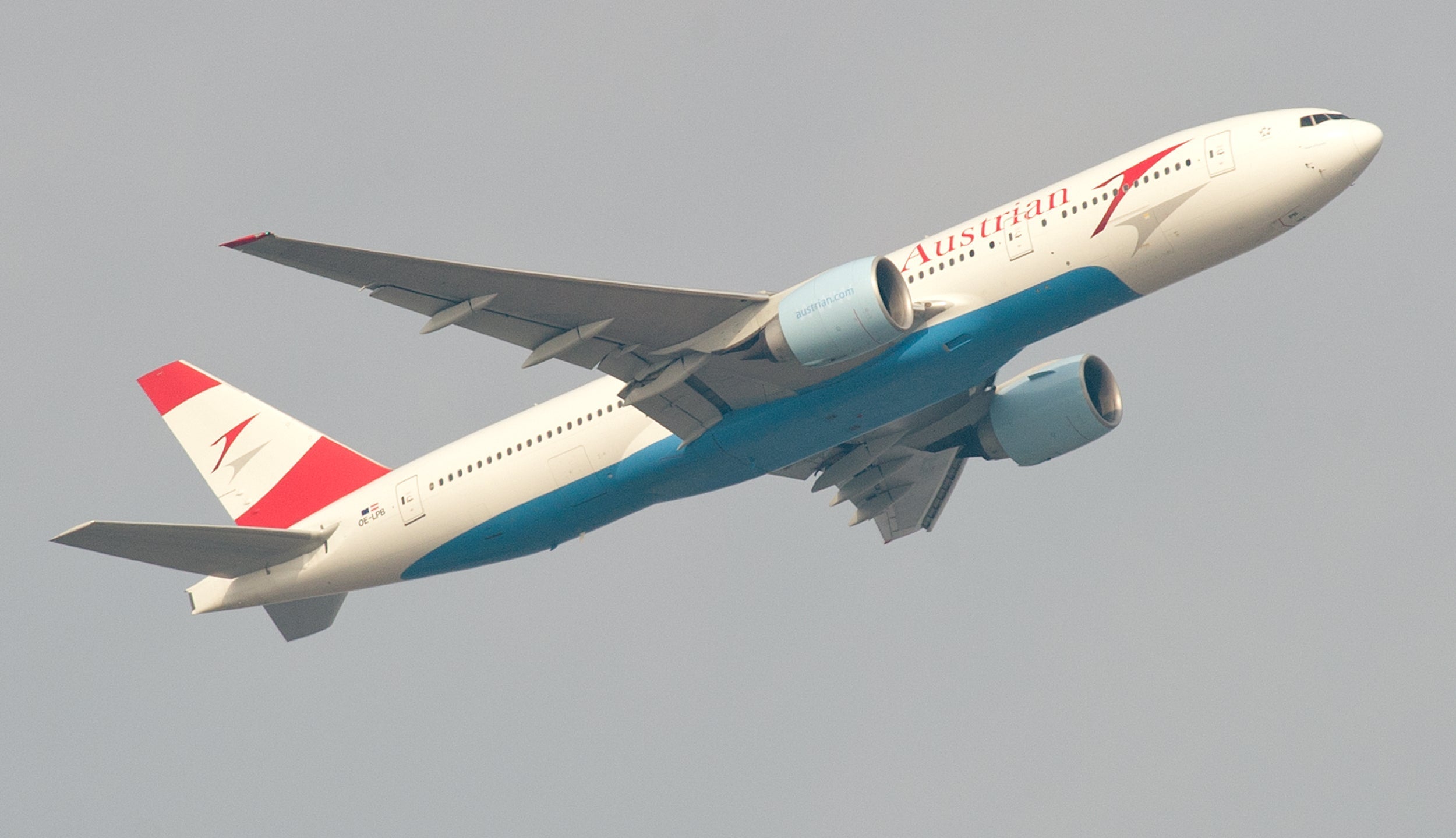
By now, I'm sure most of you will have seen the news of a United Boeing 777-200, which suffered an engine problem shortly after takeoff from Denver International Airport last weekend.
According to an NTSB media briefing on Monday, the aircraft took off at 1:40 p.m. local time from runway 25 and was cleared to climb to 23,000 feet. Four minutes after takeoff, passing 12,500 feet above sea level and flying at 280 knots, the cockpit voice recorder (CVR) picked up a loud bang and increased vibrations were detected in the right hand, number two engine.
The crew carried out checklists, including pulling the engine fire handle and discharging both extinguisher bottles into the engine. Despite the fuel supply being shut off, the NTSB is still investigating why signs of fire continued to be visible in the engine. The crew declared an emergency and returned to Denver, touching down some 20 minutes after the engine problems began.
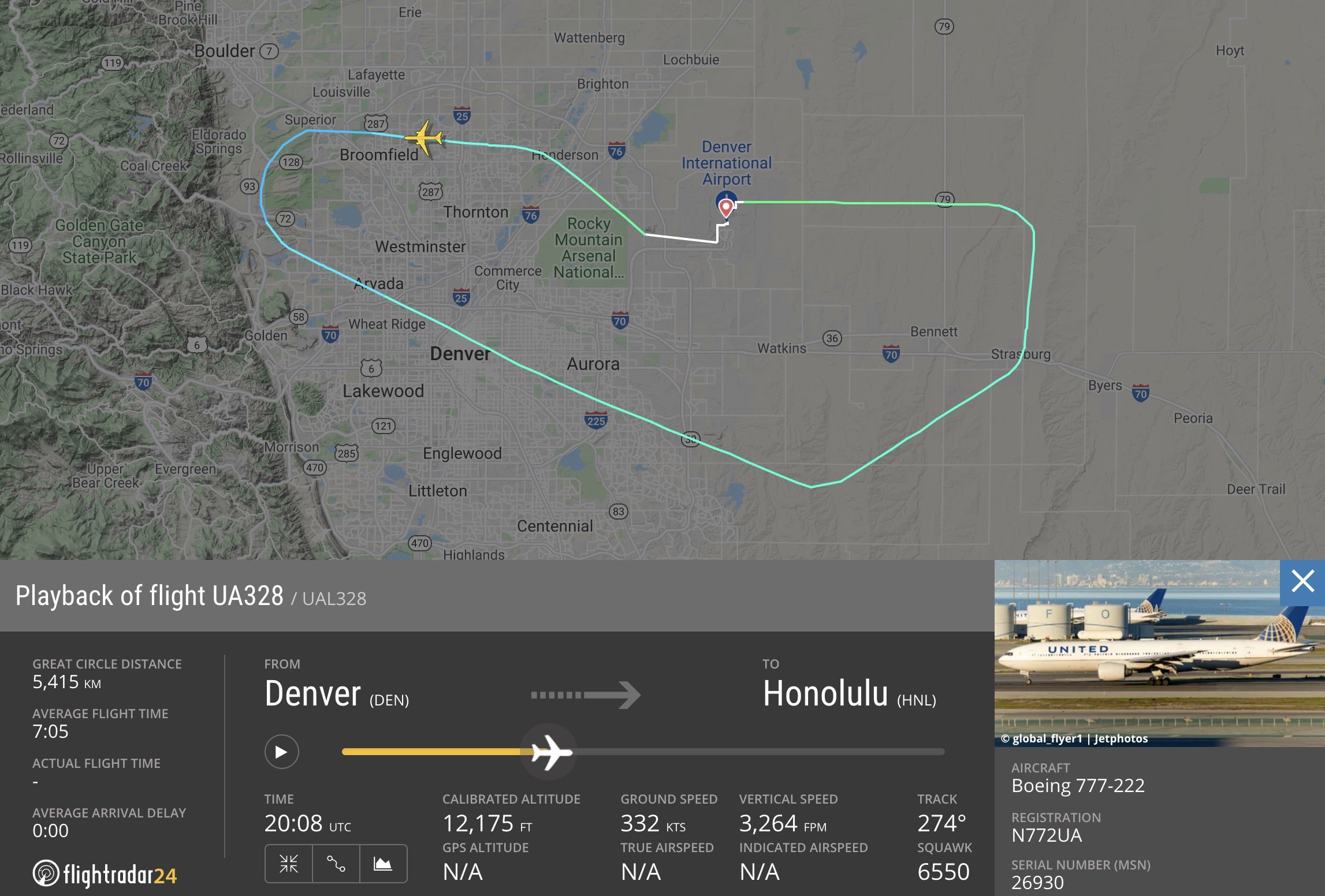
Once on the ground, with the fire services in attendance, the crew deemed that an emergency evacuation was not necessary. A little while later, all 229 passengers and 10 crew safely disembarked the aircraft.
In these situations, it is always best to wait for official reports from the relevant authorities about what caused the incident. It is not right to speculate about what may have happened when you are not privy to the facts.
What I can do, however, is explain how the aircraft systems are designed to work in these circumstances and what we, as pilots, are trained to do.
Detecting an engine fire
If you think of fires on an aircraft, you most likely think of engines being on fire. Yet, what if I was to tell you that an engine is always on fire? Surprised? In order to generate the thrust to move the aircraft forward, the fuel must be ignited. This constant burning of fuel is a controlled fire, albeit in an area that is designed to contain it. So what happens if there is a fire in a part of the engine which isn't the combustion chamber?
In each engine, there are two fire detection channels, both with multiple sensors. Each channel provides both fire and overheating detection. In normal cases, at least one element in each channel must detect a fire or an overheat for the fire warning to go off in the flight deck.
That sounds pretty complicated so let's break it down. The whole point of having two fire detection systems is to guard against false positives -- situations where one system may have a fault and then indicate a fire. This is obviously the safe option in the case of a system failure, but if every time a detection channel failed, the pilots would have no option but to shut the engine down and divert the aircraft.

Read more: 'Roger, Roger. What's our vector, Victor?' — How pilots use radios
The presence of the second system guards against these false warnings. It's like trying to heat a pan of water to an exact temperature. With one thermometer in the pan, when the reading hits the desired temperature, the water could be at that temperature or, the thermometer could be broken or inaccurate. With a second thermometer in the pan, if both show the desired temperature at the same time, you can be pretty sure that the reading is accurate.
That said, if the aircraft detects that one of the channels has broken, the system reverts to single-channel operation. In that scenario, should the remaining system detect a fire or overheat situation, it triggers the appropriate warning in the flight deck.
If both systems were to fail, then no fire detection is available. If the aircraft was still on the ground, it would not be allowed to depart. If it was mid-flight, the crew would have to decide if they continue the flight or divert to another airport.
When the system detects the presence of a fire in the engine, a number of indications appear in the flight deck. Firstly, the fire bell sounds along with the illumination of the red master warning light. On the EICAS (engine indication and crew alert system) screen, the FIRE ENG L or R is displayed. The appropriate fuel control switch illuminates red, as does the appropriate engine fire switch.
Fly the aircraft
I've mentioned "The Chimp Paradox" by Dr. Steve Peters, in previous articles. It states that inside us still live our original ancestors, the ones who behave like any other animal in the jungle.
When that ancestor felt threatened, the immediate reaction of its brain was the "fight or flight" impulse. Do I stay and fight or do I run away? When something untoward or surprising happens to us today, that inner chimp still reigns supreme as panic takes over.
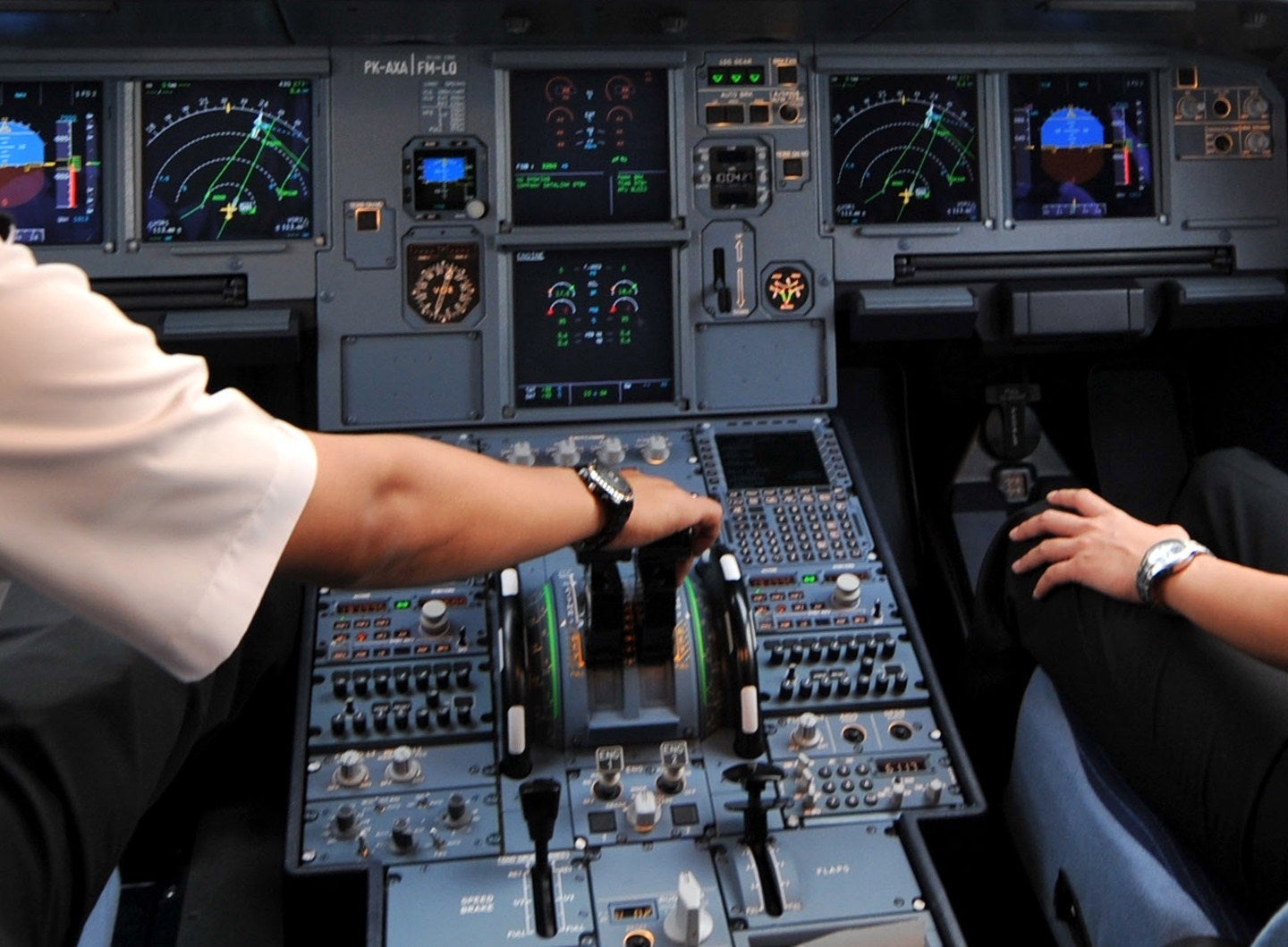
When flying an airliner and an engine suddenly catches fire, it's only natural for the chimp to control our initial emotions. Red lights are flashing and warning alarms are going off. However, with 300 lives on board, we rarely get a second chance to rectify an instinctive poor decision. What we must do is put the chimp back in its cage to allow us to think rationally.
The best way to do this is to have a structure we can always fall back on. A structure that will help us calm down and give us time to evaluate the situation properly -- and it comes in three steps.
Climb power
When a non-normal event occurs, the first thing we must do is ensure that the aircraft is flying safely. In a previous article, I discussed how we deal with an engine failure (or fire) on takeoff. However, the Denver event was slightly different.
When the loud bang was heard and the vibration detected, the aircraft was already 7,200 feet above the ground. By this point of the flight, the autopilot would normally be engaged with the pilots monitoring the aircraft instruments. The engines, too, would be operating differently at this stage of flight.
The most important part of the takeoff is climbing away from the ground and into the air and to do this, we use a relatively high power setting. Sounds obvious. As Denver sits 5,300 feet above sea level, due to the lower air density, aircraft use a slightly higher power setting than at a sea-level airfield.
Read more: The 10 most spectacular airport approaches from the cockpit
Once a safe height above the ground, normally around 1,000 feet, that excess power is no longer needed so we reduce the engine power to what is known as "climb thrust." Regular passengers will be familiar with this drop in engine sound at this stage of flight.
However, some departures require us to keep takeoff power for longer than normal. Counter-intuitively, this is often done for noise abatement reasons. The idea is that we keep a higher power setting to climb quicker, ensuring that we are at a higher altitude when overflying noise-sensitive areas.
On the 777 and 787, we have a choice of three climb thrust settings, each with less power, and thus more fuel-efficient, than the last. Climb, or CLB, is the most powerful, then we have CLB 1 and then CLB 2.
If an engine fails or catches fire with climb power set and the autopilot engaged, we deal with the situation in quite a different way to how we would if it had happened just as we got airborne.
Aviate
When we first become aware of a developing situation, usually from a warning or caution alert, the pilot responsible for flying the aircraft (PF) will state out loud: "I have control." This may seem obvious, but a clear and unambiguous statement immediately resolves any confusion over who is doing what.
Next, the PF will confirm not only what the aircraft is doing, but make sure that it is doing what they actually want it to be doing. For example, if they were flying manually, would it be a better idea to now engage the autopilot?
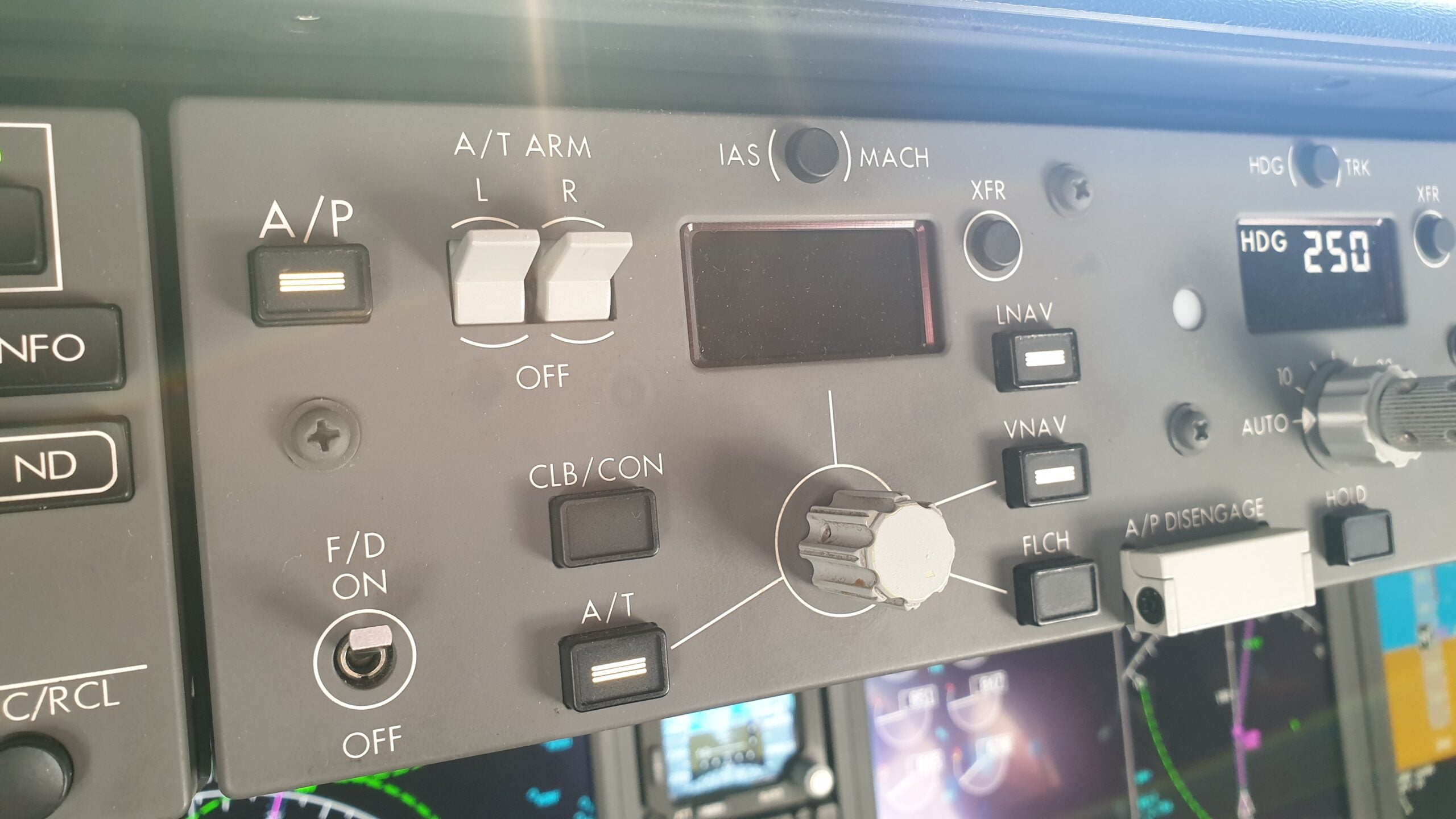
In the case of an engine fire with any of the climb power settings, the PF will need as much power as possible from the remaining engine. To do this, they press the CLM/CON button which will give maximum continuous thrust from both engines.
It may also make sense to reduce, or even stop, the climb. With an engine on fire, the chances of continuing to the planned destination are close to zero. If that's the case, why bother climbing further and putting extra stress on the good engine? As a result, the PF may decide to level off at the altitude at which they are currently at.
Navigate
With the aircraft flying safely, the next step is to navigate the aircraft to a position that continues to keep us safe. This very much depends on the stage of flight and how well prepared we are.
Pilots are always thinking about the "What if?" scenarios at all stages of flight. By constantly talking to each other, we keep our situational awareness high, ready to put a plan into action should the need arise.
Before each departure, we will always discuss what we will do in the event of an engine failure after takeoff. By having a pre-defined plan in place, should the event actually happen, we already know how we will handle it and what we're going to do.
Once airborne and in the thick of the situation, if the brief is still valid, there is no reason why we can't just continue with the original plan. If that was to turn around and land back at the departure airport, then that's what we will do.
Terrain clearance is also critical in these situations, particularly if the event happens soon after takeoff or just before landing. Making sure that the aircraft is at a safe altitude will ensure terrain clearance is paramount before we attempt to deal with the issue at hand.
Communicate
With the aircraft flying safely, the final element is to communicate. But who with and when?
Understandably, letting Air Traffic Control know that we have a problem is important at some point, but it may not need to be done immediately. In some parts of the world, letting ATC know too soon may result in a barrage of questions which will hamper our efforts to solve the problem.
Likewise, for passengers seeing flames coming out the back of the engine, it may be pretty alarming, but letting them know what is going on isn't always high on our list of priorities. Once the situation is under control and we have a plan, then we will speak to them.
Dealing with the fire
With the activation of the engine fire system, in this situation, the right engine, we have a well-practiced routine to execute. Firstly, the PF will continue to fly the aircraft. It is imperative that one pilot continues to monitor the flight path and does not get drawn into dealing with the problem. They will then instruct the pilot monitoring (PM) to carry out the "fire engine right" memory items.
As the prompt execution of these items is essential, they are done from memory and not from a checklist. This involves turning off the autothrottle, closing the thrust lever, shutting off the fuel control switch and pulling and turning the relevant engine fire handle. However, as these switches are engine specific, it's of absolute importance that we shut down the correct engine.
Even though the aircraft systems illuminate which switches we should use, we will still confirm with each other which engine has the fire. This is done by using open questions.
Read more: Can pilots predict turbulence?
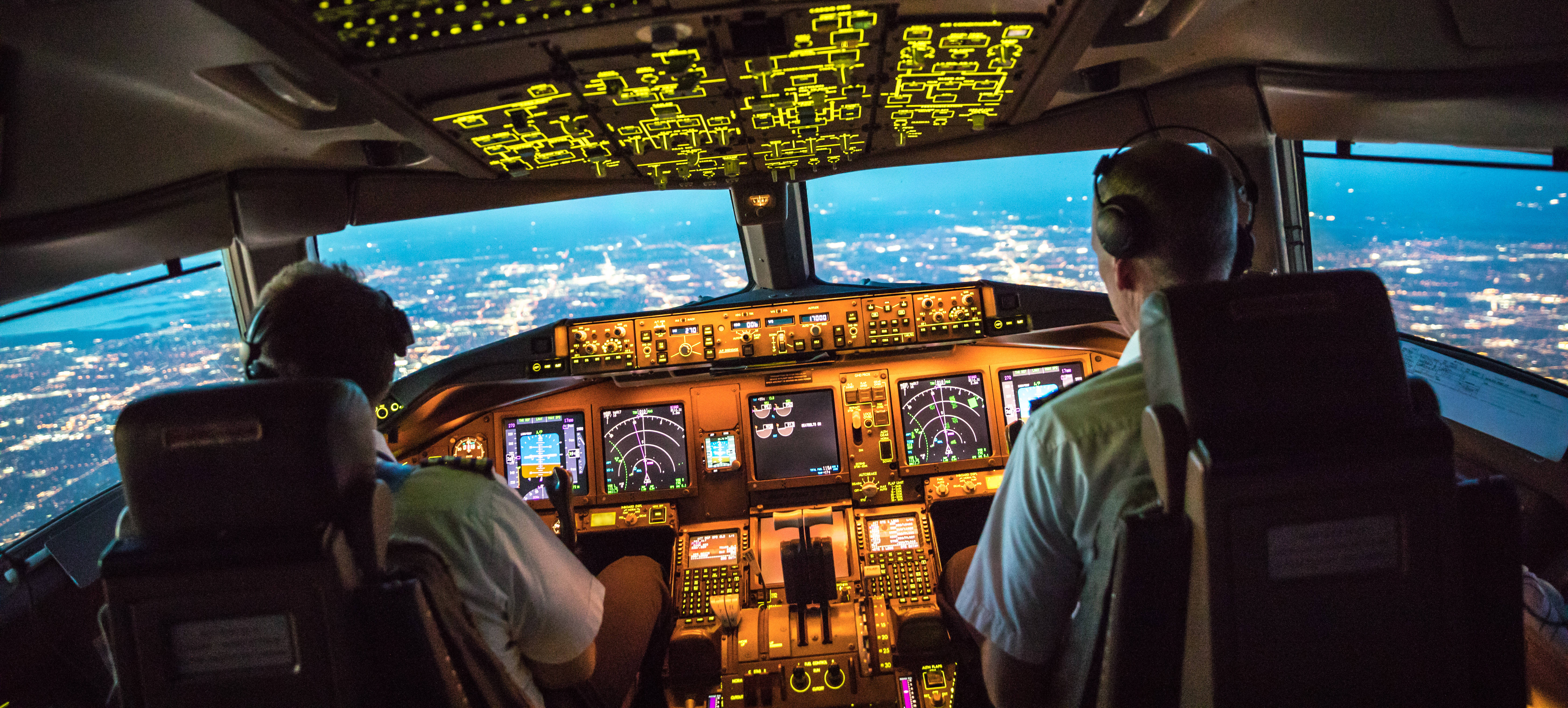
In the heat of the moment, it's very easy to be led by the compelling red lights. When under pressure and the other pilot says to you, "do you think the fire is in the left engine?" or, "I think the left engine is on fire. Do you agree?", it's very easy just to say yes.
However, using open questions enables the other pilot to make their own assessment. "Which engine do you think is on fire?" is a much better way of phrasing the question. This enables them to make their own assessment of the situation and give their own answer. If there is then any disparity between the answers, more diagnosis is needed.
With both pilots agreeing on which engine is to be shut down, the PM can execute the memory items.
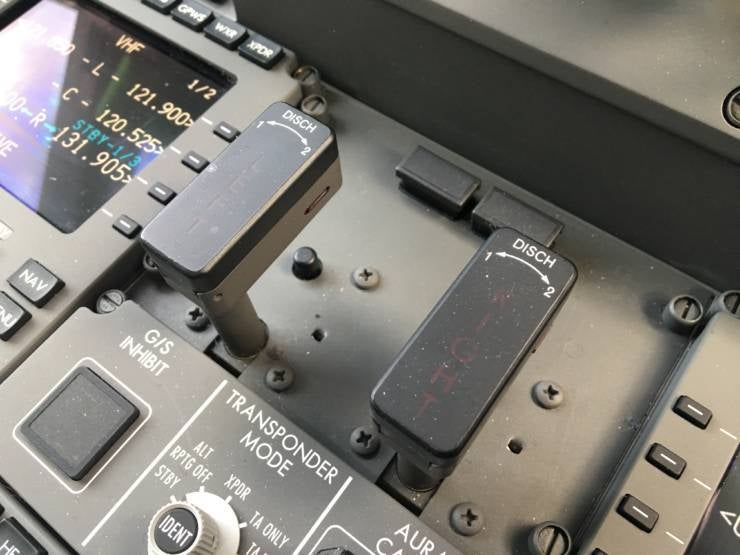
In total, there are two fire extinguisher bottles, and these can be used in either engine. When the engine fire switch is pulled out, rotating it to the left extinguishes bottle one into that engine. If the switch is then rotated to the right, then bottle two is used in the same engine.
What next?
In an ideal situation, these actions will extinguish the fire and we then have time to breathe. We can join a holding pattern to complete the rest of the checklist and consider whether we may need to dump fuel before landing.
However, if the engine is still showing signs of fire, time is not our friend. We must endeavor to land the aircraft as soon as possible, without rushing and making mistakes that could make the situation even worse.
If above our maximum landing weight, dumping fuel is a "nice-to-do" but it is not a "need-to-do". Airliners are built strong enough to land safely, even at their maximum takeoff weight. What will be affected, though, is the landing distance needed.
A quick check of the landing performance will confirm how much runway is required, but if this was done as part of the departure brief when sat at the gate, we can save precious seconds in the air.
All that remains to do is speak to the cabin crew to explain the situation and land the aircraft safely.
Bottom line
An engine fire is an incredibly rare event. Most pilots will go an entire career and never experience one. That said, our job is to be there and act accordingly when the unthinkable does happen.
Dealing with a fire or failure when a few thousand feet in the air differs quite significantly from an event just after takeoff. The priority is to increase engine power to keep the aircraft flying and then slow, or stop the rate of climb.
The sooner the aircraft can be brought under control, the sooner the fire can be dealt with and the sooner we can have the aircraft safely back on the ground.
TPG featured card

at Capital One's secure site
Terms & restrictions apply. See rates & fees.
| 5X miles | Earn 5X miles on hotels, vacation rentals and rental cars booked through Capital One Travel |
| 2X miles | Earn unlimited 2X miles on every purchase, every day |
Pros
- Stellar welcome offer of 75,000 miles after spending $4,000 on purchases in the first three months from account opening. Plus, a $250 Capital One Travel credit to use in your first cardholder year upon account opening.
- You'll earn 2 miles per dollar on every purchase, which means you won't have to worry about memorizing bonus categories
- Rewards are versatile and can be redeemed for a statement credit or transferred to Capital One’s transfer partners
Cons
- Highest bonus-earning categories only on travel booked via Capital One Travel
- LIMITED-TIME OFFER: Enjoy $250 to use on Capital One Travel in your first cardholder year, plus earn 75,000 bonus miles once you spend $4,000 on purchases within the first 3 months from account opening - that’s equal to $1,000 in travel
- Earn unlimited 2X miles on every purchase, every day
- Earn 5X miles on hotels, vacation rentals and rental cars booked through Capital One Travel
- Miles won't expire for the life of the account and there's no limit to how many you can earn
- Receive up to a $120 credit for Global Entry or TSA PreCheck®
- Use your miles to get reimbursed for any travel purchase—or redeem by booking a trip through Capital One Travel
- Enjoy a $50 experience credit and other premium benefits with every hotel and vacation rental booked from the Lifestyle Collection
- Transfer your miles to your choice of 15+ travel loyalty programs
- Top rated mobile app