8 myths about being a pilot, debunked

Even after 15 years in the job, it still amazes me the number of myths that still seem to circulate around being a pilot and how aircraft work in general. According to some of the stories, we all get free flights, have perfect vision and don't suffer from jet lag as badly as passengers.
Some of these are true, others less so. Here are eight of the most common myths about being a pilot, explained.
1. Both pilots can't eat the same meal
Don't eat the fish! Ever since that famous scene in the movie "Airplane!", it has been a widely accepted fact that pilots are not allowed to eat the same meal. The thinking being that should a certain meal be contaminated, it will stop both (or all three or four) pilots from being incapacitated, and it makes total sense.
However, these days, airline food is made in purpose-built facilities that churn out thousands of meals a day. Such large commercial kitchens are subject to rigorous health inspections to ensure that food is being stored and prepared in a hygienic manner. As a result, the chances of food poisoning are incredibly small.
As most food poisoning takes around six hours to show symptoms, most airlines accept that a crew is more likely to get ill from something that they ate before the flight than the onboard catering. As a result, they allow pilots to eat the same meal.
2. We need to have perfect vision
"I always wanted to become a pilot but I wear glasses," is something I often hear from people who once harbored a dream of becoming a pilot. Sadly, they were misinformed. You can wear glasses (or contacts) and still be an airline pilot.
As part of our flying license, all airline pilots must also hold a valid medical certificate. In the U.K., this is known as a class 1 medical. Once a year (twice a year if you're over 60), we visit an Aeromedical Examiner who conducts a number of tests, one of them being an eye test.
If the tests show that the individual does not meet the uncorrected limits as set out by the CAA, they must wear corrective lenses, which brings the vision back within limits.
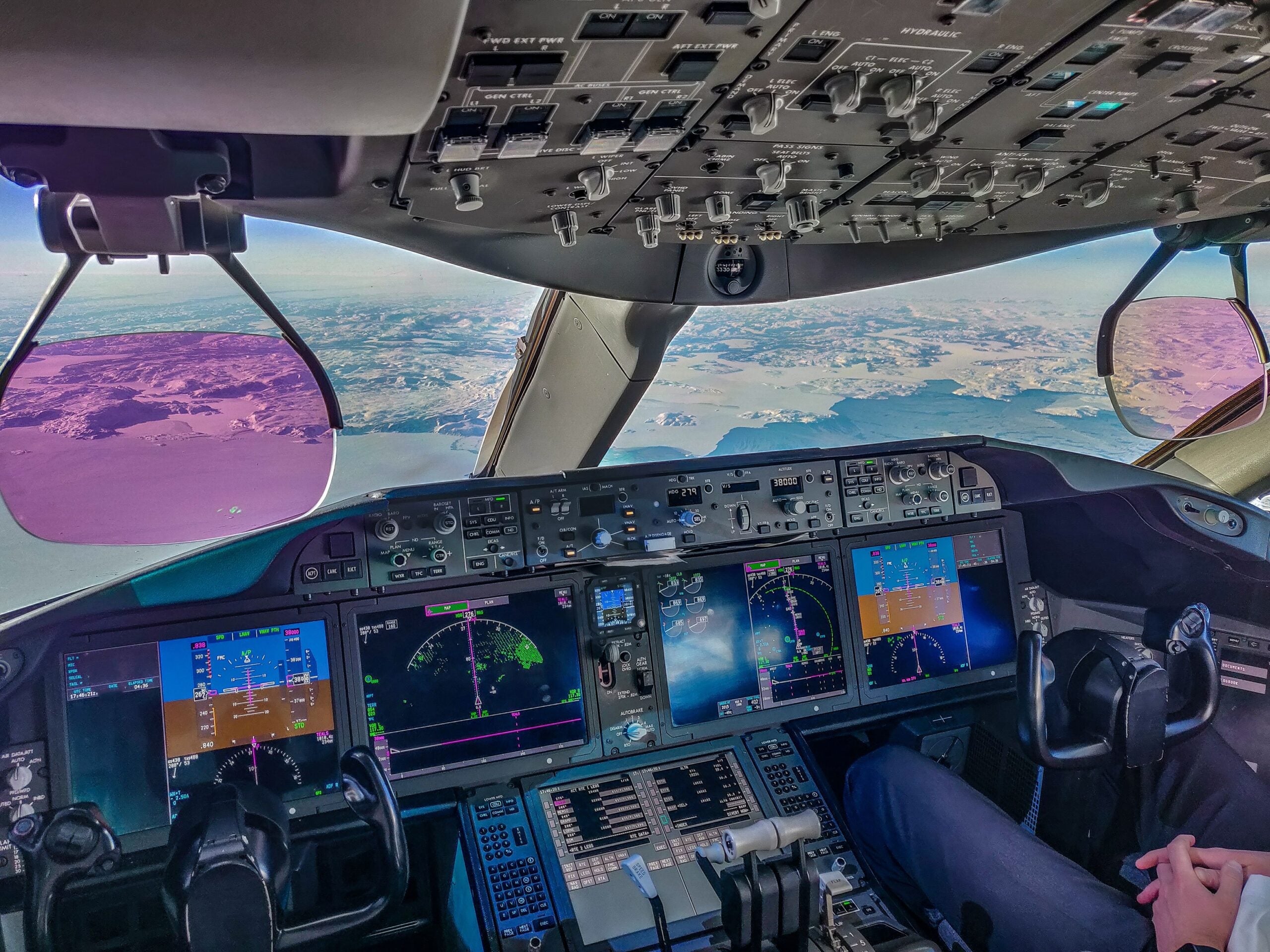
Of interest, the use of polarized sunglasses is discouraged. This is because they can cause distortion patterns on laminated windshields and, depending on the screen type, make some flight deck instruments difficult to read. Not ideal!

Read more: How pilots keep track of aircraft defects
3. We get free flights
Most jobs have perks for employees and one of the biggest benefits of working for an airline is access to discounted travel. I use the word "discounted" as there is very rarely such thing as a "free" ticket.
Airline employees, not just pilots, are able to buy a ticket known as an "ID90" -- which normally equates to 90% off the normal fare. Staff are able to buy as many ID90s as they like in a year. However, there is a drawback. This is a standby ticket, meaning that you will only get on the flight if there is a seat available.
When you buy an ID90, you are given a priority code, which determines who goes ahead of you in the list to get a seat. For example, staff traveling on their own airline will get a higher priority than staff from another airline.

Once check-in has closed, the Flight Management Department looks at how many seats are remaining and allocates them to staff in priority order. This is why staff often refer to this as "standby roulette".
As a result, these tickets are best used when traveling on your own to a destination and at a time where the flights are not busy. Relying on an ID90 to get a family of four on a flight just before Christmas is not a great idea.
In addition to ID90s, most airlines will give staff a limited annual allowance of "free" tickets (they still have to pay airport and government taxes), which give them access to better seats on board. How these schemes work varies massively from airline to airline.
For the most part, these are limited to one or two tickets a year (for the staff member and their immediate family) and depending on the employee's job position, this ticket could entitle them to business or first class.
However, once again, this depends on these seats being available when check-in closes. Staff will never get a premium seat at the expense of a fare-paying passenger.
4. The autopilot does all the work
Ah, my favorite one. As a group, pilots are fairly self-deprecating. We're happy to accept the jokes and jibes from passengers and cabin crew alike, so long as it gives everyone peace of mind. The reality, though, is quite different.
Let me put it to you like this. Do you use a laptop or computer for work? If so, when you're sat at your desk for hours on end, who is doing the work? You or the laptop? If your boss came out and tried to tell you that you won't be getting a bonus this year because your computer did all your work for you, how would you feel? It's the same with aircraft.
Read more: How pilots and controllers communicate digitally
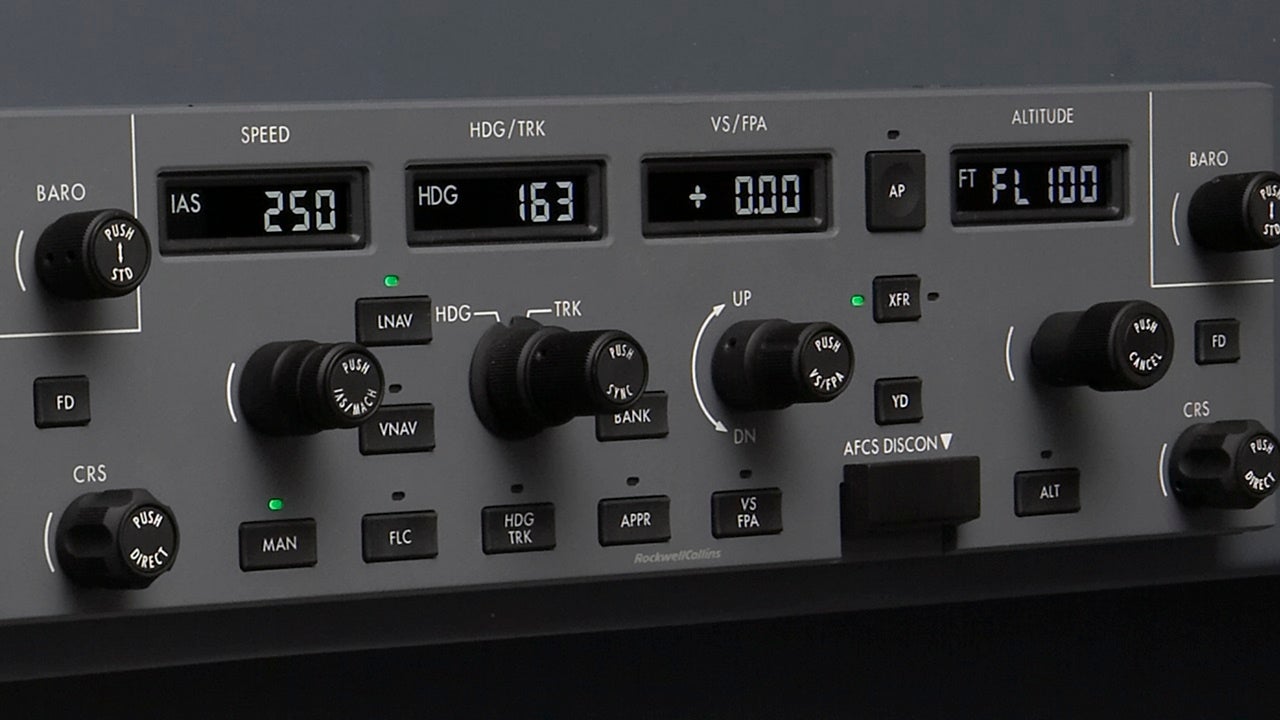
The autopilot is merely a computer that we use to lower workload, enabling us to work on other tasks at the same time. It is only as good as the information which we give it. If we tell the autopilot to fly a heading of north at 3,000 feet, it will do it perfectly... until it flies into a mountain.
Numerous accidents have occurred because the pilots were too reliant on the automatics. Even with highly advanced modern flight decks, the original principles still apply. Feed rubbish into a computer and you'll get rubbish out.
5. We always fly the same route
As part of our pilot's license, we are rated to fly a particular type of aircraft. This is known as a type rating. Some aircraft types are very similar and the rating allows us to fly two types, for example, the 787 rating is in fact a 777/787 rating, allowing me to fly both if my airline had both types.
As a result, this means that I can fly the 787 to any destination to which my airline decides to operate it. In theory, the airline could limit us to just one destination but it would make manpower planning unnecessarily complicated. Imagine needing a pilot at the last minute for a New York flight when you only had Johannesburg pilots available. Not particularly efficient.
Each month, we are issued with our roster. How we are given this depends very much on the airline and is a big part of our terms and conditions. When we spend such a vast amount of time away from home, being able to have some control over our rosters is essential to ensure a decent work/life balance.
As part of this, some people prioritize when they have days off at home, others which destination they would prefer to fly to or, more often than not, where they would like to avoid going to.
6. We aren't affected as badly by jet lag
Oh, believe me, we are -- sometimes worse than passengers. Any time you rapidly cross multiple timezones, as you do on a long-haul flight, you're likely to feel the effects of jet lag. This is made even worse when your sleep patterns are disrupted, for example by having to be awake all night when flying an aircraft.
Jet lag is caused by a mismatch between what the actual time is and what time your body thinks it is. Our circadian rhythm is a powerful clock, affecting a whole range of bodily functions such as hormone release, temperature regulation and eating habits. As a result, if you don't take positive action to control it, jet lag can affect you for up to a week after a flight. This is why having enough time off to rest between flights is crucial for flight safety.
Read more: How a flying cadet graduates to a fully qualified pilot

Pilots and cabin crew never get used to it, but we do find out our own ways in which we best deal with it. The key to this is getting onto your destination time as soon as possible. When coming back from a trip, I have a "midday rule." If I'm home before midday, I'll sleep for a couple of hours and then make sure I get up. If I'm home after midday, I'll stay up. The key is making yourself tired for a normal bedtime in your timezone.
7. Pilots breathe different air from the passengers
This is an interesting one and it very much depends on the aircraft type and how the air-conditioning system works. On the A320 family, hot air is taken out of the engines, conditioned, filtered and then sent into the cabin. Every few minutes, not only is this air filtered by operating theatre grade filters, but it is also dumped overboard and replaced by fresh air.
In the 787 Dreamliner which I fly now, the system is even better. Instead of taking air from the engines, the air that is pumped into the cabin (after being conditioned) comes directly from the outside. This means that there is no chance of contamination from the engines. In addition, like on the A320, the air is filtered and dumped overboard every couple of minutes.
However, the air supply to the flight deck is slightly different. To minimize the chance of contaminated air being fed into the compartment, there is a separate supply of air from the air-conditioning system. This ensures that should there be smoke or fumes in the cabin, the pilots remain protected, allowing us to land the aircraft safely.
8. Pilots are paid really well
Tough one. Back in the day, pilots did get paid relatively well. Some of the pilots now approaching the end of their careers can earn salaries into the six figures. However, these are a significant minority and, like with all things, time has changed everything.
Firstly, very few airlines pay for the training to become a pilot. Most students have to take out large loans to finance the course with no guarantee of a job at the end. It's not uncommon for new pilots to have debts of well over $100,000.
After this, they must find a job. However, with the competition amongst airlines to offer the lowest fares whilst delivering high profits to shareholders, something has to give. Staff salaries are an obvious target to go for. With that in mind, some airlines in Europe now offer starting salaries of around $24,000 a year. A tough gig when you have such a big loan to repay as well as normal living costs.
Bottom line
Thanks to strict hygiene rules, you're more likely to get ill from food consumed before a flight than from anything you eat on board. As a result, most airlines allow pilots to eat the same meal. Eyesight is important, however, we are allowed to wear glasses so long as we then meet the requirements set out by the relative governing agency.
Jet lag certainly affects us, however, most pilots develop their own system to enable them to deal with it. Fortunately, flying different routes gives us some variety and the autopilot definitely does not just fly the aircraft on its own.
TPG featured card
at American Express's secure site
Terms & restrictions apply. See rates & fees.
| 4X | Earn 4X Membership Rewards® points per dollar spent on purchases at restaurants worldwide, on up to $50,000 in purchases per calendar year, then 1X points for the rest of the year. |
| 4X | Earn 4X Membership Rewards® points per dollar spent at US supermarkets, on up to $25,000 in purchases per calendar year, then 1X points for the rest of the year. |
| 5X | Earn 5X Membership Rewards® points on prepaid hotel stays booked through AmexTravel.com or the Amex Travel App™. |
| 3X | Earn 3X Membership Rewards® points on flights booked through AmexTravel.com, the Amex Travel App™, or purchased directly from airlines. |
| 2X | Earn 2X Membership Rewards® points on prepaid car rentals booked through AmexTravel.com or the Amex Travel App™ and cruises booked and paid through AmexTravel.com. |
| 1X | Earn 1X Membership Rewards® point per dollar spent on all other eligible purchases. |
Pros
- Valuable dining and food-related credits
- Flexible rewards with airline and hotel transfer partners
- Multiple travel and purchase protections
- No foreign transaction fees
- Access to Amex Offers for additional savings (enrollment required)
Cons
- Not as useful for those living outside the U.S.
- Some may have trouble using Uber and other dining credits
- You may be eligible for as high as 100,000 Membership Rewards® Points after you spend $8,000 in eligible purchases on your new Card in your first 6 months of Card Membership. Welcome offers vary and you may not be eligible for an offer. Apply to know if you’re approved and find out your exact welcome offer amount – all with no credit score impact. If you’re approved and choose to accept the Card, your score may be impacted.
- Earn 4X Membership Rewards® points per dollar spent on purchases at restaurants worldwide, on up to $50,000 in purchases per calendar year, then 1X points for the rest of the year.
- Earn 4X Membership Rewards® points per dollar spent at US supermarkets, on up to $25,000 in purchases per calendar year, then 1X points for the rest of the year.
- Earn 5X Membership Rewards® points on prepaid hotel stays booked through AmexTravel.com or the Amex Travel App™.
- Earn 3X Membership Rewards® points on flights booked through AmexTravel.com, the Amex Travel App™, or purchased directly from airlines.
- Earn 2X Membership Rewards® points on prepaid car rentals booked through AmexTravel.com or the Amex Travel App™ and cruises booked and paid through AmexTravel.com.
- Earn 1X Membership Rewards® point per dollar spent on all other eligible purchases.
- Pay It® lets you tap in the American Express® App to quickly pay for small purchase amounts throughout the month and still earn rewards the way you usually do. Plan It® gives you the option to split up big purchases into equal monthly payments with a fixed fee. You’ll know upfront exactly how much you’ll pay.
- $120 Dining Credit: Earn up to a total of $10 in statement credits monthly when you pay with the Gold Card at Grubhub (including Seamless), Buffalo Wild Wings, Five Guys, The Cheesecake Factory, and Wonder. This can be an annual savings of up to $120. Enrollment required.
- $100 Resy Credit: Get up to $100 in statement credits each calendar year at over 10,000 qualifying U.S. Resy restaurants after you pay for eligible purchases with the American Express® Gold Card. That’s up to $50 in statement credits semi-annually. Enrollment required.
- $84 Dunkin' Credit: Earn up to $7 in monthly statement credits after you pay with the American Express® Gold Card at U.S. Dunkin’ locations. Enrollment required.
- $120 Uber Cash on Gold: Enjoy up to $120 in Uber Cash annually with your Gold Card. Just add your Card to your Uber account and you'll get $10 in Uber Cash each month to use on orders and rides in the U.S. when you select an Amex Card for your transaction.
- Enjoy complimentary Hertz Five Star® Status benefits like skipping the counter at select locations, adding an additional driver at no additional cost*, and vehicle upgrades**. Benefit enrollment and Hertz Gold+ registration are required. *Additional drivers must meet standard rental qualifications and must be a spouse or domestic partner to qualify as complimentary. Other additional drivers subject to fees. **Benefits are subject to availability and vary by location. Additional Hertz program Terms and Conditions including age restrictions apply.
- Book two nights or more with The Hotel Collection through AmexTravel.com or the Amex Travel App™ and receive a $100* credit towards eligible charges at over 1,400 upscale hotels worldwide. *Eligible charges vary by property.
- Book your travel through the Amex Travel App™ with added peace of mind – backed by American Express® service and support. Only for American Express® Card Members.
- Whenever you need us, we're here. Our Member Services team will ensure you are taken care of. From lost Card replacement to statement questions, we are available to help 24/7.
- No Foreign Transaction Fees.
- Annual Fee is $325.
- Terms Apply.