How a flying cadet graduates to a fully qualified pilot

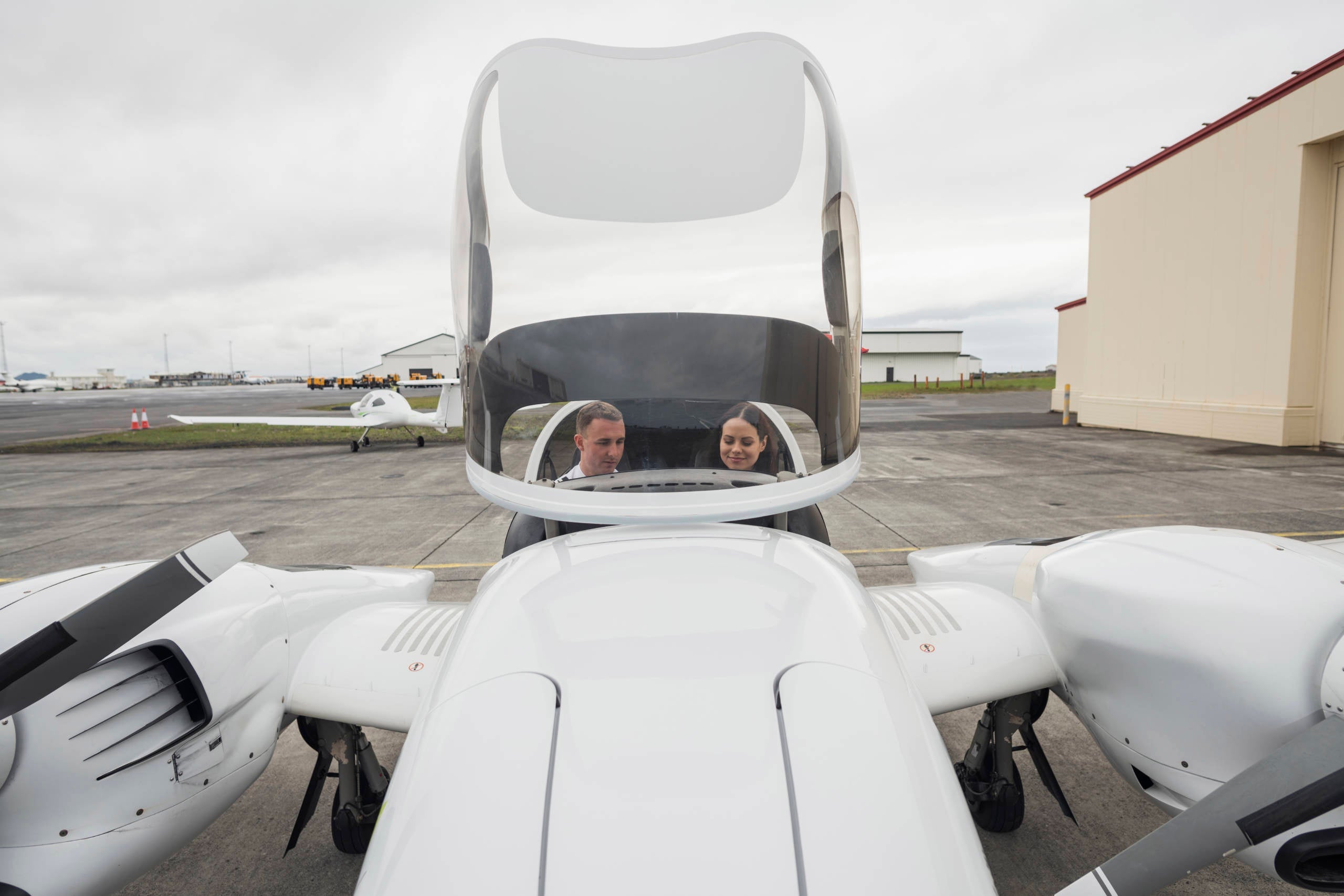
The path to becoming an airline pilot contains many hurdles and hoops that cadet pilots must jump over and through. By the time they take to the controls of their first commercial flight, they will have completed hundreds of hours of flying in both aircraft and simulators and be the proud owner of an official pilot's license.
However, recent news in the world of aviation has uncovered that some pilots may have been flying on "fake" licenses or cheated in exams to obtain their license.
Each country has its own agency that governs aviation, often known as the Civil Aviation Authority (CAA). In the U.K., the CAA is responsible for the regulation of aviation safety and the licensing and financial fitness of airlines and individuals, amongst other things.
So how does the CAA ensure that the person responsible for your safety on an aircraft is suitably qualified?
Air transport pilot's license
To fly a passenger aircraft, pilots need an air transport pilots license (ATPL). The license is issued by the country that governs the flying school, and cadets must complete three stages of training before they can be issued their license.

First, they must pass a range of theoretical exams before they start the bulk of their practical flying training. Once all training is complete, they must then pass a final skills test. The whole process can be done in around two years if training on an integrated course.
However, this comes with a cost. Very few airlines have sponsorship programs these days, so the cost of training falls at the feet of the cadet. To train all the way to the co-pilot's seat of an A320 can cost an eye-watering $164,000.
Theoretical knowledge exams
The path to becoming an airline pilot involves a lot of studying. Before getting anywhere near an aircraft, cadets must complete seven months of classroom-based theory. These are a combination of computer-based training, classroom sessions and a lot of self-study.
As part of the theoretical knowledge training, pilots must pass exams in 14 subjects. These are:

- Air law
- Aircraft general knowledge -- airframe/systems/power plant
- Aircraft general knowledge -- instrumentation
- Mass and balance
- Performance
- Flight planning and monitoring
- Human performance
- Meteorology
- General navigation
- Radio navigation
- Operational procedures
- Principles of flight
- Visual flight rules (VFR) communications
- Instrument flight rules (IFR) communications
Identification
The theoretical examinations for the U.K. ATPL can be sat at any one of seven locations across the U.K. and even at one in Malaysia.
When taking an examination, the CAA must ensure that the person actually taking the examination is the person who the exam results will be credited to. As a result, all candidates must provide photographic identification before every exam.
Read more: Your next flight could be a pilot's final test before making captain

When arriving for the exam, the candidate must present their examination booking confirmation slip to the invigilator at least 30 minutes before the start of the exam. They will also have to prove their identity at this point by providing their photographic identification.
This part is so strict that the ID must be the same as stated during the exam registration and as verified by the CAA. It must also be valid at that time. If the candidate does not produce the identification document, they will not be allowed to sit the exam and will forfeit their exam fee.
Exam rules
The rules when taking an exam are very strict, as you might imagine. Very similar to when you took exams at school or university, they are laid down in black and white so that there can be no confusion. For example:
- If a candidate fails to arrive on time, they will not be allowed to sit the exam.
- Candidates must not become involved in any unfair or dishonest practice in any part of the examination.
- Candidates must not have in their possession any unauthorized material or equipment that might give them an unfair advantage.
- Only information listed in the permitted or supplied material list is allowed. Possession of unauthorized materials is considered cheating, even if the candidate does not intend to use it.
- Candidates must not talk to or attempt communication by non-verbal actions to other candidates once they have entered the examination room.
- Candidates must not take or copy any of the material provided by the CAA, both electronic or hardcopy.
- Candidates must not have in their possession any mobile phone, communication device, storage device, electronic or otherwise.
- Candidates must not attempt to or use any video imaging or audio recording devices in the examination room.
- Cheating is taken so seriously that CCTV may be used to record the exams, when permissible under local law. This is to ensure the candidates and invigilators safety, but also to monitor the behavior of the candidates.
Cheating
If any candidate breaks any of the rules above, their actions will be referred to the CAA as misconduct. This may result in the disqualification of any exams the candidate has already taken and may also ban them from taking other exams in the future.
It's safe to say that the risk of cheating in an exam far outweighs the benefits.
Flying training
After the theory exams have been completed, it's time for the cadets to finally get their hands on a real aircraft. This stage of training takes around a year and a half and takes the cadet all the way from learning how to fly straight and level to flying an airliner.
The first stage of training takes place in a single-engine aircraft, normally with just two seats. This is a great place for the cadet to learn the basics of handling an aircraft and simple navigation by looking out of the window.
Read more: Can you hear me now: How pilots communicate with ATC while 35,000 feet in the air
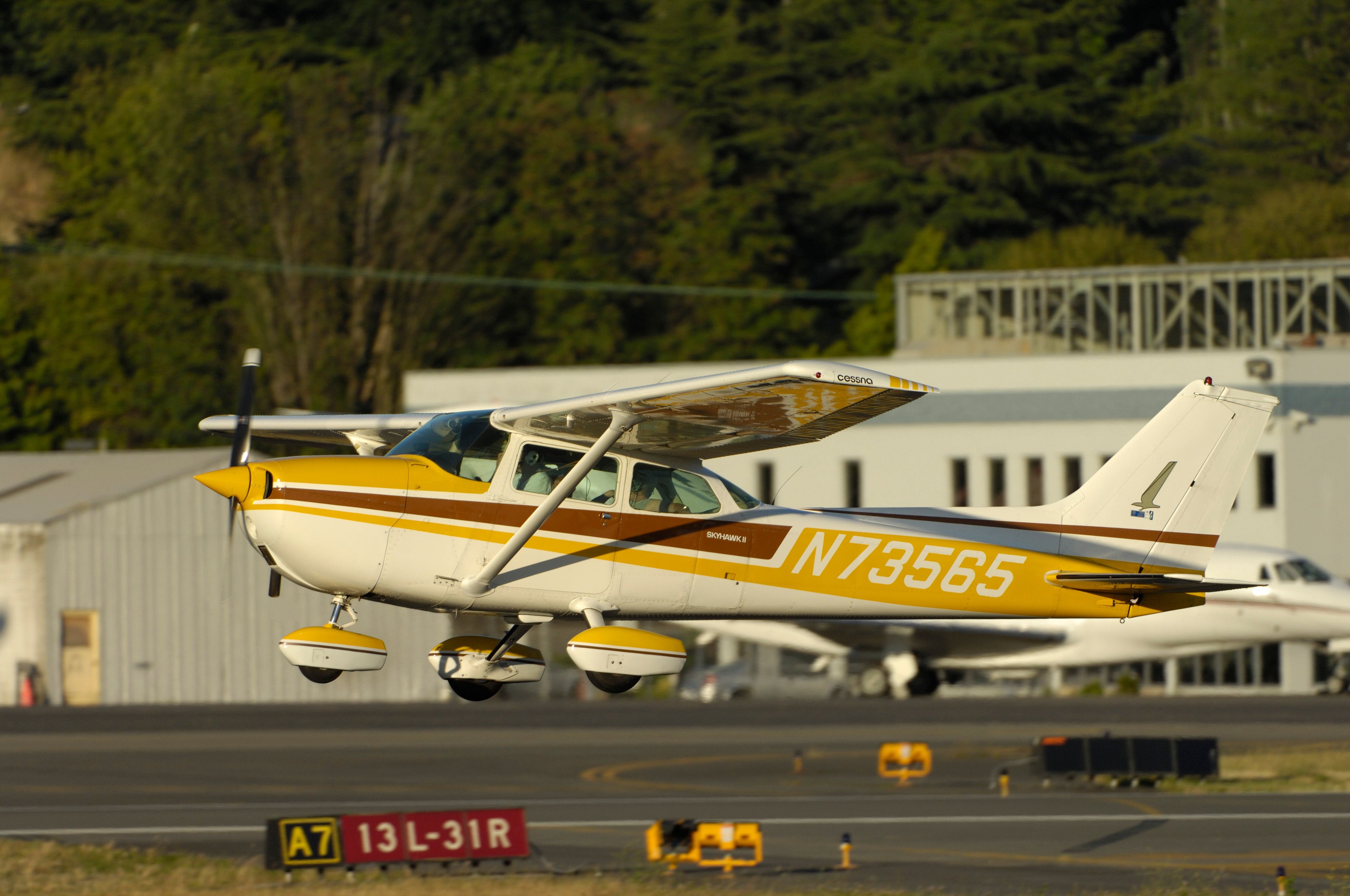
With this stage complete, it's time to take the step up to twin propellor aircraft and learning to fly using the instruments as if they are flying in cloud. This is a key part of making the transition to airliners. By the end of this stage, the cadet will hold a commercial pilots license -- good enough to carry passengers, but not quite enough to fly an airliner.
The final stage before joining an airline prepares the cadet for the complexities of flying a modern airliner in a multi-crew environment. Using a jet aircraft simulator, the multi-crew cooperation course (MCC) gives cadets the opportunity to transition from flying an aircraft on their own, to sharing tasks in the flight deck with another pilot.
Running checklists, using the radio and managing high workload situations are made easier when tasks are shared between the two pilots. The MCC course gives the cadet the skills they need to handle the complexities of the modern flight deck.
'Frozen' ATPL
Whilst an ATPL is needed to fly an airliner when finishing flight school, most pilots will not have the required hours to meet the criteria to be awarded an ATPL. For this, pilots need 1,500 flying hours but they can't get those hours without a job. It's a real chicken-and-egg scenario. However, there is a way around this.
At the end of flying school, pilots will hold a commercial pilots license. If they have passed all their ATPL subject exams and also completed the MCC course, their qualifications will satisfy all the requirements of an ATPL, except for the flying hours.
As a result, their license is known as a "frozen" ATPL. All they need to do is achieve the hours requirement before being issued a full ATPL.
The type rating
As the proud holder of a frozen ATPL, the cadet is then in a position to start applying to airlines. Depending on the state of the airline industry, this can take anything from weeks to years. There are countless stories of cadets who, unable to secure a job, have given up hopes of securing a pilot job and started working another job just to pay off their training debts.
Read more: Cabin pressure: How pilots avoid disaster in the cockpit

However, for those who do manage to get an airline job, there is still one more stage of training to go. The type rating teaches the cadet to fly the particular aircraft which they will be flying at their airline. It covers the basics of everyday flying but also how to deal with any emergency situations that may occur.
With the type rating complete, it's time to start flying passengers.
Flying experience
For a pilot to be issued with their full ATPL, they must satisfy certain aircraft flying experiences. Not only must they have 1,500 hours of total flying time, but they must also satisfy the following criteria.
Firstly, they must have a minimum of 500 hours of multi-pilot operations in airplanes. Operating as a co-pilot on a 737 or A320 would satisfy this requirement.
Next, they must also have 500 hours as "pilot in command under supervision" (PICUS). On a normal two-sector flight, for example, London to Madrid and back, the crew will take it in turns to fly the aircraft. The captain may operate the sector out to Madrid and the first officer will then fly the sector back. The time the first officer operates the aircraft is logged at PICUS time -- they are flying the aircraft but the captain is still in overall command.
In addition to these two requirements, they must also have completed a number of hours flying at night and on instruments. Bearing in mind that most airliner flying is done using instruments and a large proportion at night, meeting these criteria is rarely a problem
License skills test
The final stage of gaining an ATPL is the license skills test (LST). This sounds pretty daunting, but by the time it comes round to doing the LST to validate the ATPL, the pilot will have no doubt done the test several times before.
The type rating which the pilot received when joining their airline must be renewed each year by taking an LST. When the pilot has reached the hours required for their full ATPL, at their next simulator check they must inform the instructor.
The LST contains various handling exercises such as an engine failure after takeoff, a single-engine landing, a single-engine go-around and a rejected takeoff. If the required standard as outlined by the CAA is not met, the pilot will fail the test.
On successful completion of the test, the instructor fills outs the required forms to indicate that that pilot has now met all the criteria to be awarded their full ATPL.
All that needs to be done now is send the forms to the CAA and wait for the lovely new license to arrive.
Bottom line
The route to becoming an airline pilot is heavily regulated by the CAA. Along every step of the way, checks are in place to ensure the quality and integrity of the system remain in place.
The identity of candidates is scrutinized before taking examinations and a rigorous set of standards is put in place to ensure that the quality of a license holder meets a certain skill level.
TPG featured card

at Capital One's secure site
Terms & restrictions apply. See rates & fees.
| 5X miles | Earn 5X miles on hotels, vacation rentals and rental cars booked through Capital One Travel |
| 2X miles | Earn unlimited 2X miles on every purchase, every day |
Pros
- Stellar welcome offer of 75,000 miles after spending $4,000 on purchases in the first three months from account opening. Plus, a $250 Capital One Travel credit to use in your first cardholder year upon account opening.
- You'll earn 2 miles per dollar on every purchase, which means you won't have to worry about memorizing bonus categories
- Rewards are versatile and can be redeemed for a statement credit or transferred to Capital One’s transfer partners
Cons
- Highest bonus-earning categories only on travel booked via Capital One Travel
- LIMITED-TIME OFFER: Enjoy $250 to use on Capital One Travel in your first cardholder year, plus earn 75,000 bonus miles once you spend $4,000 on purchases within the first 3 months from account opening - that’s equal to $1,000 in travel
- Earn unlimited 2X miles on every purchase, every day
- Earn 5X miles on hotels, vacation rentals and rental cars booked through Capital One Travel
- Miles won't expire for the life of the account and there's no limit to how many you can earn
- Receive up to a $120 credit for Global Entry or TSA PreCheck®
- Use your miles to get reimbursed for any travel purchase—or redeem by booking a trip through Capital One Travel
- Enjoy a $50 experience credit and other premium benefits with every hotel and vacation rental booked from the Lifestyle Collection
- Transfer your miles to your choice of 15+ travel loyalty programs
- Top rated mobile app