Your next flight could be a pilot's final test before making captain

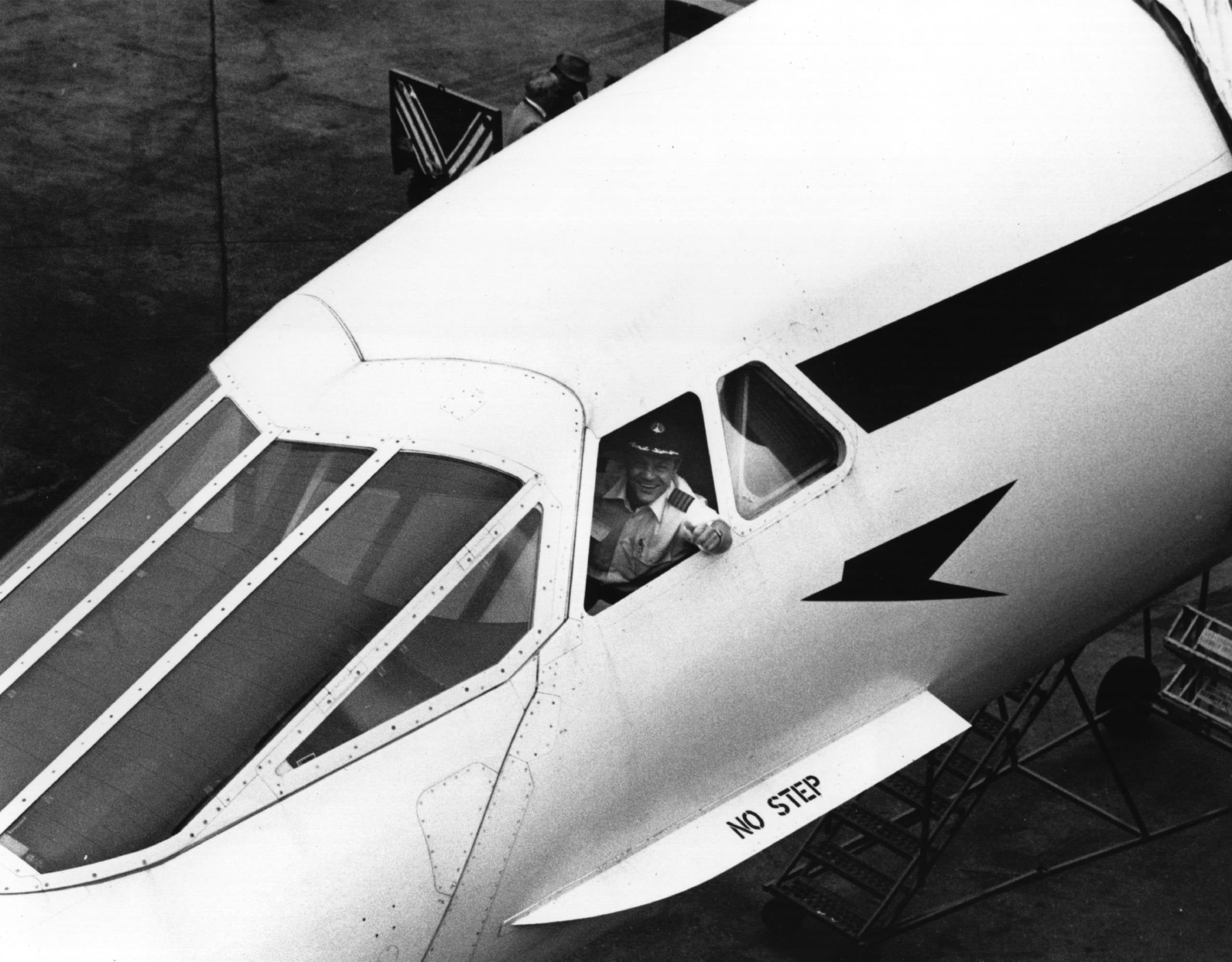
The path to becoming an airline captain starts on the first day of flight school. Every flight, every simulator session and every event that happens along the way builds the skills that a first officer needs to become a captain.
All good first officers will view each flight as if they were the captain. How would they react in the same situation if they were they sat in the left hand seat? What would they have done differently? What can they learn from the situation?
All these experiences along the road to command are like Lego blocks, giving the pilot the bricks they require to build themselves into a safe and confident captain. When the aircraft door closes, the airline is trusting the captain with $250 million worth of assets and hundreds of lives. When you're sat in the left hand seat, there's no place to hide.
The type conversion
When a captain's position becomes available in an airline, it may not always be on the aircraft type which the pilot is already flying. Most large airlines operate a number of different aircraft types. Depending on the promotions system within the company, a pilot may have to learn to fly a new type of aircraft as part of the command upgrade.
Some airlines operate a system where the command is only available on the fleet that the pilot is currently flying. Others, which fly both long- and short-haul aircraft, require a pilot to take their first command on the short-haul fleet.
If a pilot must change types for their command, the workload is, in effect, doubled. Not only must they learn the skills of being a captain, but they must also pass the licensing test to fly the new aircraft type. It's no wonder that this is the most demanding part of any pilot's career.

With the simulator phase of the type conversion completed, the training moves onto the aircraft. This stage takes place on normal flights under the guidance and supervision of a training captain.
The trainee will sit in the captain's seat on the left hand side of the flight deck and the training captain will sit in the right-hand seat. If you were to glance into the flight deck during boarding, this is one of the few times when you would see a pilot with three stripes sitting in the left hand seat and one with four stripes in the right-hand seat.
Getting comfortable
This stage of training is very much focused on the prospective captain being comfortable in the left hand seat of their new aircraft type -- just like any other type conversion. The obvious difference is that they are now flying with the other hand. In the right-hand seat, pilots use their right hand on the control column or side stick, whereas when they switch seats, this changes.

People often think that this is the biggest problem, but you'd be surprised at just how quickly the same manual flying skills transfer to the other hand. In fact, for those pilots coming from a long-haul fleet, they will most likely have had experience sitting in the other seat already. As part of a three-pilot crew on longer flights, when the captain is on their beak, one of the co-pilots will sit in the left hand seat. They will also have had the experience of flying non-normal maneuvers such as emergency descents from the left hand seat in the simulator.
Strangely, what is actually the most difficult aspect of sitting in the other seat is locating the buttons and switches, which have become second nature when sitting in the right-hand seat. Very much like when someone changes the location of items in your kitchen cupboards, it initially takes some conscious thought to find your way around some of the panels.
Read more: Perfect landing: How pilots avoid colliding with the ground in tricky situations

Throughout this time, the training captain is still the legal commander of the aircraft and will handle most of the command decisions. If they feel that the trainee is dealing with the aircraft element well, they will encourage them to start making more of these decisions.
This phase of training takes around 12 flights, or sectors. If these flights are on a short-haul aircraft, they could be completed in a week. However, due to the nature of long-haul flying, it could take a couple of months to complete the 12 sectors. If the trainee needs longer, then more flights will be organized. Only when they are operating the aircraft proficiently will they proceed to the next stage of training.
Command training
When the trainee is comfortable operating the aircraft on a normal flight, it's time for them to switch roles. The training captain now becomes the "co-pilot" and the trainee starts to act as the captain. This enables the trainee to practice using the team skills which are needed to create a safe and efficient working environment but also to start to feel like the final responsibility belongs to them.
The training captain now has two parts to play. Whilst they remain the legal commander of the aircraft, they must also adopt the role of a competent co-pilot, but one who lacks any initiative to come up with ideas of their own.
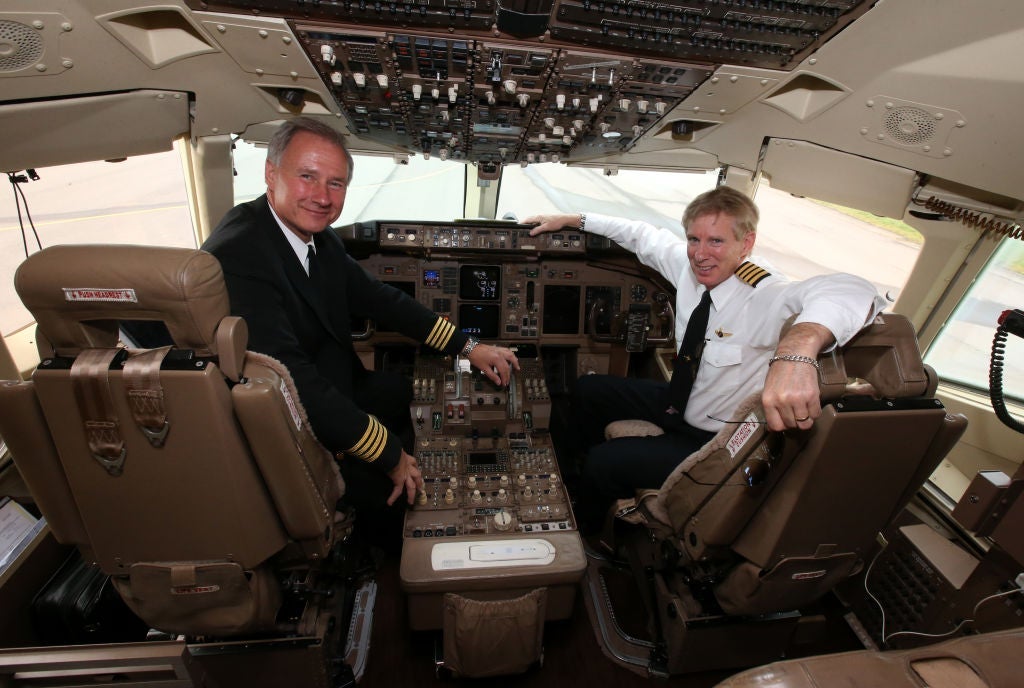
This "role play" will start from the moment the two pilots meet at the start of the day in the crew briefing center. The training captain will explain to the trainee how this stage of training will run and also how they will assume the role of co-pilot.
The trainee is expected to act as the captain in all aspects, using the "co-pilot" and any other people to facilitate their decision making. The training captain will try to take a metaphorical back seat as much as they can, allowing the trainee captain to run the show. This includes briefing the flight attendants, liaising with the ground staff at the gate and aircraft and making the welcome onboard announcement to the passengers.
During a normal flight, there will always be a number of problems that require solving. These are rarely major technical problems with the aircraft, but the day-to-day issues all pilots face. Passengers being late to the gate, bags not being loaded on time and ATC delays are all problems the trainee will have seen when flying as a first officer. As a result, they will have developed the skills needed to solve these issues. All that is needed is the confidence to put these skills to use.
Not only does this enable the trainee to develop their captain skills, but it also allows them to be assessed on the quality of their operation. If the trainer is too forthcoming with ideas and solutions for problems, it may mask the problem-solving abilities of the trainee.
The trainee is also given the responsibility for the legal flight paperwork including the loadsheet, NOTOC and the aircraft technical log. Whilst the training captain remains the legal commander of the aircraft and thus must sign the documents, the trainee still has a role.
Read more: Can you hear me now: How pilots communicate with ATC while 35,000 feet in the air

They must check and complete all relevant elements before passing them over to be signed. It is then the trainee's responsibility to ensure that the correct parts are handed over to the ground staff before the aircraft door is closed.
As there are normally many ways to solve a problem, the trainer will allow the flight to develop with the decisions made by the trainee unless there is an obvious risk to flight safety. This provides discussion points at the end of flight debrief from which the trainee can learn and build on.
At the end of this stage of training, the prospective captain should be running the whole operation as if they are the captain. They should be looking to the "co-pilot" for their advice and input as per a normal flight, but have the confidence and ability to make decisions in a timely manner.
It should take the trainee around 10 sectors to get to this stage. However, as with all stages of training, if more sectors are required to reach the standard, then these will be arranged. Once the training captain is happy with the trainee's progress, they will proceed to the final stage of training.
Route check practice
Before the trainee is put forward for their final command assessment, they undertake a number of sectors to prepare them for the final check. A part of this stage, the training captain operates just like a regular co-pilot would, without the training input they would have been offering till this point.
As a result, the atmosphere in the flight deck can be a little quieter than it has been, adding to the sense of pressure.
The trainer will continue to operate as a competent co-pilot but will not offer any thoughts or input of their own unless asked by the trainee captain. It's a chance for the trainer to see if the trainee has the awareness and attention to detail to pick up any errors on their own.
For example, a coding error in the flight management computer may have the aircraft high on the approach or the trainee may be planning to land on a runway which the trainer knows is not normally used for landing. Neither of these is an issue that can't be solved safely before landing but gives the trainer an idea of how well the trainee is controlling the flight on their own.
The trainee isn't expected to know everything but they are expected to use the resources available to them to resolve any uncertainty. For example, asking the co-pilot, "Are you familiar with this airport? Do you know which runway they tend to use for landing?" is a perfectly acceptable thing to do. In fact, it's the kind of question that a good crew should be asking each other.
This stage of training should take around six sectors and when the trainer is satisfied with the trainee's performance, they will put them forward for the final route check.
The final route check
The final check is the culmination of the last few months of intensive work, the last step between the trainee and that coveted fourth stripe. The check is assessed by a senior training captain who sits in the flight deck jump-seat and another training captain who plays the part of the co-pilot.
Once again, the trainer in the right-hand seat will perform as a competent co-pilot but offer no thoughts or advice unless the trainee seeks their opinion -- very much like the training stage. The check normally takes place over two sectors to enable an assessment of all areas of the trainee's operation.
The trainee is assessed right from the start of duty when briefing in the crew briefing center, all the way to leaving the aircraft at the end of the trip. Only then will they be informed of the outcome of the check.
Read more: How pilots adapt their takeoff plans at hot and high airports

If the senior training captain is happy that the trainee has met all the criteria required of them and shown that they can operate a flight in a safe and commercially aware manner, they will pass the check flight.
This is obviously one of the most exciting moments of a pilot's career. Many senior training captains will present the new captain with their four stripe epaulets on the spot, enabling them to walk out of the flight deck to the congratulations of the flight attendants.
Some will even make an announcement to the passengers as they are disembarking to share the good news with them, allowing the new captain to receive their congratulations at the door. There will never be smiles as wide as those again in their career!
What if they fail?
When the captain has such massive responsibility, airlines need to make sure that they are up to the job. As a result, not everyone passes their command check first time around. If they do fail, the first thing that the trainers do is to explain why they failed.
After this, it is up to the training department to put together a package of remedial training to address the areas of operation which were substandard. With this training completed, the trainee will be put forward for another final route check. Depending on the airline, if they fail this again, they may have to wait a number of years before they can try again.
Bottom line
Being the captain of an aircraft comes with great responsibility. When you're seven miles above the Atlantic Ocean in the middle of the night, the buck stops with you. As a result, airlines need to ensure that they are bestowing such a weight on the shoulders of someone who is up to the job.
TPG featured card

at Capital One's secure site
Terms & restrictions apply. See rates & fees.
| 5X miles | Earn 5X miles on hotels, vacation rentals and rental cars booked through Capital One Travel |
| 2X miles | Earn unlimited 2X miles on every purchase, every day |
Pros
- Stellar welcome offer of 75,000 miles after spending $4,000 on purchases in the first three months from account opening. Plus, a $250 Capital One Travel credit to use in your first cardholder year upon account opening.
- You'll earn 2 miles per dollar on every purchase, which means you won't have to worry about memorizing bonus categories
- Rewards are versatile and can be redeemed for a statement credit or transferred to Capital One’s transfer partners
Cons
- Highest bonus-earning categories only on travel booked via Capital One Travel
- LIMITED-TIME OFFER: Enjoy $250 to use on Capital One Travel in your first cardholder year, plus earn 75,000 bonus miles once you spend $4,000 on purchases within the first 3 months from account opening - that’s equal to $1,000 in travel
- Earn unlimited 2X miles on every purchase, every day
- Earn 5X miles on hotels, vacation rentals and rental cars booked through Capital One Travel
- Miles won't expire for the life of the account and there's no limit to how many you can earn
- Receive up to a $120 credit for Global Entry or TSA PreCheck®
- Use your miles to get reimbursed for any travel purchase—or redeem by booking a trip through Capital One Travel
- Enjoy a $50 experience credit and other premium benefits with every hotel and vacation rental booked from the Lifestyle Collection
- Transfer your miles to your choice of 15+ travel loyalty programs
- Top rated mobile app