Cabin pressure: How pilots avoid disaster in the cockpit

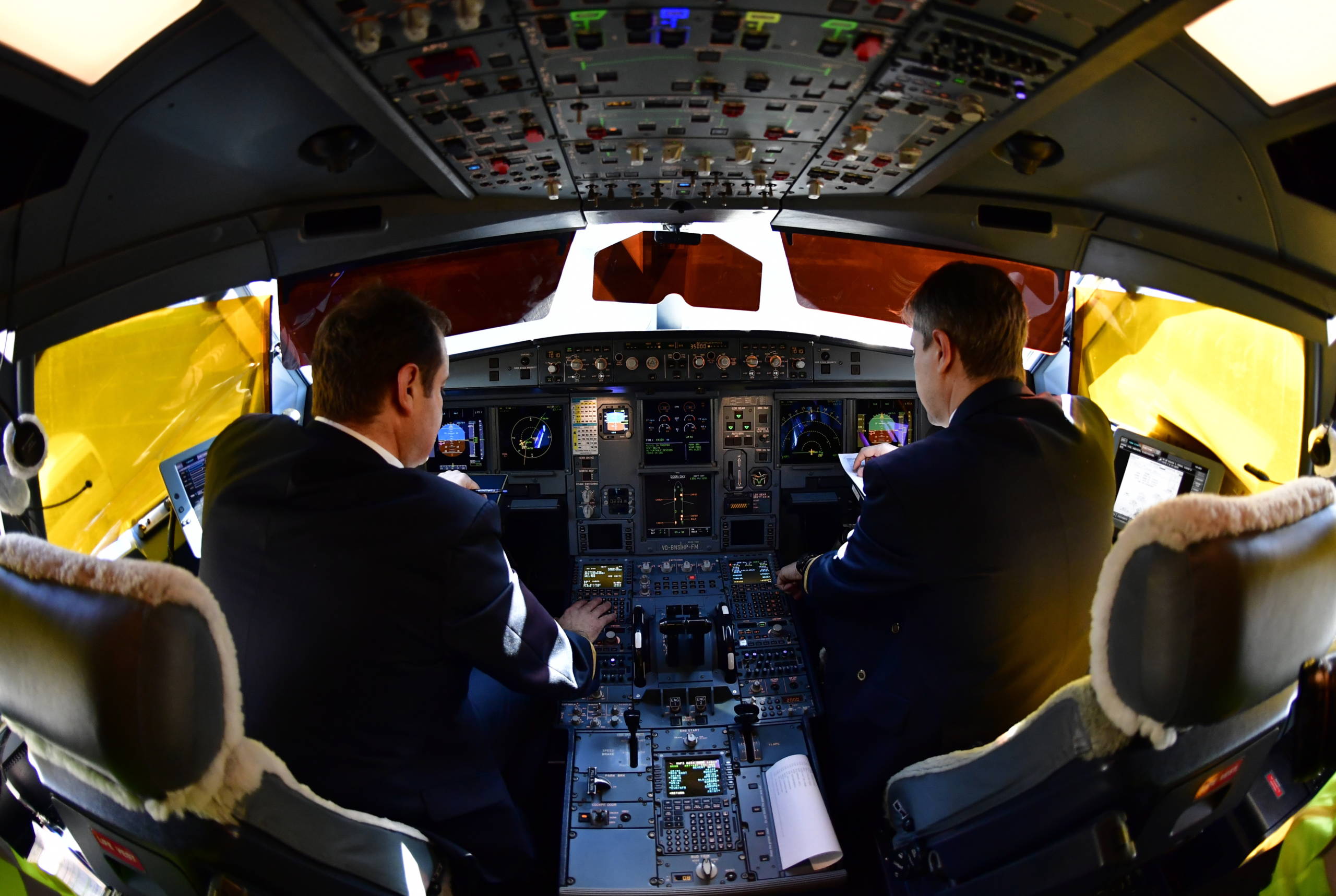
Being overloaded makes humans do funny things. Our focus narrows on the task at hand, tunnel vision sets in and it becomes difficult to notice other things. Our brain shuts out other senses and our hearing is the first to go.
Have you been driving your car on the motorway in heavy rain, only to realize minutes later that your indicator was flashing away? In hindsight, it was obvious that it was still flashing, but due to being so focused on the road ahead, you missed this obvious sign.
Pilots are not immune to these human reactions. We, too, suffer from the same physiological responses with the onset of stress. However, as part of our training, we are made acutely aware of the dangers and learn to process to deal with them.
Staying ahead of the aircraft
Flying an aircraft is a dynamic environment. When you're moving forward at a minimum of 2.5 miles a minute, situations unfold quickly. Unlike when driving a car, there is no option for us to just pull over and take a break.
As a result, we must always be "ahead of the aircraft," predicting what is about to happen and being proactive in developing a scenario rather than being reactive. To enable us to do this and deliver our passengers safely to their destination, our training teaching us to manage our workload effectively.
Read more: Your next flight could be a pilot's final test before making captain
The higher the workload, the more overloaded we become and thus have less capacity to notice other things going on around us — just like in the video above. Therefore, the primary objective of a good crew is to manage their workload to keep it at an absolute minimum.
Approach brief
Managing the workload during the approach and landing starts back in the calm of the cruise. Before starting the descent, pilots will always carry out a briefing between themselves. As part of this, we discuss what we expect to do from starting our descent, all the way up to parking on the gate.
However, verbalizing what we expect to do is only half of the story. The most important part is how we plan to do this.

When flying an aircraft like the 787 Dreamliner, there are often a number of ways to do the same thing. For example, when descending the aircraft to a lower altitude there are three methods we can use.
The first, and most commonly used autopilot mode is VNAV or vertical navigation. When flying a descent in VNAV, the autopilot will fly the profile as defined by the pilots in the flight management computer (FMC). Certain navigation points will have altitude restrictions and VNAV will ensure that these are met. When flying in VNAV, the rate of descent will vary to match the descent profile. This is particularly useful when flying into somewhere like Los Angeles.

If there are no altitude restrictions on the descent and we want to descend quickly, the use of flight level change (FLCH) mode is a better option than VNAV. This autopilot mode brings the engine power near to idle and allows the aircraft to descend at the speed determined by the pilots.
However, certain arrivals, like into London Heathrow, normally require aircraft to enter a holding pattern before starting the final approach. At this stage, with aircraft sitting just 1,000 feet above each other in the stack, a much slower rate of descent is preferred. To do this, we use the vertical speed (V/S) mode.
All three modes are acceptable ways of flying the aircraft, however, one may be more appropriate than the others in a certain situation. By verbalizing which method we plan to use, the other pilots know what to expect. Any unannounced change from this plan is a good indication that the workload has increased and the pilot may be in danger of being overloaded.
Identifying threats
Not only does the brief give us an opportunity to talk about what we expect to do and how we will fly the aircraft, but it also enables us to identify any threats, reducing our workload later in the approach.
Elements such as terrain, thunderstorms, tail winds and other aircraft can all ramp up the workload in an instant should the crew be unprepared. Therefore, to ensure that we are not caught out, we will discuss how any of these will be a factor for our arrival.
However, it's not just a matter of saying "the wind at the destination could change direction."
Whilst this identifies the threat, it does nothing to help reduce the workload. Threat analysis comes in three levels and is known as NUTA -- notice, understand and think ahead.
Notice
The notice level is the most basic level of threat analysis. Using the example above, a pilot sees on the weather report that the wind could change direction. This is all well and good to have noticed this fact, but so what? What does this actually mean for how it will impact the approach?
Operating at the notice level doesn't help reduce the workload. It merely identifies a fact which needs developing.
Read more: Perfect landing: How pilots avoid colliding with the ground in tricky situations
Understand
The understand stage takes the observation and turns it into something that the crew can use to their advantage. Continuing the example from above, as the wind could change direction, it might mean that the runway in use for landing could change. This is because it's preferable for aircraft to land into the wind.
This has developed from the basic notice level into something which is of better use to the crew. They now understand how this change in wind direction could impact the arrival. While this is certainly a better level to operate at, it still won't keep the workload to a minimum later in the flight.
For a normal descent, approach and landing, we normally fly a 3-degree path meaning that we require three miles of horizontal distance for every 1,000 feet of height we need to lose. When approaching the airport, a last-minute change of runway could result in fewer miles to touchdown, leaving us high on the approach path.
What's needed is proactive thinking as opposed to reactive thinking. This comes from the top level of situational awareness. To truly understand the meaning of a particular threat, we must be operating at the think ahead level.
Think ahead
In order to keep the workload to a minimum, a good crew will take the information from the understand level and think ahead to see how they can stop this from becoming a problem before it happens.
If we know that the runway in use may change, we may plan to start the descent a littler earlier and fly slightly below the planned descent path, terrain permitting. Even better, we may also discuss the approach to the other runway during the approach brief.
As a result, if the runway in use does indeed change, not only will we already be on the descent profile for the new runway, we will also have discussed how we will fly the new approach. The end result is a much lower workload giving us greater capacity to keep an eye on other things.
Make time for yourself
Time management is another key skill to being a good pilot. Effective use of time can mean the difference between a calm, relaxed flight deck and a stressed, overloaded flight deck. Ultimately, how time is utilized is down to the crew.
The most obvious limitation on time available to a crew is the fuel remaining in the tanks. However, this is rarely an issue due to the extra fuel that we carry on every flight. What tends to cause the most issues is the notion of perceived time.

Take, for example, our approach to a single runway airport as above. As mentioned, we always try to take off and land into wind as it helps with the performance of the aircraft. This is particularly important on landing as a tail wind greatly increased the amount of runway required to stop safely.
If a crew is operating at the think ahead level in anticipation of the runway change, they may already be flying a decent profile in preparation for the change. However, even if they are not, there are still options available to them.
When notified of a runway change when already in the descent, the workload in the flight deck immediately increases. If you were to be sat in the jump seat watching the crew, you'd be able to sense the heightened alert level.
The crew need to shift their mental model from the original plan onto a new one. They have to be adaptable to the dynamic situation. This is exactly why a good crew will talk through this possibility in the calm of the approach brief.
Increasing workload
However, even if they didn't do this, it's not the end of the world. The key here is to make time for themselves. It will take an experienced crew a couple of minutes to reprogram the FMC and check that all the information is correct. They will then need to rebrief the new approach, making sure that the pertinent information is covered.
During this time, one pilot must always be flying the aircraft. They must ensure that they are complying with ATC instructions whilst keeping the aircraft clear of any terrain. Any distraction from this task could be catastrophic for the flight.

Briefing for the new approach whilst flying a descent requires extra attention. The greater the workload, the harder it becomes to process other important information. Tunnel vision sets in. Radio calls are missed and frequencies are miss-identified. If the pilot flying the aircraft is so focused on that job, they may miss things which are being mentioned by the other pilot as part of the brief.
Very quickly, a scenario which could have been avoided by operating at the think ahead level in the cruise is resulting in confusion between the pilots and the aircraft getting high and fast on the approach.
As the workload increases, the stress increases. Instead of the pilots being ahead of the aircraft, the aircraft is now ahead of them. The crew perceive that time is being compressed. A dangerous situation is developing.
Slow it down
This kind of situation requires calm and clear thinking by the crew to be able to make time. The obvious thing to do from the moment of being advised of the runway change is to slow down. The slower you fly, the more time you create for yourself. This is quite often enough to reduce the stress and do all the tasks required.
If slowing down still doesn't create enough time, there is one final option. A good approach brief will have discussed how much spare fuel the crew has available. With that in mind, if they still feel rushed and not ready to start the approach, the crew can request to take up a holding pattern.
Here, they can go round in circles for as long as they need (or have fuel) whilst they set up for the new approach in a calm and relaxed fashion. Once they feel ready, they can start the approach. Yes, this takes time and may result in a delay, but delivering the passengers safely to their destination takes priority over punctuality.
Stable approach procedure
Finding yourself high and fast on an approach is never a comfortable position to be in. The more your attention goes to getting the aircraft down, the less you notice elsewhere in the flight deck.
If a crew have not taken advantage of any of the options available to them mentioned above, the closer they get to the ground, the more overworked and stressed they will become.
However, there is one final procedure most airlines mandate, designed to save a crew from disaster -- the stable approach procedure.

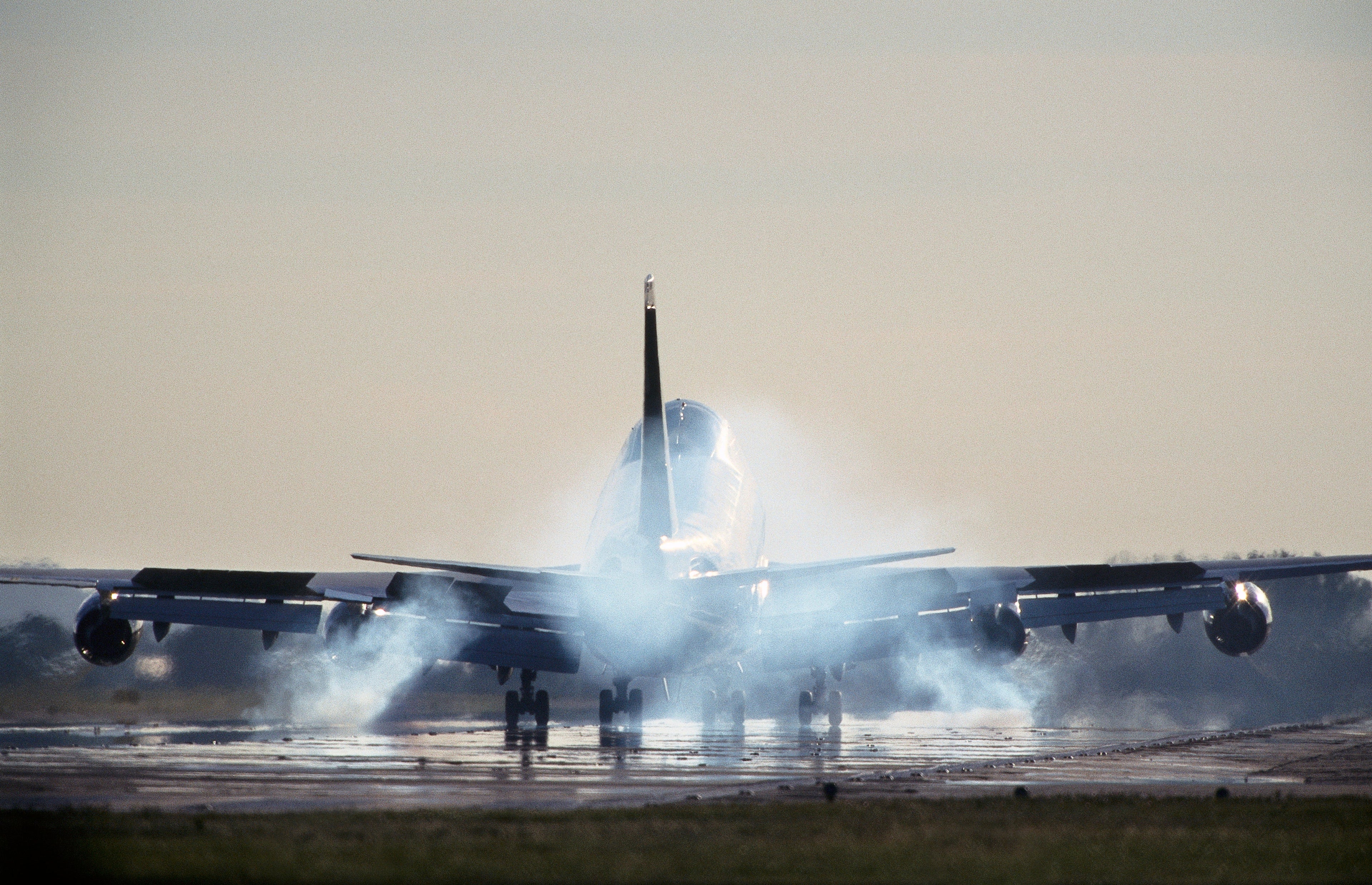
When the aircraft descends through 1,000 feet above the ground, all the pilots in the flight deck must confirm that the aircraft has met certain parameters for landing. The aircraft must be at or close to its final approach speed, on the correct vertical profile and in the landing configuration (landing gear down and landing flap set).
If these criteria have been satisfied, the aircraft is declared as "stable" and may continue the approach to land. If any of these have not been met, the aircraft is "unstable"' and a go-round must be flown. Not only must these parameters be met at the 1,000-foot point, they must also be maintained all the way to touch down. If not, a go-round must be flown. It is the crew who have the responsibility to ensure that this procedure is adhered to.
The thinking behind the stable approach policy is that if a crew reach 1,000 feet and haven't fulfilled the criteria, chances are that they have ended up in this situation because they are overloaded. If they are so overloaded that they were still high and fast, what else might they have missed? What other switches and aircraft systems may be in the incorrect configuration for landing?
Bottom line
As a result, the stable approach procedure is a final safety net to catch an overloaded crew. It gives them a final opportunity to break off from the approach before a potential disaster occurs. Most airlines will never question their crew if they performed a go-round if they were unstable. However, a crew will find themselves in trouble if they continue to land off an unstable approach.
Pilots and the procedures set out by their airlines are there to ensure that passengers are flown to their destination as safely as possible. By identifying the main threats to an arrival and coming up with a plan on how to deal with them in advance keeps our workload to a minimum. Even if the workload does ramp up, there are procedures in place to help catch errors in the system.
TPG featured card

at American Express's secure site
Terms & restrictions apply. See rates & fees.
| 4X | Earn 4X Membership Rewards® points per dollar spent on purchases at restaurants worldwide, on up to $50,000 in purchases per calendar year, then 1X points for the rest of the year. |
| 4X | Earn 4X Membership Rewards® points per dollar spent at US supermarkets, on up to $25,000 in purchases per calendar year, then 1X points for the rest of the year. |
| 5X | Earn 5X Membership Rewards® points on prepaid hotel stays booked through AmexTravel.com or the Amex Travel App™. |
| 3X | Earn 3X Membership Rewards® points on flights booked through AmexTravel.com, the Amex Travel App™, or purchased directly from airlines. |
| 2X | Earn 2X Membership Rewards® points on prepaid car rentals booked through AmexTravel.com or the Amex Travel App™ and cruises booked and paid through AmexTravel.com. |
| 1X | Earn 1X Membership Rewards® point per dollar spent on all other eligible purchases. |
Pros
- Valuable dining and food-related credits
- Flexible rewards with airline and hotel transfer partners
- Multiple travel and purchase protections
- No foreign transaction fees
- Access to Amex Offers for additional savings (enrollment required)
Cons
- Not as useful for those living outside the U.S.
- Some may have trouble using Uber and other dining credits
- You may be eligible for as high as 100,000 Membership Rewards® Points after you spend $8,000 in eligible purchases on your new Card in your first 6 months of Card Membership. Welcome offers vary and you may not be eligible for an offer. Apply to know if you’re approved and find out your exact welcome offer amount – all with no credit score impact. If you’re approved and choose to accept the Card, your score may be impacted.
- Earn 4X Membership Rewards® points per dollar spent on purchases at restaurants worldwide, on up to $50,000 in purchases per calendar year, then 1X points for the rest of the year.
- Earn 4X Membership Rewards® points per dollar spent at US supermarkets, on up to $25,000 in purchases per calendar year, then 1X points for the rest of the year.
- Earn 5X Membership Rewards® points on prepaid hotel stays booked through AmexTravel.com or the Amex Travel App™.
- Earn 3X Membership Rewards® points on flights booked through AmexTravel.com, the Amex Travel App™, or purchased directly from airlines.
- Earn 2X Membership Rewards® points on prepaid car rentals booked through AmexTravel.com or the Amex Travel App™ and cruises booked and paid through AmexTravel.com.
- Earn 1X Membership Rewards® point per dollar spent on all other eligible purchases.
- Pay It® lets you tap in the American Express® App to quickly pay for small purchase amounts throughout the month and still earn rewards the way you usually do. Plan It® gives you the option to split up big purchases into equal monthly payments with a fixed fee. You’ll know upfront exactly how much you’ll pay.
- $120 Dining Credit: Earn up to a total of $10 in statement credits monthly when you pay with the Gold Card at Grubhub (including Seamless), Buffalo Wild Wings, Five Guys, The Cheesecake Factory, and Wonder. This can be an annual savings of up to $120. Enrollment required.
- $100 Resy Credit: Get up to $100 in statement credits each calendar year at over 10,000 qualifying U.S. Resy restaurants after you pay for eligible purchases with the American Express® Gold Card. That’s up to $50 in statement credits semi-annually. Enrollment required.
- $84 Dunkin' Credit: Earn up to $7 in monthly statement credits after you pay with the American Express® Gold Card at U.S. Dunkin’ locations. Enrollment required.
- $120 Uber Cash on Gold: Enjoy up to $120 in Uber Cash annually with your Gold Card. Just add your Card to your Uber account and you'll get $10 in Uber Cash each month to use on orders and rides in the U.S. when you select an Amex Card for your transaction.
- Enjoy complimentary Hertz Five Star® Status benefits like skipping the counter at select locations, adding an additional driver at no additional cost*, and vehicle upgrades**. Benefit enrollment and Hertz Gold+ registration are required. *Additional drivers must meet standard rental qualifications and must be a spouse or domestic partner to qualify as complimentary. Other additional drivers subject to fees. **Benefits are subject to availability and vary by location. Additional Hertz program Terms and Conditions including age restrictions apply.
- Book two nights or more with The Hotel Collection through AmexTravel.com or the Amex Travel App™ and receive a $100* credit towards eligible charges at over 1,400 upscale hotels worldwide. *Eligible charges vary by property.
- Book your travel through the Amex Travel App™ with added peace of mind – backed by American Express® service and support. Only for American Express® Card Members.
- Whenever you need us, we're here. Our Member Services team will ensure you are taken care of. From lost Card replacement to statement questions, we are available to help 24/7.
- No Foreign Transaction Fees.
- Annual Fee is $325.
- Terms Apply.