JetBlue set to buy Spirit Airlines in a previously unlikely marriage

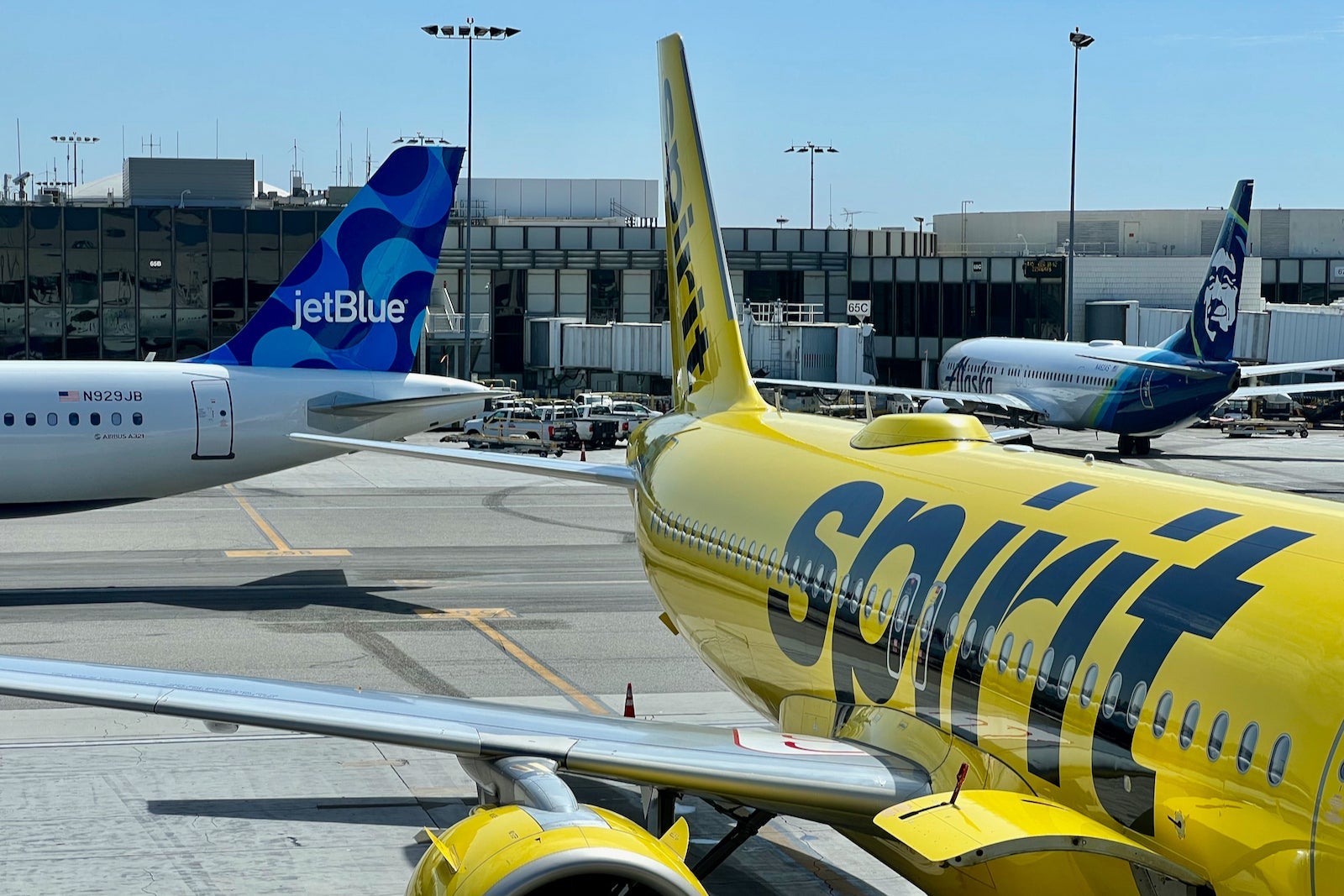
Out with Frontier, in with JetBlue.
JetBlue has reached a deal to acquire Spirit Airlines, a stunning reversal that now has JetBlue in the driver's seat to take over the Florida-based budget carrier.
Just weeks ago, Spirit appeared likely to merge with fellow ultra-low-cost carrier Frontier Airlines. But a deal between those two carriers was officially terminated Wednesday, paving the way for JetBlue's acquisition that was announced early this morning.
The agreement seems to end an unlikely bidding war for Spirit that surprised the industry and left casual observers wondering how Spirit had suddenly become such a hot commodity.
Spirit first agreed to merge with Frontier in February, but JetBlue made its own bid in April — kicking off months of back-and-forth wrangling for Spirit that eventually saw JetBlue's bid turn hostile. But Spirit's shareholders never warmed to the deal, which lost momentum and officially fell apart as it seemed certain to be voted down.
By the numbers: A snapshot of the merger between JetBlue and Spirit
The latest deal with JetBlue, valued at about $3.8 billion, would have the New York-based carrier pay $33.50 a share in cash for its acquisition of Spirit and its fleet of yellow Airbus jets.
With a tie-up now being welcomed by Spirit, JetBlue CEO Robin Hayes touted the deal, which would create the nation's fifth-biggest airline after American, Delta, United and Southwest.
- Spirit terminates Frontier merger deal, paving way for possible JetBlue acquisition
- JetBlue vs Frontier: Who will win the battle over Spirit and why does it matter?
- 3 reasons JetBlue's bid for Spirit could raise red flags for regulators
- JetBlue makes yet another offer for Spirit — but this time is different

The merger, Hayes said, would create a "compelling combination that turbocharges our strategic growth."
Still, the proposal is expected to face substantial headwinds in Washington, where regulators may not be as enthusiastic about the tie-up as JetBlue's CEO.
A Frontier-Spirit deal would have brought together two ultra-low-cost carriers with complimentary route networks and similar operating models and fleets. In the process, it would have created a budget behemoth that could have challenged the four biggest U.S. airlines, which — combined — control about 80% of the domestic U.S. market.
A Spirit merger with JetBlue, however, would bring two together airlines with disparate business models and passenger experiences. JetBlue likes to bill itself as something of a "boutique" carrier, positioned between budget airlines and the big full-service carriers. It has the highest average legroom in coach among U.S. carriers, and offers free seatback entertainment and inflight Wi-Fi. Spirit, on the other hand, is a true no-frills carrier, charging cheap base fares but tacking on fees for everything beyond boarding the plane.
The two share a common fleet type — but little else. Despite that, Hayes spoke optimistically of bringing the two airlines together and of how the combined carrier could compete nationally.
"We look forward to welcoming Spirit's outstanding Team Members to JetBlue and together creating a customer-centric, fifth-largest carrier in the United States," Hayes said in the statement announcing the merger agreement. "Spirit and JetBlue will continue to advance our shared goal of disrupting the industry to bring down fares from the Big Four airlines."
Now, JetBlue will have to convince regulators that its vision of a merged airline is in the public interest.
It's widely thought that the Justice Department might have looked more favorably at a Frontier-Spirit merger, which would have continued to operate under a model promising rock-bottom fares and lots of (tightly packed) seats per plane.
JetBlue's bid, however, calls for retrofitting Spirit's planes into its own less-dense configuration by removing seats and adding perks. JetBlue's fares, on average, are also higher than Spirit's.
That means to approve the deal, competition regulators would have to swallow the idea that removing seats from a true budget airline to make way for a bigger — and likely more expensive — JetBlue would be a net win for consumers.
For now, Spirit and JetBlue will continue to operate separately as they get ready to make their case in Washington.
If approved, the combined carrier would be led by Hayes and remain headquartered in New York under the JetBlue brand. Spirit's brand would eventually disappear.
TPG featured card
at American Express's secure site
Terms & restrictions apply. See rates & fees.
| 4X | Earn 4X Membership Rewards® points per dollar spent on purchases at restaurants worldwide, on up to $50,000 in purchases per calendar year, then 1X points for the rest of the year. |
| 4X | Earn 4X Membership Rewards® points per dollar spent at US supermarkets, on up to $25,000 in purchases per calendar year, then 1X points for the rest of the year. |
| 5X | Earn 5X Membership Rewards® points on prepaid hotel stays booked through AmexTravel.com or the Amex Travel App™. |
| 3X | Earn 3X Membership Rewards® points on flights booked through AmexTravel.com, the Amex Travel App™, or purchased directly from airlines. |
| 2X | Earn 2X Membership Rewards® points on prepaid car rentals booked through AmexTravel.com or the Amex Travel App™ and cruises booked and paid through AmexTravel.com. |
| 1X | Earn 1X Membership Rewards® point per dollar spent on all other eligible purchases. |
Pros
- Valuable dining and food-related credits
- Flexible rewards with airline and hotel transfer partners
- Multiple travel and purchase protections
- No foreign transaction fees
- Access to Amex Offers for additional savings (enrollment required)
Cons
- Not as useful for those living outside the U.S.
- Some may have trouble using Uber and other dining credits
- You may be eligible for as high as 100,000 Membership Rewards® Points after you spend $8,000 in eligible purchases on your new Card in your first 6 months of Card Membership. Welcome offers vary and you may not be eligible for an offer. Apply to know if you’re approved and find out your exact welcome offer amount – all with no credit score impact. If you’re approved and choose to accept the Card, your score may be impacted.
- Earn 4X Membership Rewards® points per dollar spent on purchases at restaurants worldwide, on up to $50,000 in purchases per calendar year, then 1X points for the rest of the year.
- Earn 4X Membership Rewards® points per dollar spent at US supermarkets, on up to $25,000 in purchases per calendar year, then 1X points for the rest of the year.
- Earn 5X Membership Rewards® points on prepaid hotel stays booked through AmexTravel.com or the Amex Travel App™.
- Earn 3X Membership Rewards® points on flights booked through AmexTravel.com, the Amex Travel App™, or purchased directly from airlines.
- Earn 2X Membership Rewards® points on prepaid car rentals booked through AmexTravel.com or the Amex Travel App™ and cruises booked and paid through AmexTravel.com.
- Earn 1X Membership Rewards® point per dollar spent on all other eligible purchases.
- Pay It® lets you tap in the American Express® App to quickly pay for small purchase amounts throughout the month and still earn rewards the way you usually do. Plan It® gives you the option to split up big purchases into equal monthly payments with a fixed fee. You’ll know upfront exactly how much you’ll pay.
- $120 Dining Credit: Earn up to a total of $10 in statement credits monthly when you pay with the Gold Card at Grubhub (including Seamless), Buffalo Wild Wings, Five Guys, The Cheesecake Factory, and Wonder. This can be an annual savings of up to $120. Enrollment required.
- $100 Resy Credit: Get up to $100 in statement credits each calendar year at over 10,000 qualifying U.S. Resy restaurants after you pay for eligible purchases with the American Express® Gold Card. That’s up to $50 in statement credits semi-annually. Enrollment required.
- $84 Dunkin' Credit: Earn up to $7 in monthly statement credits after you pay with the American Express® Gold Card at U.S. Dunkin’ locations. Enrollment required.
- $120 Uber Cash on Gold: Enjoy up to $120 in Uber Cash annually with your Gold Card. Just add your Card to your Uber account and you'll get $10 in Uber Cash each month to use on orders and rides in the U.S. when you select an Amex Card for your transaction.
- Enjoy complimentary Hertz Five Star® Status benefits like skipping the counter at select locations, adding an additional driver at no additional cost*, and vehicle upgrades**. Benefit enrollment and Hertz Gold+ registration are required. *Additional drivers must meet standard rental qualifications and must be a spouse or domestic partner to qualify as complimentary. Other additional drivers subject to fees. **Benefits are subject to availability and vary by location. Additional Hertz program Terms and Conditions including age restrictions apply.
- Book two nights or more with The Hotel Collection through AmexTravel.com or the Amex Travel App™ and receive a $100* credit towards eligible charges at over 1,400 upscale hotels worldwide. *Eligible charges vary by property.
- Book your travel through the Amex Travel App™ with added peace of mind – backed by American Express® service and support. Only for American Express® Card Members.
- Whenever you need us, we're here. Our Member Services team will ensure you are taken care of. From lost Card replacement to statement questions, we are available to help 24/7.
- No Foreign Transaction Fees.
- Annual Fee is $325.
- Terms Apply.