JetBlue-Spirit merger is officially dead

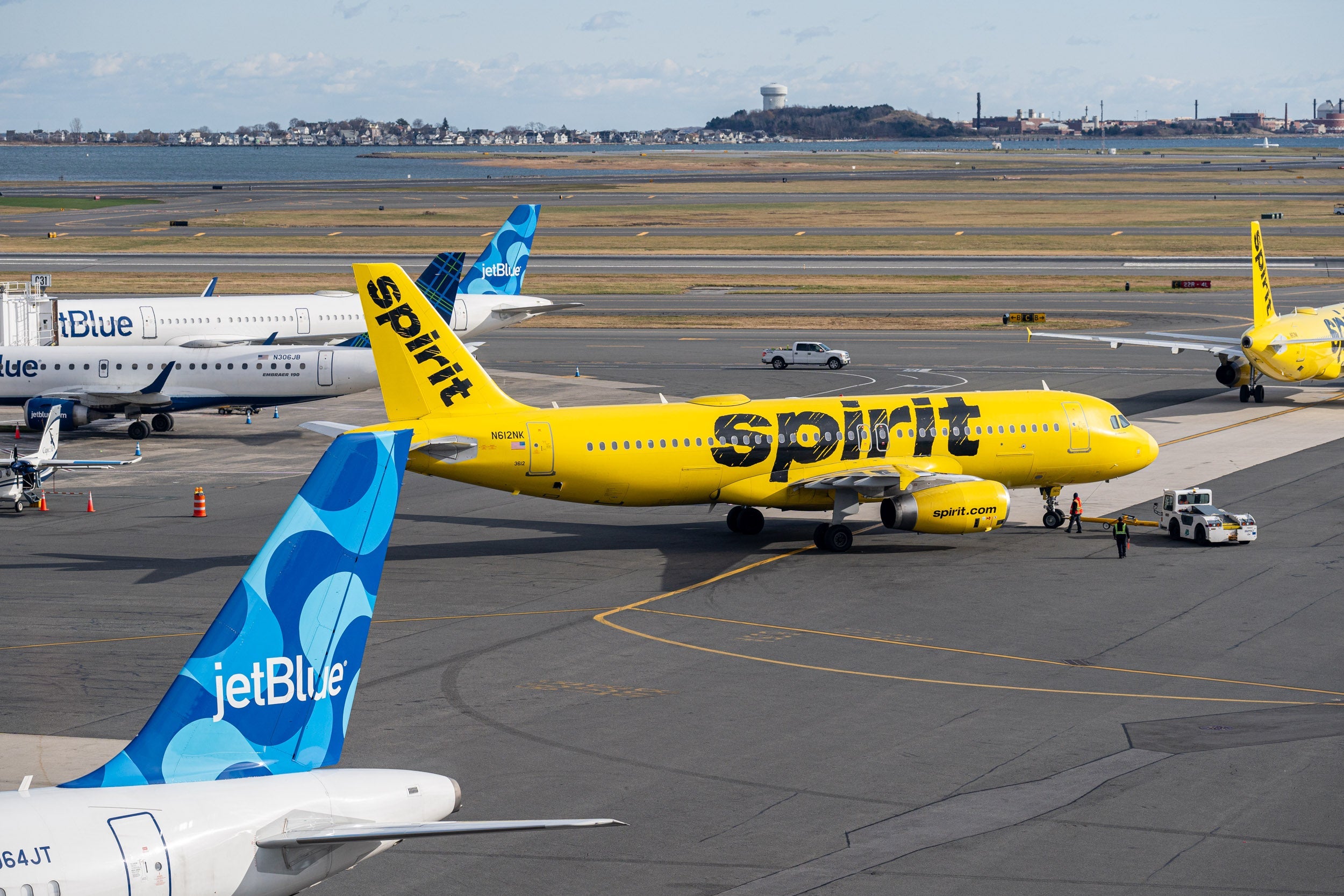
JetBlue said Monday that it had terminated its merger agreement with Spirit Airlines, putting an end to the $3.8 billion acquisition nearly seven weeks after it was blocked by a federal judge.
The two airlines reached an agreement to end the merger, they said, which involves JetBlue paying Spirit $69 million in breakup fees on top of the $425 million JetBlue has already prepaid to Spirit shareholders as part of the merger agreement.
Although the airlines previously said that they planned to appeal the court's order blocking the merger, they said Monday that they predicted that regulatory obstacles would prevent them from closing the merger by a July deadline.
"Even if the ruling was overturned on appeal, we simply don't see a path to regulatory approval by the required July 24 deadline," newly promoted JetBlue CEO Joanna Geraghty said in a memo to employees, which was viewed by TPG. "Additionally, the lingering uncertainty is distracting and taking our resources away from more pressing priorities — particularly our work to return to profitability and reinvigorate our brand and culture."
"With the Spirit merger behind us, we can fully dedicate ourselves to a standalone JetBlue," she added.
Even as JetBlue began the process to appeal the injunction, the airline found itself in an awkward situation: Although it was required to pursue the appeal under the terms of the merger agreement, the acquisition was increasingly beginning to look like a bad deal for the airline.
Since the merger deal was first struck last spring, Spirit's valuation has fallen significantly as the airline struggled to return from coronavirus pandemic lows and generate a profit. That meant that JetBlue was stuck buying Spirit at an inflated price of $3.8 billion, or $33.50 per share, even as share prices fell to around $15 just before the court's initial decision and less than $6 after.
Spirit's shares were down more than 12% at $5.75 per share by 9:45 a.m. on Monday.
JetBlue planned to absorb Spirit's aircraft and other assets, along with crew members, in order to supercharge its growth. During an antitrust trial in Boston last fall, which TPG covered from the courtroom, the airline argued that the merger would allow it to compete with bigger U.S. carriers.

Spirit, meanwhile, said during the trial that it was in a precarious financial position and could no longer compete effectively with its particular ultra-low-cost business model. Under the terms of the merger, JetBlue would have acquired Spirit and absorbed its assets under its own brand and operation.
The ultimate question at the heart of the trial boiled down to whether the risk of raising the lowest fares on some routes through Spirit's exit would be worth the potential to lower the average airfare across the broader market by putting more pressure on the major carriers.
Ultimately, Judge William G. Young of the U.S. District Court in Massachusetts found that it was not worth that risk.
Now, the question will be what happens to the two airlines.
JetBlue has outlined some details of a path toward growth and profitability, cutting costs and refocusing on various revenue initiatives while optimizing its network under Geraghty's new leadership.
Spirit, however, may face an existential threat as it continues to lose money. Analysts have noted that the airline is at risk of bankruptcy and potentially insolvency.
CEO Ted Christie vociferously pushed back against those suggestions during the airline's fourth-quarter earnings call, saying that the airline was raising capital and had plans to improve its cost structure and revenue.
"This misguided narrative has been advanced by an assortment of pundits," Christie said at the start of the call, during which Spirit reported a loss of $184 million for the quarter. "However, back in the real world, we are focused on facts."
It remains unclear, however, whether those changes will be enough. If Spirit were to become insolvent, it's possible that JetBlue — along with other competitors — could acquire Spirit's assets for significantly less expense than it would have incurred through the merger.
In a statement on Monday, Christie said that the airline was prepared to proceed on its own.
"Throughout the transaction process, given the regulatory uncertainty, we have always considered the possibility of continuing to operate as a standalone business and have been evaluating and implementing several initiatives that will enable us to bolster profitability and elevate the guest experience," Christie said.
"We remain confident in our future as a successful independent airline," he added.
TPG featured card

at Capital One's secure site
Terms & restrictions apply. See rates & fees.
| 5X miles | Earn 5X miles on hotels, vacation rentals and rental cars booked through Capital One Travel |
| 2X miles | Earn unlimited 2X miles on every purchase, every day |
Pros
- Stellar welcome offer of 75,000 miles after spending $4,000 on purchases in the first three months from account opening. Plus, a $250 Capital One Travel credit to use in your first cardholder year upon account opening.
- You'll earn 2 miles per dollar on every purchase, which means you won't have to worry about memorizing bonus categories
- Rewards are versatile and can be redeemed for a statement credit or transferred to Capital One’s transfer partners
Cons
- Highest bonus-earning categories only on travel booked via Capital One Travel
- LIMITED-TIME OFFER: Enjoy $250 to use on Capital One Travel in your first cardholder year, plus earn 75,000 bonus miles once you spend $4,000 on purchases within the first 3 months from account opening - that’s equal to $1,000 in travel
- Earn unlimited 2X miles on every purchase, every day
- Earn 5X miles on hotels, vacation rentals and rental cars booked through Capital One Travel
- Miles won't expire for the life of the account and there's no limit to how many you can earn
- Receive up to a $120 credit for Global Entry or TSA PreCheck®
- Use your miles to get reimbursed for any travel purchase—or redeem by booking a trip through Capital One Travel
- Enjoy a $50 experience credit and other premium benefits with every hotel and vacation rental booked from the Lifestyle Collection
- Transfer your miles to your choice of 15+ travel loyalty programs
- Top rated mobile app