Spirit saw Northeast Alliance as biggest threat to JetBlue merger, testimony reveals

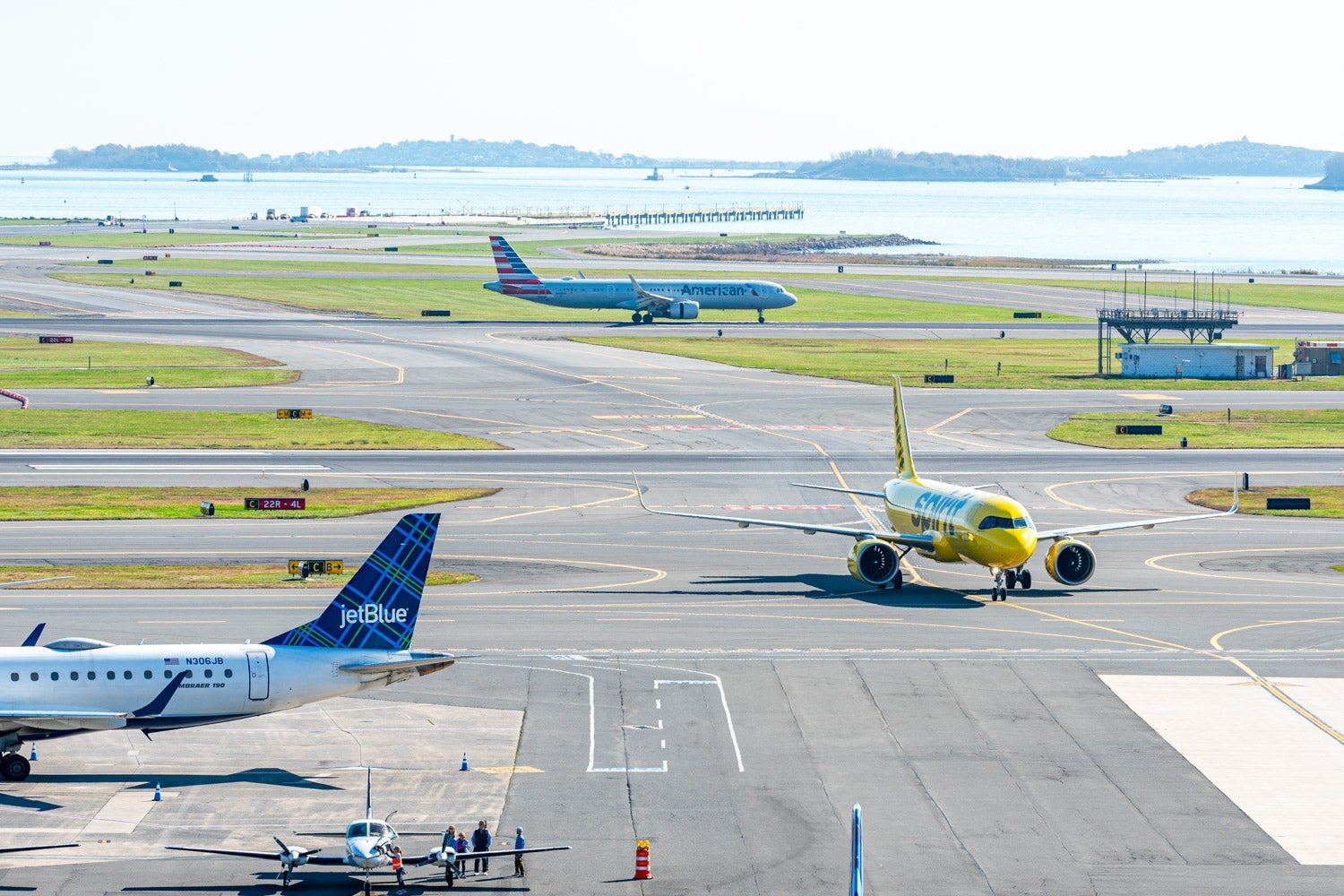
New details are coming to light surrounding Spirit Airlines' initial resistance to a merger offer from JetBlue Airways — and what led the ultra-low-cost carrier to change its mind and sign on with the New York-based JetBlue.
During an antitrust trial that began this week in Federal District Court in Boston, Spirit CEO Ted Christie testified about how and why the merger agreement came to pass.
Although Spirit had initially agreed to merge with ULCC competitor Frontier Airways, JetBlue made a compelling and unsolicited offer involving significantly more cash.
However, Spirit's board wasn't interested.
The board saw JetBlue's Northeast Alliance partnership with American Airlines as a major regulatory risk, one likely to kill any merger agreement that it might reach with JetBlue.
Even so, the board recognized that with some modifications, JetBlue's offer could trump Frontier's — a "superior proposal." This meant that under the terms of the existing agreement with Frontier, the board could begin engaging with JetBlue.
Spirit's board demanded a "come hell or high water clause," as Christie described it, before agreeing to consider JetBlue's offer.
Such a clause, according to Christie, would entail JetBlue agreeing to do virtually anything in its power to achieve regulatory approval for the Spirit deal, including abandoning the NEA if it appeared that both the alliance with American and the merger with Spirit could not both be approved by regulators.
JetBlue did not initially agree, prompting Spirit to urge shareholders to approve Frontier and reject JetBlue.

Although there were several rounds of counter-offers, two events convinced Spirit's board to move forward with JetBlue.
First, a shareholder vote appeared to be going against the Frontier merger. The board halted the vote before it was completed, anticipating the negative result.
Second, JetBlue submitted a final offer that included "an express obligation to litigate and to divest assets of JetBlue and Spirit up to a material adverse effect on the combined JetBlue-Spirit, with a limited carveout to this divestiture option for actions that would be reasonably likely to materially and adversely affect the anticipated benefits under JetBlue's Northeast Alliance."
In other words, JetBlue would commit to doing nearly anything necessary to meet regulatory thresholds for the merger, up to the point of doing anything that would actively hurt the combined airline.
Spirit's board took this to mean that JetBlue had "significant latitude to offer very significant divestitures" and accepted.
JetBlue abandoned the NEA after a judge ruled earlier this year that it was anti-competitive, following a similar trial last fall. While American Airlines chose to appeal the mechanics of the ruling, JetBlue initiated the alliance's termination, saying at the time that it would focus its attention on the Spirit merger.
JetBlue additionally included a $470 million reverse termination fee in the event of the merger not going through. It agreed to surrender Spirit's slots and gates in New York, Boston and Fort Lauderdale.
Spirit was interested in merger opportunities in 2016
Although the competing merger offers happened in early 2022, Christie testified that merging with another airline has long been considered Spirit's best opportunity to grow large enough to compete with the legacy airlines.
Between November 2016 and August 2018, Spirit and Frontier had periodically discussed the possibility of merging to become the fifth-largest airline in the U.S. as a super-sized ULCC, Christie testified. The two airlines saw the potential of forming a potent challenger to the four major domestic carriers — American Airlines, Delta Air Lines, United Airlines and Southwest Airlines — that control roughly 80% of the U.S. market.
The pre-pandemic talks between Spirit and Frontier eventually broke down over price disagreements, Christie testified, but Spirit was nevertheless interested in merging to be more competitive. Christie's team and Spirit's board of directors looked into several other airlines at the time — such as Allegiant, Sun Country Airways and several carriers in Latin America, including Viva Colombia — in addition to Jetblue.
The pandemic put a pause on merger exploration, Christie said. Given financial headwinds and supply chain constraints, it made a potential merger appealing as an existential measure as much as a competitive one.
The trial is expected to continue through much of November, so be sure to check back for the latest from TPG.
Related reading:
- When is the best time to book flights for the cheapest airfare?
- The best airline credit cards
- What exactly are airline miles, anyway?
- 6 real-life strategies you can use when your flight is canceled or delayed
- Maximize your airfare: The best credit cards for booking flights
- The best credit cards to reach elite status
- What are points and miles worth? TPG's monthly valuations
TPG featured card

at American Express's secure site
Terms & restrictions apply. See rates & fees.
| 3X | Earn 3X Miles on Delta purchases. |
| 1X | Earn 1X Miles on all other eligible purchases. |
Pros
- Delta SkyClub access when flying Delta
- Annual companion ticket for travel on Delta (upon renewal)
- Ability to earn MQDs through spending
- Various statement credits for eligible purchases
Cons
- Steep annual fee of $650
- Other Delta cobranded cards offer superior earning categories
- Earn 100,000 Bonus Miles after you spend $6,000 or more in purchases with your new Card within the first 6 months of Card Membership and an additional 25,000 bonus miles after you make an additional $3,000 in purchases on the Card within your first 6 months, starting from the date that your account is opened. Offer Ends 04/01/2026.
- Delta SkyMiles® Reserve American Express Card Members receive 15 Visits per Medallion® Year to the Delta Sky Club® when flying Delta and can unlock an unlimited number of Visits after spending $75,000 in purchases on your Card in a calendar year. Plus, you’ll receive four One-Time Guest Passes each Medallion Year so you can share the experience with family and friends when traveling Delta together.
- Enjoy complimentary access to The Centurion® Lounge in the U.S. and select international locations (as set forth on the Centurion Lounge Website), Sidecar by The Centurion® Lounge in the U.S. (see the Centurion Lounge Website for more information on Sidecar by The Centurion® Lounge availability), and Escape Lounges when flying on a Delta flight booked with the Delta SkyMiles® Reserve American Express Card. § To access Sidecar by The Centurion® Lounge, Card Members must arrive within 90 minutes of their departing flight (including layovers). To access The Centurion® Lounge, Card Members must arrive within 3 hours of their departing flight. Effective July 8, 2026, during a layover, Card Members must arrive within 5 hours of the connecting flight.
- Receive $2,500 Medallion® Qualification Dollars with MQD Headstart each Medallion Qualification Year and earn $1 MQD for each $10 in purchases on your Delta SkyMiles® Reserve American Express Card with MQD Boost to get closer to Status next Medallion Year.
- Enjoy a Companion Certificate on a Delta First, Delta Comfort, or Delta Main round-trip flight to select destinations each year after renewal of your Card. The Companion Certificate requires payment of government-imposed taxes and fees of between $22 and $250 (for itineraries with up to four flight segments). Baggage charges and other restrictions apply. Delta Basic experiences are not eligible for this benefit.
- $240 Resy Credit: When you use your Delta SkyMiles® Reserve American Express Card for eligible purchases with U.S. Resy restaurants, you can earn up to $20 each month in statement credits. Enrollment required.
- $120 Rideshare Credit: Earn up to $10 back in statement credits each month after you use your Delta SkyMiles® Reserve American Express Card to pay for U.S. rideshare purchases with select providers. Enrollment required.
- Delta SkyMiles® Reserve American Express Card Members get 15% off when using miles to book Award Travel on Delta flights through delta.com and the Fly Delta app. Discount not applicable to partner-operated flights or to taxes and fees.
- With your Delta SkyMiles® Reserve American Express Card, receive upgrade priority over others with the same Medallion tier, product and fare experience purchased, and Million Miler milestone when you fly with Delta.
- Earn 3X Miles on Delta purchases and earn 1X Miles on all other eligible purchases.
- No Foreign Transaction Fees. Enjoy international travel without additional fees on purchases made abroad.
- $650 Annual Fee.
- Apply with confidence. Know if you're approved for a Card with no impact to your credit score. If you're approved and you choose to accept this Card, your credit score may be impacted.
- Terms Apply.
- See Rates & Fees