How Gogo's Working to Make In-Flight Wi-Fi Not Suck

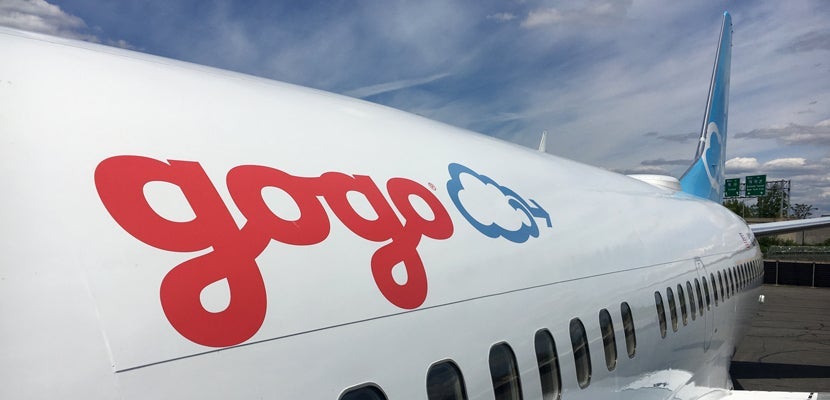
Gogo Wi-Fi can be found on most US airlines, including Alaska, America, Delta, United and Virgin America, but not all experiences are created equal. Many people don't realize why their connectivity speeds seem to differ between airlines and planes, so TPG spoke to Gogo EVP and CTO Anand Chari to help demystify this and several other issues.
"In North America, we pioneered the connectivity with air-to-ground (ATG)," said Chari. "It was simple, lightweight and cheaper for airlines to install. It was a great service. Netflix was mailing DVDs, and we didn't have iPhones. Then a couple of things changed in the world. The need for bandwidth grew and we only had 3MHz of spectrum assigned by the government. We needed to bring more bandwidth to the aircraft."
Over the years, as Gogo came up with ways to increase bandwidth capacity, it remained up to the airlines to make the necessary upgrades to receive the increased bandwidth, and some chose not to, because their planes were facing retirement. The primary increase came in the form of Gogo's new satellite Wi-Fi service, called 2Ku.
Still not good enough?
Although 2Ku was better than anything previously offered, it was still limited by the onboard modem. It's like having the world's best milkshake. If you only have a thin straw to sip it with, you're not going to enjoy it to its full potential.
Gogo selected Gilat's next-generation SkyEdge II-c Taurus modem to work with the 2Ku upgrade. The modem is capable of delivering up to 400Mbps to the aircraft. Gilat says the Taurus incorporates significant technological advances to support the growing demand for in-flight connectivity services. It dramatically improves the available throughput per aircraft as well as the efficient utilization of bandwidth.

In terms of installing the new modem, Chari says, "It takes only a few hours. It's a drop-in replacement. It has the same size, shape and screws, so you just take the old one out and put new one in." Airlines could easily do this during an overnight stay for each plane. He said, "Everyone is going to upgrade [to the new modem]. It's not even an option. I don't see why anyone wouldn't want to do it."

The new modems will enter service later this year, and will also be installed during the manufacturing process on new Airbus A320-series planes, as well as the Bombardier C-Series.
The Competition
Gogo has always been open to chatting, but this interview with Mr. Chari actually came about as result of an interview I had conducted with ViaSat VP Commercial Mobility Don Buchman, at this year's Aircraft Interiors Expo.
Gogo recently purchased all of the bandwidth capability from the aging SES AMC-4 satellite, which has a good 5+ years left in its serviceable lifespan. Gogo will reposition AMC-4 to serve primarily the western US and Pacific region, benefitting airlines with existing 2Ku service such as Air Canada, Delta and GOL. It should also appeal to existing Gogo ATG customers Alaska and Virgin America, which may be considering a switch. Alaska has no satellite Wi-Fi on its planes, while Virgin America has Gogo ATG on some, and ViaSat on some others. Since their merger, no decision has been announced for a full-fleet solution.
I asked if the buy was in response to the forthcoming launch of ViaSat 2 on June 1, to which Chari responded, "This wasn't in response to ViaSat. It was in response to the global demand. We have flights to Alaska, Hawaii, Canada and over the Pacific. What happened was the AMC-4 was being replaced by SES 10, and there was the opportunity to use the AMC-4 and relocate it using all of the capacity on markets where we need the capacity."
"Gogo has always been an innovator a pioneer and we established the market. We brought true broadband connectivity. We started in North America with ATG which was transformational in its time. It solved the bandwidth and coverage problem around the globe. In addition to that we're working on next generation for smaller planes. All satellite antennas are quite large so we are coming up with a next-gen ATG solution to launch next year, capable of up to 100Mbps."
Chari said Gogo also established a challenging protocol of sorts to the rest of the industry, called 15/98/98. It calls for a standard of 15Mbps to each seat, covering 98 percent of global flight hours, with 98% reliability. He said, "We are delivering this today, and are working to improve this. We believe this is industry-leading."
What does the future hold for Gogo?
Chari said that Gogo's 2Ku service has been excluded in the past from regional jets, because the 2Ku antenna is too large to fit on top of the tiny planes. However, Gogo recently successfully lab-tested a new ATG antenna upgrade that would allow planes to receive up to 100Mbps, and when you're only flying with 50 or so people, that could mean a stellar experience for each customer. That being said, it would need to be priced in a way that would make it attractive for those passengers on the shorter flights typically flown by regional jets.
Chari said Gogo will be constantly adding capacity to its network in the short, medium and long term. "We want to stay ahead of demand and we have the ability because of open architecture and open ecosystem. You have to take advantage of the innovation and cost." Using cell phones as an example, he said you don't buy every cell phone you'll ever need for the rest of your life. You buy the best of what's available at the time you need it.
For passengers, it's not about how many megabits per second can be beamed to the plane and by whom. All they really care about is whether they can binge-watch Netflix or post live to Facebook or Snapchat at a reasonable price. To that end, I believe the playing field is becoming more level as airlines and their Wi-Fi providers find ways to bring in more bandwidth. Whether that be through wholly owned satellites like ViaSat uses, or leased bandwidth like Gogo uses, the passengers are the winners.
Currently, Gogo 2Ku can be found on 170 planes with AeroMexico, Air Canada, British Airways, Delta, GOL and Virgin Atlantic. There are over 1,600 remaining planes to have 2Ku installed over the next two years.
TPG featured card

at Capital One's secure site
Terms & restrictions apply. See rates & fees.
| 5X miles | Earn 5X miles on hotels, vacation rentals and rental cars booked through Capital One Travel |
| 2X miles | Earn unlimited 2X miles on every purchase, every day |
Pros
- Stellar welcome offer of 75,000 miles after spending $4,000 on purchases in the first three months from account opening. Plus, a $250 Capital One Travel credit to use in your first cardholder year upon account opening.
- You'll earn 2 miles per dollar on every purchase, which means you won't have to worry about memorizing bonus categories
- Rewards are versatile and can be redeemed for a statement credit or transferred to Capital One’s transfer partners
Cons
- Highest bonus-earning categories only on travel booked via Capital One Travel
- LIMITED-TIME OFFER: Enjoy $250 to use on Capital One Travel in your first cardholder year, plus earn 75,000 bonus miles once you spend $4,000 on purchases within the first 3 months from account opening - that’s equal to $1,000 in travel
- Earn unlimited 2X miles on every purchase, every day
- Earn 5X miles on hotels, vacation rentals and rental cars booked through Capital One Travel
- Miles won't expire for the life of the account and there's no limit to how many you can earn
- Receive up to a $120 credit for Global Entry or TSA PreCheck®
- Use your miles to get reimbursed for any travel purchase—or redeem by booking a trip through Capital One Travel
- Enjoy a $50 experience credit and other premium benefits with every hotel and vacation rental booked from the Lifestyle Collection
- Transfer your miles to your choice of 15+ travel loyalty programs
- Top rated mobile app