Hyatt is doubling down on luxury while its competitors focus on budget hotels


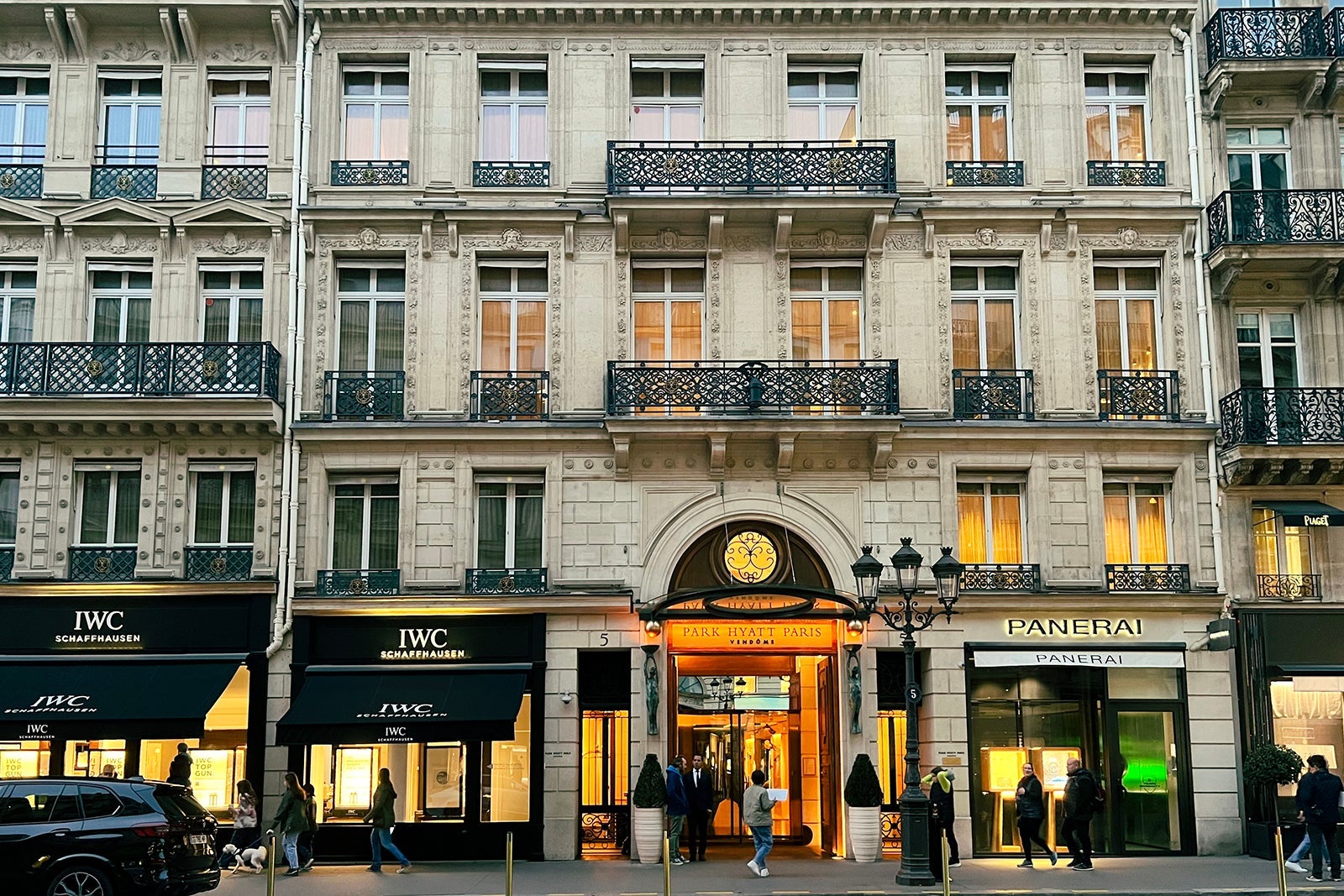
The future of Hyatt is about luxury, lifestyle and resorts.
Cheap hotels? Leave that to Hilton and Marriott.
Hyatt on Thursday reported hefty profits ($294 million for the last three months of the year and $455 million for all of 2022) and significant growth — increasing its room count by nearly 7% last year. That's higher than Marriott's 3.1% net unit growth and Hilton's 4.7% (though both companies have larger portfolios than Hyatt's).
Marriott and Hilton both made moves in recent months to court travelers at more affordable price points. Marriott plans to acquire the Mexico-based City Express chain of midscale hotels later this year. Hilton launched the premium economy Spark brand last month.
Don't take that as a sign every hotel conglomerate is looking to jump into this space, though.
"Our strategy is to focus on the high-end customer and to serve and operate at the high end of every segment that we're in right now," Hyatt CEO Mark Hoplamazian said during an investor call Thursday morning. "We continue to focus on filling out our portfolio to be able to add the number of experiences and the critical mass that we have to that high-end traveler."
The commentary reinforces some industry logic that major hotel companies make more money by focusing on higher-paying market segments like luxury hotels and lifestyle hotels. These are properties with enhanced food-and-beverage programs, and a greater focus on design and experiences.
Players in the lifestyle segment include Hilton's Canopy, Marriott's W and Edition brands, and Accor's Ennismore partnership which includes brands like The Hoxton and Delano. Hyatt's lifestyle hotel brands include Andaz and Thompson Hotels while its luxury mix includes offerings like Alila and Park Hyatt.
It appears Hilton and Marriott's strategy aims to bring newer types of customers into their loyalty programs. Spark could be an entry point for younger travelers with less disposable income to still earn and redeem points, Hilton CEO Christopher Nassetta said earlier this month.

Hyatt's is more about providing increased options for its expanding mix of high-end and leisure travelers.
That's evident with some of Hyatt's hefty rate increases. Average nightly rates across Hyatt's entire global portfolio jumped 24.5% from a year ago. Hyatt's average room rates, excluding those in China, ended the year 14% above 2019 levels.
"I'm a believer in never saying never [about] extensions into other segments," Hoplamazian said. "But [focusing on high-end travelers] has been our very deliberate strategy over the last five years, of which I feel like we've made tremendous progress."
Hyatt's luxury liftoff
It's clear the Chicago-based hotel company leaned into luxury in recent years, but company leaders provided data Thursday on just how monumental that growth was. Hyatt now has 135,000 luxury and resort rooms — a number greater than Hyatt's entire hotel portfolio a decade ago, Hoplamazian said. Resort properties also accounted for 66% of the rooms Hyatt added to its portfolio this past year.
The company's performance in the Americas in 2022 was largely driven by its growth in luxury hotels.
"We now have more luxury branded hotels and resort locations than any other hospitality company in the world," Hoplamazian said.
Some of Hyatt's expansion into luxury, resort and lifestyle hotels includes the acquisition of Apple Leisure Group and its hefty all-inclusive resort collection; it also acquired Dream Hotels and Two Roads Hospitality, which brought the Thompson Hotels and JdV brands into the World of Hyatt orbit.
While Hyatt's performance fared well in the Americas and Europe, the company saw a decline in Asia. This was mostly attributed to China, which had stringent COVID-19-related restrictions in place for much of 2022.
China's coronavirus restrictions included mass lockdowns, testing and strict travel limitations to stymie transmission. However, these restrictions eventually sparked mass protests, prompting China to gradually remove its stringent policies.
As China lifted its COVID-19 restrictions, the country reopened its borders and removed quarantine requirements for travelers in January. Hoplamazian said January was "a stunning month of performance" once China lifted the restrictions.
That growth has not wavered since China fully phased out its zero-COVID-19 policy.
"The first week of February, we ran higher occupancies in our system in China than we did in the United States," Hoplamazian said.
Hoplamazian credited the almost instantaneous growth in China to leisure travel and the Lunar New Year; he also said business travel was experiencing a rebound in the region.
Hyatt also expects to open 24 hotels in China this year.
Hyatt's shopping spree isn't over
Some might scratch their heads over Hyatt's profits being less than its competitors (Hilton's full-year profit exceeded $1 billion while Marriott's soared above $2 billion). However, part of that involves Hyatt owning more of its hotel real estate than its competitors.
That's quickly changing.
The company sold billions of dollars in hotel real estate in recent years and plans to offload another $2 billion by the end of next year. Hotel sales play an important role in Hyatt's seismic growth in the luxury, lifestyle and resort sectors.
Over the last five years, Hyatt offloaded $3.8 billion in hotel real estate. In that same time frame, it spent $3.6 billion acquiring Miraval, Apple Leisure Group and Two Roads Hospitality. The company also went on to acquire Dream Hotel Group and partner with Germany-based Lindner Hotels AG, which provides more European options.
While it might seem like Hyatt needs time to digest all these brands, Hoplamazian on Thursday indicated the brand integrations were going well.
Don't expect the brand acquisitions to stop there.
The guidelines Hyatt uses for potential takeover targets are whether the brand fits in with the Hyatt portfolio (like Dream did with lifestyle hotels) and whether it enhances the network (like Dream did with expanding Hyatt's New York City presence by 30%, and Lindner will with its significant footprint in Germany). It also has to come with growth potential.
"We don't feel like we are dragged down by further integration efforts that are going to really consume a lot of our time," Hoplamazian said. "So we will continue to look for [other] platforms."
Related reading:
TPG featured card

at American Express's secure site
Terms & restrictions apply. See rates & fees.
| 3X | Earn 3X Miles on Delta purchases. |
| 1X | Earn 1X Miles on all other eligible purchases. |
Pros
- Delta SkyClub access when flying Delta
- Annual companion ticket for travel on Delta (upon renewal)
- Ability to earn MQDs through spending
- Various statement credits for eligible purchases
Cons
- Steep annual fee of $650
- Other Delta cobranded cards offer superior earning categories
- Earn 100,000 Bonus Miles after you spend $6,000 or more in purchases with your new Card within the first 6 months of Card Membership and an additional 25,000 bonus miles after you make an additional $3,000 in purchases on the Card within your first 6 months, starting from the date that your account is opened. Offer Ends 04/01/2026.
- Delta SkyMiles® Reserve American Express Card Members receive 15 Visits per Medallion® Year to the Delta Sky Club® when flying Delta and can unlock an unlimited number of Visits after spending $75,000 in purchases on your Card in a calendar year. Plus, you’ll receive four One-Time Guest Passes each Medallion Year so you can share the experience with family and friends when traveling Delta together.
- Enjoy complimentary access to The Centurion® Lounge in the U.S. and select international locations (as set forth on the Centurion Lounge Website), Sidecar by The Centurion® Lounge in the U.S. (see the Centurion Lounge Website for more information on Sidecar by The Centurion® Lounge availability), and Escape Lounges when flying on a Delta flight booked with the Delta SkyMiles® Reserve American Express Card. § To access Sidecar by The Centurion® Lounge, Card Members must arrive within 90 minutes of their departing flight (including layovers). To access The Centurion® Lounge, Card Members must arrive within 3 hours of their departing flight. Effective July 8, 2026, during a layover, Card Members must arrive within 5 hours of the connecting flight.
- Receive $2,500 Medallion® Qualification Dollars with MQD Headstart each Medallion Qualification Year and earn $1 MQD for each $10 in purchases on your Delta SkyMiles® Reserve American Express Card with MQD Boost to get closer to Status next Medallion Year.
- Enjoy a Companion Certificate on a Delta First, Delta Comfort, or Delta Main round-trip flight to select destinations each year after renewal of your Card. The Companion Certificate requires payment of government-imposed taxes and fees of between $22 and $250 (for itineraries with up to four flight segments). Baggage charges and other restrictions apply. Delta Basic experiences are not eligible for this benefit.
- $240 Resy Credit: When you use your Delta SkyMiles® Reserve American Express Card for eligible purchases with U.S. Resy restaurants, you can earn up to $20 each month in statement credits. Enrollment required.
- $120 Rideshare Credit: Earn up to $10 back in statement credits each month after you use your Delta SkyMiles® Reserve American Express Card to pay for U.S. rideshare purchases with select providers. Enrollment required.
- Delta SkyMiles® Reserve American Express Card Members get 15% off when using miles to book Award Travel on Delta flights through delta.com and the Fly Delta app. Discount not applicable to partner-operated flights or to taxes and fees.
- With your Delta SkyMiles® Reserve American Express Card, receive upgrade priority over others with the same Medallion tier, product and fare experience purchased, and Million Miler milestone when you fly with Delta.
- Earn 3X Miles on Delta purchases and earn 1X Miles on all other eligible purchases.
- No Foreign Transaction Fees. Enjoy international travel without additional fees on purchases made abroad.
- $650 Annual Fee.
- Apply with confidence. Know if you're approved for a Card with no impact to your credit score. If you're approved and you choose to accept this Card, your credit score may be impacted.
- Terms Apply.
- See Rates & Fees