How 9/11 changed aviation

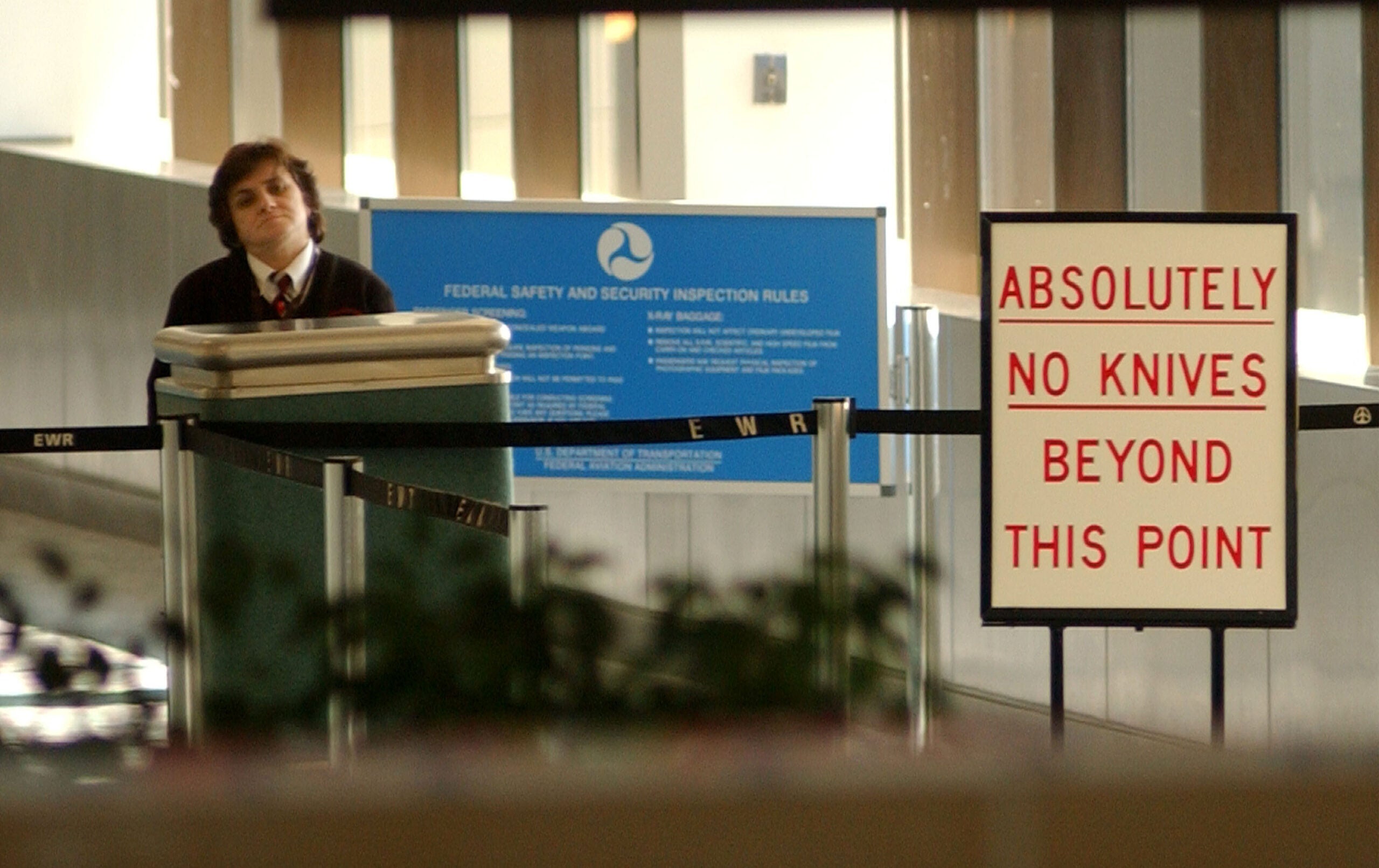
I'm not sure when it became clear that 9/11 would change virtually everything. It might have been as the second plane hit the towers, and my school rushed to put a TV in the auditorium so we could watch history in real time (presumably they did not expect the towers to fall).
It might have been the next day, when smoke from the towers choked my neighborhood. It might have been when it became known around town that a local firefighter, Jonathan Ielpi, had been killed in the collapse, or when my mom went anxiously on her first business trip in the months after.
The attacks had an immediate impact on the air travel industry — an impact which, at the time, was seen as decisive and crucial. The interconnectedness of the world and the ubiquity of mass transportation were central to the attacks, with weaknesses exploited in a security system that had never before seemed to be of such key import, and methods of connecting friends, families and businesses turned into hellish missiles loaded with jet fuel warheads.
In the immediate years after the attacks and the decades since, the travel industry — specifically the airline industry and the experience of its patrons — changed in ways that at one time would have been unimaginable.
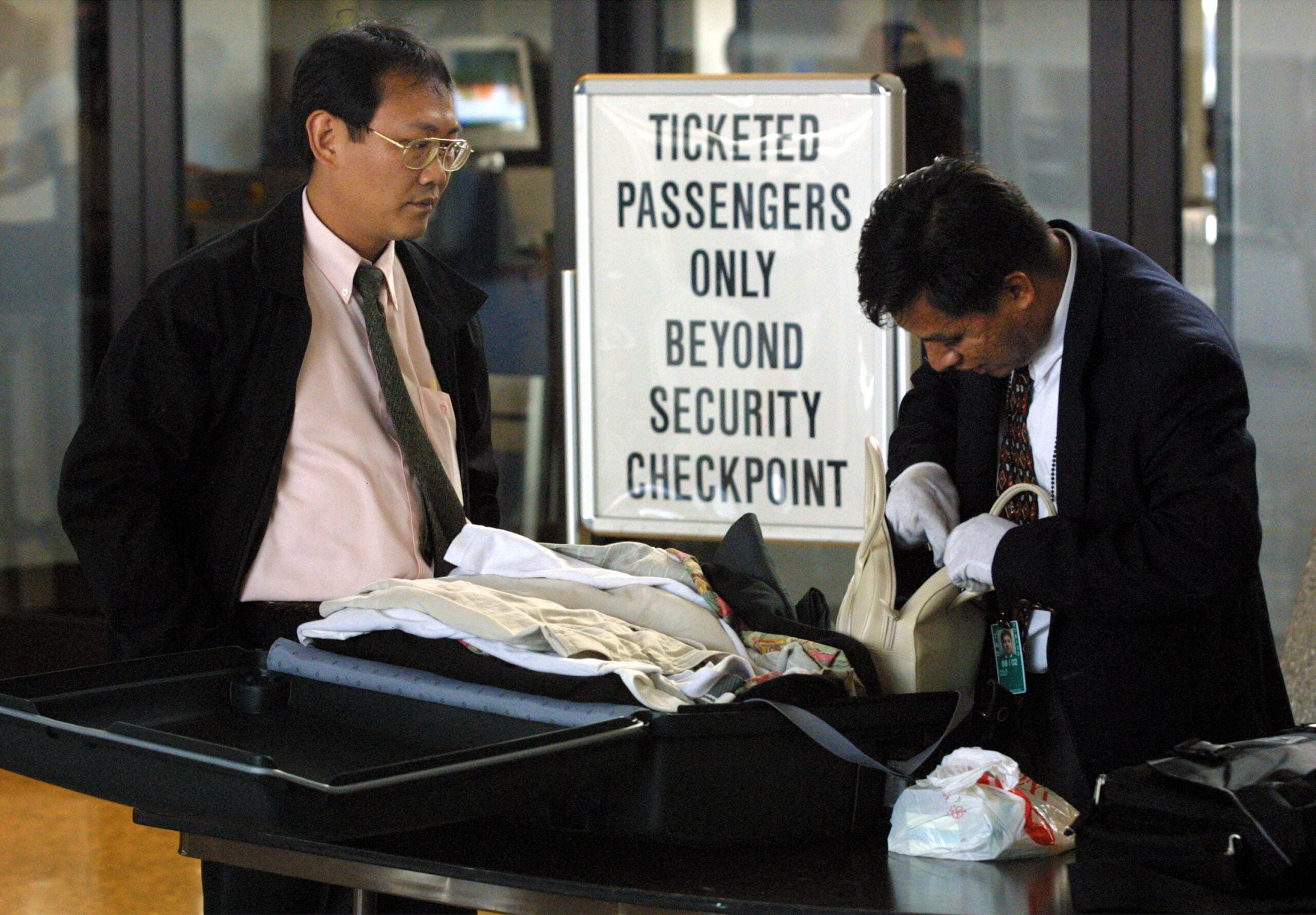
From the creation of the Department of Homeland Security and the Transportation Security Administration, to the restrictions on liquids and shoes that have proliferated around the world, to the end of meeting loved ones or watching planes airside, the experience of traveling changed forever.
But at the same time, the ability to travel, to move somewhat freely around the country and the world, became more precious than ever, and those early years of fear and uncertainty perhaps underscored the need to move.
An end of casualness in air travel
One of the greatest legacies of Sept. 11, 2001, on air travel can be summed up in a word: hassle. In the decades since 9/11, air travel has become more of a production than it ever was before.
"Being on an airplane, traveling a lot, that didn't really stress me out or scare me" said Dana Freeman, a freelance travel writer and former marketing manager who was a frequent flyer in the years before and after 9/11. (Disclosure: Freeman contributes to Lonely Planet, which is owned by Red Ventures, the same parent company as TPG.) "But it became more of a hassle post-9/11, for sure."
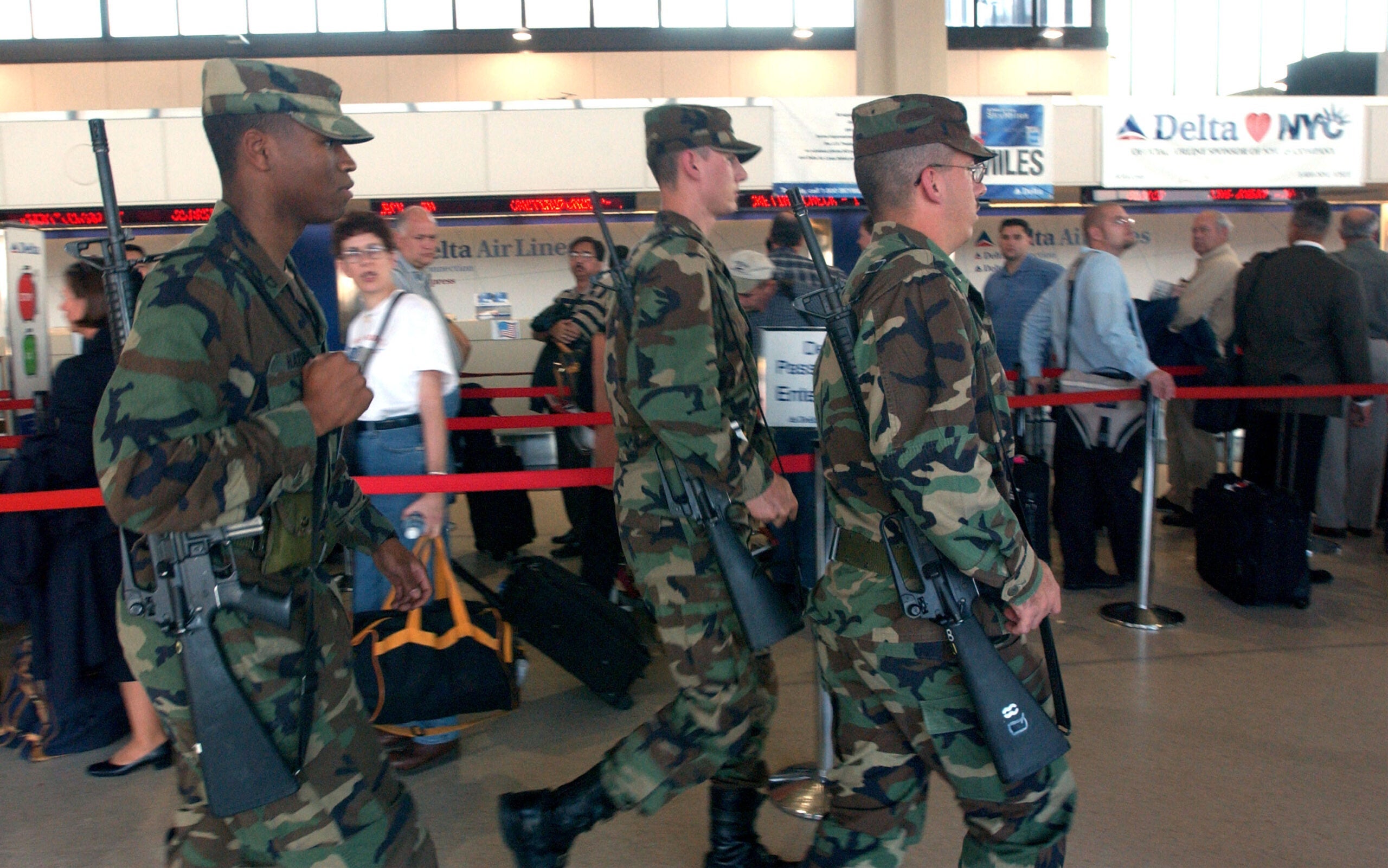
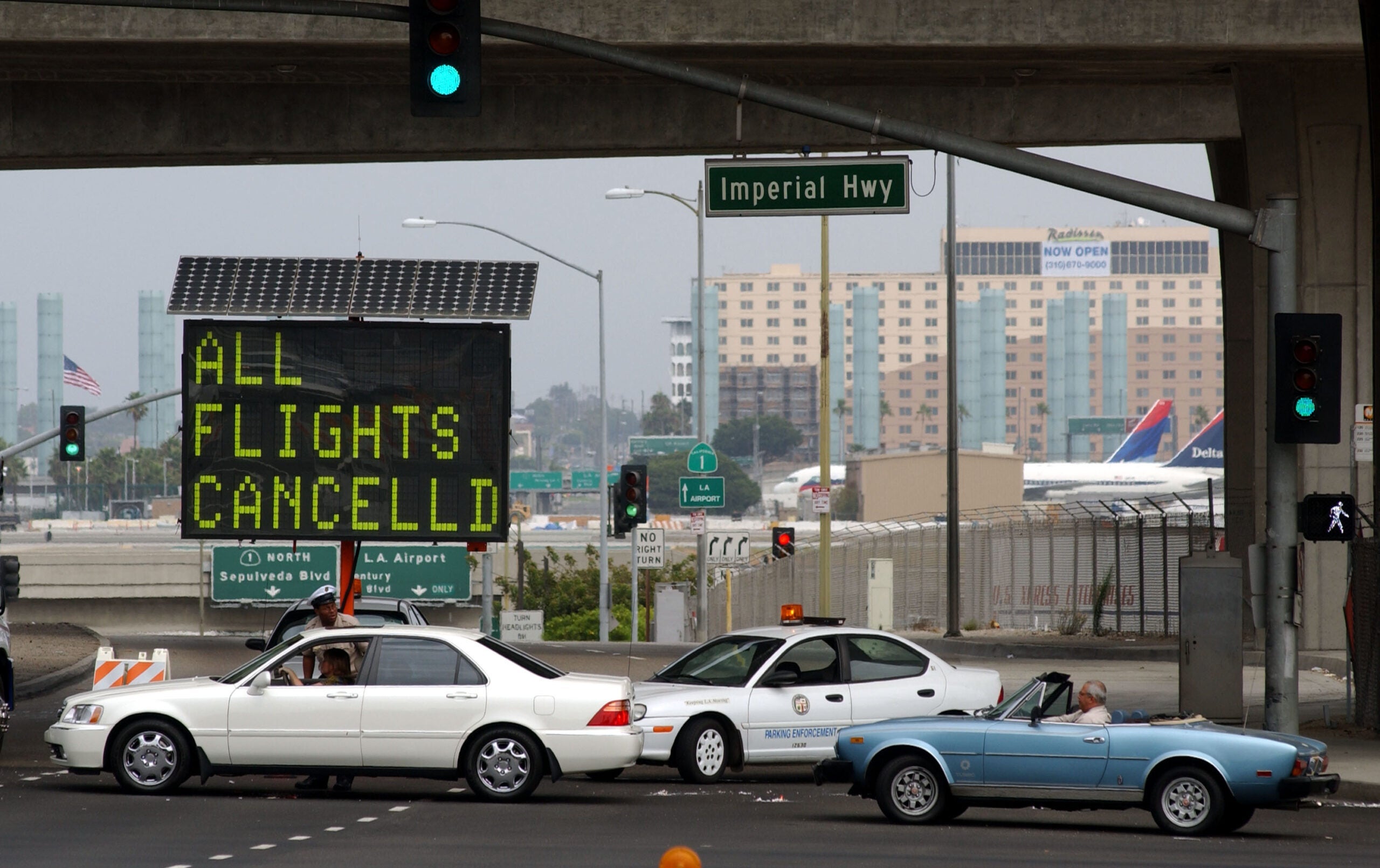
The changes were obvious as soon as Sept. 14, when commercial air traffic was allowed to restart, with heavily armed National Guardsmen bolstering normal civilian airport security, and new rules requiring government-issued identification in order to pass through checkpoints.

At the time, the changes seemed like an ultimately small price to pay for a return to travel and normalcy.
Jeff Berg, a former management consultant, doesn't distinctly remember his first flight after the attacks, though he knows it was the following week. While stories of people who were afraid to fly after 9/11 are abundant, for Berg and other frequent business travelers at the time, those first post-attack flights did not have the significance a less-frequent flyer might expect.
"It was just another day for me," he said.
What did stand out to him was his first visit to the Pentagon after the building was attacked — the Department of Defense was one of his clients at the time.
"The commotion surrounding getting in at that point had gone from, it was already really strict, but afterwards, it was so much more," Berg said. "It took several hours to get into a meeting there."
Centralizing aviation security
The apparatus behind that security machine was novel, as well. Before the attacks, airport security was a locally managed operation, with a hodgepodge collection of agencies around the country running airport checkpoints to a set of standards.

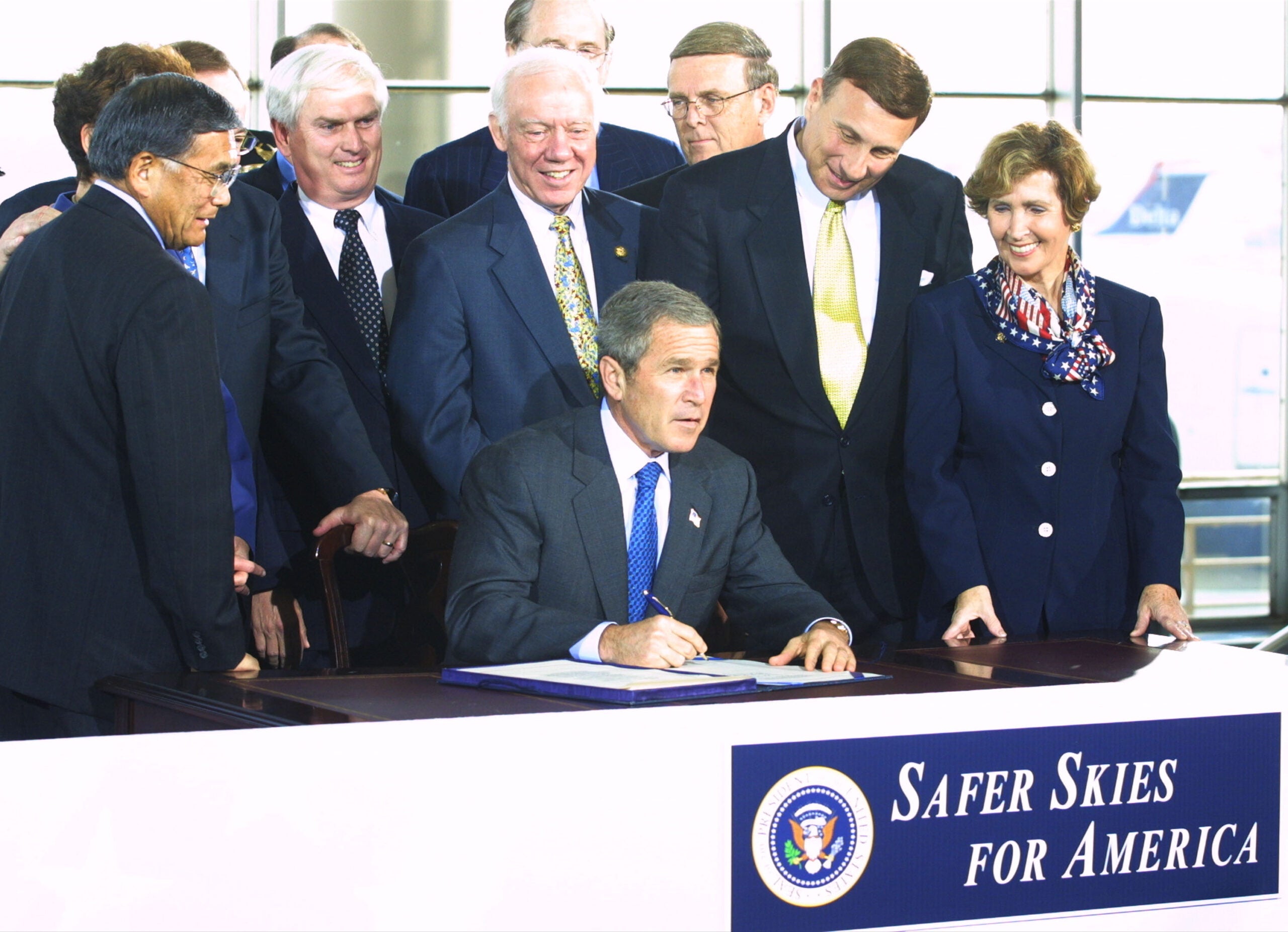
Two months after the attacks, on Nov. 19, 2001, the Aviation and Transportation Security Act was signed into law, creating a new federal agency: the TSA. Within about a year, the agency had recruited more than 60,000 people — the biggest mobilization of the federal government since World War II, according to Michael P. C. Smith, a former in-house historian and communications director at the TSA.
Other security changes came in later years in response to foiled plots, although it can be argued that those failed attacks would not, by themselves, had prompted such widespread overhauls of the security apparatus if the memory of 9/11 had not been so fresh.
Explosive-detection systems were installed at major airports by the end of 2002, while the restriction on liquids in carry-on bags — limiting passengers to a maximum of 3.4-ounce containers for liquids in carry-ons — came after a failed plot to bomb a plane in August 2006. All liquids were initially banned, but the 3.4-ounce rule was introduced in September.
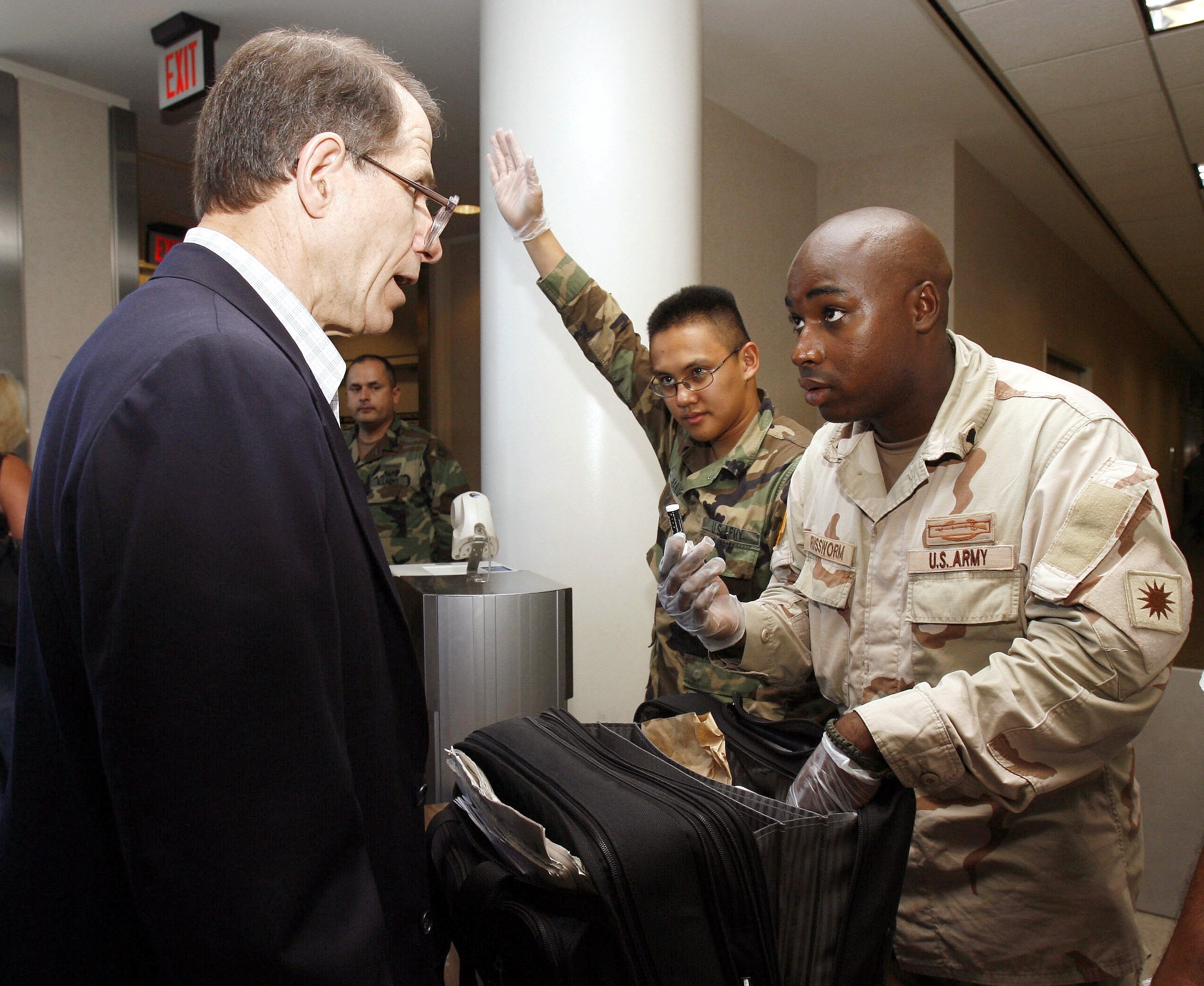
Also in August of that year, the TSA started to require passengers to remove their shoes at security checkpoints. The rule came five years after a failed attempt, in December 2001, by a passenger on a flight from Paris to Miami to ignite explosives hidden in a shoe.
One of the more invasive systems — the full-body scanner — was introduced in early 2010, several months after a failed "underwear bomber" was subdued on a Christmas Day flight.
What was the point of it all?
Of course, some argue that all of this really just amounts to security theater, pointing to a report that found that TSA officers failed to detect 95% of explosives or weapons carried by undercover inspectors. Others say that the system, which could have room for improvement, is nevertheless effective.
"TSA is an effective deterrent against most attacks," Jeffrey Price, an aviation security instructor, told the Associated Press. "If it's security theater, like some critics say, it's pretty good security theater because since 9/11 we haven't had a successful attack against aviation."
Chris Zaberto, director of operations at a multinational aviation security consultancy — and a first responder on 9/11 who spent months working at the World Trade Center site — agrees.
"You'll hear people say, 'Yeah but the TSA never arrested a terrorist,'" he said.
But dramatically arresting terrorists and foiling plots in the nick of time at the airport is not the point of the TSA, he said.
"Their job is not direct enforcement, to arrest terrorists. Their job is to prevent an attack against the aviation system," he said. "There are agencies out there that are responsible for finding terrorists, but that's not TSA."
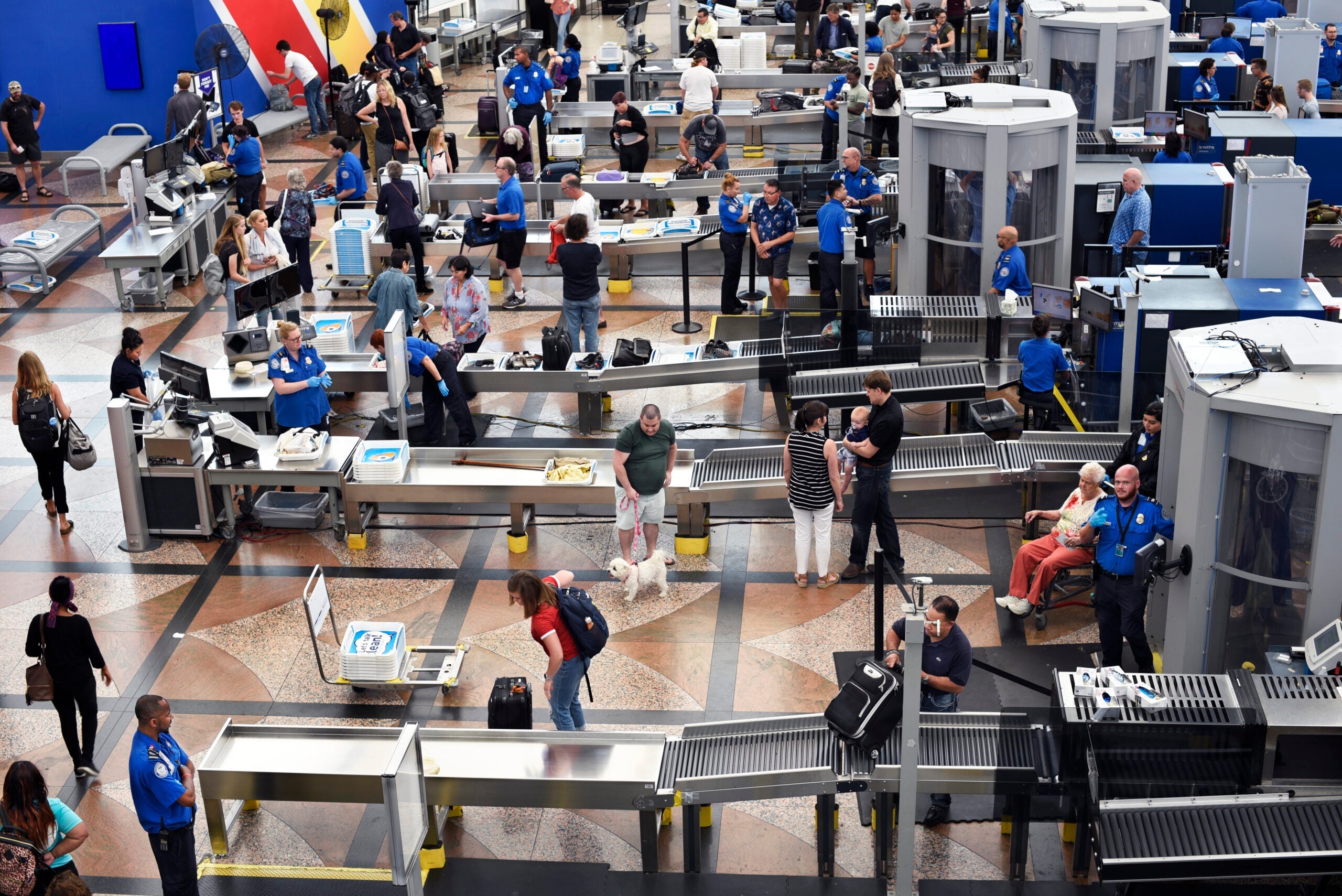
"If the TSA arrests a terrorist, that means all the other layers have failed," he added.
But under that line of thinking, what's the point of the heavy focus on aviation that came from the Sept. 11 attacks? Plenty of systemic weaknesses were exploited by the 9/11 architects and hijackers — why has aviation been such a prime focus, even as the "war on terror" has been waged on multiple fronts?
Zaberto thinks it's multifaceted, including the effectiveness of increasing security at the scene of the crime, and simple public perception.
"There was a need to not only protect people, but to protect the business end of aviation," he said. "If we allowed terrorism and those incidents to reduce the flying public's confidence, it could cause a systemic collapse of air travel. And I don't know what the alternative would be."
But regardless of what internal and external audits have found — and what weak points he's observed over the years, although for obvious security reasons he did not elaborate — a 9/11-style attack on a commercial flight has not been repeated, despite the several failed efforts.
"As much as a hassle as it can be to us, even to frequent fliers and crew members, it's all part of the big picture," he said. "While still inconvenient, 20 years later, it's still done a lot to keep us safe and prevent another 9/11-style attack, a coordinated hijacking of multiple aircraft, or even of a single aircraft."
And after what he saw at ground zero, that's something he considers to be a success.
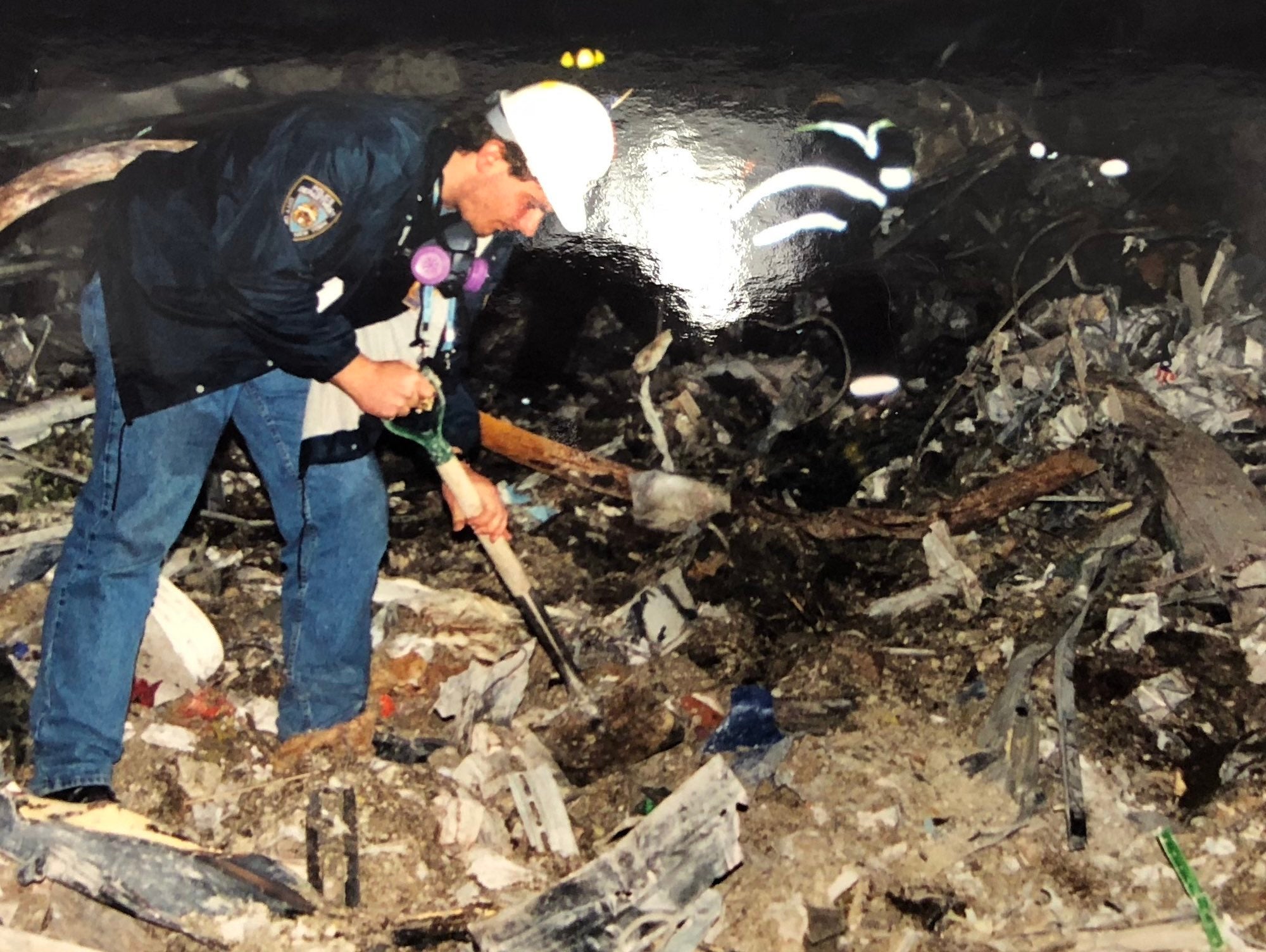
"I remember finding an emergency life vest from the United flight that hit the tower," Zaberto said. "It was completely intact, so I gave it to an FBI agent managing evidence collection. To know that someone sitting in that seat died, and this thing was unscathed, I don't know why, but that stuck with me."
It's even helped prevent non-terroristic incidents on flights from escalating too far.
"Look at all the drama we've been seeing with unruly passengers," he said. "No one's been armed in any of these incidents, and that's because the TSA is doing their job: deterrence and detection."
Beyond security — a lifestyle change
The security aspect is obvious. But for travelers, especially frequent business travelers, it forced a change in how people worked, balanced their lives and planned their business.
In the months and years after the attacks, the simple process of traveling became an unpredictable and inconsistent production that could eat hours out of a person's day.
"I remember the days when you could leave 45 minutes before your flight, that's all you needed to get to the gate and you're out of there," Freeman said. "And now it's like two hours because you don't know how long the security line is going to be, and having to be ID-checked, and the whole thing."
As the new security apparatus fell into place, it became more of a burden, requiring travelers to plan meetings, calls, billable hours, family events and everything in between with an extra buffer.
"Instead of business travel being enjoyable," Freeman added, "it became a pain in the neck."
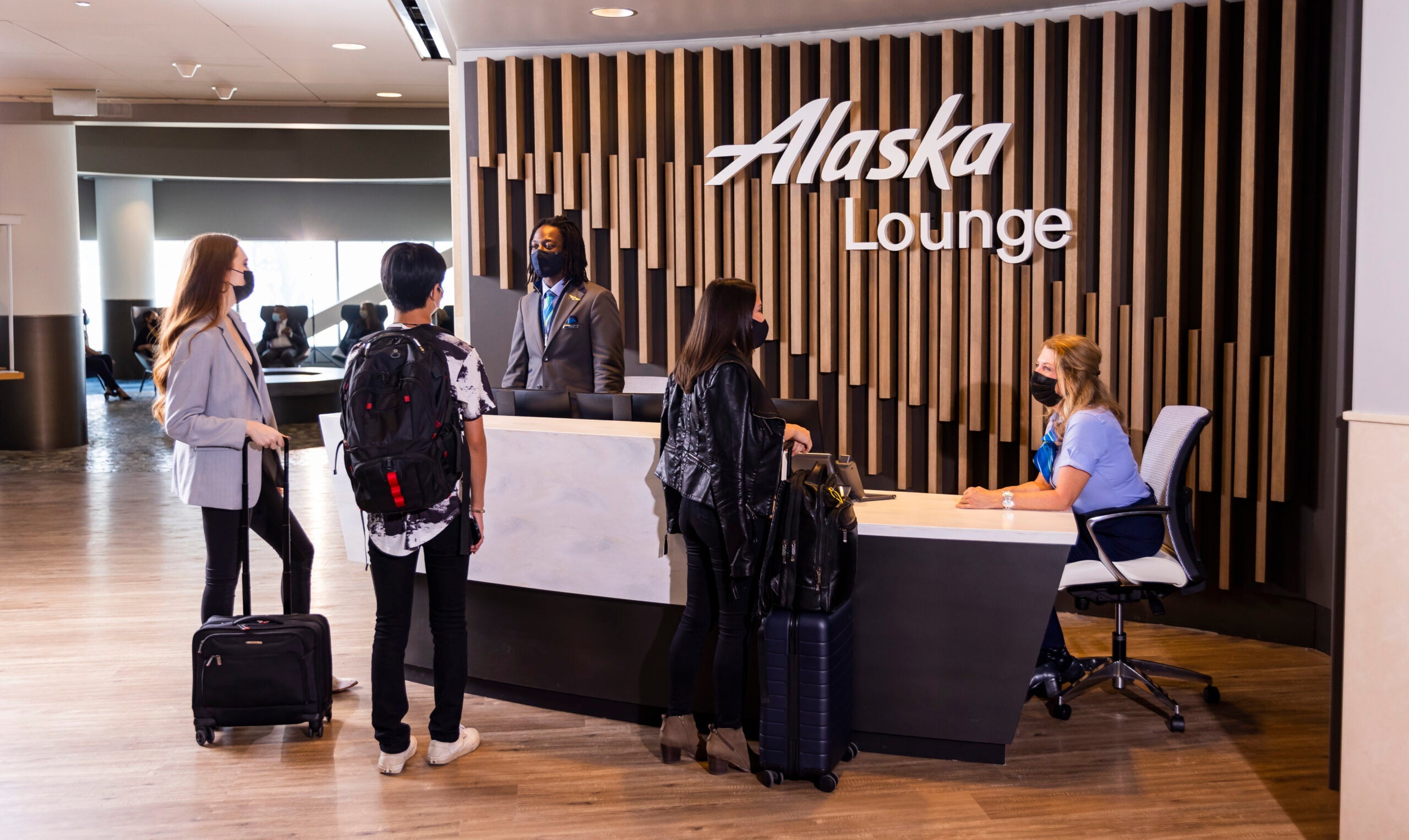
That led to a rise in the importance of two airport amenities we take for granted today: Wi-Fi and lounges.
"You got very used to being productive in airports, so thank goodness for airline clubs in those first few years after," Berg said. "It made LaGuardia a little bit easier. But no such thing at (smaller airports), so you got very good at trying to be productive."
"And those were the days when you had to pay for internet," added Debra Paget, who was a business manager at IBM at the time (and who is married to Berg). "So all of the sudden, all my business trips, I had to charge for internet at the airport. Because if I have to get there two hours early for a domestic flight, I have to do something while I'm sitting there."
For families traveling, the security procedures created a whole new set of hassles, not the least of which was keeping kids entertained after going through the security checkpoint.
"Travel with kids just became more complicated," Paget said. "Only because now you have five people traveling and five bags that everybody's got to go through, and make sure that no one has anything dangerous in there, like, you know, a bottle of water."
And then, of course, were the inevitable delays if something was flagged at security.
Today, while someone might carry a pocket knife or multitool on the ground, forgetting it in your pocket or backpack before a flight is a sure way to lose what would otherwise be a fairly innocuous tool — not to mention those who forget that they're carrying loaded guns.
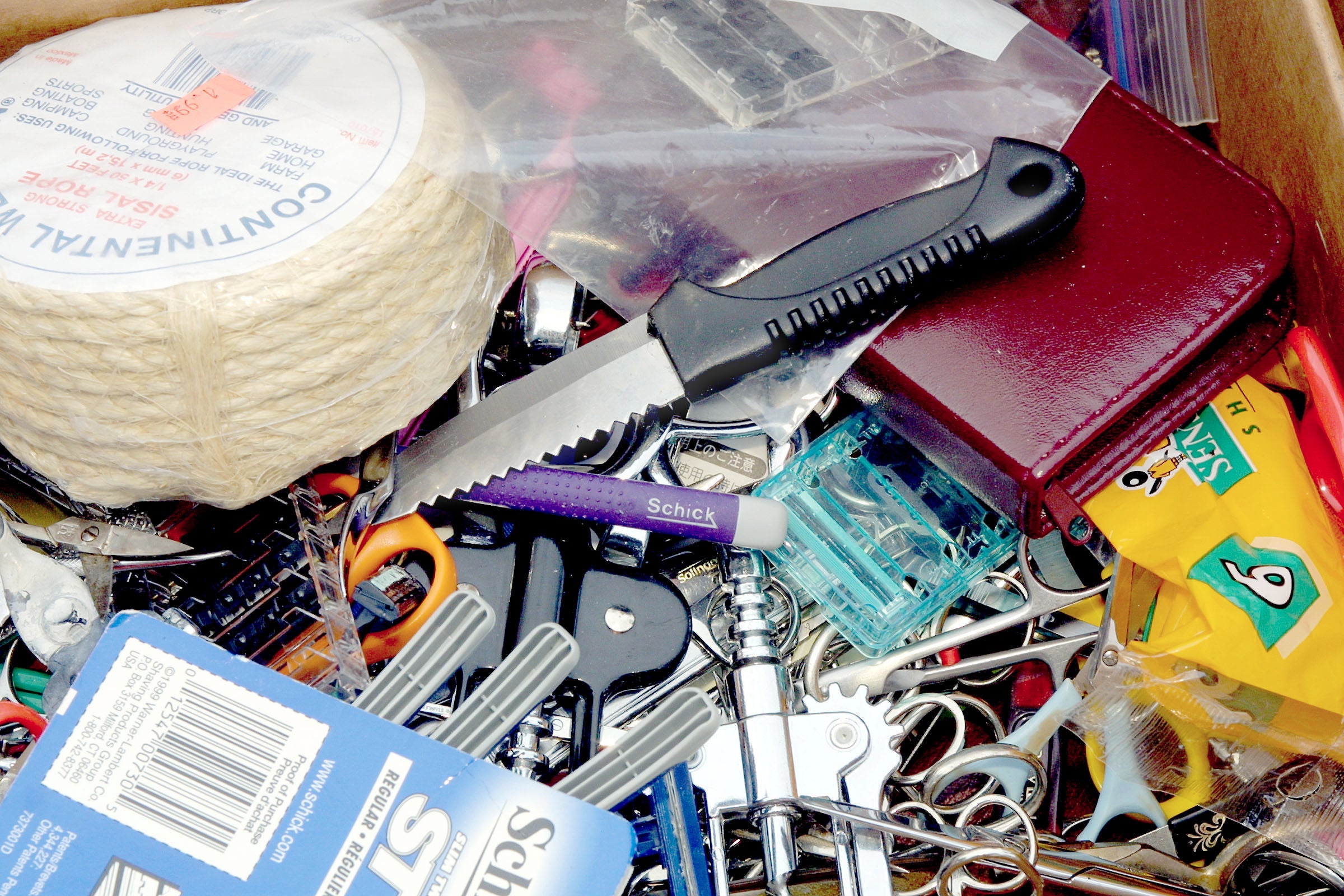
"I always kept a Swiss Army knife in my handbag and one in my toiletry kit," Paget said. The habit started after a business trip to Switzerland early in her career, where she picked up her first one. "Now I don't own any because they were all confiscated when I forgot I had them."
Not to mention the totally innocuous things that could set off alarms.
"I had an extendable pointer," Berg said. "I had to demonstrate that it wasn't dangerous, that it was just a pointer, nothing else."
Lasting impacts
It seems unlikely that the new security system will ever go away.
Instead, we're likely to see more of what we've seen in past years: efforts to mitigate the inconveniences, even as more layers are added. The question is, however, to what degree people will continue to be willing to part with privacy.
TSA PreCheck is one example — allowing passengers to keep their shoes on and keep liquids in their bags in exchange for submitting to an in-depth background check every five years.
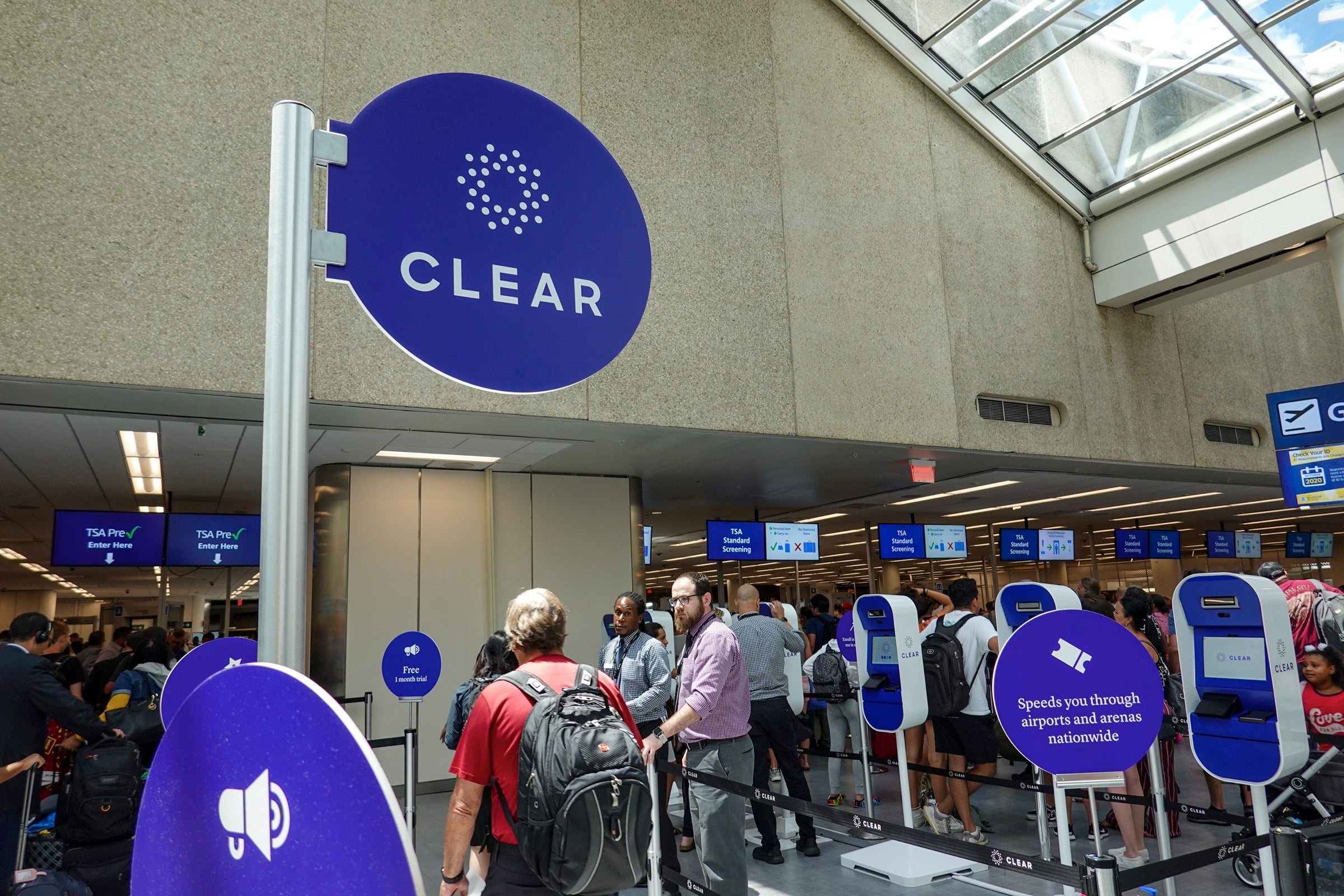
Clear is another example, a system operated by a private company that facilitates relatively hands-free passage through security checkpoints — and allows users to skip the line — by verifying biometric data, which the company collects and stores.
On the other hand, the TSA continues to slowly improve the screening infrastructure. After uproar over the first body scanners, a less-invasive replacement was introduced. Meanwhile, new computerized tomography bag scanners currently being trialed would allow passengers to leave everything inside their carry-on bags.
With increasing security needs, and increasing desires to circumvent the most inconvenient parts of the process, it seems likely that one of the most lasting legacies of 9/11 on air travel will be further erosions of privacy in the name of convenience.
TPG featured card

at American Express's secure site
Terms & restrictions apply. See rates & fees.
| 4X | Earn 4X Membership Rewards® points per dollar spent on purchases at restaurants worldwide, on up to $50,000 in purchases per calendar year, then 1X points for the rest of the year. |
| 4X | Earn 4X Membership Rewards® points per dollar spent at US supermarkets, on up to $25,000 in purchases per calendar year, then 1X points for the rest of the year. |
| 5X | Earn 5X Membership Rewards® points on prepaid hotel stays booked through AmexTravel.com or the Amex Travel App™. |
| 3X | Earn 3X Membership Rewards® points on flights booked through AmexTravel.com, the Amex Travel App™, or purchased directly from airlines. |
| 2X | Earn 2X Membership Rewards® points on prepaid car rentals booked through AmexTravel.com or the Amex Travel App™ and cruises booked and paid through AmexTravel.com. |
| 1X | Earn 1X Membership Rewards® point per dollar spent on all other eligible purchases. |
Pros
- Valuable dining and food-related credits
- Flexible rewards with airline and hotel transfer partners
- Multiple travel and purchase protections
- No foreign transaction fees
- Access to Amex Offers for additional savings (enrollment required)
Cons
- Not as useful for those living outside the U.S.
- Some may have trouble using Uber and other dining credits
- You may be eligible for as high as 100,000 Membership Rewards® Points after you spend $8,000 in eligible purchases on your new Card in your first 6 months of Card Membership. Welcome offers vary and you may not be eligible for an offer. Apply to know if you’re approved and find out your exact welcome offer amount – all with no credit score impact. If you’re approved and choose to accept the Card, your score may be impacted.
- Earn 4X Membership Rewards® points per dollar spent on purchases at restaurants worldwide, on up to $50,000 in purchases per calendar year, then 1X points for the rest of the year.
- Earn 4X Membership Rewards® points per dollar spent at US supermarkets, on up to $25,000 in purchases per calendar year, then 1X points for the rest of the year.
- Earn 5X Membership Rewards® points on prepaid hotel stays booked through AmexTravel.com or the Amex Travel App™.
- Earn 3X Membership Rewards® points on flights booked through AmexTravel.com, the Amex Travel App™, or purchased directly from airlines.
- Earn 2X Membership Rewards® points on prepaid car rentals booked through AmexTravel.com or the Amex Travel App™ and cruises booked and paid through AmexTravel.com.
- Earn 1X Membership Rewards® point per dollar spent on all other eligible purchases.
- Pay It® lets you tap in the American Express® App to quickly pay for small purchase amounts throughout the month and still earn rewards the way you usually do. Plan It® gives you the option to split up big purchases into equal monthly payments with a fixed fee. You’ll know upfront exactly how much you’ll pay.
- $120 Dining Credit: Earn up to a total of $10 in statement credits monthly when you pay with the Gold Card at Grubhub (including Seamless), Buffalo Wild Wings, Five Guys, The Cheesecake Factory, and Wonder. This can be an annual savings of up to $120. Enrollment required.
- $100 Resy Credit: Get up to $100 in statement credits each calendar year at over 10,000 qualifying U.S. Resy restaurants after you pay for eligible purchases with the American Express® Gold Card. That’s up to $50 in statement credits semi-annually. Enrollment required.
- $84 Dunkin' Credit: Earn up to $7 in monthly statement credits after you pay with the American Express® Gold Card at U.S. Dunkin’ locations. Enrollment required.
- $120 Uber Cash on Gold: Enjoy up to $120 in Uber Cash annually with your Gold Card. Just add your Card to your Uber account and you'll get $10 in Uber Cash each month to use on orders and rides in the U.S. when you select an Amex Card for your transaction.
- Enjoy complimentary Hertz Five Star® Status benefits like skipping the counter at select locations, adding an additional driver at no additional cost*, and vehicle upgrades**. Benefit enrollment and Hertz Gold+ registration are required. *Additional drivers must meet standard rental qualifications and must be a spouse or domestic partner to qualify as complimentary. Other additional drivers subject to fees. **Benefits are subject to availability and vary by location. Additional Hertz program Terms and Conditions including age restrictions apply.
- Book two nights or more with The Hotel Collection through AmexTravel.com or the Amex Travel App™ and receive a $100* credit towards eligible charges at over 1,400 upscale hotels worldwide. *Eligible charges vary by property.
- Book your travel through the Amex Travel App™ with added peace of mind – backed by American Express® service and support. Only for American Express® Card Members.
- Whenever you need us, we're here. Our Member Services team will ensure you are taken care of. From lost Card replacement to statement questions, we are available to help 24/7.
- No Foreign Transaction Fees.
- Annual Fee is $325.
- Terms Apply.