A history of Delta in Seattle, Alaska Airlines' hometown

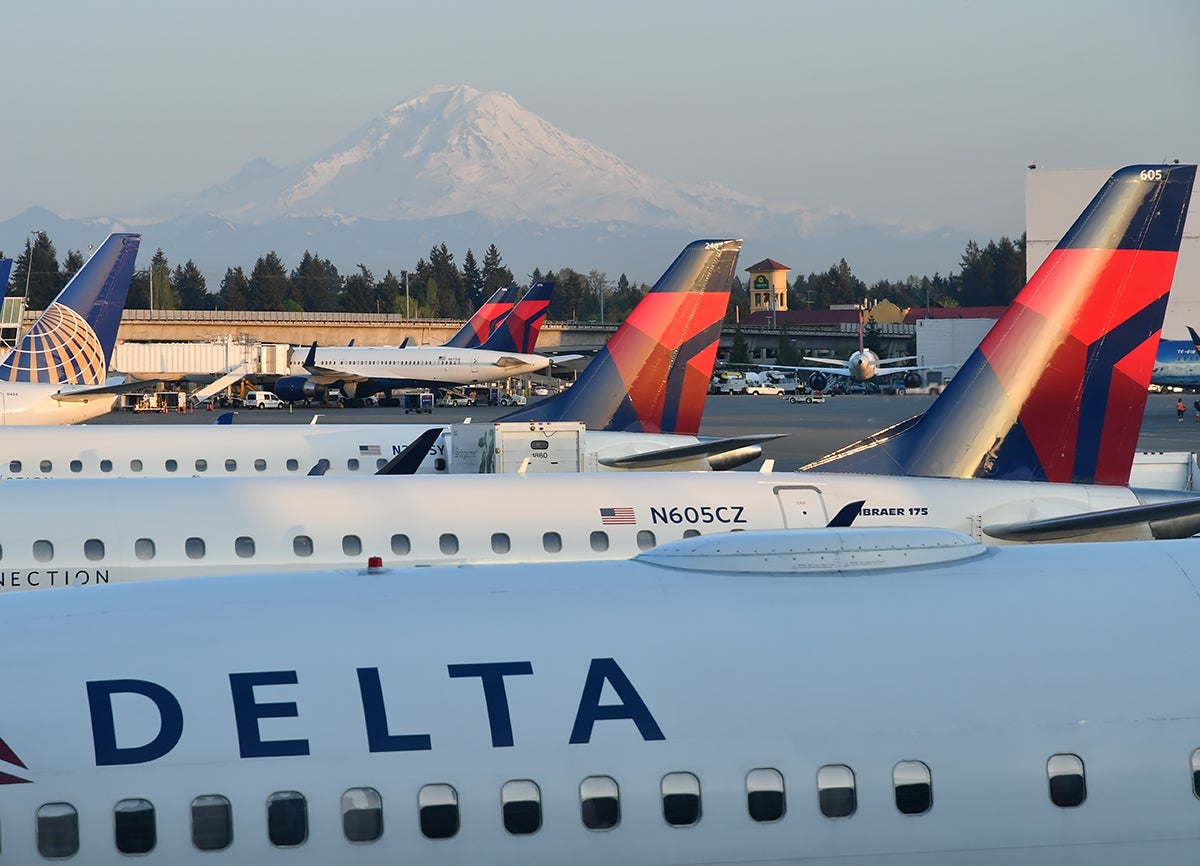
Delta Air Lines is firmly ensconced as the Seattle area's second carrier, having built an Asia gateway and hub there during the past decade.
The SkyTeam Alliance carrier will offer up to 184 departures this summer, including service to seven cities in Asia and Europe, from Seattle/Tacoma International Airport (SEA), according to Cirium schedule data. Hometown carrier Alaska Airlines will offer nearly 345 departures, all of which are to points in North America.
However, while Delta's No. 2 position in Seattle is not in question, it now faces a new challenge from a rekindled partnership between Alaska and American airlines. As part of the tie-up, American will launch new daily flights from Seattle to Bangalore (BLR) — its only service to India — in October, and London Heathrow (LHR) in March 2021.
The new partnership will strengthen Alaska's value proposition to travelers in Seattle, ratcheting up pressure on Delta in one of its key West Coast markets.
Related: Alaska Airlines plans to join Oneworld, forms alliance with American
Hub of necessity
Delta's Seattle hub was a product of necessity. Once a bit player in the Seattle market — it only served the city from Atlanta (ATL), Cincinnati (CVG), New York John F. Kennedy (JFK) and Salt Lake City (SLC) in 2008 —it more than doubled in size there through its merger with Northwest Airlines in 2009.
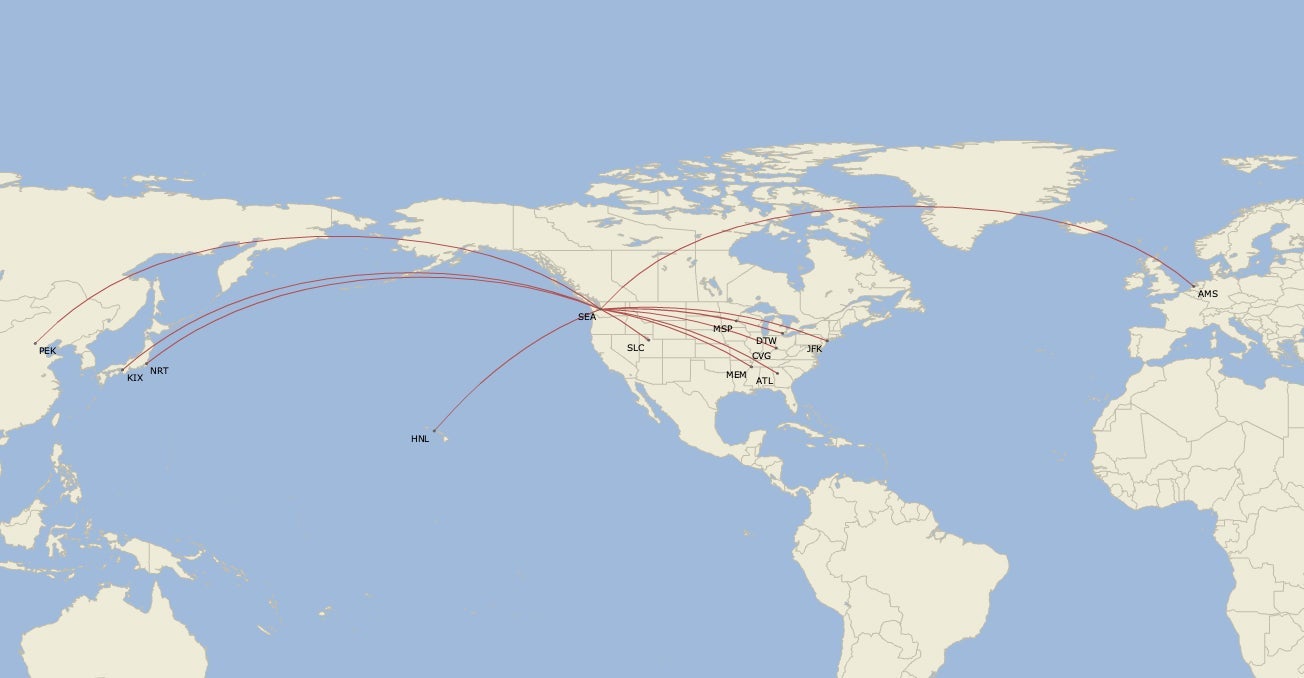
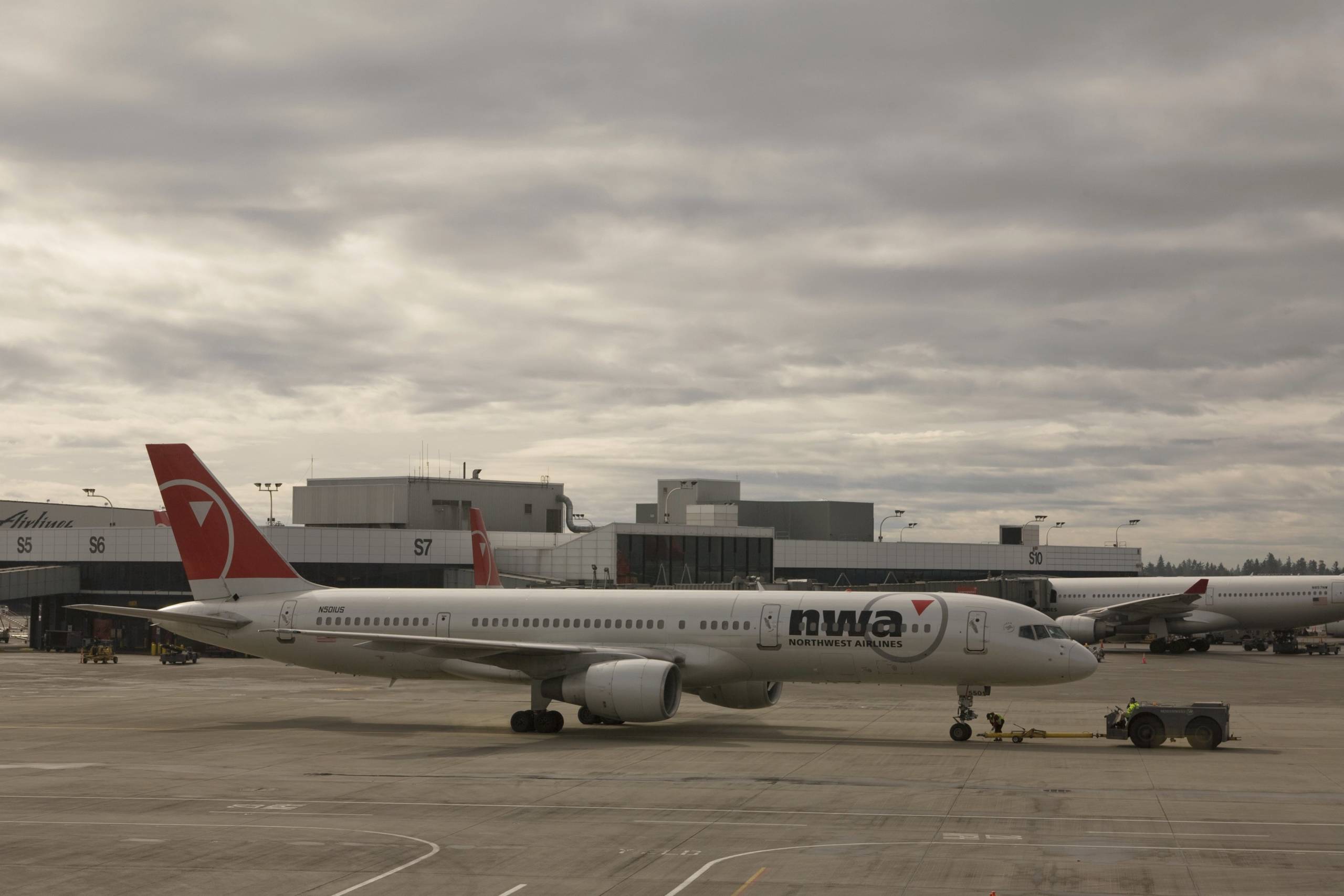
The Northwest combo also expanded Delta's Pacific route map, including Northwest's hub at Tokyo Narita (NRT). The Minneapolis-based carrier's network included nonstops between Seattle and both Beijing Capital (PEK), Osaka Kansai (KIX) and Narita, according to Cirium.
That Tokyo hub, Delta eventually realized, needed to go. Thus began its Seattle build up.

Sign up for the free daily TPG newsletter for more airline news!
Delta added flights to Shanghai Pudong (PVG) and Tokyo Haneda (HND) from Seattle in 2013, Cirium shows. These routes, plus the others it already flew, were primarily supported by connections with then-codeshare partner Alaska.
However, as Delta added long-haul routes from Seattle it realized that it could fill more seats — and generate more revenue — by providing its own domestic connections rather than flights operated by a partner.
"We are making Seattle our West Coast hub to serve the Pacific," Mike Medeiros, Delta's then-vice president for Seattle, told FlightGlobal in April 2014. "We are looking at the top business markets with a focus on Asia."
Delta had added 18 new routes from Seattle, including flights to Hong Kong (HKG) and Seoul Incheon (ICN), in 2014 — the year it officially declared the city a hub.
Related: The rise and fall of Delta's Tokyo hub
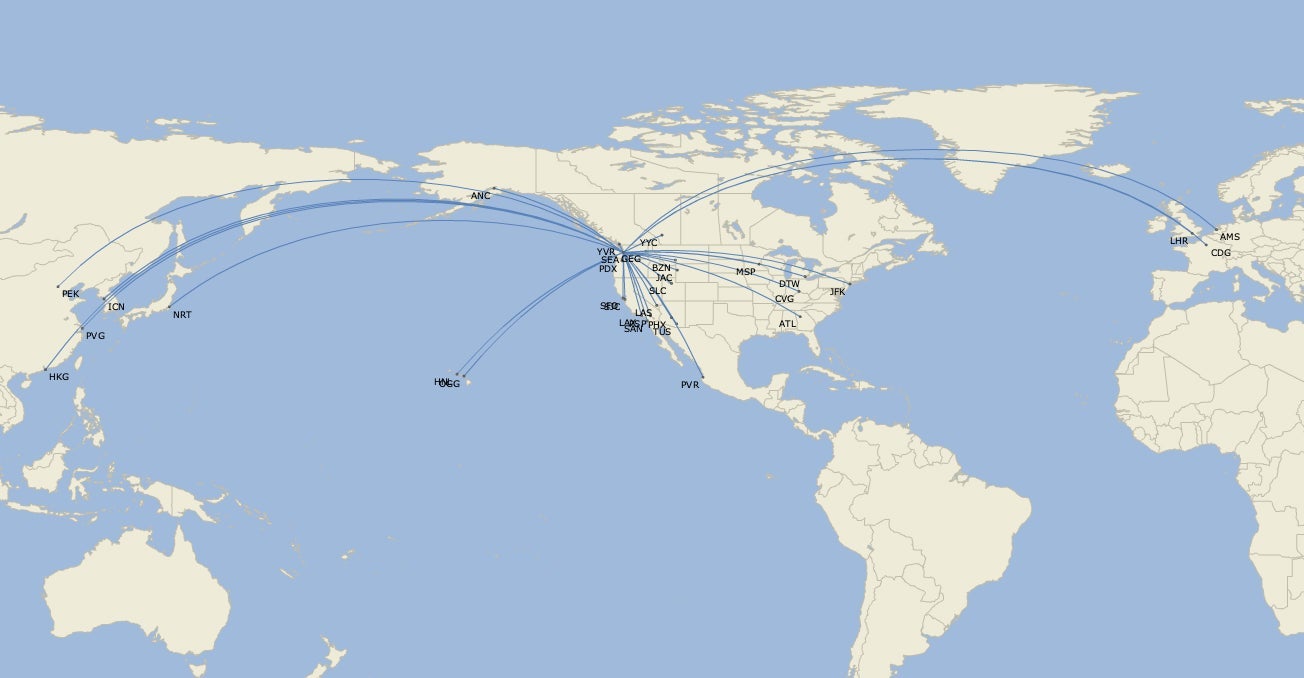
Delta continued to expand in Seattle, repeatedly going head-to-head with its still partner Alaska on nearly every route it added.
Alaska and Delta finally went their separate ways in May 2017, just five months after the former closed its acquisition of Virgin America.
Today, Alaska still dominates Seattle carrying nearly 49% of the 48.7 million travelers that passed through the airport during the year ending in July 2019, the latest U.S. Bureau of Transportation Statistics data via Cirium shows. Delta carried just 24% of airport traffic.
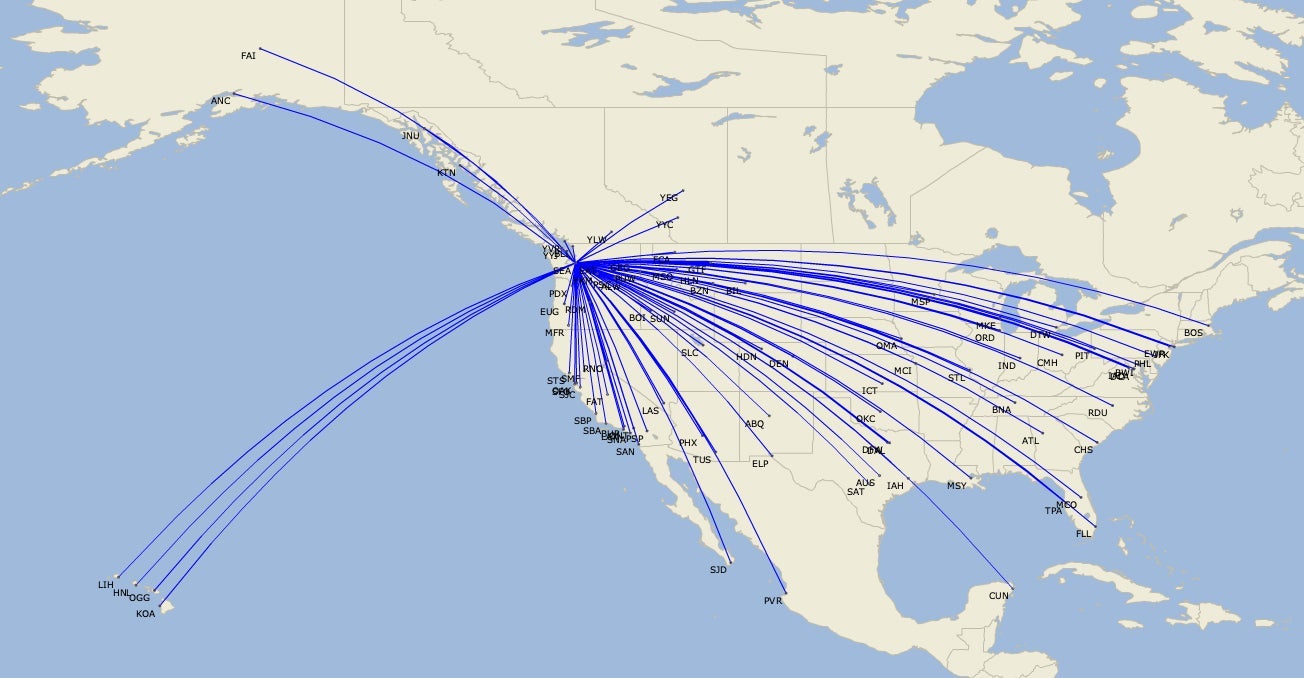
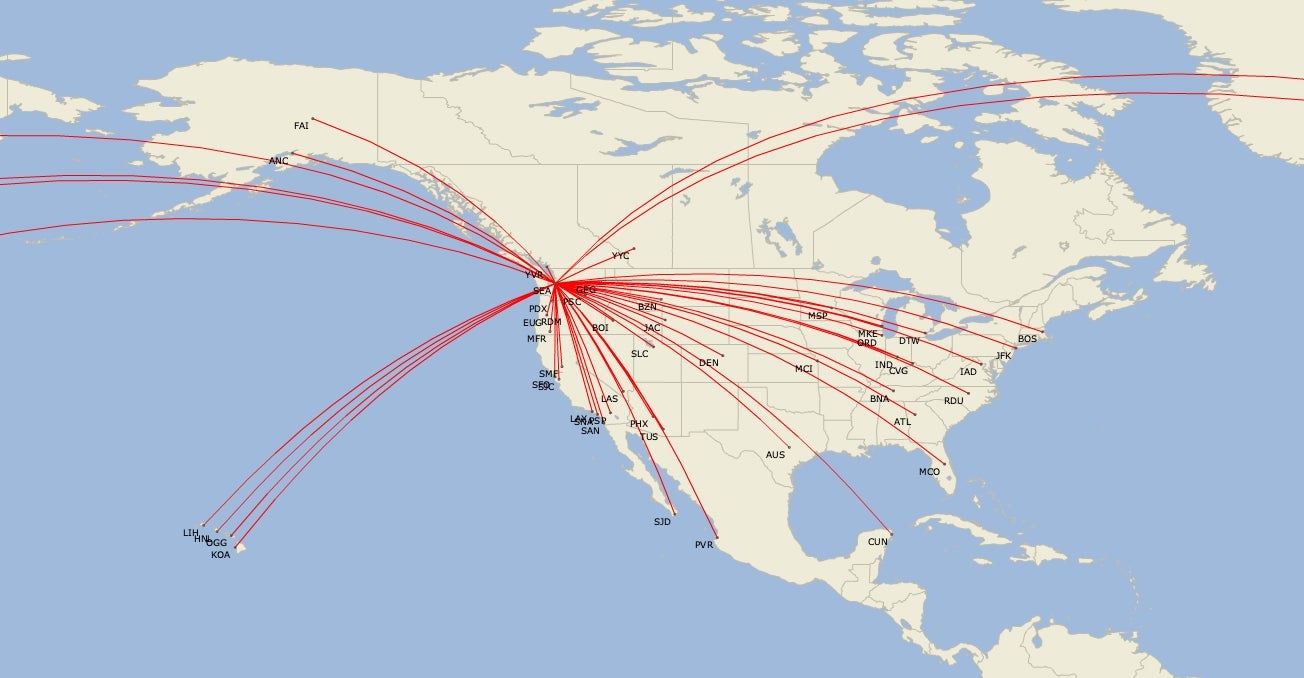
American, for comparison, was the fifth-largest airline in Seattle — behind Southwest Airlines and United Airlines — with just over a 5% share of passengers during the period.
For its part, American's long-haul flights from Seattle will not be the first time the city has had two U.S. carriers competing for international passengers. Throughout the 1980s and 1990s, Northwest and United Airlines competed for Asia-bound travelers from the Puget Sound region with dueling flights to Tokyo and elsewhere.
TPG featured card
at American Express's secure site
Terms & restrictions apply. See rates & fees.
| 4X | Earn 4X Membership Rewards® points per dollar spent on purchases at restaurants worldwide, on up to $50,000 in purchases per calendar year, then 1X points for the rest of the year. |
| 4X | Earn 4X Membership Rewards® points per dollar spent at US supermarkets, on up to $25,000 in purchases per calendar year, then 1X points for the rest of the year. |
| 5X | Earn 5X Membership Rewards® points on prepaid hotel stays booked through AmexTravel.com or the Amex Travel App™. |
| 3X | Earn 3X Membership Rewards® points on flights booked through AmexTravel.com, the Amex Travel App™, or purchased directly from airlines. |
| 2X | Earn 2X Membership Rewards® points on prepaid car rentals booked through AmexTravel.com or the Amex Travel App™ and cruises booked and paid through AmexTravel.com. |
| 1X | Earn 1X Membership Rewards® point per dollar spent on all other eligible purchases. |
Pros
- Valuable dining and food-related credits
- Flexible rewards with airline and hotel transfer partners
- Multiple travel and purchase protections
- No foreign transaction fees
- Access to Amex Offers for additional savings (enrollment required)
Cons
- Not as useful for those living outside the U.S.
- Some may have trouble using Uber and other dining credits
- You may be eligible for as high as 100,000 Membership Rewards® Points after you spend $8,000 in eligible purchases on your new Card in your first 6 months of Card Membership. Welcome offers vary and you may not be eligible for an offer. Apply to know if you’re approved and find out your exact welcome offer amount – all with no credit score impact. If you’re approved and choose to accept the Card, your score may be impacted.
- Earn 4X Membership Rewards® points per dollar spent on purchases at restaurants worldwide, on up to $50,000 in purchases per calendar year, then 1X points for the rest of the year.
- Earn 4X Membership Rewards® points per dollar spent at US supermarkets, on up to $25,000 in purchases per calendar year, then 1X points for the rest of the year.
- Earn 5X Membership Rewards® points on prepaid hotel stays booked through AmexTravel.com or the Amex Travel App™.
- Earn 3X Membership Rewards® points on flights booked through AmexTravel.com, the Amex Travel App™, or purchased directly from airlines.
- Earn 2X Membership Rewards® points on prepaid car rentals booked through AmexTravel.com or the Amex Travel App™ and cruises booked and paid through AmexTravel.com.
- Earn 1X Membership Rewards® point per dollar spent on all other eligible purchases.
- Pay It® lets you tap in the American Express® App to quickly pay for small purchase amounts throughout the month and still earn rewards the way you usually do. Plan It® gives you the option to split up big purchases into equal monthly payments with a fixed fee. You’ll know upfront exactly how much you’ll pay.
- $120 Dining Credit: Earn up to a total of $10 in statement credits monthly when you pay with the Gold Card at Grubhub (including Seamless), Buffalo Wild Wings, Five Guys, The Cheesecake Factory, and Wonder. This can be an annual savings of up to $120. Enrollment required.
- $100 Resy Credit: Get up to $100 in statement credits each calendar year at over 10,000 qualifying U.S. Resy restaurants after you pay for eligible purchases with the American Express® Gold Card. That’s up to $50 in statement credits semi-annually. Enrollment required.
- $84 Dunkin' Credit: Earn up to $7 in monthly statement credits after you pay with the American Express® Gold Card at U.S. Dunkin’ locations. Enrollment required.
- $120 Uber Cash on Gold: Enjoy up to $120 in Uber Cash annually with your Gold Card. Just add your Card to your Uber account and you'll get $10 in Uber Cash each month to use on orders and rides in the U.S. when you select an Amex Card for your transaction.
- Enjoy complimentary Hertz Five Star® Status benefits like skipping the counter at select locations, adding an additional driver at no additional cost*, and vehicle upgrades**. Benefit enrollment and Hertz Gold+ registration are required. *Additional drivers must meet standard rental qualifications and must be a spouse or domestic partner to qualify as complimentary. Other additional drivers subject to fees. **Benefits are subject to availability and vary by location. Additional Hertz program Terms and Conditions including age restrictions apply.
- Book two nights or more with The Hotel Collection through AmexTravel.com or the Amex Travel App™ and receive a $100* credit towards eligible charges at over 1,400 upscale hotels worldwide. *Eligible charges vary by property.
- Book your travel through the Amex Travel App™ with added peace of mind – backed by American Express® service and support. Only for American Express® Card Members.
- Whenever you need us, we're here. Our Member Services team will ensure you are taken care of. From lost Card replacement to statement questions, we are available to help 24/7.
- No Foreign Transaction Fees.
- Annual Fee is $325.
- Terms Apply.