Did you have a 'hard landing'? It was likely on purpose

Sometimes a landing is as smooth as silk. On the Airbus A380, almost every time I barely notice that the plane has made contact with terra firma — instead it's the noise made by the reverse thrusters that lets you know. Other times, the landing is quite a bit more bumpy with a solid jolt on touchdown that you feel in your body. Very, very rarely, the landing is so hard that the plane is damaged, sometimes even beyond repair, like this United Airlines 757 earlier this year.
But did you know that some of the landings you might have thought were especially hard are intentionally firm?
I spoke to Captain Doug Morris, a longtime Air Canada pilot with 25,000 hours of flight time under his belt, and Captain Chris Brady, a commercial airline pilot who created the Boeing 737 Technical Site and Facebook group, for their take on landings with a bit more of a jolt.
Snug or Firm...But Not Hard
"First of all, pilots prefer the term snug or firm," Morris explained. "The term 'hard' is bit harsh". And as it turns out, technically incorrect. Indeed, Brady explained that a so-called "hard landing" is both colloquially used by passengers, but also has a technical meaning used by the aircraft manufacturers.
Sign up for the free daily TPG newsletter for more airline news!
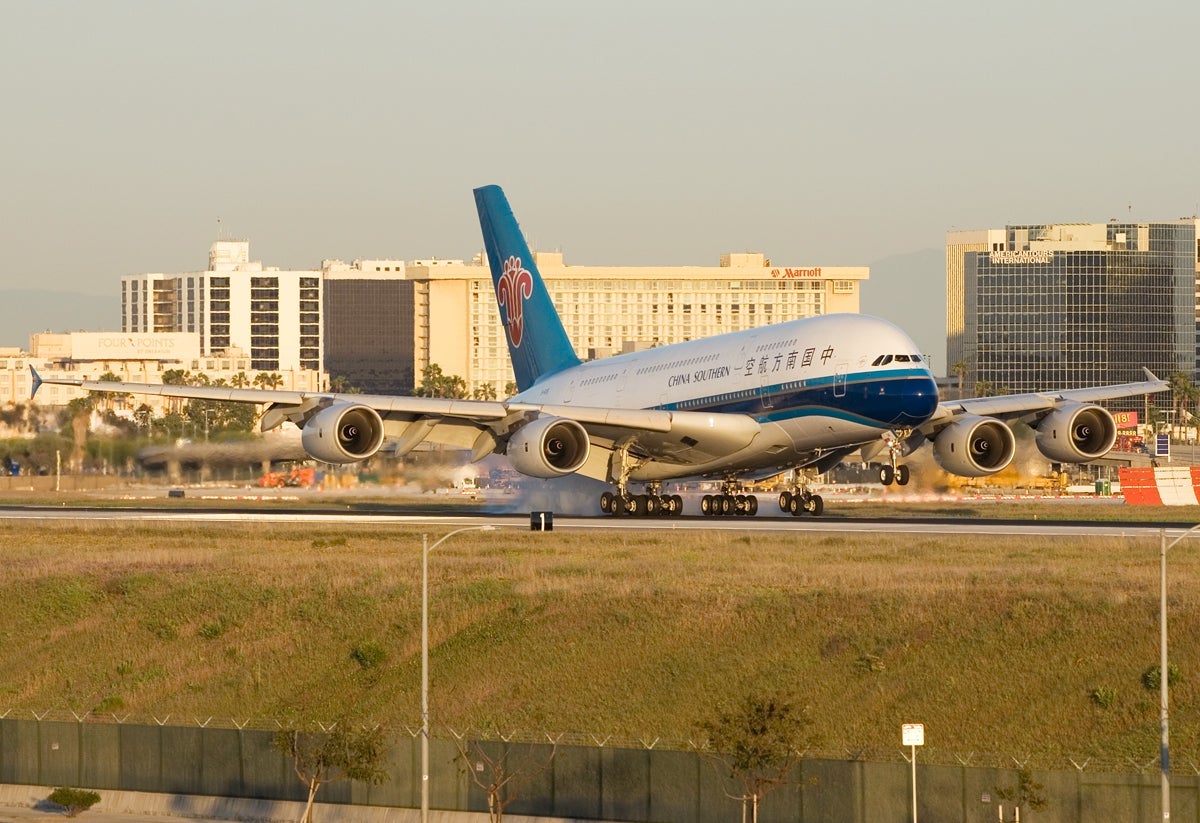
The normal sink rate of an aircraft on landing is two to three feet per second; when a pilot lands at seven to eight feet per second, it will feel harder than normal. Pilots have been known to report it as a hard landing, Brady explained, even though the landing was within the prescribed limits.
The technical definition of a hard landing is a peak recorded vertical acceleration that exceeds 2.1G, or a force more than twice your own body weight. Boeing defines a "hard landing" to be any landing that may have resulted in an exceeding of limit load on the airframe or landing gear, with a sink rate of 10 feet per second with zero roll at touchdown. That would be a big drop, much more than seven to eight feet per second.
A hard landing is never ok, said Brady. "A firm landing may be ok," he added.
So, why will pilots land firmly?

First of all, their training manuals for aircraft such as the Boeing 737 specifically state: "Do not allow the airplane to float: fly the airplane onto the runway. Do not extend the flare by increasing pitch attitude in an attempt to achieve a perfectly smooth touchdown." (In layperson's terms: Don't pull the nose up for too long just prior to touchdown. "Flaring" means pulling the nose up.)
There are few good reasons to fly the airplane onto the runway. One is very simple: a runway is a coveted space. You don't want to hog it when there are dozens of other airplanes that need to get on it quick.
"I fly in to the 10 busiest airports in the world. Many of those are high-intensity runway operations. You want to get on the runway, and get off to the nearest taxiway. It's not the time for finesse and a smooth landing," said Air Canada's Morris.
"[LaGuardia] is a good example. It's basically like landing on a short-field runway every time," he said, noting that he flew frequently to LGA as a captain on the A320. "We're going to flare but with no float. We aim to pick a spot on the runway and put it there."
"On landing, it's important to be in the correct place at the correct speed," Brady said. "You don't want to be 10 or 20 knots too fast, and not set up to land at the right spot on the runway."
"Everything else is dressing," Brady laughed.
Slippery when wet
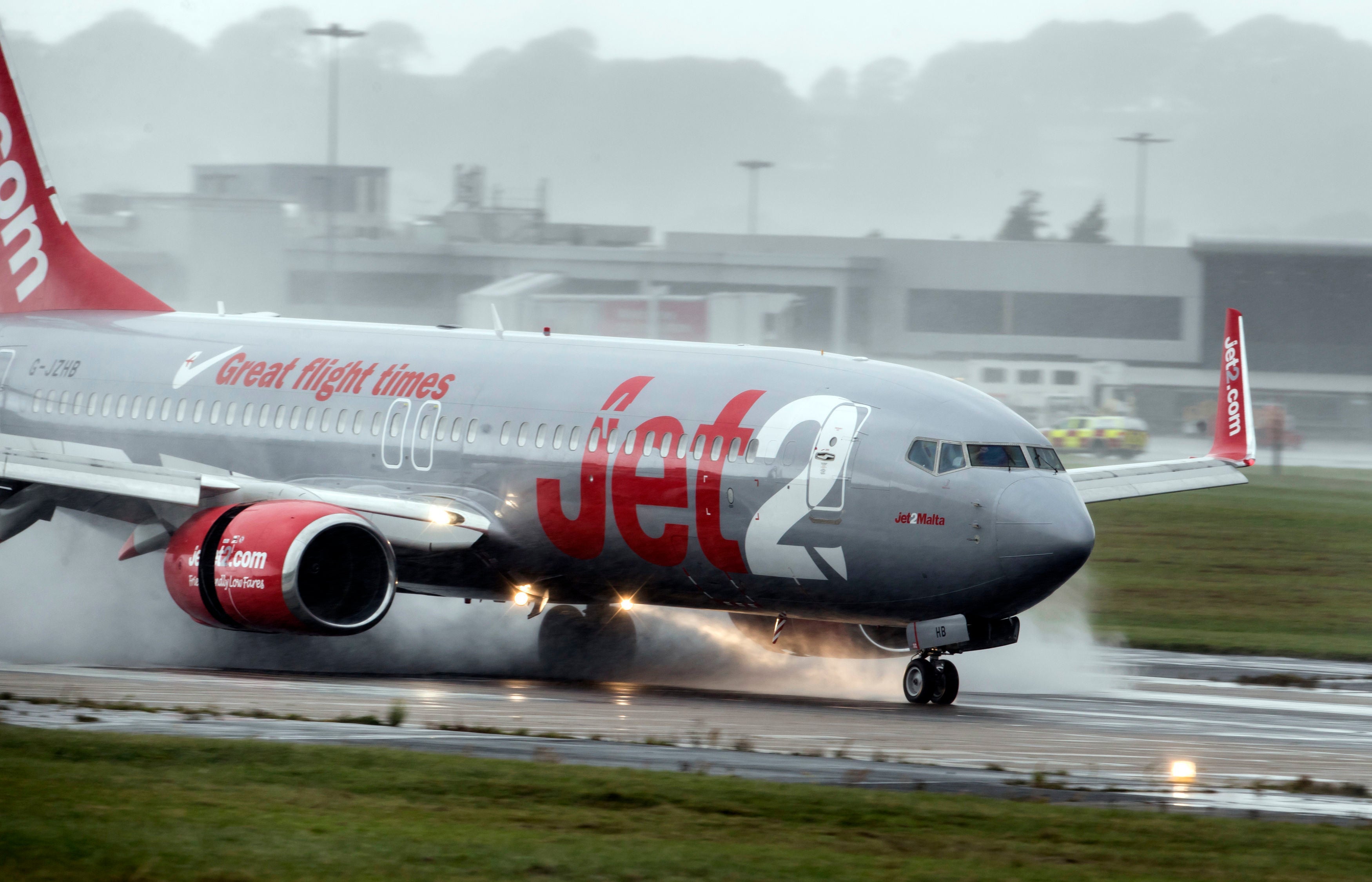
The other reason to land firm is if the weather is poor with a slippery runway due to "contamination" such as water, slush or snow. Morris explained that on departure, the primary concern is any kind of mechanical issue, itself quite rare. "On landing, it's all related to weather," he said. This kind of weather includes cross-winds, wind shear, microbursts, rain, and slippery runways because of rain or snow. In these instances, the pilots want to put down the plane firmly.
A firm landing allows for the ground spoilers to deploy more quickly, the wheels to spin up and the brakes to be applied. All of this helps with the braking action of the aircraft. Even though the runways are long — at Toronto's Pearson Airport where Morris flies, the longest is two miles — there is always the potential for an overrun when conditions are poor.
Intentional firm landings aside, Brady said that some runways make it very hard to get a smooth landing, particularly those with an upslope. He cited Naples, Italy, which "undulates," and noted that Manchester Airport's runway 24R has a large bump right in the middle. "My colleagues and I have tried to flatten it out with our planes," Brady joked.
"Some of them are like ski slopes with plenty of oscillations," he said, noting that the maps that pilots use will sometimes indicate the runway profile to help pilots understand where the runway goes up or down. Other runways, he said, are unusually wide. Madrid's airport runways, for example, are 198 feet wide, compared to 165 feet at London Heathrow.
In any case and no matter the landing, pilots like Morris and Brady will greet passengers as they disembark. Whether a greased landing or a firm one, their objective is always safety first. And a firm landing is sometimes necessary.
Mike Arnot is a pilot, the founder of Boarding Pass NYC, a New York-based travel brand, and a marketing consultant to airlines, none of which appear in this article.
TPG featured card

at Capital One's secure site
Terms & restrictions apply. See rates & fees.
| 5X miles | Earn 5X miles on hotels, vacation rentals and rental cars booked through Capital One Travel |
| 2X miles | Earn unlimited 2X miles on every purchase, every day |
Pros
- Stellar welcome offer of 75,000 miles after spending $4,000 on purchases in the first three months from account opening. Plus, a $250 Capital One Travel credit to use in your first cardholder year upon account opening.
- You'll earn 2 miles per dollar on every purchase, which means you won't have to worry about memorizing bonus categories
- Rewards are versatile and can be redeemed for a statement credit or transferred to Capital One’s transfer partners
Cons
- Highest bonus-earning categories only on travel booked via Capital One Travel
- LIMITED-TIME OFFER: Enjoy $250 to use on Capital One Travel in your first cardholder year, plus earn 75,000 bonus miles once you spend $4,000 on purchases within the first 3 months from account opening - that’s equal to $1,000 in travel
- Earn unlimited 2X miles on every purchase, every day
- Earn 5X miles on hotels, vacation rentals and rental cars booked through Capital One Travel
- Miles won't expire for the life of the account and there's no limit to how many you can earn
- Receive up to a $120 credit for Global Entry or TSA PreCheck®
- Use your miles to get reimbursed for any travel purchase—or redeem by booking a trip through Capital One Travel
- Enjoy a $50 experience credit and other premium benefits with every hotel and vacation rental booked from the Lifestyle Collection
- Transfer your miles to your choice of 15+ travel loyalty programs
- Top rated mobile app