The fuel dilemma: How pilots know how much to carry

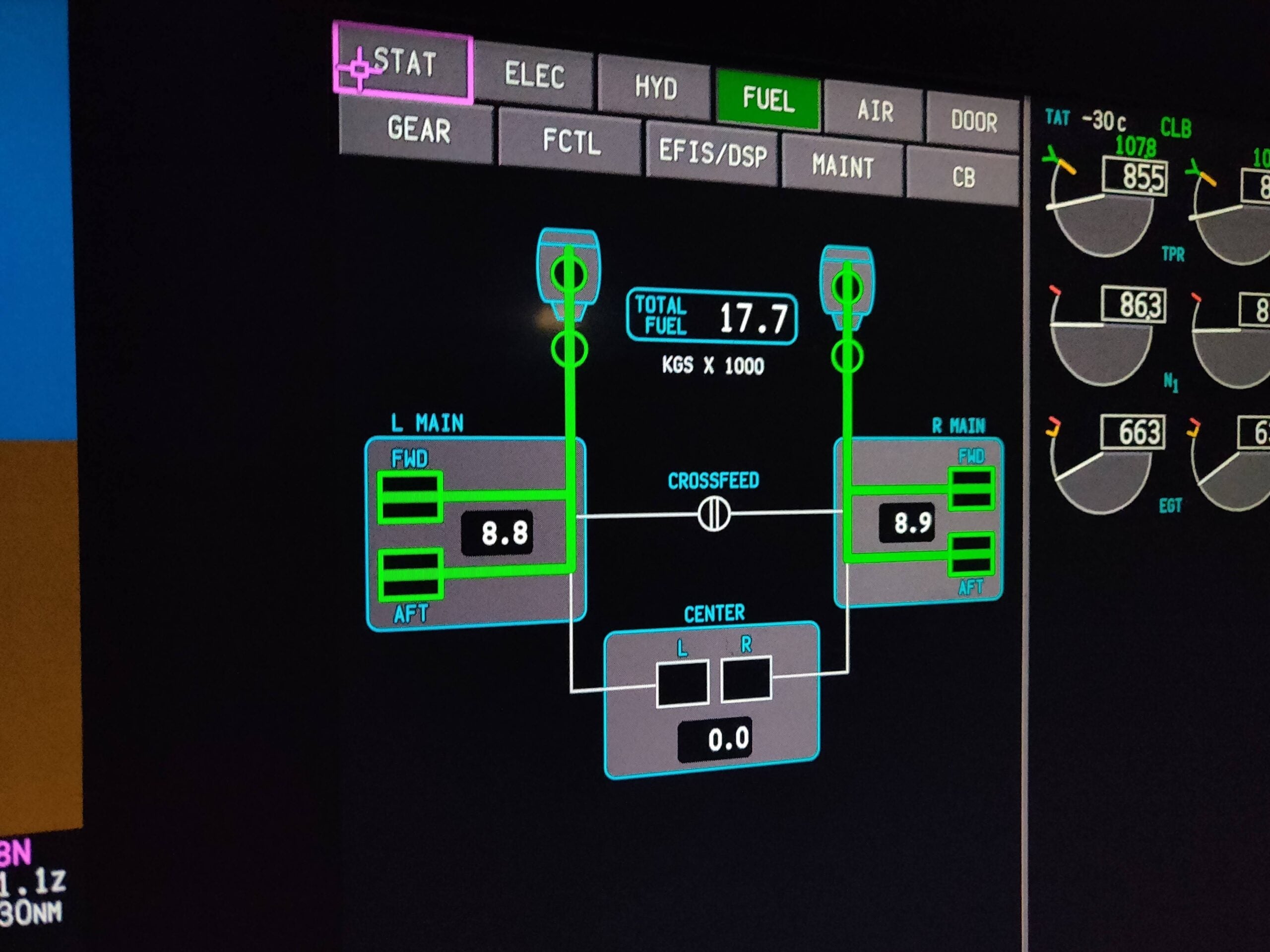
In the past week, sudden airspace closures over Afghanistan have shown how political events on the ground can have a major impact on air travel. Pilots already airborne planning to fly through this area of the world had to think on the spot and come up with a solid backup plan.
This involved planning a new route to avoid the closed airspace, as well as other nearby areas also deemed unsafe. Whether or not these reroutes were possible depended on an unchangeable factor: how much fuel they had on board.
There's a famous saying that the most useless things in aviation are runway behind you, altitude above you and fuel left in the fuel truck. As a result, deciding how much fuel we want to uplift before departure is key to a safe flight.
What is aviation fuel?
The fuel used to power a commercial aircraft is quite different from what you put in your car.
It must be volatile enough to be ignited in the engine's combustion chamber, but not so volatile that it will burst into flames in the event of a fuel spill or accident. At the same time, it must be easily mass-produced, straightforward to transport but also able to withstand the high range of temperatures it will experience in the various stages of flight.
While the fuel you put in your car also comes from oil, the fuel that goes into an aircraft is somewhat different.
You may remember from high school chemistry that raw oil is heated in a refinery. The vapors that are created condense into liquids at different temperatures, which then form the base of fuels such as petrol, diesel and kerosene. It is kerosene that is then used to make the Jet A-1 (or Jet A in the U.S.) fuel used in turbine engines.
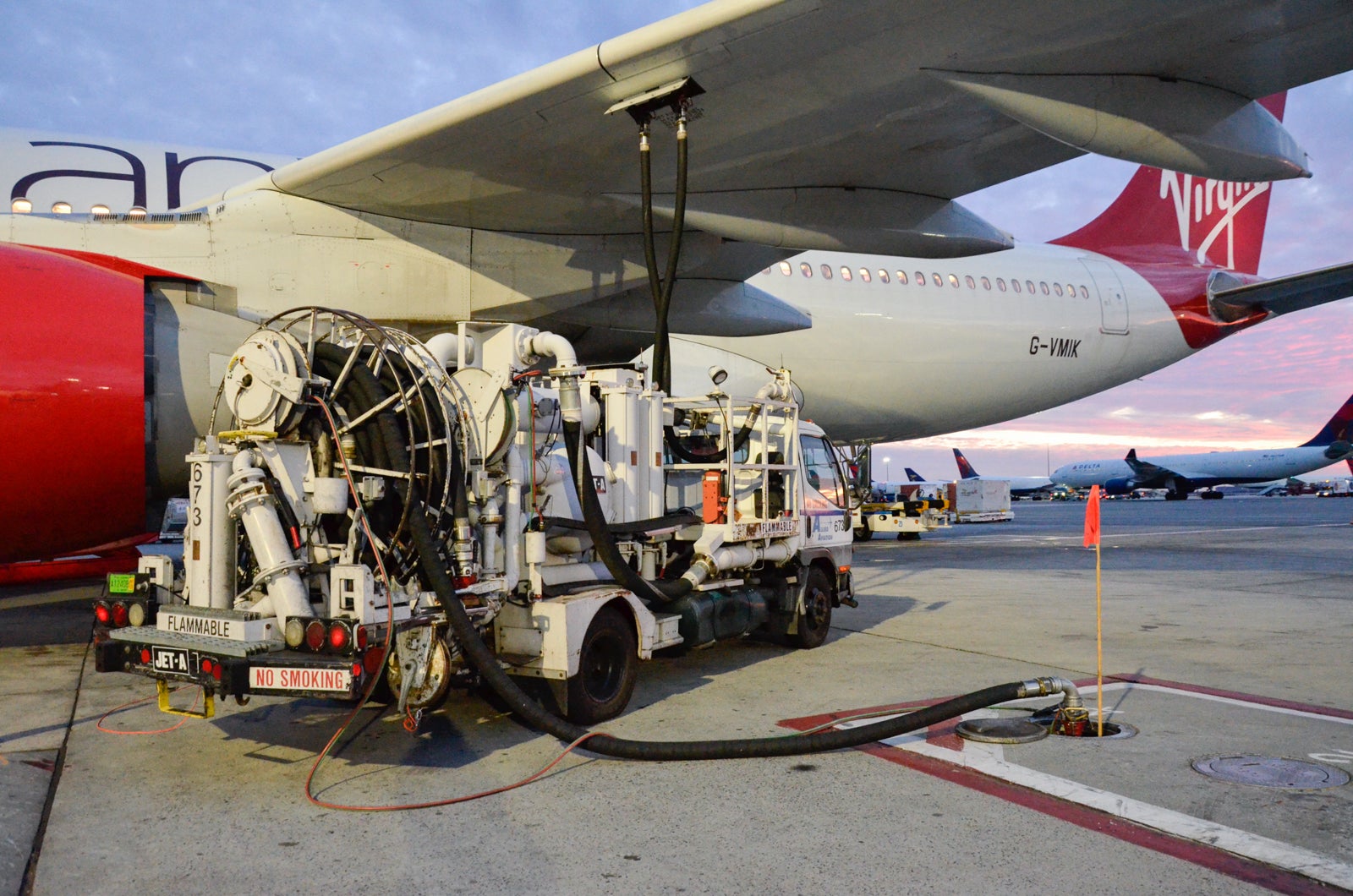
To help reduce the impact of aviation on the environment, however, the industry is developing Sustainable Aviation Fuels (SAFs) which lower the harmful emissions produced by burning kerosine. These fuels, mostly based on biomass, can be mixed in with conventional Jet-A1 to reduce a flight's carbon emissions. As SAFs have to work seamlessly alongside traditional fuels, for now, they both have very similar properties.
Firstly, they have a much higher flash point than the petrol in your car, commonly around 460 degrees Fahrenheit. Commercial aviation is all about safety, and this includes fuel. When you're carrying 90 tons of it you want it to be as stable as possible. This means that in the event of an accident, the fuel is less likely to ignite.

Secondly — and most importantly from a day-to-day aspect — it has a very low freezing point. While you're seated enjoying a movie in a pleasant 70-degree cabin, outside your window it's bitterly cold (about minus 67 degrees). At higher latitudes, it can get even colder; minus 97 degrees over Siberia is my personal record. When temperatures get this low, a conventional fuel would freeze.
The Jet A-1 powering the engines has a freezing point of minus 52 degrees Fahrenheit. Jet A, used only in the U.S., has a slightly warmer freezing point of minus 40 degrees. However, due to the warming effect the air rushing over the wing has, the fuel rarely gets this cold. On the 787 Dreamliner, the fuel normally only gets as cold as minus 14 degrees Fahrenheit.
Filling the tanks
The tanks on a 787 Dreamliner can hold up to 101 tons of fuel, enough for an 18-hour flight. However, for shorter trips, like those between New York City and London where the flight time is around seven hours, we only need about 35 tons of fuel.
We could of course just fill the tanks up and be on our way, but carrying extra fuel has a knock-on effect: it increases our weight. To see why this affects us, we need to look at how an aircraft flies.
Contrary to common belief, an aircraft flies not because of the engines, but because of the wings. Air flowing over the wings creates lift and makes it possible to fly. The engines merely provide the forward thrust to get the air flowing over the wings. For this reason, even if both engines failed mid-flight, the aircraft would not just immediately fall out of the sky.
We'd simply lower the nose slightly to start a slow descent, using the airflow over the wings to create the lift.
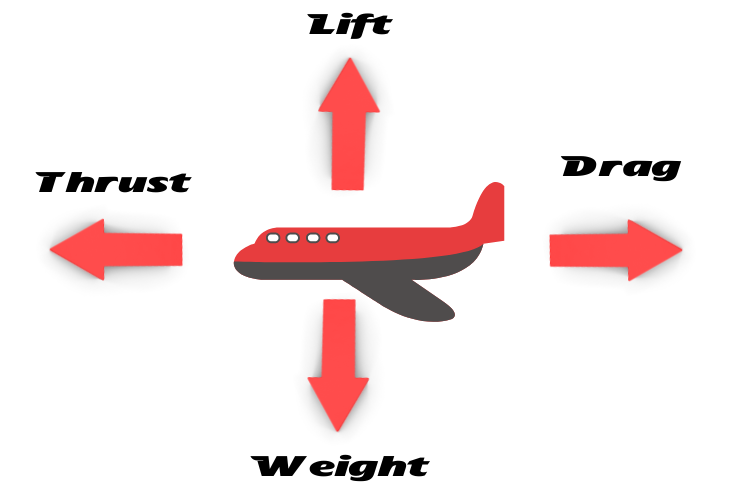
As we accelerate down the runway on takeoff, when the lift generated by the wings is greater than the weight of the aircraft, we can raise the nose into the air and get airborne. This is where the issue of excess fuel comes in.
The more excess fuel we carry, the heavier we become. The heavier we become, the more lift we need to take off and keep flying. To do this, we have to accelerate to a faster speed, requiring more engine power. Which, in turn, uses more fuel.
So, not only does the extra weight of the fuel use more fuel to take off and climb up to cruising altitude, we actually end up using more fuel to carry that extra weight of the fuel along the course of our flight. This is fine if money is no object.
But, for most airlines, fuel is the second-highest cost, so regularly carrying too much fuel can have a major impact on the bottom line. For a pilot, there is no such thing as too much fuel, but for the airline accountants, there certainly is.
Conversely, there is obviously such a thing as too little fuel.
How much fuel is necessary?
It's not quite as simple as calculating the distance between the two airports and loading just enough fuel for that route.
Before every departure, the airline's flight planning department study the details of the flight including the planned weight of the aircraft (including the crew, passengers, baggage and cargo), en-route winds and any other factors that may affect the route, such as airspace closures.
From this, they can plan the most efficient route, taking advantage of tailwinds and higher altitudes.
The department generates a flight plan for the crew that not only details the route, but also the fuel plan for the duration of the journey. This is broken down into seven parts:
Trip fuel
The most obvious value, the trip fuel — also called the 'burn' — is what the aircraft will use to take off from the departure airport, climb up to the cruising altitude, descend make an approach and land at the destination.
On the 787, this is roughly 5 tons for every one hour of flying time. So, for a seven-hour flight to New York City, we'd be looking at roughly 35 tons of fuel.
The flight planning department can keep this to a minimum by using tailwinds and planning for the aircraft to fly as high as possible.
When flying with the wind behind us, our speed over the ground is greatly increased. As a result, the flight time is reduced and the engines will burn fuel for a shorter period of time.
Conversely, when flying into a headwind, the speed over the ground is slower, so the flight time is longer and we use more fuel.
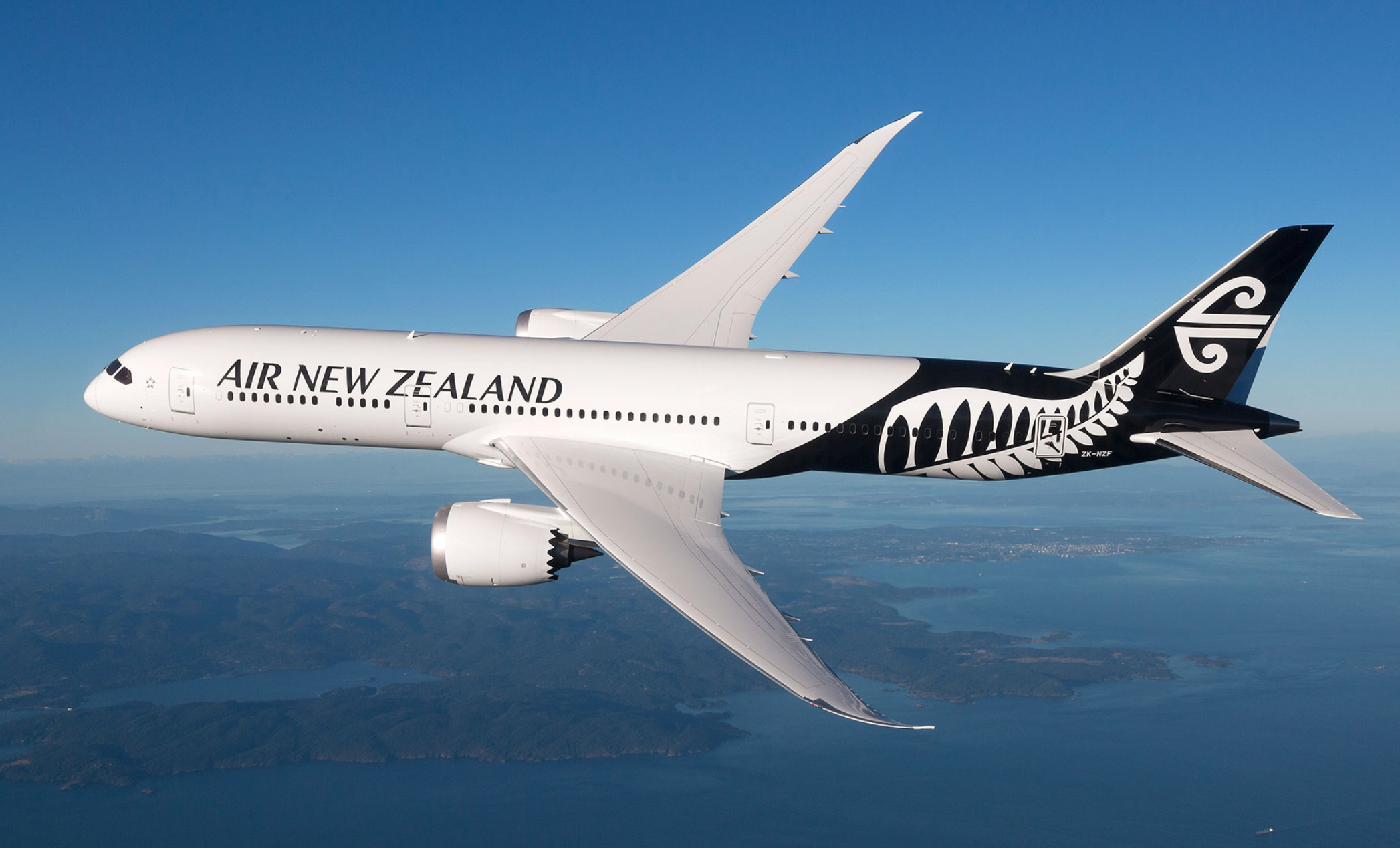
The altitude at which we fly also has a major effect on the fuel burn. The higher we fly, the more efficient the engines become.
However, this is limited by our weight: The heavier we are, the more lift we require from the wings and thus we're limited on how high we can climb. As we use fuel over the course of a long flight, we become lighter and are then able to climb up to the more fuel-efficient altitudes, known as a step climb.
The trip fuel will take these step climbs into consideration and give us an accurate figure for the flight ahead.
Contingency fuel
This is our "just in case" fuel.
As the events of last week have shown, flying an aircraft is extremely dynamic. The flight doesn't always go to plan and we must be able to adapt.
While this isn't always as extreme as the sudden closure of airspace, smaller reroutes do often happen, thunderstorms need circumnavigating and we may not always get the higher altitude on which the flight plan was based. As a result, we always carry a certain amount of contingency fuel to cover these eventualities. This is normally 5% of the trip fuel.
Diversion fuel
Taking enough fuel to get from one airport to the next along with a 5% contingency is fine — but what if we use the contingency along the way and then when we arrive at our destination, the weather has closed in and we're unable to land?
Having hardly any fuel left and nowhere to land is not ideal.
To cover this eventuality, we not only carry the trip and contingency fuel, but we also carry enough fuel to divert from the destination airport to an alternate airport. Where this alternate airport is located depends on a few factors.
In normal circumstances, the alternate will be somewhere geographically quite close. For London Heathrow (LHR), it might be London Gatwick (LGW). Instead of New York-JFK, it might be Newark (EWR). This gives us another option should the destination close for an unforeseen event like an aircraft emergency and keeps the weight of the extra fuel to a minimum.
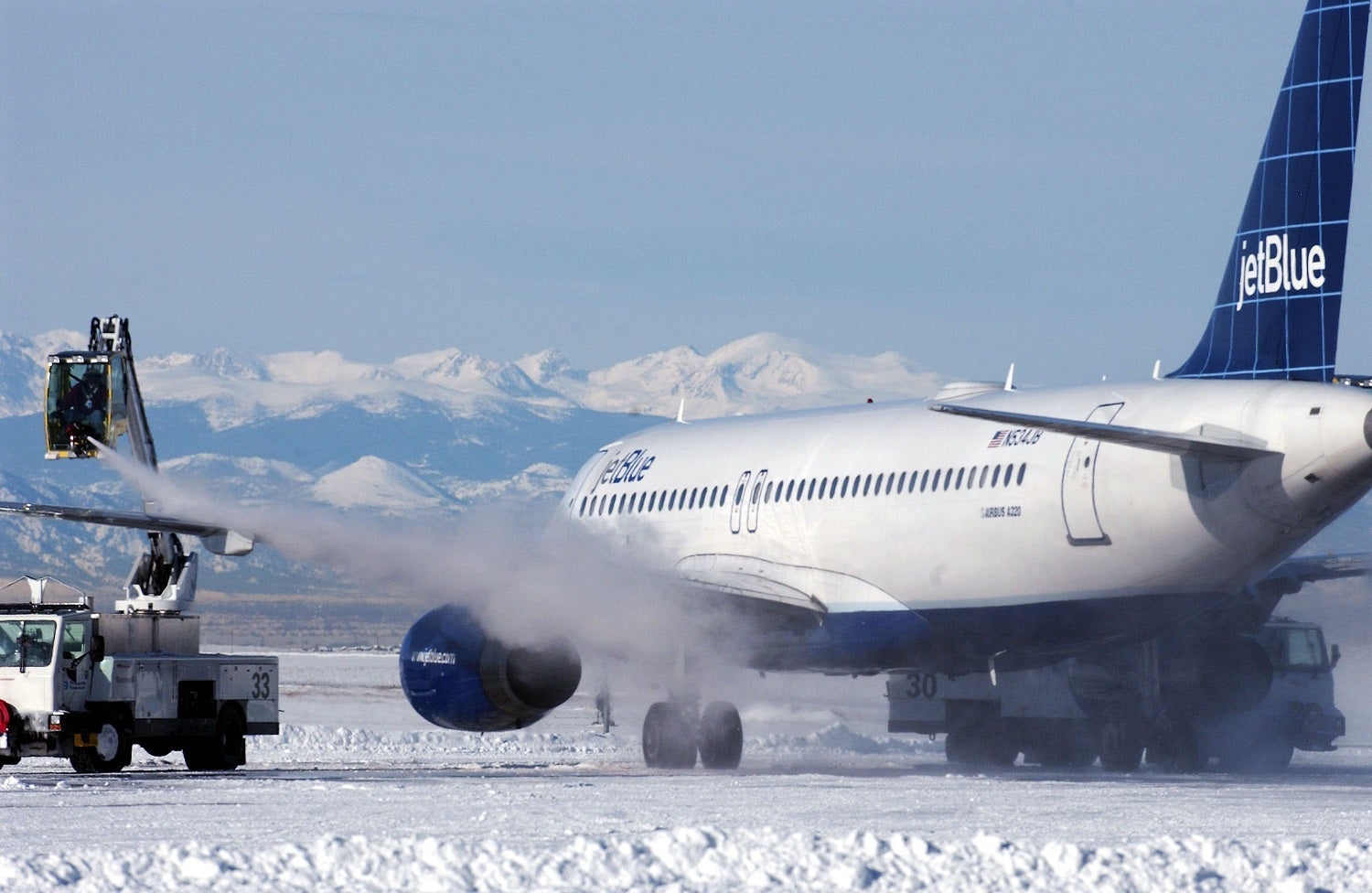
But if there's bad weather forecast at the destination (for example, across the Eastern Seaboard during a winter storm), bad weather at New York-JFK, it's pretty likely to be an issue at Newark (EWR), too.
As a result, we'll look for an airfield farther away that has a 'wide open' forecast, meaning the forecast weather will not stop us from landing.
Once we've identified somewhere suitable, we will then increase the diversion fuel to enable us to reach this airport. In this scenario, it may well be somewhere as far away as Atlanta, Georgia (ATL), or Charlotte, North Carolina (CLT).
It may seem extreme, but we do not want to find ourselves in a situation where we are running low on fuel with all nearby airports closed due to snow.
Final reserve
By now we have built up a fairly large amount of backup fuel should things not go according to plan. However, should we arrive at our alternate airport, having used all our trip, contingency and diversion fuel and suddenly need to break off the approach, we will be extremely low on fuel.
At this stage, there is one final backup: the final reserve fuel.
Providing 30 minutes flying time, all flights must plan to land with this final fuel intact. If we find ourselves in a situation where we will land with less than this amount, we must declare a fuel emergency to Air Traffic Control (ATC) and land the aircraft as soon as possible.
When declaring "mayday, mayday, mayday, fuel," ATC will make every effort to clear other aircraft out of the way and give us priority to land.
This is obviously a serious situation and there will be a subsequent investigation as to why the flight landed with less than the final reserve. As a result, this is an event that rarely happens.
Taxi fuel
The final part of the fuel plan is the fuel required to taxi to and from the runway and accounts for just a few hundred kilos on the 787.
Total fuel
With all these numbers calculated, we can then add them together to calculate the fuel required for the flight. However, it doesn't just stop there. This is just a minimum number to which we then apply our knowledge and experience.
If the weather for the destination looks fine, this final number will normally suffice. However, if the destination is forecast bad weather and there's a chance we may have to enter a holding pattern and delay our landing, we need to account for this fuel.
We could build that time into the contingency figure, but that would then reduce the amount of contingency fuel available to us for, say, weather diversions.
As a result, we will normally assess how much of a delay we think might experience before landing and add a certain extra amount onto the total fuel.
Bottom line
Deciding how much fuel to take on a flight is one of the most important decisions we make before departing from the gate.
Once are airborne, we only have a finite amount of time before we have to land the aircraft somewhere. There's no pulling over on the side of the road to think things through.
As a result, we pay close attention to weather forecasts both at the destination, the alternate and along our route and also to any situations on the way which might force us to change our route or altitude. Having the ability to think clearly when the chips are down is key to flight safety. And having more fuel in the tanks at these moments makes it much easier to do so.
TPG featured card

at American Express's secure site
Terms & restrictions apply. See rates & fees.
| 3X | Earn 3X Miles on Delta purchases. |
| 1X | Earn 1X Miles on all other eligible purchases. |
Pros
- Delta SkyClub access when flying Delta
- Annual companion ticket for travel on Delta (upon renewal)
- Ability to earn MQDs through spending
- Various statement credits for eligible purchases
Cons
- Steep annual fee of $650
- Other Delta cobranded cards offer superior earning categories
- Earn 100,000 Bonus Miles after you spend $6,000 or more in purchases with your new Card within the first 6 months of Card Membership and an additional 25,000 bonus miles after you make an additional $3,000 in purchases on the Card within your first 6 months, starting from the date that your account is opened. Offer Ends 04/01/2026.
- Delta SkyMiles® Reserve American Express Card Members receive 15 Visits per Medallion® Year to the Delta Sky Club® when flying Delta and can unlock an unlimited number of Visits after spending $75,000 in purchases on your Card in a calendar year. Plus, you’ll receive four One-Time Guest Passes each Medallion Year so you can share the experience with family and friends when traveling Delta together.
- Enjoy complimentary access to The Centurion® Lounge in the U.S. and select international locations (as set forth on the Centurion Lounge Website), Sidecar by The Centurion® Lounge in the U.S. (see the Centurion Lounge Website for more information on Sidecar by The Centurion® Lounge availability), and Escape Lounges when flying on a Delta flight booked with the Delta SkyMiles® Reserve American Express Card. § To access Sidecar by The Centurion® Lounge, Card Members must arrive within 90 minutes of their departing flight (including layovers). To access The Centurion® Lounge, Card Members must arrive within 3 hours of their departing flight. Effective July 8, 2026, during a layover, Card Members must arrive within 5 hours of the connecting flight.
- Receive $2,500 Medallion® Qualification Dollars with MQD Headstart each Medallion Qualification Year and earn $1 MQD for each $10 in purchases on your Delta SkyMiles® Reserve American Express Card with MQD Boost to get closer to Status next Medallion Year.
- Enjoy a Companion Certificate on a Delta First, Delta Comfort, or Delta Main round-trip flight to select destinations each year after renewal of your Card. The Companion Certificate requires payment of government-imposed taxes and fees of between $22 and $250 (for itineraries with up to four flight segments). Baggage charges and other restrictions apply. Delta Basic experiences are not eligible for this benefit.
- $240 Resy Credit: When you use your Delta SkyMiles® Reserve American Express Card for eligible purchases with U.S. Resy restaurants, you can earn up to $20 each month in statement credits. Enrollment required.
- $120 Rideshare Credit: Earn up to $10 back in statement credits each month after you use your Delta SkyMiles® Reserve American Express Card to pay for U.S. rideshare purchases with select providers. Enrollment required.
- Delta SkyMiles® Reserve American Express Card Members get 15% off when using miles to book Award Travel on Delta flights through delta.com and the Fly Delta app. Discount not applicable to partner-operated flights or to taxes and fees.
- With your Delta SkyMiles® Reserve American Express Card, receive upgrade priority over others with the same Medallion tier, product and fare experience purchased, and Million Miler milestone when you fly with Delta.
- Earn 3X Miles on Delta purchases and earn 1X Miles on all other eligible purchases.
- No Foreign Transaction Fees. Enjoy international travel without additional fees on purchases made abroad.
- $650 Annual Fee.
- Apply with confidence. Know if you're approved for a Card with no impact to your credit score. If you're approved and you choose to accept this Card, your credit score may be impacted.
- Terms Apply.
- See Rates & Fees