Will the Big Front Seat survive? Higher fares? Spirit and Frontier CEOs tackle biggest merger questions

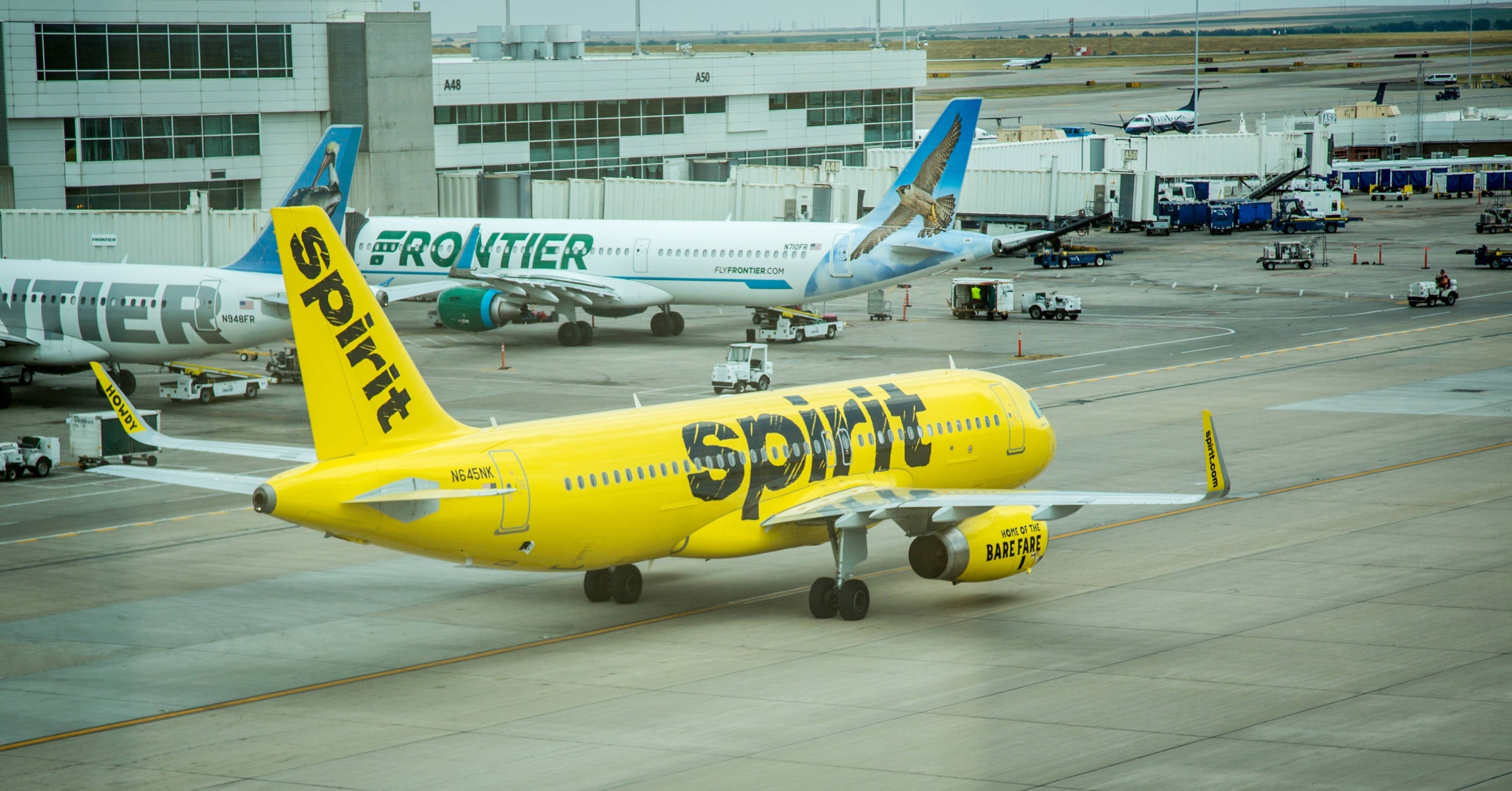
Spirit and Frontier Airlines announced a planned merger on Monday that, when completed, would see the airlines merge operations and operate potentially as a single airline.
The blockbuster deal would make the combined Spirit and Frontier the fifth-biggest airline by capacity in the United States, behind only the "Big 4" carriers — American, Delta, United and Southwest.
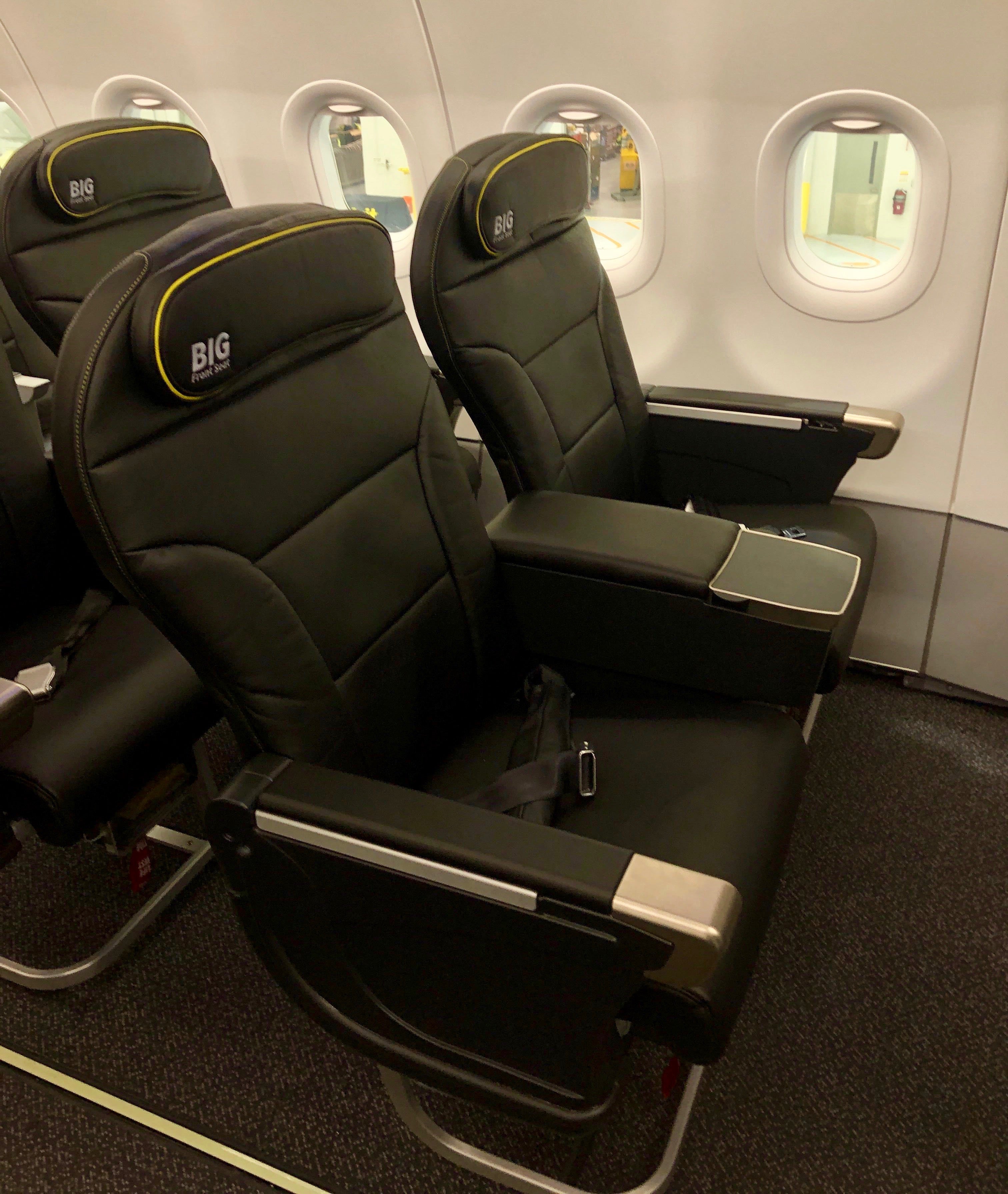
Although the airlines have shared some of the initial details of the merger, there are presently more questions than answers. Among the biggest for passengers: What's to come for the Big Front Seat?
In an interview with TPG, Spirit's current CEO Ted Christie and Frontier CEO Barry Biffle declined to say whether the combined airline would add the Big Front Seat across its fleet, or whether it would be slowly phased out. Still, the two hinted that it's been a customer favorite, and that the new airline will follow the customer data — as long as the economics work out.
"We do have the Big Front Seat at Spirit and they've got a stretch product at Frontier, and we'll look at what our guests are telling us, at what the data tells us," Christie said.
Related: Is the Spirit Airlines Big Front Seat worth it?
The Big Front Seat is exactly what it sounds like. It's a larger domestic first class-style recliner seat at the front of Spirit Aircraft, set in a 2-2 configuration (as opposed to the 3-3 layout of the rest of the seats). Unlike legacy airlines, which sell the bigger seats up front as a separate cabin, with improved service, passengers who pay for the Big Front Seat only get the more comfortable chair. Everything else about the experience is the same.
Biffle, who previously worked at Spirit from 2005-2013, said that the idea of the Big Front Seat came when Spirit repositioned itself as a budget airline.
"The reason for the Big Front Seat was because before Spirit was transformed to a ULCC," he said, "they had a business class seat, and it was actually more expensive to get rid of it than we had cash at the time, but we wanted to get rid of the service element, at least."

Biffle said that Frontier's extra-legroom "stretch" seats have been "really successful" since their introduction, and suggested that the combined airline would look at the two products and see which would be the most economically viable.
"I couldn't be more excited to someday sit down when we can, post-close, and compare notes," he said. "How is the stretch doing, how is the Big Front Seat doing? And we'll figure out what the right thing for consumers is."
"I understand it, but we've got to make sure it makes economic sense, but more importantly, what is the overall consumer value proposition," Biffle added. "But I can assure you that we'll derive all the data from both sides and we'll come up with the best consumer offering that drives the most consumer loyalty."
Fares and markets
Big Front Seat aside, among the biggest questions about the merger is whether ticket prices on the carriers will increase. After all, the merger would mean that Allegiant is the only ULCC of any significant size left to take on the Frontier-Spirit conglomeration.
Biffle insists that fares will not increase, and said that all of the financial projections and calculations the airline released to investors assume an average "all-in" price paid by consumers that stays the same as it is today.
"The $500 million in annual EBITDA synergies, there's not one penny from raising fares," he said. "All of that is from selling more low fares to more people and more places."
"This is not about raising prices, it's not about constraining capacity, this is about everybody winning," Biffle added. "For consumers to win, for our employees to win, for our shareholders to win, and quite honestly, for the environment to win," he said, referring to the fact that the combined airline would have the youngest fleet age of any major U.S. airline, of which nearly 80% would belong to the more efficient A320neo family.
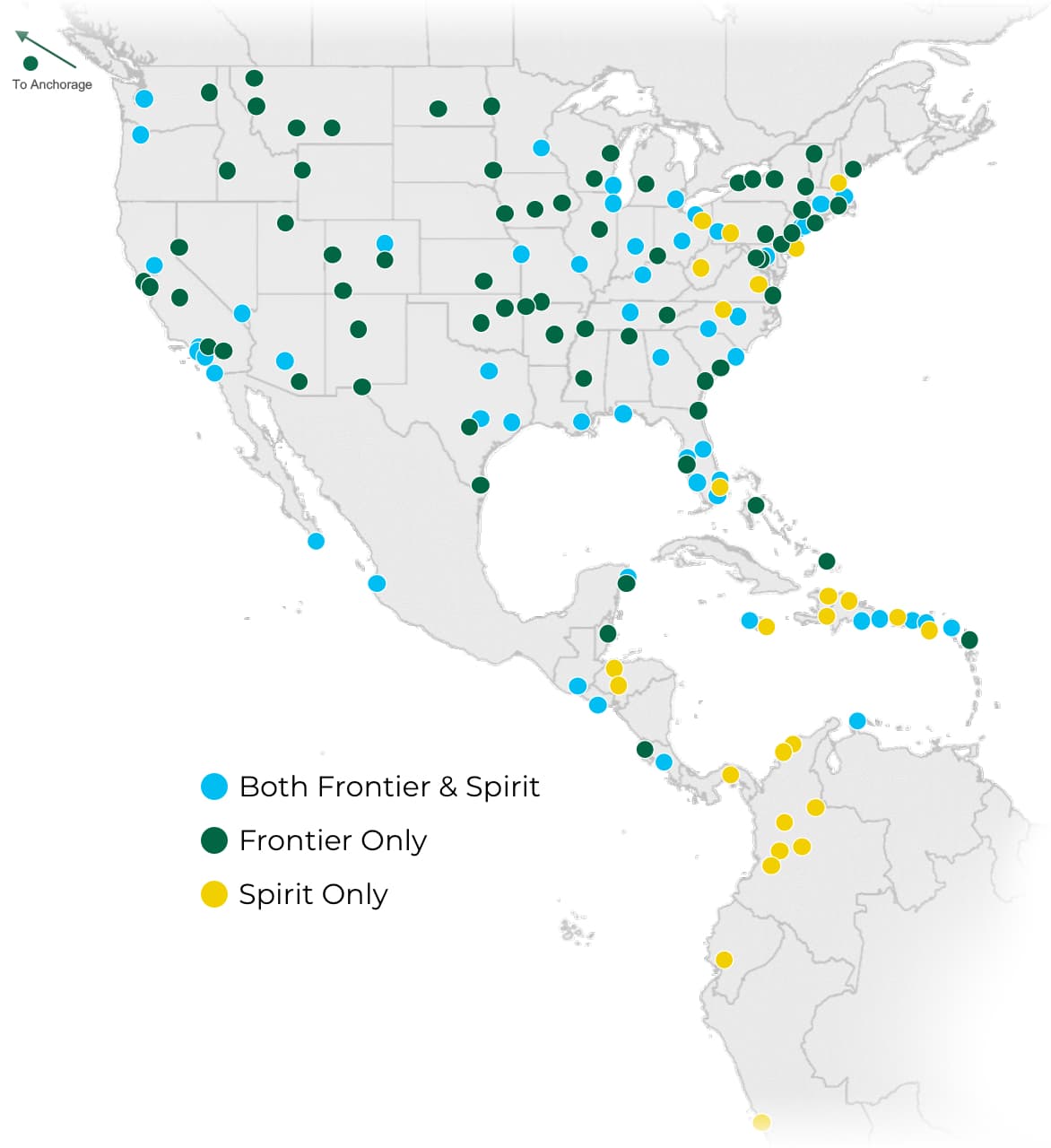
During the merger announcement on Monday, the two airlines said that with their combined operations, the two airlines would be able to successfully service markets that they had previously either rejected — such as Eugene, Oregon, and Worcester, Massachusetts, or that they had withdrawn from, like Jackson, Mississippi and Birmingham, Alabama.
Biffle said that the efficiencies from combining operations and economies of scale would drive the potential for these markets.
"The two airlines just get bigger, which means they have more options and more availability of connections," Biffle said.
Places like Eugene, he argued, have lower levels of originating demand than other markets the two airlines have individually chosen to focus on, but have enough demand for leisure travel and for people visiting friends and relatives that the larger airline would make it feasible.
"Scale matters," Biffle said.
Regulatory challenges
The two airlines will need to show their work, though, before the merger can proceed. The final deal is still subject to regulatory approval, and that's not a given.
The Biden administration has previously given indications of reluctance to approve mergers and coordination in the airline sector. In 2021, the Department of Justice filed an antitrust suit against American Airlines and JetBlue, alleging that their "Northeast Alliance" amounts to unfair, uncompetitive practices.
American and JetBlue have argued that by coordinating in the Northeast, they can better compete against entrenched airlines Delta and United. It's a similar tack to the one Frontier and Spirit appear poised to use.
"All we can emphasize," Christie said, "is the extreme positives of this transaction. The fact that it's a different deal than [the DOJ] has seen before."
"It really behooves us to educate the administration and the DOJ on the positive parts of the deal, and when we take that all into consideration, we feel like we have a very good, compelling argument that this combination should proceed," he added.
TPG featured card

at Capital One's secure site
Terms & restrictions apply. See rates & fees.
| 5X miles | Earn 5X miles on hotels, vacation rentals and rental cars booked through Capital One Travel |
| 2X miles | Earn unlimited 2X miles on every purchase, every day |
Pros
- Stellar welcome offer of 75,000 miles after spending $4,000 on purchases in the first three months from account opening. Plus, a $250 Capital One Travel credit to use in your first cardholder year upon account opening.
- You'll earn 2 miles per dollar on every purchase, which means you won't have to worry about memorizing bonus categories
- Rewards are versatile and can be redeemed for a statement credit or transferred to Capital One’s transfer partners
Cons
- Highest bonus-earning categories only on travel booked via Capital One Travel
- LIMITED-TIME OFFER: Enjoy $250 to use on Capital One Travel in your first cardholder year, plus earn 75,000 bonus miles once you spend $4,000 on purchases within the first 3 months from account opening - that’s equal to $1,000 in travel
- Earn unlimited 2X miles on every purchase, every day
- Earn 5X miles on hotels, vacation rentals and rental cars booked through Capital One Travel
- Miles won't expire for the life of the account and there's no limit to how many you can earn
- Receive up to a $120 credit for Global Entry or TSA PreCheck®
- Use your miles to get reimbursed for any travel purchase—or redeem by booking a trip through Capital One Travel
- Enjoy a $50 experience credit and other premium benefits with every hotel and vacation rental booked from the Lifestyle Collection
- Transfer your miles to your choice of 15+ travel loyalty programs
- Top rated mobile app