Flight planning: The unseen detail behind every flight

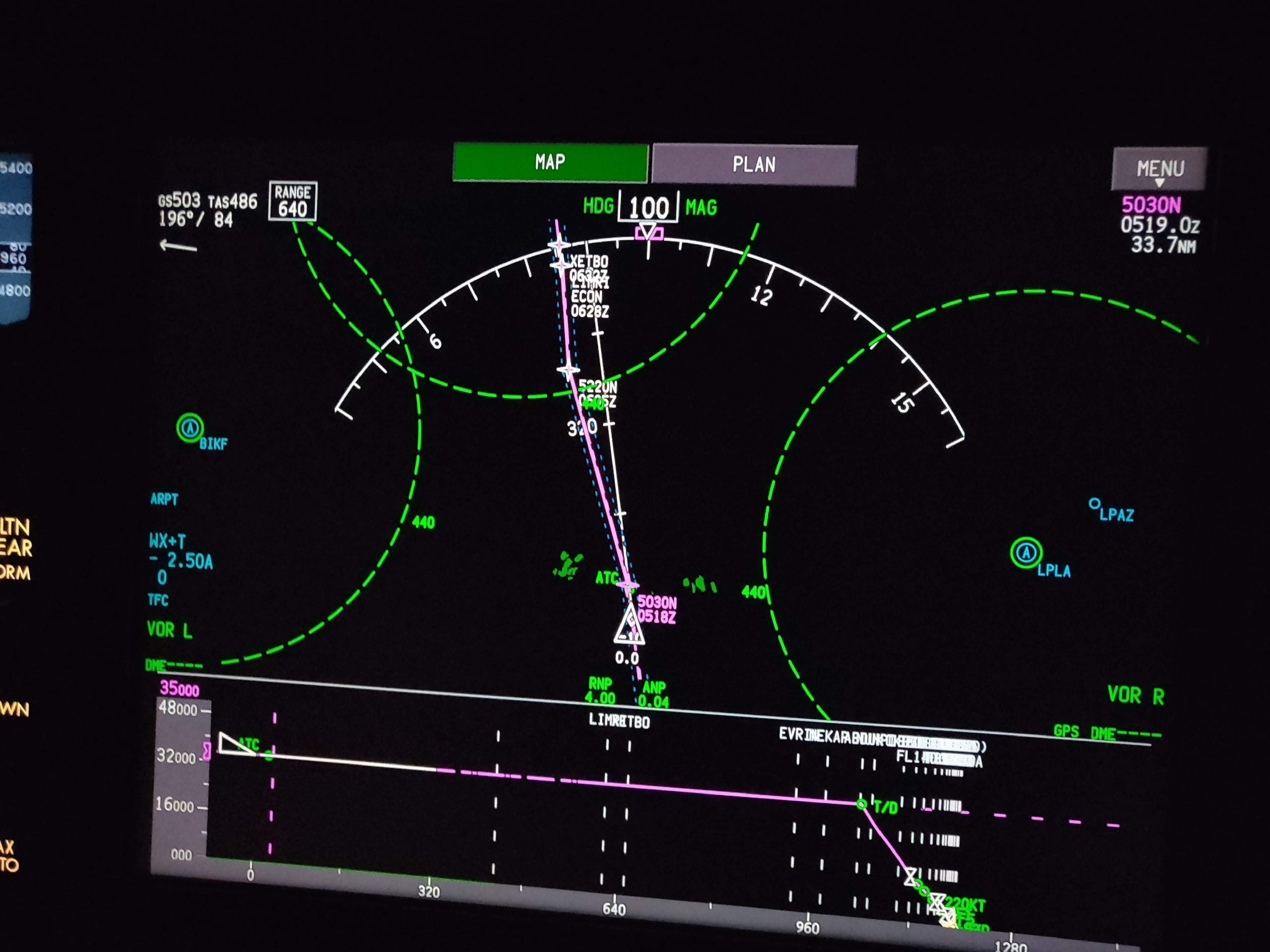
Last week, I received an email from TPG reader Darren, asking about the planning process of a long-haul flight.
He wanted to know if it's as complicated as it seems, what elements go into it and whether it's done on paper or all on an app these days.
So, Darren, here you go.
Flight Planning Department
For those of you reading this who fly privately, I'm sure you're well used to pitching up a little early and planning your route. I imagine this is the same for those of you who fly smaller aircraft commercially.
However, due to the nature of flying an airliner like the 787 Dreamliner for 15 hours around the world, there are a greater number of variables to consider, some of which can change suddenly and have a big impact on the flight. As a result, airlines have a specialized flight planning department, tasked with creating flight plans for all their aircraft.
Related: 6 features that set the 787 Dreamliner apart from the rest
They must consider a number of elements such as the geographic route, weather, aircraft weight and also any defects with the aircraft before they submit the official flight plan to ATC and then issue us, the pilots, with a more detailed paper copy.
In years gone by, our pre-flight briefing would involve printing out reams of paperwork with the weather and airport information for the entirety of our route. At most airlines, this has now been replaced with a briefing pack, which is downloaded onto a tablet. However, as far as I am aware, most airlines still issue their crews with a paper copy of the flight plan.

Route
When it comes to planning a long-haul flight, the biggest variable is the route. You may think that the quickest route between two cities is in a straight line, "as the crow flies."

This line, known as a great circle track, takes a direct route over the curvature of the earth, connecting two locations with the shortest distance over the ground. It's for this reason why a flight from London to Los Angeles normally routes north over Scotland and Greenland, instead of flying directly west as one might expect.

However, it's not always as simple as this.
With more than 1,000 flights (as of 2019) crossing the Atlantic Ocean each day from Europe to North America, it's one of the busiest airspaces in the world. To complicate things further, for the vast majority of the crossing, there's no radar coverage. This means that ATC is unable to see in real-time where aircraft are.
Related: Fly like the wind: Pilots are about to cross the Atlantic in a whole new way
Aircraft need to go from A to B as safely as possible but also as commercially efficiently as possible. For the most part, traffic heading west from Europe to North America do so during the daytime. A few hours later, the flow is reversed as the aircraft make their way back to Europe overnight.
To facilitate this flow, each day, airlines send Shanwick Oceanic Control their preferred routings for their westbound flights the day before. This normally depends on the location of the jetstreams — areas of fast-moving air which tend to flow west to east.
Naturally, flight planners want to avoid the strong east-flowing winds when flying west, so they will opt for a route that avoids these, normally over the northern part of the Atlantic. Controllers then collate this data and create a set of routes using GPS positions. This is known as the organized track system (OTS).
Related: Hopping across the pond: How pilots find their way to the USA
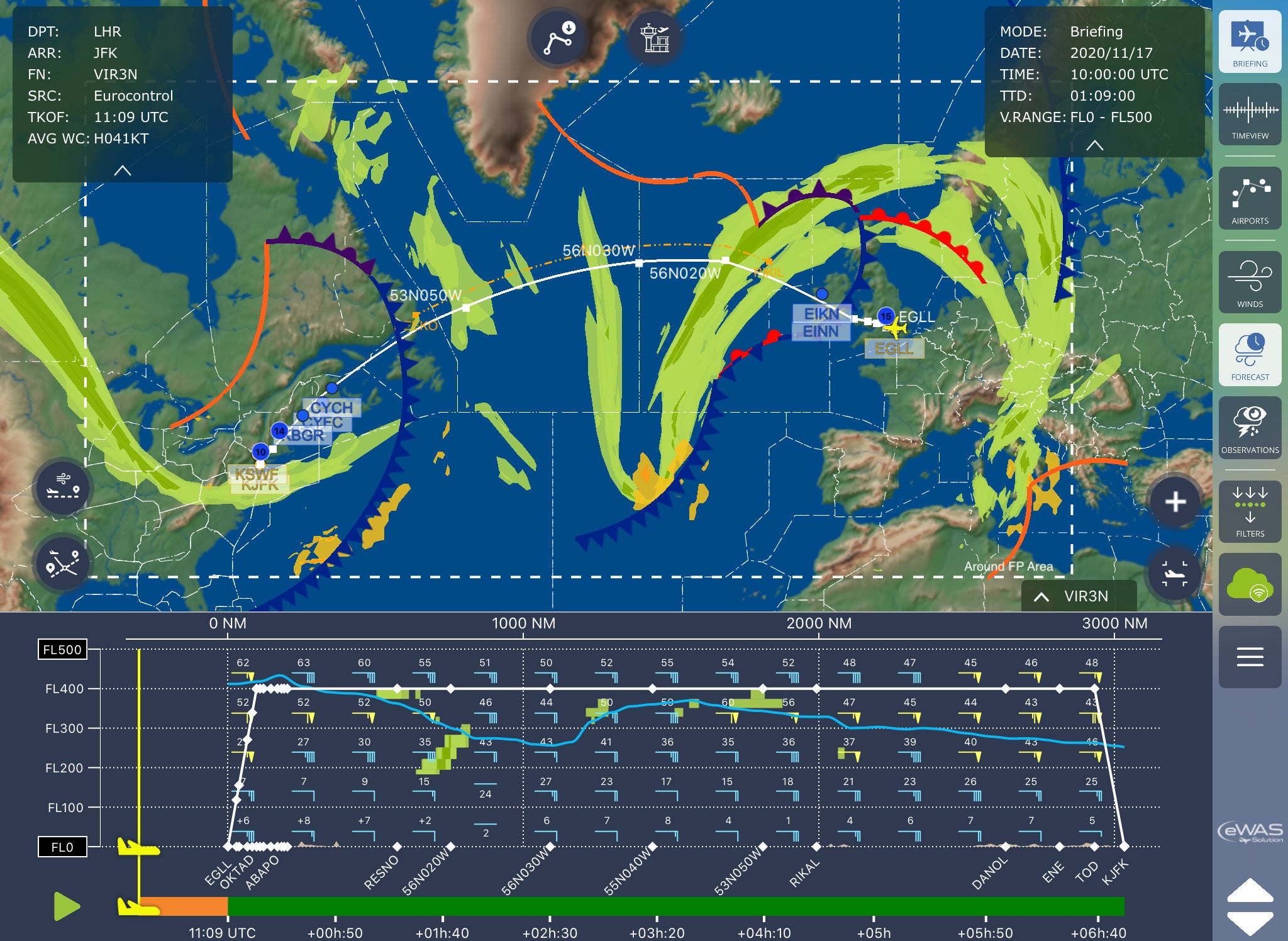
There used to be around six to seven of these tracks each day and they are then given an individual designator. Westbound flights during the day use tracks labeled Alpha, Bravo, Charlie, etc. So, to avoid any confusion, eastbound flights overnight start at Zulu and work backward. Therefore Yankee, X-ray, Whisky, etc. Any flights planning to fly in this area of the Oceanic airspace must use the OTS.
Traditionally these tracks were spaced at one degree of latitude intervals, roughly 60 nautical miles apart. Aircraft are then separated by 10-minute intervals along the track and 1,000 feet vertically.
However, due to demands on the system, ATC has utilized the greater navigation accuracy of modern aircraft and reduced the lateral separation to 30 nautical miles. Not only does this allow more aircraft to cross the Atlantic in a given time, but it also enables more aircraft to fly at their optimum cruising level, reducing their carbon emissions as a result.
The effect of wind on the route
A significant factor in selecting the route is how the wind will affect the flight. As mentioned, jetstreams tend to flow around the earth from west to east. Therefore, when flying west, flight planners will do their best to keep flights out of these winds.
On a flight from London to Los Angeles, this actually tends to mean that we will pretty much follow the great circle track, avoiding the stronger winds found further to the south. Up over Scotland, the southern tip of Greenland, the open expanses of Canada and then down into the USA over Montana. However, on the way back, it's a different story.
Normally, particularly in the winter, there are strong jetstreams blowing across the Atlantic. On some days, these jetstreams can even be found over mainland USA. In these situations, there is a tradeoff to be made and it's here that the flight planners earn their pay.
The strong tailwinds will help us speed through the air quicker than normal, but we will have to fly a longer distance over the ground to take advantage of them The flight planners are able to calculate if the extra distance is worth flying in order to take advantage of the stronger tailwinds.
ETOPS
In recent years, there has been a shift towards more fuel-efficient twin-engined aircraft such as the 787 Dreamliner and the A350. These aircraft can fly exactly the same routes as safely as their four-engine counterparts, but for a fraction of the fuel. A win for both accountants and environmentalists.
With the advances in engine and aircraft reliability since the first transatlantic crossing nearly 100 years ago, regulators have allowed twin-engine aircraft to fly farther and farther from the nearest adequate airfield in the event of an engine shut down. This is known as ETOPS or Extended Range Twin Operations.
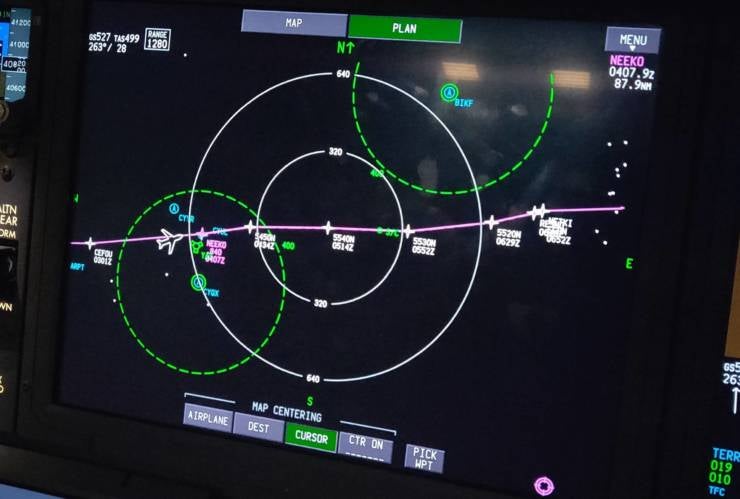
Initially limited to just 60-minute single-engine flying time from the nearest suitable airfield, the routes that aircraft could fly were pretty limited. Nowadays, 180 minutes is the norm, allowing aircraft to cross the globe on almost any route they wish.
When planning a route for a twin-engined aircraft, flight planners must take the ETOPS requirements into consideration.
An airfield is considered adequate if, at the expected time of use, it is open and available and also equipped with extra services such as Air Traffic Control, emergency services, weather-reporting facilities, lighting and communications. A runway must be available that provides enough stopping distance, taking into consideration the weight at which the aircraft would be at that stage of flight, the wind, temperature and surface conditions.
Altitude
The engines on a modern jet aircraft are phenomenal pieces of kit. The way in which they are designed means that the higher they fly, the more efficient they become. That said, the lift that makes us fly is generated by the wings, not the engines.
Simply put, the wing relies on air molecules passing over the surface to create lift. This is all well and good at sea level where the air is nice and thick, but as you go up in the atmosphere, it starts to thin. The higher you go, the fewer molecules there are per cubic meter of air, resulting in less lift.
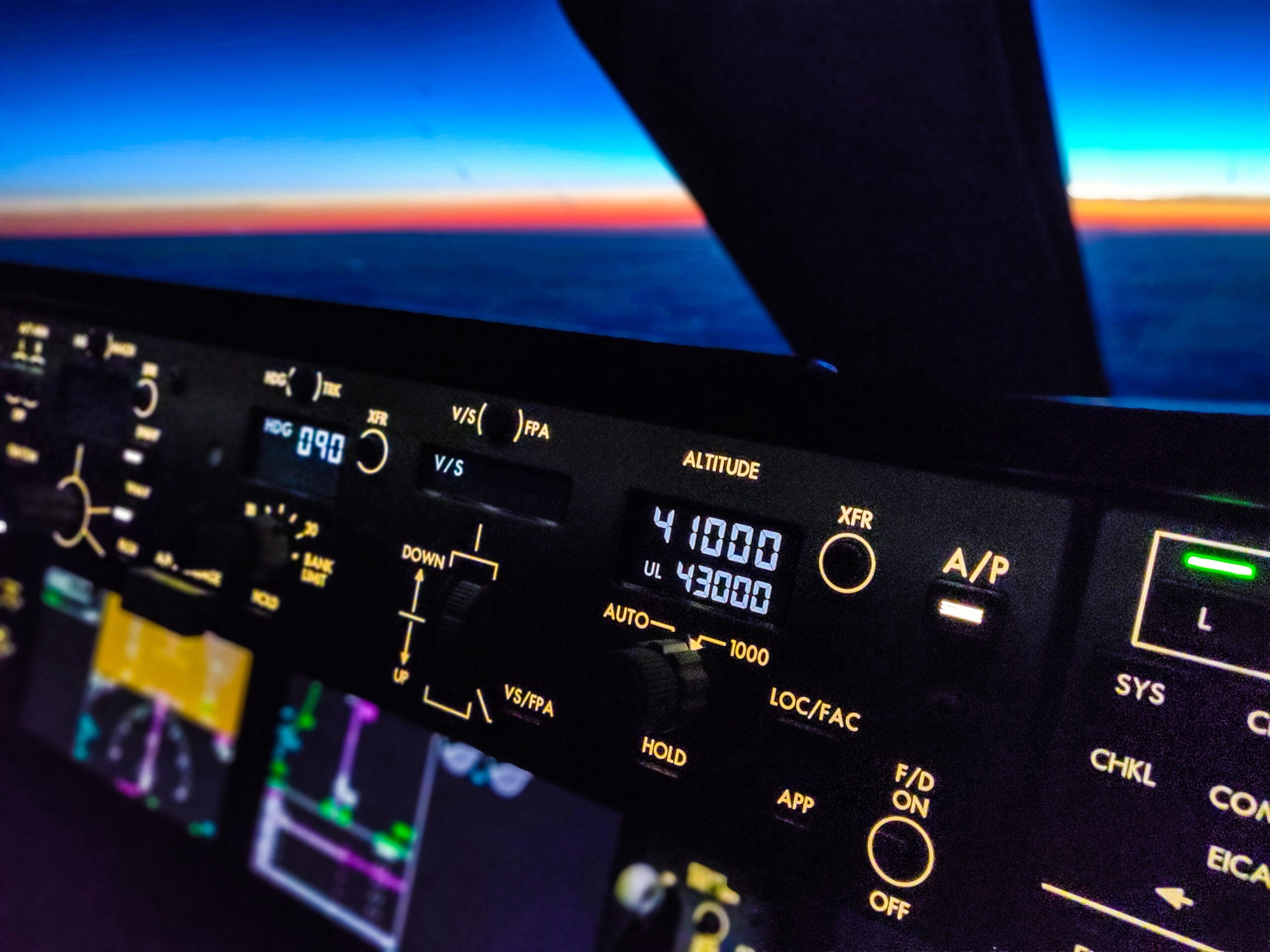
This produces an interesting tradeoff. The engine wants to be as high as possible. But try to go too high and the wing may not be able to generate the lift required to reach that altitude. As a result, there will be an optimum altitude for the aircraft to fly. This level maximizes the engine efficiency but also allows the wing to provide enough lift to fly safely. This is the basic principle of altitude selection.
When the flight takes off, there is an optimum altitude at which the aircraft will fly for its weight. As the flight progresses, fuel is burnt by the engines, which reduces the weight of the aircraft. As the fuel onboard reduces, the lift available becomes greater than the weight of the aircraft, so the aircraft is able to climb to altitudes where the engines are more efficient. This is why on a long flight we may start at 35,000 feet, a few hours later climb to 37,000 feet and then some hours later climb to 39,000 feet.
Winds
Not only does the wind play a significant role in the geographic location of the route, but it also affects how high we opt to fly.
A jetstream is very much like a fast-flowing river. In the center of the river, the water moves fastest, unhindered by obstructions. However, the further you go from the center of the river, the more the water is impeded by large rocks, trees and other debris, slowing the flow down.
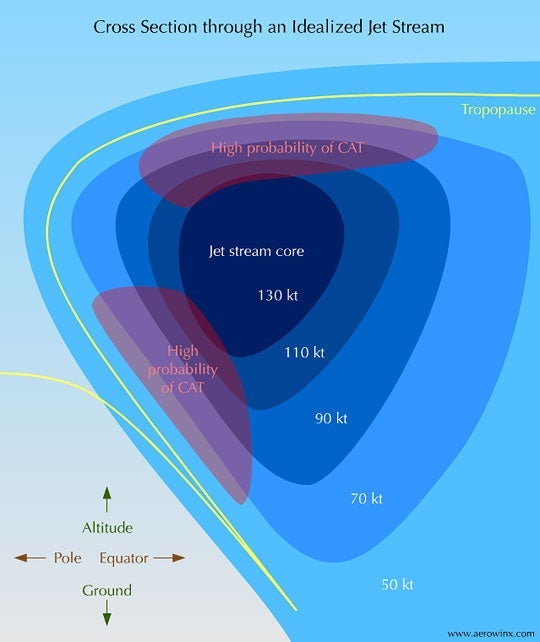
As a result, the core of the jetstream is where we really want to be in order to take advantage of the fast-moving winds. This may mean flying at an altitude that is below optimum for the engines but will ultimately save more fuel due to the reduced flight time.
Speed
Each flight plan published by the planning department is based on a Cost Index or CI. According to Boeing, "The CI is the ratio of the time-related cost of an airplane operation and the cost of fuel. The value of the CI reflects the relative effects of fuel cost on overall trip cost as compared to time-related direct operating costs."
In simple terms, it's a trade-off between the cost of fuel and the cost of operating the aircraft. (Operating the aircraft isn't just about fuel — the more hours it flies, the more maintenance and other works that must be carried out, costing more money.)
When fuel is cheap, the cost of operating the aircraft is the major consideration. Therefore, it makes more sense to fly faster and land sooner, keeping the flying hours of the aircraft to a minimum.
When fuel is expensive, it is this cost that is the major factor. In these situations, it makes more sense to fly at a slower, more fuel-efficient speed, accepting that the flight time will be longer and the accrued aircraft hours greater.
As part of the procedure for setting up the aircraft for departure, we enter this Cost Index into the Flight Management Computer.
Bottom Line
With all these elements taken into consideration, the flight planner is then able to generate our flight plan, which will indicate the minimum fuel required to safely operate the journey. However, if as a crew we decide that we require more fuel, for example, if the weather at the destination is forecast to be less than ideal, we will do so.
Like with many things in life, attention to detail in the planning stage makes life far easier when it comes to executing the task. This could not be more true when it comes to long-haul flying.
If you have a topic that you'd like me to write about or explain, please drop me an email at charlie@charliepage.co.uk.
TPG featured card
at American Express's secure site
Terms & restrictions apply. See rates & fees.
| 4X | Earn 4X Membership Rewards® points per dollar spent on purchases at restaurants worldwide, on up to $50,000 in purchases per calendar year, then 1X points for the rest of the year. |
| 4X | Earn 4X Membership Rewards® points per dollar spent at US supermarkets, on up to $25,000 in purchases per calendar year, then 1X points for the rest of the year. |
| 5X | Earn 5X Membership Rewards® points on prepaid hotel stays booked through AmexTravel.com or the Amex Travel App™. |
| 3X | Earn 3X Membership Rewards® points on flights booked through AmexTravel.com, the Amex Travel App™, or purchased directly from airlines. |
| 2X | Earn 2X Membership Rewards® points on prepaid car rentals booked through AmexTravel.com or the Amex Travel App™ and cruises booked and paid through AmexTravel.com. |
| 1X | Earn 1X Membership Rewards® point per dollar spent on all other eligible purchases. |
Pros
- Valuable dining and food-related credits
- Flexible rewards with airline and hotel transfer partners
- Multiple travel and purchase protections
- No foreign transaction fees
- Access to Amex Offers for additional savings (enrollment required)
Cons
- Not as useful for those living outside the U.S.
- Some may have trouble using Uber and other dining credits
- You may be eligible for as high as 100,000 Membership Rewards® Points after you spend $8,000 in eligible purchases on your new Card in your first 6 months of Card Membership. Welcome offers vary and you may not be eligible for an offer. Apply to know if you’re approved and find out your exact welcome offer amount – all with no credit score impact. If you’re approved and choose to accept the Card, your score may be impacted.
- Earn 4X Membership Rewards® points per dollar spent on purchases at restaurants worldwide, on up to $50,000 in purchases per calendar year, then 1X points for the rest of the year.
- Earn 4X Membership Rewards® points per dollar spent at US supermarkets, on up to $25,000 in purchases per calendar year, then 1X points for the rest of the year.
- Earn 5X Membership Rewards® points on prepaid hotel stays booked through AmexTravel.com or the Amex Travel App™.
- Earn 3X Membership Rewards® points on flights booked through AmexTravel.com, the Amex Travel App™, or purchased directly from airlines.
- Earn 2X Membership Rewards® points on prepaid car rentals booked through AmexTravel.com or the Amex Travel App™ and cruises booked and paid through AmexTravel.com.
- Earn 1X Membership Rewards® point per dollar spent on all other eligible purchases.
- Pay It® lets you tap in the American Express® App to quickly pay for small purchase amounts throughout the month and still earn rewards the way you usually do. Plan It® gives you the option to split up big purchases into equal monthly payments with a fixed fee. You’ll know upfront exactly how much you’ll pay.
- $120 Dining Credit: Earn up to a total of $10 in statement credits monthly when you pay with the Gold Card at Grubhub (including Seamless), Buffalo Wild Wings, Five Guys, The Cheesecake Factory, and Wonder. This can be an annual savings of up to $120. Enrollment required.
- $100 Resy Credit: Get up to $100 in statement credits each calendar year at over 10,000 qualifying U.S. Resy restaurants after you pay for eligible purchases with the American Express® Gold Card. That’s up to $50 in statement credits semi-annually. Enrollment required.
- $84 Dunkin' Credit: Earn up to $7 in monthly statement credits after you pay with the American Express® Gold Card at U.S. Dunkin’ locations. Enrollment required.
- $120 Uber Cash on Gold: Enjoy up to $120 in Uber Cash annually with your Gold Card. Just add your Card to your Uber account and you'll get $10 in Uber Cash each month to use on orders and rides in the U.S. when you select an Amex Card for your transaction.
- Enjoy complimentary Hertz Five Star® Status benefits like skipping the counter at select locations, adding an additional driver at no additional cost*, and vehicle upgrades**. Benefit enrollment and Hertz Gold+ registration are required. *Additional drivers must meet standard rental qualifications and must be a spouse or domestic partner to qualify as complimentary. Other additional drivers subject to fees. **Benefits are subject to availability and vary by location. Additional Hertz program Terms and Conditions including age restrictions apply.
- Book two nights or more with The Hotel Collection through AmexTravel.com or the Amex Travel App™ and receive a $100* credit towards eligible charges at over 1,400 upscale hotels worldwide. *Eligible charges vary by property.
- Book your travel through the Amex Travel App™ with added peace of mind – backed by American Express® service and support. Only for American Express® Card Members.
- Whenever you need us, we're here. Our Member Services team will ensure you are taken care of. From lost Card replacement to statement questions, we are available to help 24/7.
- No Foreign Transaction Fees.
- Annual Fee is $325.
- Terms Apply.