Behind the scenes: How Etihad trains its flight attendants

Most jobs require some form of specialized training, and becoming a flight attendant is certainly one of them.
Principally, flight attendants must learn all about the detailed safety procedures and mechanisms on board an aircraft. From fire safety and operating an exit door to deploying a life raft and other procedures, budding flight attendants have lots to learn.

That's before even considering mastering the inflight service procedures, which can be quite extensive on some of the world's top airlines.
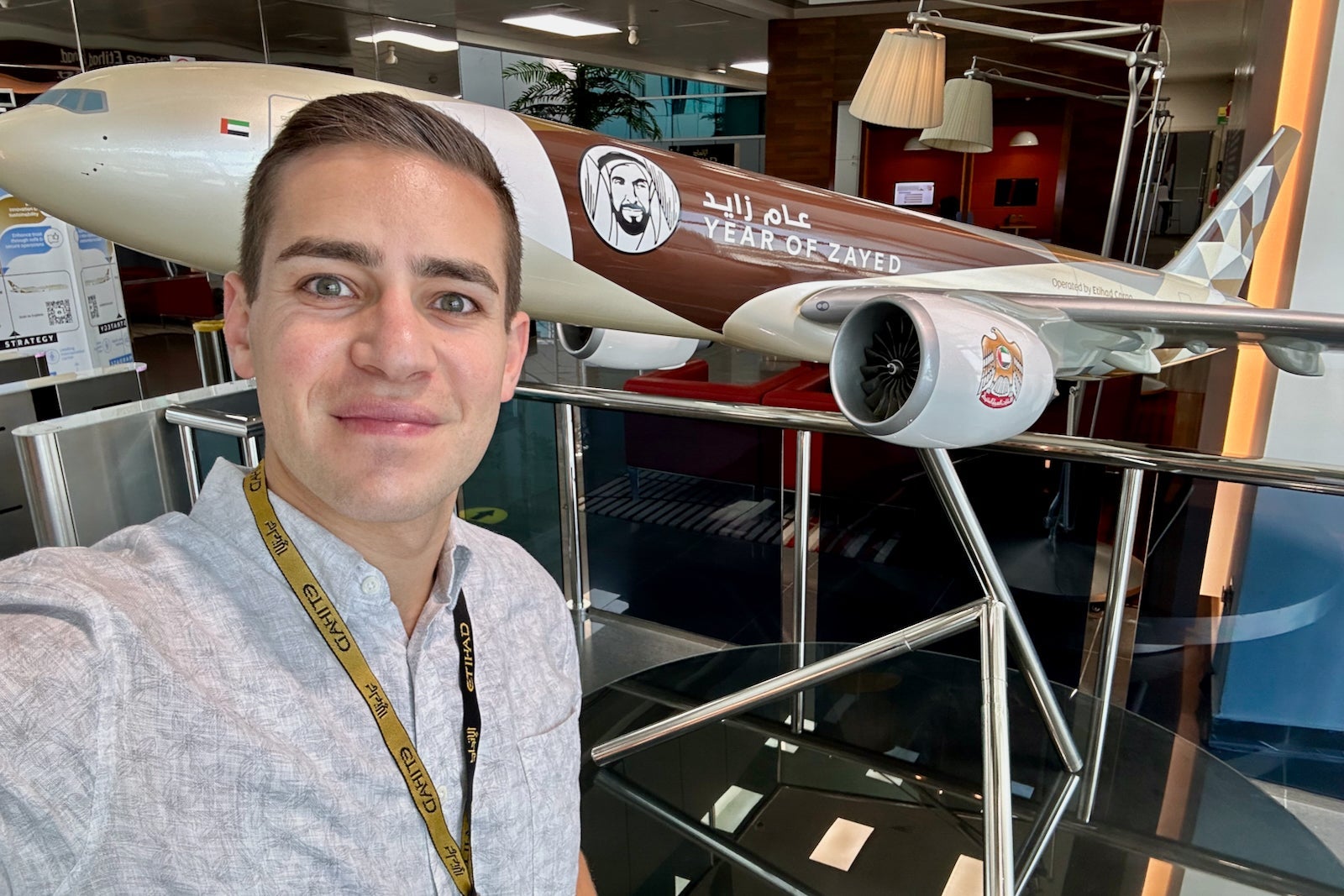
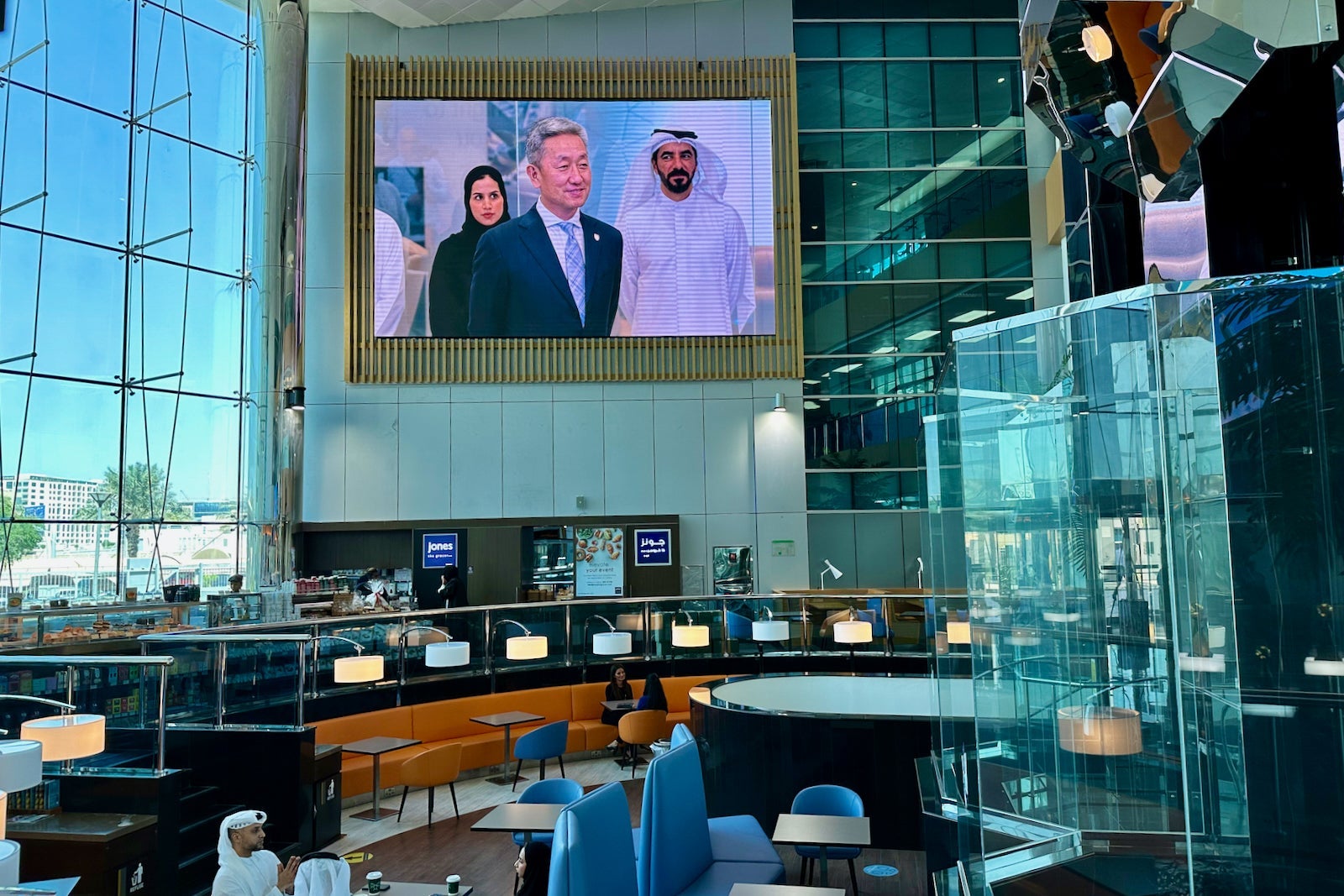
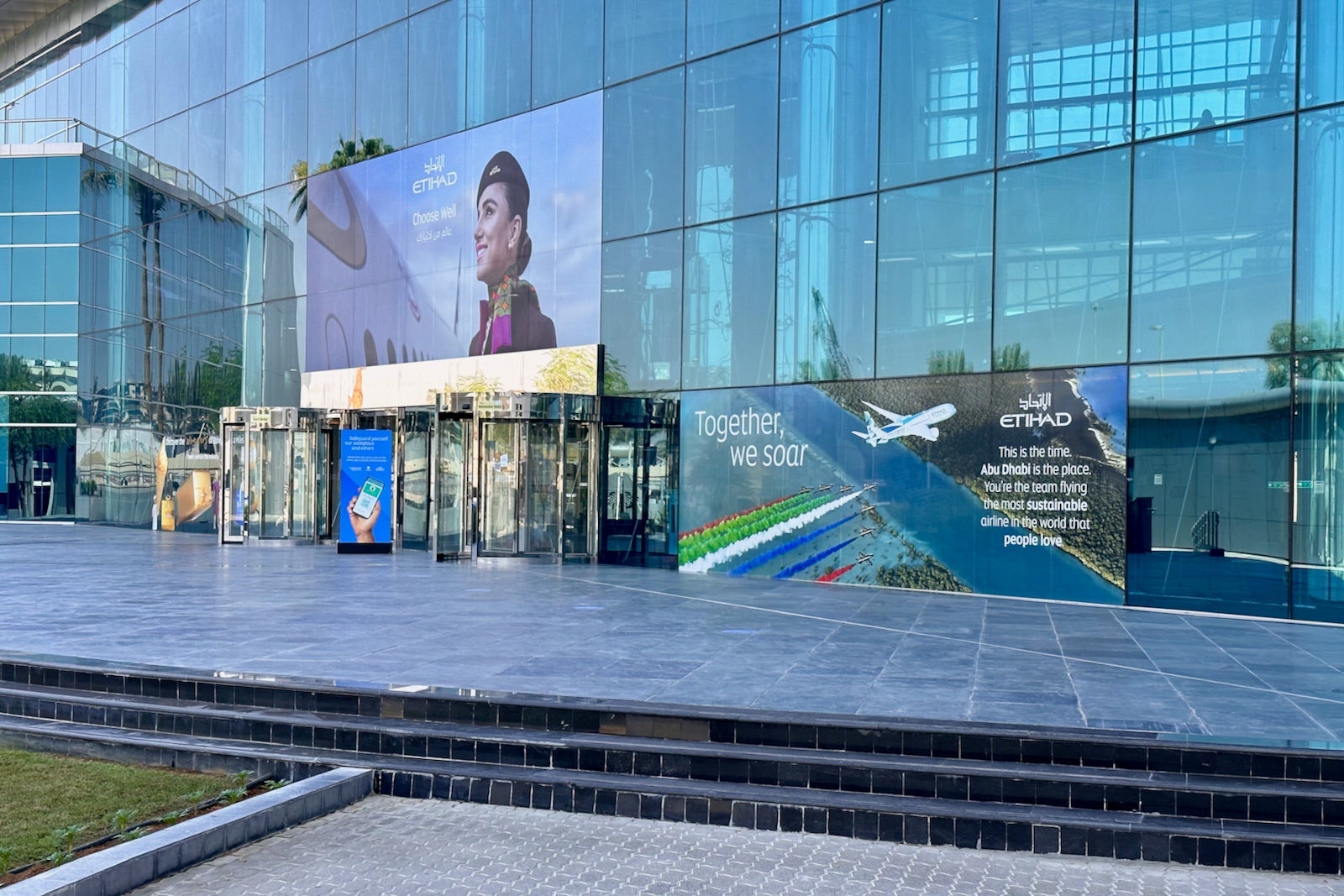
I recently had a chance to visit Etihad's headquarters, just a stone's throw away from the airline's mega-hub at the Abu Dhabi International Airport (AUH) in the United Arab Emirates.
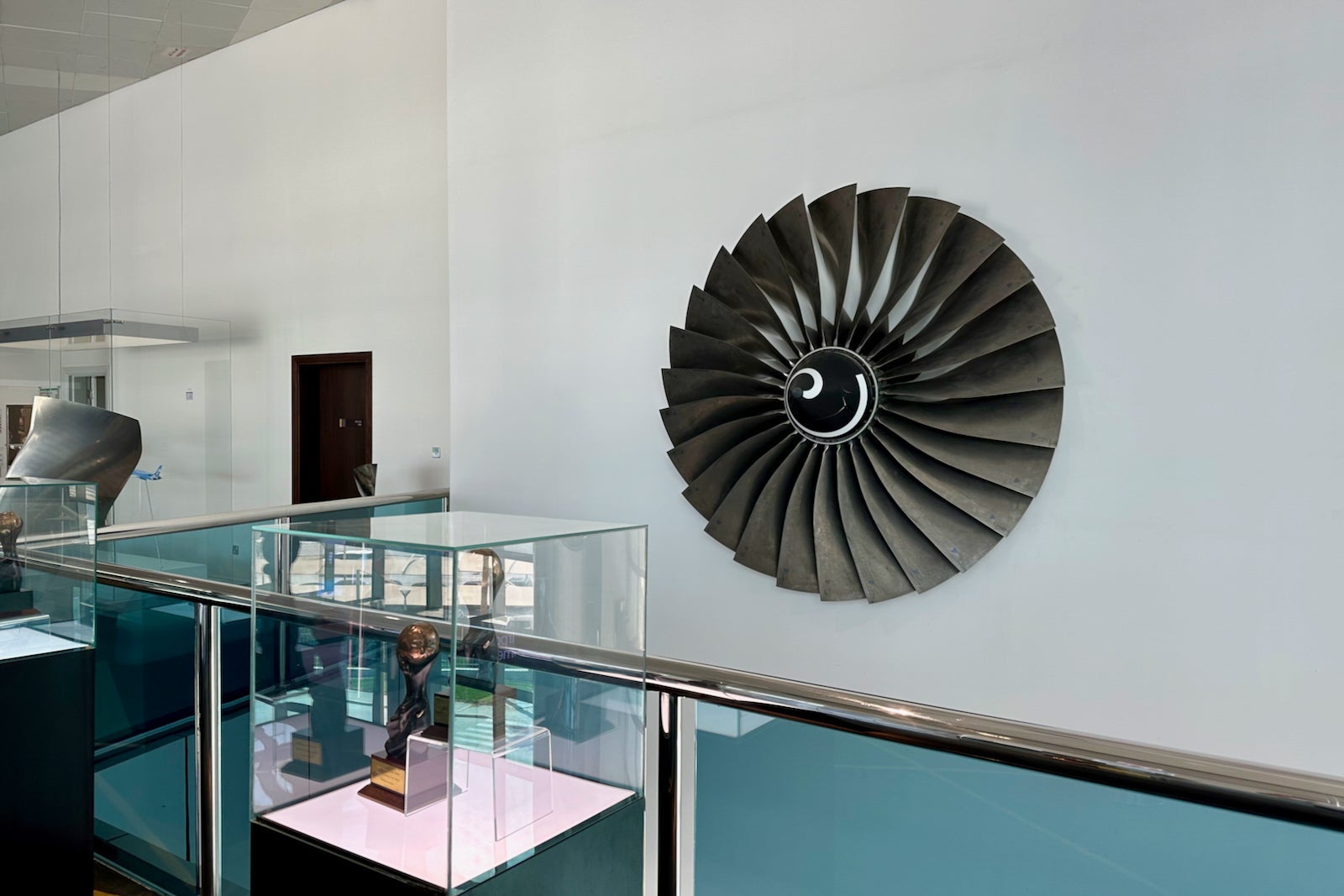
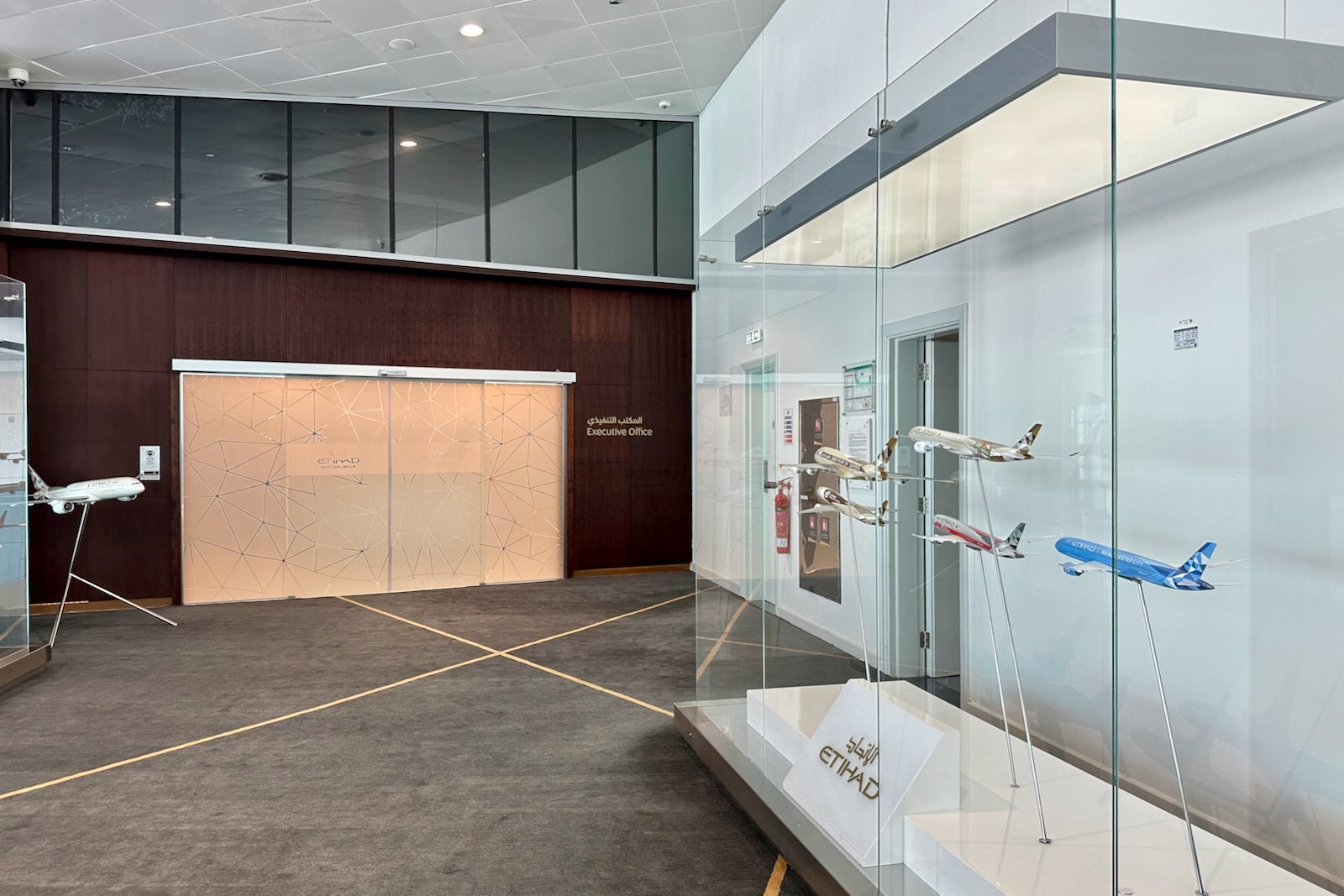
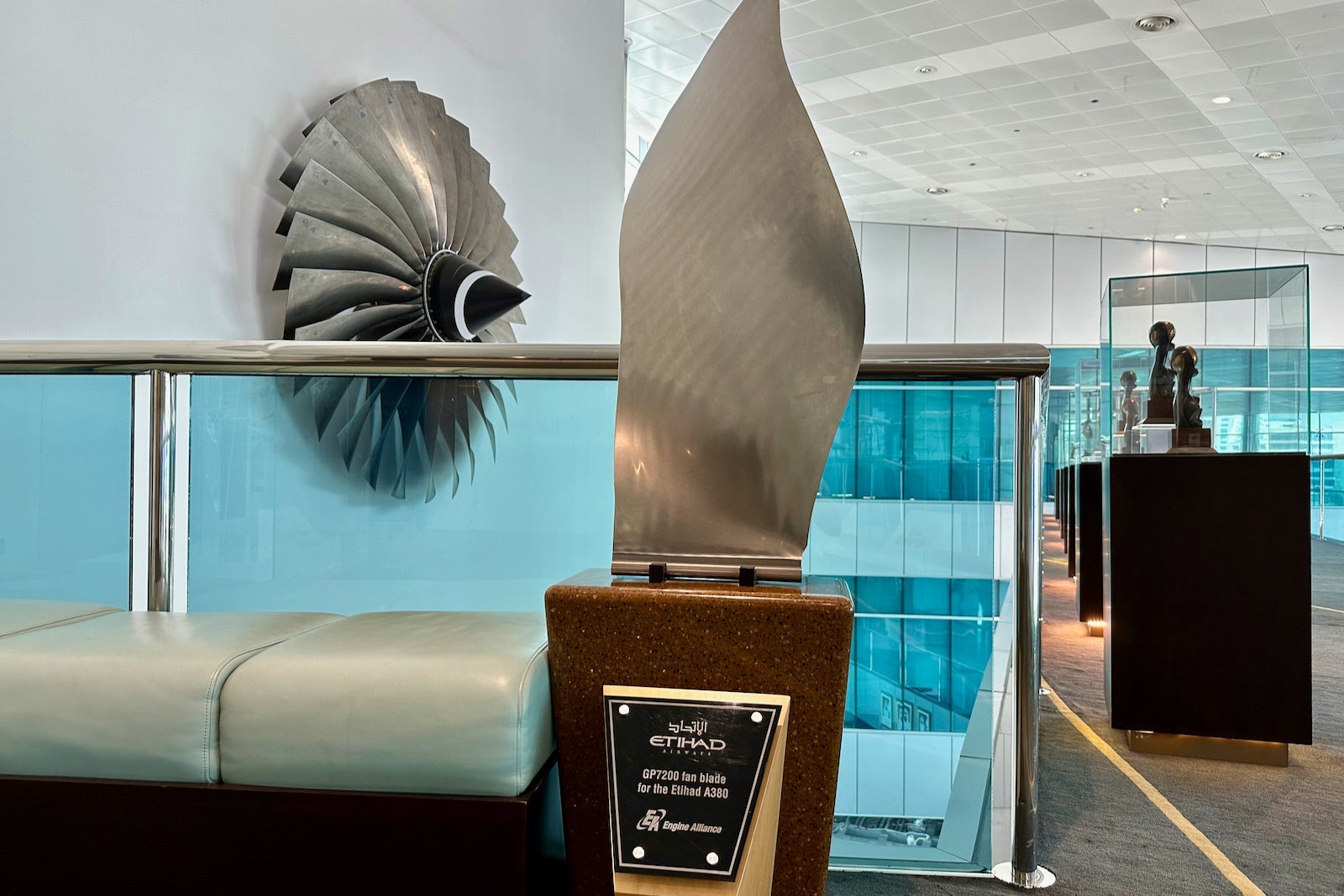
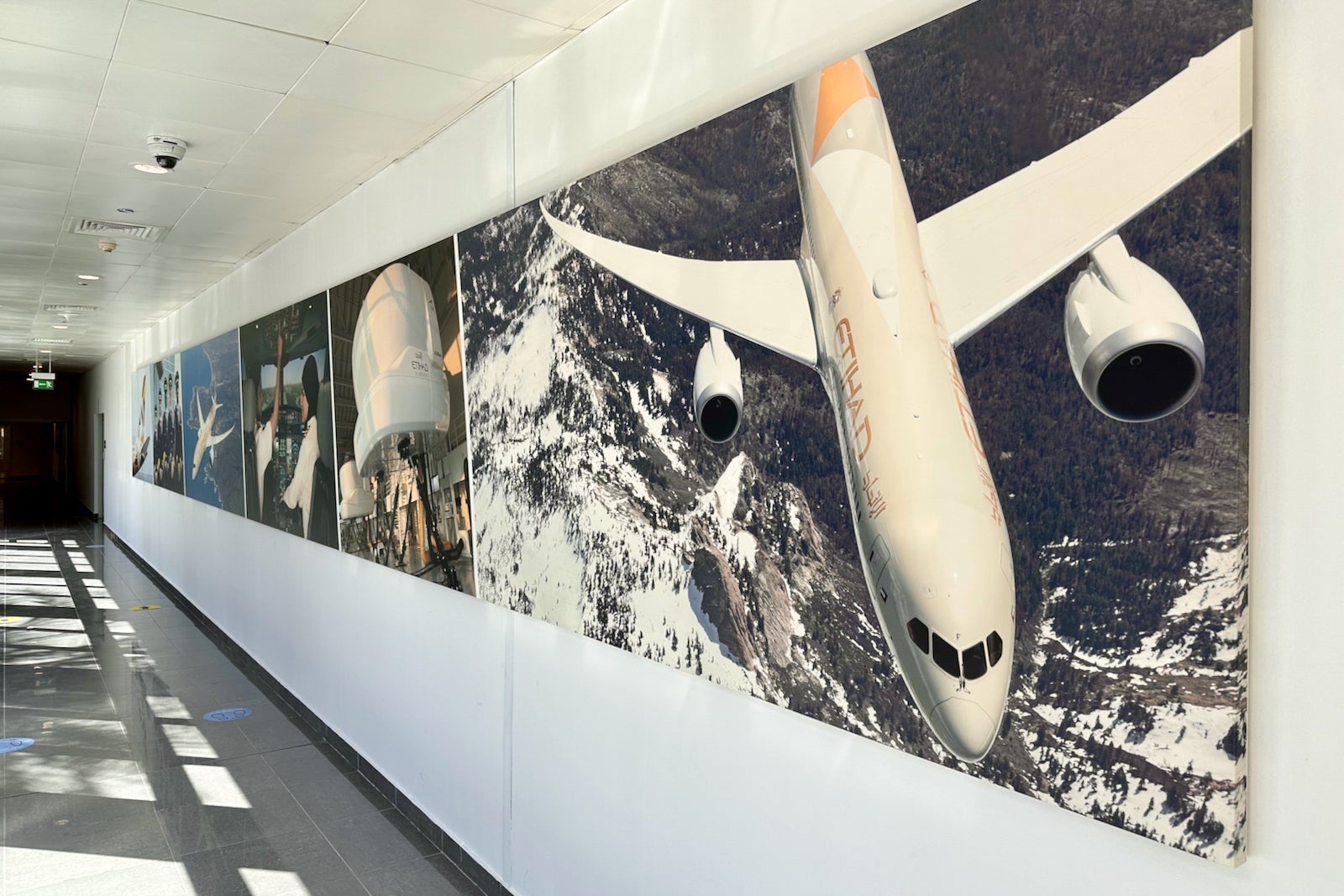
The office itself is quite fascinating for any aviation enthusiast, with plenty of model planes, aircraft parts and aviation-themed memorabilia on display.

In addition to meetings with airline management, I also toured the on-site aviation training center.

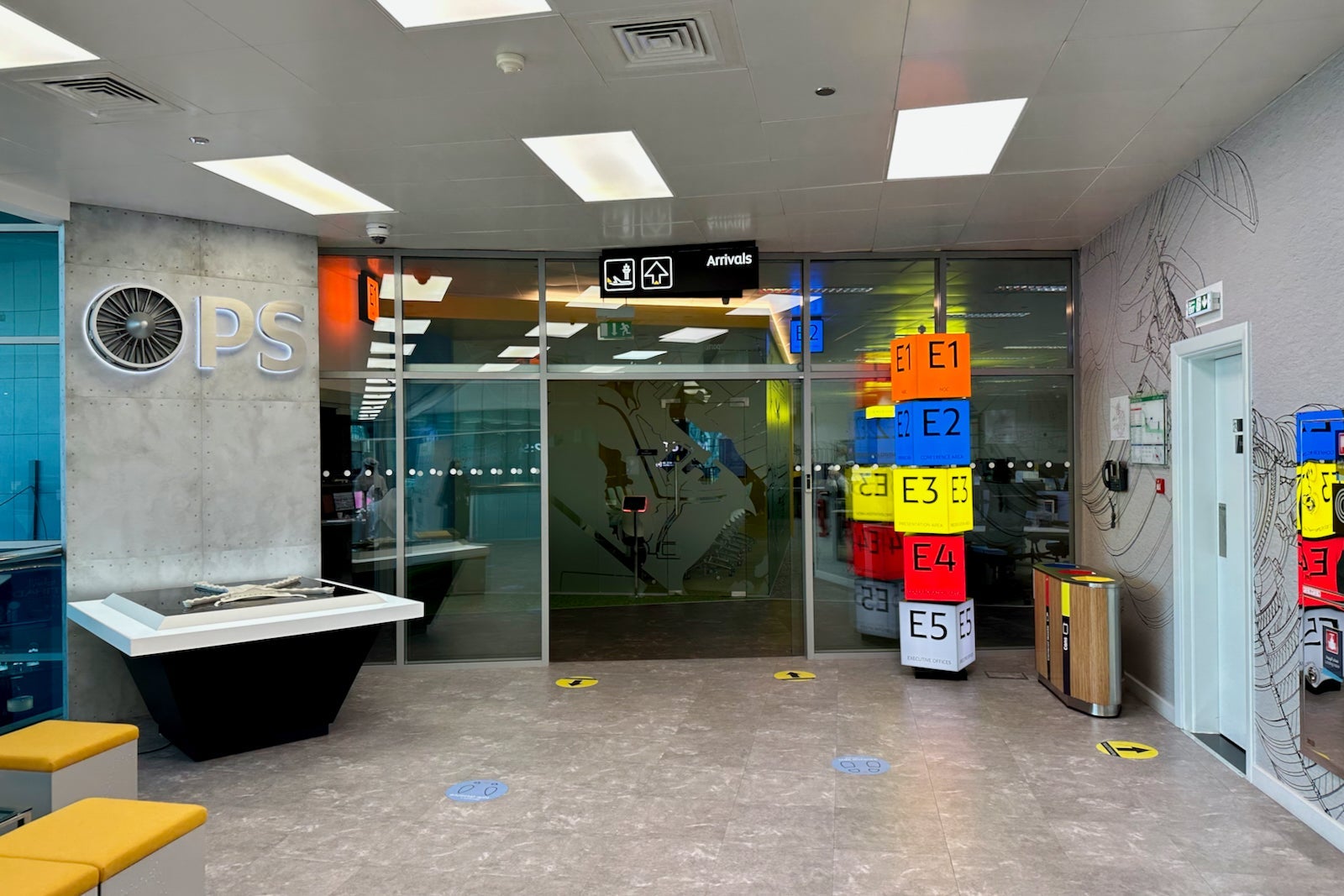
Becoming a flight attendant begins in the classroom. That's where you learn many of the basics before getting some hands-on experience at the aviation training center.
There are many lecture rooms throughout the campus at Etihad's headquarters, and they look just like something you'd find at a university. Sessions here cover many of the basics of aircraft safety, first aid and service procedures, and they're usually led by senior pursers and specially trained facilitators.
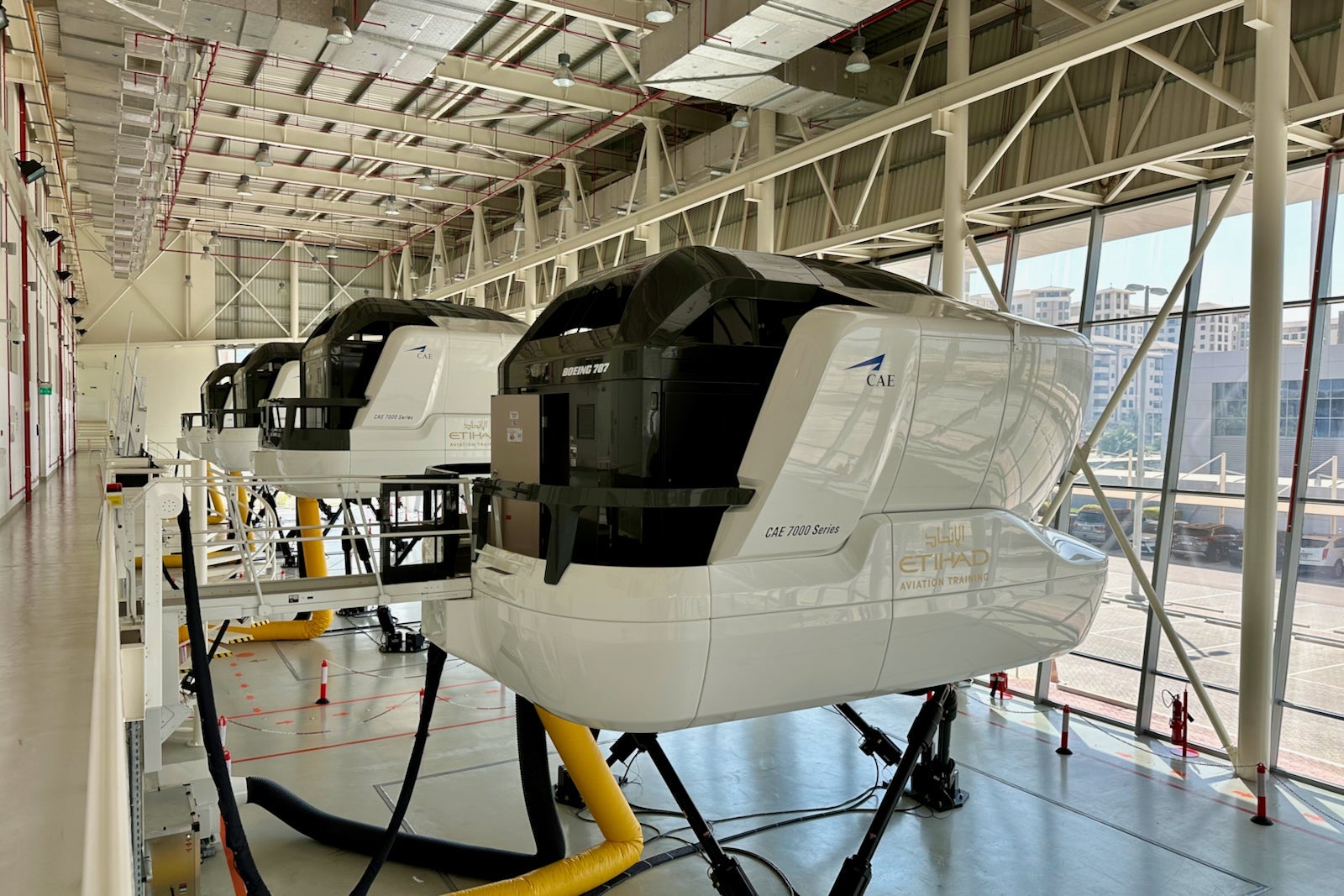
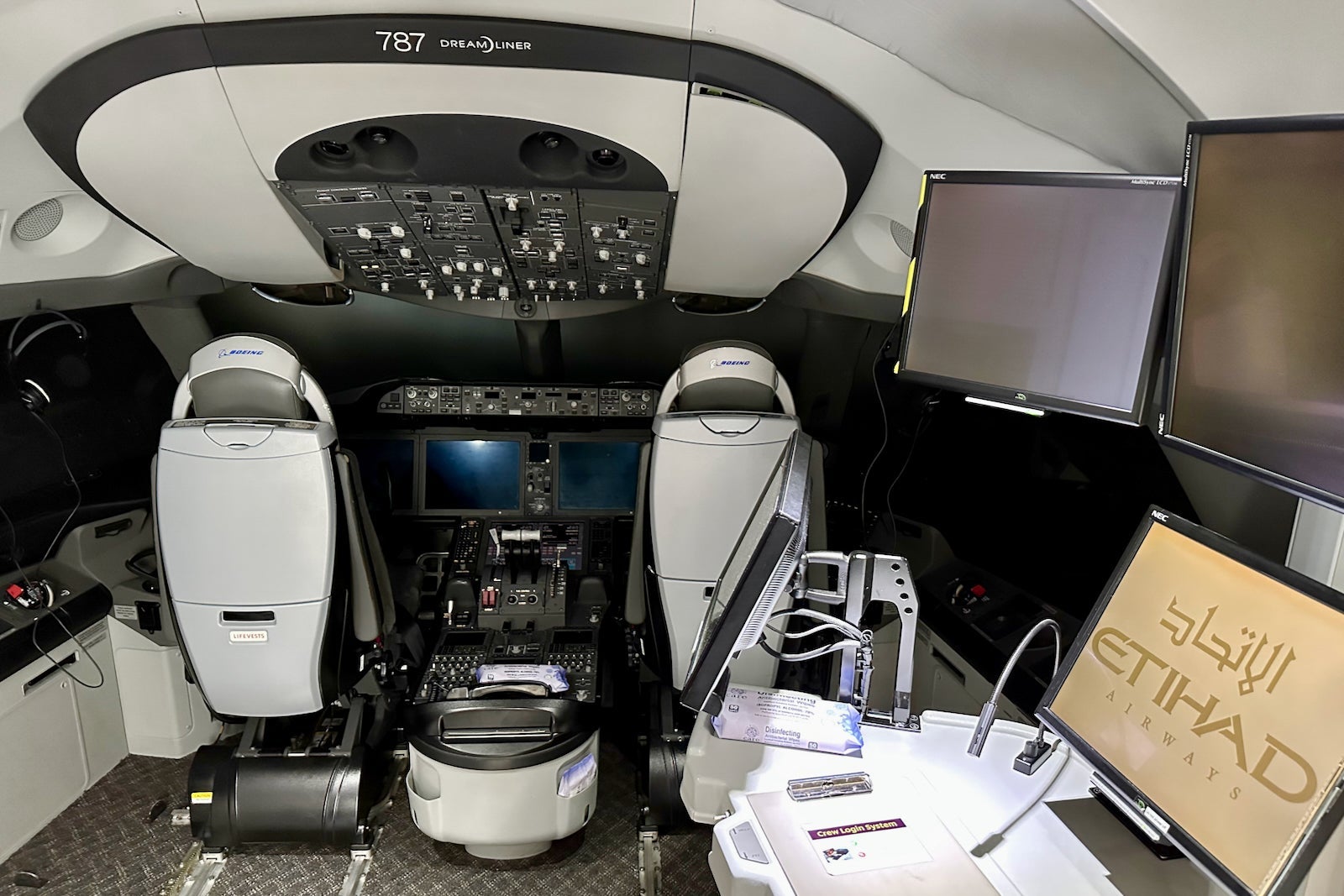
After completing the "core curriculum," if you will, it's time to get hands-on experience in the various training simulators.

Of course, an airline could theoretically conduct this type of training using real planes at the airport, but that'd be prohibitively expensive. Not only would the plane have to be on the ground (and not flying with paying passengers), but it would also require a substantial amount of money to practice with its exit slides.
That's because once you deploy a raft on a real airplane, folding it up and putting it back on the plane isn't as easy as packing up an inflatable sleeping bag or air mattress.
Instead, most major airlines have simulations of all these required safety and service procedures at a flight training center. Smaller airlines may not have as extensive of an aviation training center as Etihad, so the Abu Dhabi-based carrier also rents time at its facility to other carriers.
Mocking up an entire airplane at a training center would cost millions, so these training simulations are conducted on modules meant to replicate smaller subsections of an airplane.

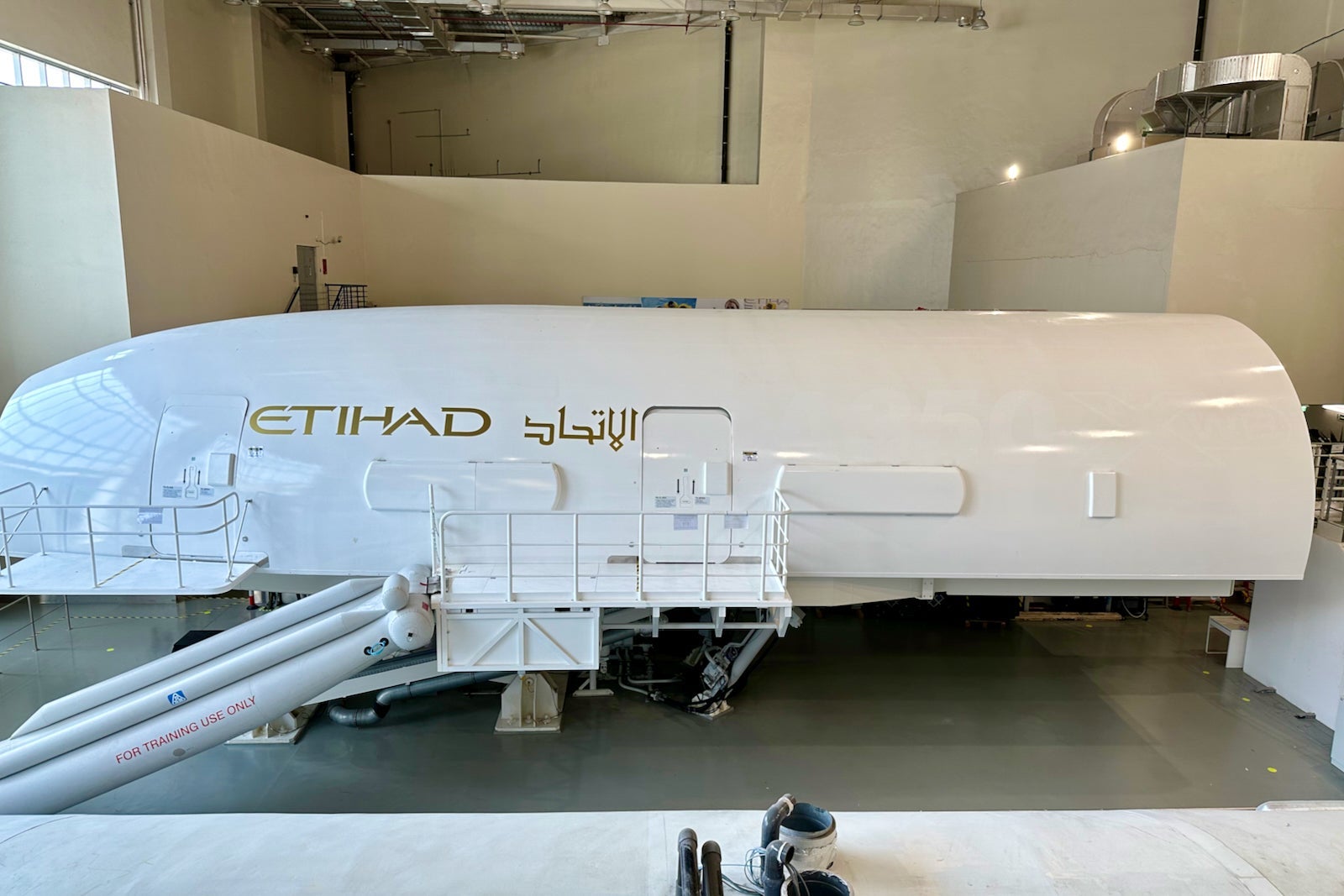
Take exit door training for instance. Etihad has a few different types of doors at its aviation training center, each resembling an aircraft and door type that it operates in its fleet. The Airbus A320 door trainer features three rows of seats with an over-wing exit door, as well as a standard exit door at the front.
Here, instructors can simulate any type of emergency situation and teach new hires how to operate the door safely in all conditions.
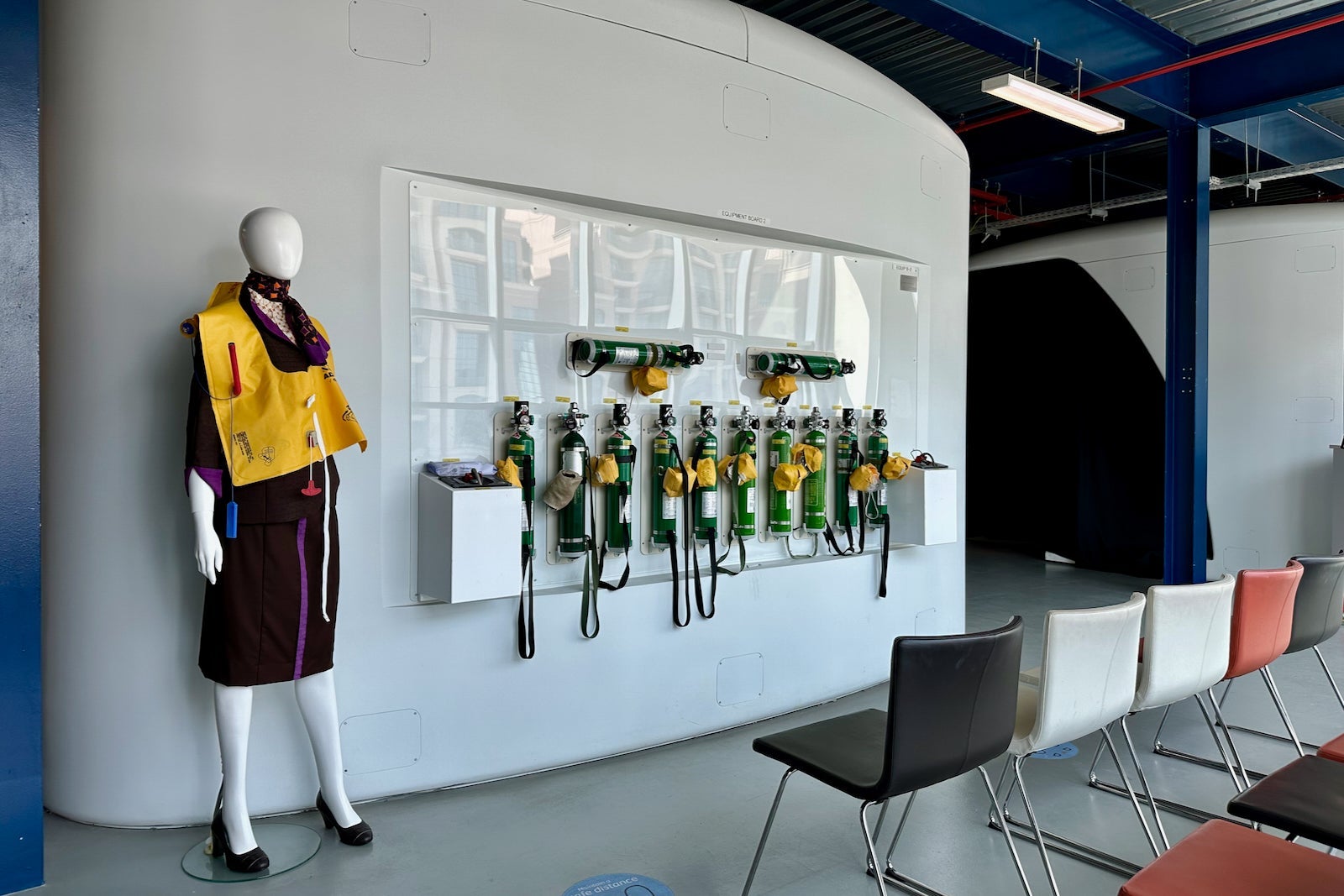
Behind this training module is a fire safety demonstration. That's where flight attendants receive hands-on experience with fire extinguishers and learn how to properly don a life vest, which is demonstrated on a mannequin.
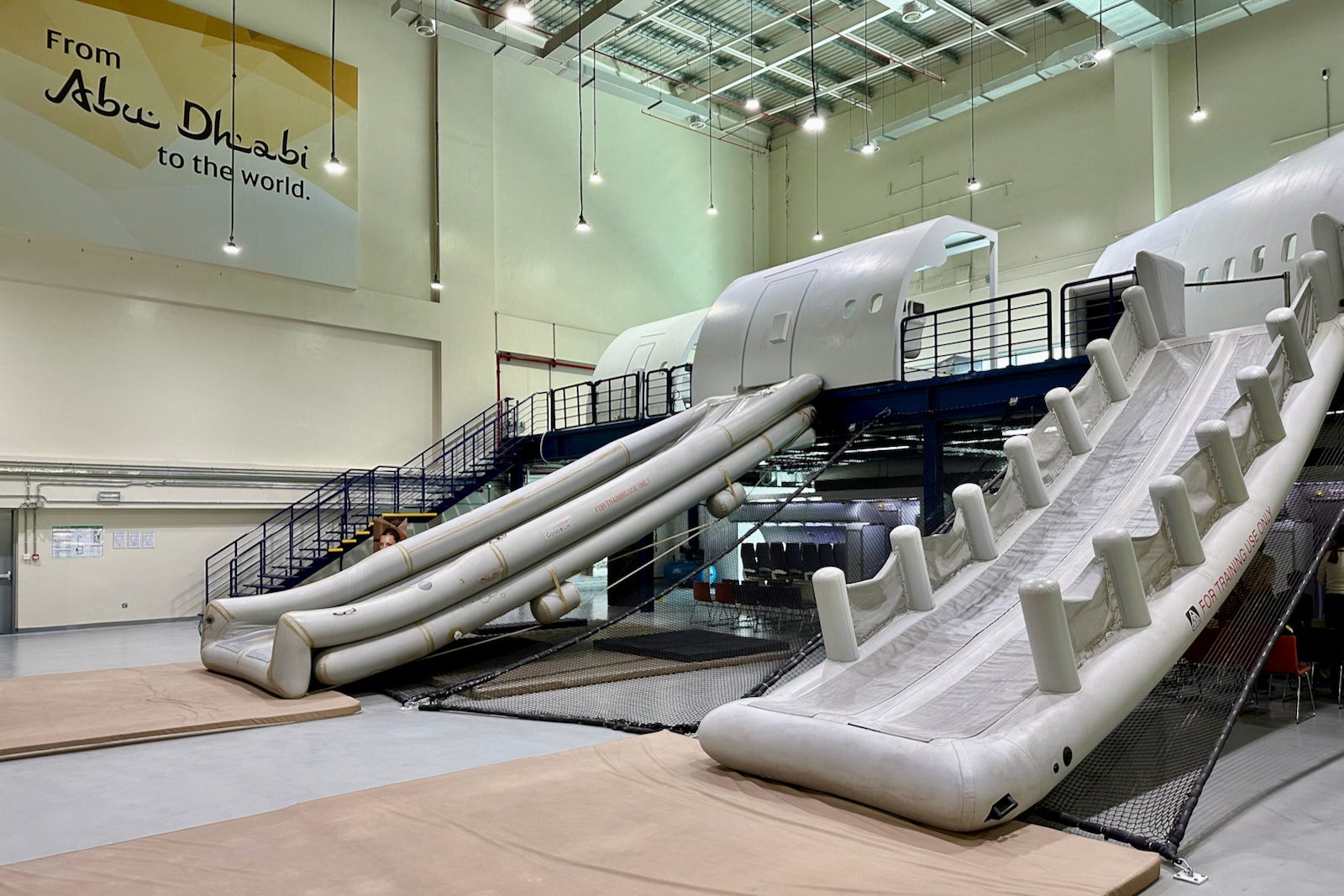
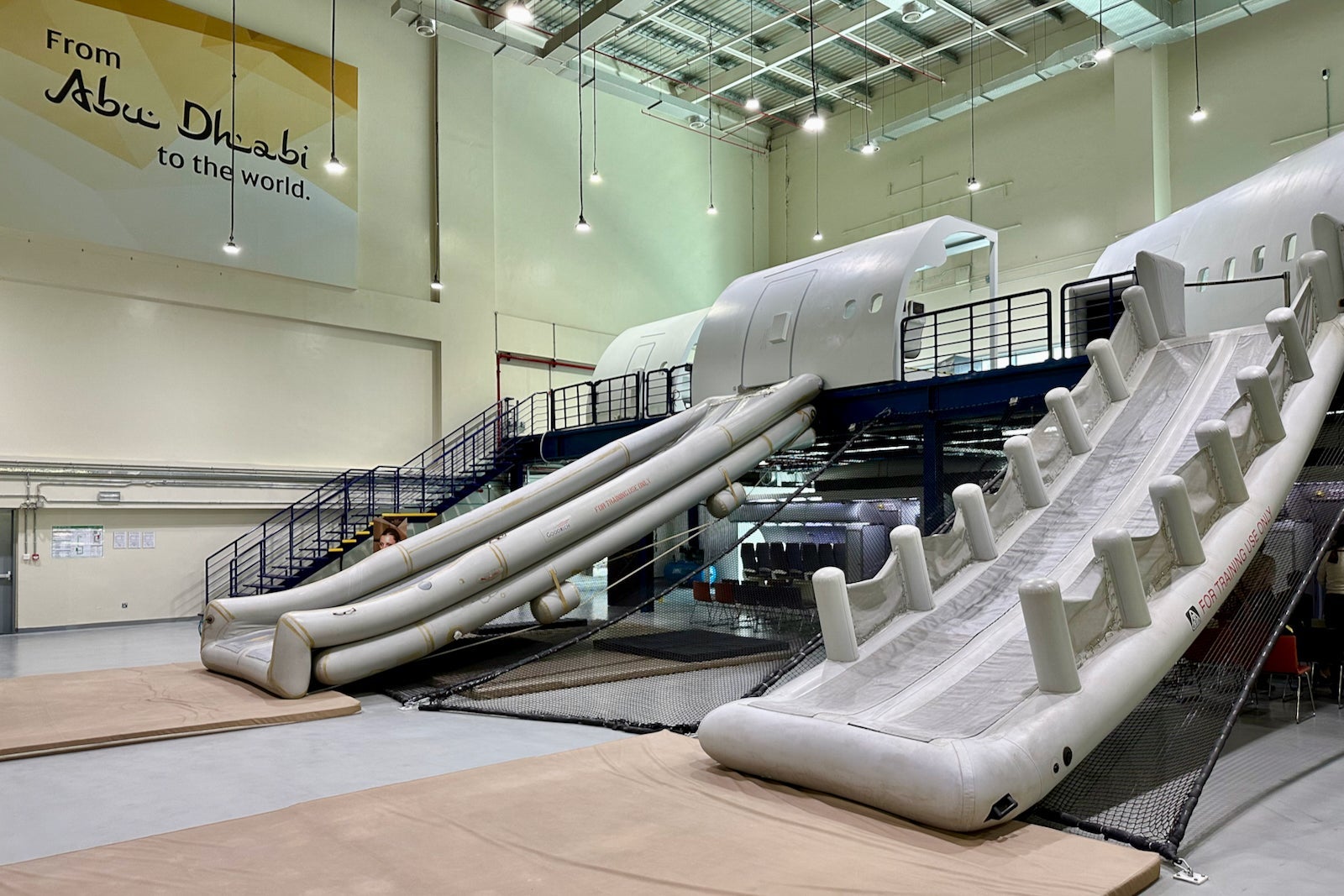
Some emergencies require evacuating a fully loaded aircraft in as little as 90 seconds. This requires efficient use of the slides and exit doors and is simulated in what looks like a gymnastics center.
Instead of beams and vaults, there are two exit slides that land on padded mats. Here, flight attendants learn how to evacuate an aircraft efficiently.
There's even a special version of this trainer designed for the Airbus A380, the world's largest passenger aircraft. Even though Etihad's A380s are still in long-term storage (with no update yet on whether these planes might return to service), the airline still has training modules for this whale of a jet.
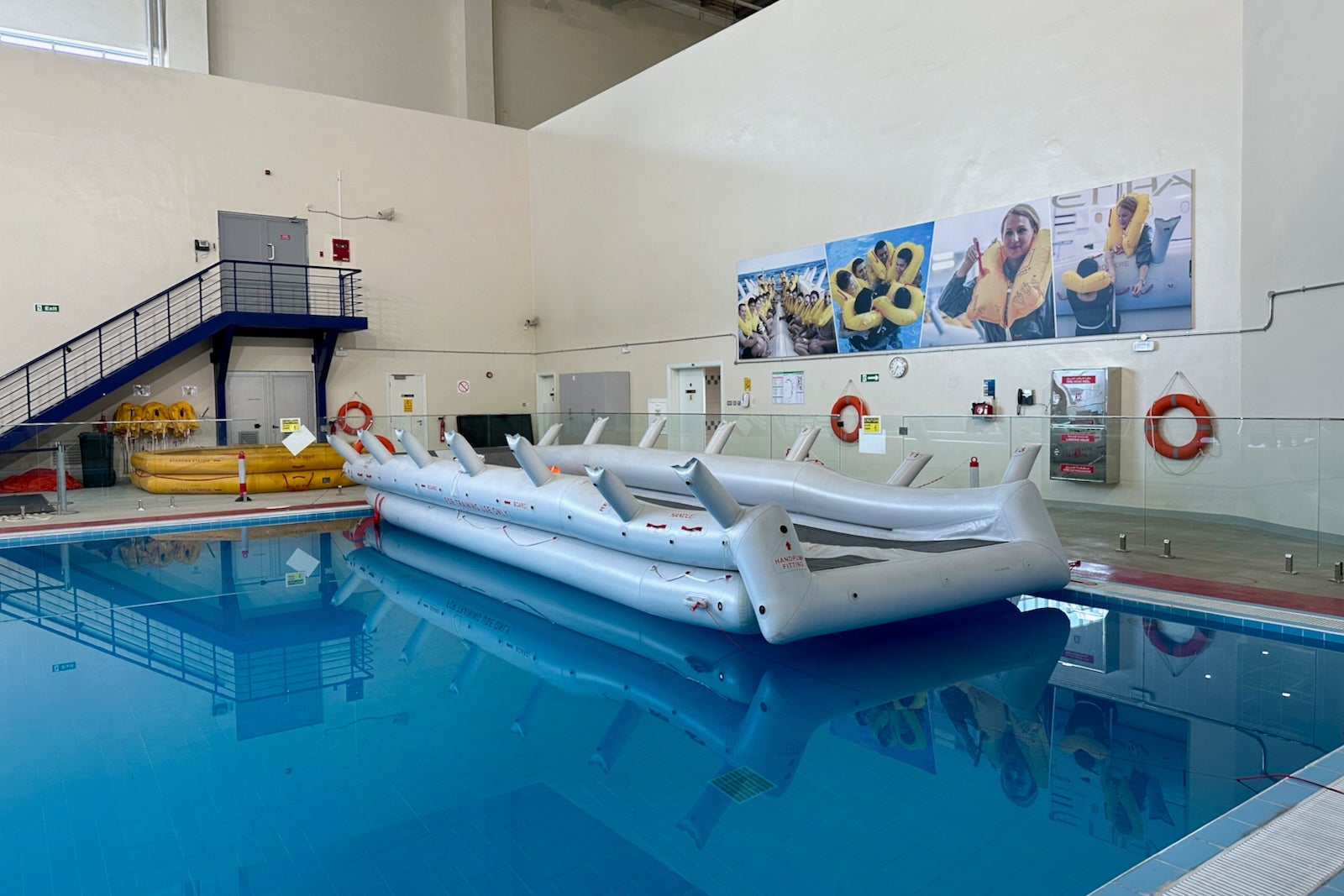
Some emergency evacuations occur on land while others are on the water. Flight attendants learn about water landings in the classroom, then turn their learning into practice at the swimming pool.
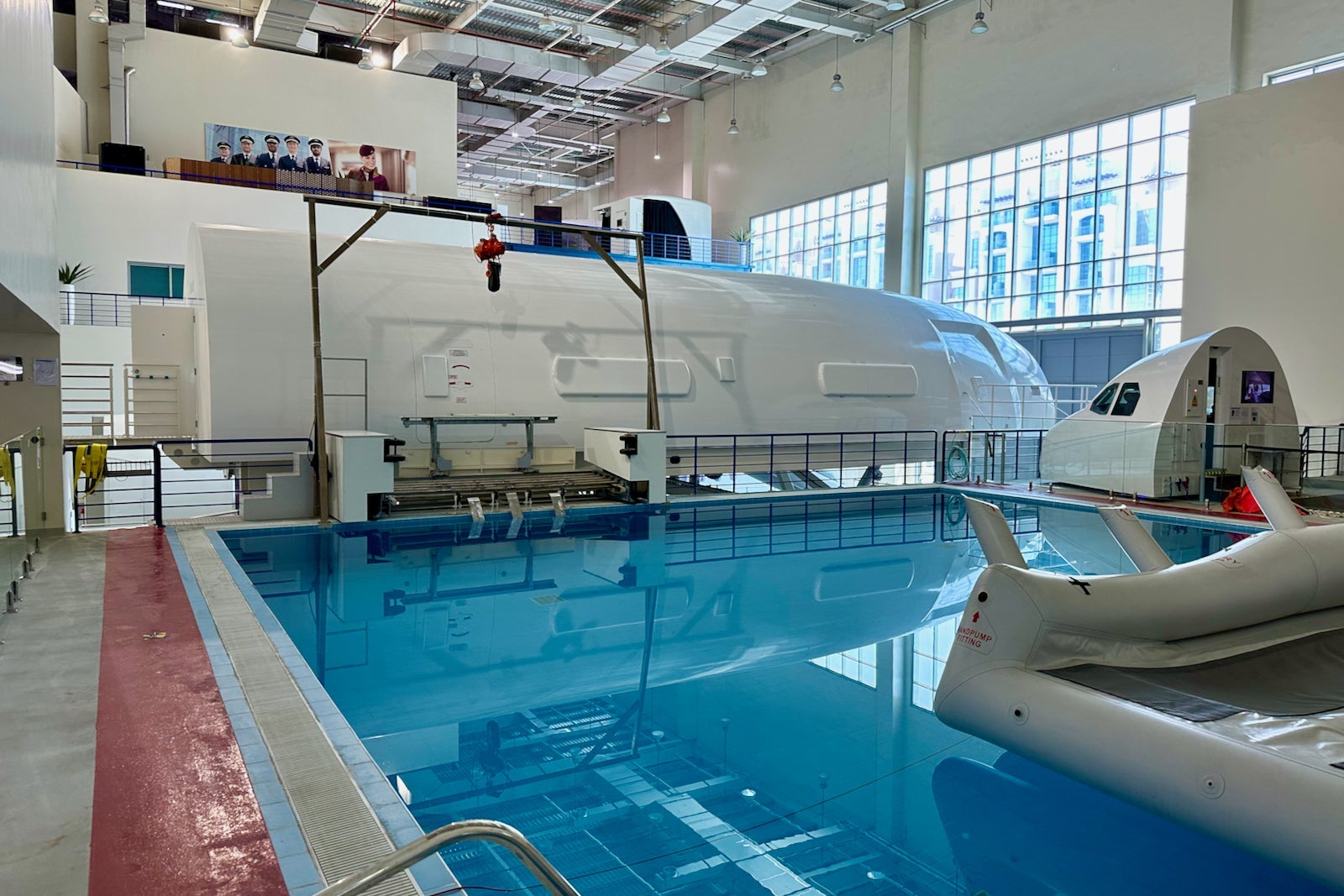
To simulate a water landing, Etihad's training facility has a massive pool with slide rafts that have already been deployed.
While that covers much of the safety-related training, Etihad's flight attendants also have lots to learn about service delivery. The Abu Dhabi-based carrier is regarded as one of the world's best, partially thanks to a well-above-average onboard service delivered by flight attendants.
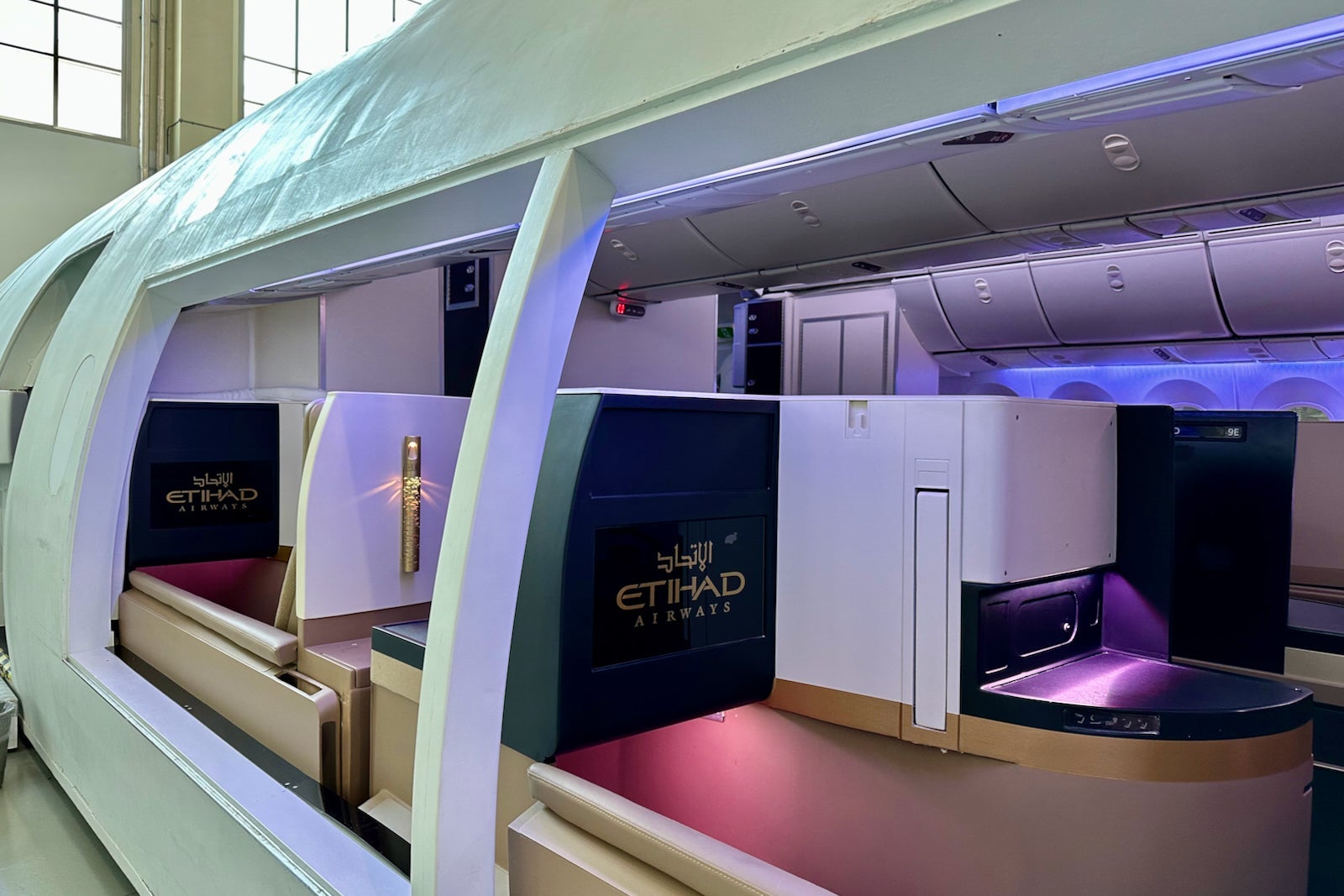
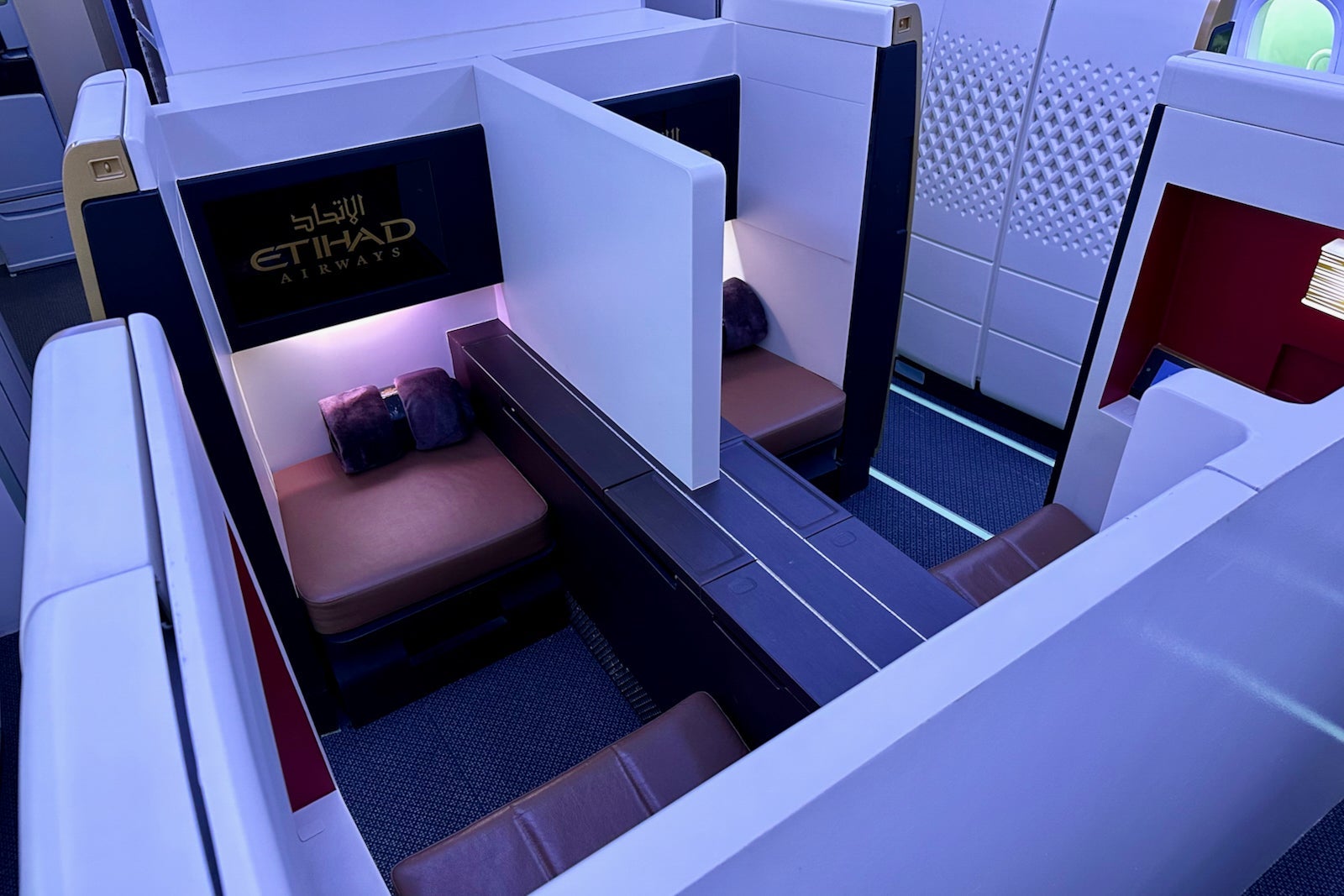
To learn more about how to deliver service, flight attendants practice in cabin mockups at the aviation training center. Etihad has a few miniature versions of first-, business- and economy-class cabins for this purpose.
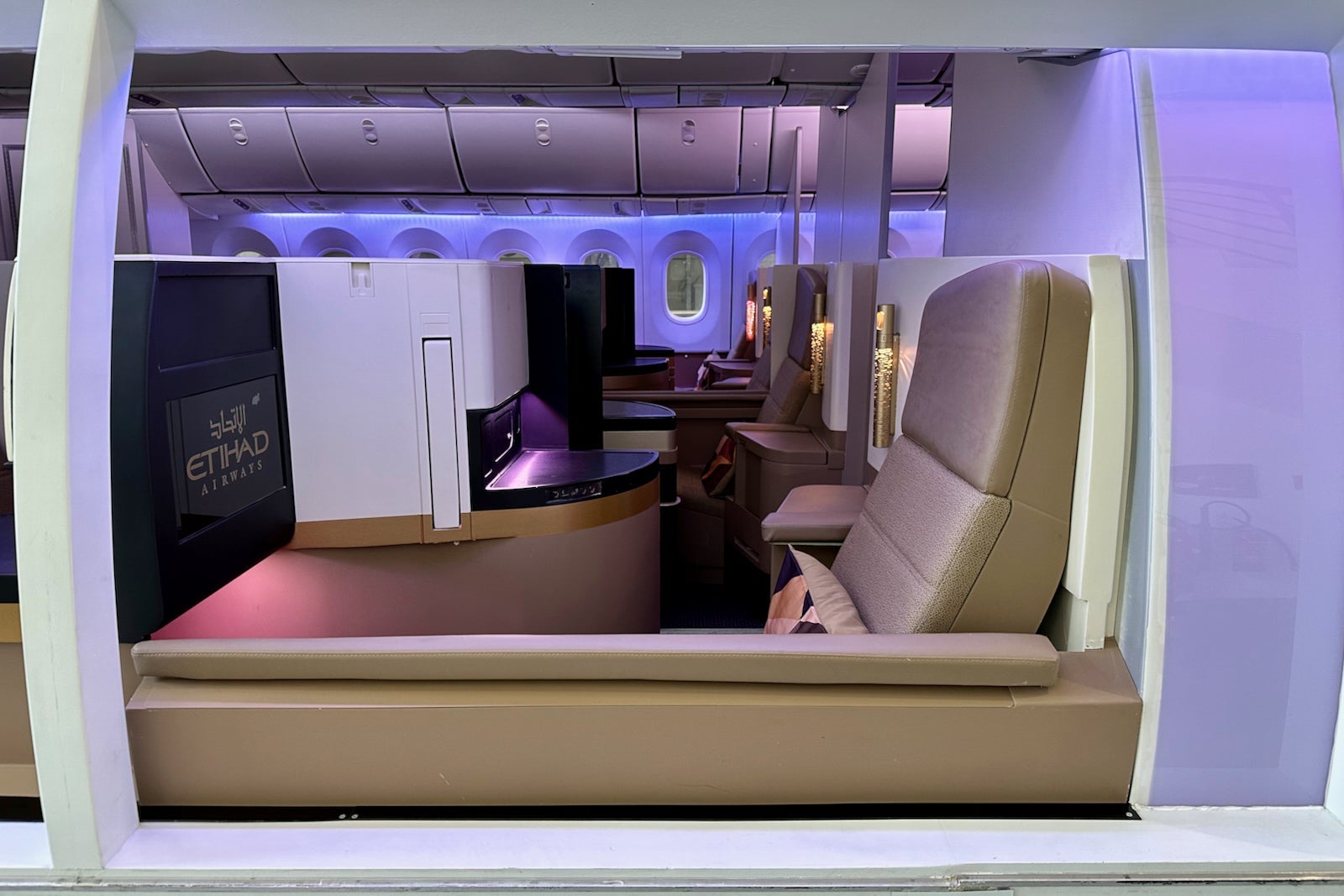
While the seats themselves aren't fully functional (as they're not connected to power), these cabin mockups are a great way to practice how to deliver meals, ask for drink orders and operate galley carts.
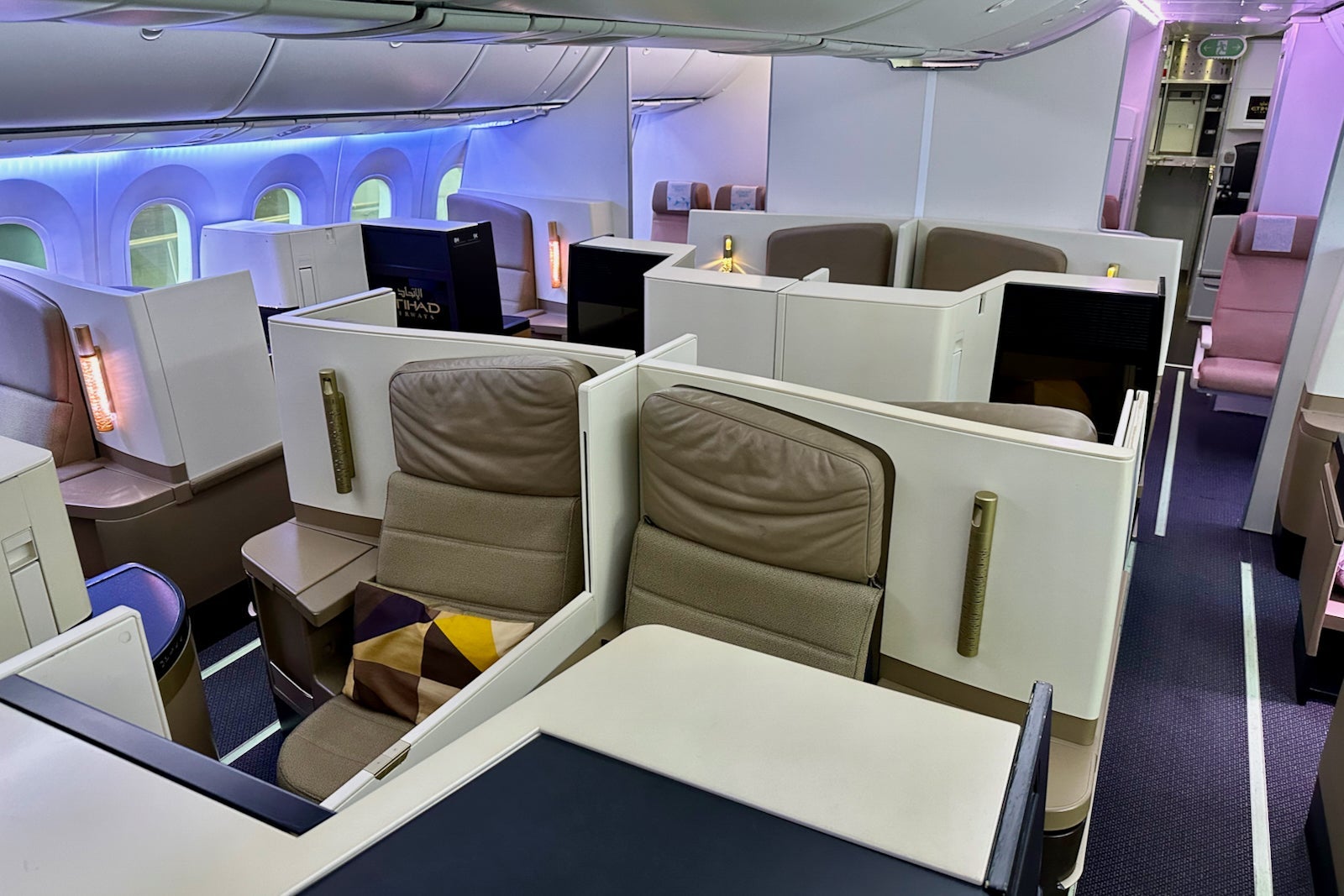
The galleys and kitchen are exact replicas of what you'd find on the plane itself. The airline has training cabins for the Airbus A320, as well as the Boeing 777 and 787 Dreamliner, which comprise much of the carrier's fleet.
After learning all the safety and service delivery procedures, flight attendants then complete multiple ground-based examinations to ensure competence with each of the key responsibilities.
Assuming that they pass, they get their wings and start flying as a trainee on a few revenue flights.
Within weeks, they officially join the ranks of Etihad flight attendants and continue to return back to the aviation training center for recurring training and to learn about updated procedures and guidelines.
So, the next time you hear that "flight attendants are primarily here for your safety," now you have an inside look at what that means — and what how they learn to ensure it.
TPG featured card

at Capital One's secure site
Terms & restrictions apply. See rates & fees.
| 5X miles | Earn 5X miles on hotels, vacation rentals and rental cars booked through Capital One Travel |
| 2X miles | Earn unlimited 2X miles on every purchase, every day |
Pros
- Stellar welcome offer of 75,000 miles after spending $4,000 on purchases in the first three months from account opening. Plus, a $250 Capital One Travel credit to use in your first cardholder year upon account opening.
- You'll earn 2 miles per dollar on every purchase, which means you won't have to worry about memorizing bonus categories
- Rewards are versatile and can be redeemed for a statement credit or transferred to Capital One’s transfer partners
Cons
- Highest bonus-earning categories only on travel booked via Capital One Travel
- LIMITED-TIME OFFER: Enjoy $250 to use on Capital One Travel in your first cardholder year, plus earn 75,000 bonus miles once you spend $4,000 on purchases within the first 3 months from account opening - that’s equal to $1,000 in travel
- Earn unlimited 2X miles on every purchase, every day
- Earn 5X miles on hotels, vacation rentals and rental cars booked through Capital One Travel
- Miles won't expire for the life of the account and there's no limit to how many you can earn
- Receive up to a $120 credit for Global Entry or TSA PreCheck®
- Use your miles to get reimbursed for any travel purchase—or redeem by booking a trip through Capital One Travel
- Enjoy a $50 experience credit and other premium benefits with every hotel and vacation rental booked from the Lifestyle Collection
- Transfer your miles to your choice of 15+ travel loyalty programs
- Top rated mobile app