Is ‘Doctor Odyssey’ for real? Get a behind-the-scenes look from an actual cruise ship medic


"That would never happen!" I yelled at my TV screen as I watched the first episode of "Doctor Odyssey," Ryan Murphy's new series about a team of cruise ship medical professionals who behave anything but professionally.
Within the first few minutes of the show, which takes place on fictional cruise ship The Odyssey, you'll see several breaches of security and etiquette, as well as embellishments about cruise medical facilities. As the episodes progress, the show depicts everything from the vessel's first officer accidentally tripping on psychedelic candy to the onboard doctor performing an emergency appendectomy on one of his nurses while the ship battles a hurricane.
Sure, it's OK to suspend reality for the sake of entertainment, but because there are already so many incorrect cruise stereotypes floating around, I called an actual cruise medic to help me set the record straight.
Liz Baugh, lead medical consultant for Scenic Luxury Cruises and Tours' oceangoing expedition ships, is a health, safety and environment offshore medic and former Royal Navy medic with more than 25 years of expertise in maritime medicine. In an interview, she confirmed that much of what you'll see on the show is a misrepresentation.
"We are so much more conservative than that," Baugh said. "Everything's very calm and measured when we practice medicine at sea, but that doesn't make for exciting TV, does it?"
Why do passengers seek onboard medical attention?
On the show, people visit the medical team — Dr. Max Bankman (Joshua Jackson) and nurses Avery Morgan (Phillipa Soo) and Tristan Silva (Sean Teale) — to remedy botched plastic surgery and iodine poisoning from eating their weight in shrimp at the buffet. But Baugh told me emergencies are rare, with most people seeking treatment on ships for far more minor ailments than what the show would have you believe.
"The majority of people that come to a cruise ship medical center, in my experience ... are [there] for things like ear, nose and throat infections; minor musculoskeletal [issues resulting from steadying themselves on a moving ship]; and seasickness."
To ward off seasickness, which Baugh said is the most common of those three, she advises passengers to seek out medical advice from their doctors before sailing and to come prepared with any motion sickness medications prescribed. She also suggests considering cabin location when booking, as rooms lower on the ship and closer to the middle tend to experience less movement.
What can't cruise ship medical facilities do?
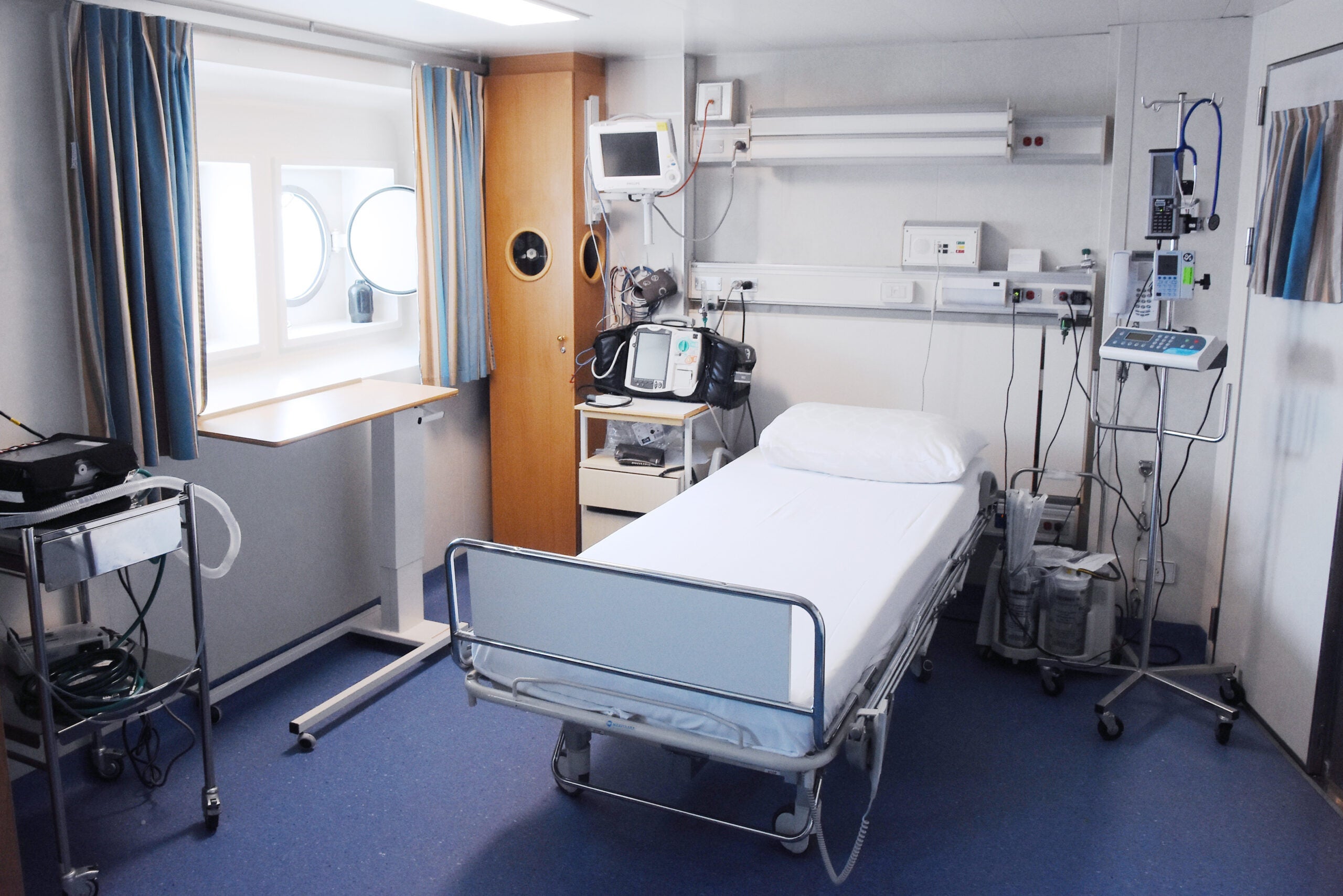
Dr. Odyssey will make you believe that cruise medical centers have unlimited capabilities, ranging from skin grafting to operating on penile fractures. It's just not true. On a cruise ship, medical facilities are largely designed to treat aches, pains, bumps and bruises.

"There were a couple of things that happened — total cringe — you know, the penile fracture," Baugh chuckled. "I was talking about this with my colleagues, and ... in your career, probably once every seven or eight years you might come across something like that, but you certainly wouldn't be doing surgery on that on a ship."
Of course, efforts are made to stabilize passengers in the event of an emergency, but onboard medical offices are too small to house all the equipment necessary for every situation. The extent of the capabilities and the size of the medical center vary by ship. Generally, the larger the vessel, the more medical staff are on board and the more space is allocated.
Medical treatments on ships usually do not include specialized services, such as dialysis or cancer treatments. Although ship medical centers are stocked with basic medications, they aren't full-service pharmacies. That's why passengers need to make sure they bring a large enough supply of their prescription medications for any trips they're planning.
Cruise medical facilities also generally aren't equipped to perform more than the most basic of life-saving surgeries.
"No, we wouldn't be doing anything like [an emergency appendectomy], simply because there's an awful lot of equipment and medication and follow-up that you need," Baugh explained. "But you also need somebody who's a qualified general surgeon. ... Some doctors are ... dual-certified surgeon and medical, but some aren't surgical, so you can't ask them to do surgery."
What types of emergencies can cruise medical centers handle?
One type of minor surgery — a tracheotomy — that appeared in the show is actually something onboard medical staff can handle, says Baugh. However, it's only employed as a lifesaving measure if medical staff can't facilitate a patient's breathing in any other way.
You might not be surprised to learn that the most common life-threatening types of emergencies are heart-related, according to Baugh.
"Thankfully, in the four years I've worked with Scenic, we haven't had any deaths on board, which is fantastic," Baugh said. "If there were to be a death occurring on board, the most common reason is cardiovascular disease, which has led to some sort of cardiac arrest."
Most, if not all, cruise ships — even river cruise vessels, which don't normally have medical facilities on board because they're always so close to land — have defibrillators to help passengers who go into cardiac arrest while sailing. Many cruise ships also have X-ray and lab capabilities on board.
How often do emergencies require passengers to disembark?
You'll have to suspend belief to accept the show's appendix-removal storyline. Bankman and Silva were forced to conduct an appendectomy on Morgan because the Caribbean-bound ship was too far offshore to evacuate her. Generally, unless a vessel is in the middle of an ocean crossing voyage or an expedition sailing, the ship can send a passenger to a land-based hospital in the event that adequate treatment isn't available on board.
"Medical evacuations are done when we've got a major emergency, as in this is potentially life-threatening," Baugh said. "Those are actually very, very rare. With Scenic in the last four years, we've probably had one medical evacuation per year.
As opposed to a medevac by helicopter or Coast Guard ship, "a medical disembarkation is normally [for] somebody who requires ... intervention that we're unable to provide [on board]," explained Baugh. In those cases, the patient is stable enough to wait until the ship docks and can be taken to a land-based medical facility.
Even those situations aren't common. "We maybe have three or four of those per year," Baugh told us.
In the case of most expedition sailings, passengers' doctors are required to fill out forms indicating that those guests are healthy enough to travel. It's important to establish a baseline of health and fitness for expedition cruisers before they board because those sailings can be both physically demanding and remote. There are few hospitals nearby and few medevac options available if something goes wrong.
If emergencies are rare, what do ship doctors and nurses do all day?
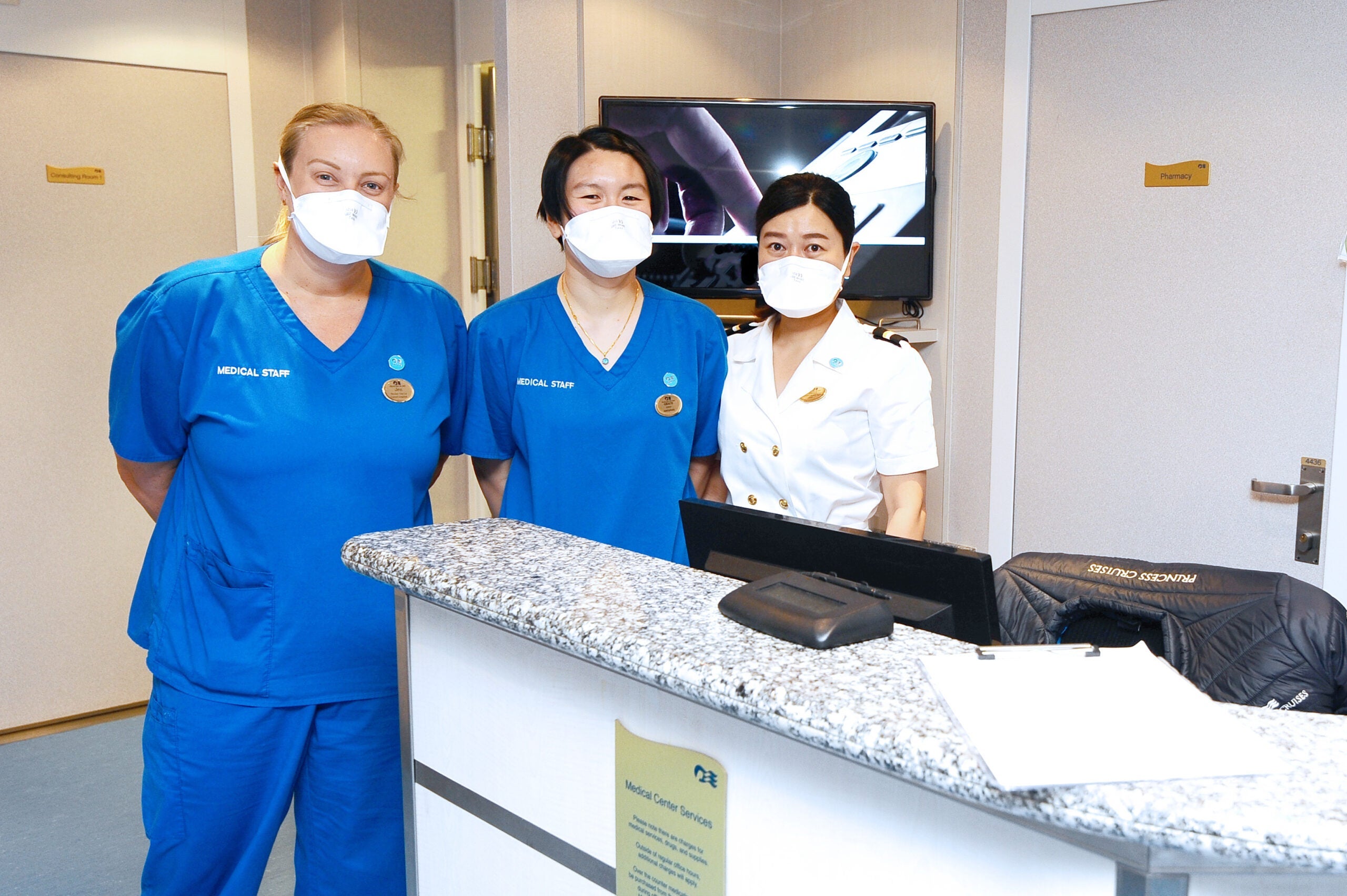
Baugh assured me that, despite a lack of frequent emergencies, a day in the life of a cruise ship medic is still busy. And it's not the wining, dining and dancing in which the show's characters seem to revel more often than they do their jobs.
A typical day involves opening the medical center and checking that all equipment is in working order before the clinic opens. After the staff sees patients for the day, they follow up with previous patients — changing dressings, checking blood pressure and the like. Inventory and ordering come next so medics can take stock of supplies that might be running low.
That doesn't mean doctors and nurses are done for the day as soon as the facility closes. They're on call 24 hours a day, and they have other shipboard duties, too.
"They don't just do doctoring and nursing on board," Baugh said. "They're also part of the health and safety team. They [conduct] training ... to make sure that crew, especially in passenger areas, are understanding what a medical emergency looks like and how to raise the alarm."
And, of course, they have mandatory rest periods to allow them to perform their best when passengers need their help.
And what about crew etiquette?
No self-respecting cruise ship captain would be caught dead playing strip poker with his officers on board, but "Doctor Odyssey" might have unsuspecting viewers thinking otherwise. As Bankman peeled off his shirt, I once again rolled my eyes.
Earlier scenes saw members of the medical team lounging by the passenger pool, responding to emergencies in their swimsuits and hooking up with each other — and with guests.
"The medical team can be invited to dine with the guests, but that's at the permission of the captain," Baugh said when I asked her just how cozy doctors and nurses can be with passengers. "If they're invited to dine, then they need to gain permission to do that, but with that comes all the professional responsibility of not drinking alcohol and staying appropriate in your conversation. ... There should be no crossing of those boundaries."
But crossing boundaries is exactly what "Doctor Odyssey" does. So, the next time you observe the characters asking passengers to dance or saving a guest from an ailment that's rare even on land, remember: It's not really a cruise ship clinic. It just plays one on TV.
Read more about cruise-related entertainment, health and safety here:
- Are cruise ships dirty?
- Are cruise ships safe?
- Do cruise ships have enough lifeboats?
- What happens if you get sick on a cruise?
- What is norovirus, and should you worry about it?
- Cruise-themed TV shows to put you in the mood to sail
- 10 wild attractions you'll find on cruise ships
- Best cruise ship waterslides and water parks
- Cruise activities not to miss on sea days
TPG featured card
at American Express's secure site
Terms & restrictions apply. See rates & fees.
| 4X | Earn 4X Membership Rewards® points per dollar spent on purchases at restaurants worldwide, on up to $50,000 in purchases per calendar year, then 1X points for the rest of the year. |
| 4X | Earn 4X Membership Rewards® points per dollar spent at US supermarkets, on up to $25,000 in purchases per calendar year, then 1X points for the rest of the year. |
| 5X | Earn 5X Membership Rewards® points on prepaid hotel stays booked through AmexTravel.com or the Amex Travel App™. |
| 3X | Earn 3X Membership Rewards® points on flights booked through AmexTravel.com, the Amex Travel App™, or purchased directly from airlines. |
| 2X | Earn 2X Membership Rewards® points on prepaid car rentals booked through AmexTravel.com or the Amex Travel App™ and cruises booked and paid through AmexTravel.com. |
| 1X | Earn 1X Membership Rewards® point per dollar spent on all other eligible purchases. |
Pros
- Valuable dining and food-related credits
- Flexible rewards with airline and hotel transfer partners
- Multiple travel and purchase protections
- No foreign transaction fees
- Access to Amex Offers for additional savings (enrollment required)
Cons
- Not as useful for those living outside the U.S.
- Some may have trouble using Uber and other dining credits
- You may be eligible for as high as 100,000 Membership Rewards® Points after you spend $8,000 in eligible purchases on your new Card in your first 6 months of Card Membership. Welcome offers vary and you may not be eligible for an offer. Apply to know if you’re approved and find out your exact welcome offer amount – all with no credit score impact. If you’re approved and choose to accept the Card, your score may be impacted.
- Earn 4X Membership Rewards® points per dollar spent on purchases at restaurants worldwide, on up to $50,000 in purchases per calendar year, then 1X points for the rest of the year.
- Earn 4X Membership Rewards® points per dollar spent at US supermarkets, on up to $25,000 in purchases per calendar year, then 1X points for the rest of the year.
- Earn 5X Membership Rewards® points on prepaid hotel stays booked through AmexTravel.com or the Amex Travel App™.
- Earn 3X Membership Rewards® points on flights booked through AmexTravel.com, the Amex Travel App™, or purchased directly from airlines.
- Earn 2X Membership Rewards® points on prepaid car rentals booked through AmexTravel.com or the Amex Travel App™ and cruises booked and paid through AmexTravel.com.
- Earn 1X Membership Rewards® point per dollar spent on all other eligible purchases.
- Pay It® lets you tap in the American Express® App to quickly pay for small purchase amounts throughout the month and still earn rewards the way you usually do. Plan It® gives you the option to split up big purchases into equal monthly payments with a fixed fee. You’ll know upfront exactly how much you’ll pay.
- $120 Dining Credit: Earn up to a total of $10 in statement credits monthly when you pay with the Gold Card at Grubhub (including Seamless), Buffalo Wild Wings, Five Guys, The Cheesecake Factory, and Wonder. This can be an annual savings of up to $120. Enrollment required.
- $100 Resy Credit: Get up to $100 in statement credits each calendar year at over 10,000 qualifying U.S. Resy restaurants after you pay for eligible purchases with the American Express® Gold Card. That’s up to $50 in statement credits semi-annually. Enrollment required.
- $84 Dunkin' Credit: Earn up to $7 in monthly statement credits after you pay with the American Express® Gold Card at U.S. Dunkin’ locations. Enrollment required.
- $120 Uber Cash on Gold: Enjoy up to $120 in Uber Cash annually with your Gold Card. Just add your Card to your Uber account and you'll get $10 in Uber Cash each month to use on orders and rides in the U.S. when you select an Amex Card for your transaction.
- Enjoy complimentary Hertz Five Star® Status benefits like skipping the counter at select locations, adding an additional driver at no additional cost*, and vehicle upgrades**. Benefit enrollment and Hertz Gold+ registration are required. *Additional drivers must meet standard rental qualifications and must be a spouse or domestic partner to qualify as complimentary. Other additional drivers subject to fees. **Benefits are subject to availability and vary by location. Additional Hertz program Terms and Conditions including age restrictions apply.
- Book two nights or more with The Hotel Collection through AmexTravel.com or the Amex Travel App™ and receive a $100* credit towards eligible charges at over 1,400 upscale hotels worldwide. *Eligible charges vary by property.
- Book your travel through the Amex Travel App™ with added peace of mind – backed by American Express® service and support. Only for American Express® Card Members.
- Whenever you need us, we're here. Our Member Services team will ensure you are taken care of. From lost Card replacement to statement questions, we are available to help 24/7.
- No Foreign Transaction Fees.
- Annual Fee is $325.
- Terms Apply.