Delta is suspending service to 12 more destinations in US, Canada


Delta Air Lines is wasting no time in suspending service to more cities now that it has U.S. authorities' blessing to exit more markets as passenger numbers remain at historic lows due to the coronavirus pandemic.
The Atlanta-based SkyTeam Alliance carrier will end service to 11 smaller cities across the U.S. on July 8, Delta said Friday. In addition, it will drop service to Ottawa (YOW) in Canada on June 21.
The suspensions follow the finalization of the Department of Transportation's new round of waivers to the flight schedule requirements of the federal government's coronavirus aid package, known as the CARES Act. Airlines including Delta were granted exemptions from serving five cities or 5% of those on their map — whichever number was higher — through Sept. 30. The exemptions are also the last that the regulator will grant.
Get Coronavirus travel updates. Stay on top of industry impacts, flight cancellations, and more.
Delta will end service to the following 11 U.S. cities:
- Aspen, Colorado (ASE)
- Bangor, Maine (BGR)
- Erie, Pennsylvania (ERI)
- Flint, Michigan (FNT)
- Fort Smith, Arkansas (FSM)
- Lincoln, Nebraska (LNK)
- New Bern, North Carolina (EWN)
- Peoria, Illinois (PIA)
- Santa Barbara, California (SBA)
- Scranton/Wilkes-Barre, Pennsylvania (AVP)
- Williston, North Dakota (XWA)
Delta told staff in an internal memo on June 5 viewed by TPG that it will re-evaluate service to these U.S. destinations after Sept. 30, when the CARES Act restrictions end. At the same time, the airline will also evaluate whether to resume flights to 10 airports in metropolitan areas with multiple airports where it has already suspended flights.
Sandy Gordon, senior vice president of domestic airport operations, told employees in the memo that Delta will re-evaluate its "overall network needs" come October.
Delta is ending service to Ottawa "indefinitely," said Gordon. It has also temporarily suspended service to Saskatoon (YXE) in Canada.

Related: U.S. allows Alaska, Delta, United and others to drop flights to 75 cities
View this post on Instagram
The air service suspensions come even as travelers slowly trickle back onto planes. The Transportation Security Administration (TSA) screened 441,255 people on June 7, its latest data shows. This is the most since people began staying home in large numbers due to COVID-19 in March, but it remains below a fifth of the number screened on the same day a year ago.
U.S. airlines have slowly been adding flights back after deep cuts in April and May. In July, American Airlines will fly 55% of the domestic schedule it flew a year ago, Delta just over 38%, Southwest Airlines over 62% and United Airlines nearly 30%, according to Cirium schedules.
Carriers with larger domestic franchises, like American and Southwest, are faring better as domestic travel is recovering faster than international.
Related: American to reopen lounges, add flights to Florida, Rockies as flyers return
The DOT is allowing American to suspend service to four more cities: Aspen, Montrose (MTJ) and Vail (EGE) in Colorado, and Worcester, Massachusetts (ORH). However, it is only suspending flights to Worcester from June 8 through at least Sept. 30, Cirium schedules show.
United won exemptions from serving 11 cities: Allentown (ABE), Chattanooga (CHA), Fairbanks (FAI), Hilton Head (HHH), Ithaca (ITH), Kalamazoo (AZO), Key West (EYW), Lansing (LAN), Myrtle Beach (MYR), Rochester, Minnesota (RST) and St. Thomas (STT). The airline plans to suspend flights to all of the cities except St. Thomas through Aug. 3, according to Cirium schedules.
Southwest has continued to serve all of the cities on its map and sought no air service waivers. This is not to say the Dallas-based carrier has not adjusted its map, with plans to fly 100 fewer routes by year end.
Related: A complete list of major carriers' coronavirus change and cancellation policies
Travelers whose flights are affected by the suspensions can refund or change their tickets without a fee.
Of course, schedules at American, Delta, United and most carriers are subject to change and flights could resume — or be suspended — at any of the cities where they have received DOT waivers.
And, come Oct. 1, the maps for the three carriers could change dramatically as the airlines adapt to less demand — particularly for international travel — for the foreseeable future.
Analysts at Cowen expect U.S. airlines to shrink their mainline fleets by as many as 1,000 jets, or 21% of their combined fleets, after the pandemic passes. This will result in fewer older, gas-guzzling models but also means less air service for travelers.
Related: US airlines may have to retire 1,000 jets; these are the ones that could end up in the boneyard.
TPG featured card
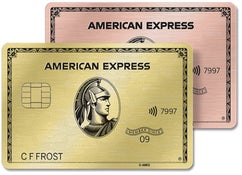
at American Express's secure site
Terms & restrictions apply. See rates & fees.
| 4X | Earn 4X Membership Rewards® points per dollar spent on purchases at restaurants worldwide, on up to $50,000 in purchases per calendar year, then 1X points for the rest of the year. |
| 4X | Earn 4X Membership Rewards® points per dollar spent at US supermarkets, on up to $25,000 in purchases per calendar year, then 1X points for the rest of the year. |
| 5X | Earn 5X Membership Rewards® points on prepaid hotel stays booked through AmexTravel.com or the Amex Travel App™. |
| 3X | Earn 3X Membership Rewards® points on flights booked through AmexTravel.com, the Amex Travel App™, or purchased directly from airlines. |
| 2X | Earn 2X Membership Rewards® points on prepaid car rentals booked through AmexTravel.com or the Amex Travel App™ and cruises booked and paid through AmexTravel.com. |
| 1X | Earn 1X Membership Rewards® point per dollar spent on all other eligible purchases. |
Pros
- Valuable dining and food-related credits
- Flexible rewards with airline and hotel transfer partners
- Multiple travel and purchase protections
- No foreign transaction fees
- Access to Amex Offers for additional savings (enrollment required)
Cons
- Not as useful for those living outside the U.S.
- Some may have trouble using Uber and other dining credits
- You may be eligible for as high as 100,000 Membership Rewards® Points after you spend $8,000 in eligible purchases on your new Card in your first 6 months of Card Membership. Welcome offers vary and you may not be eligible for an offer. Apply to know if you’re approved and find out your exact welcome offer amount – all with no credit score impact. If you’re approved and choose to accept the Card, your score may be impacted.
- Earn 4X Membership Rewards® points per dollar spent on purchases at restaurants worldwide, on up to $50,000 in purchases per calendar year, then 1X points for the rest of the year.
- Earn 4X Membership Rewards® points per dollar spent at US supermarkets, on up to $25,000 in purchases per calendar year, then 1X points for the rest of the year.
- Earn 5X Membership Rewards® points on prepaid hotel stays booked through AmexTravel.com or the Amex Travel App™.
- Earn 3X Membership Rewards® points on flights booked through AmexTravel.com, the Amex Travel App™, or purchased directly from airlines.
- Earn 2X Membership Rewards® points on prepaid car rentals booked through AmexTravel.com or the Amex Travel App™ and cruises booked and paid through AmexTravel.com.
- Earn 1X Membership Rewards® point per dollar spent on all other eligible purchases.
- Pay It® lets you tap in the American Express® App to quickly pay for small purchase amounts throughout the month and still earn rewards the way you usually do. Plan It® gives you the option to split up big purchases into equal monthly payments with a fixed fee. You’ll know upfront exactly how much you’ll pay.
- $120 Dining Credit: Earn up to a total of $10 in statement credits monthly when you pay with the Gold Card at Grubhub (including Seamless), Buffalo Wild Wings, Five Guys, The Cheesecake Factory, and Wonder. This can be an annual savings of up to $120. Enrollment required.
- $100 Resy Credit: Get up to $100 in statement credits each calendar year at over 10,000 qualifying U.S. Resy restaurants after you pay for eligible purchases with the American Express® Gold Card. That’s up to $50 in statement credits semi-annually. Enrollment required.
- $84 Dunkin' Credit: Earn up to $7 in monthly statement credits after you pay with the American Express® Gold Card at U.S. Dunkin’ locations. Enrollment required.
- $120 Uber Cash on Gold: Enjoy up to $120 in Uber Cash annually with your Gold Card. Just add your Card to your Uber account and you'll get $10 in Uber Cash each month to use on orders and rides in the U.S. when you select an Amex Card for your transaction.
- Enjoy complimentary Hertz Five Star® Status benefits like skipping the counter at select locations, adding an additional driver at no additional cost*, and vehicle upgrades**. Benefit enrollment and Hertz Gold+ registration are required. *Additional drivers must meet standard rental qualifications and must be a spouse or domestic partner to qualify as complimentary. Other additional drivers subject to fees. **Benefits are subject to availability and vary by location. Additional Hertz program Terms and Conditions including age restrictions apply.
- Book two nights or more with The Hotel Collection through AmexTravel.com or the Amex Travel App™ and receive a $100* credit towards eligible charges at over 1,400 upscale hotels worldwide. *Eligible charges vary by property.
- Book your travel through the Amex Travel App™ with added peace of mind – backed by American Express® service and support. Only for American Express® Card Members.
- Whenever you need us, we're here. Our Member Services team will ensure you are taken care of. From lost Card replacement to statement questions, we are available to help 24/7.
- No Foreign Transaction Fees.
- Annual Fee is $325.
- Terms Apply.