Could a Passenger Land an Airplane?
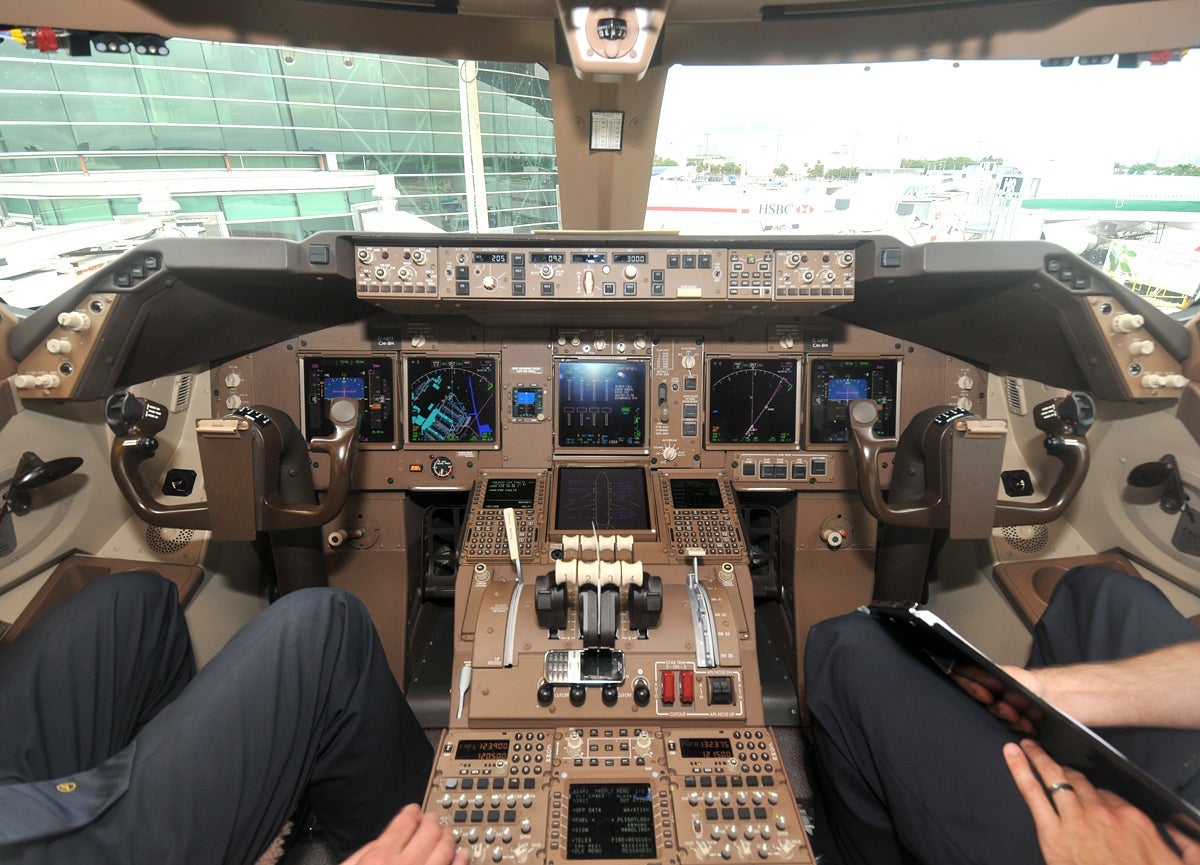
One of the most regular questions I'm hit with is the one about a passenger landing the plane. If, for whatever reason, the entire cockpit crew suddenly became incapacitated, could a person with no formal training somehow get a commercial jetliner safely to the ground?
Many people seem to think so — a presumption that has always struck me as peculiar. As somebody with no medical training, I don't propose that I could saunter into an operating room and perform a kidney transplant. Neither could I repair a satellite or design a skyscraper. Heck, I can barely cook a proper meal. Some things are, simply and expectedly, beyond my levels of expertise. When it comes to airplanes, though, a surprising number of non-pilots believe they could pull it off.
The reason for this is rooted in people's widespread misunderstanding of cockpit automation. Consensus holds that jetliners today are super-automated machines where a pilot's only critical role is to play backup in case of an emergency. Indeed, the notion of the automatic airplane that "flies itself" is perhaps the most aggravating and stubborn myth in all of aviation. That's the result, in part, of a sometimes gullible media that takes at face value the claims of researchers and academics who -- interesting as their work may be -- often have little sense of the operational realities of commercial flight. Cue the aeronautics professor or university scientist who will blithely assert that we are well on our way to a future in which pilots will be engineered out of the picture entirely. Consequently, travelers have a vastly exaggerated sense of what cockpit technology actually does, and how pilots interact with that technology. "Of course I could land the plane," the thinking goes. "It's only a matter of pressing a few buttons, is it not?"
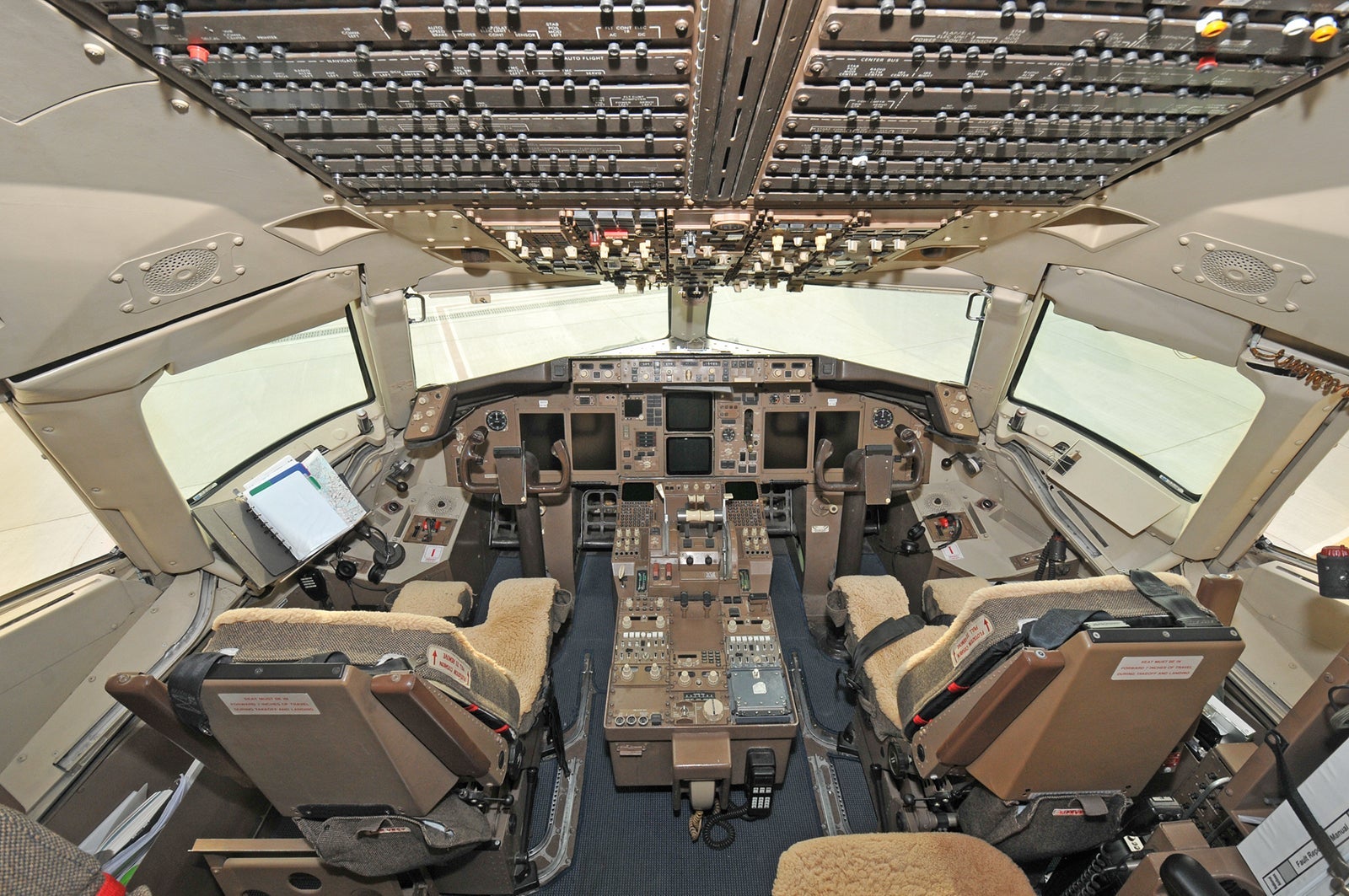
A Boeing 757 cockpit (Photo by Alberto Riva/TPG)
In fact, flying remains a very hands-on operation subject to tremendous amounts of pilot input. Our hands might not be steering the airplane directly -- as would have been the case in the 1930s -- but almost everything the airplane does is commanded, one way or the other, by the crew. The automation only does what we tell it to do. It needs to be instructed when, where, and how to perform its tasks. On the 767 that I fly, there are multiple ways to set up and command an "automatic" climb, descent or change of course. People might be surprised at how busy a cockpit can become on even the most routine flight and with all of the automation running. Granted, there are stretches of low workload during which, to the non-pilot observer, it would seem that very little requires the crew's attention. But there also are periods of very high workload, to the point where both pilots can become task-saturated.
The best analogy, I think, is one that compares flying to medicine. In other words, cockpit automation assists pilots similar to the way that advanced medical equipment assists surgeons. While it has improved their capabilities, pilots and surgeons both remain absolutely essential. A plane "flies itself" no more than an operating room performs that kidney transplant "by itself."
That fantasy has outpaced reality is perhaps symptomatic of our infatuation with technology and gadgetry, and the belief that we can compute our way out of every dilemma or complication. The proliferation of drones, both large and small, has also made it easy to misconstrue the realities of flying. A 777 isn't simply a scaled-up drone. Pilotless aircraft have been tested, that's true, but for now these things exist only in the experimental stages. A handful of successful test flights does not prove the viability of a concept able to carry up to four million passengers every day of the week.
With all of that duly noted, let's get back to the original question: What are the chances of a nonpilot safely landing a jetliner?
Everything I just wrote notwithstanding, there's a ladder to this. Do you mean somebody who knows nothing at all about flying? How about a private pilot who has flown four-seaters? What about a desktop simulator buff who has studied a jetliner's systems and controls? Depending on the circumstances, some would fare better than others. It depends, too, on the meaning of "land." Do you mean from just a few hundred feet over the ground, in ideal weather, with the plane stabilized and pointed toward the runway, and with someone talking you through it? Or, do you mean the whole full-blown arrival, from cruising altitude to touchdown?

In the case of the former, you've got a fighting chance. This was demonstrated in 2007 on the Discovery Channel show Mythbusters. In the episode, hosts Adam Savage and Jamie Hyneman took the controls in a NASA simulator stripped down to represent a "generic commercial airliner." A seasoned pilot, stationed in an imaginary control tower, carefully instructed them via radio. On the first try they crashed. The second time, they made it.
But all they really did was land a make-believe airplane from a starting point close to the runway. The scenario most people envision is the one where, droning along at cruise altitude, the crew suddenly falls ill and only a brave passenger can save the day. They'll strap themselves in, and, with the smooth coaching of a voice over the radio, try to bring the plane to the ground.
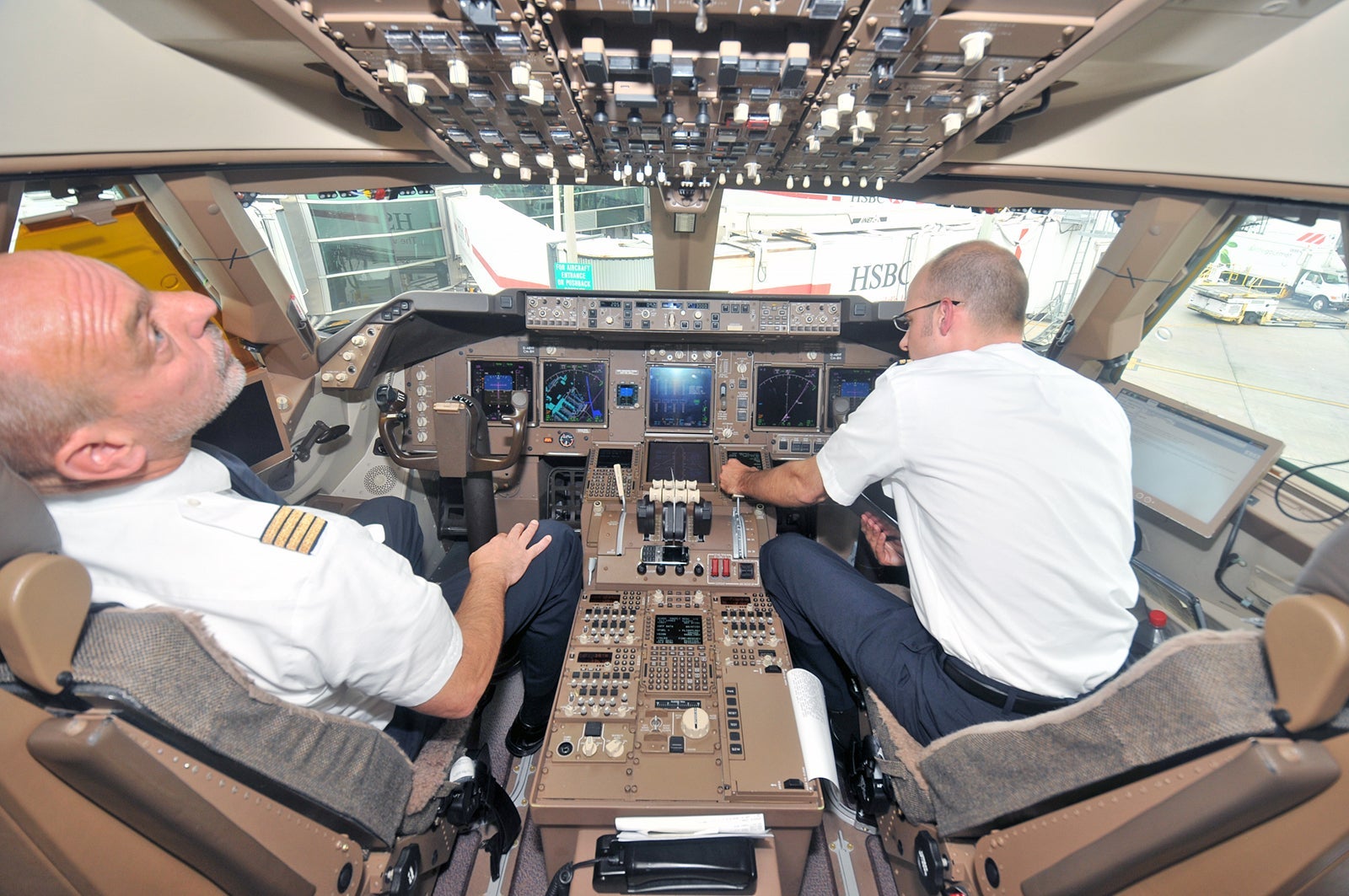
For somebody without any training, the chance of success in this scenario is exactly zero. This person would have to be talked from 35,000 feet all the way to the point where an automatic approach could commence, complete with any number of turns, descents, decelerations, and configuration changes (appropriately setting the flaps, slats, and landing gear). Sorry to drop in another medical analogy, but I reckon it would be about as easy as dictating brain surgery over the telephone to somebody who has never held a scalpel. It'd be tough even for a private pilot or the most obsessive desktop sim hobbyist. Our would-be hero would have a hard enough time finding the microphone switch and correctly configuring the radio panel, let alone handling the maneuvering, programming, navigating, and configuring it would take to land safely.
A few of you might remember the film "Airport '75." A 747 is struck near the flight deck in midair by a small propeller plane and all three pilots are taken out. I almost hate to say it, but dangling Charlton Heston from a helicopter and dropping him through the hole in the fuselage wasn't as far-fetched a solution as it might sound. It was about the only way that jumbo jet was getting back to Earth in one piece. The scene where Karen Black, playing a flight attendant, coaxes the crippled jumbo over a mountain range was, if less than technically accurate, useful in demonstrating the difficulty any civilian would have of pulling off even the simplest maneuver.
All right, but what of the hijacker pilots on September 11, 2001? Doesn't their success at steering Boeing 757 and 767 jets into their targets contradict what I've just said?
No, not really. They, including their leader Mohammad Atta, were licensed private pilots, and he and at least one other member of the cabal had purchased several hours of jet simulator training. Additionally they had obtained manuals and instructional videos for the 757 and 767, the planes used in the attacks, openly available from aviation supply shops. In any case, they neither needed nor demonstrated any in-depth knowledge or skill. The intent was nothing more than to steer an already airborne jetliner, in perfect weather, into the side of a building. And their techniques along the way, based on radar tracks and telephone calls from passengers, were violent and unstable.
Hijacker pilot Hani Hanjour, at the controls of American flight 77, was a notoriously untalented flyer who had never piloted anything larger than a four-seater. According to some, he pulled off a remarkable series of aerobatic maneuvers before slamming into the Pentagon. But when you really look at it, his flying was exceptional only in its recklessness. If anything, his erratic loops and spirals above the nation's capital revealed him to be exactly the terrible pilot he by all accounts was. To hit the building squarely he needed a bit of luck, and he got it. Striking a stationary object, even a large one with five beckoning sides, at high speed and at a steep descent angle, is very difficult. To make the job easier, he came in obliquely, tearing down light poles as he roared across the Pentagon's lawn. If he'd flown the same profile 10 times, in seven of them he'd probably have tumbled short of the target or overflown it entirely.
A few years ago, here in New England, after the lone pilot of a Cape Air commuter plane became ill, a passenger took over and performed a safe landing. The TV news had a field day with that one, though the passenger was a licensed private pilot and the aircraft was only a 10-seat Cessna. Otherwise, there has never been a case where a passenger needed to be drafted for cockpit duty.
Patrick Smith is an airline pilot for a major US airline and the host of askthepilot.com. He lives near Boston. Portions of this article are excerpted from his book, Cockpit Confidential.
TPG featured card

at Capital One's secure site
Terms & restrictions apply. See rates & fees.
| 5X miles | Earn 5X miles on hotels, vacation rentals and rental cars booked through Capital One Travel |
| 2X miles | Earn unlimited 2X miles on every purchase, every day |
Pros
- Stellar welcome offer of 75,000 miles after spending $4,000 on purchases in the first three months from account opening. Plus, a $250 Capital One Travel credit to use in your first cardholder year upon account opening.
- You'll earn 2 miles per dollar on every purchase, which means you won't have to worry about memorizing bonus categories
- Rewards are versatile and can be redeemed for a statement credit or transferred to Capital One’s transfer partners
Cons
- Highest bonus-earning categories only on travel booked via Capital One Travel
- LIMITED-TIME OFFER: Enjoy $250 to use on Capital One Travel in your first cardholder year, plus earn 75,000 bonus miles once you spend $4,000 on purchases within the first 3 months from account opening - that’s equal to $1,000 in travel
- Earn unlimited 2X miles on every purchase, every day
- Earn 5X miles on hotels, vacation rentals and rental cars booked through Capital One Travel
- Miles won't expire for the life of the account and there's no limit to how many you can earn
- Receive up to a $120 credit for Global Entry or TSA PreCheck®
- Use your miles to get reimbursed for any travel purchase—or redeem by booking a trip through Capital One Travel
- Enjoy a $50 experience credit and other premium benefits with every hotel and vacation rental booked from the Lifestyle Collection
- Transfer your miles to your choice of 15+ travel loyalty programs
- Top rated mobile app