A look behind the scenes of Air France's Charles de Gaulle Hub Control Center

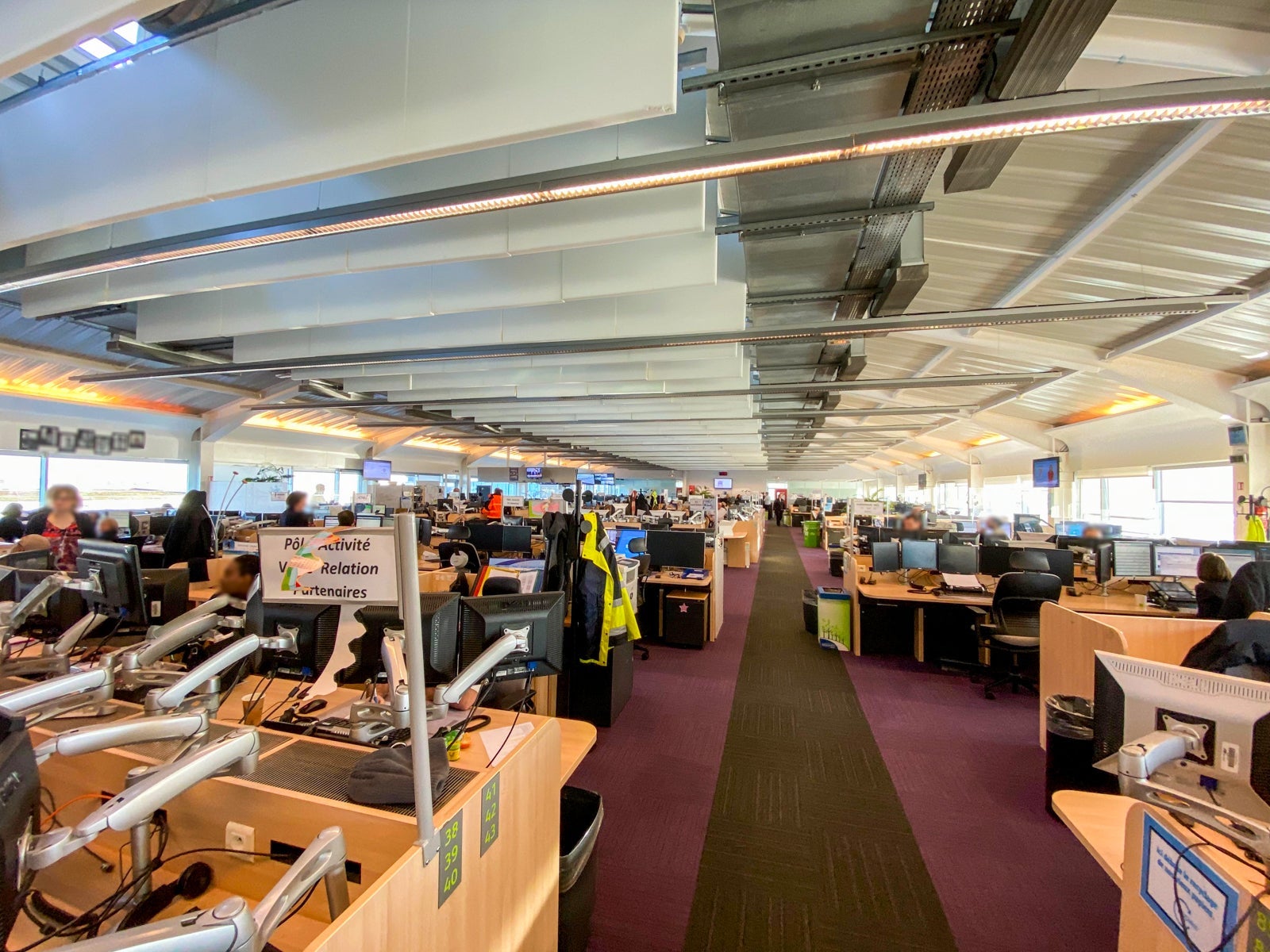
Air France is one of the largest airlines in the world. In 2018, the French flag carrier transported 51.4 million passengers. Its network includes almost 200 destinations in about 100 countries. And most of those operations went through the carrier's hub at Paris Charles de Gaulle Airport (CDG), which houses not only the airline's headquarters and a majority of its operations, but is also home to the CDG Hub Control Center, the center of Air France's massive operation at the airport.
Sign up for the free daily TPG newsletter for more travel tips!
At the CDG Hub Control Center, staff are responsible for the safe — and ideally, on-time — operation of 140 long-haul flights per day. Between both long- and medium-haul operations, the center handles 770 arrivals and departing Air France flights per day at CDG.
Atr its CDG home base, Air France has its own terminals complete with branded lounges and slews of gates for its narrow-body and wide-body fleet, from 75-seat regional jets to the Airbis A380 double-decker. Air France uses a hub-and-spoke model at CDG, and 54% of Air France passengers traveling through CDG are connecting, feeding into CDG from a different origin before continuing on to their final destination.
Related reading: Choose this, not that: CDG Priority Pass lounge edition
As a result, Air France has six peak waves of traffic at CDG every day: two waves in the morning, two in the afternoon and two at night. During its busiest time, Air France has an aircraft landing every 30 seconds. The CDG Hub Control Center staff are partially responsible for the smooth flow of air traffic, allowing passengers to seamlessly connect to their next flight.
Charles de Gaulle is France's only commercial airport that's open 24 hours a day. As a result, the CDG Hub Control Center is staffed around the clock. Heading the center is the DO, or operational director. There is always one DO on call from the eight available who work on a rotating basis, split between a morning (beginning at 5 a.m.), afternoon (beginning at 12 p.m.) and night (beginning at 8 p.m.) shift.
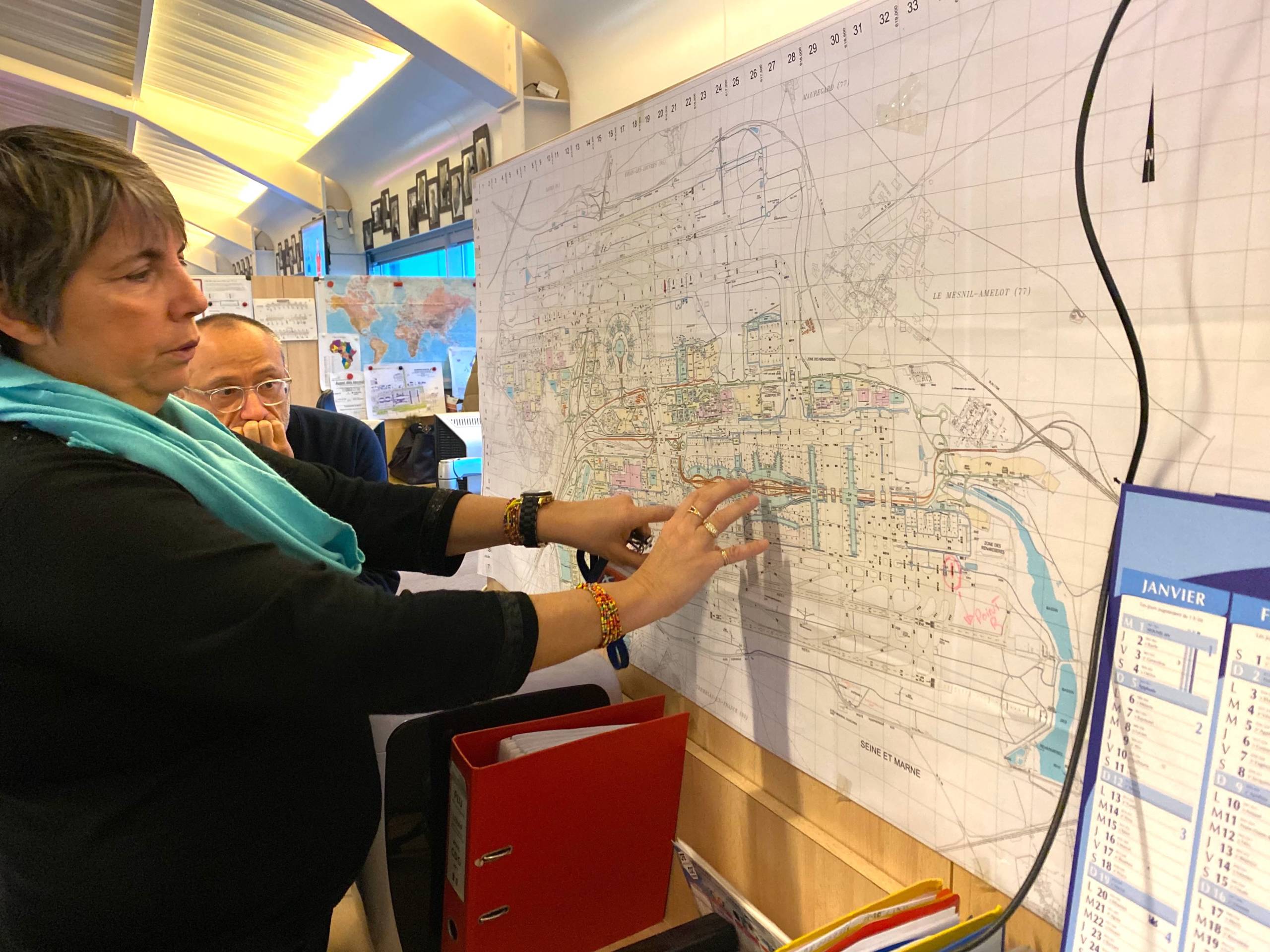
The DO is essentially the leader of all Air France CDG operations during their shift. They're the person who talks with the respective teams — catering, customer service, cargo and more — to determine if a flight needs to be delayed, or worse, canceled. From an aircraft landing at CDG, to following it to ensure it gets properly prepared for the next flight and then until it's taken off, the DO tracks it all.
If, for example, a cargo delay will hold up a flight, the DO will take into account the cost associated with delaying the flight — and potential EU261 claims for passenger compensation as well as general customer dissatisfaction — against operating on time without the delayed cargo, another type of cost.

"Cargo customers are customers as well", said Geraldine, a DO who declined to give her last name. Software comes up with the most cost-effective way of dealing with a potential delay, but the final decision comes down to the DO on duty.
Related reading: Paris Charles de Gaulle vs. Orly: Which airport should you fly into?
When the DO's decision to cancel or delay a flight becomes even more important to the bottom line of Air France is during off-hours operations. Although CDG is staffed 24 hours a day, there are strict noise restrictions between 12 a.m. and 5 a.m. daily. As a result, airlines avoid early arrivals and late departures. While the on-duty DO tries to avoid noise-restricted operations, it happens — that's the nature of the work.
For example, Air France Flight 293 from Tokyo Haneda (HND) is the airline's first arrival at CDG each day. With a scheduled arrival time of 4:50 a.m., an on-time arrival means a fee. So the airport operations have tried to tell the crew of the flight to delay arrival until 5:01 a.m., but most of the time the crew don't listen and land early, Geraldine said. In fact, FlightRadar24 data from the past week shows that AF293 has landed before 5 a.m. every day.
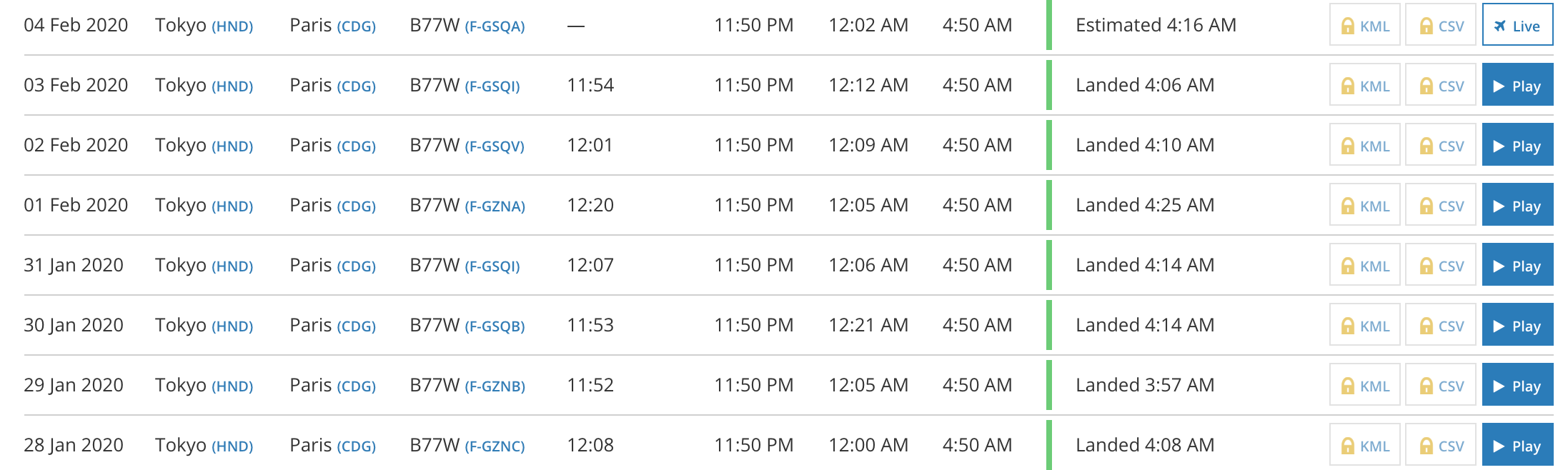
If the airline has any arrivals or departures between 11:59 p.m. and 5 a.m., it has to pay — big time. Even if a delayed aircraft lands at 12:01 a.m., the airline has to pay up.
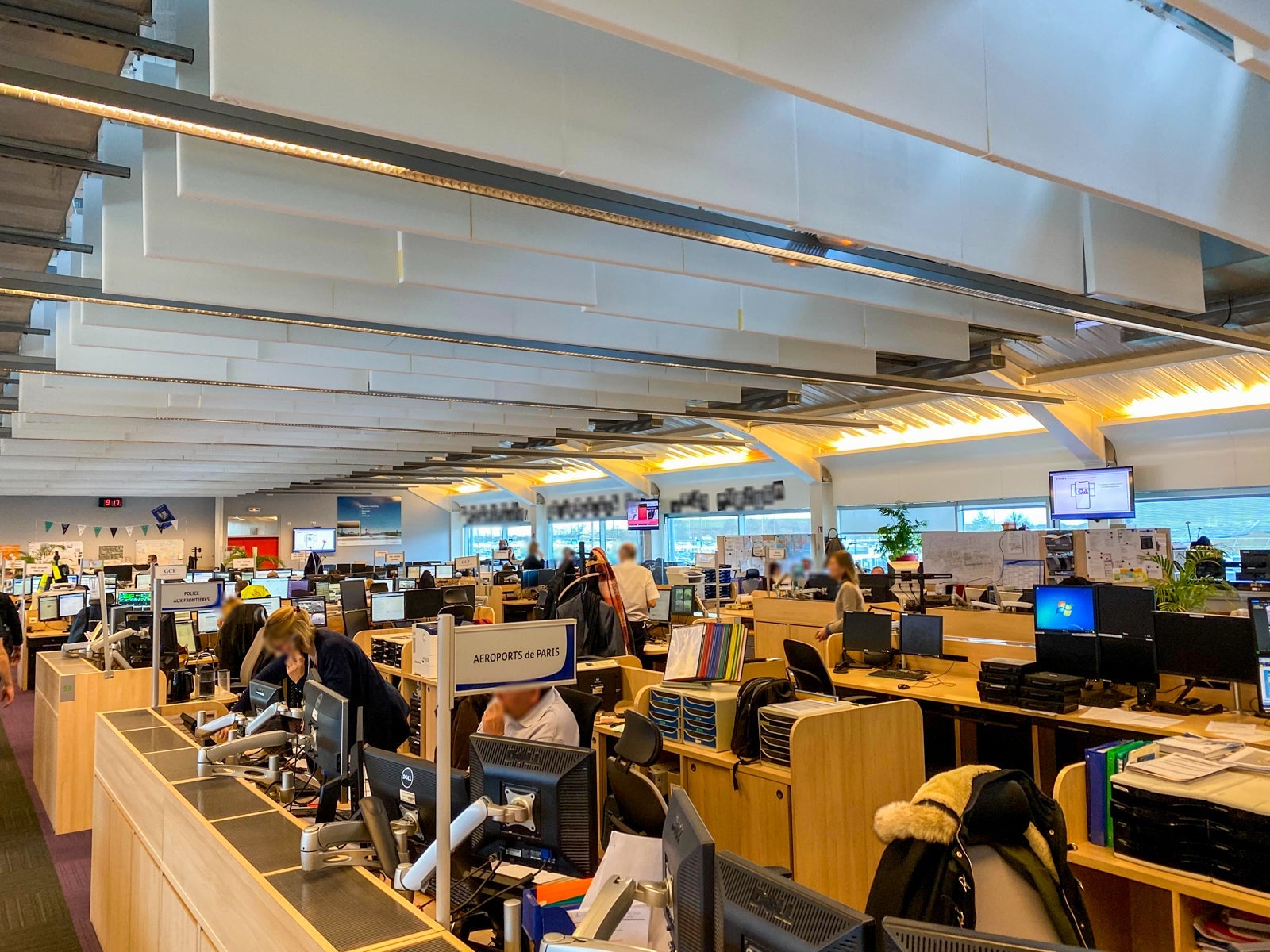
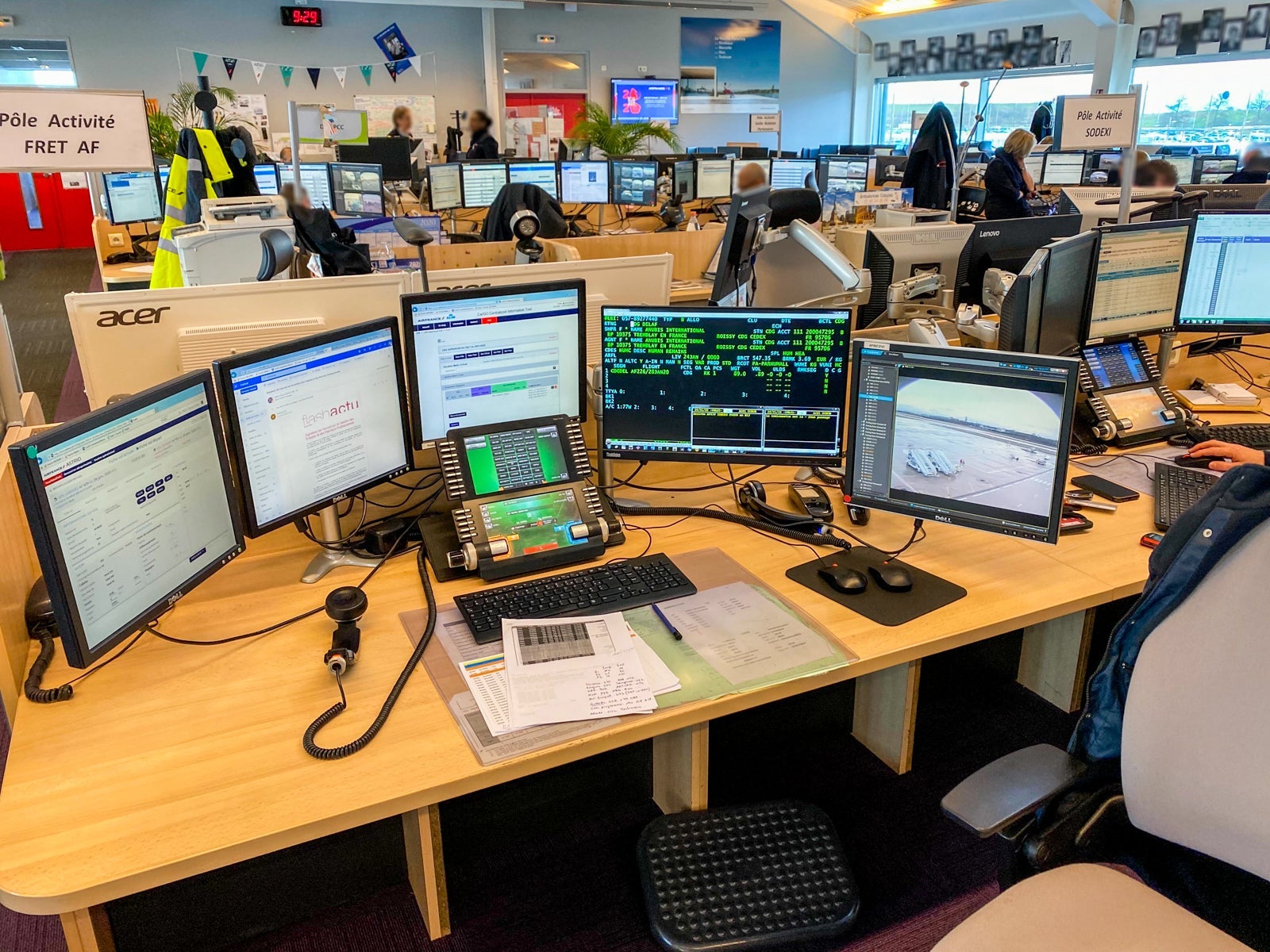
The DO's team is only one of several at the Hub Control Center. The rest of the large space is filled with teams responsible for the likes of customer experience, gate planning, cargo operations, catering operations and even a dedicated team for handling partner airlines. More often than not, individual desks are occupied by several computer monitors — sometimes as many as five.
There is a portion of the HCC that is operated by uniformed staff like those you'd see on the ground in the airport. It's the customer experience team, and most employees can move between the HCC and a customer-facing role in the terminal. Much like their counterparts you might interact with as a passenger, their job is to make sure you have a smooth flight — and if they spot an issue with your reservation, to solve it before it escalates.
For example, if you're connecting at CDG for a flight onward to the Maldives but your first leg from London was delayed, the customer experience team at the CDG Hub Control Center will attempt to re-route you to ensure you don't miss your connection. The team works with those on the ground to communicate any upcoming issues at CDG. Being based in Air France's airport control center gives this team the advantage of knowing first if a flight is going to be severely delayed or cancelled by the DO.
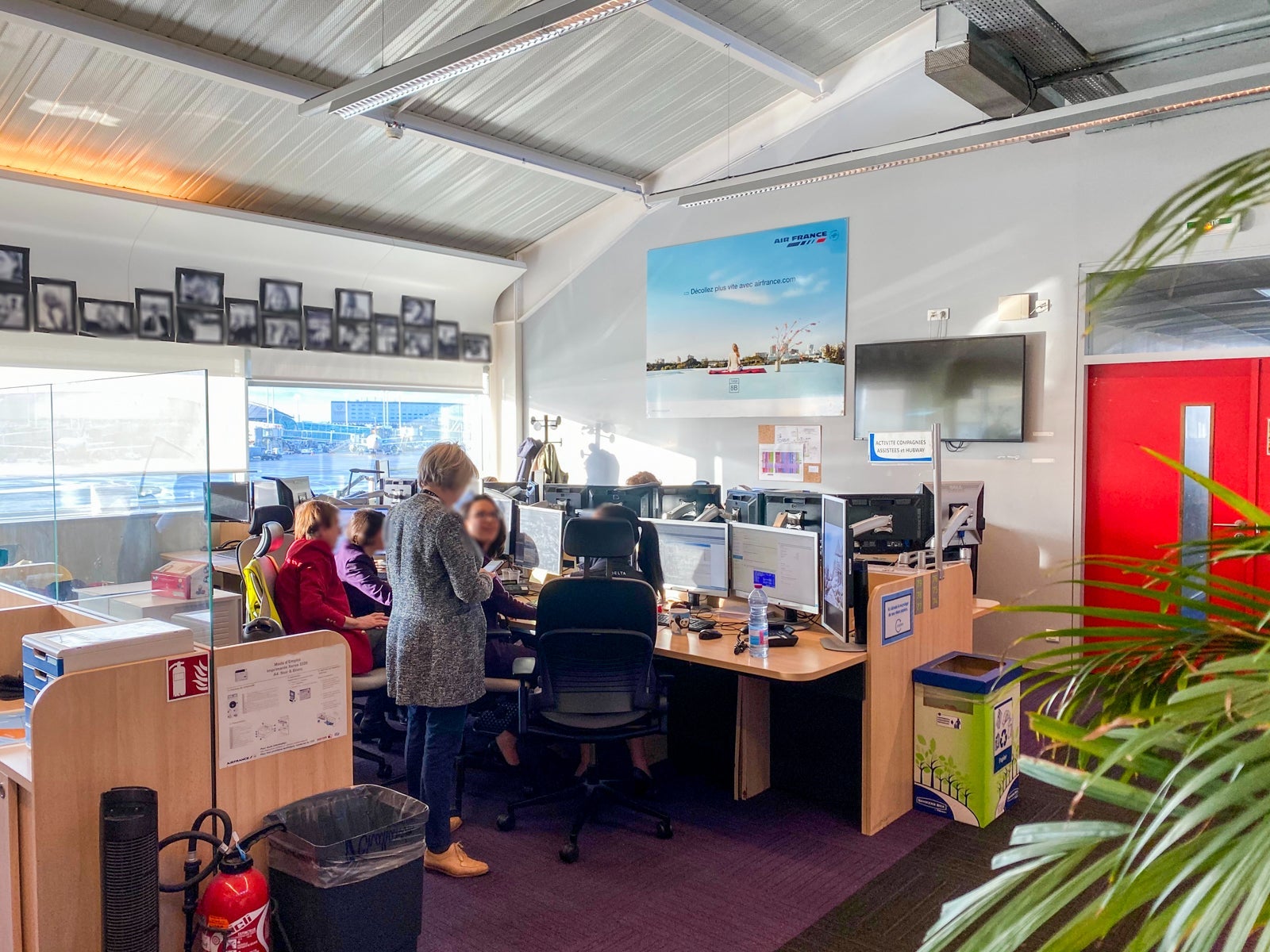
Because of Air France's close relationship with Delta Air Lines, the Atlanta-based carrier is the only other airline that has a dedicated team with a set of desks in the CDG Hub Control Center. Like their counterparts on the customer-facing side of the airport, the Delta staff are outfitted in the carrier's recognizeable red and purple uniforms. Depending on the season, Delta operates between eight and 15 daily flights to CDG. The team works with the roughly 20 maintenance staff the airline has at CDG, along with the U.S.-based operations teams, to ensure smooth flow of aircraft departing and arriving at the airport, as well as smooth connections for transiting passengers.
For most of the operations at the CDG Hub Control Center, it comes down to planning. Generally, about one day before an aircraft is set to arrive at CDG, staff at the HCC know at which gate the plane will be parked, how long it's expected to stay and what kind of servicing it will need. Delays do happen, so the team monitors flights and makes a new plan of action if needed.
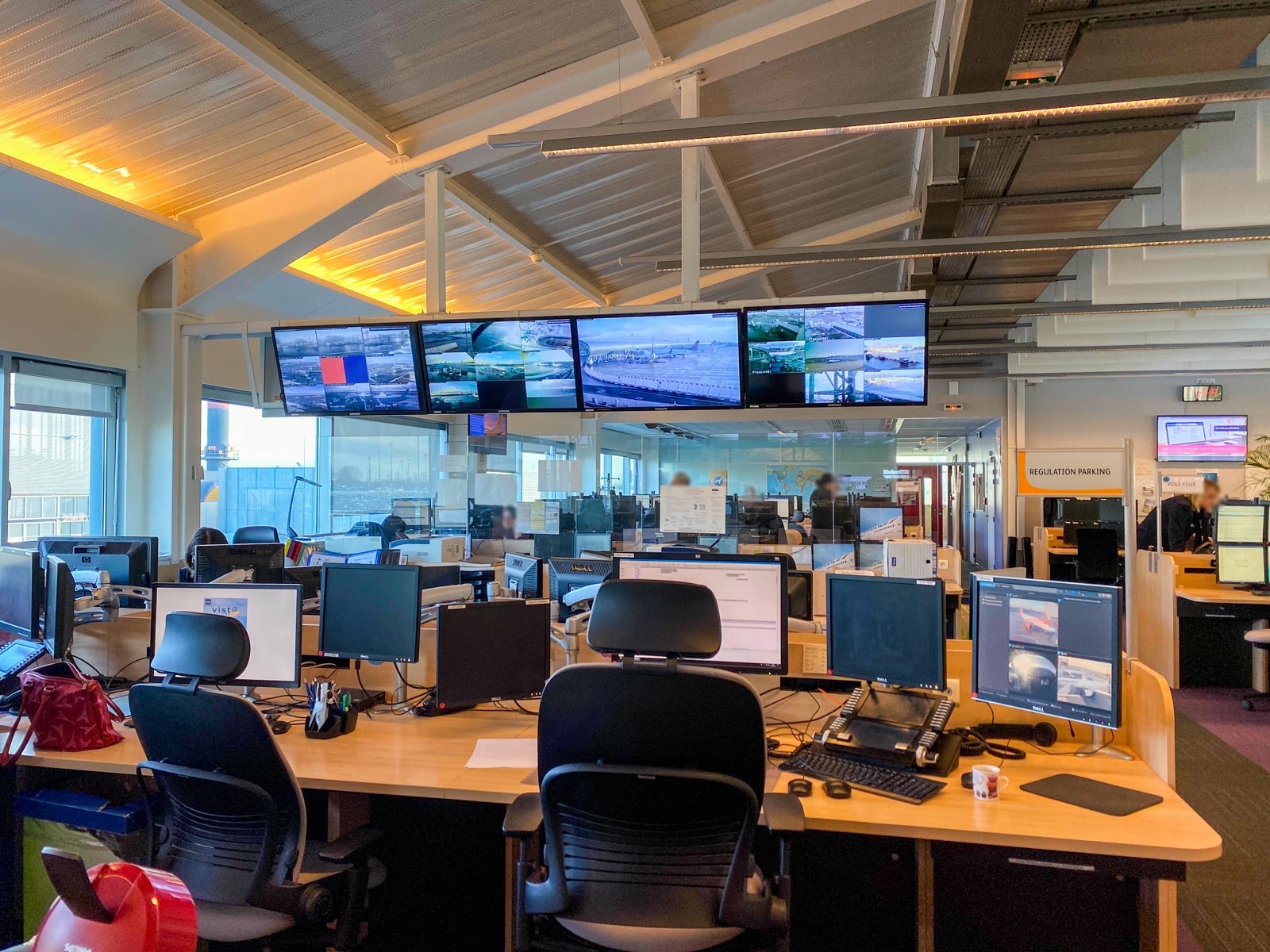
Throughout the office, there are monitors displaying live camera footage of the gates. That way, it's easy for the catering team to let the DO know if the catering cart is still parked at the aircraft door. If it is at the same time that the flight is scheduled to leave the gate, catering operations can let the DO know, who will then consult the appropriate systems in choosing to delay the flight.
Of course, France is no stranger to strikes. Airport strikes — in particular, air traffic control strikes — have derailed the country's aviation system dozens of times in the past year alone. No matter whether the strikes come in the form of ground crew or ATC, the CDG Hub Control Center has to constantly be prepared. By law, the striking body has to inform the HCC of a strike at least 48 hours in advance. The DO, as well as the airline's Operations Control Center (OCC), which is responsible for global Air France operations, arrange how they'll deal with the strike and how it affects operations. Ultimately, the decision comes down to the OCC.
If it's a large planned strike, in general, the airline will cancel medium-haul flights, Geraldine said. Only if absolutely necessary will the carrier cancel its long-haul flight operations, given the costs associated with those cancellations and rebooking passengers on new itineraries.
With more than 600 daily flights arriving and departing from the airport's four runways every day, the HCC is a vital organ at one of the largest airports in the world.
TPG featured card

at Capital One's secure site
Terms & restrictions apply. See rates & fees.
| 5X miles | Earn 5X miles on hotels, vacation rentals and rental cars booked through Capital One Travel |
| 2X miles | Earn unlimited 2X miles on every purchase, every day |
Pros
- Stellar welcome offer of 75,000 miles after spending $4,000 on purchases in the first three months from account opening. Plus, a $250 Capital One Travel credit to use in your first cardholder year upon account opening.
- You'll earn 2 miles per dollar on every purchase, which means you won't have to worry about memorizing bonus categories
- Rewards are versatile and can be redeemed for a statement credit or transferred to Capital One’s transfer partners
Cons
- Highest bonus-earning categories only on travel booked via Capital One Travel
- LIMITED-TIME OFFER: Enjoy $250 to use on Capital One Travel in your first cardholder year, plus earn 75,000 bonus miles once you spend $4,000 on purchases within the first 3 months from account opening - that’s equal to $1,000 in travel
- Earn unlimited 2X miles on every purchase, every day
- Earn 5X miles on hotels, vacation rentals and rental cars booked through Capital One Travel
- Miles won't expire for the life of the account and there's no limit to how many you can earn
- Receive up to a $120 credit for Global Entry or TSA PreCheck®
- Use your miles to get reimbursed for any travel purchase—or redeem by booking a trip through Capital One Travel
- Enjoy a $50 experience credit and other premium benefits with every hotel and vacation rental booked from the Lifestyle Collection
- Transfer your miles to your choice of 15+ travel loyalty programs
- Top rated mobile app