JetBlue founder’s new U.S. airline now has a name: Breeze Airways

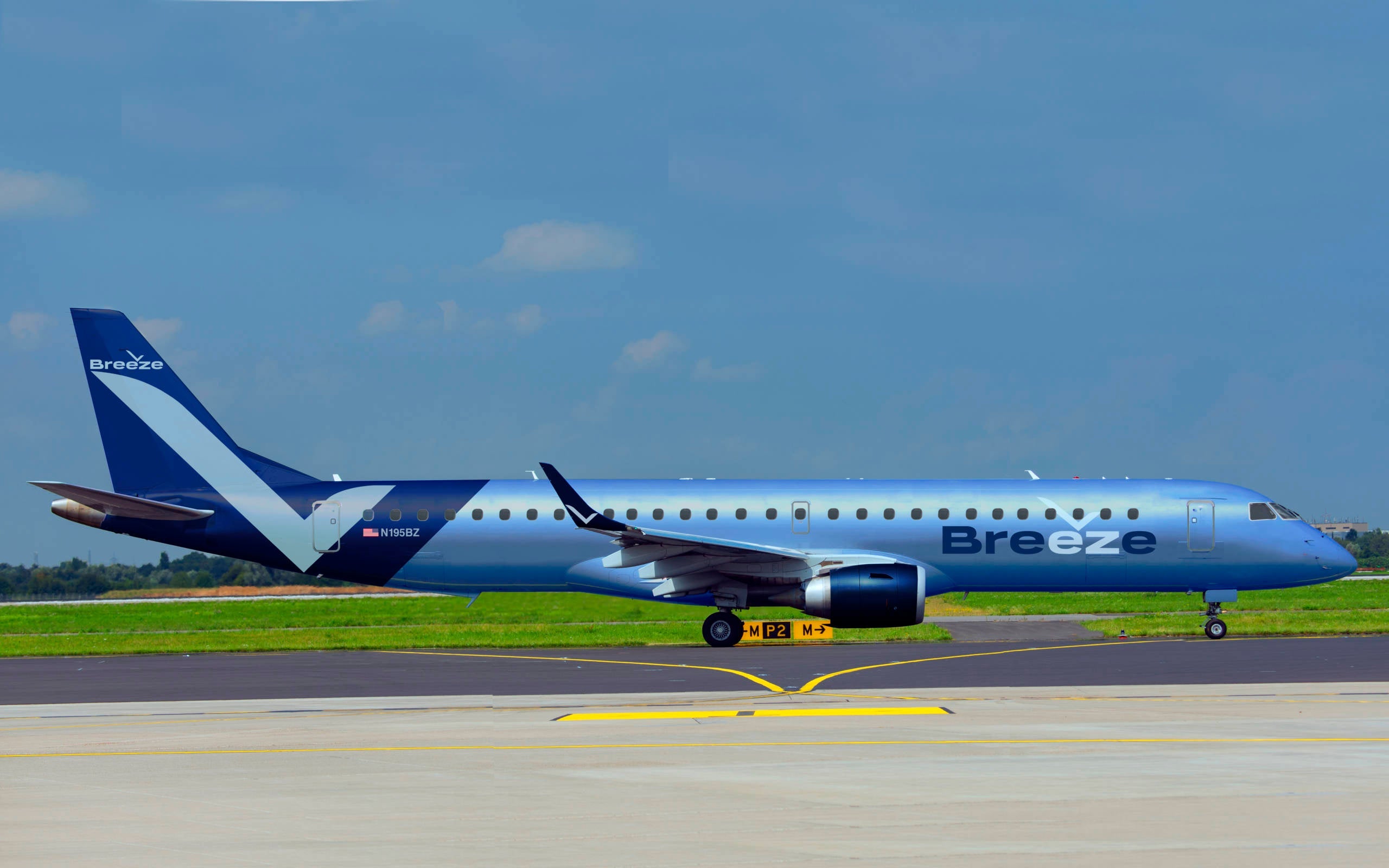
Move over, Moxy. Make room for Breeze.
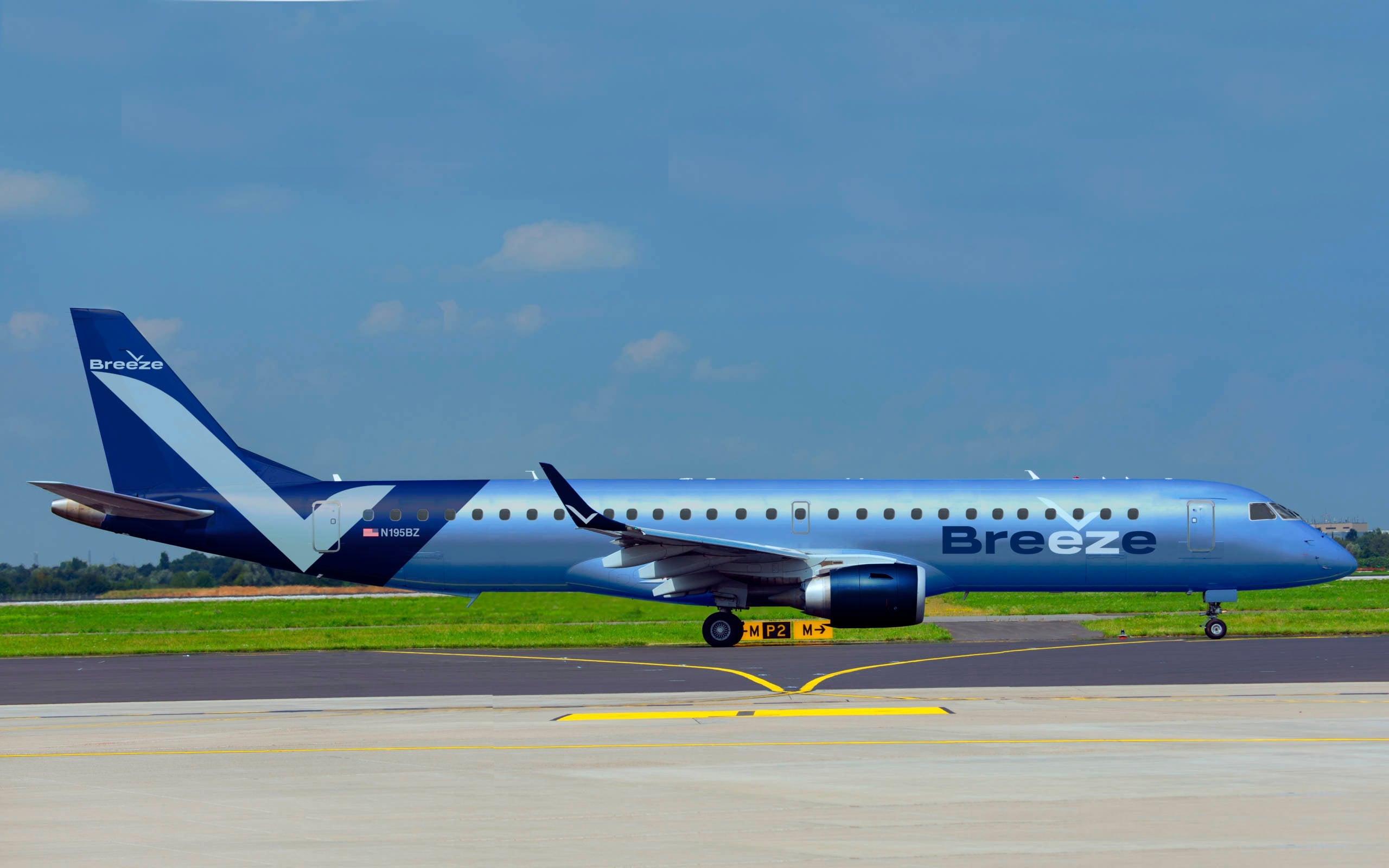
Breeze Airways will be the name for the USA's newest start-up carrier, the fifth to be launched by JetBlue founder and serial airline entrepreneur David Neeleman.
The new name comes after months of speculation about whether Neeleman's latest airline might be called "Moxy" – the initial code name given to the project as Neeleman began his effort to launch the carrier.
"Moxy was a name that I always liked," Neeleman said in an interview with TPG. "I actually was going to name JetBlue Moxy years ago, but I didn't."
Since then, hotel giant Marriott has tapped Moxy as one of its newer lodging brands -- an obvious complication.
Sign up for the free daily TPG newsletter for more airline news!
"Marriott got a Moxy hotel and I don't think they were necessarily in favor of us using that name," Neeleman said. "So to avoid anything complex, we just went with the new name."
Enter Breeze Airways.
Neelman said that no matter the name, just like his other start-ups JetBlue and WestJet, it's the new carrier's performance that will have to win over travelers.

"The name doesn't make you, you make the name," Neeleman said. "We'll make it something special."
Neeleman confirmed the name Friday as the company filed for its airline operating certificate with the Federal Aviation Administration and the U.S. Department of Transportation.
If all goes according to plan, Neeleman said he hopes Breeze will be flying paying passengers by the end of the year. But, he added, it's too early to say exactly when the inaugural flight might be.
"We're not certainly not putting out a definitive date because we have a FAA certification process and it wouldn't be fair to the FAA to say," Neeleman said. "I have total confidence we'll get it done. I just can't give you the exact date."
Neeleman is perhaps best known in the U.S. for helping found JetBlue, by far the most successful start-up here since deregulation. But Neeleman also has helped launch Canada's WestJet, Brazil's Azul and Utah-based Morris Air – a budget carrier acquired by Southwest in 1993.
Breeze is now set to become Neeleman's fifth airline brand.
But, like the precise start date, it is not clear which cities Breeze will fly from on its first day of service.
The company has already revealed that its headquarters will be in Salt Lake City, but Neeleman declined to say what cities might be in the mix for the new service.
"It's really just trying to find a cluster. You can't be popping all over the place," he said. "We're working on a couple of airports and we'll see who actually comes to the to the party."
Related: Exciting new airline routes from January 2020 and beyond
Asked if Breeze was likely to launch with a nationwide set of destinations or go with a more regional approach, Neeleman said "probably more regionally. We don't want to spread ourselves too thin."
What is known is that Breeze intends to focus on routes where it will be the only carrier offering nonstop service, likely focusing on secondary airports as it develops its network.
Neeleman believes there are hundreds of markets ripe for Breeze's nonstop service.
He pointed to the series of airline mergers in the U.S. during the past two decades, saying that the bigger carriers that have emerged have increasingly focused on building up their major hub airports.
More:The best travel credit cards for 2020
That's left travelers – especially leisure customers – with fewer options for nonstop flights between smaller and mid-sized markets.
To capitalize on that, Breeze said in its initial business plan that it intended to fly to underserved markets from secondary airports in large metro areas. Airports like Providence (PVD), Oakland (OAK), Gary, Indiana (GYY) and Mesa/Phoenix (AZA) are the types of airports that could fit the bill for the latter category, though none have been selected yet.
"There's just a lot of scraps that the big guys have left," Neeleman said. "They've left a lot of city pairs, they've left a lot of other things untouched. I think we can fill that void nicely with the two aircraft types that we have coming."
Breeze intends to operate Airbus A220s, but those aren't expected to begin arriving until 2021.
More: JetBlue founder David Neeleman to base new airline in Salt Lake City
In the interim, Neeleman found an opportunity to get Breeze up and running earlier by leasing Embraer E195s from Brazilian carrier Azul (which, as mentioned, is another Neeleman start-up). Azul is looking to unload the planes as it begins taking delivery of newer, next-generation "E2" Embraer jets.
Breeze will update the cabins of those planes, configuring them with 118 to 122 seats, Neeleman said. The airline's A220s could eventually have anywhere from 118 to 145 seats, depending on how Breeze chooses to configure them.
While Neeleman didn't offer details on Breeze's potential route map, he did give insight on what type of schedule the airline might run. Don't be surprised if Breeze adopts a schedule that sees it offering just a few weekly flights on some of its routes.
More: Allegiant adds 3 new cities in 44-route expansion
"I think we could serve a market two days a week or serve it four days a week. Or we could serve it daily," Neeleman said, explaining that the carrier's fleet of E195s and A220s would not require high daily utilization – or hours flying – for Breeze to be profitable. "It just depends on the time of the year. There'll be markets we'll serve in the summer and those other markets we'll serve in the wintertime."
That strategy is common at U.S. budget carriers like Spirit and Frontier. But it's perhaps most prevalent with Allegiant Air, the Las Vegas-based discounter that first made its mark by flying nonstop from very small markets to leisure destinations like Las Vegas and Florida. Many of its routes operate with just two or three flights a week, often seasonally.
Could Breeze learn from that strategy?
"You know, Lukas Johnson, who is our chief commercial officer, came from Allegiant," Neeleman said. "He developed and started like 400 routes there. He really knows his business. He knows how to do it, and we have a lot of experts. We're very confident that we'll find lots of markets."
More: JetBlue founder's new airline won't have customer service
Those even could include airports that currently have no commercial service, Neeleman said. That's something Allegiant has experimented with – seemingly successfully – in markets like Punta Gorda, Florida (PGD); Concord (USA) near Charlotte; Hagerstown, Maryland (HGR); and Phoenix/Mesa (AZA).
Neeleman said the cost and capacity of the planes Breeze will fly – first the E195s then the A220s – will give it the economics it needs to expand in destinations that most big carriers have shied away from.
"I think we can hit the soft spot where there's just a lot of markets that aren't being served today," Neeleman said.
Beyond that, Neeleman said Breeze will look for other ways to keep its planes flying during slow periods.
"We just do what the opportunity brings," he said. "Not only scheduled service, but flying charters for college football teams and basketball teams. For a low-utilization aircraft, there is just a lot of stuff that you can do. It doesn't need to be the traditional thing."
TPG featured card

at Capital One's secure site
Terms & restrictions apply. See rates & fees.
| 5X miles | Earn 5X miles on hotels, vacation rentals and rental cars booked through Capital One Travel |
| 2X miles | Earn unlimited 2X miles on every purchase, every day |
Pros
- Stellar welcome offer of 75,000 miles after spending $4,000 on purchases in the first three months from account opening. Plus, a $250 Capital One Travel credit to use in your first cardholder year upon account opening.
- You'll earn 2 miles per dollar on every purchase, which means you won't have to worry about memorizing bonus categories
- Rewards are versatile and can be redeemed for a statement credit or transferred to Capital One’s transfer partners
Cons
- Highest bonus-earning categories only on travel booked via Capital One Travel
- LIMITED-TIME OFFER: Enjoy $250 to use on Capital One Travel in your first cardholder year, plus earn 75,000 bonus miles once you spend $4,000 on purchases within the first 3 months from account opening - that’s equal to $1,000 in travel
- Earn unlimited 2X miles on every purchase, every day
- Earn 5X miles on hotels, vacation rentals and rental cars booked through Capital One Travel
- Miles won't expire for the life of the account and there's no limit to how many you can earn
- Receive up to a $120 credit for Global Entry or TSA PreCheck®
- Use your miles to get reimbursed for any travel purchase—or redeem by booking a trip through Capital One Travel
- Enjoy a $50 experience credit and other premium benefits with every hotel and vacation rental booked from the Lifestyle Collection
- Transfer your miles to your choice of 15+ travel loyalty programs
- Top rated mobile app