Both Crashed 737 MAX 8 Jets Lacked 2 Safety Features; Boeing Charged Extra for Them

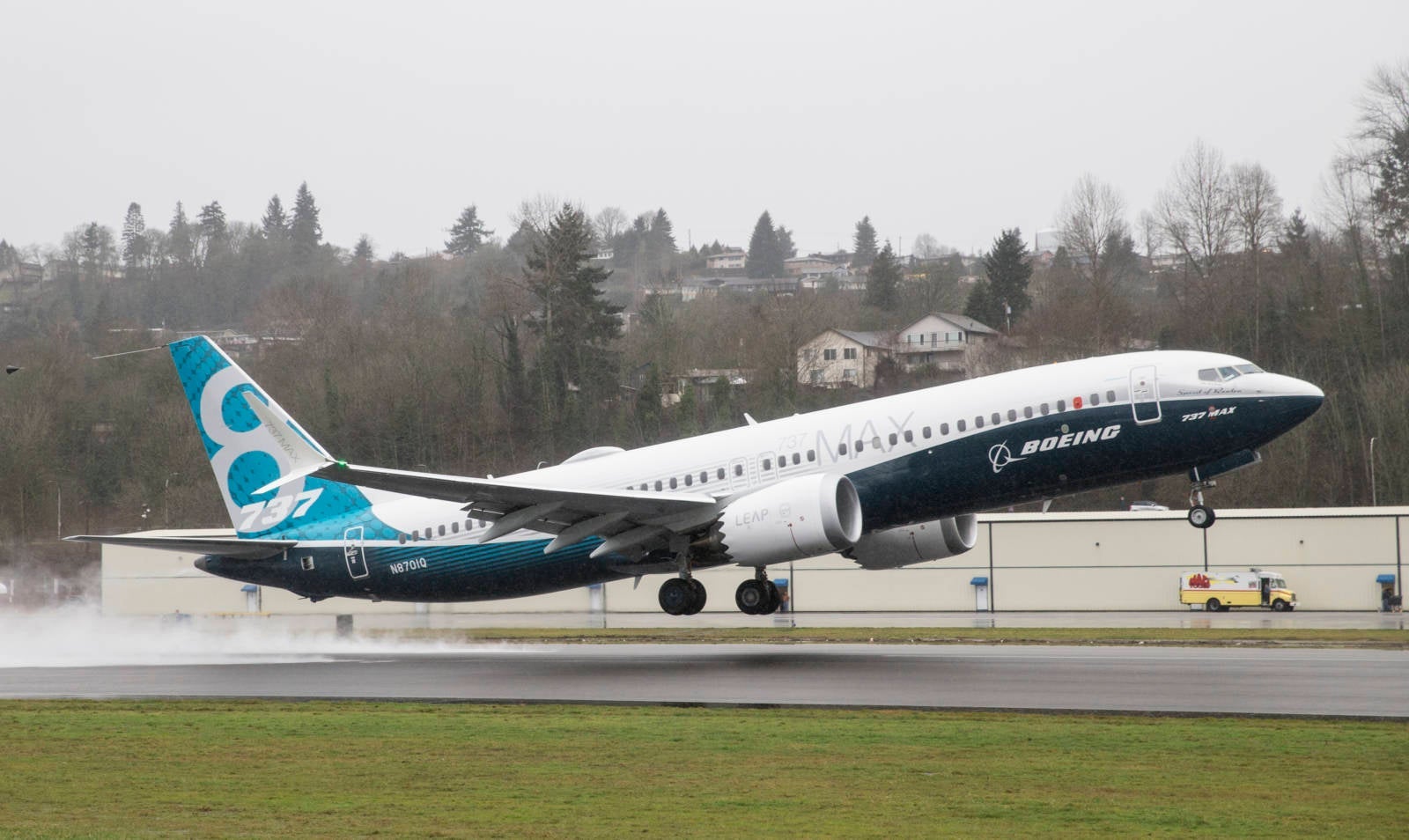
The flight decks of two ill-fated Boeing 737 MAX 8 jets that belonged to Lion Air and Ethiopian Airlines lacked safety features that could have helped pilots identify the source of erratic speed and altitude changes in the moments before both fatal crashes.
According to a report in The New York Times, the planes lacked the safety features because Boeing charged additional fees to install them on the MAX aircraft. Lion Air and Ethiopian Airlines reportedly did not opt to purchase these two additional features.
The two safety components in question are centered around a particular aircraft sensor, called the angle of attack sensor. The AOA sensor measures the angle of the aircraft nose and at which air passes over the wings. On the MAX jet, there was a computer system, called a Maneuvering Characteristics Augmentation System (MCAS) that automatically pushed the aircraft nose downward if the AOA sensor said it was tipping too high, which puts the jet at risk of an aerodynamic stall.
One of the add-on safety features is called an angle of attack indicator, a feature that displays AOA information in the cockpit. The other, dubbed a disagree light, is triggered when the two readings from the AOA sensors don't match.
The Federal Aviation Administration never made either feature mandatory. In fact, it wasn't until after the Lion Air crash that the airline with the largest MAX fleet in the world, Southwest Airlines, installed the angle of attack indicators in all of its MAX cockpits. Southwest announced in late November 2018, about a month after the Lion Air crash, that it would roll out the indicators on upcoming 737 MAX orders starting in late December 2018 and add them to MAX jets already in service shortly after.
"Currently, there is an Angle of Attack (AOA) disagree light on the MAX and NG aircraft that provides an alert for identifying erroneous AOA data," a spokesperson for the airline told TPG in an email at the time. (NGs are Boeing 737s of the model immediately preceding the MAX.) "Additionally, we are working with Boeing to enable the optional Primary Flight Display (PFD) AOA indicators on new MAX deliveries starting in late December; followed by modifications to our current MAX fleet."

Southwest noted that the additional indicators "provide a valuable, supplemental cross-check in the event there is an erroneous AOA signal present" and that they "offer continuous visual feedback to Flight Crews." The carrier currently has 34 MAX 8 planes in its fleet.
American Airlines, with a fleet of 24 MAX 8s, purchased both the AOA indicator and the disagree light for all of its 737 planes. "American purchased optional AOA display and comparator features for all our Boeing 737 aircraft – since our first Boeing 737-800 was delivered in 1999," the airline said in a statement to TPG. "This provides our pilots with a display of the left and right AOA input from the aircraft as well as an indication if there is a difference between the AOA inputs."
United Airlines, which flies 14 of the larger MAX 9 model, told the Times it did not purchase either of the optional safety tools, saying its pilots use other data to safely operate the aircraft. United did not respond to TPG's request for comment.
Boeing now plans to make at least the disagree light a standard feature on its MAX planes, the Times reports, citing sources with inside knowledge of the matter. TPG reached out to Boeing for comment but did not receive a response by the time of publication. The plane manufacturer is also set to roll out a software update to the MCAS program in coming days.
All 737 MAX planes are grounded, at least until the software update is completed. In a statement earlier this month, Boeing said it supported the decision to ground the planes "out of an abundance of caution."
TPG featured card

at Capital One's secure site
Terms & restrictions apply. See rates & fees.
| 5X miles | Earn 5X miles on hotels, vacation rentals and rental cars booked through Capital One Travel |
| 2X miles | Earn unlimited 2X miles on every purchase, every day |
Pros
- Stellar welcome offer of 75,000 miles after spending $4,000 on purchases in the first three months from account opening. Plus, a $250 Capital One Travel credit to use in your first cardholder year upon account opening.
- You'll earn 2 miles per dollar on every purchase, which means you won't have to worry about memorizing bonus categories
- Rewards are versatile and can be redeemed for a statement credit or transferred to Capital One’s transfer partners
Cons
- Highest bonus-earning categories only on travel booked via Capital One Travel
- LIMITED-TIME OFFER: Enjoy $250 to use on Capital One Travel in your first cardholder year, plus earn 75,000 bonus miles once you spend $4,000 on purchases within the first 3 months from account opening - that’s equal to $1,000 in travel
- Earn unlimited 2X miles on every purchase, every day
- Earn 5X miles on hotels, vacation rentals and rental cars booked through Capital One Travel
- Miles won't expire for the life of the account and there's no limit to how many you can earn
- Receive up to a $120 credit for Global Entry or TSA PreCheck®
- Use your miles to get reimbursed for any travel purchase—or redeem by booking a trip through Capital One Travel
- Enjoy a $50 experience credit and other premium benefits with every hotel and vacation rental booked from the Lifestyle Collection
- Transfer your miles to your choice of 15+ travel loyalty programs
- Top rated mobile app