Take a look at the new Alaska Airlines 737 MAX that Boeing is using as a flying laboratory

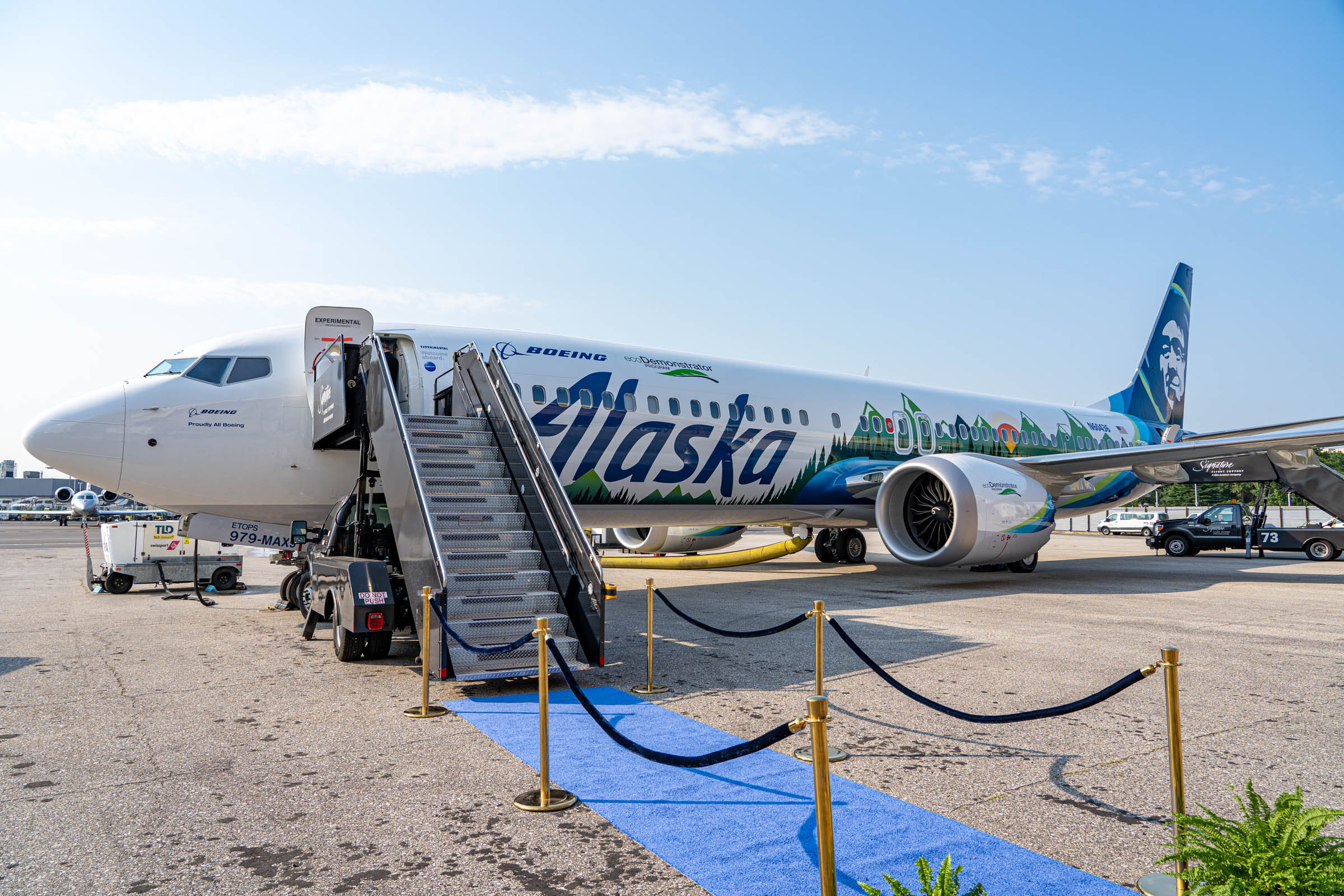
Research and development is just one part of designing new technology for commercial aircraft. The second part: getting the new product certified.
Planemakers like Embraer, Boeing and Airbus must rigorously test every new thing that they want to use on an airplane before actually carrying passengers. And that's not just big things like new airplane types. Even the more mundane things, like materials for cabin walls and new types of light bulbs, must be thoroughly tested and proved safe.
That's one of the considerations as the airline industry seeks to decarbonize and reduce emissions. Any new technology — from digital pilots books to hydrogen-powered aircraft — must go through intense testing.
In 2012, Boeing launched a program called "ecoDemonstrator," which takes new airplanes and, before delivering them to airline customers, turns them into flying laboratories to develop, test, fine-tune and certify new technologies and products.
Despite the name, not every project tested is necessarily tied to sustainability, although many are.
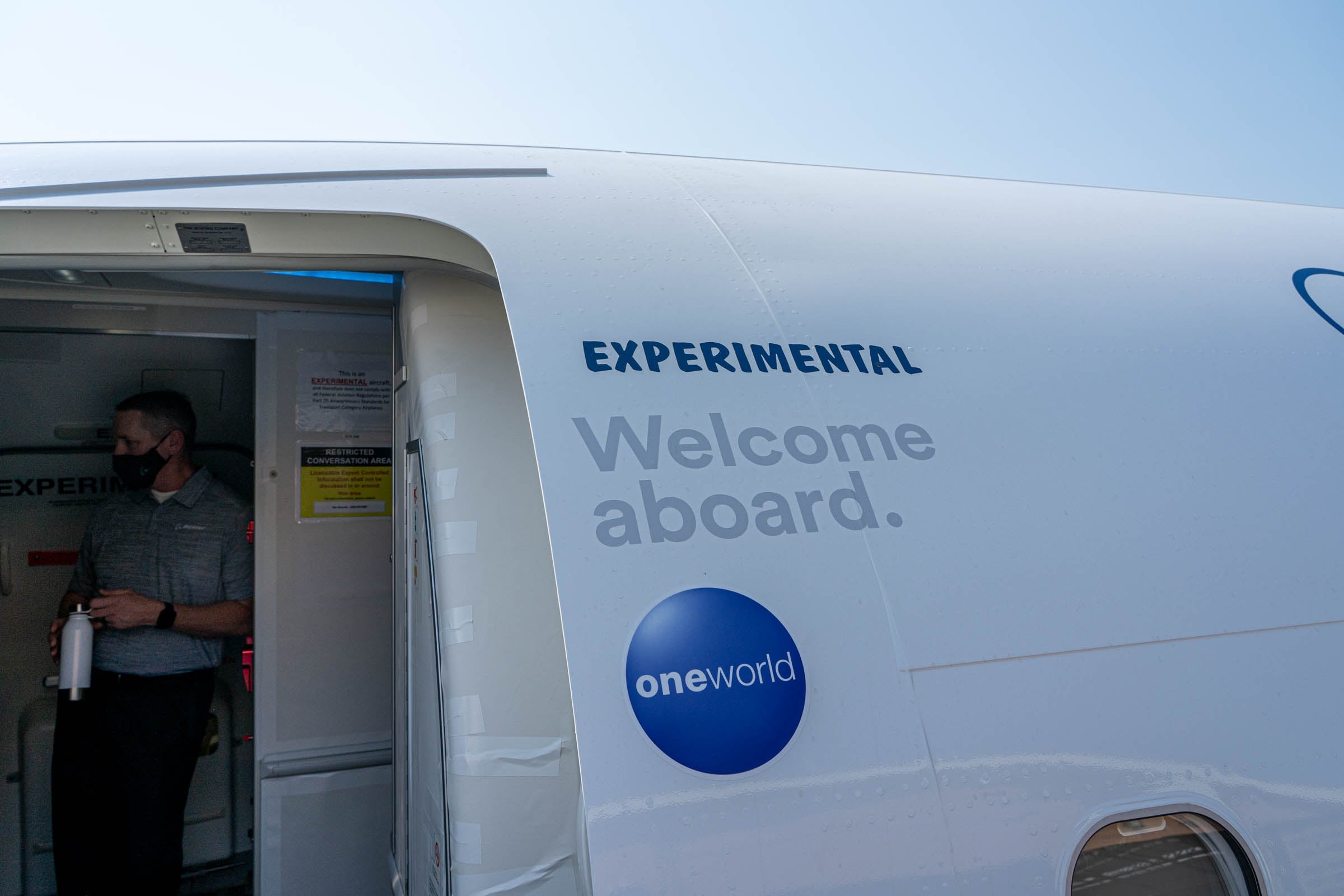
Last month, Boeing began flying its eighth ecoDemonstrator jet, a 737 MAX 9 bound for Alaska Airlines. For the next six months, the plane will make flights all around the country testing a variety of tools.
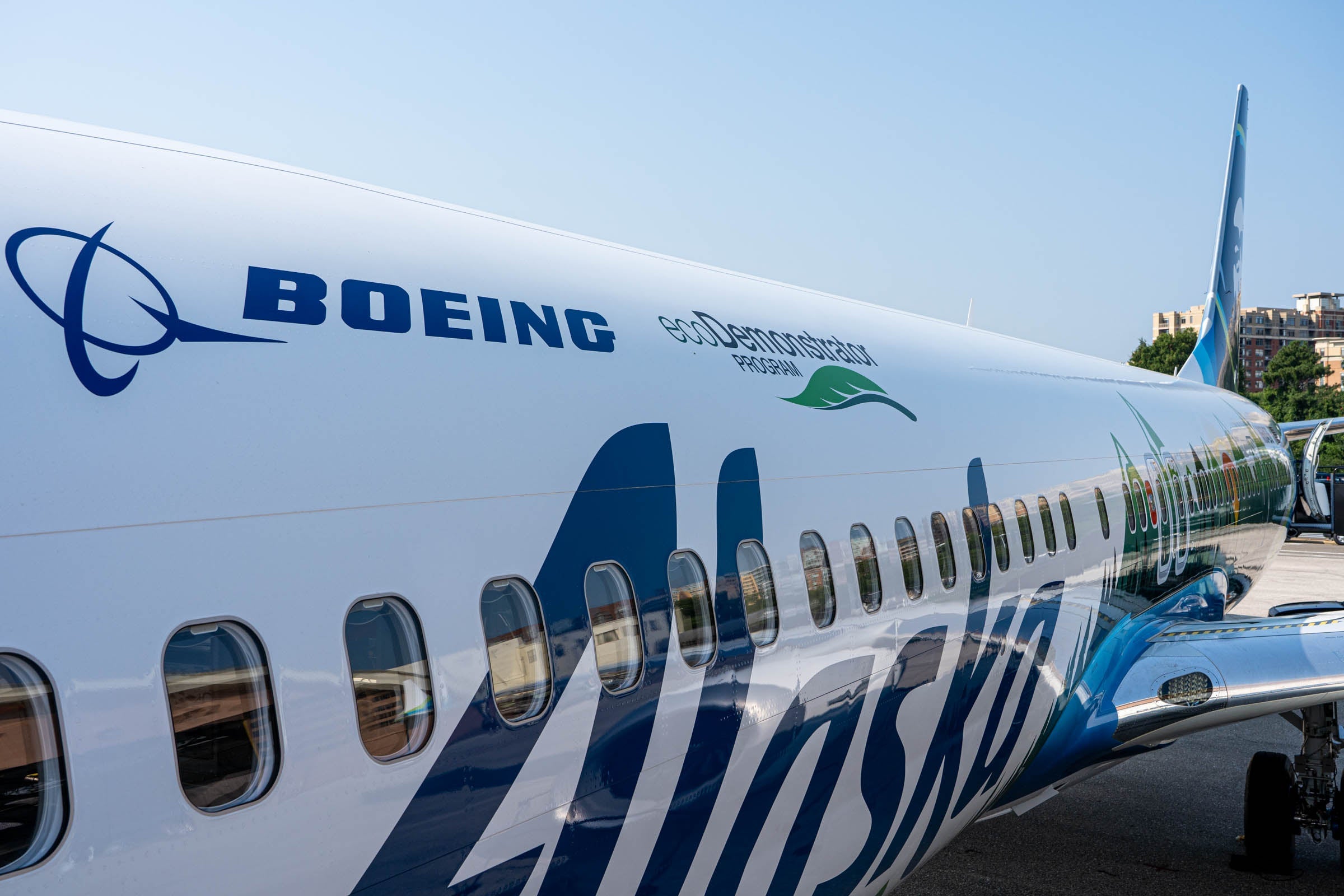
Boeing and Alaska held an event at Washington Regan National Airport (DCA) last week to offer U.S. lawmakers and foreign delegates tours of the aircraft. TPG was also in attendance and had the opportunity to tour the ecoDemonstrator plane.
While the event was hosted by Boeing, Alaska Airlines had a large presence as well. After all, it's their plane — or at least, it will be, once they take delivery in about six months — that's serving as a flying lab.
Interestingly, Alaska does not have a financial incentive for allowing their future plane to be used for the program.

Instead, it's more about contributing to new tech that Alaska — and the rest of the industry — will benefit from in the long term.
"It's an investment in the R&D and the future of aviation on all of those fronts, some of which will be on an emissions front, and some of which won't be," said Diana Birkett Rakow, Alaska Airlines' vice president of public affairs and sustainability, in an interview with TPG. Birkett Rakow was referring to the projects currently onboard the ecoDemonstrator aircraft, including tech meant to help reduce cabin noise and monitor the atmosphere for the National Oceanic and Atmospheric Administration. "It's our ability (together with Boeing) to invest in the future technology."

"It's a chance to learn from the technologies, have a voice in it, be able to — if there are technologies that prove particularly valuable, to be able to advocate for those being on future aircraft," she added.
Of course, there's also the marketing benefit, as proven perhaps by the fact that this very article is being written.
But as a team of notorious AvGeeks, we can hardly resist the chance to check out a brand-new airplane — especially one being put to such a unique use.
The tours, led by Boeing engineers on the ecoDemonstrator team, began at the back of the plane. Of the roughly 20 tests on board, we were able to take a close look at five of them.
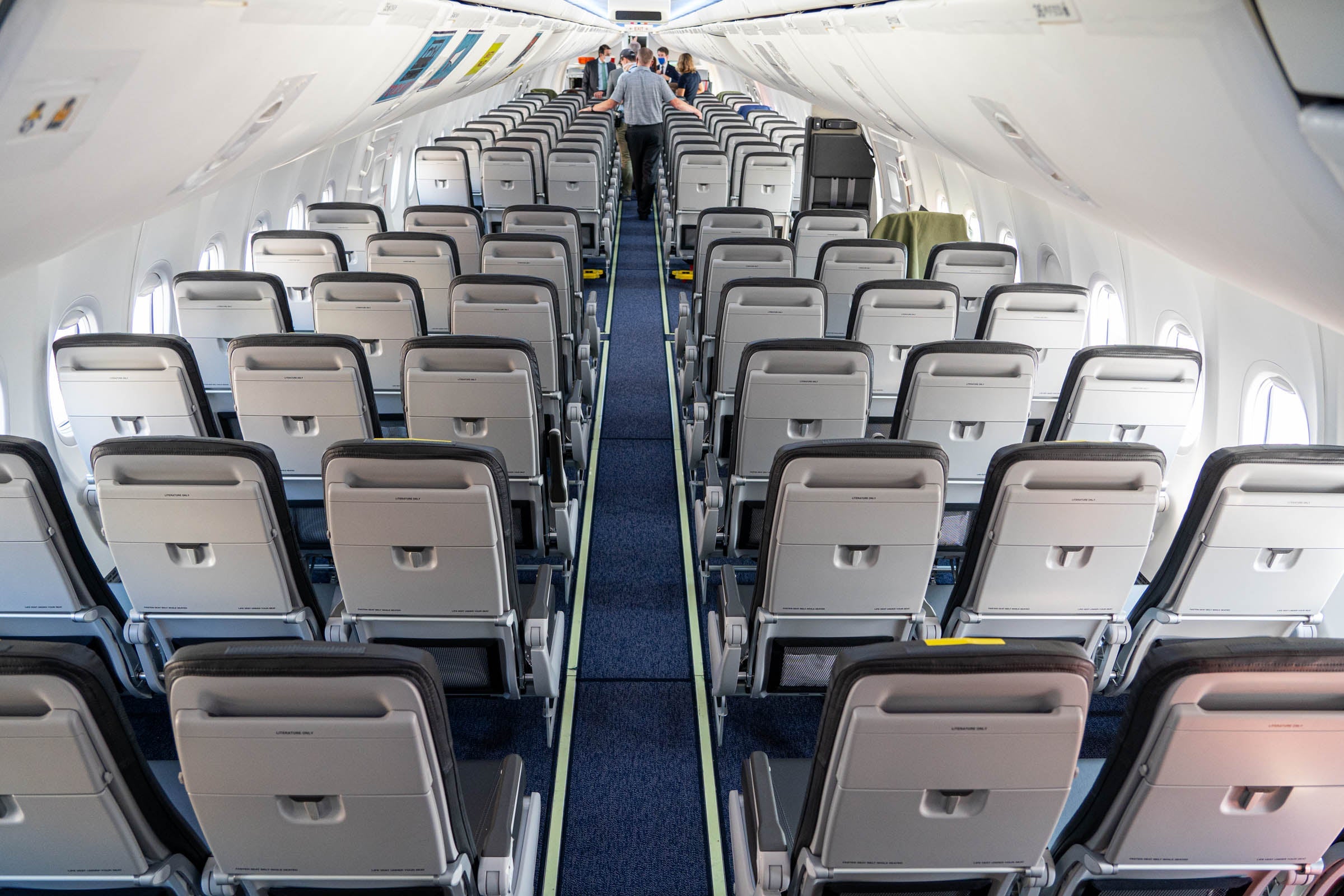
Stepping aboard the plane, the first impression was of, well, a plane.
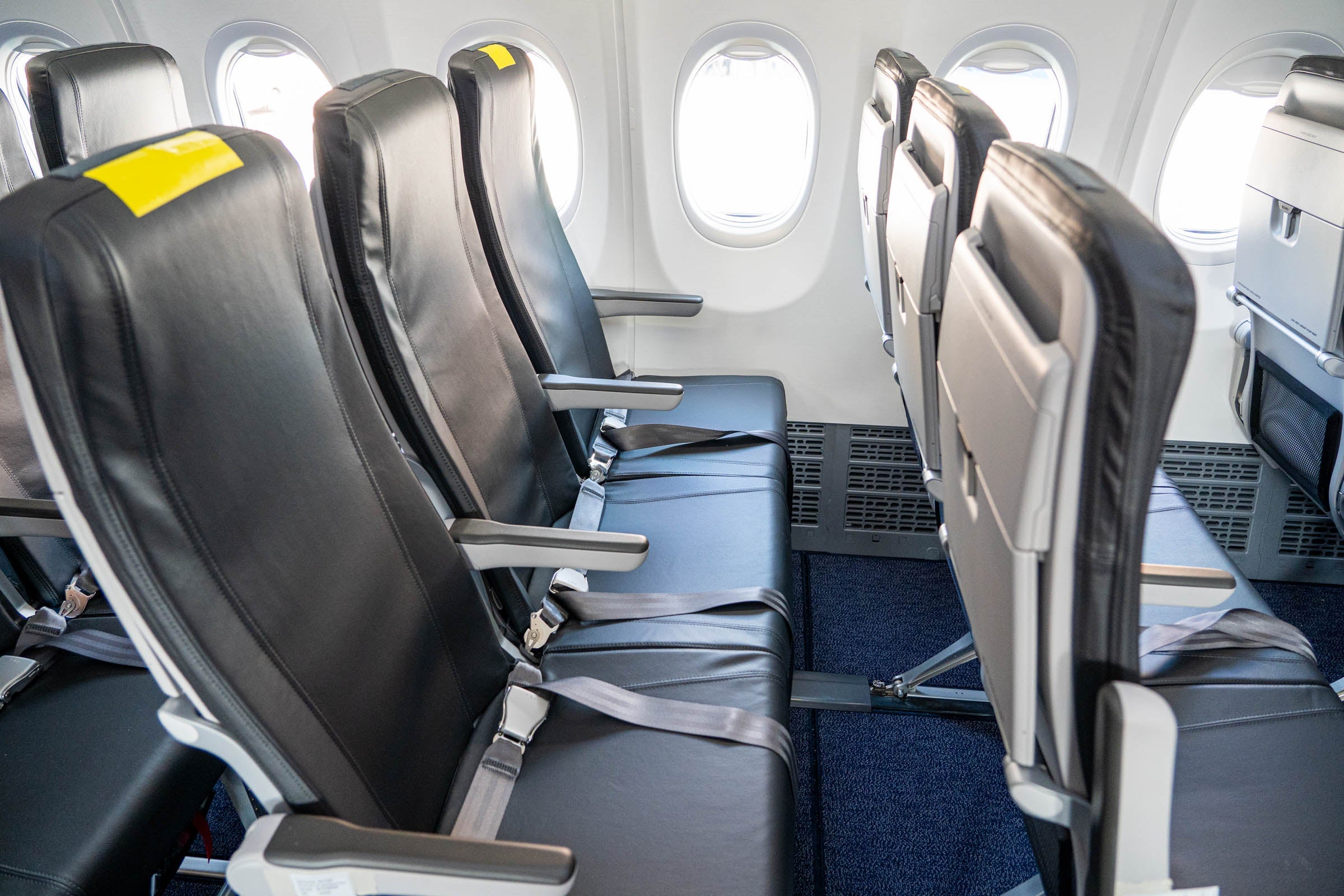
At first glance, it's more or less a normal airplane, though with different seats than you'd normally find on Alaska. These are a more bare-bones variety reminiscent of what you'd find on a low-cost carrier like Ryanair. No moveable headrests, no power ports, little cushioning. But these are just placeholders — they'll be swapped out before the plane enters service with Alaska.
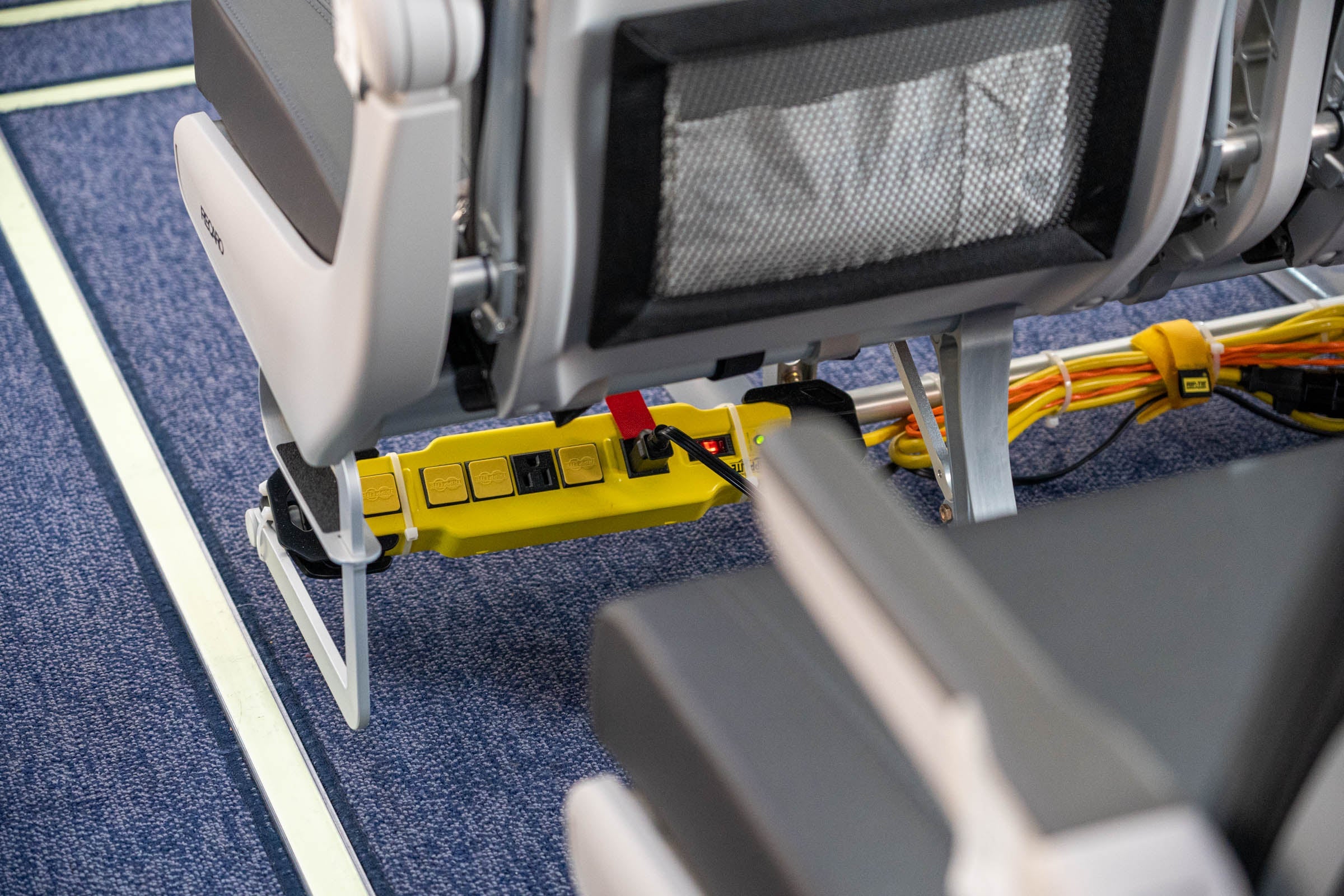
A second look, though, shows you pretty quickly that this is a bit different than a normal commercial plane, with extension cords and power sources, exposed wiring and temporary workstations set up all over the plane.
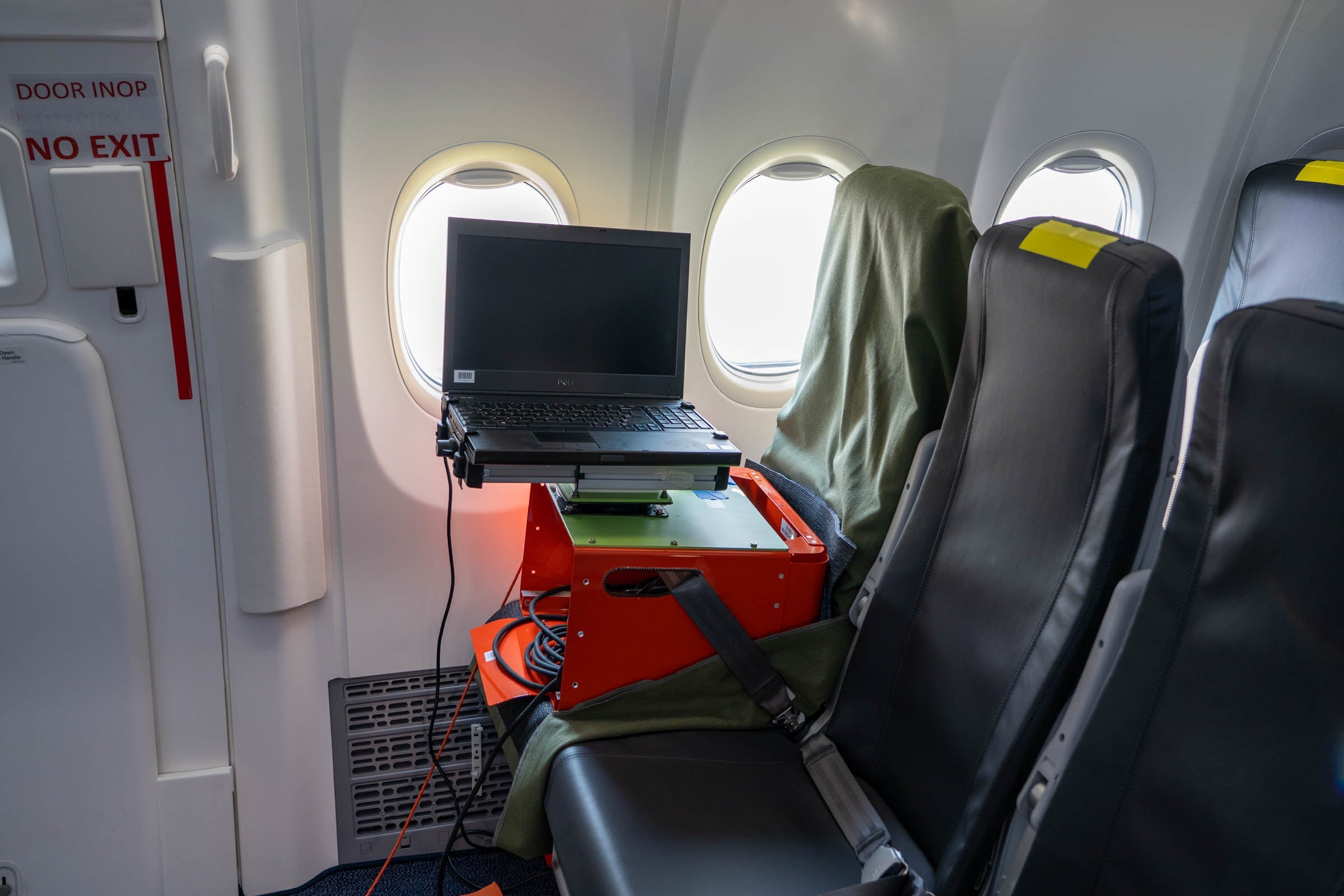
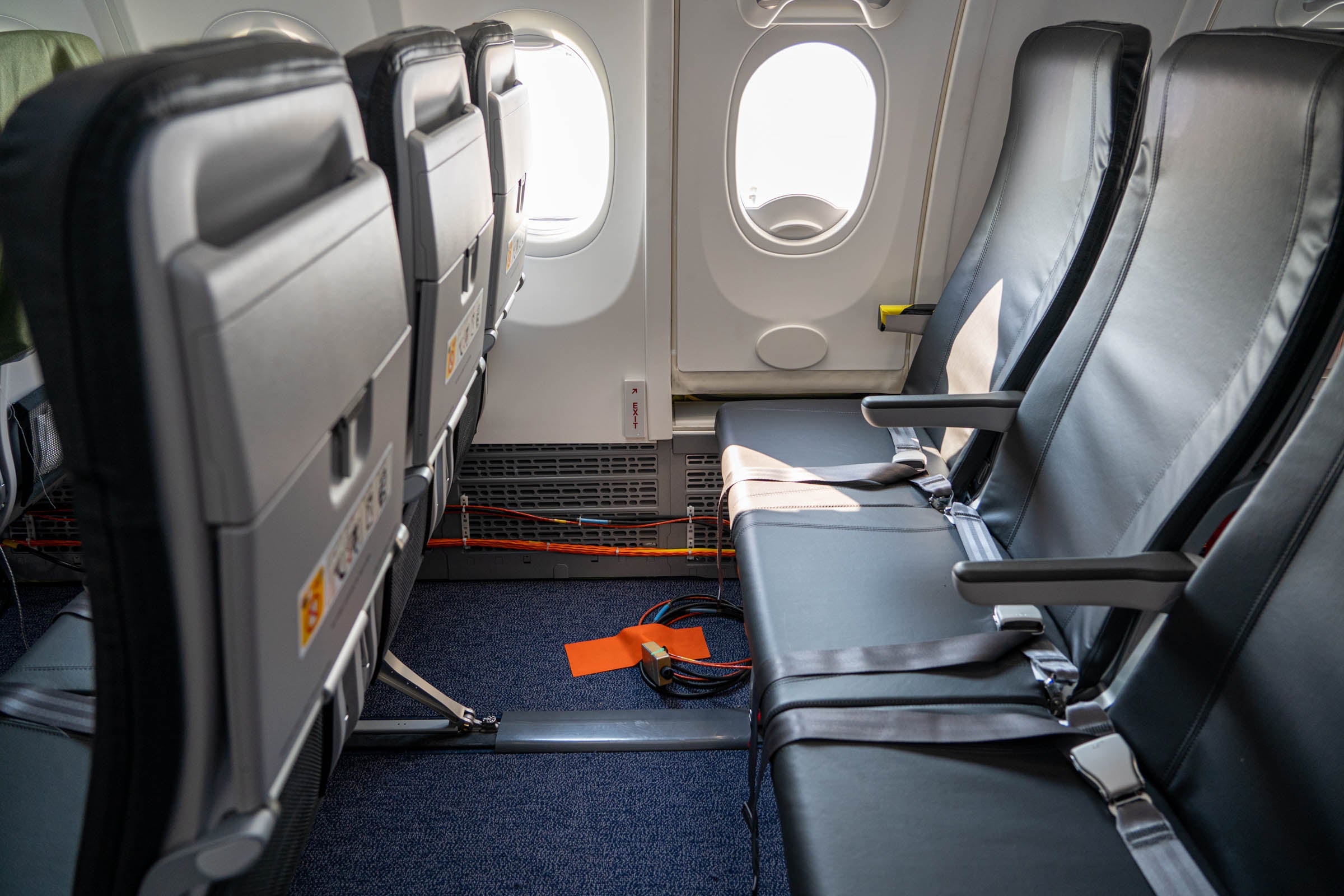
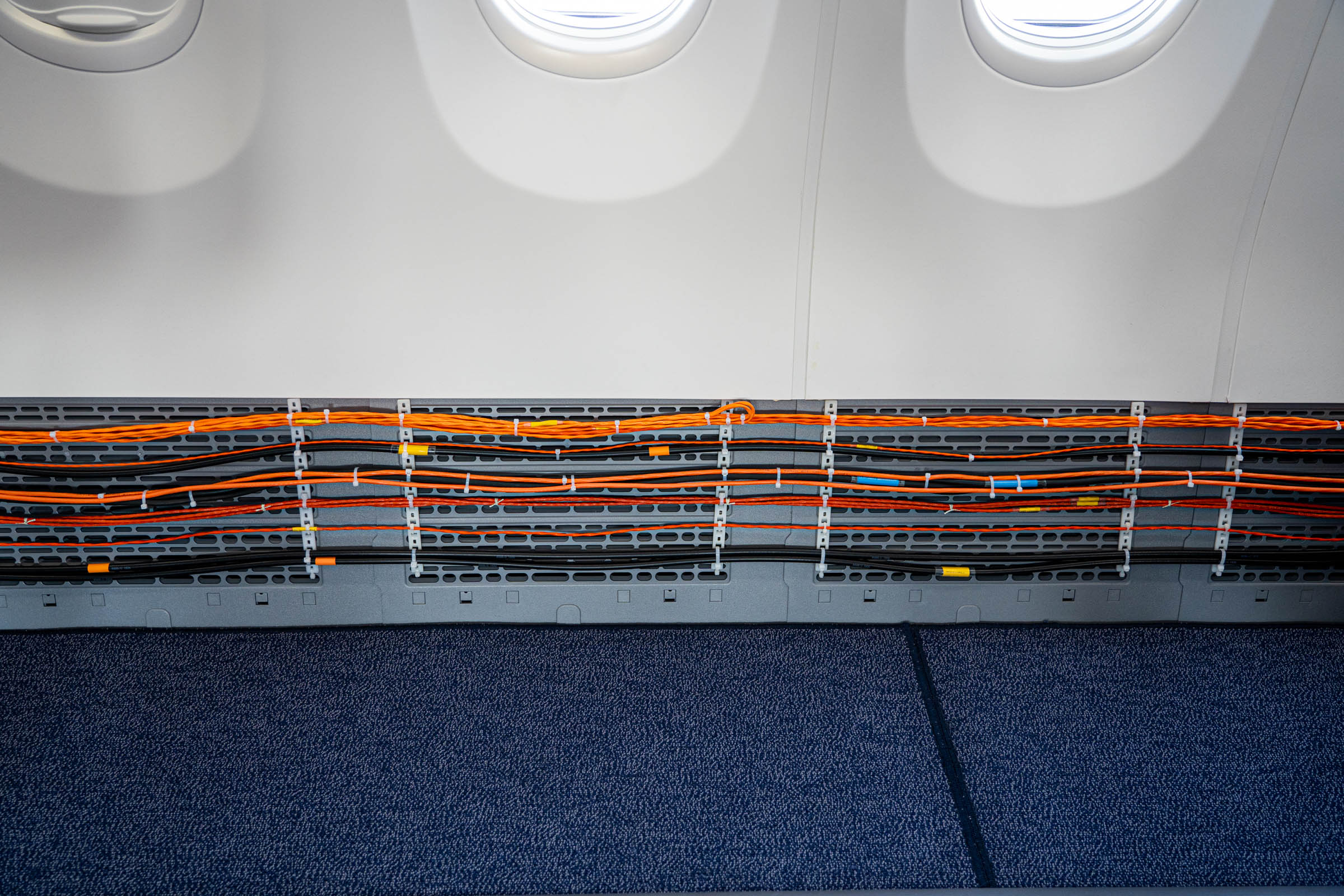
The rear of the aircraft looked pretty normal otherwise, but it turns out it's actually the first testing station.
Five panels of the interior sidewall — there are eight total in this section of the plane — were made of recycled carbon fibers, all scrap material from manufacturing at Boeing's factories.
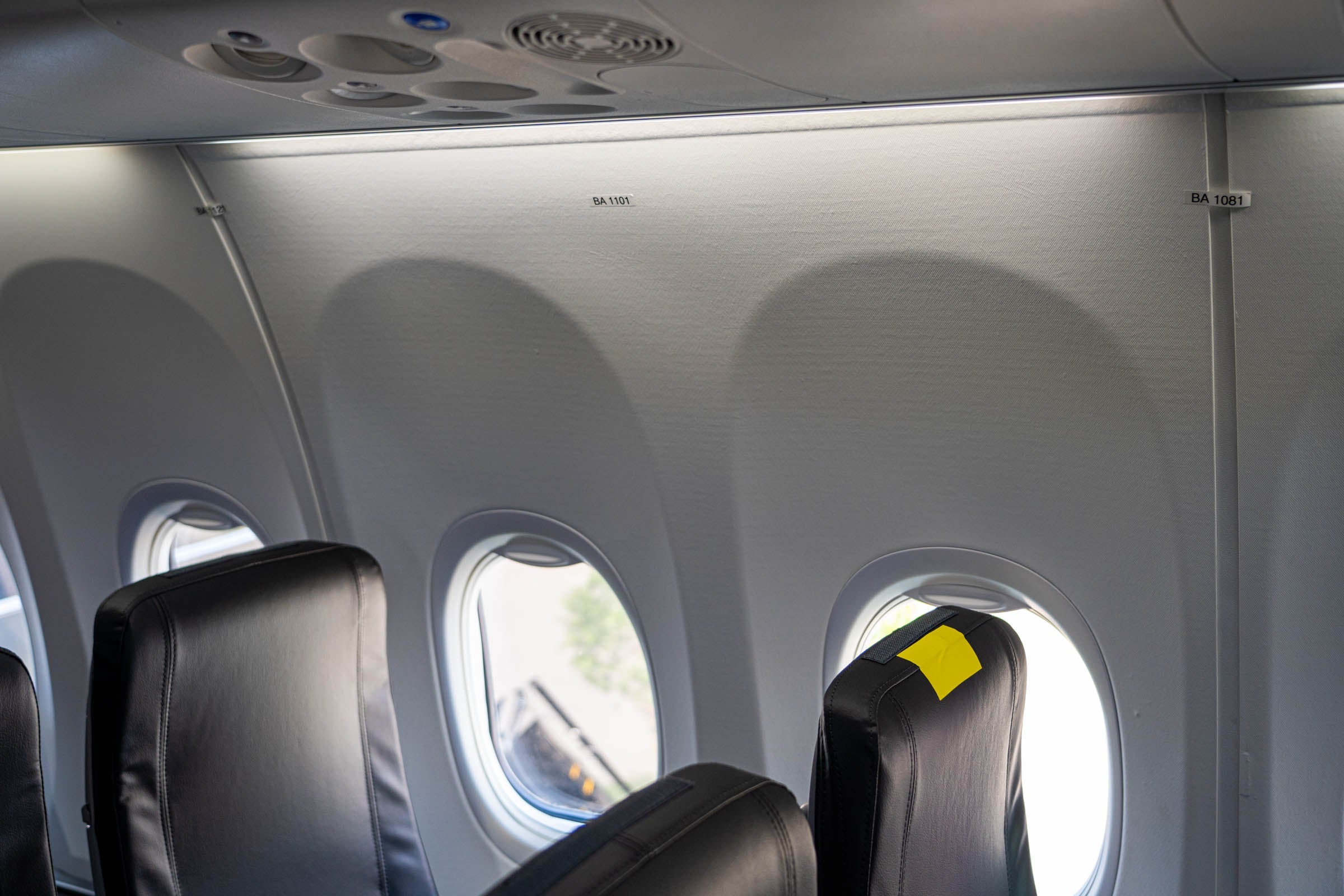
"There's a sustainability angle there, using recycled materials, but they also have the added benefit of being substantially lighter, easier and quicker to manufacture, and cheaper," said one Boeing engineer, whose name I was unable to note because the tour was fairly crowded. "What we're doing onboard this airplane is measuring interior noise levels to make sure that they at least meet, if not exceed, the noise standards of our existing sidewalls."
It's not the most exciting new development. But given the challenges inherent in reducing emissions in aviation, incremental steps — such as developing a lighter material to use in construction, which consequently reduces fuel burn — are important and can come together to have a more substantial impact.
The same applies to the next test product, a lower-profile LED warning light, which could be found just in front of the center emergency exits.
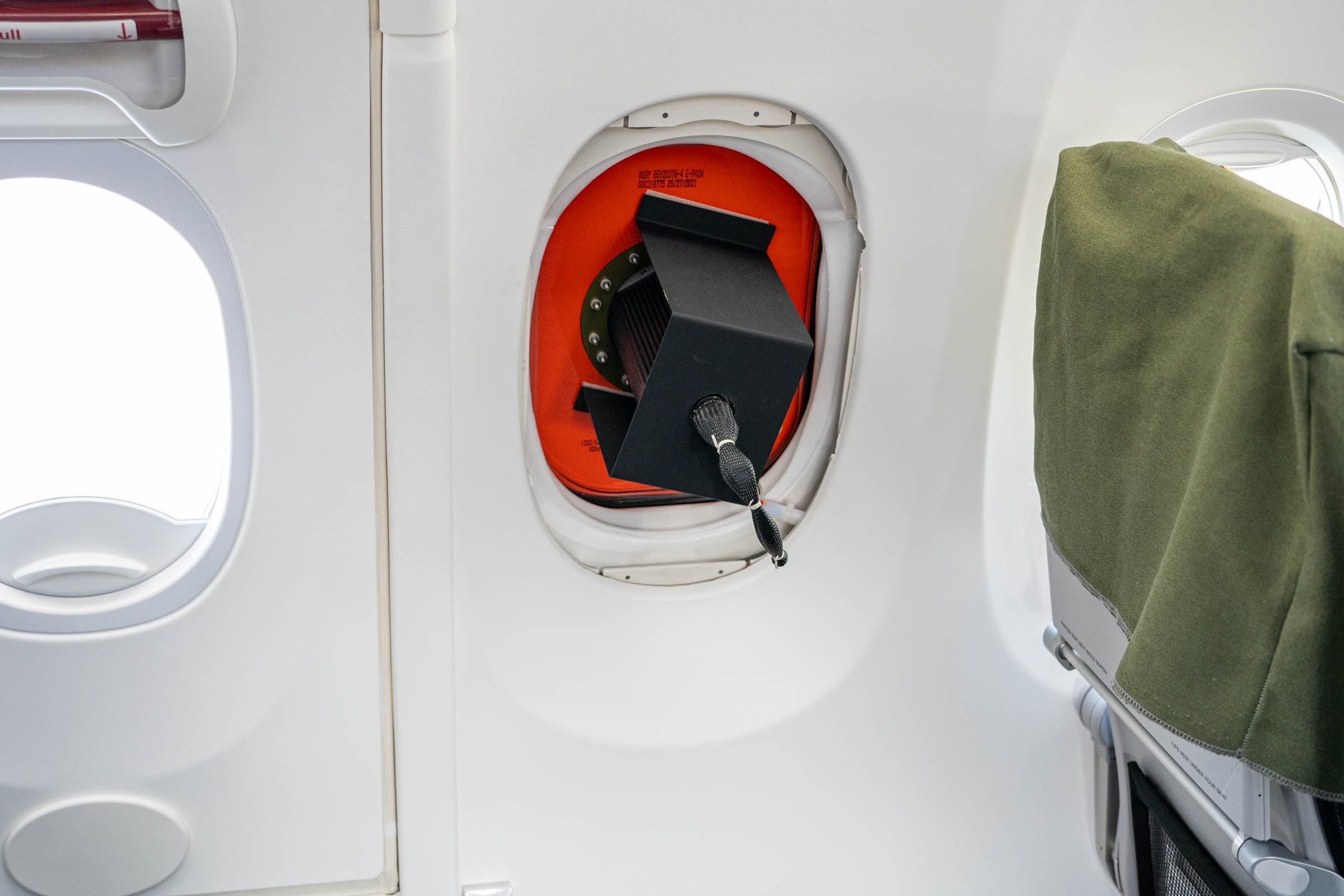
It's a test version of the typical anti-collision lights that aircraft have on the top and bottom of the fuselage. For testing purposes, this one was sticking right out of a window.
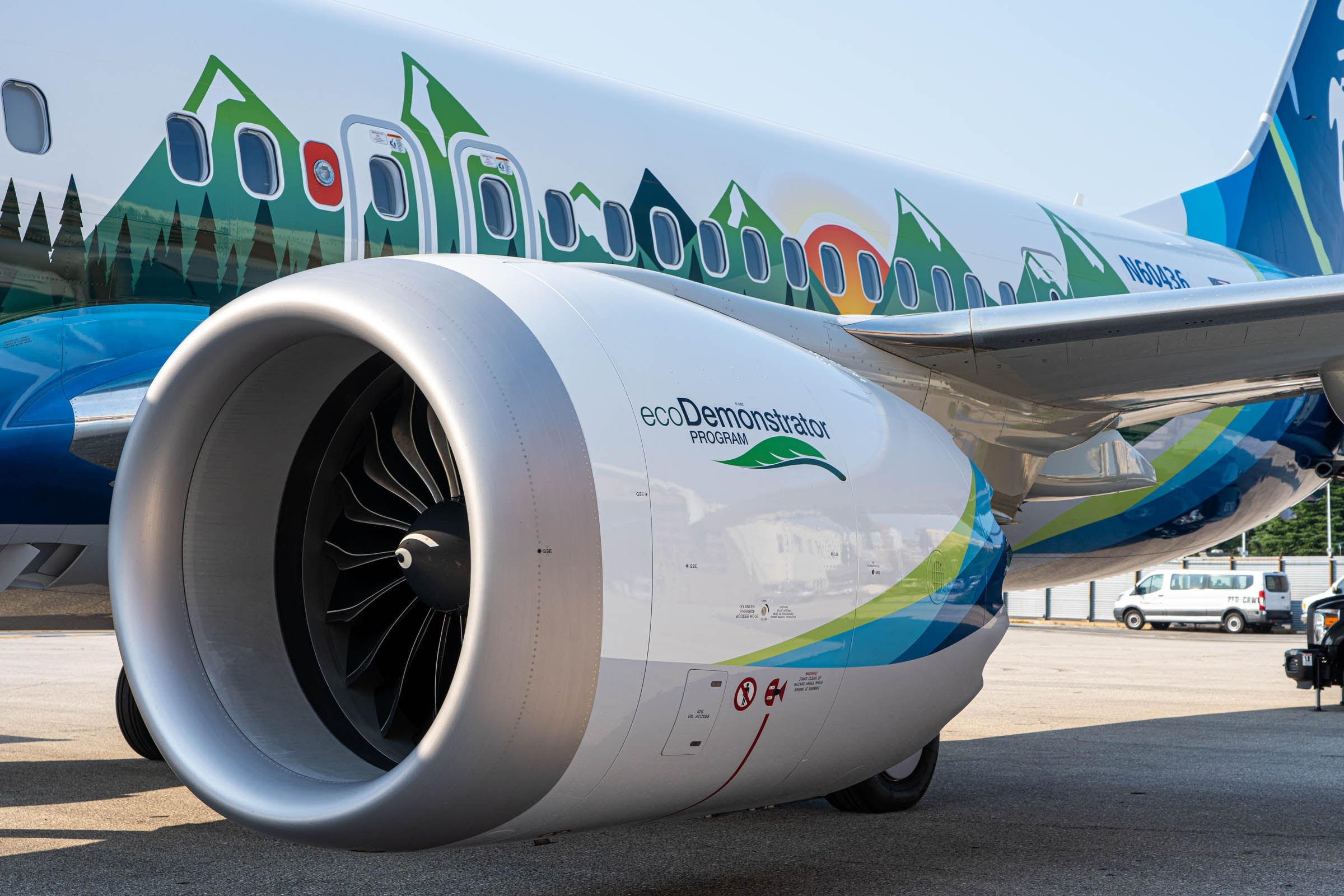
And here's what it looked like from the outside — it's the red window with the circular bulb in the middle.
Moving forward from the center emergency exits, any sense that this was a normal passenger airplane disappeared as the rows of seats came to an abrupt stop.
Forward of the exits were two stations — one on each side — with two cockpit-style chairs and two screens at each station.
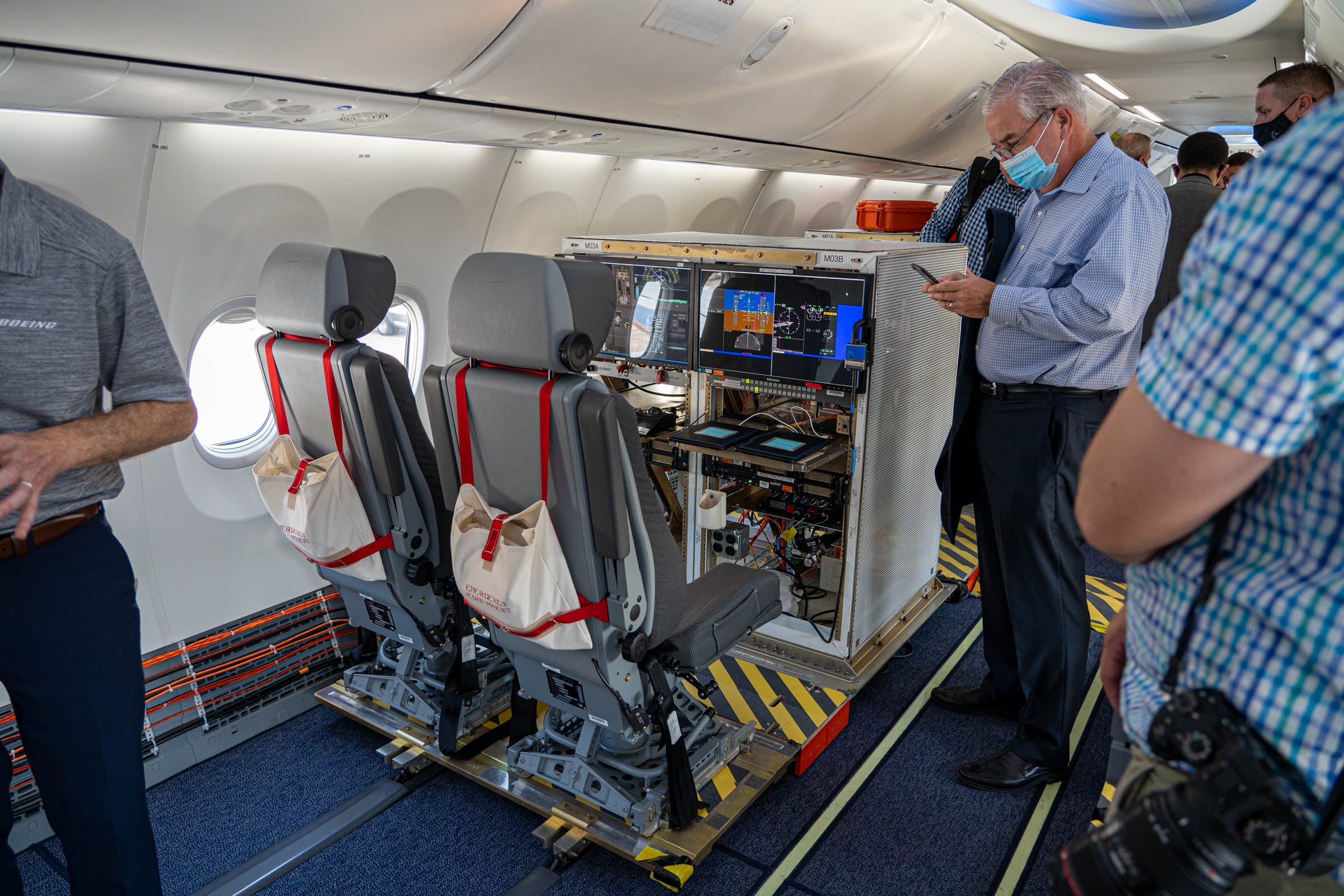
These "flight test instrumentation racks," as our guide called them, are where the test engineers sit during flight.
This could include more intense proving or certification flights — during which pilots make fairly extreme maneuvers to test aircraft structures before regulators sign off on them — or more standard test flights, including those the ecoDemonstrator is used for.
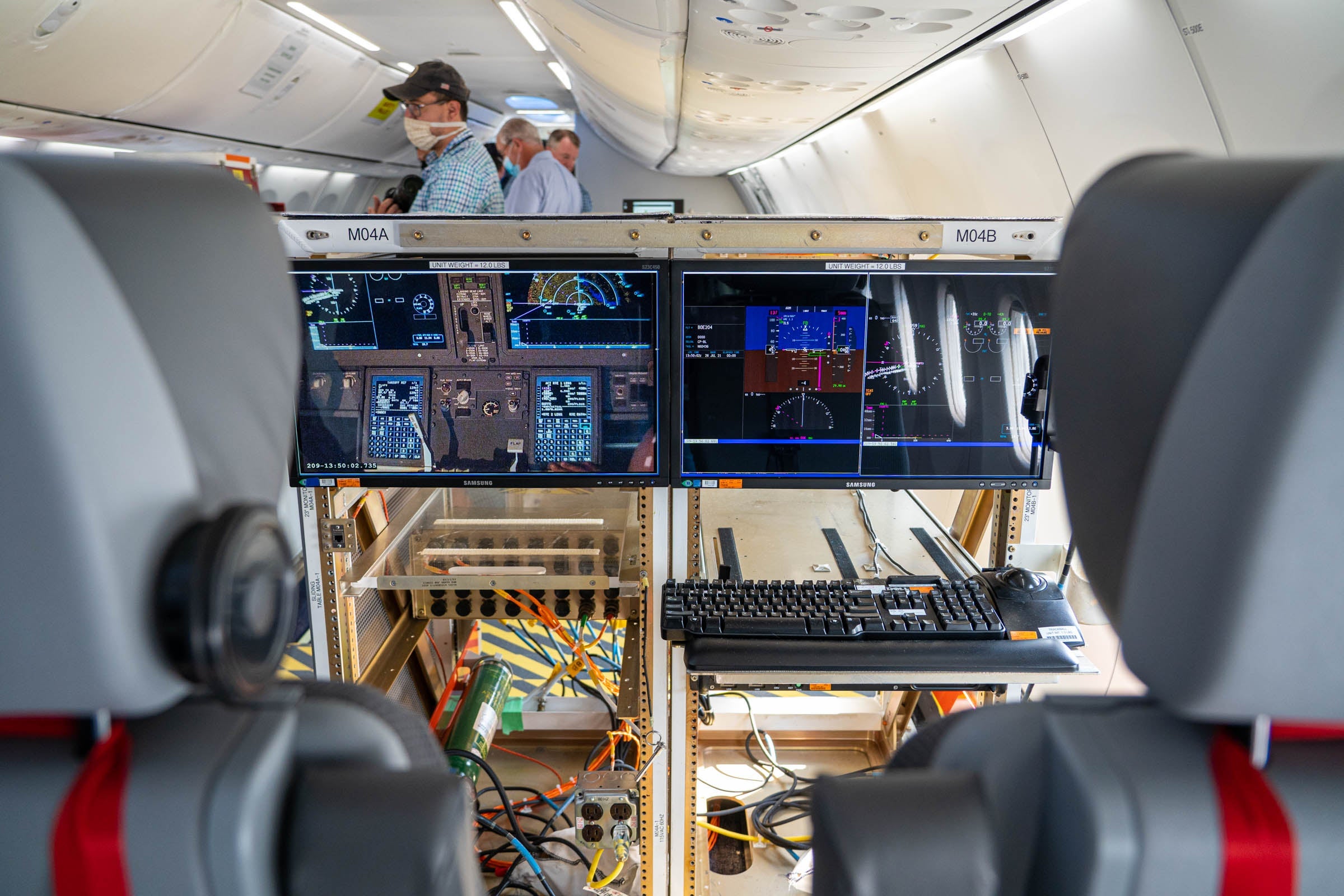
The stations are used to monitor live data parameters in real time, observing cockpit instruments via a camera mounted on the ceiling of the flight deck and ensuring that the engineering team is getting the data needed to validate the onboard test products, according to the Boeing guide.
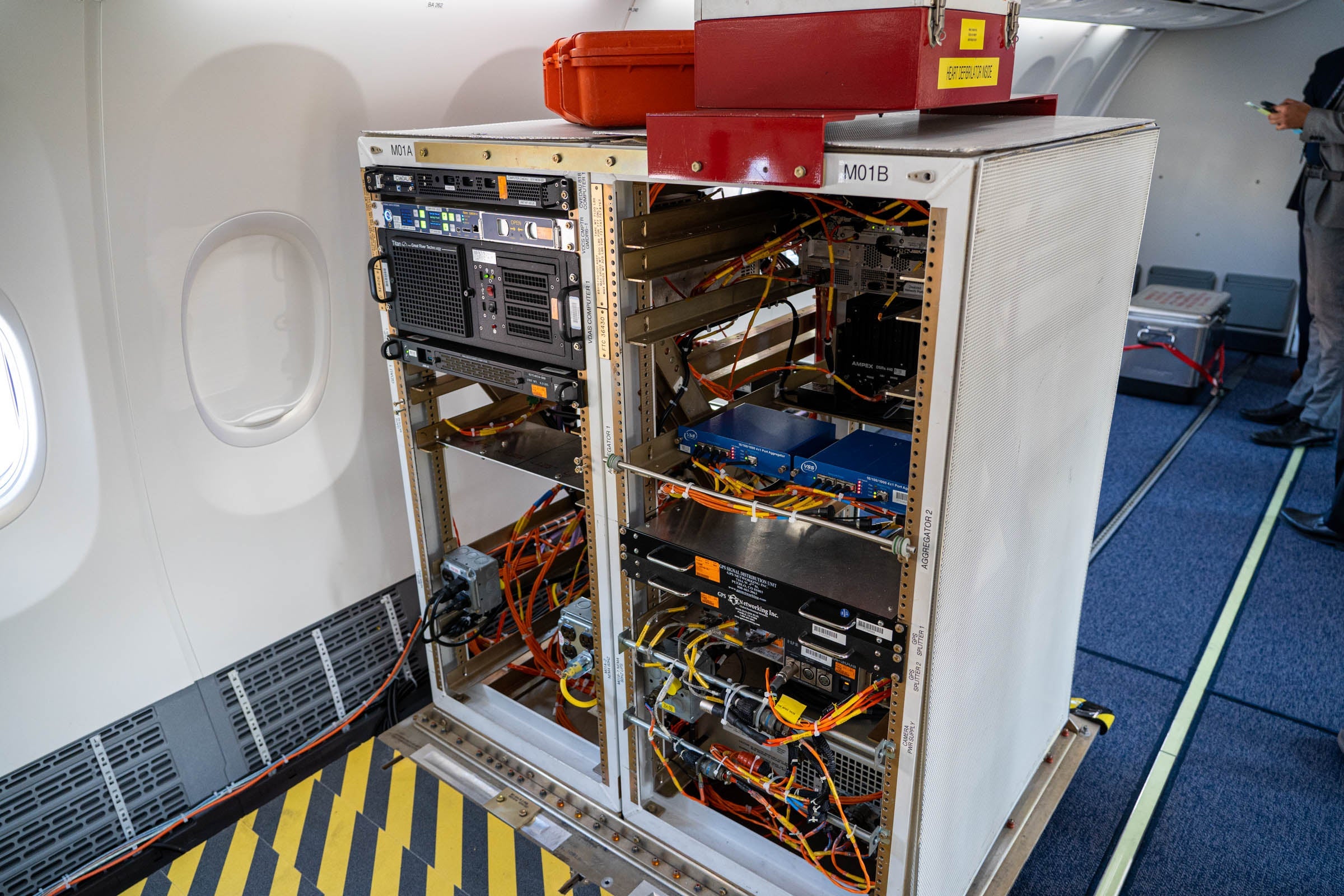
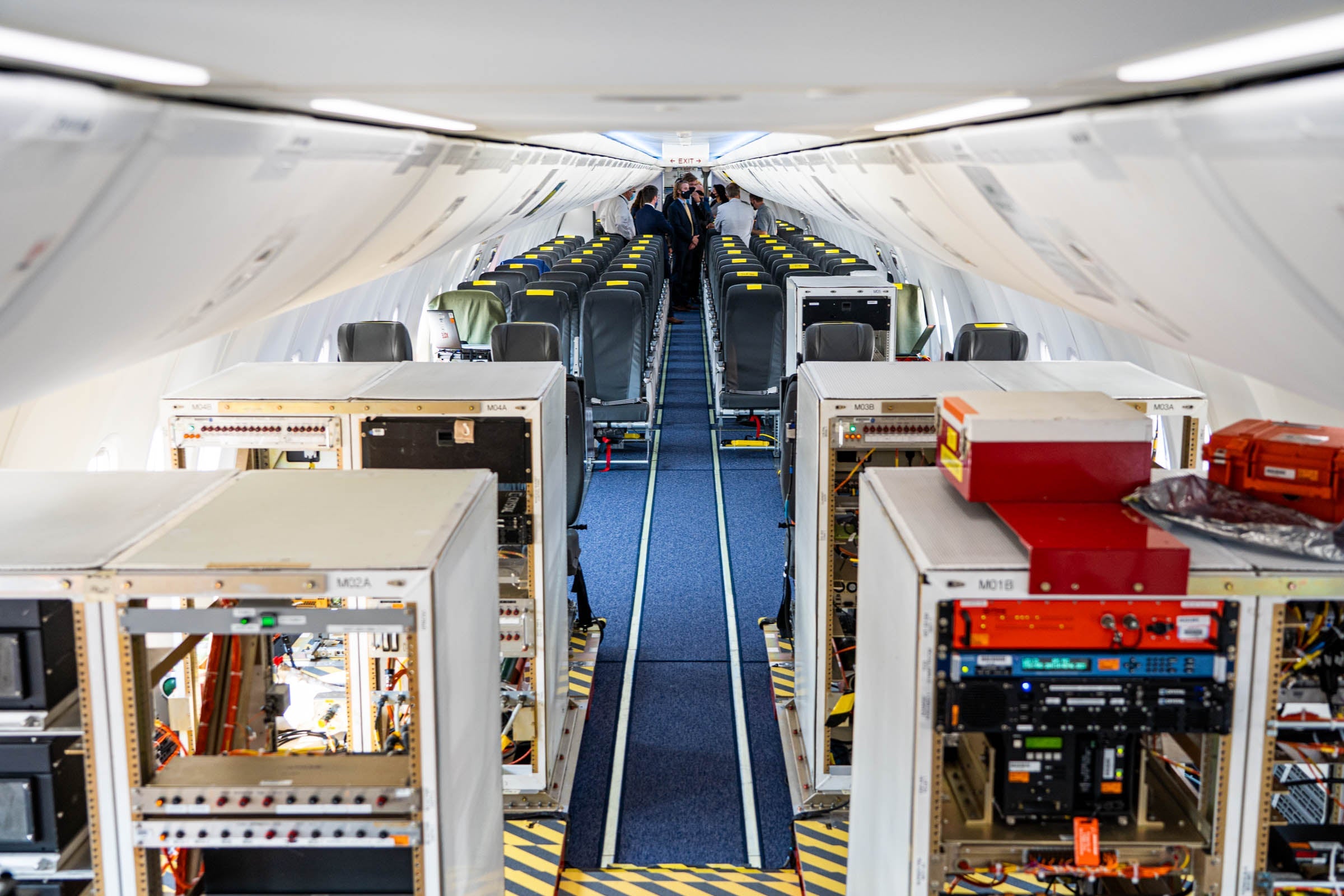
There were no more seats throughout the front part of the cabin. Instead, there were a number of cabinets with computers, electronics, sensors and other test gear.
The next project we looked at was one that Boeing is running in partnership with NOAA.
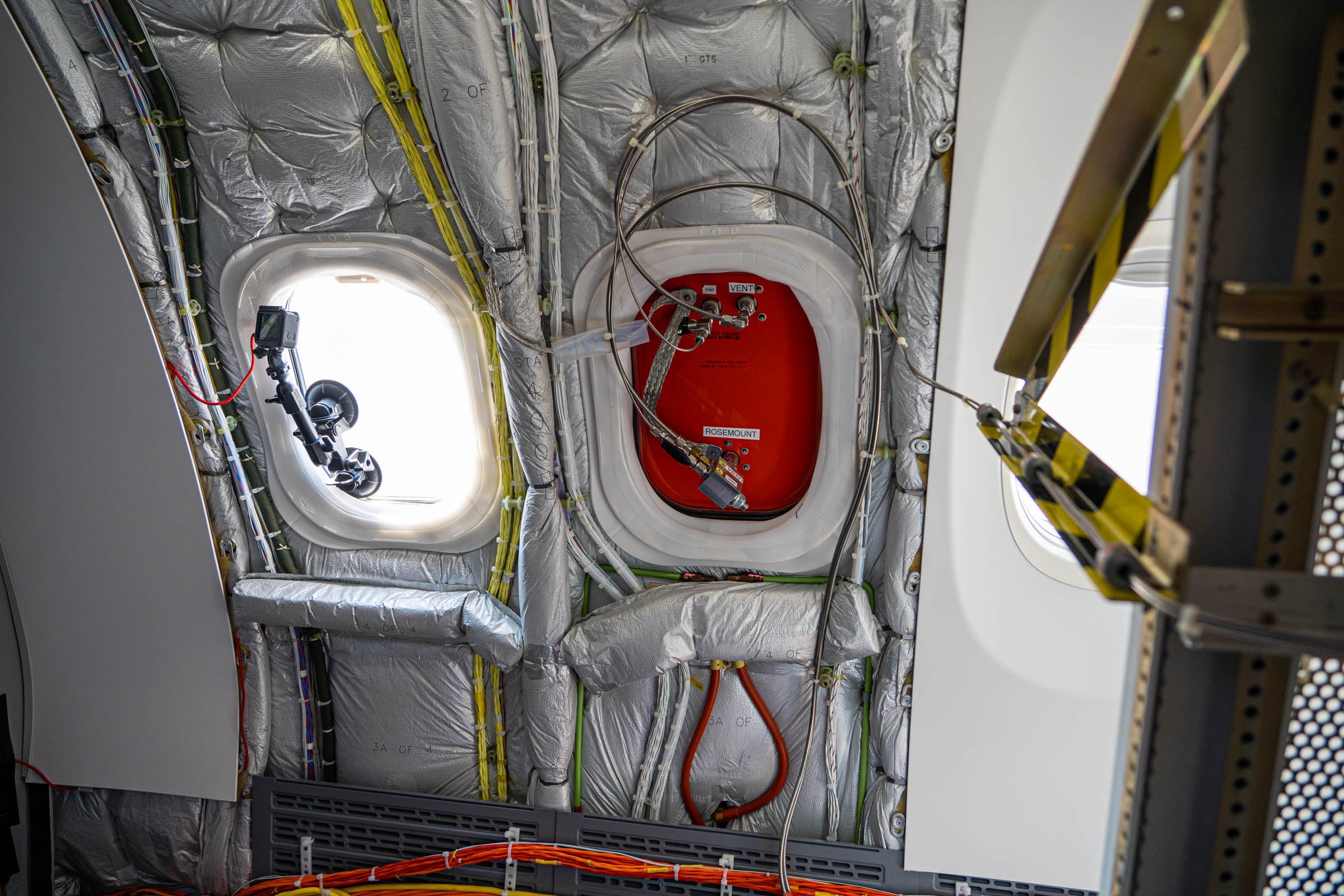
Sensors mounted in the window measure greenhouse gasses during flight, with the goal of helping NOAA figure out the best way to measure greenhouse gas emissions throughout the planet.
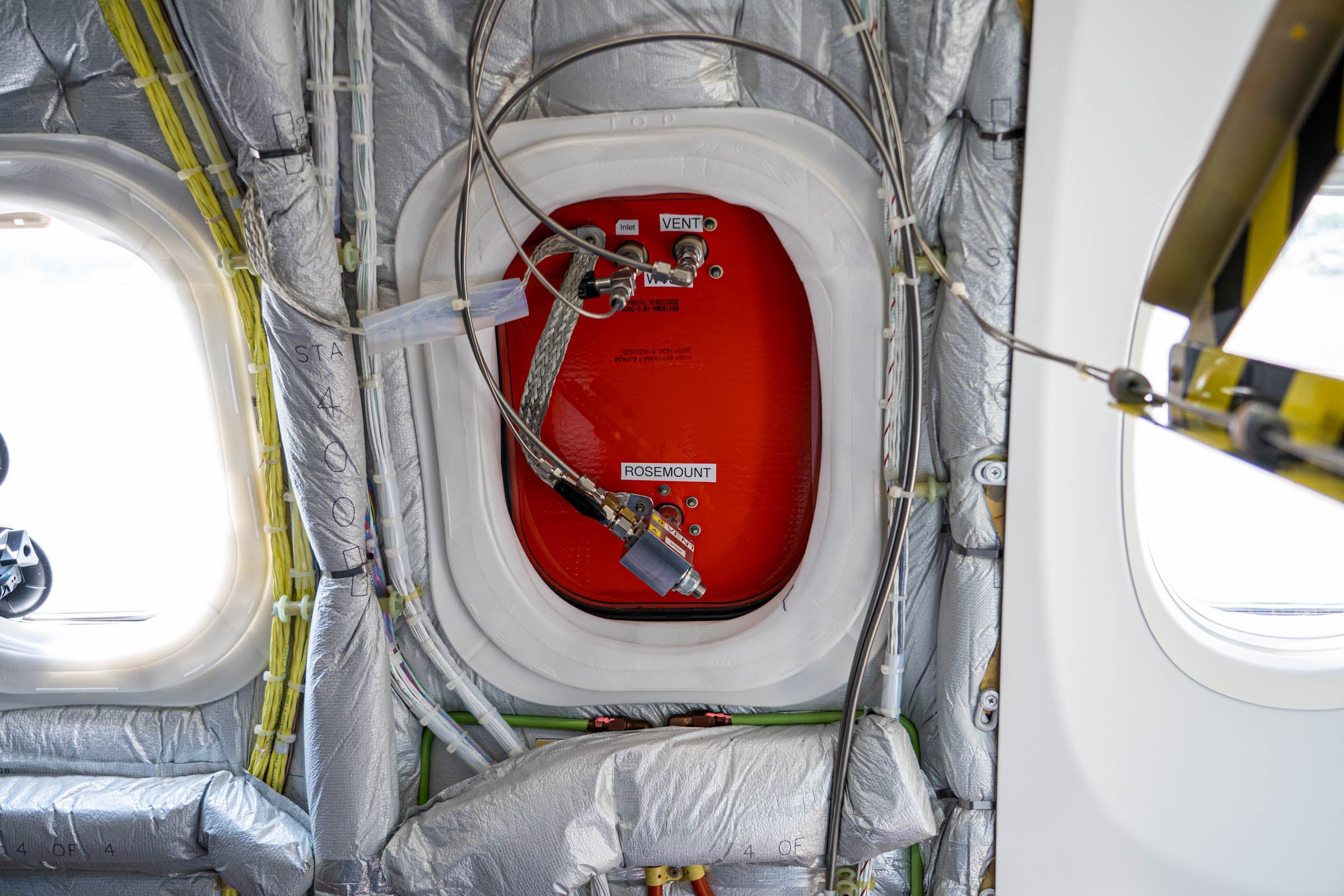
Assuming that the data collected is useful and the sensors are proven to not interfere with flights or cause safety concerns, the agency hopes to add the tech across fleets of commercial airplanes in order to basically crowdsource data in real time from around the world.
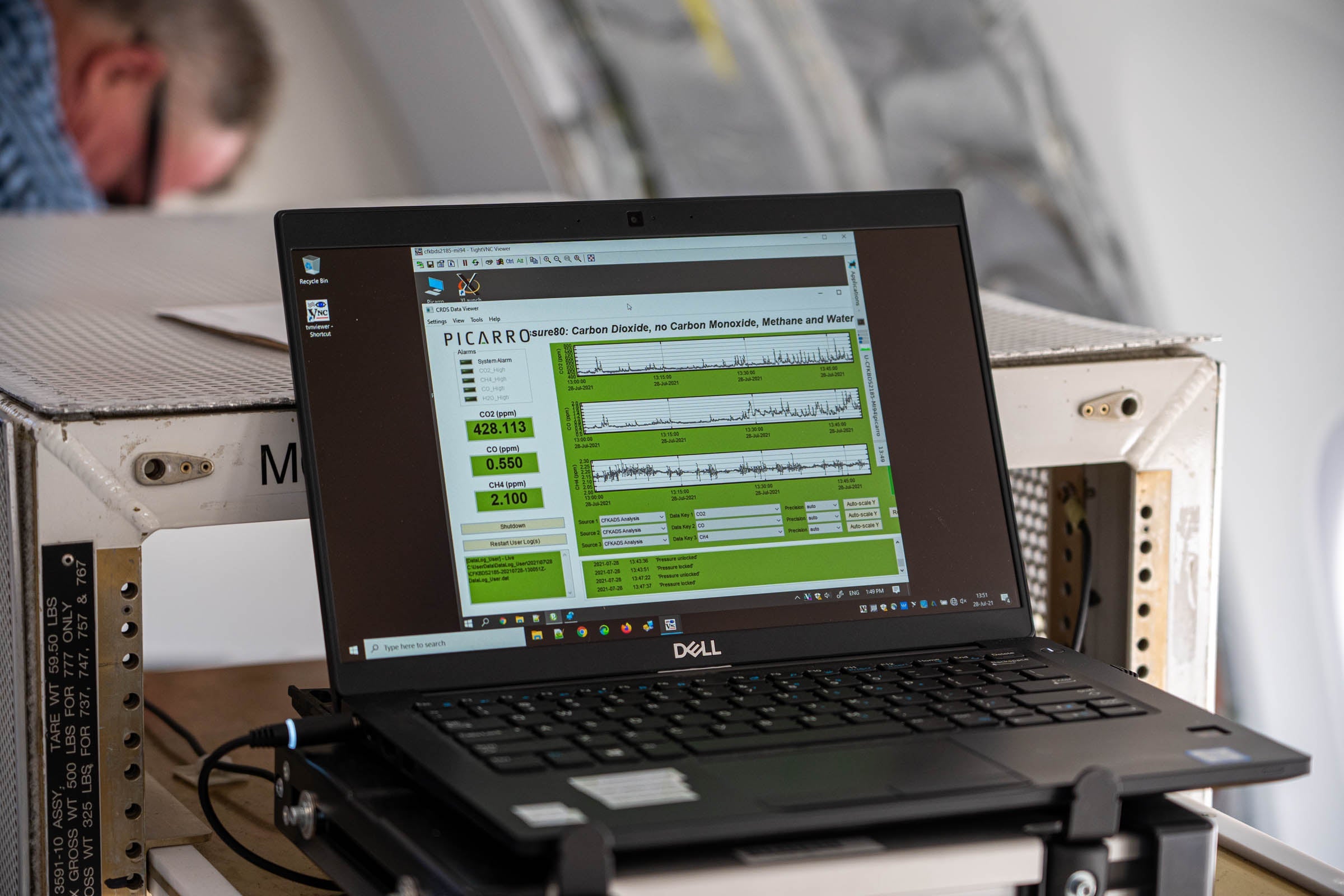
The agency could then use that data to improve climate projections and modeling.
In addition to two sensors at the front of the cabin, there was a third mounted in the rear, and a GoPro stuck to the window to simply record video.
The last test project we had the chance to see was a bit more mundane, and something that non-pilots might be surprised to learn doesn't exist already.
It's a touch-screen control display unit to replace the clunky older versions still used on modern flight decks.
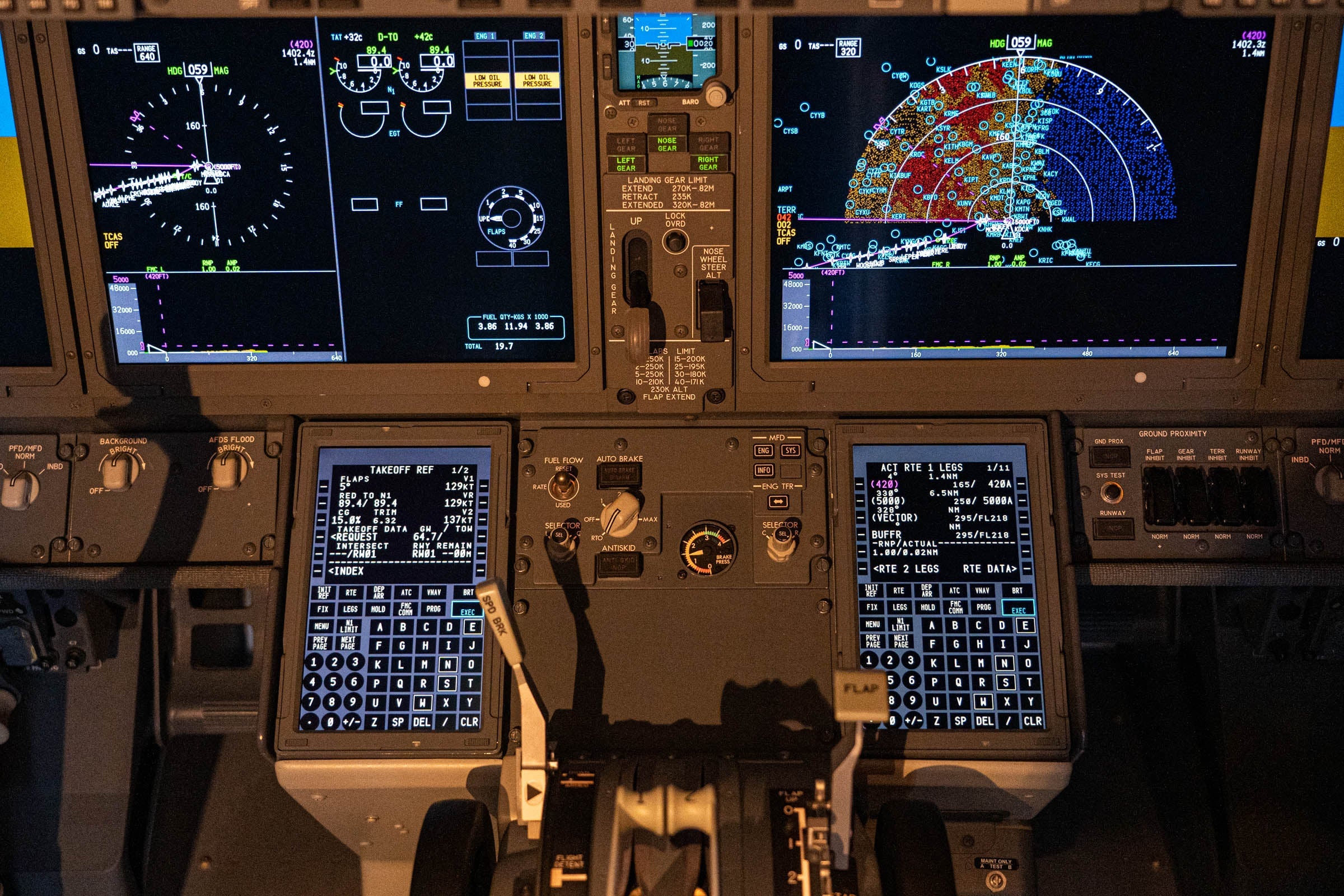
It gives planemakers the option to incorporate more functions into the unit, replacing physical hardware and reducing weight, which would contribute over time to fuel savings.
As with all technologies, the CDUs must be proven safe before they can be installed on commercial aircraft, which makes the ecoDemonstrator a useful proving platform.
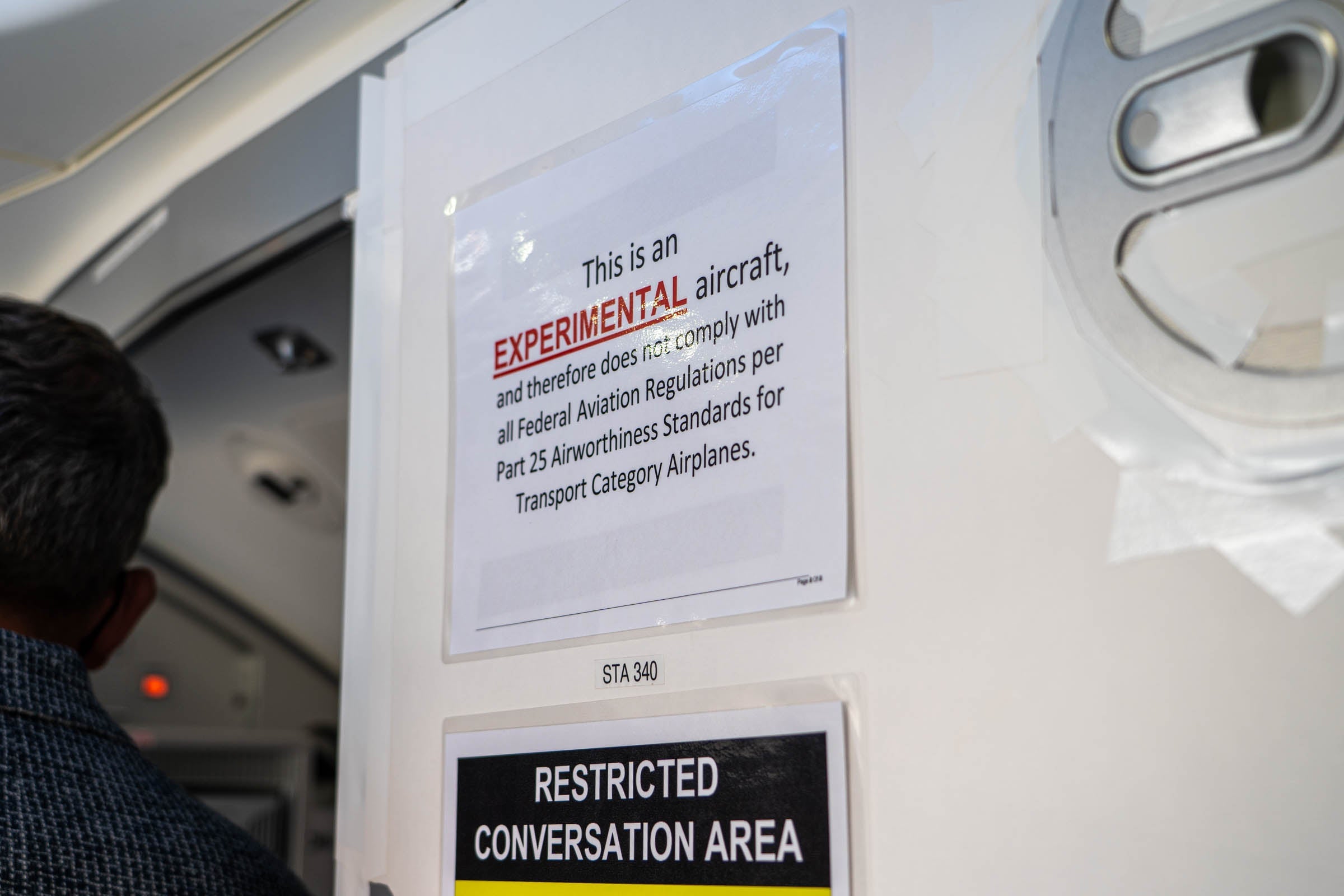
The ecoDemonstrator is ultimately an interesting project, and an exciting platform for Boeing to test new projects on.
But, even though it flies using mostly sustainable aviation fuel, the plane itself is not a solution to the emissions crisis in aviation.
Commercial aviation contributes 2%-3% of global emissions each year, according to various estimates. However, as other industries decarbonize — and the airline industry rebounds after the pandemic and expands, particularly in emerging markets — that share is expected to grow.
Although aviation is thought to be among the most difficult industries to decarbonize, simply due to the inherent fuel-burning nature of transportation, airlines and planemakers are working to find alternative fuels and ways to cut back on emissions.
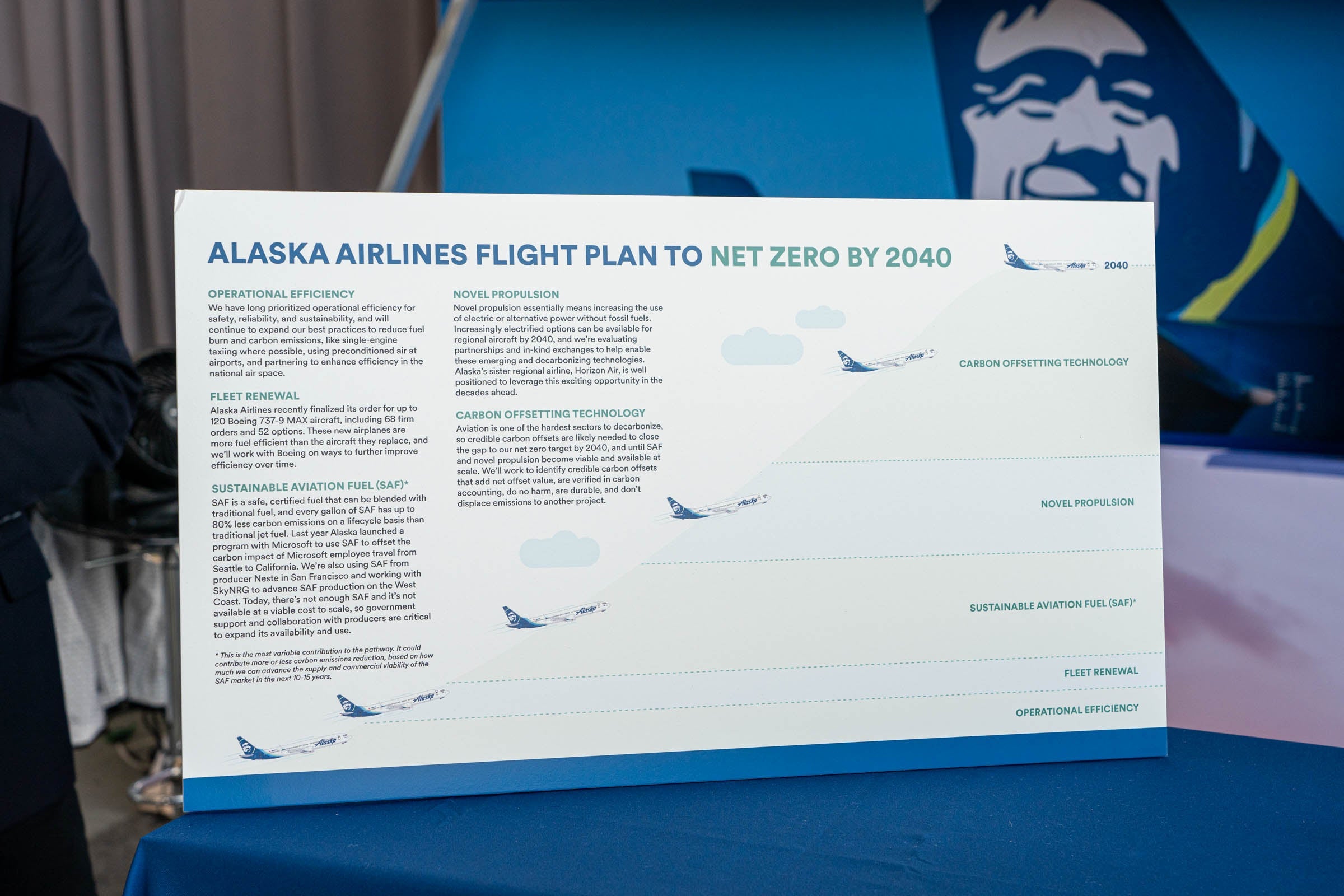
Alaska Airlines, for instance, aims to be net-zero emissions by 2040, partly banking on future technology that has not yet become available.
The big question is: Will it be ready in time? And will projects like the ecoDemonstrator be enough?
TPG featured card

at American Express's secure site
Terms & restrictions apply. See rates & fees.
| 4X | Earn 4X Membership Rewards® points per dollar spent on purchases at restaurants worldwide, on up to $50,000 in purchases per calendar year, then 1X points for the rest of the year. |
| 4X | Earn 4X Membership Rewards® points per dollar spent at US supermarkets, on up to $25,000 in purchases per calendar year, then 1X points for the rest of the year. |
| 5X | Earn 5X Membership Rewards® points on prepaid hotel stays booked through AmexTravel.com or the Amex Travel App™. |
| 3X | Earn 3X Membership Rewards® points on flights booked through AmexTravel.com, the Amex Travel App™, or purchased directly from airlines. |
| 2X | Earn 2X Membership Rewards® points on prepaid car rentals booked through AmexTravel.com or the Amex Travel App™ and cruises booked and paid through AmexTravel.com. |
| 1X | Earn 1X Membership Rewards® point per dollar spent on all other eligible purchases. |
Pros
- Valuable dining and food-related credits
- Flexible rewards with airline and hotel transfer partners
- Multiple travel and purchase protections
- No foreign transaction fees
- Access to Amex Offers for additional savings (enrollment required)
Cons
- Not as useful for those living outside the U.S.
- Some may have trouble using Uber and other dining credits
- You may be eligible for as high as 100,000 Membership Rewards® Points after you spend $8,000 in eligible purchases on your new Card in your first 6 months of Card Membership. Welcome offers vary and you may not be eligible for an offer. Apply to know if you’re approved and find out your exact welcome offer amount – all with no credit score impact. If you’re approved and choose to accept the Card, your score may be impacted.
- Earn 4X Membership Rewards® points per dollar spent on purchases at restaurants worldwide, on up to $50,000 in purchases per calendar year, then 1X points for the rest of the year.
- Earn 4X Membership Rewards® points per dollar spent at US supermarkets, on up to $25,000 in purchases per calendar year, then 1X points for the rest of the year.
- Earn 5X Membership Rewards® points on prepaid hotel stays booked through AmexTravel.com or the Amex Travel App™.
- Earn 3X Membership Rewards® points on flights booked through AmexTravel.com, the Amex Travel App™, or purchased directly from airlines.
- Earn 2X Membership Rewards® points on prepaid car rentals booked through AmexTravel.com or the Amex Travel App™ and cruises booked and paid through AmexTravel.com.
- Earn 1X Membership Rewards® point per dollar spent on all other eligible purchases.
- Pay It® lets you tap in the American Express® App to quickly pay for small purchase amounts throughout the month and still earn rewards the way you usually do. Plan It® gives you the option to split up big purchases into equal monthly payments with a fixed fee. You’ll know upfront exactly how much you’ll pay.
- $120 Dining Credit: Earn up to a total of $10 in statement credits monthly when you pay with the Gold Card at Grubhub (including Seamless), Buffalo Wild Wings, Five Guys, The Cheesecake Factory, and Wonder. This can be an annual savings of up to $120. Enrollment required.
- $100 Resy Credit: Get up to $100 in statement credits each calendar year at over 10,000 qualifying U.S. Resy restaurants after you pay for eligible purchases with the American Express® Gold Card. That’s up to $50 in statement credits semi-annually. Enrollment required.
- $84 Dunkin' Credit: Earn up to $7 in monthly statement credits after you pay with the American Express® Gold Card at U.S. Dunkin’ locations. Enrollment required.
- $120 Uber Cash on Gold: Enjoy up to $120 in Uber Cash annually with your Gold Card. Just add your Card to your Uber account and you'll get $10 in Uber Cash each month to use on orders and rides in the U.S. when you select an Amex Card for your transaction.
- Enjoy complimentary Hertz Five Star® Status benefits like skipping the counter at select locations, adding an additional driver at no additional cost*, and vehicle upgrades**. Benefit enrollment and Hertz Gold+ registration are required. *Additional drivers must meet standard rental qualifications and must be a spouse or domestic partner to qualify as complimentary. Other additional drivers subject to fees. **Benefits are subject to availability and vary by location. Additional Hertz program Terms and Conditions including age restrictions apply.
- Book two nights or more with The Hotel Collection through AmexTravel.com or the Amex Travel App™ and receive a $100* credit towards eligible charges at over 1,400 upscale hotels worldwide. *Eligible charges vary by property.
- Book your travel through the Amex Travel App™ with added peace of mind – backed by American Express® service and support. Only for American Express® Card Members.
- Whenever you need us, we're here. Our Member Services team will ensure you are taken care of. From lost Card replacement to statement questions, we are available to help 24/7.
- No Foreign Transaction Fees.
- Annual Fee is $325.
- Terms Apply.