Avelo Airlines CEO Andrew Levy on the airline's path to profitability: 'We're really close'

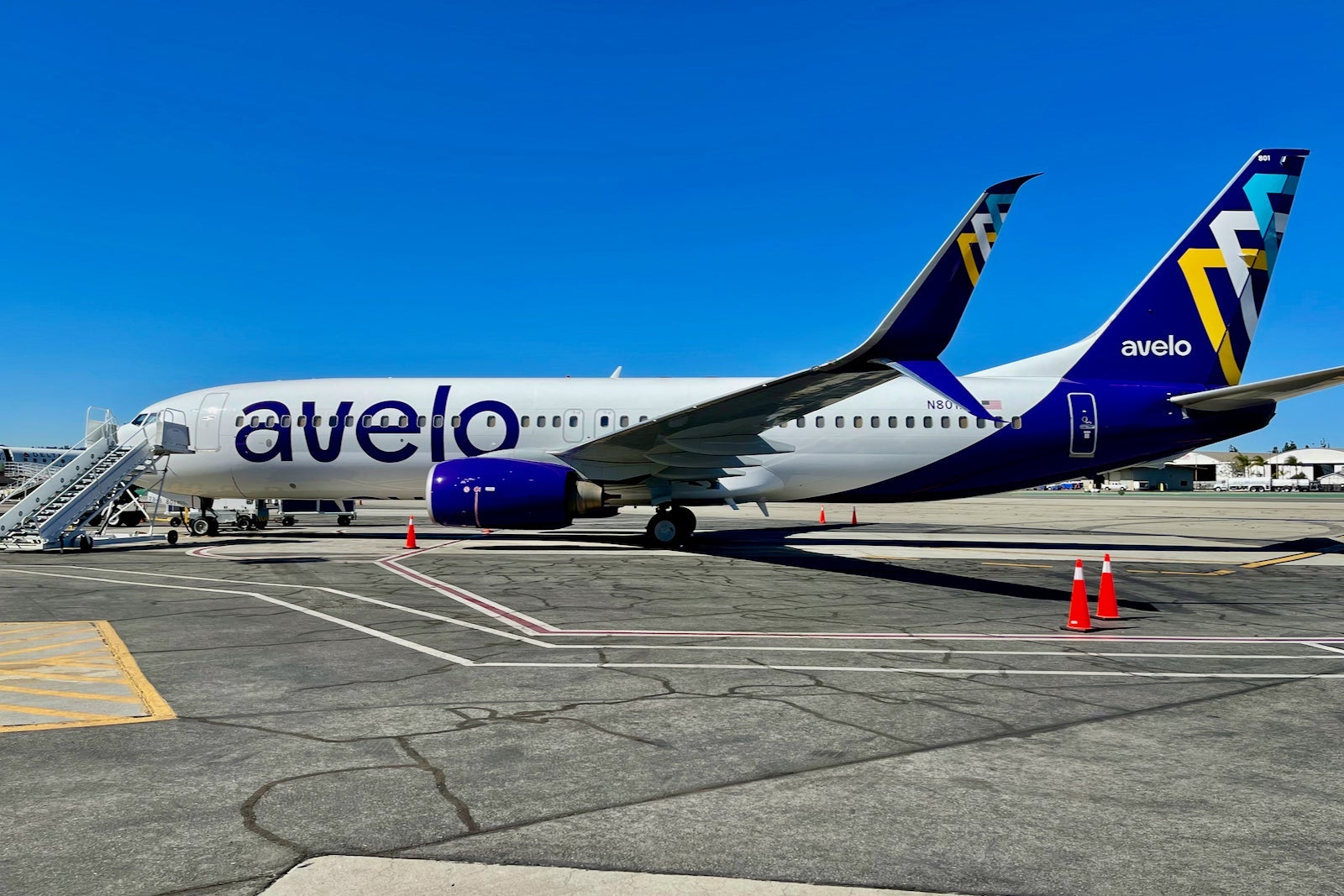
When you enter the headquarters of Avelo Airlines in a glass-walled office building in Houston's Greenway Plaza neighborhood, you won't find a sign.
In fact, the only indication that this is Avelo's home is that the walls are painted purple — and that some marketing materials hang in the elevator lobby.
For now, there's no sign with Avelo's name or logo, but perhaps that's something CEO Andrew Levy will spring for once the airline posts its first profit.
Levy, who was formerly the chief financial officer of United Airlines and president of Allegiant Air, says he's laser-focused on Avelo's cost structure. He's faced the unique challenge of starting an ultra-low-cost airline during a pandemic. The carrier has offered dirt-cheap fares to consumers (often less than $100 each way) during a summer when airfare was a key driver of inflation; it has also contended with sky-high fuel prices, pilot recruitment issues and COVID-19 variants. Plus, of course, Levy has to manage all of this without compromising safety.
The good news for Levy and Avelo is that the company believes it can be profitable by the end of this year.
"We gotta hit our forecast," Levy said. "I want to make sure that we're actually hitting our forecast and generating cash. We're not quite yet, but we're really close."
If it doesn't, it wouldn't be because of empty planes. Levy boasted of monthly load factors greater than 70% since last November and greater than 80% this summer.
"We have, you know, big airplanes and we have very low seat costs," he said. "For us, we're still kind of spreading out our overhead."
As Avelo celebrated its 1 millionth passenger in August, Levy sat down with TPG for a wide-ranging interview in Houston about the airline's past, its plans for growth and its path to profitability.

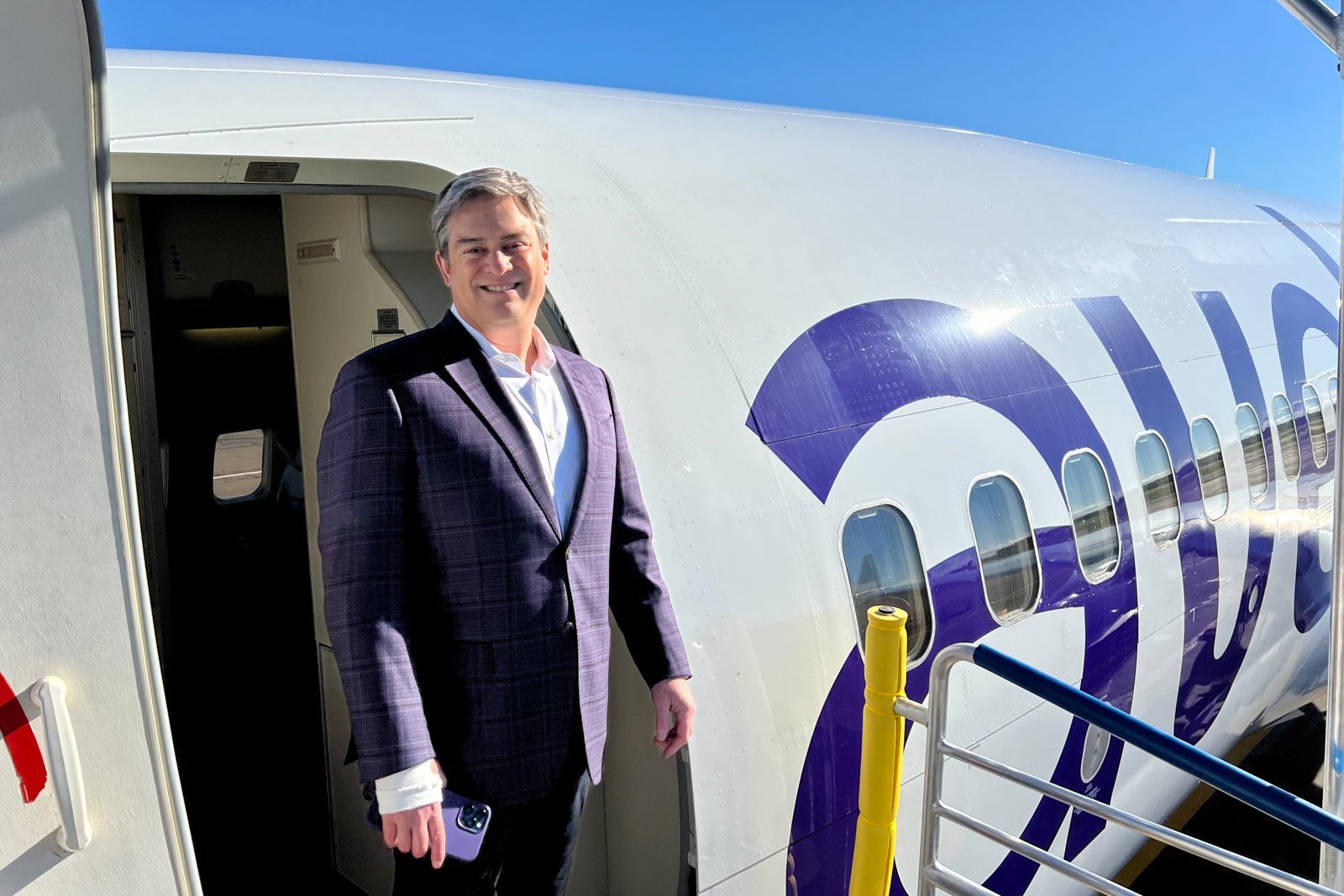
Fuel prices: 'It's been killing us'
Levy is not new to the airline industry. Still, his experience wasn't enough to prepare him for the fuel prices that Avelo had to pay this summer, particularly at its base at Tweed-New Haven Airport (HVN) in Connecticut.
"High fuel prices have been a really tough challenge — absolutely," Levy said. "It's been killing us and there was about a month period in New Haven where we were paying over $7 a gallon. And there are two weeks of that period that we were paying over $8 a gallon, which are numbers that are like double what I'd ever seen in my career."
In June, the most recent month of available data, U.S. carriers reported paying $4.03 per gallon on average for jet fuel domestically, according to data compiled by the Bureau of Transportation Statistics. So, Avelo's costs were briefly double that.
The good news, Levy said, is that since June, fuel prices have gone down. He anticipates Avelo paying less than $4 per gallon in August — much-needed relief for the startup.
New planes: Don't expect an Avelo 737 MAX anytime soon
It's clear there are deals out there for 737 MAX aircraft. Fellow low-cost startups Flyr in Norway, Lynx Air in Canada and Akasa Air in India have all either launched with the MAX or added it to their fleets within a few months of starting up. That's not to mention Levy's former home, Allegiant Air, which placed an unexpected order for the MAX earlier this year.
However, that's not Levy's style.
"I don't like new airplanes because it really changes your balance sheet and it forces you to really have very high levels of utilization to make your numbers work," he said. "And so I shy away from them in principle. I like the idea of having older airplanes so that you don't have the same pressure, so you can park them without really being all that concerned."
More: A look inside Boeing's 737 MAX factory
Newer aircraft cost more to acquire, though they are cheaper to operate because they have fewer maintenance needs and burn less fuel. Levy's calculus is that it's more economical to work with used planes, which have significantly lower acquisition costs.
As of this week, there are 11 Boeing 737 next-generation models in Avelo's fleet: a mixture of used 737-700s and 737-800s. The airline expects to have 14 737s by the end of the year and a 15th and 16th coming by the end of the second quarter of next year. Avelo leases all but two of its aircraft, and Levy said that the newest aircraft are coming online with favorable lease terms: less than $150,000 per month per aircraft.
Still, Levy wouldn't completely rule out adding the MAX to the Avelo fleet eventually.
"I think it's certainly possible one day," he said.
Network: Will Avelo go international?
Avelo eventually has its sights on an international expansion, but not anytime soon, Levy said.
"I do think it's probably highly likely," he said.
Levy specifically mentioned international routes out of the New Haven base to destinations where U.S. Customs and Border Protection Preclearance is available, including Canada, Bermuda and the Bahamas. (Preclearance is a process through which travelers can complete customs in a foreign country before flying to an American airport, thanks to the CBP members stationed in international locations.) New Haven lacks federal inspection station facilities, and none are planned. Serving Preclearance destinations would allow Avelo's passengers and crew to clear inspections in the foreign country they're departing from, arriving in New Haven as a domestic flight.
Additionally, Levy did not rule out an international expansion from the Orlando base, where federal inspection station facilities are available. Avelo is already certified for flag operations, which means that it is allowed to offer scheduled flights outside the U.S.
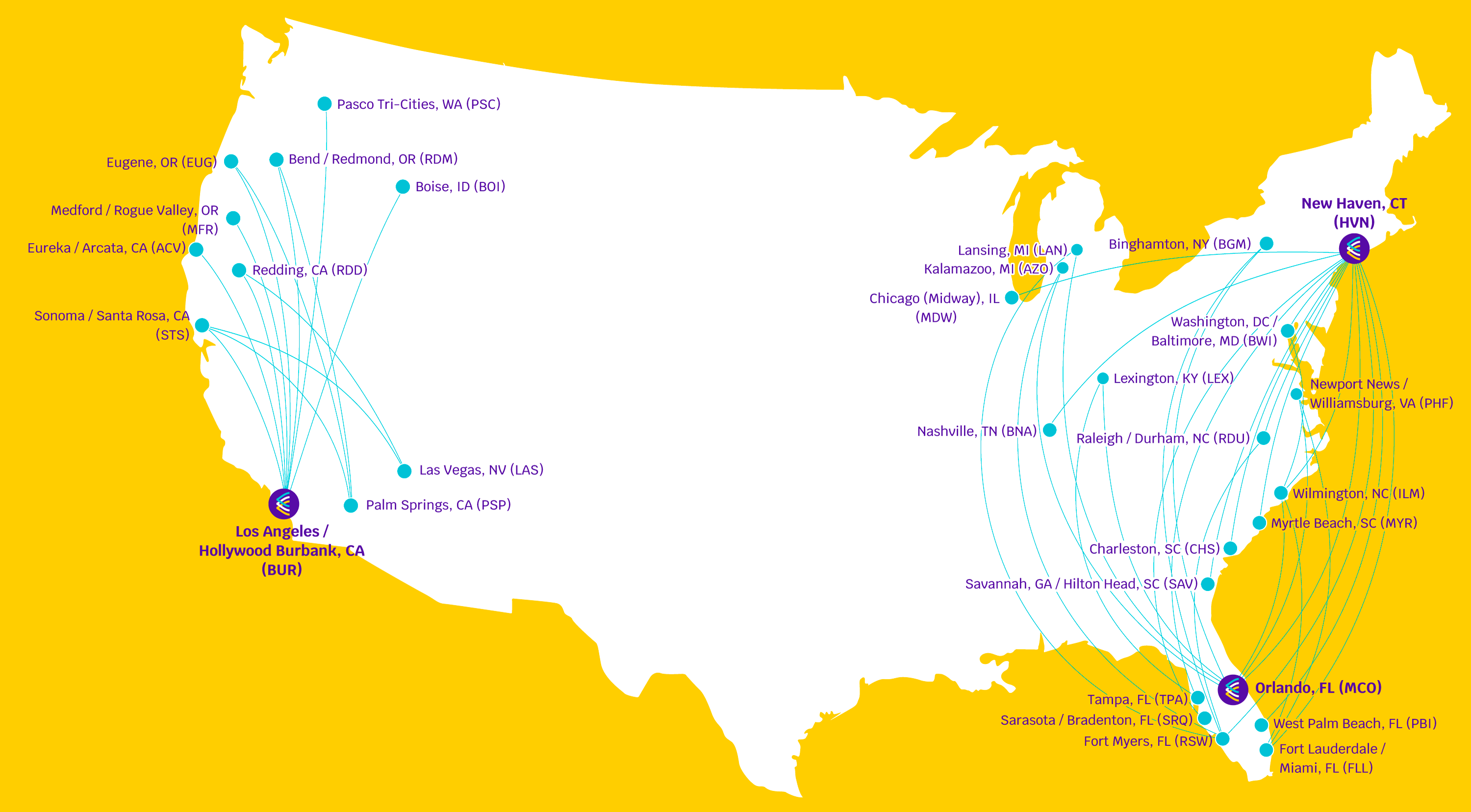
As for Avelo's current domestic network, Levy didn't offer up many more specifics about new service, but he promised new routes by the end of the year.
While New Haven has been the source of much of Avelo's recent growth, Levy said the airline's original base in Burbank, California, is performing "really, really well."
"We're really pleased with where it is now," he said. "Our West Coast network has outperformed, I think May June, July, August, and probably will in September."
The airline has attracted some negative attention for announcing routes and then cutting them before they even start. Levy ticked through all five airports off the top of his head where that's happened: Monterey Regional Airport (MRY) in California, St. George Regional Airport (SGU) in Utah, Spokane International Airport (GEG) in Washington, Provo Airport (PVU) in Utah, and a single route from Charleston International Airport (CHS) in South Carolina where Avelo was to compete against Breeze Airways.
"When you're starting and you don't have a massive balance sheet, then you really have to have very little tolerance for markets that don't work," Levy said. "Because you just can't afford to take the risk. You can't afford to fly airplanes and not make and not generate enough revenue to be able to cover your costs."
For some routes, the cancellations came down to poor timing: This was the case with Monterey and St. George, which were announced at the front end of the COVID-19 delta variant surge last summer, right before cases increased dramatically.
That was just one of the challenges associated with launching an airline in the middle of the pandemic. For instance, Levy said, the airline estimates it lost about $1 million in revenue due to the omicron variant surge this past winter.
"That really killed the holidays," he said of a startup where every dollar counts — as was evident from the lack of office signage.
Uniquely, the airline doesn't operate out of its home city of Houston, and while Levy wouldn't rule that out someday, it's not at the top of his list at the moment.
"There are other opportunities out there that are much more accessible that we're more interested in," he said.
Pilot hiring: 'You can't fight the market'
Labor is one of the top two costs of running an airline, along with fuel. A pilot shortage has caused Avelo — and many other airlines — to raise pilot pay in order to be competitive in recruiting from a smaller pool of pilots. Avelo now starts its first officers at $90 per flight hour and its captains at $200 per flight hour, which is higher than its ultra-low-cost peers. Pilots also earn a monthly stipend of $1,800 on top of their hourly flying wage, which has a monthly guarantee at the industry standard of 70 hours.
"I just believe you can't fight the market — the market is what it is," Levy said. "Pilots are in short supply, they're in high demand and therefore pilot costs for everybody — they're gonna go up at least over the next several years."
More: How a pilot shortage could leave travelers with higher fares and fewer options
Levy doesn't view the high costs of pilots in terms of affecting the airline's cost per available seat mile. CASM is one of the industry's standard cost metrics and calculates how much it costs to fly one seat for 1 mile.
"I kind of feel like costs are really a relative game and obviously, the lower your costs are, the more you can stimulate demand and, that's still all true," he said. He added that he feels particularly good about the size of Avelo's Boeing 737s and the ability to spread out the costs among more seats.
Levy did admit that despite offering competitive pay among ULCCs, Avelo is losing pilots to other airlines — particularly Delta Air Lines, Southwest Airlines and United, as those carriers aggressively staff up.
"A lot of people view that as like the pinnacle of where you'd want to get in the profession," he said. "I think that that's misguided in many cases, but hey, it's like you can't fight city hall on that one."
Breeze: 'I'm still not certain what their strategy is'
In May 2021, Breeze operated its first flight, a month after Avelo did. The flashy airline has made headlines because of its well-known leader, serial airline entrepreneur David Neeleman, and its new aircraft, the Airbus A220-300.
These two airlines are often compared to one another since they are both ultra-low-cost carriers that started operations during the COVID-19 pandemic.
However, Levy said that you shouldn't compare Avelo and Breeze.
"Those are such different airplanes that if we're both trying to do the same thing, then one of us has the wrong airplane for sure," Levy said of the A220. "And I was pretty sure it wasn't me. So I just kind of always assumed that they have different things that they're focusing on.
"I'm still not certain what their strategy is really," he added.
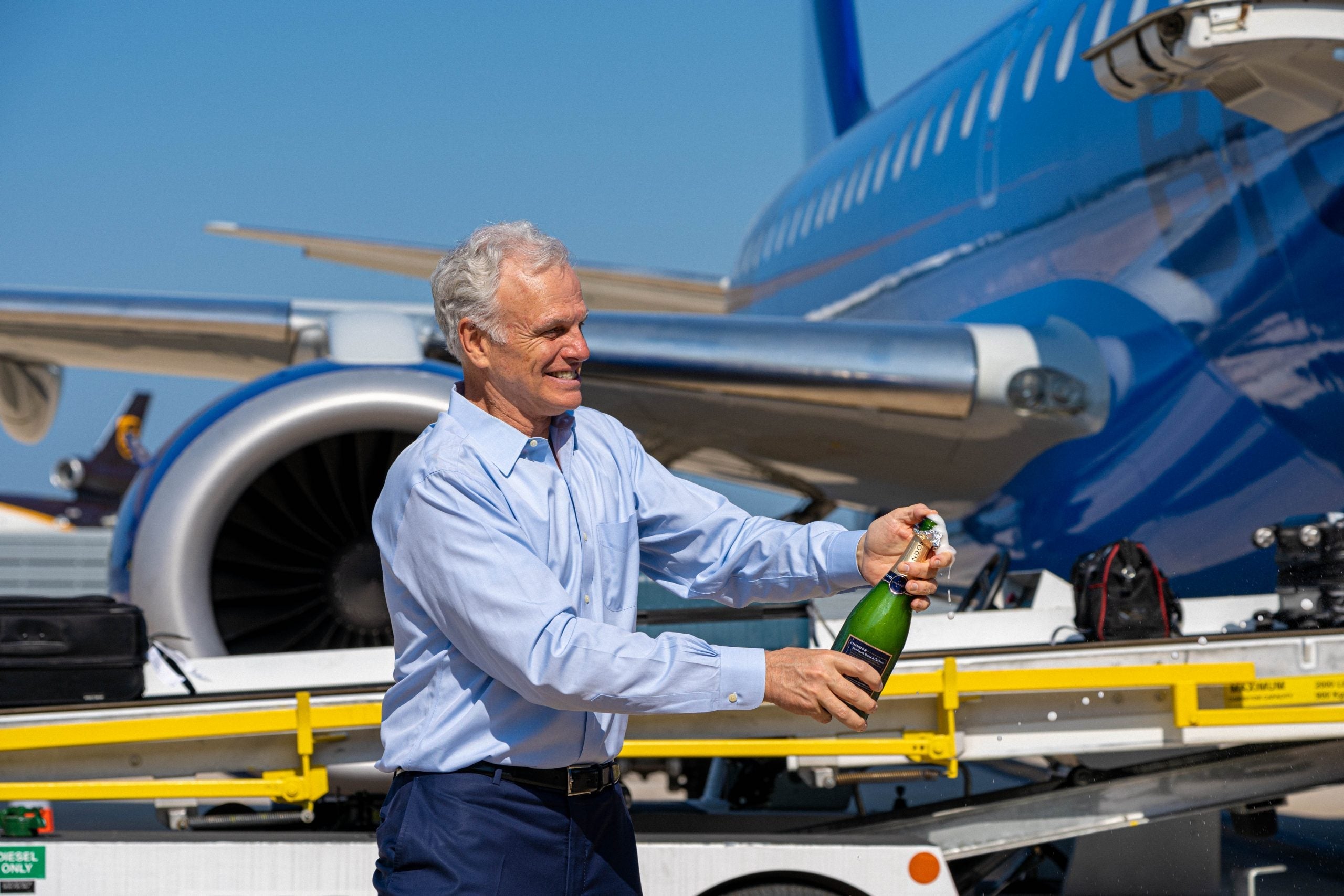
While Levy said he hasn't spoken to Neeleman himself in three to four years, he says that he knows many other top leaders at Breeze and keeps in touch.
"I know their team exceptionally well," he said.
Looking forward
When asked where he wants Avelo to be a year from now, Levy had a simple and unsurprising answer.
"I would say that I want us to be consistently profitable, and that means month in, month out," he said. "If we're at that point, then we will absolutely be bigger and will be getting a lot bigger because companies that are profitable deserve to grow. So that's my goal right now. It's all about getting the company to where we generate cash and not relying on external financing. I'm very confident we'll get there. I think we'll get there before then."
Some of Avelo's individual investors are also its senior executives, Levy said, naming some members of his executive team and how much they've invested.
"I think that's pretty cool because we have people — they're not just here for the upside, they're actually betting their own money. I think that's a great testament to what we've got going. And many of these people did this a year ago. They're betting on themselves and they're betting on their colleagues and that's pretty important."
It's not just his senior leaders that Levy had kind words for. He's proud of all of his staff — "crewmembers" in Avelo parlance — which now number around 500.
"I'm really proud of the people side of what we've done in terms of our own people and how we've treated our customers and how well they notice it," he said. "I get so many complimentary notes about our people, which is really cool because that's exactly what we had hoped to do."
TPG featured card

at Capital One's secure site
Terms & restrictions apply. See rates & fees.
| 5X miles | Earn 5X miles on hotels, vacation rentals and rental cars booked through Capital One Travel |
| 2X miles | Earn unlimited 2X miles on every purchase, every day |
Pros
- Stellar welcome offer of 75,000 miles after spending $4,000 on purchases in the first three months from account opening. Plus, a $250 Capital One Travel credit to use in your first cardholder year upon account opening.
- You'll earn 2 miles per dollar on every purchase, which means you won't have to worry about memorizing bonus categories
- Rewards are versatile and can be redeemed for a statement credit or transferred to Capital One’s transfer partners
Cons
- Highest bonus-earning categories only on travel booked via Capital One Travel
- LIMITED-TIME OFFER: Enjoy $250 to use on Capital One Travel in your first cardholder year, plus earn 75,000 bonus miles once you spend $4,000 on purchases within the first 3 months from account opening - that’s equal to $1,000 in travel
- Earn unlimited 2X miles on every purchase, every day
- Earn 5X miles on hotels, vacation rentals and rental cars booked through Capital One Travel
- Miles won't expire for the life of the account and there's no limit to how many you can earn
- Receive up to a $120 credit for Global Entry or TSA PreCheck®
- Use your miles to get reimbursed for any travel purchase—or redeem by booking a trip through Capital One Travel
- Enjoy a $50 experience credit and other premium benefits with every hotel and vacation rental booked from the Lifestyle Collection
- Transfer your miles to your choice of 15+ travel loyalty programs
- Top rated mobile app