Travel Waivers: Do Airlines Get More Stingy in the Summer?
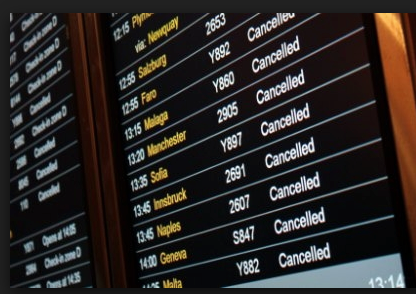
It's become a staple of winter air travel: the weather waiver.
When extreme winter storms threaten to wreak havoc, causing mass flight cancellations throughout the country, airlines routinely waive change fees so that passengers can alter their flight plans without penalty.
But the need for waivers doesn't go away once the snow melts. Powerful thunderstorms, tornadoes, hurricanes and extreme heat waves cause flyers to seek travel waivers in warm-weather months, as well.
On May 29, 2019, a series of storms throughout the US led to hundreds of flight cancellations and delays. Yet, US-based air carriers announced only two weather waivers that day: one for American Airlines passengers traveling through Dallas Fort Worth Airport (DFW) and the other for Southwest passengers going through Denver Airport (DIA).
With hurricane season underway, and the potential for more extreme summer weather to come, The Points Guy (TPG) asked: Are airlines more reluctant to grant travel waivers during the summer than they are in the winter?
Why Airlines Issue Waivers
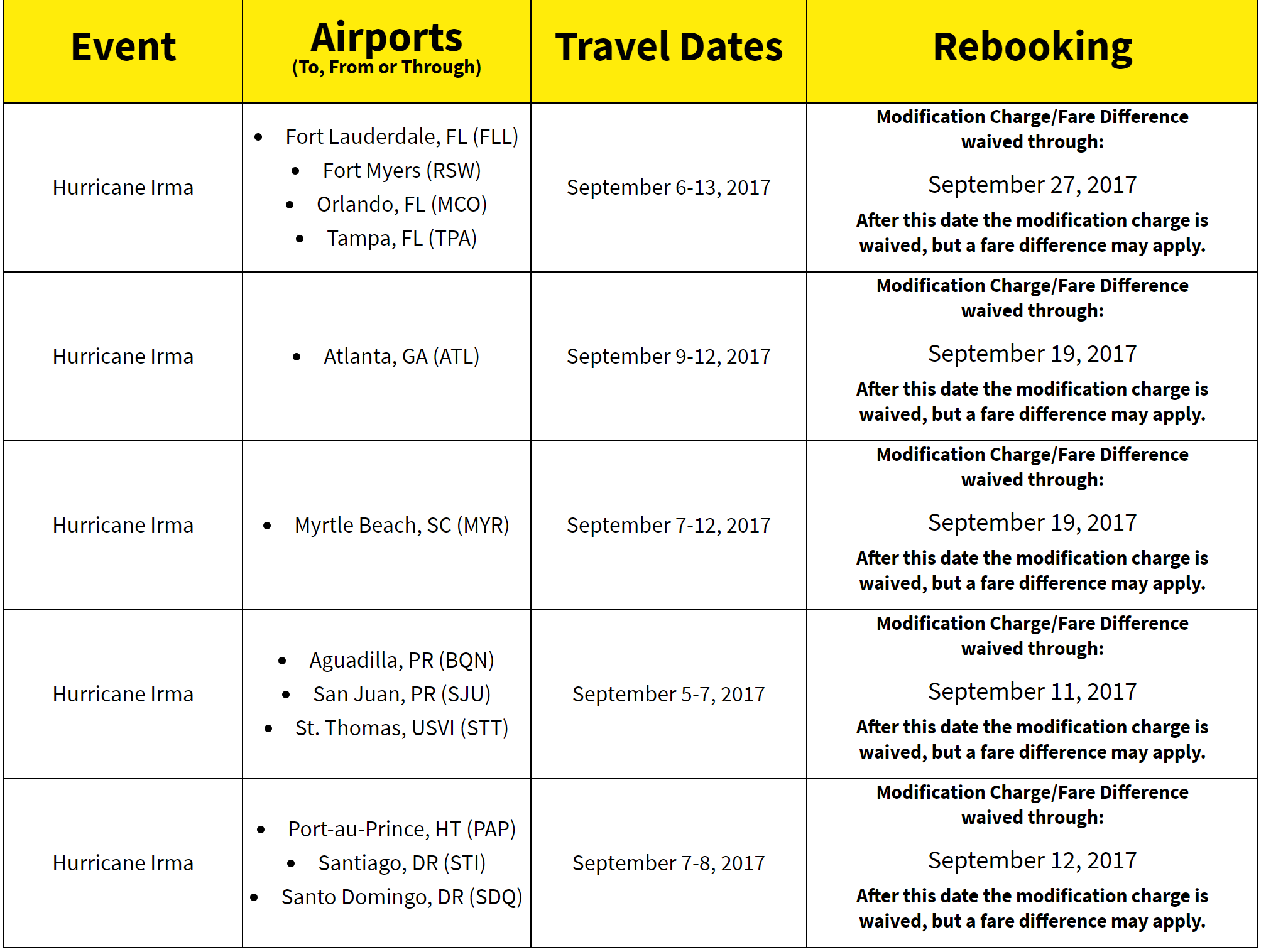
"Airlines only issue waivers when they've determined that there is a high probability that the flight will ultimately be canceled," Michelle Couch-Friedman, executive director of the consumer group Elliott Advocacy, told TPG in an email. Weather is often the culprit behind waivers, but it's far from the only one. Airlines have also announced waivers when confronted with possible labor strikes, State Department travel advisories, or natural disasters.
"When airlines issue a waiver for a flight, passengers usually will get an alert telling them what travel dates are affected by the waiver, how long it's in effect, and which fees the airline is waiving," Couch-Friedman explained. "Sometimes it's just the change fee, sometimes it's the change fee plus the difference in your old and new fares," she added.
Waivers don't just benefit customers. Airlines benefit from them, too. "[Waivers] are pretty much put in place to help the airlines mitigate possible large-scale cancellations based on a large event," aviation expert Kyle Bailey told TPG in an email. The more people who change their flight plans before, say, a major blizzard rolls into town in two days, the fewer people the airlines will have to scramble to reaccommodate after the calamity forces hundreds of flight cancellations.
"It's better for the airline when passengers rebook or reschedule their flight," Bailey said.

Cold-Weather Waivers VS. Warm-Weather Waivers
TPG looked at weather-related waivers issued by the big three legacy carriers — United, American and Delta — going back several months. We found that in the five-month period between May and September of 2018, which we used to define as "warm-weather months," those carriers announced a total of 53 weather waivers for travel in the continental United States, Canada and Mexico.
In contrast, the five-month period between November 2018 and March of this year, our "cold-weather months," yielded 108 weather waivers throughout the region — more than double the number announced in the warm-weather months.
That hot/cold disparity isn't too surprising. A polar vortex that slams half the East Coast and most of the Midwest during the winter is going to cause far more trouble with US air travel than a thunderstorm that rolls through Dallas. Unlike summer storms, big winter storms are often predicted days in advance, giving airlines more time to limit travel disruptions by issuing waivers.
Airlines may have another reason for issuing fewer weather waivers in the spring and summer: they simply can't mess with their super-busy warm-weather travel season. "Waivers only work when airlines have some excess capacity on which to reaccommodate customers who may choose to change their travel plans," aviation industry expert Bob Mann told TPG in an email. "In winter, that slack may exist. In summer, not so much. And with the unanticipated capacity reductions due to the [Boeing 737] MAX grounding, fuhgeddaboudit."
Still, Bailey believes that airlines are on the same level when it comes to waivers. "The travel waivers are pretty straightforward," he said. "I don't believe the airlines are playing games with the issuance of them," he added.
Waiver Tips
Bailey and Couch-Friedman offered the following tips to navigate the world of waivers:
Don't make your own forecast; give the airlines time to act.
Passengers tend to get in trouble with waivers when they start playing weather forecaster Al Roker. "We often get complaints from passengers who have canceled their flights ahead of a waiver based on their own predictions of a cancellation due to bad weather," said Couch-Friedman. "This really isn't a good idea. If you cancel your flight before the airline has issued a waiver or canceled the flight, you'll be on the hook for the cancellation/change fee." She suggests waiting for up to an hour before your flight to see what the airlines do before taking any action yourself.
Be nice.
Suppose a bad weather forecast has you so worried about your scheduled flight, you say, "To heck with the change fees!" — and change your flight — only to have the airline announce a waiver right after you made the change and incurred the fees. Hope is not lost — you may still be able to get your fee waived. "A short, polite request to the airline can often do the trick and get the waiver applied post-cancellation," Couch-Friedman said.
Being nice can also help if the airline hasn't issued a waiver, but you're still wary about flying in predicted bad weather. "Individual waivers are possible," Couch-Friedman explained. "Even if an airline doesn't issue a general waiver, a concise, friendly request to waive change fees when a terrible snowstorm or hurricane is predicated is often granted. The key is to ask politely."
Book with airlines directly.
Requesting waivers from an airline can get tricky if you booked your original flight through a third-party website. "I opt for booking with the airlines directly," Bailey said. "Third-party sites' hands are tied when it comes to waiving fees. Airlines themselves are more flexible." Bailey also suggested booking airline tickets with a major credit card for an added layer of protection in case of a fee dispute. "American Express, Chase, etc. are very competitive and customer-service focused," he said. "For those who don't have the privilege of booking with a credit card, they might want to purchase travel disruption insurance in extreme cases."
The Bottom Line
Airlines appear to issue fewer weather waivers in the summer than in the winter. But waivers help airlines and passengers mitigate the travel headaches caused by bad weather, no matter the season. Take advantage of them, but do so smartly. And politely.
For the latest travel news, deals and points and miles tips please subscribe to The Points Guy daily email newsletter.
TPG featured card

at American Express's secure site
Terms & restrictions apply. See rates & fees.
| 3X | Earn 3X Miles on Delta purchases. |
| 1X | Earn 1X Miles on all other eligible purchases. |
Pros
- Delta SkyClub access when flying Delta
- Annual companion ticket for travel on Delta (upon renewal)
- Ability to earn MQDs through spending
- Various statement credits for eligible purchases
Cons
- Steep annual fee of $650
- Other Delta cobranded cards offer superior earning categories
- Earn 100,000 Bonus Miles after you spend $6,000 or more in purchases with your new Card within the first 6 months of Card Membership and an additional 25,000 bonus miles after you make an additional $3,000 in purchases on the Card within your first 6 months, starting from the date that your account is opened. Offer Ends 04/01/2026.
- Delta SkyMiles® Reserve American Express Card Members receive 15 Visits per Medallion® Year to the Delta Sky Club® when flying Delta and can unlock an unlimited number of Visits after spending $75,000 in purchases on your Card in a calendar year. Plus, you’ll receive four One-Time Guest Passes each Medallion Year so you can share the experience with family and friends when traveling Delta together.
- Enjoy complimentary access to The Centurion® Lounge in the U.S. and select international locations (as set forth on the Centurion Lounge Website), Sidecar by The Centurion® Lounge in the U.S. (see the Centurion Lounge Website for more information on Sidecar by The Centurion® Lounge availability), and Escape Lounges when flying on a Delta flight booked with the Delta SkyMiles® Reserve American Express Card. § To access Sidecar by The Centurion® Lounge, Card Members must arrive within 90 minutes of their departing flight (including layovers). To access The Centurion® Lounge, Card Members must arrive within 3 hours of their departing flight. Effective July 8, 2026, during a layover, Card Members must arrive within 5 hours of the connecting flight.
- Receive $2,500 Medallion® Qualification Dollars with MQD Headstart each Medallion Qualification Year and earn $1 MQD for each $10 in purchases on your Delta SkyMiles® Reserve American Express Card with MQD Boost to get closer to Status next Medallion Year.
- Enjoy a Companion Certificate on a Delta First, Delta Comfort, or Delta Main round-trip flight to select destinations each year after renewal of your Card. The Companion Certificate requires payment of government-imposed taxes and fees of between $22 and $250 (for itineraries with up to four flight segments). Baggage charges and other restrictions apply. Delta Basic experiences are not eligible for this benefit.
- $240 Resy Credit: When you use your Delta SkyMiles® Reserve American Express Card for eligible purchases with U.S. Resy restaurants, you can earn up to $20 each month in statement credits. Enrollment required.
- $120 Rideshare Credit: Earn up to $10 back in statement credits each month after you use your Delta SkyMiles® Reserve American Express Card to pay for U.S. rideshare purchases with select providers. Enrollment required.
- Delta SkyMiles® Reserve American Express Card Members get 15% off when using miles to book Award Travel on Delta flights through delta.com and the Fly Delta app. Discount not applicable to partner-operated flights or to taxes and fees.
- With your Delta SkyMiles® Reserve American Express Card, receive upgrade priority over others with the same Medallion tier, product and fare experience purchased, and Million Miler milestone when you fly with Delta.
- Earn 3X Miles on Delta purchases and earn 1X Miles on all other eligible purchases.
- No Foreign Transaction Fees. Enjoy international travel without additional fees on purchases made abroad.
- $650 Annual Fee.
- Apply with confidence. Know if you're approved for a Card with no impact to your credit score. If you're approved and you choose to accept this Card, your credit score may be impacted.
- Terms Apply.
- See Rates & Fees