Kyle Olsen is the former points and miles reporter at TPG. He specializes in maximizing points and miles, elite status and credit cards so readers travel more comfortably and at a lower cost.
June 14, 2022 • 10 min read
The cards we feature here are from partners who compensate us when you are approved through our site, and this may impact how or where these products appear. We don't cover all available credit cards, but our analysis, reviews, and opinions are entirely from our editorial team. Terms apply to the offers listed on this page. Please view our advertising policy and product review methodology for more information.Editorial disclaimer: Opinions expressed here are the author's alone, not those of any bank, credit card issuer, airline or hotel chain, and have not been reviewed, approved or otherwise endorsed by any of these entities.
Comments
By commenting, you agree to our Community Guidelines to help create a positive space for conversation. The responses below are not provided or commissioned by the bank advertiser, our partners, or The Points Guy (“TPG”). They have not been reviewed, approved, or otherwise endorsed by any of these parties. All responses are submitted by individual contributors, and neither the bank advertiser, our partners, nor TPG are responsible for ensuring that all posts and/or questions are answered.
Related stories
Quick summary
United miles have seen significant devaluations, with TPG valuing them at 1.4 cents each as of June 2024, though some travelers still extract higher value through strategic redemptions.
The Excursionist Perk allows for a 'free' one-way segment within a single region on multicity award bookings, enabling creative and high-value itineraries.
United miles can be redeemed for premium experiences on top Star Alliance partners, such as ANA and EVA Air, particularly on long-haul business-class routes.
Despite higher mileage requirements compared to some other programs, United awards generally avoid fuel surcharges and keep taxes and fees low.
What to consider
Some offers mentioned may no longer be available, so current redemption options should be checked before booking.
United's dynamic award pricing means rates can fluctuate, and partner flights typically require more miles than flights operated by United.
The Excursionist Perk is best booked online, as phone agents may not be familiar with its rules.
What you'll miss from the article
Detailed examples of maximizing United miles value, including step-by-step uses of the Excursionist Perk and comparisons with other loyalty programs.
Generated by AI with support from our editorial team.
Update: Some offers mentioned below are no longer available. View the current offers here.
When I tell like-minded points and miles geeks that I value my United miles at 5 cents apiece, they tell me that I'm dreaming of 2010 — before the Continental merger and subsequent devaluations.
Even so, I value my 500,000 MileagePlus miles at around $25,000 — more than four times TPG's valuations. In this article, I'll discuss why I value United miles so highly and describe how you can start getting 5 cents or more per United mile. Let's dive in.
In short, the first route within a single MileagePlus-defined region that’s different from the region where your itinerary begins and ends is free in the same class as the preceding leg.
So, what does that mean? Let’s take a round-trip business-class flight between Newark and London. If you manage to find business saver space, this route will set you back 120,000 miles.
But the Excursionist Perk gives you a “free” business-class flight between your two transatlantic flights from London to another city in Europe like Brussels, for example.
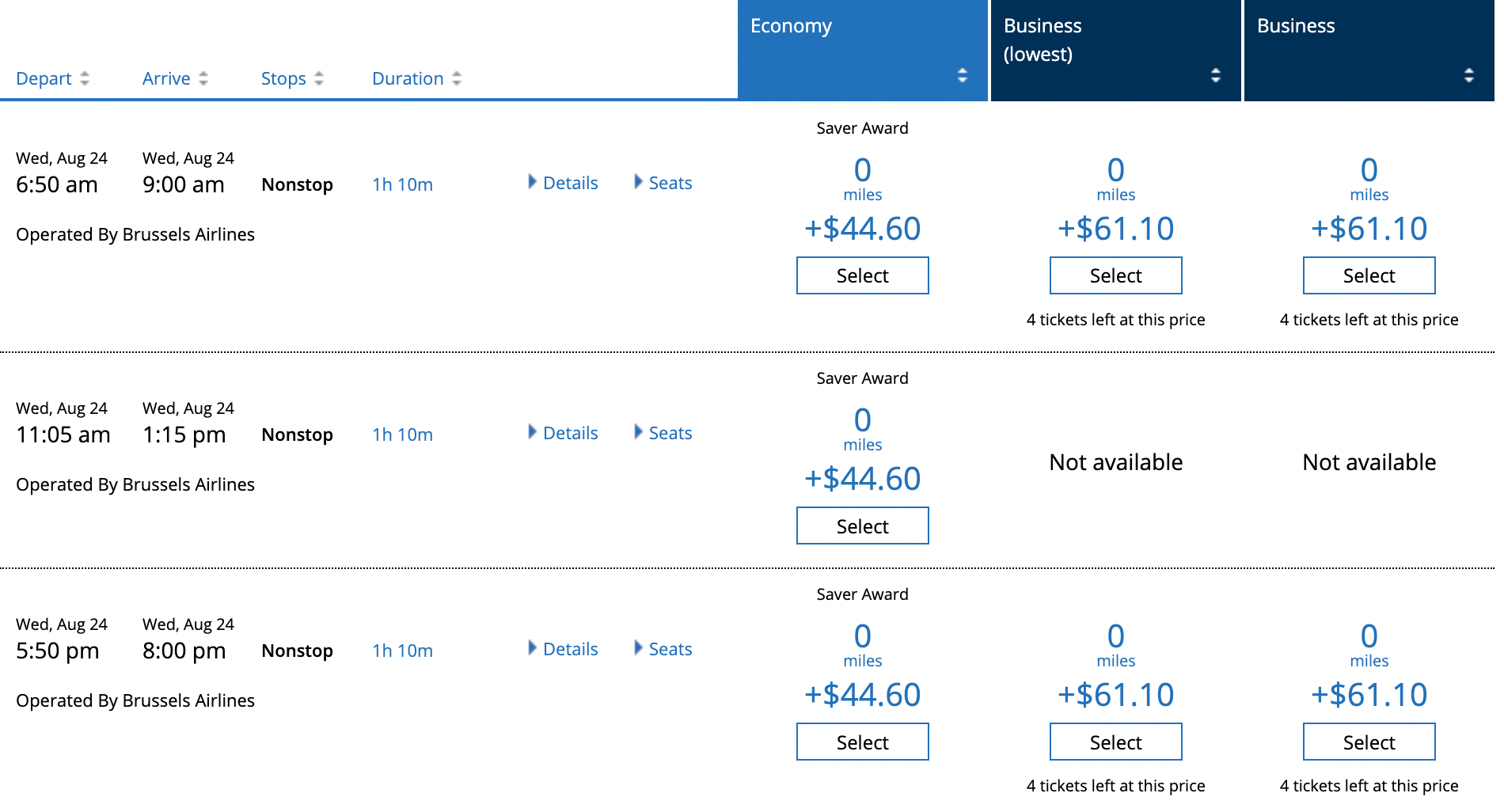
Thanks to the Excursionist Perk, you use the same number of miles as you would have used on a round-trip ticket between Newark and London, but you get to fly to Brussels and then back from Brussels to Newark. As the screenshot below shows, your London-to-Brussels flight would cost you zero miles.
(Screenshot from united.com)
By playing around with the MileagePlus regions, you'll find ways to maximize the Excursionist Perk. You might even find a multi-hundred dollar flight in a lie-flat business-class seat that you can book for zero miles.
One of my favorite uses of the Excursionist Perk was between two transpacific business-class flights. I used it to fly from Singapore to Manila on a Singapore Airlines A350 — one of the best business-class products in the sky.
You can even use the Excursionist Perk to get a "free" interisland flight in Hawaii thanks to United's partnership with Hawaiian Airlines.
For inspiration on the Excursionist Perk, check out our guide. Keep in mind that United's phone agents are largely unaware of the Excursionist Perk. So if you want to book it, you should do so online at united.com using the "multicity" search feature on the homepage.
American AAdvantage has the Oneworld "in" with Qatar's QSuite and Delta SkyMiles has an arrangement with Virgin Atlantic. But that's not to say that Star Alliance is going to leave you with a luxury deficit.
You can redeem United miles on two creme de la creme East Asian carriers: All Nippon Airways and EVA Air.
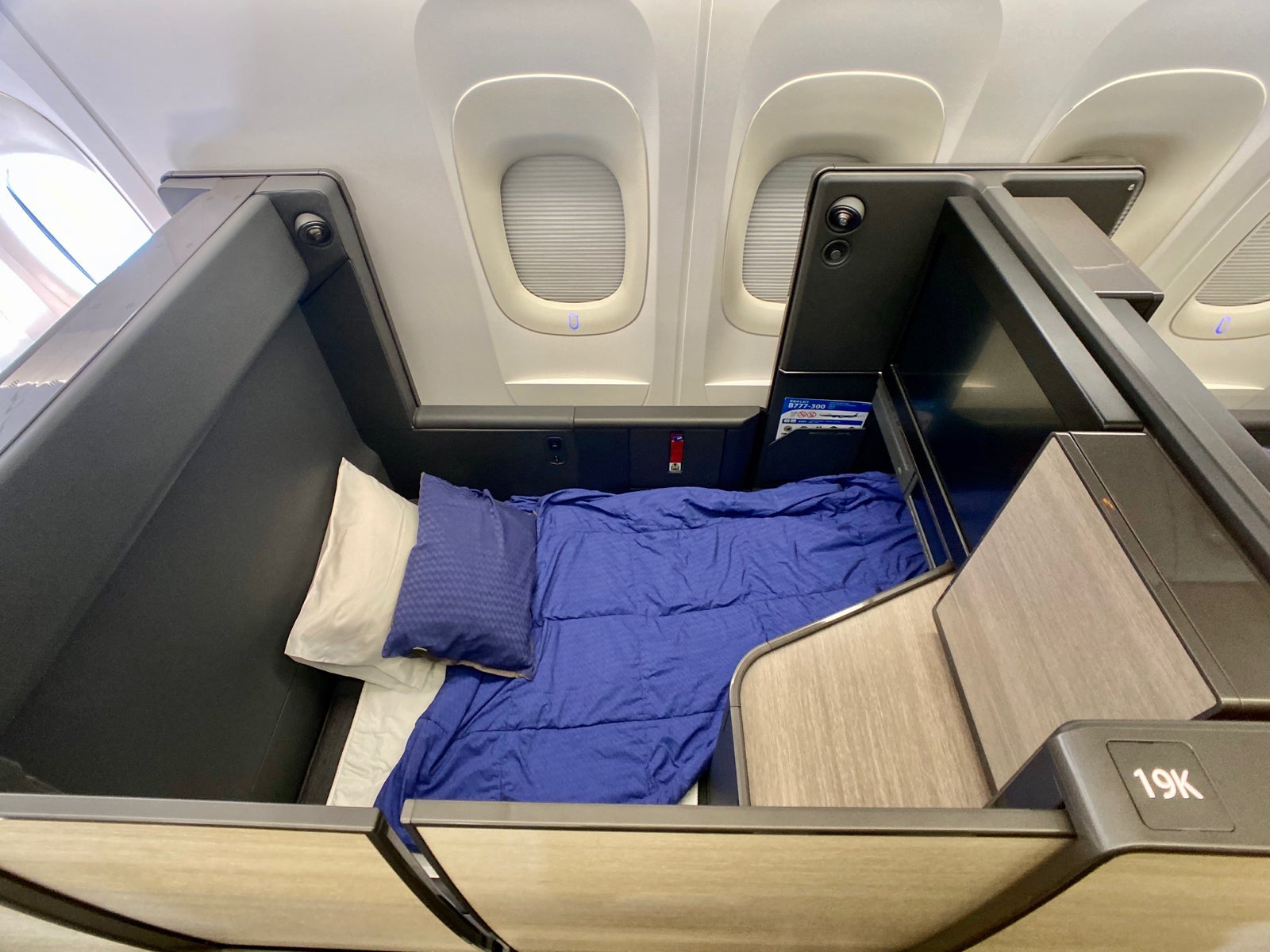
ANA launched a new business-class product called "The Room" right before the pandemic. When TPG senior reporter Zach Griff reviewed it, he disembarked the plane saying that it's "the new gold standard" of international business class, blowing the beloved Qatar QSuite "out of the water."
Not far behind ANA's business class is EVA. When TPG contributor Ethan Steinberg reviewed EVA's business class, flight attendants served him vintage Champagne that retails for $160 and he enjoyed poached lobster and butternut squash with pumpkin ravioli.
(Photo by Ethan Steinberg/The Points Guy)
I plan to check out both airlines later this year on a trip to Thailand and the Philippines. And if you haven't already guessed, I'm using the Excursionist Perk to fly for "free" between Bangkok and Manila on Thai Airways.
Admittedly, it's not cheap. Each transpacific flight costs 99,000 United miles. So my MileagePlus account is taking a 198,000-mile hit for this journey. But when I booked my flight, cash rates were over $15,000 — not a bad redemption, in my view.
With so many United flyers using miles for travel touching the United States, U.S. redemptions have been disproportionately devalued compared to the rest of the world. Last week, one of my friends redeemed 32,500 miles for a one-way economy-class flight between Los Angeles and Chicago. For that number of miles, you could fly in business class from Istanbul to Lisbon on Turkish Airlines or in economy class from London to Johannesburg on Lufthansa.
Some other impressive non-U.S. redemptions include Melbourne, Australia, to Bangkok for 50,000 miles in business class on Thai Airways, Sao Paulo to Buenos Aires, Argentina, for 27,500 miles in business class (or 38,500 miles in first class) on Swiss and Seoul to Tokyo for 8,800 miles in economy class on Asiana or Ethiopian Airlines.
If you're planning a trip outside of the United States, it's worth comparing the cash price of your flight to the award price. Remember, just because you're flying a route that United doesn't operate doesn't mean you can't use your United miles.
Whether you opt for economy or business class, there's still value to be found when using your United miles between the United States and Europe.
In economy class, saver prices from the mainland United States go for around 30,000 miles. And for our Hawaii readers, compared to the mainland, United only charges an additional 5,000 miles to get to Europe from Hawaii. That means you could redeem 30,000 miles for the saver one-way 3,649-mile journey from Newark to Paris or 35,000 miles for the 8,611-mile journey from Hawaii.
In business class, saver award rates, which start at 60,000 miles one-way from the mainland to Europe, are also quite appealing.
I've booked countless economy- and business-class saver awards across the pond. And across these flights, I've routinely hit my goal of 5 cents per mile. Luckily, these award rates haven't been significantly affected by United's dynamic pricing.
Keep in mind that if you decide to travel on a United partner to Europe, you'll spend at least 10% more than the price of an award ticket on United's own metal.
Traveling in Belgium earlier this year, I had to return immediately to the United States due to a family emergency. The urgent nature of the situation meant that I needed to be on the first flight that would get me home to San Francisco.
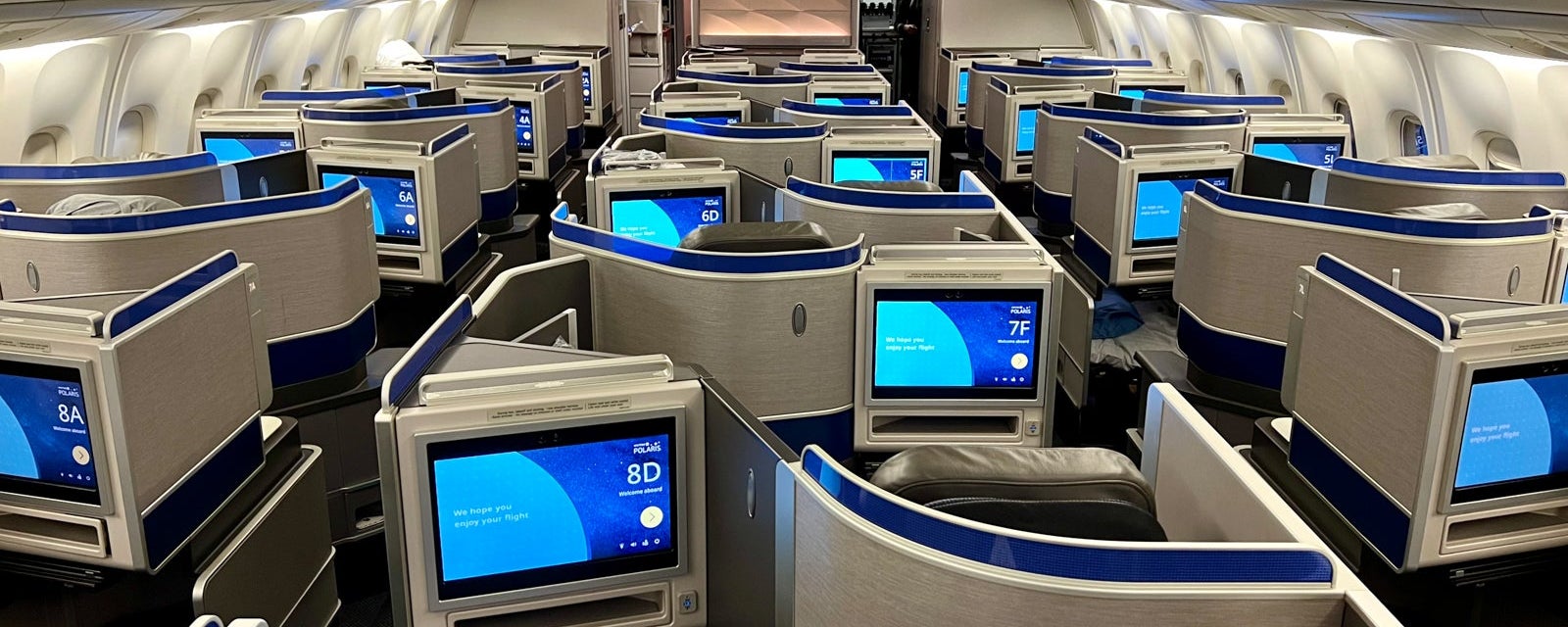
Shopping on my phone for a flight back while en route to the Brussels airport by taxi, I found a United flight in Polaris business class for 62,800 miles connecting through Chicago. Miraculously, this flight was scheduled to depart Brussels in two hours and had the soonest arrival back into San Francisco. The cash price was over $8,000.
Even with the increase in award prices for close-in bookings, this flight was a bargain and I avoided paying for an expensive last-minute paid fare.
From this experience, which could have been exorbitantly expensive, I've learned to keep a healthy "just in case" sum of miles in my MileagePlus account for situations like this.
If you compare Star Alliance awards across different loyalty programs, you'll quickly see that United almost always charges more miles than any other loyalty program. This is what I mean:
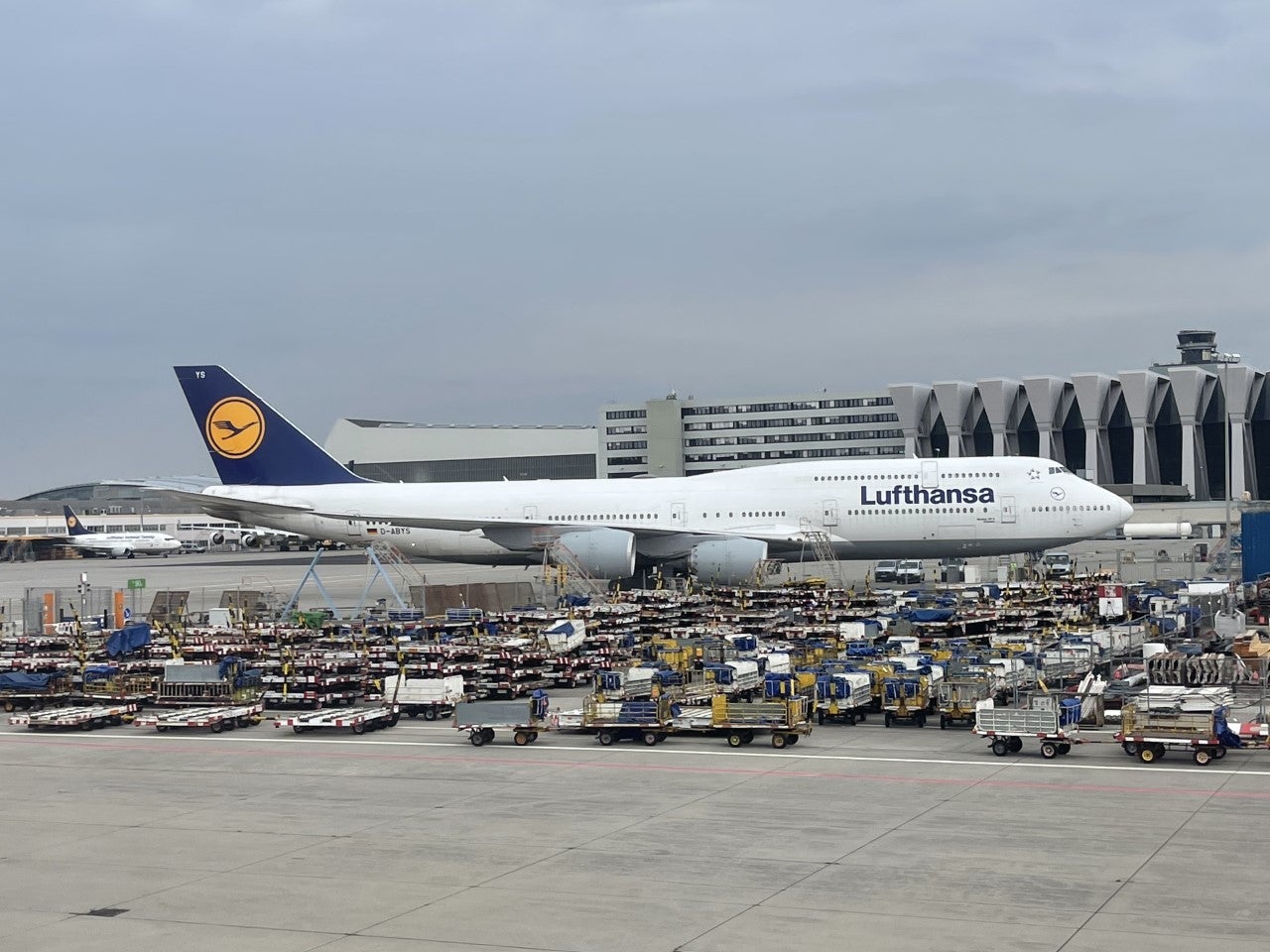
Washington, D.C., to Johannesburg one-way in Luftansa first class: 75,000 Aegean miles, 130,000 Aeroplan points or 143,000 United miles.
Los Angeles to Copenhagen round-trip in SAS business class: 88,000 ANA miles, 140,000 Aeroplan points or 144,000 United miles.
San Francisco to Kahului, Hawaii, one-way in United economy class: 17,500 Singapore Airlines miles or 22,500 United miles.
Even though United prices are on the high end, there are no fuel surcharges when using MileagePlus miles. Also, carrier-imposed fees are either fully waived or heavily reduced.
By the time you start adding taxes and fees to your award ticket's price, you'll quickly see that MileagePlus still delivers strong value.
United Polaris lounge in San Francisco. (Photo by Kyle Olsen/The Points Guy)
Of course, I miss the days of spending 10,000 miles on last-minute flights from Washington, D.C., to San Francisco, which I sometimes booked in college. But in fairness, United miles are easier to earn now than they were in the past. For example, the United Club Infinite Card earns 4 miles per dollar spent on United purchases. That would have been inconceivable before the United-Continental merger when miles were worth more.
Before booking your next United ticket for 30,000 miles, think to yourself for a moment, "Hmmm, for that number of miles, I could get to Europe."
By commenting, you agree to our Community Guidelines to help create a positive space for conversation. The responses below are not provided or commissioned by the bank advertiser, our partners, or The Points Guy (“TPG”). They have not been reviewed, approved, or otherwise endorsed by any of these parties. All responses are submitted by individual contributors, and neither the bank advertiser, our partners, nor TPG are responsible for ensuring that all posts and/or questions are answered.