The Points Guy believes that credit cards can transform lives, helping you leverage everyday spending for cash back or travel experiences that might otherwise be out of reach. That's why we publish a variety of editorial content and card comparisons: to help you find a great card to turn your goals into reality.
Our site may earn compensation when a customer clicks on a link, when an application is approved, or when an account is opened with our partners, and this may impact how or where these products appear. While we don't cover all available credit cards, our editorial team creates and maintains all of the analysis of these cards, and our content is not influenced nor subject to review by any credit card company, bank or partner prior to (or after) publication. Please view our advertising policy and product review methodology for more information.
Advertiser disclosure
The Points Guy believes that credit cards can transform lives, helping you leverage everyday spending for cash back or travel experiences that might otherwise be out of reach. That's why we publish a variety of editorial content and card comparisons: to help you find a great card to turn your goals into reality.
Our site may earn compensation when a customer clicks on a link, when an application is approved, or when an account is opened with our partners, and this may impact how or where these products appear. While we don't cover all available credit cards, our editorial team creates and maintains all of the analysis of these cards, and our content is not influenced nor subject to review by any credit card company, bank or partner prior to (or after) publication. Please view our advertising policy and product review methodology for more information.
Guides
Why points and miles are the best insurance policy
Ethan's been a frequent flier for as long as he can remember, from studying abroad in Paris to moving to Shanghai after graduating college, where he served as TPG's eyes and ears for all things travel in the Asia-Pacific region. If you asked him where he wants to travel next he'd quote Anthony Bourdain and tell you "anytime I'm eating spicy noodles in a bowl, I'm happy."
November 14, 2022 • 14 min read
The cards we feature here are from partners who compensate us when you are approved through our site, and this may impact how or where these products appear. We don't cover all available credit cards, but our analysis, reviews, and opinions are entirely from our editorial team. Terms apply to the offers listed on this page. Please view our advertising policy and product review methodology for more information.Editorial disclaimer: Opinions expressed here are the author's alone, not those of any bank, credit card issuer, airline or hotel chain, and have not been reviewed, approved or otherwise endorsed by any of these entities.
Comments
By commenting, you agree to our Community Guidelines to help create a positive space for conversation. The responses below are not provided or commissioned by the bank advertiser, our partners, or The Points Guy (“TPG”). They have not been reviewed, approved, or otherwise endorsed by any of these parties. All responses are submitted by individual contributors, and neither the bank advertiser, our partners, nor TPG are responsible for ensuring that all posts and/or questions are answered.
Related stories
Quick summary
Points and miles can serve as a valuable backup when travel plans are disrupted by emergencies, sudden changes or inflexible bookings.
Flexible, transferable rewards currencies offer significant advantages, allowing travelers to quickly book alternative flights or hotels across multiple loyalty programs.
Recent policy changes mean most major airlines now waive change and redeposit fees for award tickets, making last-minute adjustments less costly.
Maintaining a healthy balance of transferable points can act as a form of self-insurance, providing peace of mind for unexpected travel needs.
What to consider
Not all travel protections cover every situation, and exclusions may apply, especially for certain emergencies or during global events.
Award ticket flexibility varies by airline and loyalty program, so check policies before booking, especially regarding taxes and fees.
Elite status can provide faster customer support and additional options in urgent scenarios.
What you'll miss from the article
Real-world examples and practical strategies for using points and miles to handle travel disruptions, emergencies and last-minute changes.
Generated by AI with support from our editorial team.
Update: Some offers mentioned below are no longer available. View the current offers here.
Even though the darkest days of the pandemic are hopefully behind us, things can come up that can disturb prepaid hotels and nonrefundable flights.
From sudden family emergencies to unexpectedly being summoned for jury duty, any number of life's obligations can get in the way of inflexible travel arrangements.
Still, most of us who play the points and miles game aim to accrue enough for a "free" flight or hotel reservation. Over my years of travel, points and miles have bailed me out of many costly incidents when things get thrown off.
Here are a few stories where “extra” points saved the day, as well as general tips to help you to do the same.
24 hours to beat the quarantine
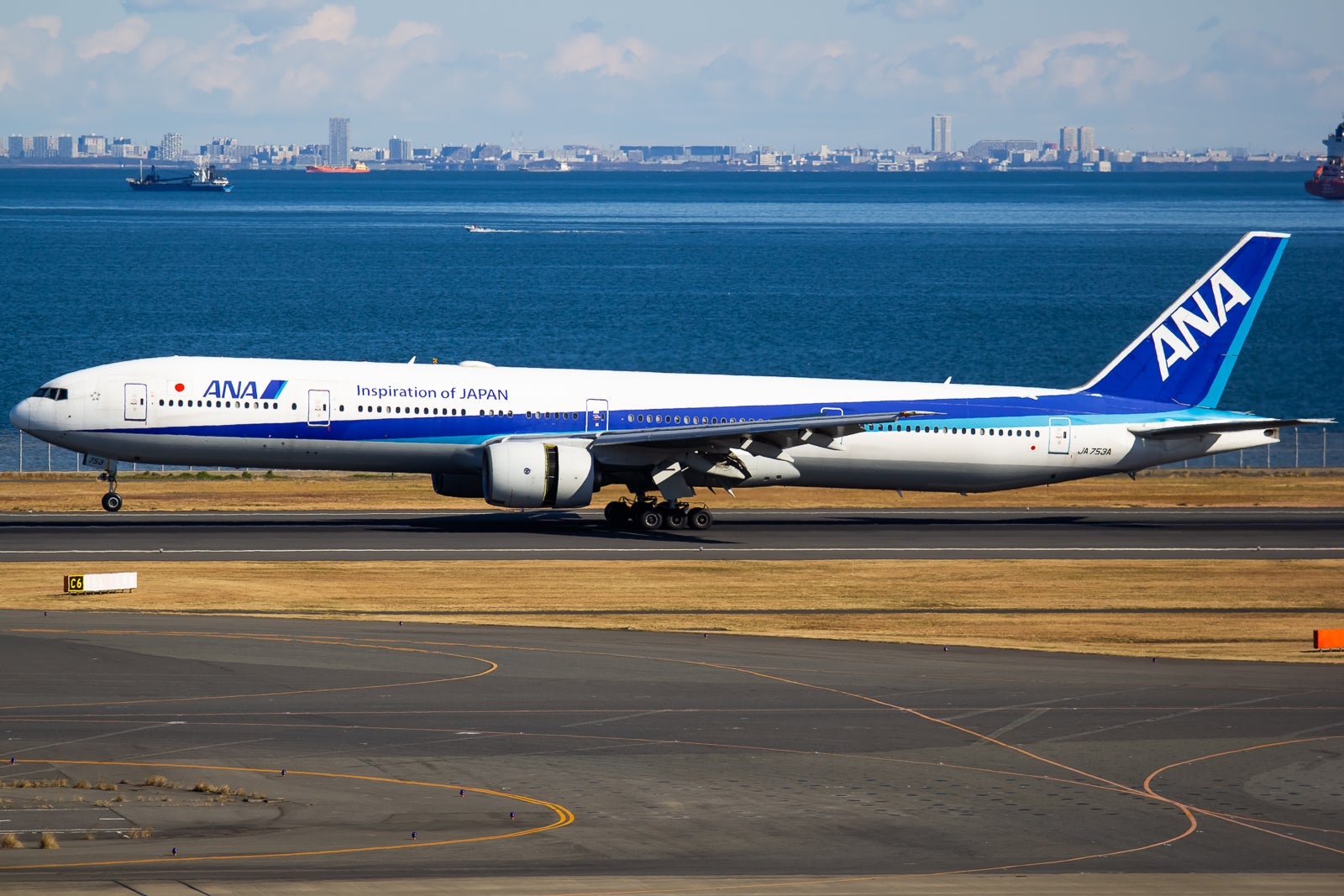
An ANA Boeing 777-300. ETHAN KLAPPER/THE POINTS GUY
At the beginning of 2020, I was living in Shanghai. Due to some health issues in my family, I flew back to the U.S. about five or six times a year.
I had one such trip scheduled for the beginning of March 2020, and I was beyond ecstatic to fly in ANA’s brand-new first class with a quick overnight layover at Tokyo's Haneda Airport (HND).
Booking this trip in the first place required a bit of creativity, as I had to book all five legs separately (three flights, from Shanghai to Tokyo to New York to Washington, D.C., and hotels for the long layovers in Tokyo and New York).
Five days before I was supposed to fly, I learned that Japan was planning to enact two new restrictions to stop the spread of the coronavirus.
First, all flights from China and South Korea would be required to land at Tokyo's Narita International Airport (NRT) or Osaka's Kansai International Airport (KIX), effectively canceling my flight to Haneda.
Second, all travelers arriving from those countries would be forced into a mandatory 14-day government quarantine.
I learned about these changes on a Saturday afternoon, and they were set to go into effect Monday morning. This meant I had less than 24 hours to cancel my entire itinerary and find a faster way to get home.
Avianca's LifeMiles customer service is spotty even in the best of times, and I spent well over four hours getting transferred between different departments. Still, I was much more relaxed, having already secured my new flight.
My girlfriend and I spent most of college chasing each other around the world, with one of us studying abroad for a summer or semester and the other coming out to visit.
When she was accepted to a five-month program in Sydney, it was my turn to start booking flights.
I got incredibly lucky right off the bat: American Airlines had a major fare sale while I had a $500 bump voucher burning a hole in my pocket. I booked a five-day trip from Ronald Reagan Washington National Airport (DCA) to Sydney Airport (SYD) for about $250 out of pocket.
We spent our first day on the move to stay ahead of the jet lag. After going directly from the airport to Bondi Beach, we did the entire 6-kilometer walk to Coogee and thus planned to sleep in the next day.
However, we were awakened at about 8 a.m. by a harsh knock on her dorm room door. An employee of the dorm calmly but sternly reminded her that they have a zero-tolerance guest policy. Never mind that she had her own room within the apartment and cleared my visit with her roommates. I had to leave.
Unwilling to let this derail my trip, I grabbed my suitcase, and we went to brunch to make a game plan.
Sydney is a modern, English-speaking metropolis, but this was one of my first international trips, and there was no one around I could ask for help. All I had at my disposal was a solid stash of Chase Ultimate Rewards points and an uncapped IHG reward night certificate.
One of my close friends from home grew up estranged from her father. She had a rough childhood but always tried to make the best of it.
We drifted apart a bit once we left for college, but one day I got a call from her saying her dad had turned up in a Veterans Affairs hospital in bad shape. He had days, maybe just hours, and she desperately wanted one last chance to try to patch things up.
She knew nothing about my points hobby but was asking if I had any idea how she could get from Washington, D.C., to Columbus, Ohio, in the shortest time possible.
Without missing a beat, I whipped out my computer and found her a Southwest flight that left in just two hours. I transferred points instantly from my Chase Sapphire Preferred, and she was with her dad for his last few days.
The flight was fairly cheap, no more than $200, but even today, I regard this as my best redemption. Vacations and new experiences are an incredible perk of this hobby, but our nearest and dearest come first. I was so fortunate to be able to help in this situation.
United Boeing 787-9 Polaris business class. KYLE OLSEN/THE POINTS GUY
Earlier this year, TPG points and miles reporter Kyle Olsen and his mom urgently needed to return to San Francisco International Airport (SFO) from a European trip.
His original return trip from Europe was booked using credit card points transferred to Flying Blue for a KLM flight. Unfortunately, Flying Blue had no acceptable flight options with two seats from Brussels Airport (BRU) on such short notice.
When he searched on Google Flights for a new flight, one-way airfare rates back to San Francisco were around $3,000 per person in economy class. However, United Airlines had a flight to SFO via Chicago's O'Hare International Airport (ORD) leaving in a few hours.
While the cash rate was laughably high, there were two Polaris business-class seats for just 62,800 MileagePlus miles plus around $50 in taxes and fees. Economy-class seats were selling for 70,000 miles.
With around $100 out of pocket, Kyle booked the two seats back to San Francisco in business class for a total of 125,600 miles for him and his mom. Those two seats using cash would have cost around $15,000.
Kyle called Flying Blue after returning home and his miles were redeposited without penalty and all taxes and fees were refunded.
In this case, points and miles saved the day while the flexibility of award tickets in a pandemic-era travel world meant Kyle could change his flights without losing points or cash. Nowadays, most major U.S. airlines and many European carriers have dropped cancellation and change fees for all award tickets. In turn, this can save you hundreds (if not thousands) of dollars when something happens before a trip or when you're already on the road.
Most Cathay Pacific first-class cabins have just six seats. SAMANTHA ROSEN/THE POINTS GUY
Stock traders often discuss hedging their bets, using complex tools like options and derivatives to limit losses if the market goes haywire.
While losing when you’re getting free flights is almost impossible, it never hurts to have a backup plan to protect yourself. This is especially true in the following circumstances:
After I used up my 5/24 slots with Chase, I shifted my strategy to collecting Starwood Preferred Guest points (before the merger with Marriott) and Alaska miles.
My sights were set on Cathay Pacific first class for a trip to Thailand, but I needed to leave the U.S. on one or two specific days.
I couldn’t find a single Cathay award seat that worked for me. So I acted like a trader and booked a hedge: For 130,000 United miles, I locked in an ANA first-class flight from O’Hare International Airport (ORD) to Narita International Airport (NRT) with a connecting flight in Thai first class to Bangkok's Suvarnabhumi Airport (BKK).
This backup plan would get me where I needed to be (and quite comfortably at that) should I need to use it.
That didn’t happen since the award I wanted became available a week or two before my trip. At the time, I paid $100 (as a United Premier Silver member) to cancel my original booking and locked in my ideal routing. But if this happened in 2022, I would have paid nothing out of pocket as United has since eliminated all award change and redeposit fees.
With the United redeposit fee, I paid $125 (instead of just $25 in taxes) for an $11,000-plus Cathay Pacific ticket. More importantly, if that award hadn’t opened up, I would’ve still made it to Thailand on time and in comfort.
This is a strategy I continue to apply with my award bookings whenever possible, and it's gotten even easier since the pandemic caused most airlines to get rid of all change and cancellation fees.
The first (entirely my fault) was that we forgot to rent a car. Naha is a lovely city, but if you’re going to Okinawa to scuba dive like my girlfriend was, you’ll be making plenty of trips to the island's north side.
With no public transit outside of Naha and no car of our own, we were easily spending $60-90 each way on cab fares. Then there was the other thing ...
I still have a lot of trouble converting between Fahrenheit and Celsius, so when our Airbnb in Okinawa was sweltering hot every day, I didn’t read too much into it. I blamed it on our tropical location in the middle of July and turned the air conditioning in our room up as high as it would go.
However, by the third day, it was getting pretty unbearable — we even stopped showering in the morning to get out of the house faster.
We finally found the thermostat about halfway through our stay, and I will never forget the number on display: 43. That’s right; our host had it set to 43 degrees Celsius or about 110 degrees Fahrenheit.
Unfortunately, we couldn’t convince our Airbnb host to turn it down to a less sweltering temperature. Airbnb customer support also couldn’t help, but we knew we had to get out of there.
As with my experience in Sydney, we needed to move on as quickly as possible without ruining our trip, so I quickly searched for award availability at nearby hotels.
As chance would have it, I found award space at the stunning Ritz-Carlton, Okinawa. I booked us two nights and got right back to enjoying some of the clearest water I’ve ever seen.
Of course, these stories are all specific to my experiences. However, there are a few key takeaways that can help ensure you have this “insurance” policy for your next trip.
Transferable points are key
We discuss transferable points here at TPG all the time, and there’s a reason: They allow you incredible flexibility when things go awry.
What if I didn’t have Chase points in Sydney? I’m sure I could’ve found an inexpensive hostel, but that would’ve meant money out of my pocket.
This type of rewards currency allows you to wait until you’re ready to book, and since many Chase and Amex transfers are instantaneous, you hopefully won’t be left waiting.
As your flight's departure date narrows in, your flight's price tends to increase.
After the major airlines discontinued change fees and United announced that it would eliminate award redeposit fees, points and miles have become an even better contingency plan, even with more programs shifting away from fixed award charts in favor of dynamic pricing.
In the grand scheme, most of my stories were hiccups that ended up being learning experiences, no matter how stressful they may have felt in the moment. This same idea of using travel rewards to minimize your costs for last-minute trips also applies to more serious circumstances.
If you have an emergency, points and miles can help you get where you need to be as fast as possible. Even if your credit card offers a travel insurance policy, it doesn't hurt to take matters into your own hands by “self-insuring” with your travel reward balances to protect against the unexpected.
Additional reporting by Kyle Olsen.
Comments
By commenting, you agree to our Community Guidelines to help create a positive space for conversation. The responses below are not provided or commissioned by the bank advertiser, our partners, or The Points Guy (“TPG”). They have not been reviewed, approved, or otherwise endorsed by any of these parties. All responses are submitted by individual contributors, and neither the bank advertiser, our partners, nor TPG are responsible for ensuring that all posts and/or questions are answered.