The show must go on: Broadway could reopen this fall

They say the show must go on — but when?
Broadway is not only a cultural icon but also a major economic force that generates an estimated $14.7 billion annually and supports more than 96,000 jobs in New York City. It has weathered decades of challenges, from uniting the city after the attacks on Sept. 11, 2001, to persevering through hurricanes and union shutdowns — but nothing has stopped it like the silent and deadly COVID-19 pandemic.
After decades of rafter-shaking evenings in the 41 theaters that dot Times Square, March 12, 2020, was the unceremonious end of Broadway's pre-COVID-19 era.
What started as a four-week break to stop the spread quickly evolved into a year of empty theaters, widespread unemployment and the driving questions of when and how Broadway will ever return to normal.
As both a theater producer and lover of performing arts, I rarely missed an opportunity to see a Broadway show before the pandemic. There was nothing that could match the joy of escaping into a tightly packed theater, sharing the experience of artists telling a story in real time.
With the unceremonious Broadway shutdown, I too was out of work and all my tickets became mere bookmarks. Driven by the desire to get back to producing and into the seats of theaters as soon as possible, I spoke with industry leaders about how we get out of this mess and where we go from here.
When will Broadway reopen?
As for the earliest we might be able to come and meet those dancing feet, Charlotte St. Martin — the president of Broadway League, the industry's national trade association — says she's "cautiously optimistic we'll be back in early fall."
On Thursday, New York City Mayor Bill de Blasio announced during a press conference a safety plan that could lead to the reopening of Broadway and off-Broadway productions by September. And according to The Hollywood Reporter, De Blasio has indicated that a combination of COVID-19 vaccination and testing requirements could be part of Broadway's comeback.
For now, St. Martin says a few shows are "tentatively holding September dates for reopening or opening," with a few more scheduled in October and November.

But St. Martin knows that things can change quickly, adding, "If some miracle happened — the [COVID-19] incidence rate went down dramatically, the vaccination rate went up dramatically — [Broadway's return] could be sooner. But as of right now, we're looking at September."
Related: A beginner's guide to New York City: Everything you need to know for your first trip
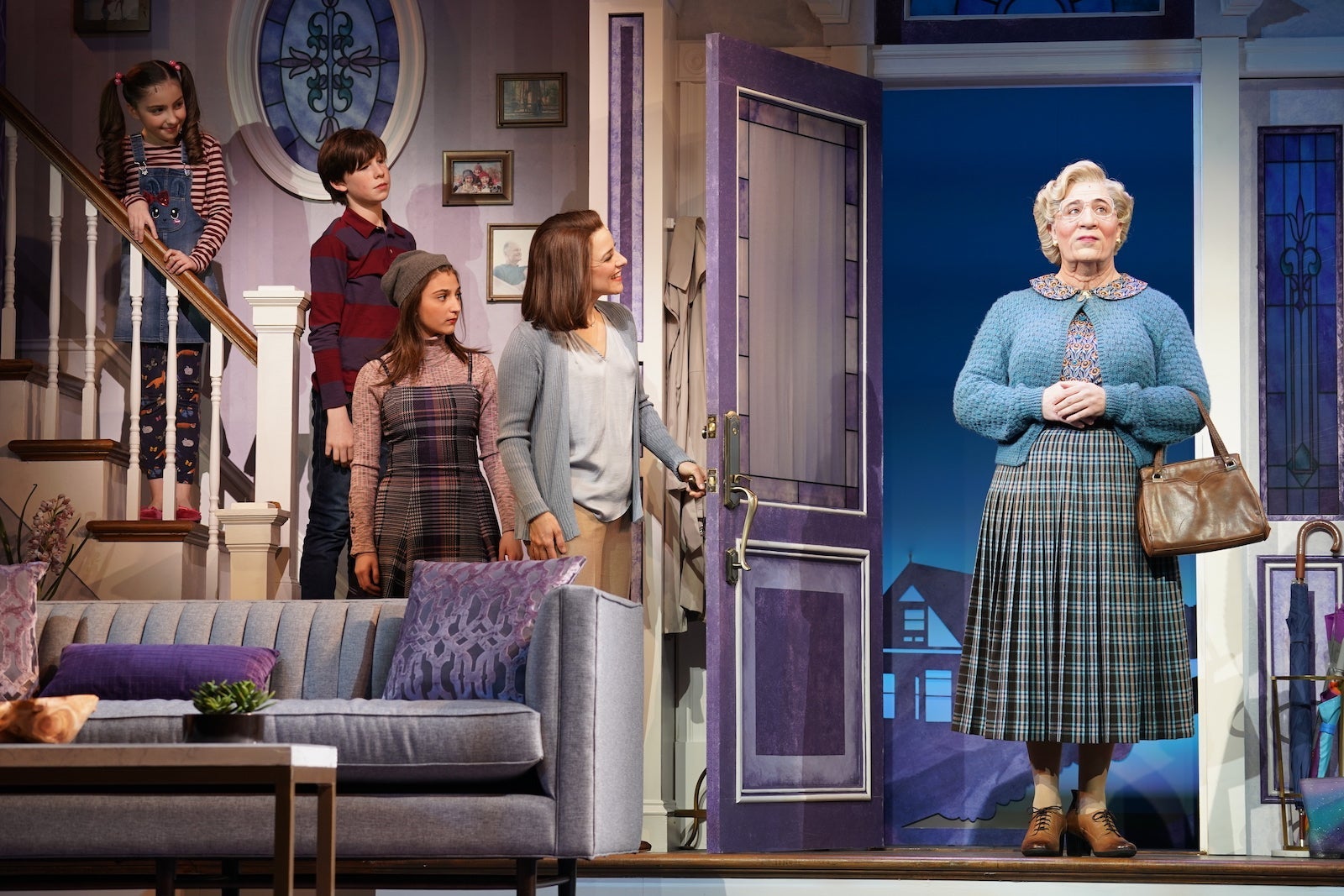
That's because "you just don't turn on the switch," explained Broadway producer Kevin McCollum, the lead on two new musicals that were in previews in March 2020, "Mrs. Doubtfire" and "Six."
Currently, Broadway is shut down under the guidance of New York Gov. Andrew Cuomo's limited indoor performance capacity regulations. The Broadway League is offering returns and exchanges on all Broadway tickets for performances through May 30, 2021, and a new on-sale date has yet to be determined.
McCollum said the two shows he's producing "are waiting for the next day when we think we can go on sale. The rest can be built off of that."
Once the governor's office gives the green light to raise the curtains, it's not technically all systems go. McCollum describes it as "more of a rehabilitation than a jumpstart."
Related: Use these cards to maximize your entertainment spending in 2021
Every Broadway show varies greatly in size and scope, whether it's a play with a cast of one or a large-scale musical with more than 30 actors on stage, over a dozen musicians in the pit and an extensive staff operating the front of house and backstage areas.
"A lot depends on the muscle memory of the cast," St. Martin speculates. If a production such as "The Phantom of the Opera" or "The Lion King" got most of their cast back, she said, "They probably have more muscle memory than those shows that had only been playing a [couple of] months."
Each show needs adequate lead time to get all aspects of its production in order, particularly in the sharing and use of limited production resources. As an industry confined to the Times Square district, there are only a few Broadway scenic and costume shops and rehearsal spaces available that all shows will rely on to get back up and running.
As for the finances to bring Broadway back, St. Martin estimates that "it will cost the smallest shows around $1.5 million, and more like $4 to $5 million for most just to come back."
Once the show is open, there's concern about who will attend — and whether or not they'll be safe.
The lead producer of "Dear Evan Hansen," Stacey Mindich, understands the risks of reopening as well as the challenge of getting it right the first time out.

Mindich says questions pervade the industry about how new life and work arrangements will change Broadway: "With a lot of New York office buildings closed and people working from home, who's going to be there on weeknights? Who's going to be there on weekends? It's a changed landscape."
And unlike sporting events, it's much harder for theaters to operate at reduced capacity. That's why sports stadiums, indoor arenas and performance venues across the country have been able to slowly reopen, that's unfeasible for Broadway.
"Broadway's primary economic model is ticket sales," explained Broadway producer Ken Davenport. "Sports stadiums are able to operate at limited capacity because they have other sources of revenue, including giant television deals. Broadway doesn't have that."
"If you're the stadium owner and the team owner, you can rely on concession sales. Producers can't rely on concession sales. We have nothing but ticket sales. Cut down our capacity to 25% and you're significantly reducing our ability to actually be able to pay people."
Of course, there's also the ongoing threat of the COVID-19 pandemic.
"We are in the business of gathering; sharing droplets by creating emotion, tears, laughter, surprise, gasps and tension which makes you breathe harder," said McCollum. "We create all that. That's where the virus, if it's not eradicated, can find [a] host."
What's to come this summer?
For people who are angling to get back to the theater, New York City is starting to reawaken. And in some ways, theater is making its comeback, too.
NY PopsUp is a state-run initiative to restart live performances through a series of unannounced concerts across New York City and New York state from now until Labor Day. While there's little to no hint as to where these shows will be or when, Twitter and Instagram are the best way to keep up with the performances.
And the Public Theater's Shakespeare in the Park reopens at the outdoor Delacorte Theater this summer with "Merry Wives," Jocelyn Bioh's "fresh and joyous adaptation" of Shakespeare's "Merry Wives of Windsor," which runs from July 5 to Aug. 29.
Oskar Eustis, artistic director of the Public, told TPG by email the reopening will be "a celebration of New York's remarkable grit, drive, resilience and joy." All shows at the Delacorte are free.
Other performing arts highlights coming this summer to New York City include Lincoln Center's Out Of Doors festival, which will bring its campus back to life with a series of outdoor, socially distanced performances. And, across the Hudson, the Brooklyn Academy of Music and Playwrights Horizons will stage a new play in the Brooklyn Botanic Garden.
When Broadway is able to finally return, the lead producer of "Jagged Little Pill," Eva Price, looks forward to "those first nights back that are going to be electric ... hundreds of people at every Broadway theater — the star of the show, the usher, the head electrician, the wardrobe supervisor, everyone involved in the creating and running of a show — will be making their triumphant return."
TPG featured card

at Capital One's secure site
Terms & restrictions apply. See rates & fees.
| 5X miles | Earn 5X miles on hotels, vacation rentals and rental cars booked through Capital One Travel |
| 2X miles | Earn unlimited 2X miles on every purchase, every day |
Pros
- Stellar welcome offer of 75,000 miles after spending $4,000 on purchases in the first three months from account opening. Plus, a $250 Capital One Travel credit to use in your first cardholder year upon account opening.
- You'll earn 2 miles per dollar on every purchase, which means you won't have to worry about memorizing bonus categories
- Rewards are versatile and can be redeemed for a statement credit or transferred to Capital One’s transfer partners
Cons
- Highest bonus-earning categories only on travel booked via Capital One Travel
- LIMITED-TIME OFFER: Enjoy $250 to use on Capital One Travel in your first cardholder year, plus earn 75,000 bonus miles once you spend $4,000 on purchases within the first 3 months from account opening - that’s equal to $1,000 in travel
- Earn unlimited 2X miles on every purchase, every day
- Earn 5X miles on hotels, vacation rentals and rental cars booked through Capital One Travel
- Miles won't expire for the life of the account and there's no limit to how many you can earn
- Receive up to a $120 credit for Global Entry or TSA PreCheck®
- Use your miles to get reimbursed for any travel purchase—or redeem by booking a trip through Capital One Travel
- Enjoy a $50 experience credit and other premium benefits with every hotel and vacation rental booked from the Lifestyle Collection
- Transfer your miles to your choice of 15+ travel loyalty programs
- Top rated mobile app