Why I'll always check the VIN before renting a car


Before I bought a used car last year, I'm not sure I'd ever heard of a vehicle identification number (VIN). But between shopping for a car, reviewing accident and service history reports and getting the vehicle insured, registered and inspected, I became very familiar with this 17-character string of digits and letters.
A car's VIN is basically its social security number — an alphanumeric thumbprint, if you will — and no two vehicles have the same identifying code.
This number can tell you a lot about a car, from where and when it was last serviced to the number of owners, damage history, manufacturer recalls and more.
Unless you're shopping for a previously owned vehicle, you may not think twice about a car's VIN and the type of information it can reveal.
But after a recent car rental experience, I've decided I won't even rent a car for a weekend without checking the VIN first.
Knowing your vehicle

For a recent trip to the Catskills of New York, my friend and I decided to rent a four- or all-wheel-drive vehicle. There was snow in the forecast, and we were worried about driving on mountainous back roads in my little sedan.
Getting the exact vehicle you request is almost never a guarantee when you rent a car, but we decided to make a game-time decision depending on what was available when we arrived at the car rental agency.
I was given the key to a 2020 Jeep Compass (a compact SUV that's available with either a front- or four-wheel drivetrain) and confirmed with the agent multiple times that the car I was renting was the latter.
And, after a quick exterior inspection of the vehicle, off we went.

As expected, it snowed during our trip. And one night, while going to pick up dinner, the vehicle really struggled.
I grew up in the Northeast, and though every vehicle has its limits, I was pretty disappointed in the car's performance. There wasn't that much snow at the time, and it just wasn't handling like the four- and all-wheel drive vehicles I've driven in the past. My friend, who was behind the wheel, could feel it losing traction.
And when we got stuck in our hotel's moderately steep driveaway, I started to get really suspicious. Perhaps this car required the four-wheel-drive to be manually activated? But it had no obvious "snow mode" or differential lock to engage.
My friend left to get assistance, and I stayed with the car in the passenger seat. And then the car began to slide backward. I launched myself into the driver's seat and slammed on the brake. (Confession: My first instinct was to open the door and jump out. But I had a change of heart.) This, I thought, must be why the highway is plastered with signs warning drivers to never abandon disabled vehicles.
We had to get help to get the car out of the driveway, and decided it wasn't safe to drive the vehicle out until after the snow had stopped and the roads were clear, forcing us to spend an extra night in the Catskills — bummer! But this was not the rugged, all-weather adventure mobile I expected, or thought I paid for.
Related: How AutoSlash can save you up to 77% on car rentals
Investigating the VIN
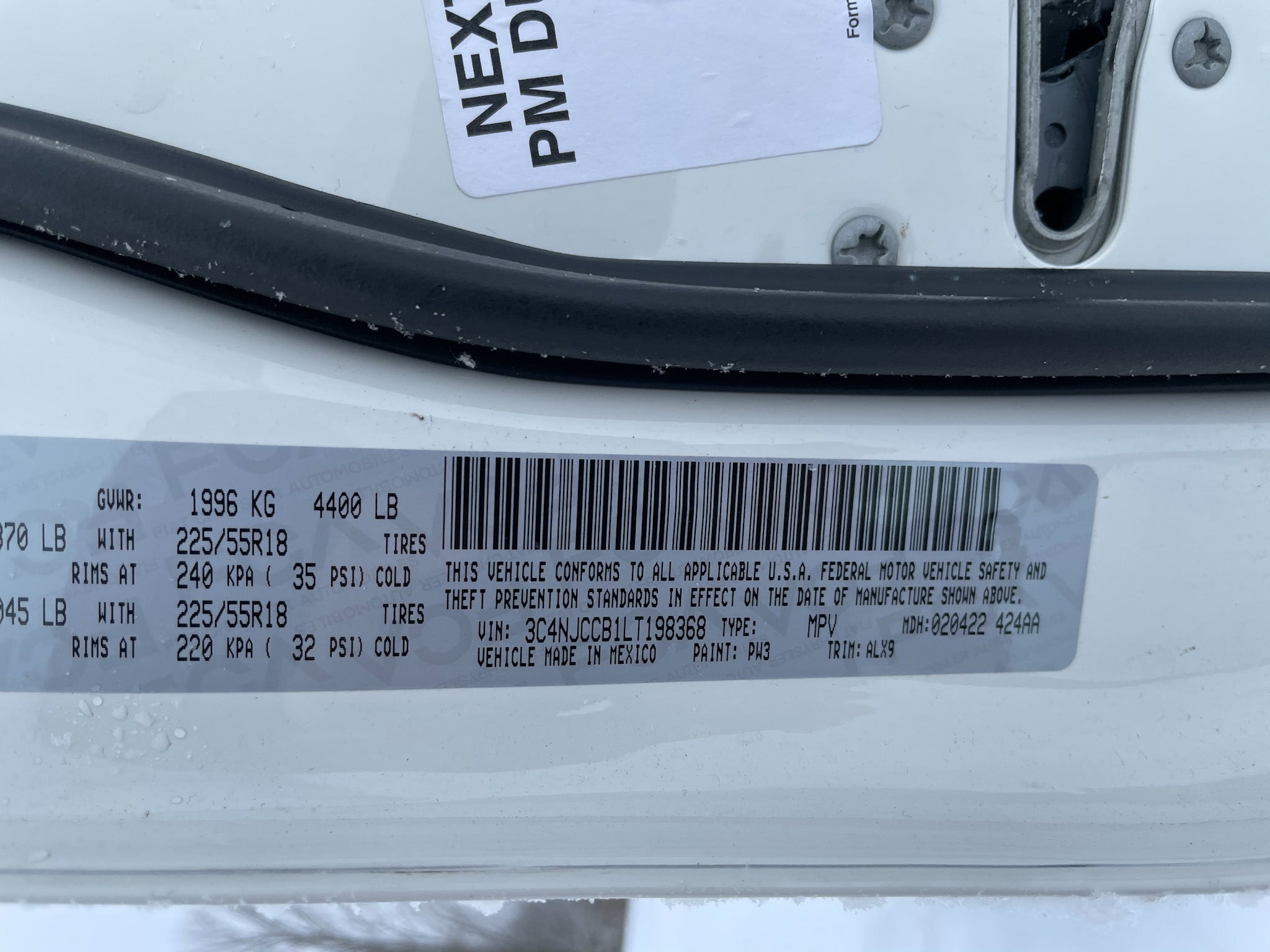
The next morning, I went out to find the car's VIN so I could look up all its specifications.
Depending on the vehicle, the VIN can be located in any number of spots. In my car, it's on both the front of the dashboard and on a sticker on a door jamb. But you could even find it on the engine block or steering column, among other places.
I found the Jeep's VIN on the driver's side door jamb. Later, I realized the VIN was also in my rental agreement, so you can probably ask the car rental agency for this information and save yourself some time.
Using a quick, free VIN-check service, I was able to ascertain two things: The Jeep I'd rented was a front-wheel-drive vehicle. And there had also been a recall on the windshield wipers.
Related: Best credit cards for rental car coverage
Looking at even an abbreviated VIN report before signing a rental agreement can give you important information about the vehicle you're about to drive out of the lot. Had I done this before, I would have known the agent was misinformed, and that I was paying for a front-wheel-drive vehicle (which I already own, thank you very much). I would have also had access to important safety and recall information.
As recently as 2015, it was legal to rent out a car with an open, unrepaired recall. That's no longer the case, but it doesn't hurt to be proactive as a renter and confirm that any recalls have been addressed. Plus, just because a car has been repaired doesn't mean it won't have issues down the, ahem, road. As a driver, it's important to know what types of issues you might encounter during the drive — even if it's something as simple as a loose windshield wiper.
Related: How to never pay full price for a rental car
Bottom line
We've all been there: You're eager to hit the road, and you give your rental car a cursory glance to make sure it has four wheels before signing the rental car agreement and taking off. Maybe you don't even check that the car has a full tank of gas, as promised (guilty).
But it's important to take a breath and give the vehicle a thorough inspection before your trip. If drivetrain is your specific concern, you can (and should) always first look to see if the car has an emblem that specifically says AWD (all-wheel-drive), 4WD or 4x4 (four-wheel-drive). Usually, you'll see this on the rear of a vehicle.
Personally, I'll always use the car's VIN to ascertain exactly what type of vehicle I'm renting, and if there are any other safety concerns I should know about. After all, if I'd returned the car with a wobbly windshield wiper, it's a lot easier to convince the agent it's not your fault if you can point to the car's recall history.
Feature photo by Colors Hunter - Chasseur de Couleurs / Getty Images.
TPG featured card

at American Express's secure site
Terms & restrictions apply. See rates & fees.
| 3X | Earn 3X Miles on Delta purchases. |
| 1X | Earn 1X Miles on all other eligible purchases. |
Pros
- Delta SkyClub access when flying Delta
- Annual companion ticket for travel on Delta (upon renewal)
- Ability to earn MQDs through spending
- Various statement credits for eligible purchases
Cons
- Steep annual fee of $650
- Other Delta cobranded cards offer superior earning categories
- Earn 100,000 Bonus Miles after you spend $6,000 or more in purchases with your new Card within the first 6 months of Card Membership and an additional 25,000 bonus miles after you make an additional $3,000 in purchases on the Card within your first 6 months, starting from the date that your account is opened. Offer Ends 04/01/2026.
- Delta SkyMiles® Reserve American Express Card Members receive 15 Visits per Medallion® Year to the Delta Sky Club® when flying Delta and can unlock an unlimited number of Visits after spending $75,000 in purchases on your Card in a calendar year. Plus, you’ll receive four One-Time Guest Passes each Medallion Year so you can share the experience with family and friends when traveling Delta together.
- Enjoy complimentary access to The Centurion® Lounge in the U.S. and select international locations (as set forth on the Centurion Lounge Website), Sidecar by The Centurion® Lounge in the U.S. (see the Centurion Lounge Website for more information on Sidecar by The Centurion® Lounge availability), and Escape Lounges when flying on a Delta flight booked with the Delta SkyMiles® Reserve American Express Card. § To access Sidecar by The Centurion® Lounge, Card Members must arrive within 90 minutes of their departing flight (including layovers). To access The Centurion® Lounge, Card Members must arrive within 3 hours of their departing flight. Effective July 8, 2026, during a layover, Card Members must arrive within 5 hours of the connecting flight.
- Receive $2,500 Medallion® Qualification Dollars with MQD Headstart each Medallion Qualification Year and earn $1 MQD for each $10 in purchases on your Delta SkyMiles® Reserve American Express Card with MQD Boost to get closer to Status next Medallion Year.
- Enjoy a Companion Certificate on a Delta First, Delta Comfort, or Delta Main round-trip flight to select destinations each year after renewal of your Card. The Companion Certificate requires payment of government-imposed taxes and fees of between $22 and $250 (for itineraries with up to four flight segments). Baggage charges and other restrictions apply. Delta Basic experiences are not eligible for this benefit.
- $240 Resy Credit: When you use your Delta SkyMiles® Reserve American Express Card for eligible purchases with U.S. Resy restaurants, you can earn up to $20 each month in statement credits. Enrollment required.
- $120 Rideshare Credit: Earn up to $10 back in statement credits each month after you use your Delta SkyMiles® Reserve American Express Card to pay for U.S. rideshare purchases with select providers. Enrollment required.
- Delta SkyMiles® Reserve American Express Card Members get 15% off when using miles to book Award Travel on Delta flights through delta.com and the Fly Delta app. Discount not applicable to partner-operated flights or to taxes and fees.
- With your Delta SkyMiles® Reserve American Express Card, receive upgrade priority over others with the same Medallion tier, product and fare experience purchased, and Million Miler milestone when you fly with Delta.
- Earn 3X Miles on Delta purchases and earn 1X Miles on all other eligible purchases.
- No Foreign Transaction Fees. Enjoy international travel without additional fees on purchases made abroad.
- $650 Annual Fee.
- Apply with confidence. Know if you're approved for a Card with no impact to your credit score. If you're approved and you choose to accept this Card, your credit score may be impacted.
- Terms Apply.
- See Rates & Fees