Travel Etiquette: How to Avoid the Chatty Cathy Seatmate

Welcome to Travel Etiquette, a new TPG column that explores the fragile social contracts and the delicate dos and don'ts of travel. Have an opinion or suggestion for a future subject? Sound off in the comments below.
In recent years, our society has become obsessed with avoiding communication — especially while commuting.
Lyft is toying with the idea of a "Zen Mode" feature that would notify your driver if you're not interested in small talk. And the European long-distance ride-sharing service BlaBlaCar allows drivers to profile themselves based on their communication style: "Bla" for the laconic, "BlaBla" for social talkers, and "BlaBlaBla" for the especially chatty.
But on planes, travelers are not just stuck in their seats. They're often, many times, forced to fly alongside random seatmates. Social anxiety ramps up in situations like this, where people agonize over the best way to exit an uncomfortably personal conversation, or how to avoid seeing a proud grandma's photos of her little brood of descendants at Disneyland.
How can you politely communicate your wish for silence without being outright rude and creating tension for the remaining, say, nine hours of flight time? To help you confidently escape inflight small talk on your next flight, we spoke to TPG Lounge members, etiquette expert Diane Gottsman of The Protocol School of Texas and TPG's resident flight attendant, Carrie A. Trey, for expert guidance.
Use props to signal your preference for quiet
"Subtle signs like [putting] headphones on signal to other travelers that you are hoping to have some alone time," Diane Gottsman, frequent flyer and founder of The Protocol School of Texas, told TPG.
Nearly every reader in the TPG Lounge agreed that their "best defense is a strong offense" when it comes to handling Chatty Cathys. That means traveling with a pair of solid noise-canceling headphones A number of TPG Lounge members suggested boarding the flight with the headphones already on, to immediately indicate a disinterest in conversation.
The Points Guy himself opts for Bose QuietComfort 35 wireless headphones when traveling. He also tries to pick solo seats whenever possible (such as onboard the 767 from JFK to MIA) or to go to sleep right away if seatmates are inevitable.
In addition to sleep masks and sunglasses, or hiding inside the hood of a sweatshirt, which all signal your intentions for sleep or silence, some travelers are a bit more aggressive about fending off talkative travelers.

Some TPG Lounge members revealed that wearing surgical face masks can deter people from unnecessary interactions. "Maybe we should all whip out a surgical mask that says 'contagious,'" Auddie M. suggested.
Fred S., on the other hand, straight-up tells his seatmates, "My flu is almost gone; please excuse any coughing I may do during the flight."
Of course, like headphones, other "props" such as books, newspapers, laptops, iPads and phones all signal to fellow travelers that your inflight agenda does not include casual conversation.
Try verbal and body language cues
"On short flights, I've gone so far as to pretend I don't know their language," Carrie A. Trey told TPG.
A handful of TPG Lounge members also reported using this tactic. "I turn to them and, in perfect English, say, 'I'm sorry, I don't speak English,'" Shawn P. said.
Frank I. said that a simple "no English" works wonders with Chatty Cathys. You can, of course, attempt this by substituting another language.
Other travelers pointedly turn toward the window and stare out at the view, using body language to demonstrate their disinterest in conversation.
Take the straightforward approach
For those who prefer more direct methods, you can always tell your seatmate upfront that you'd prefer not to chat.
"There are always the subtle signs such as putting headphones on, feigning sleep or reclining back in your seat [that] suggest to fellow passengers that you're not interested in conversation," Gottsman said. "But sometimes, you want to be left alone without having to go through all the motions or creating little white lies. In those situations, there's absolutely nothing wrong with speaking up."
Gottman suggests saying something polite but firm, such as "If you'll excuse me, I'm just going take this time to get some rest," with a pleasant, neutral demeanor and tone. "When you say it politely with the right tone of voice and a smile on your face, people understand. And you can certainly handle [the situation] wrong by being rude, but there's nothing wrong with just taking the time in a tiny little space [such as a plane] to be by oneself."
For fellow passengers who truly don't take the hint, Trey says it's perfectly fine to notify a flight attendant and ask for third-party intervention, or to discreetly ask for alternative seating. "If it's available, we usually try to accommodate our passengers as best as we can," Trey said. "Timing is everything — the sooner we know, the sooner we can do something about it."
But Trey also cautioned travelers against feeling entitled to the "right" to have an empty seat next to them on board. "Entitlement is the source of most conflict on planes," Trey said, explaining how travelers often get grumpy when they think they're seated in an open row until flight attendants move a former middle seat-traveler into the aisle seat.
"Lose that sense of entitlement," Trey said. "Unless you bought two seats, you should expect to be seated next to someone."
Trey also suggests adopting the "super unapproachable look," which combines all of the tactics mentioned above. "[Go] the whole nine yards — noise-canceling, over-the-ear headphones; sunglasses; fan open a large newspaper as a physical barrier. Pretend to be asleep."
How to avoid being a Chatty Cathy seatmate
In turn, what if you're the talkative one? Some gregarious extroverts truly don't mind speaking with fellow travelers; in fact, some thrive on it.
"It's all about reading body language and cues," Gottman said. "Just be aware and thoughtful of the other person's actions. If someone answers you in one-word sentences and doesn't ask follow-up questions, that's a pretty good sign they're not interested in talking — because when someone is interested and engaged, it's a two-way street. If they're not engaging back, they, for whatever reason, aren't interested in talking."
Gottman's final suggestion to travel extroverts? Don't hold back on potential friend-making opportunities ... but also, don't take it personally if other travelers opt for silence in the skies.
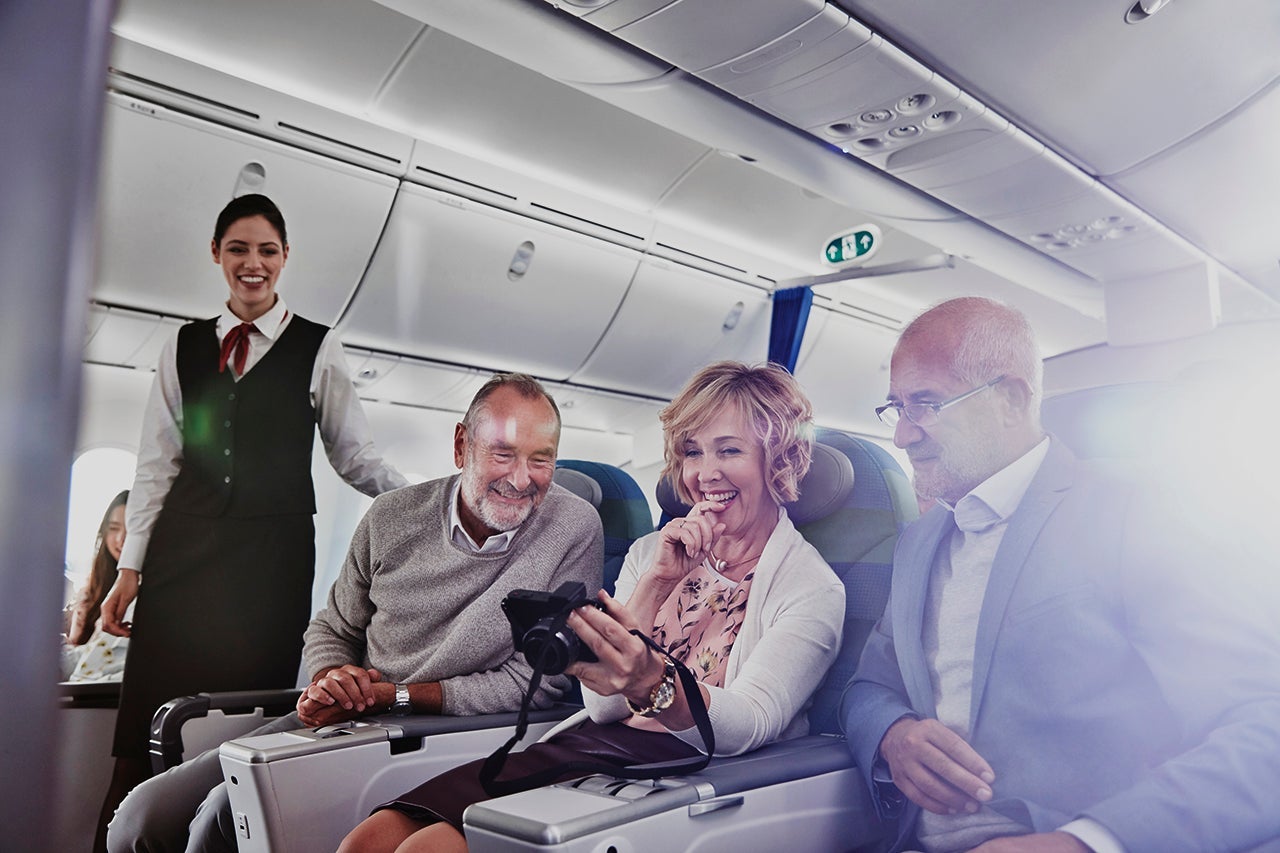
Photo by Caiaimage/Agnieszka Olek/Getty Images
TPG featured card
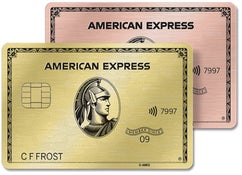
at American Express's secure site
Terms & restrictions apply. See rates & fees.
| 4X | Earn 4X Membership Rewards® points per dollar spent on purchases at restaurants worldwide, on up to $50,000 in purchases per calendar year, then 1X points for the rest of the year. |
| 4X | Earn 4X Membership Rewards® points per dollar spent at US supermarkets, on up to $25,000 in purchases per calendar year, then 1X points for the rest of the year. |
| 5X | Earn 5X Membership Rewards® points on prepaid hotel stays booked through AmexTravel.com or the Amex Travel App™. |
| 3X | Earn 3X Membership Rewards® points on flights booked through AmexTravel.com, the Amex Travel App™, or purchased directly from airlines. |
| 2X | Earn 2X Membership Rewards® points on prepaid car rentals booked through AmexTravel.com or the Amex Travel App™ and cruises booked and paid through AmexTravel.com. |
| 1X | Earn 1X Membership Rewards® point per dollar spent on all other eligible purchases. |
Pros
- Valuable dining and food-related credits
- Flexible rewards with airline and hotel transfer partners
- Multiple travel and purchase protections
- No foreign transaction fees
- Access to Amex Offers for additional savings (enrollment required)
Cons
- Not as useful for those living outside the U.S.
- Some may have trouble using Uber and other dining credits
- You may be eligible for as high as 100,000 Membership Rewards® Points after you spend $8,000 in eligible purchases on your new Card in your first 6 months of Card Membership. Welcome offers vary and you may not be eligible for an offer. Apply to know if you’re approved and find out your exact welcome offer amount – all with no credit score impact. If you’re approved and choose to accept the Card, your score may be impacted.
- Earn 4X Membership Rewards® points per dollar spent on purchases at restaurants worldwide, on up to $50,000 in purchases per calendar year, then 1X points for the rest of the year.
- Earn 4X Membership Rewards® points per dollar spent at US supermarkets, on up to $25,000 in purchases per calendar year, then 1X points for the rest of the year.
- Earn 5X Membership Rewards® points on prepaid hotel stays booked through AmexTravel.com or the Amex Travel App™.
- Earn 3X Membership Rewards® points on flights booked through AmexTravel.com, the Amex Travel App™, or purchased directly from airlines.
- Earn 2X Membership Rewards® points on prepaid car rentals booked through AmexTravel.com or the Amex Travel App™ and cruises booked and paid through AmexTravel.com.
- Earn 1X Membership Rewards® point per dollar spent on all other eligible purchases.
- Pay It® lets you tap in the American Express® App to quickly pay for small purchase amounts throughout the month and still earn rewards the way you usually do. Plan It® gives you the option to split up big purchases into equal monthly payments with a fixed fee. You’ll know upfront exactly how much you’ll pay.
- $120 Dining Credit: Earn up to a total of $10 in statement credits monthly when you pay with the Gold Card at Grubhub (including Seamless), Buffalo Wild Wings, Five Guys, The Cheesecake Factory, and Wonder. This can be an annual savings of up to $120. Enrollment required.
- $100 Resy Credit: Get up to $100 in statement credits each calendar year at over 10,000 qualifying U.S. Resy restaurants after you pay for eligible purchases with the American Express® Gold Card. That’s up to $50 in statement credits semi-annually. Enrollment required.
- $84 Dunkin' Credit: Earn up to $7 in monthly statement credits after you pay with the American Express® Gold Card at U.S. Dunkin’ locations. Enrollment required.
- $120 Uber Cash on Gold: Enjoy up to $120 in Uber Cash annually with your Gold Card. Just add your Card to your Uber account and you'll get $10 in Uber Cash each month to use on orders and rides in the U.S. when you select an Amex Card for your transaction.
- Enjoy complimentary Hertz Five Star® Status benefits like skipping the counter at select locations, adding an additional driver at no additional cost*, and vehicle upgrades**. Benefit enrollment and Hertz Gold+ registration are required. *Additional drivers must meet standard rental qualifications and must be a spouse or domestic partner to qualify as complimentary. Other additional drivers subject to fees. **Benefits are subject to availability and vary by location. Additional Hertz program Terms and Conditions including age restrictions apply.
- Book two nights or more with The Hotel Collection through AmexTravel.com or the Amex Travel App™ and receive a $100* credit towards eligible charges at over 1,400 upscale hotels worldwide. *Eligible charges vary by property.
- Book your travel through the Amex Travel App™ with added peace of mind – backed by American Express® service and support. Only for American Express® Card Members.
- Whenever you need us, we're here. Our Member Services team will ensure you are taken care of. From lost Card replacement to statement questions, we are available to help 24/7.
- No Foreign Transaction Fees.
- Annual Fee is $325.
- Terms Apply.