How do cruise ships make money? Here’s how your favorite brands generate revenue

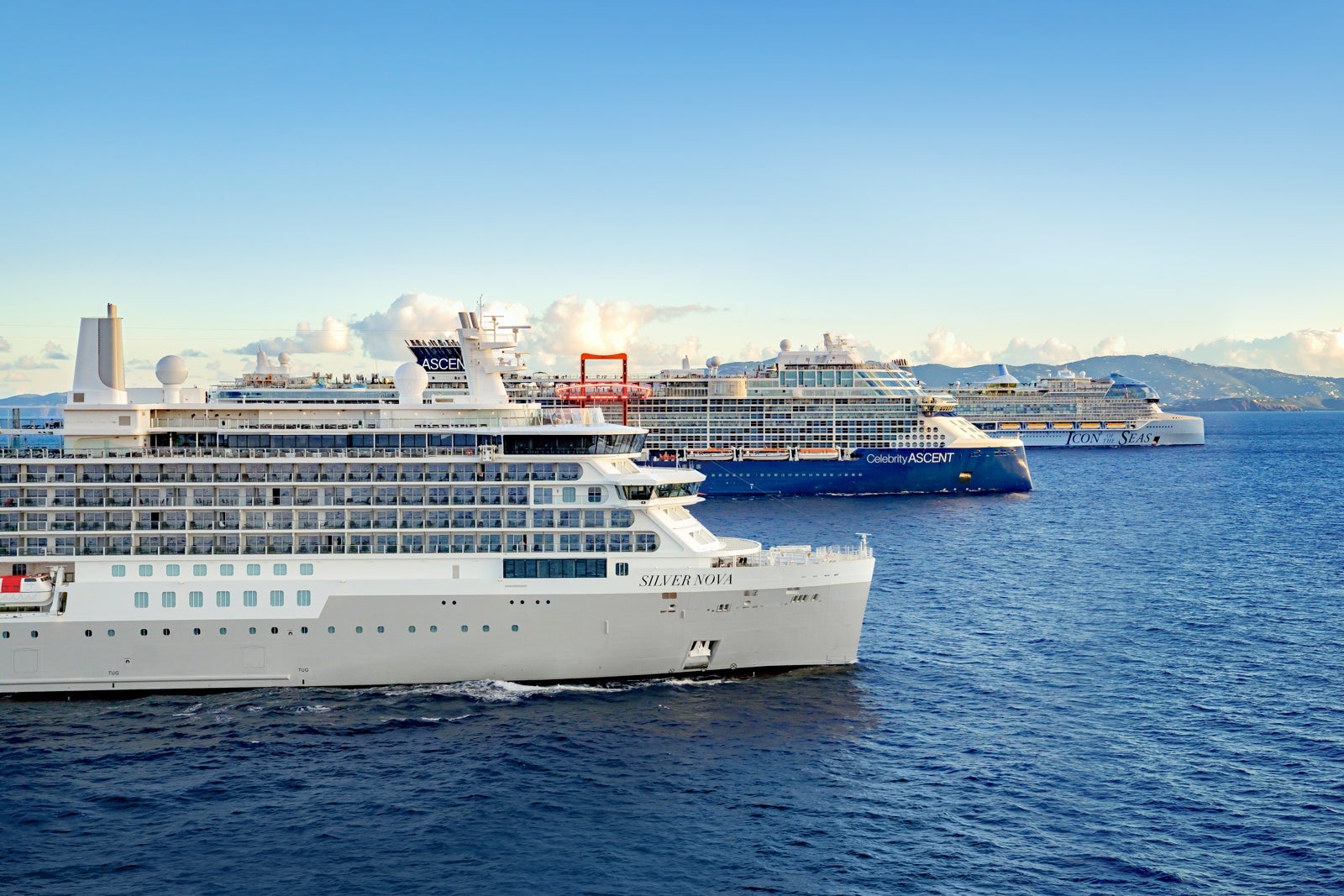
If you've ever asked the question "How do cruises make money?" you might be surprised to learn that ticket sales only make up about 65% to 70% of cruise lines' revenue. That's true even with prices soaring this year due to demand.
If the money coming in isn't completely related to cruise fares, how are cruise ships profitable in other ways? Here's a bit about ticket sales, other sources of revenue and some of the factors that play into both. I'll also list the percentages that make up the full picture for each cruise line parent company.
Ticket sales

Ticket sales only account for about two-thirds of the overall revenue pie for the three major cruise line parent companies: Carnival Corp., Norwegian Cruise Line Holdings and Royal Caribbean Group.
In a research report released May 29, Truist Securities projected that ticket sales — cruise fares and airfares for flights booked through the cruise lines — would make up 66.1%, 67.5% and 69.6% of revenue for the three companies in 2024, respectively.
Onboard spending

Truist Securities estimated that onboard spending at Carnival Corp., Norwegian Cruise Line Holdings and Royal Caribbean Group brands would account for the other 33.9%, 32.5% and 30.4% of revenue at the three brands in 2024, respectively.
This onboard spending category includes obvious items like shore excursions, drink packages, Wi-Fi, casino and arcade gaming, alternative dining, spa treatments and purchases in the onboard shops. However, it also encompasses shuttles to and from the airport, travel insurance or protection purchased through the cruise line and even cancellation fees.
"Our orientation is experiences," said Royal Caribbean Group president and CEO Jason Liberty on a Feb. 1 earnings call, "and we keep trying to advance experiences that our customers not only desire but that they're also willing to pay for. ... Obviously there are a lot of things that we're adding onto our ships. ... You see that also extend into the destination and what we're doing in the private island space. ... Our goal is to keep our customers in our ecosystem."
Location, location, location
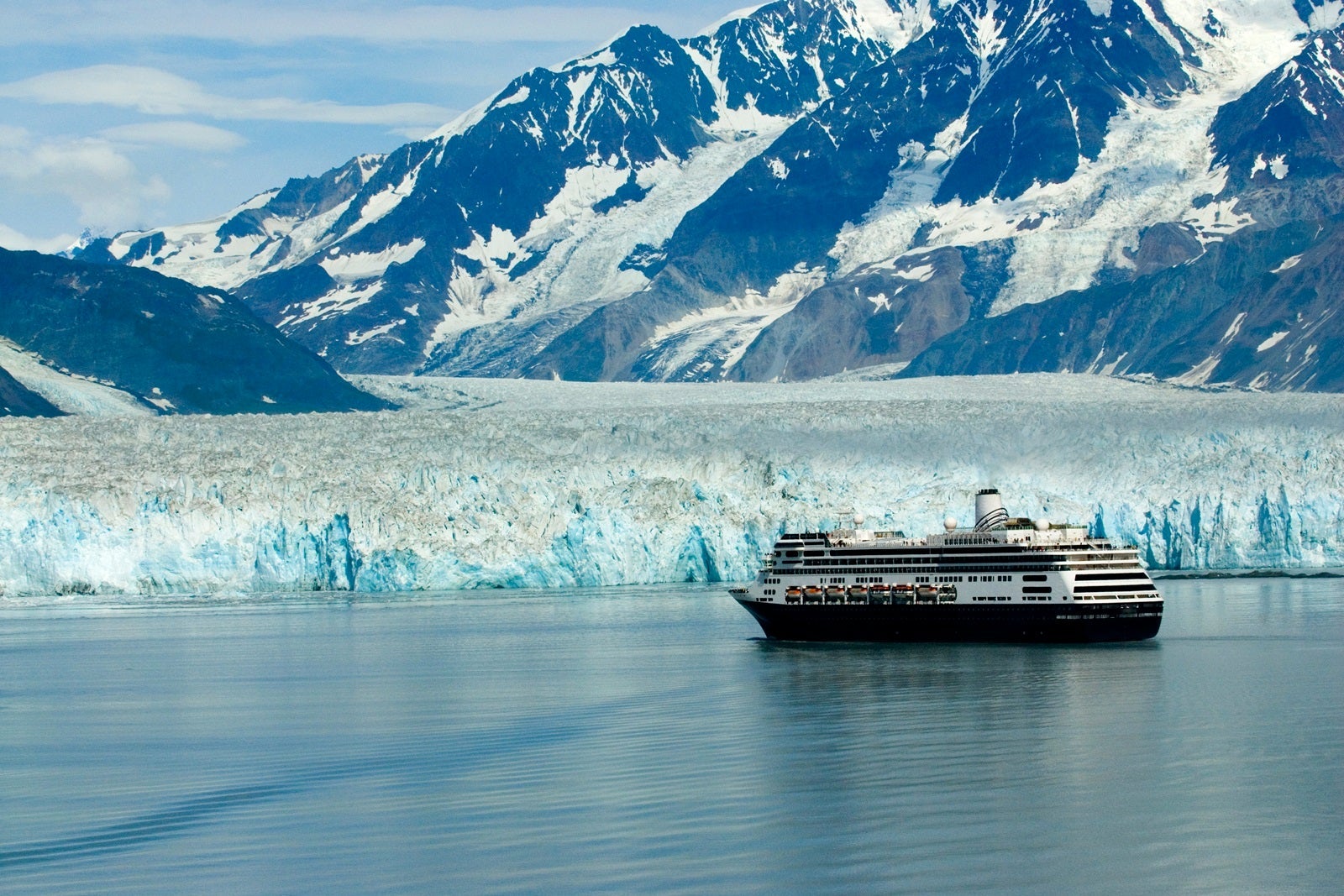
As you might expect, the per diem — the total amount each passenger pays per day to sail, including both ticket sales and onboard spending — is higher in more far-flung regions than it is in some of the more highly trafficked destinations.
For example, per diems are significantly higher in Alaska and Europe than they are in the Caribbean and the Bahamas. Supply and demand play a role, as far more ships offer sailings to the latter pair of destinations than to the former, which drives pricing down in the Caribbean and the Bahamas.

Additionally, people traveling to bucket list destinations are usually more willing to spend money on excursions or other experiences they might not have another chance to try. The more exotic the destination, the more rare the excursion opportunities tend to be, which drives up the price. For example, you can snorkel or parasail in just about every Caribbean destination, but only a couple of destinations worldwide allow for glacier trekking.
Meanwhile, those booked on three-night weekend itineraries might be on stricter budgets and, therefore, could be less willing to spend on extras.
A push to prebook
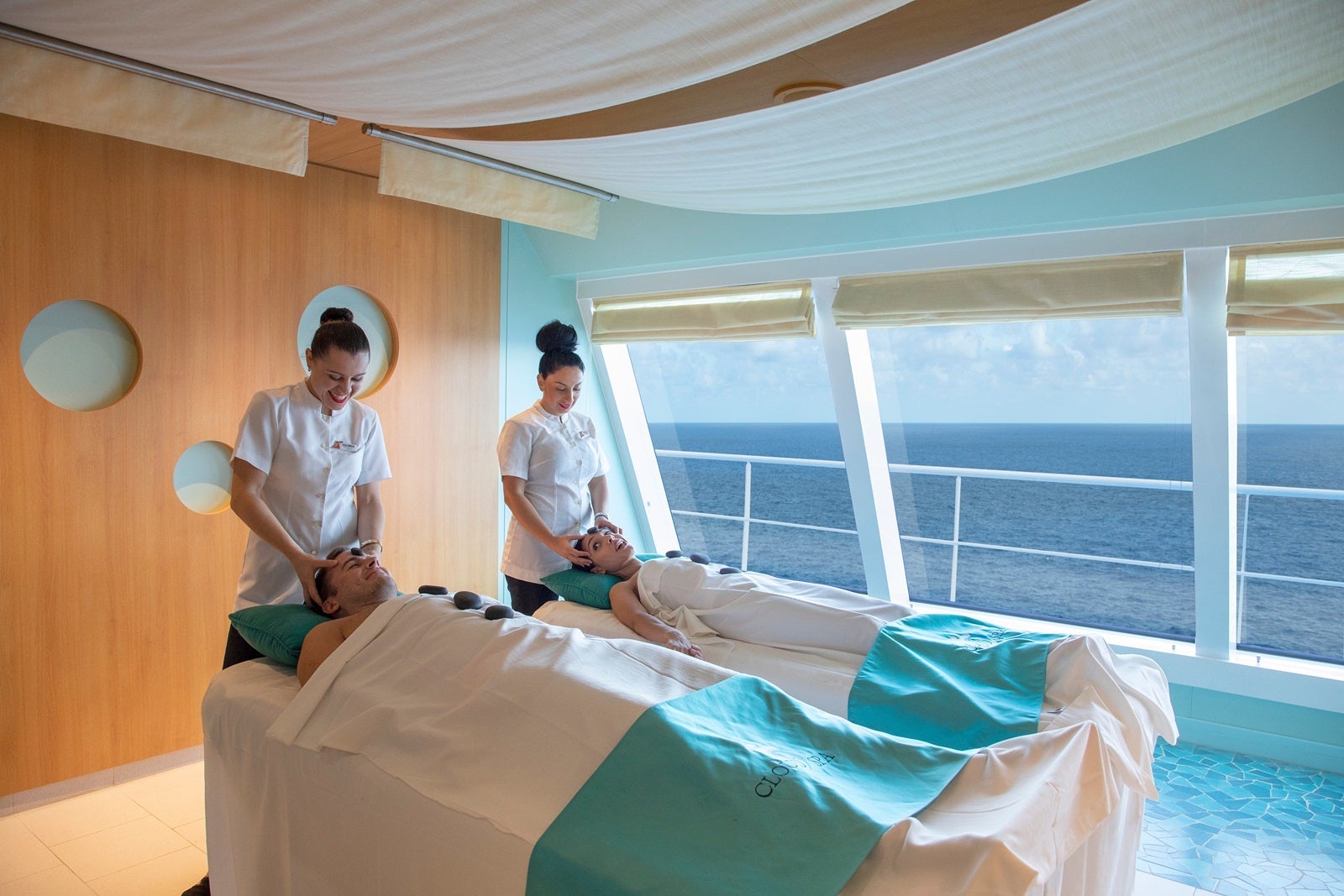
During recent earnings calls, cruise line executives have said they're pushing hard to convince passengers to book activities and experiences ahead of time. The thought is that even if cruisers reserve shore excursions, spa treatments and alternative dining before they ever set foot on the ship, they're still likely to make purchases once they're on board, which leads to larger overall spending.
"Some of the meaningful progress we've seen ... is just the ability to buy and design your vacation ahead of time precruise," said Naftali Holtz, chief financial officer of Royal Caribbean Group, during the Feb. 1 earnings call. "It also leads to great financial success as people are booking their vacations and they get on board and they spend two and a half times more than those that haven't [booked activities] precruise."
"In terms of the Norwegian brand ... we are in a continuous improvement mode in terms of expanding our presale of onboard revenue and getting more share of the wallet over a longer period of time from the point a customer enters our ecosystem," said Mark Kempa, executive vice president and CFO of Norwegian Cruise Line Holdings, on a Feb. 27 earnings call. "That plays a key part going forward as we look at our revenue opportunities."
"We've been making improvements to our precruise planning functionality at Norwegian to allow guests to book even more before they leave their homes," explained Harry Sommer, president and CEO of Norwegian Cruise Line Holdings, during the same call.
Bottom line
How do cruise lines make money? Cruise revenue is generated from two areas: Ticket sales (cruise fares and airfare booked through the cruise lines) and onboard spending (the purchase of cruise-related goods and services through the cruise line, as well as cancellation fees).
Although current fares are some of the highest in the history of cruising, lines are focused on increasing revenue generated from onboard spending, and they're doing so by coaxing booked passengers into making purchases long before they ever set sail.
Have cruise questions? TPG has answers:
- More banned items: What not to pack for a cruise
- What is baked Alaska, and why is it paraded around cruise ships?
- What are the largest cruise ships in the world?
- What is a gentleman host on a cruise?
- What is the Jones Act and how does it affect cruise ships?
- What is a lido deck on a cruise ship?
- What's a cruise cabin guarantee and will it save you money?
- What's the difference between a cruise concierge and a butler?
TPG featured card

at Capital One's secure site
Terms & restrictions apply. See rates & fees.
| 5X miles | Earn 5X miles on hotels, vacation rentals and rental cars booked through Capital One Travel |
| 2X miles | Earn unlimited 2X miles on every purchase, every day |
Pros
- Stellar welcome offer of 75,000 miles after spending $4,000 on purchases in the first three months from account opening. Plus, a $250 Capital One Travel credit to use in your first cardholder year upon account opening.
- You'll earn 2 miles per dollar on every purchase, which means you won't have to worry about memorizing bonus categories
- Rewards are versatile and can be redeemed for a statement credit or transferred to Capital One’s transfer partners
Cons
- Highest bonus-earning categories only on travel booked via Capital One Travel
- LIMITED-TIME OFFER: Enjoy $250 to use on Capital One Travel in your first cardholder year, plus earn 75,000 bonus miles once you spend $4,000 on purchases within the first 3 months from account opening - that’s equal to $1,000 in travel
- Earn unlimited 2X miles on every purchase, every day
- Earn 5X miles on hotels, vacation rentals and rental cars booked through Capital One Travel
- Miles won't expire for the life of the account and there's no limit to how many you can earn
- Receive up to a $120 credit for Global Entry or TSA PreCheck®
- Use your miles to get reimbursed for any travel purchase—or redeem by booking a trip through Capital One Travel
- Enjoy a $50 experience credit and other premium benefits with every hotel and vacation rental booked from the Lifestyle Collection
- Transfer your miles to your choice of 15+ travel loyalty programs
- Top rated mobile app