How cruise ship stabilizers make your vacation at sea more comfortable

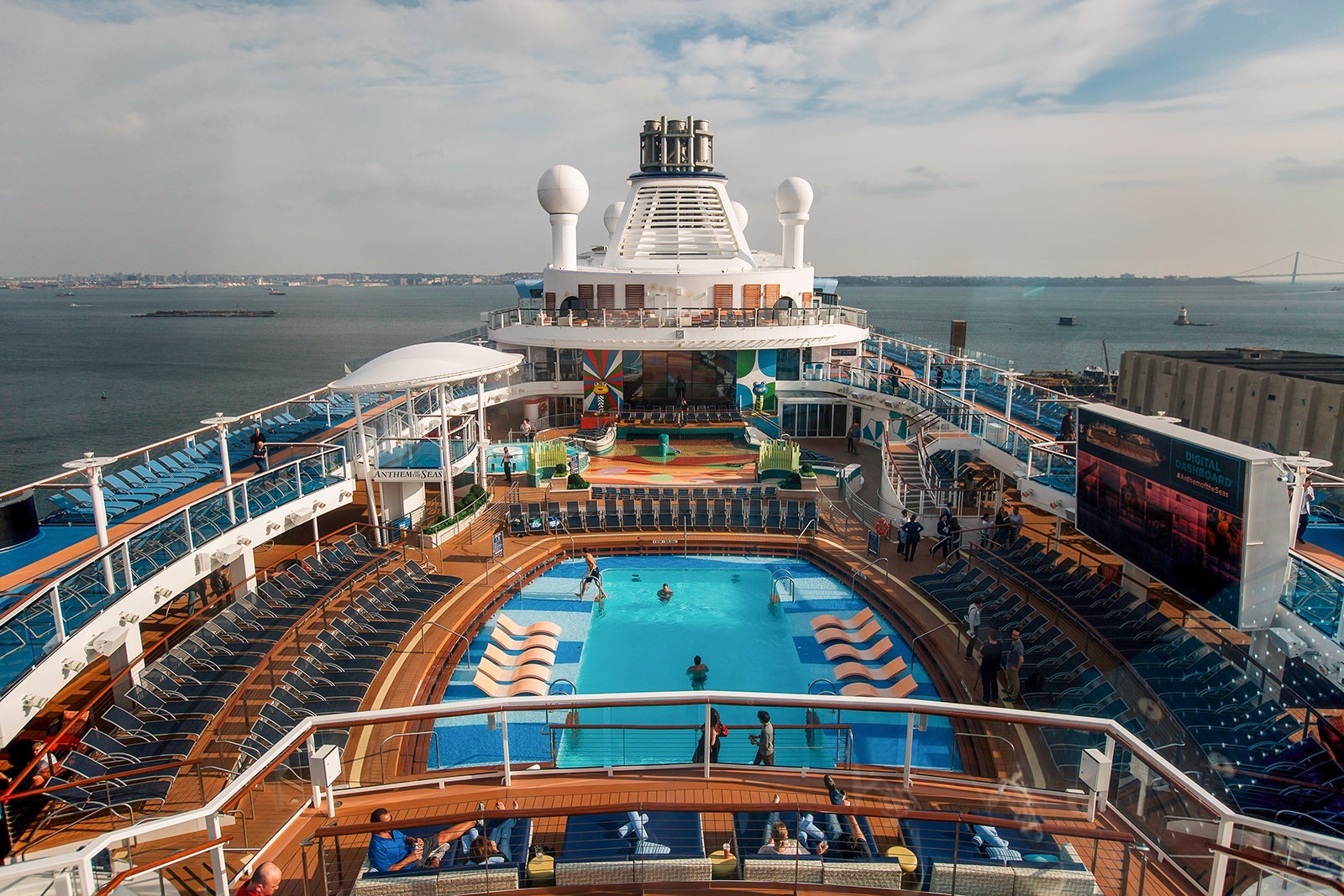
Cruise ship stabilizers are features built into the ship to reduce its side-to-side motion (or roll). Though most cruise ships have a variety of active and passive design elements working to provide a smoother ride for passengers, the retractable wing-type stabilizers on the sides of the ship below the water line are the kind the average passenger commonly thinks about.
Let's explore how the various types of stabilizers work and how they help to improve your cruise.
How do cruise ship stabilizers work?
The stabilizers that most often come to mind first are the fin-style stabilizers, which are considered active stabilizers because the captain must deploy them. When not deployed, they are fully retracted out of the way. This is particularly important when the ship docks or cruises in narrow channels.
I recently had the opportunity to visit the bridge on Celebrity Reflection during departure from the British Virgin Islands. Because the retraction of the stabilizer fins is so critical amid the multitude of small islands in the BVIs, the bridge team did not rely solely on high-tech instrumentation to keep them informed about the stabilizers.
They also had a large hand-printed note stuck on the wall above the windows in everyone's full view indicating whether the stabilizers were deployed or not — like you would use a "dirty" and "clean" note on your dishwasher at home. As we left the island chain and entered open water, the captain verbally gave the order to deploy the stabilizers and the sign was changed.
Stabilizer fins are easy to understand. As waves strike the sides of the ship, the fins help keep it from tipping too far to one side. Picture a tightrope walker carrying a pole for balance or gymnasts using their extended arms on the balance beam to stay centered and unwavering.
While stabilizer fins smooth out the ride for passengers, the downside is increased fuel usage. They also are not as effective at speeds below six knots (around 7 mph). Think of that like the wobbling of an airplane at the relatively slower speeds required for landing. The wings stabilize the plane effectively when it is at higher altitudes and higher speeds, but not so much when the plane must slow down. It's the same with cruise ship stabilizers.
Related: How is cruise ship speed measured, and how fast is a knot in miles per hour?
Beyond active stabilizer fins, bilge keel stabilizers have been a maritime standard for more than a century. First used in the late 1800s, these are internal pump and tank systems. Originally, they relied on stationary baffles to slow water movement in the tanks from side to side. Today, they are computer-controlled, using the weight and motion of water inside the tanks to match sea conditions and counterbalance the ship.

Some ships may also feature small external protrusions on the hull that help disrupt water flow, helping with overall stability. These are the most passive forms of stabilization.
How do stabilizers help me have a better vacation?
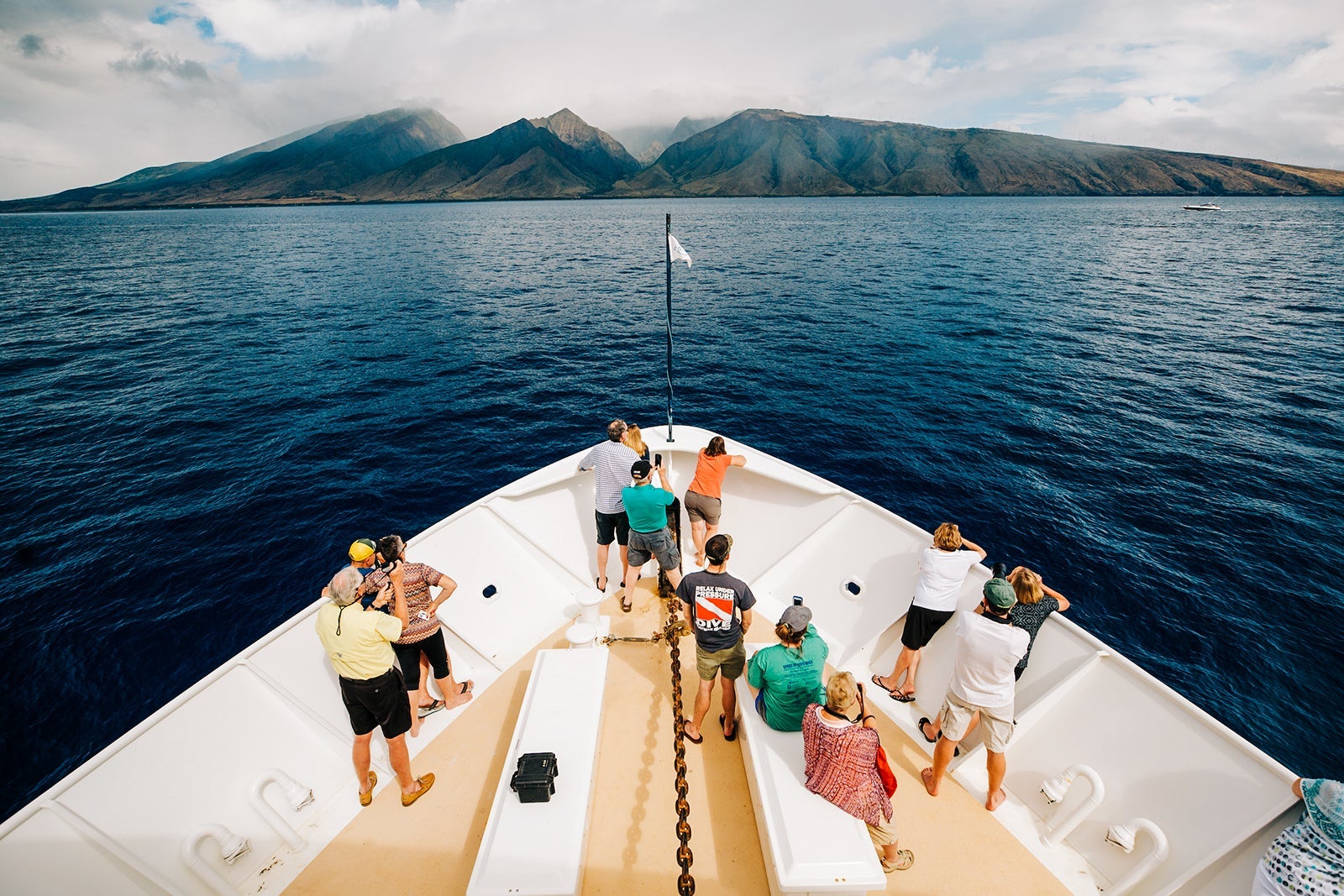
Cruise ship stabilizers improve the overall vacation experience by reducing the types of motion most likely to cause motion sickness.
Those who are highly prone to motion sickness will tell you that any movement of a ship makes them nauseous. For most people though, the side-to-side rolling motion is often the worst, followed by the front-to-back motion called pitch. Deployment of retractable stabilizer wings primarily lessens roll, doing little to stop pitch.
Some large ships have two pairs of stabilizer fins, which help a bit with pitch. The longer the ship, the less pitch passengers feel as the movement spreads across multiple waves along its length.
Cruising on an unstable ship takes away some of the fun even if you aren't prone to motion sickness. The ship's crew might close pools and outdoor activities if the ship is rocking too much. Acrobats, aerial performers or jugglers might not be able to perform at their best, or at all. In extreme cases, too much motion can disrupt dining venues and bars. Imagine the risk to both servers and patrons if food, drinks and glassware become unstable enough to slide off serving trays and tables.
Without stabilizers, even more of the fun stuff would be at risk of cancellation due to safety-first protocols.
Related: Do you really need a motion sickness patch for a cruise?
Do all cruise ships have stabilizers?
All cruise ships have stabilizers of one form or another. Almost all modern oceangoing cruise ships have retractable fin-style stabilizers. Smaller coastal ships and ferries often lack these, as they are useless in narrow straits and channels and at slow speeds. These ships rely instead on ballast systems and hull design to combat uncomfortable motion.
Which cruise ships have the best stabilizers?
The newer the ship, the more likely it is to have a highly sophisticated, computer-controlled stabilizing system capable of producing the smoothest ride possible. Imagine fins that tilt and rotate slightly as computer sensors detect the exact angle of the waves the ship is passing through. Even the best stabilizers do not, however, guarantee a complete lack of motion on board the ship.
Planning a cruise? Start with these stories:
- The 5 most desirable cabin locations on any cruise ship
- A beginners guide to picking a cruise line
- The 8 worst cabin locations on any cruise ship
- The ultimate guide to what to pack for a cruise
- A quick guide to the most popular cruise lines
- 21 tips and tricks that will make your cruise go smoothly
- Top ways cruisers waste money
- The ultimate guide to choosing a cruise ship cabin
TPG featured card

at American Express's secure site
Terms & restrictions apply. See rates & fees.
| 3X | Earn 3X Miles on Delta purchases. |
| 1X | Earn 1X Miles on all other eligible purchases. |
Pros
- Delta SkyClub access when flying Delta
- Annual companion ticket for travel on Delta (upon renewal)
- Ability to earn MQDs through spending
- Various statement credits for eligible purchases
Cons
- Steep annual fee of $650
- Other Delta cobranded cards offer superior earning categories
- Earn 100,000 Bonus Miles after you spend $6,000 or more in purchases with your new Card within the first 6 months of Card Membership and an additional 25,000 bonus miles after you make an additional $3,000 in purchases on the Card within your first 6 months, starting from the date that your account is opened. Offer Ends 04/01/2026.
- Delta SkyMiles® Reserve American Express Card Members receive 15 Visits per Medallion® Year to the Delta Sky Club® when flying Delta and can unlock an unlimited number of Visits after spending $75,000 in purchases on your Card in a calendar year. Plus, you’ll receive four One-Time Guest Passes each Medallion Year so you can share the experience with family and friends when traveling Delta together.
- Enjoy complimentary access to The Centurion® Lounge in the U.S. and select international locations (as set forth on the Centurion Lounge Website), Sidecar by The Centurion® Lounge in the U.S. (see the Centurion Lounge Website for more information on Sidecar by The Centurion® Lounge availability), and Escape Lounges when flying on a Delta flight booked with the Delta SkyMiles® Reserve American Express Card. § To access Sidecar by The Centurion® Lounge, Card Members must arrive within 90 minutes of their departing flight (including layovers). To access The Centurion® Lounge, Card Members must arrive within 3 hours of their departing flight. Effective July 8, 2026, during a layover, Card Members must arrive within 5 hours of the connecting flight.
- Receive $2,500 Medallion® Qualification Dollars with MQD Headstart each Medallion Qualification Year and earn $1 MQD for each $10 in purchases on your Delta SkyMiles® Reserve American Express Card with MQD Boost to get closer to Status next Medallion Year.
- Enjoy a Companion Certificate on a Delta First, Delta Comfort, or Delta Main round-trip flight to select destinations each year after renewal of your Card. The Companion Certificate requires payment of government-imposed taxes and fees of between $22 and $250 (for itineraries with up to four flight segments). Baggage charges and other restrictions apply. Delta Basic experiences are not eligible for this benefit.
- $240 Resy Credit: When you use your Delta SkyMiles® Reserve American Express Card for eligible purchases with U.S. Resy restaurants, you can earn up to $20 each month in statement credits. Enrollment required.
- $120 Rideshare Credit: Earn up to $10 back in statement credits each month after you use your Delta SkyMiles® Reserve American Express Card to pay for U.S. rideshare purchases with select providers. Enrollment required.
- Delta SkyMiles® Reserve American Express Card Members get 15% off when using miles to book Award Travel on Delta flights through delta.com and the Fly Delta app. Discount not applicable to partner-operated flights or to taxes and fees.
- With your Delta SkyMiles® Reserve American Express Card, receive upgrade priority over others with the same Medallion tier, product and fare experience purchased, and Million Miler milestone when you fly with Delta.
- Earn 3X Miles on Delta purchases and earn 1X Miles on all other eligible purchases.
- No Foreign Transaction Fees. Enjoy international travel without additional fees on purchases made abroad.
- $650 Annual Fee.
- Apply with confidence. Know if you're approved for a Card with no impact to your credit score. If you're approved and you choose to accept this Card, your credit score may be impacted.
- Terms Apply.
- See Rates & Fees