What is a cruise ship muster drill?

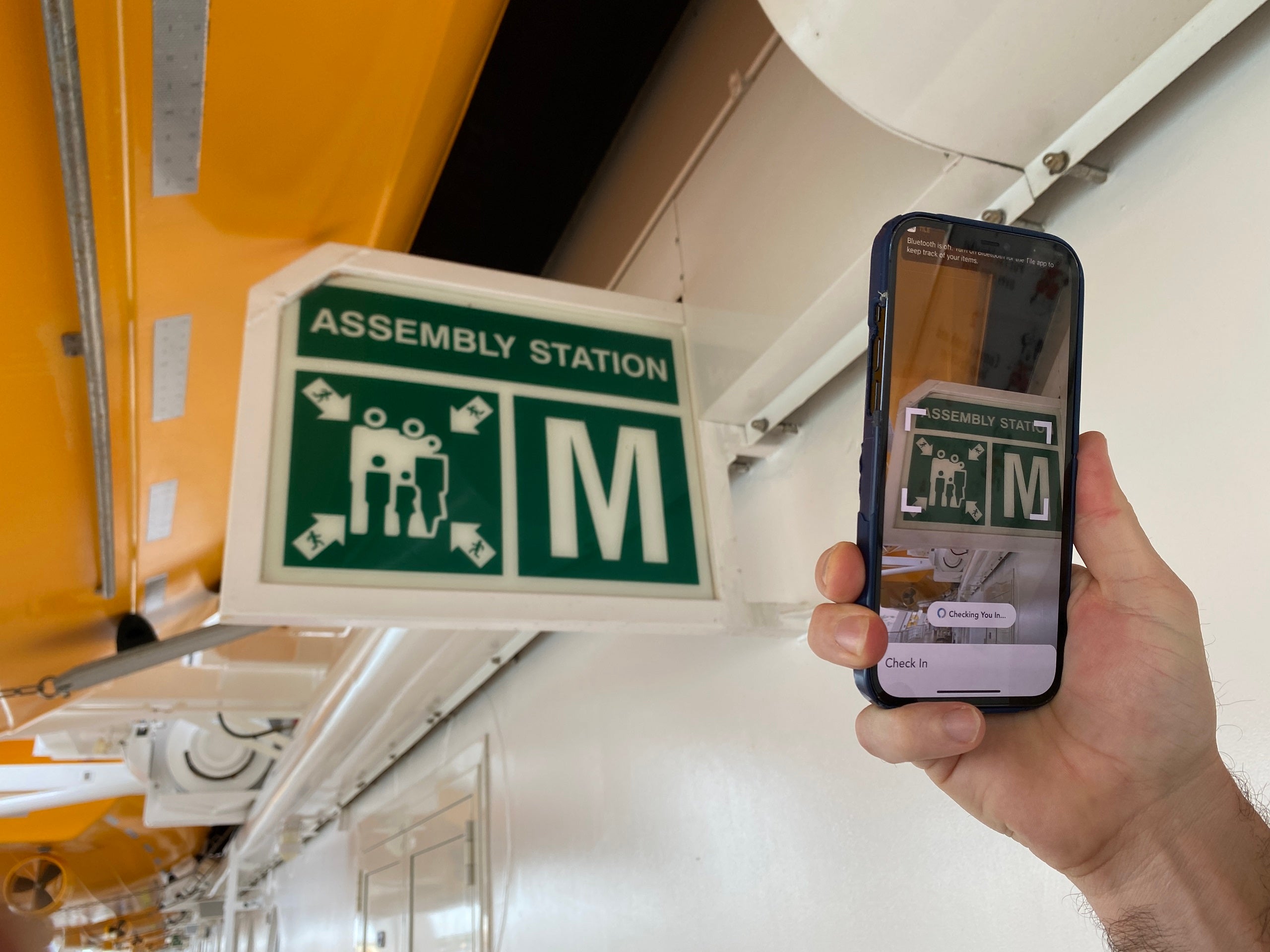
No, not "mustard." Muster. If you've been under the impression that this cruise ship staple involves condiments, listen up.
The mandatory muster drills — also known as cruise ship safety drills, safety briefings or lifeboat drills — serve to tell passengers all they need to know to stay safe on a cruise. They're the cruise ship equivalent of school fire drills.
True emergencies are rare at sea, but it's important for everyone on board to know what to do if an "abandon ship" order is given by the captain. That's where a muster drill is helpful.
What is a muster drill on a cruise ship?
Cruise muster drills are mandatory safety briefings that all passengers must attend before the ship is allowed to sail. This applies even if you have cruised before.
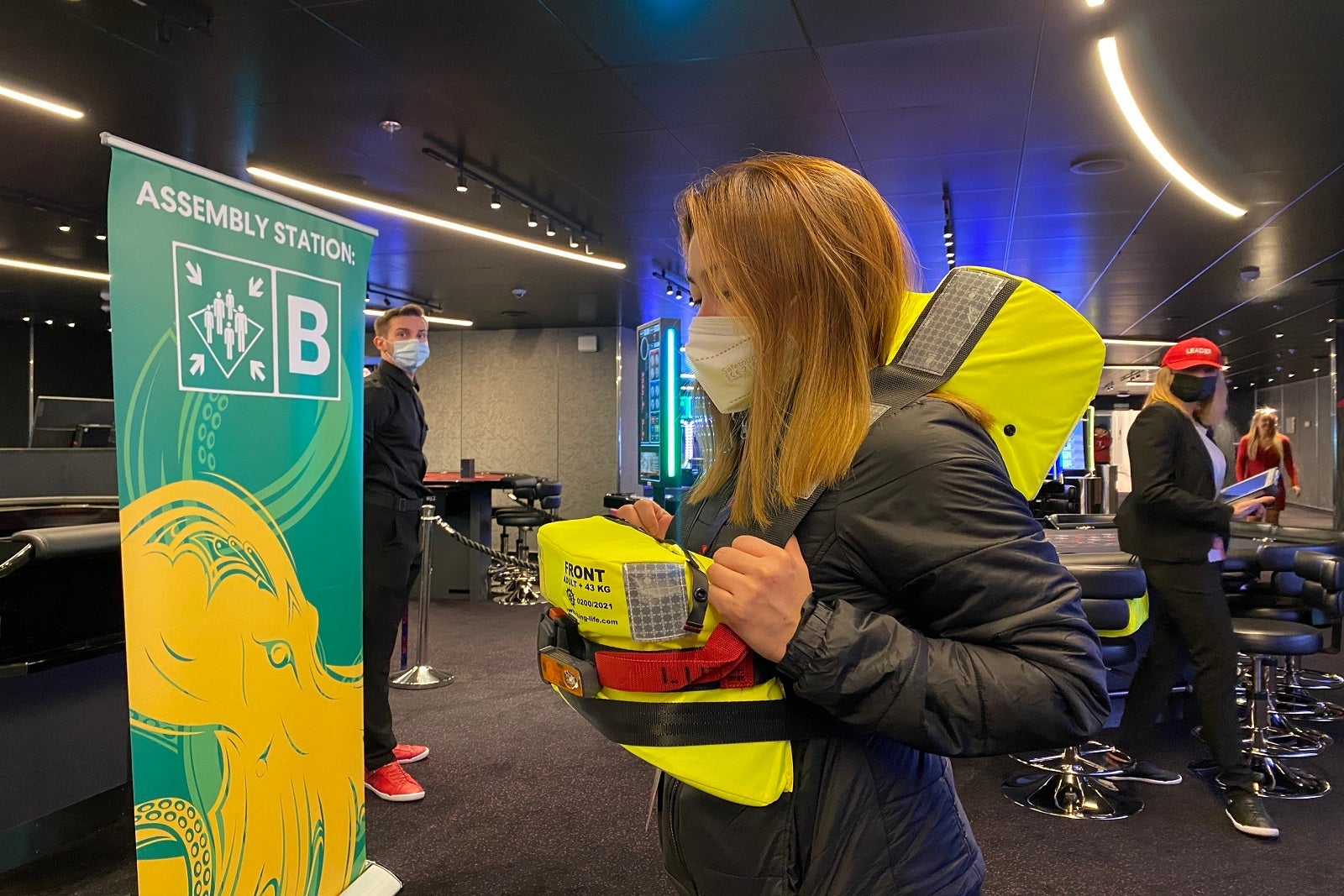
The purpose of a cruise safety drill is to familiarize you with your assembly station, where you will gather in case of an emergency. Each passenger is assigned a station based on where their cabin is located, and each station has its own corresponding lifeboat.
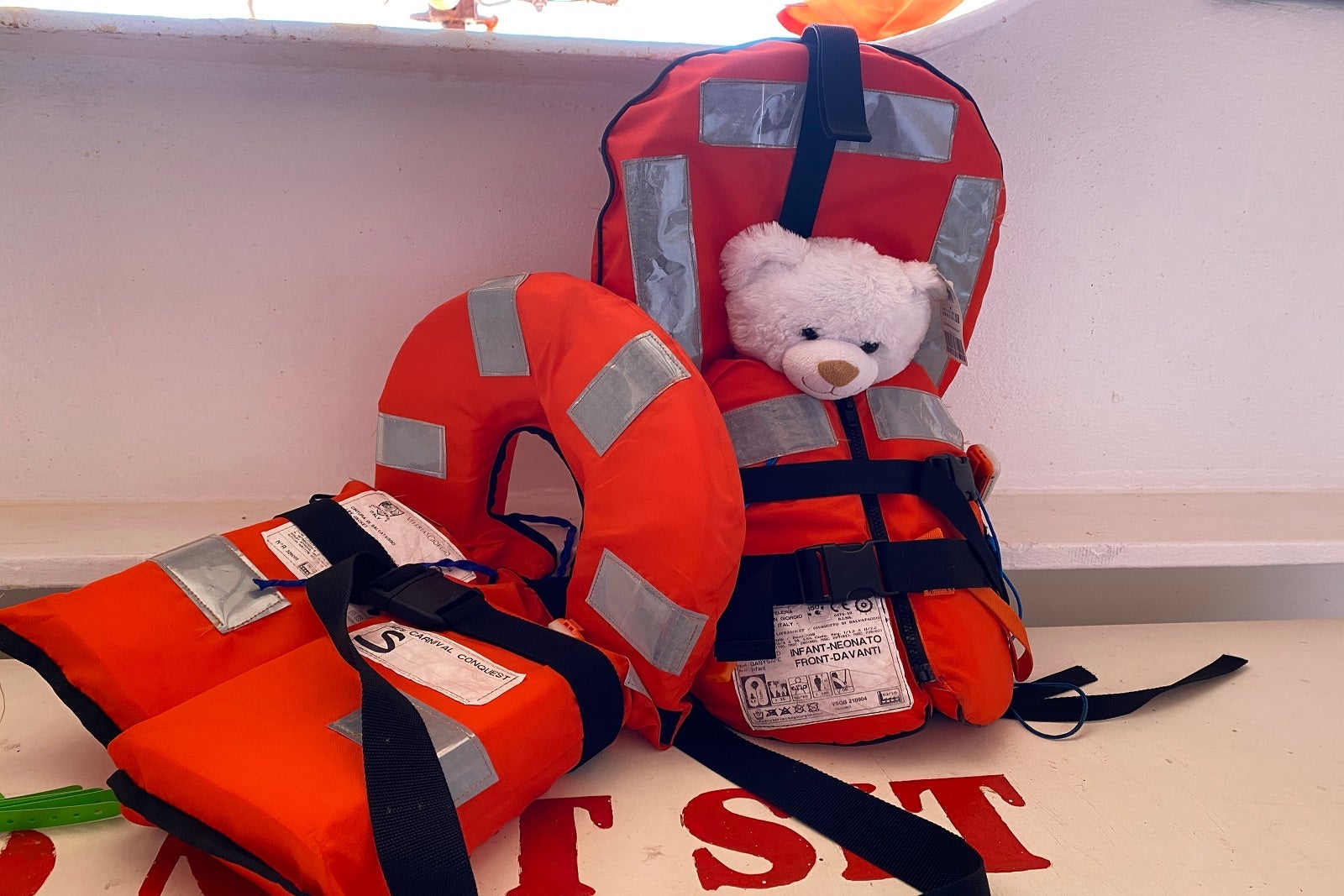
During the drill, the crew will tell you where to find your life jackets and demonstrate how to properly put them on in the event they're needed.
The captain is also likely to make some announcements to go over general safety rules for the vessel (don't throw anything overboard, don't smoke except in designated areas, don't run on the wet pool deck, hold handrails in rough seas, etc.) and demonstrate the emergency signal — seven short blasts, followed by one long blast on the ship's alarm system, which can be ear-splitting.
Related: Cruise ship embarkation day do's and don'ts
How are muster drills conducted?
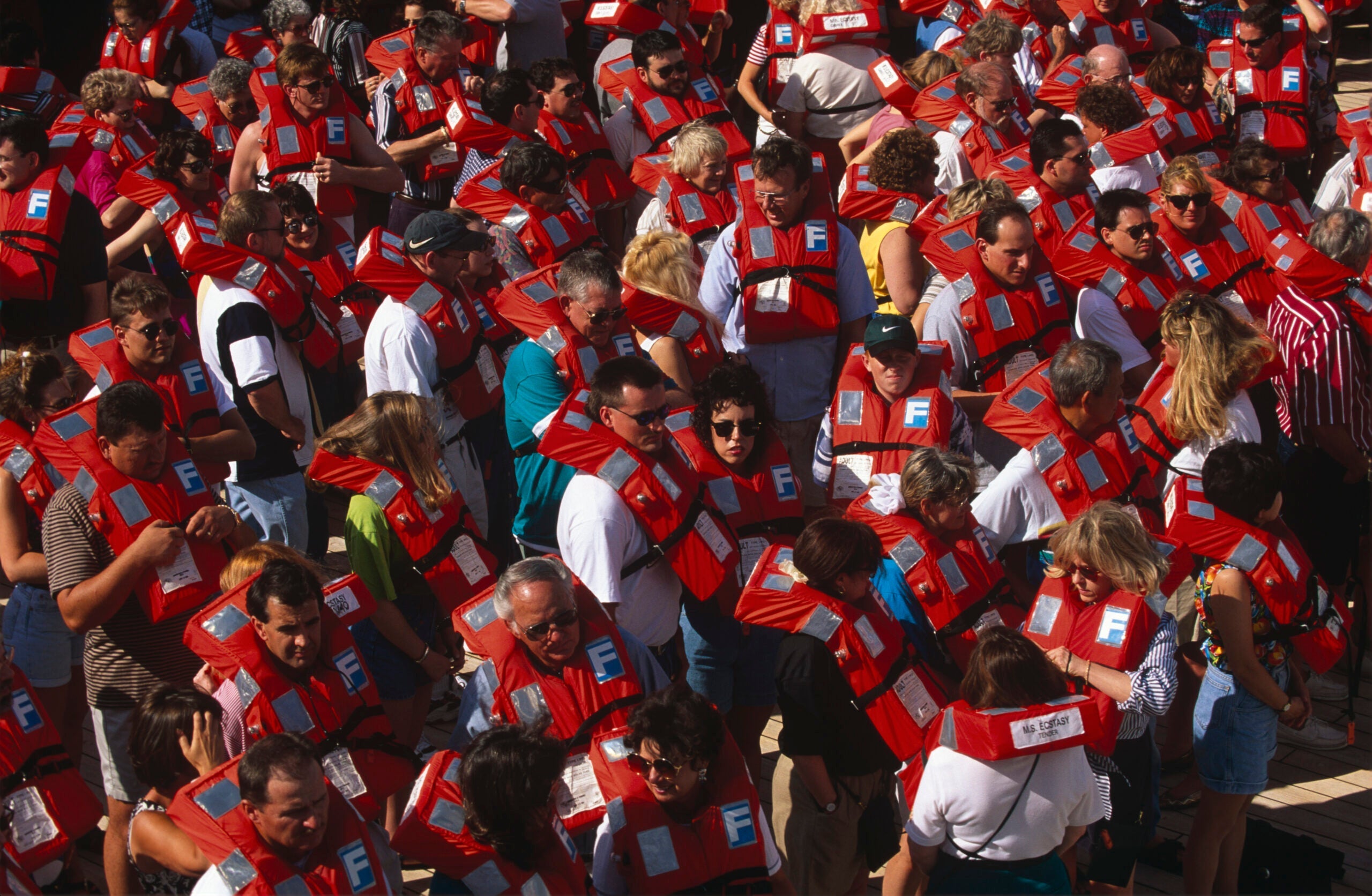
For years, ships forced passengers to gather at the same designated time in large groups, either out on deck by their lifeboats or in an indoor space, such as the theater, casino or a lounge.

When the COVID-19 pandemic created a need for social distancing, most big-ship cruise lines developed virtual muster drills, which can either be watched on cabin televisions or via cruise lines' mobile apps within a certain time frame after boarding.
As lines slowly rolled back their coronavirus protocols and returned ships to full capacity, Disney Cruise Line reverted to fully in-person drills, citing safety. Other major lines say they'll continue to offer e-muster and claim there's nothing unsafe about them.
In cases where lines continue to conduct e-muster drills, passengers must report to their designated muster stations to check in with crew members waiting there. Some will conduct a life jacket demonstration in person; others will merely verify that you've watched any required instructional videos. All will either scan your keycard or take down your name or cabin number to confirm you've done your due diligence.
Regarding fully in-person drills, some lines conduct a version where everything is done in real-time. Others gather everyone to watch a video in the same place simultaneously. Check with your cruise line to see which type of drill is offered.
Why do cruise ships have muster drills?

Cruise ships must conduct muster drills for all passengers on board before they are allowed to set sail. The purpose is to familiarize passengers with safety protocols and demonstrate what they must do in an emergency. Familiarizing them with the process beforehand eliminates an unnecessary layer of chaos and panic in the unlikely event of an emergency.
In 1914, Safety of Life at Sea regulations were implemented following the sinking of Titanic in 1912. Those familiar with the tragedy will know that so many died because there weren't enough lifeboats on board. The senselessness of those deaths led officials to realize changes were needed.
SOLAS seeks to hold all vessels to a consistent standard of safety to avoid further loss of life in a similar situation. As such, the SOLAS rules have been amended many times. They originally stated that muster drills had to occur within 24 hours of sailaway.
In 2013, following the sinking of Costa Concordia in Italy, a new amendment was made. It went into effect in 2015 and declared that muster drills had to be completed before the ship left the dock or immediately upon leaving, rather than within 24 hours of departure.
Related: 21 tips and hacks that will make your first cruise go smoothly
What happens if I skip the muster drill on my cruise?
If you fail to report to your assigned muster station by the cutoff time, your name and cabin number will be reported to the vessel's commanding officers, who might embarrass you by summoning you over the shipwide public address system.
A makeup drill will likely be conducted for those who missed it the first time around. However, in severe cases, those passengers will not be allowed to sail and could either be forced to disembark before the ship leaves or to depart in the next port of call.
For more cruise terminology, check out TPG's glossary of common cruise terms.
Got more cruise questions? TPG has answers:
- Man overboard: Why do people fall off cruise ships?
- What is baked Alaska, and why is it paraded around cruise ships?
- What are the largest cruise ships in the world?
- What is a lido deck on a cruise ship?
- What is tendering on a cruise ship?
- What's the difference between a cruise concierge and a butler?
- What is a gentleman host on a cruise?
- What is the Jones Act and how does it affect cruise ships?
- What's a cruise cabin guarantee and will it save you money?
TPG featured card

at American Express's secure site
Terms & restrictions apply. See rates & fees.
| 4X | Earn 4X Membership Rewards® points per dollar spent on purchases at restaurants worldwide, on up to $50,000 in purchases per calendar year, then 1X points for the rest of the year. |
| 4X | Earn 4X Membership Rewards® points per dollar spent at US supermarkets, on up to $25,000 in purchases per calendar year, then 1X points for the rest of the year. |
| 5X | Earn 5X Membership Rewards® points on prepaid hotel stays booked through AmexTravel.com or the Amex Travel App™. |
| 3X | Earn 3X Membership Rewards® points on flights booked through AmexTravel.com, the Amex Travel App™, or purchased directly from airlines. |
| 2X | Earn 2X Membership Rewards® points on prepaid car rentals booked through AmexTravel.com or the Amex Travel App™ and cruises booked and paid through AmexTravel.com. |
| 1X | Earn 1X Membership Rewards® point per dollar spent on all other eligible purchases. |
Pros
- Valuable dining and food-related credits
- Flexible rewards with airline and hotel transfer partners
- Multiple travel and purchase protections
- No foreign transaction fees
- Access to Amex Offers for additional savings (enrollment required)
Cons
- Not as useful for those living outside the U.S.
- Some may have trouble using Uber and other dining credits
- You may be eligible for as high as 100,000 Membership Rewards® Points after you spend $8,000 in eligible purchases on your new Card in your first 6 months of Card Membership. Welcome offers vary and you may not be eligible for an offer. Apply to know if you’re approved and find out your exact welcome offer amount – all with no credit score impact. If you’re approved and choose to accept the Card, your score may be impacted.
- Earn 4X Membership Rewards® points per dollar spent on purchases at restaurants worldwide, on up to $50,000 in purchases per calendar year, then 1X points for the rest of the year.
- Earn 4X Membership Rewards® points per dollar spent at US supermarkets, on up to $25,000 in purchases per calendar year, then 1X points for the rest of the year.
- Earn 5X Membership Rewards® points on prepaid hotel stays booked through AmexTravel.com or the Amex Travel App™.
- Earn 3X Membership Rewards® points on flights booked through AmexTravel.com, the Amex Travel App™, or purchased directly from airlines.
- Earn 2X Membership Rewards® points on prepaid car rentals booked through AmexTravel.com or the Amex Travel App™ and cruises booked and paid through AmexTravel.com.
- Earn 1X Membership Rewards® point per dollar spent on all other eligible purchases.
- Pay It® lets you tap in the American Express® App to quickly pay for small purchase amounts throughout the month and still earn rewards the way you usually do. Plan It® gives you the option to split up big purchases into equal monthly payments with a fixed fee. You’ll know upfront exactly how much you’ll pay.
- $120 Dining Credit: Earn up to a total of $10 in statement credits monthly when you pay with the Gold Card at Grubhub (including Seamless), Buffalo Wild Wings, Five Guys, The Cheesecake Factory, and Wonder. This can be an annual savings of up to $120. Enrollment required.
- $100 Resy Credit: Get up to $100 in statement credits each calendar year at over 10,000 qualifying U.S. Resy restaurants after you pay for eligible purchases with the American Express® Gold Card. That’s up to $50 in statement credits semi-annually. Enrollment required.
- $84 Dunkin' Credit: Earn up to $7 in monthly statement credits after you pay with the American Express® Gold Card at U.S. Dunkin’ locations. Enrollment required.
- $120 Uber Cash on Gold: Enjoy up to $120 in Uber Cash annually with your Gold Card. Just add your Card to your Uber account and you'll get $10 in Uber Cash each month to use on orders and rides in the U.S. when you select an Amex Card for your transaction.
- Enjoy complimentary Hertz Five Star® Status benefits like skipping the counter at select locations, adding an additional driver at no additional cost*, and vehicle upgrades**. Benefit enrollment and Hertz Gold+ registration are required. *Additional drivers must meet standard rental qualifications and must be a spouse or domestic partner to qualify as complimentary. Other additional drivers subject to fees. **Benefits are subject to availability and vary by location. Additional Hertz program Terms and Conditions including age restrictions apply.
- Book two nights or more with The Hotel Collection through AmexTravel.com or the Amex Travel App™ and receive a $100* credit towards eligible charges at over 1,400 upscale hotels worldwide. *Eligible charges vary by property.
- Book your travel through the Amex Travel App™ with added peace of mind – backed by American Express® service and support. Only for American Express® Card Members.
- Whenever you need us, we're here. Our Member Services team will ensure you are taken care of. From lost Card replacement to statement questions, we are available to help 24/7.
- No Foreign Transaction Fees.
- Annual Fee is $325.
- Terms Apply.