Cruise ship lifeboats and rafts: How your ship is prepared for an emergency
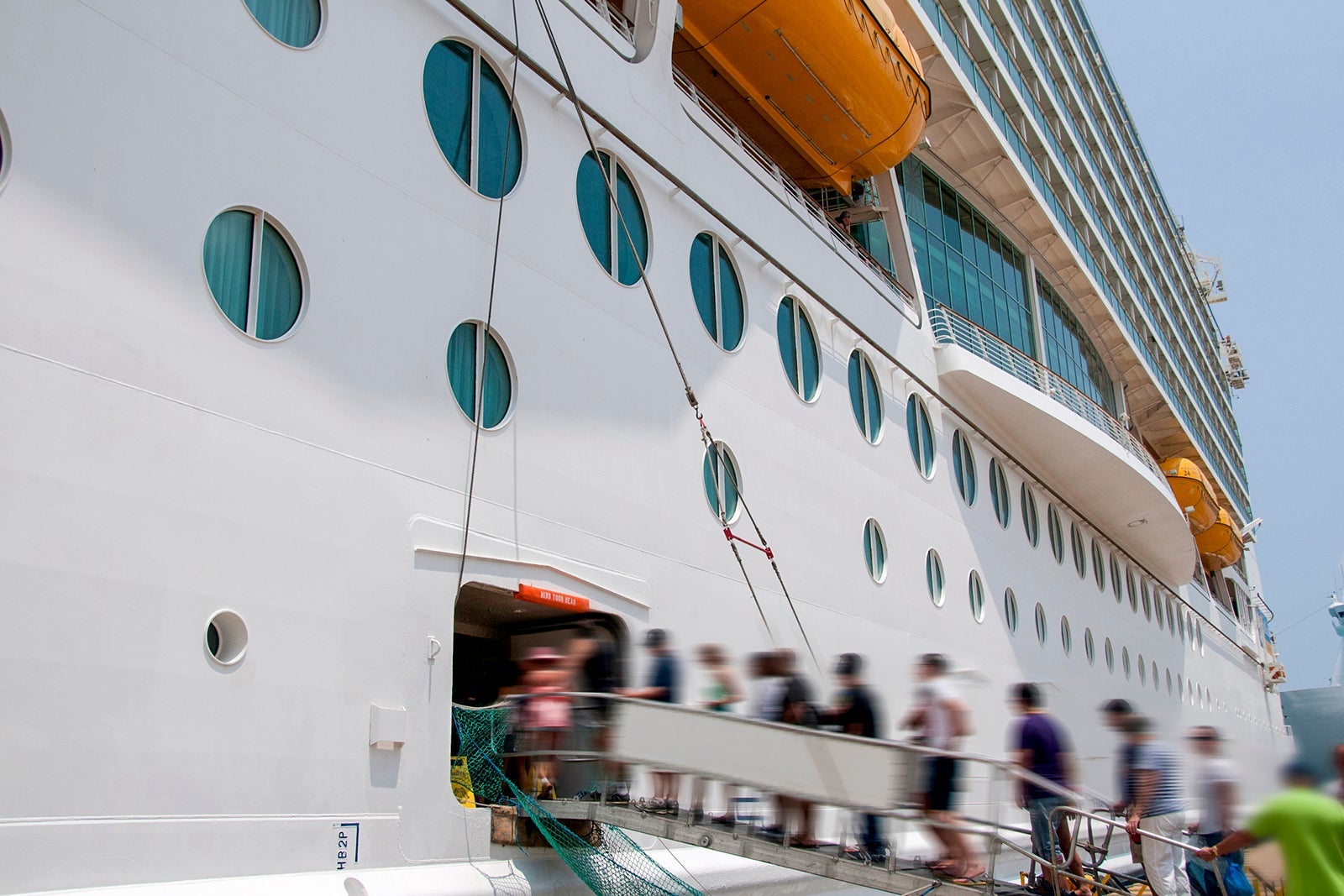
Do cruise ships have enough lifeboats for everyone?
It's a question that comes to many cruisers' minds, especially if they're hesitant about sailing across oceans and seas, far from land.
You can rest assured that cruise lines have many safety systems in place in the rare instance that a major emergency occurs at sea. Among these systems are, of course, the brightly colored lifeboats that you'll see lining the sides of your ship. Not only are they there to carry passengers to safety if the ship needs to be abandoned, but they're also used as tender boats in a port where the ship can't dock at a pier.
You may have other questions about lifeboats, either from curiosity or safety concerns. How reliable are the small vessels? What supplies are on board? Do they have restrooms?
Here are the top things to know about cruise ship lifeboats, so you'll feel safe and confident when heading out on your next voyage.
What does a lifeboat look like?
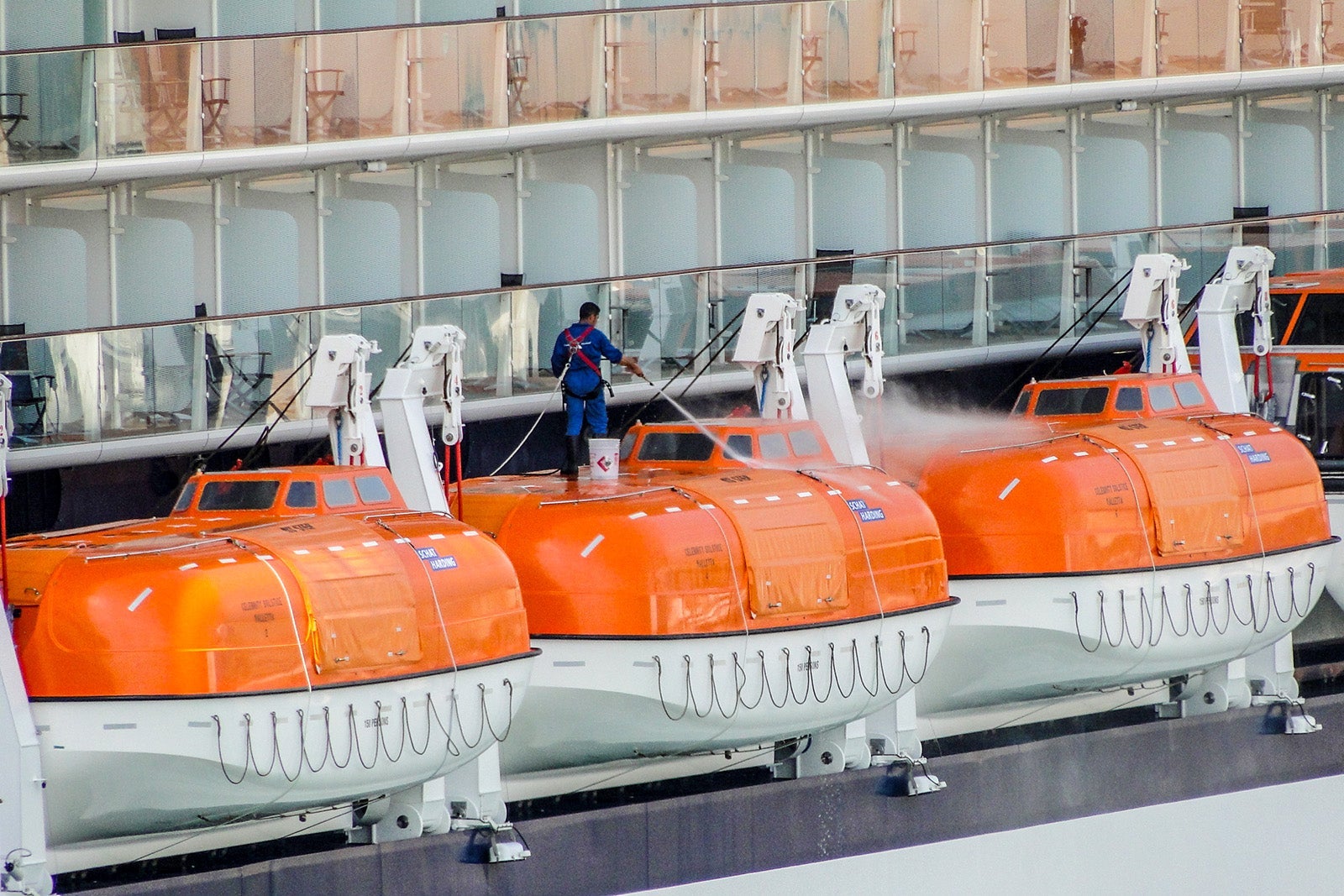
Lifeboats are orange or yellow watercraft that you'll find lining the sides of the ship. You'll find two main types of lifeboats on many cruise ships: enclosed lifeboats and lifeboat tenders. The majority of cruise ship lifeboats are enclosed lifeboats, which are tough and built with superior watertight integrity, with the ability to easily right themselves if tossed around by rough waves.
Lifeboat tenders are partially enclosed and are designed for two main functions: to serve as a lifeboat if needed and to ferry guests from the ship to the shore during a port call where the vessel can't dock. Lifeboat tenders are more expensive to maintain than traditional lifeboats, so cruise ships will usually have just enough lifeboat tenders to operate port tender service while the rest are the standard enclosed lifeboats.
The interior of a lifeboat includes rows of seating, which may or may not have a seatback. A steering area with windows and a hatch is located toward the top of the vessel. According to lifeboat manufacturer Fassmer, enclosed lifeboats have no windows besides those in the steering area, while lifeboat tenders have windows for viewing the surroundings from the seats. These windows do not open.
Fun fact: When Disney Cruise Line launched in the '90s, regulations required all cruise ship lifeboats to be orange. However, Disney wanted the exteriors of its ships to match the colors of Mickey Mouse, so it requested an exemption to paint its lifeboats yellow to match Mickey's shoes.

The U.S. Coast Guard granted the unique request, and the lifeboats were painted in Mickey's yellow, Pantone 99, which is a patented color that only Disney can use. Since then, other lines, such as Royal Caribbean and Costa Cruises, have painted their lifeboats yellow.
What's the typical capacity of cruise ship lifeboats?
The maximum capacity of a cruise ship lifeboat is 150 people, according to the International Maritime Organization's International Life-Saving Appliance Code. Most cruise ships have lifeboats that can hold this maximum number of passengers because it is easier, more cost-effective and takes up less space to have fewer large lifeboats instead of a greater number of smaller ones.
Despite the LSA's 150-person capacity limit for lifeboats, an exception allows for larger lifeboats on some of the world's largest cruise ships.
Related: Are cruises safe? Here's what you need to know about cruise ship security and safety
Royal Caribbean's massive Oasis of the Seas, which holds 8,880 passengers and crew members in total, was the first ship to use 370-person CRV55 catamaran lifeboats (or "rescue vessels"), designed and built by marine life-saving equipment company Umoe Schat-Harding. The enclosed vessels are unique in that they can be lowered directly from their storage position on the ship into the water (no moving outward needed), and passengers can board on two levels simultaneously, reducing the loading time. Their catamaran-style hull increases stability, while twin diesel engines and twin propellers allow these "mega" lifeboats to move at speeds of up to 6 knots.
On a cruise ship, there must be enough lifeboats to accommodate 37.5% of passengers and crew members on either side (75% total), according to the International Convention for the Safety of Life at Sea. What happens to the other 25%? This leads us to our next question.
Do cruise ships carry inflatable life rafts?
The remaining 25% of passengers that can't be accommodated in the traditional lifeboats can use cruise ship inflatable life rafts. These are generally designated for crew members, while guests will board the lifeboats first — though rafts can also be used for guests if necessary.
Collapsible cruise ship life rafts are stored in fiberglass canisters and usually utilize a high-pressure gas to automatically inflate once deployed. While lifeboats have motors, life rafts do not. They do, however, have oars. Ships may also carry rigid, noninflatable life rafts, but they aren't as common for large cruise vessels.
On newer cruise ships, life rafts may be used with a Marine Evacuation System, which utilizes a fully enclosed inflatable spiral slide to transfer passengers from the embarkation deck to an automatically inflated raft in the water.
If some lifeboats become damaged or can't be lowered during an emergency, cruise ships have extra life rafts to pick up the slack. SOLAS requires that there are enough additional life rafts for 25% of the ship's capacity. Cruise ships have also been designed to allow lifeboats and life rafts to deploy even if the ship is listing up to 20 degrees.
Where are lifeboats located on cruise ships?
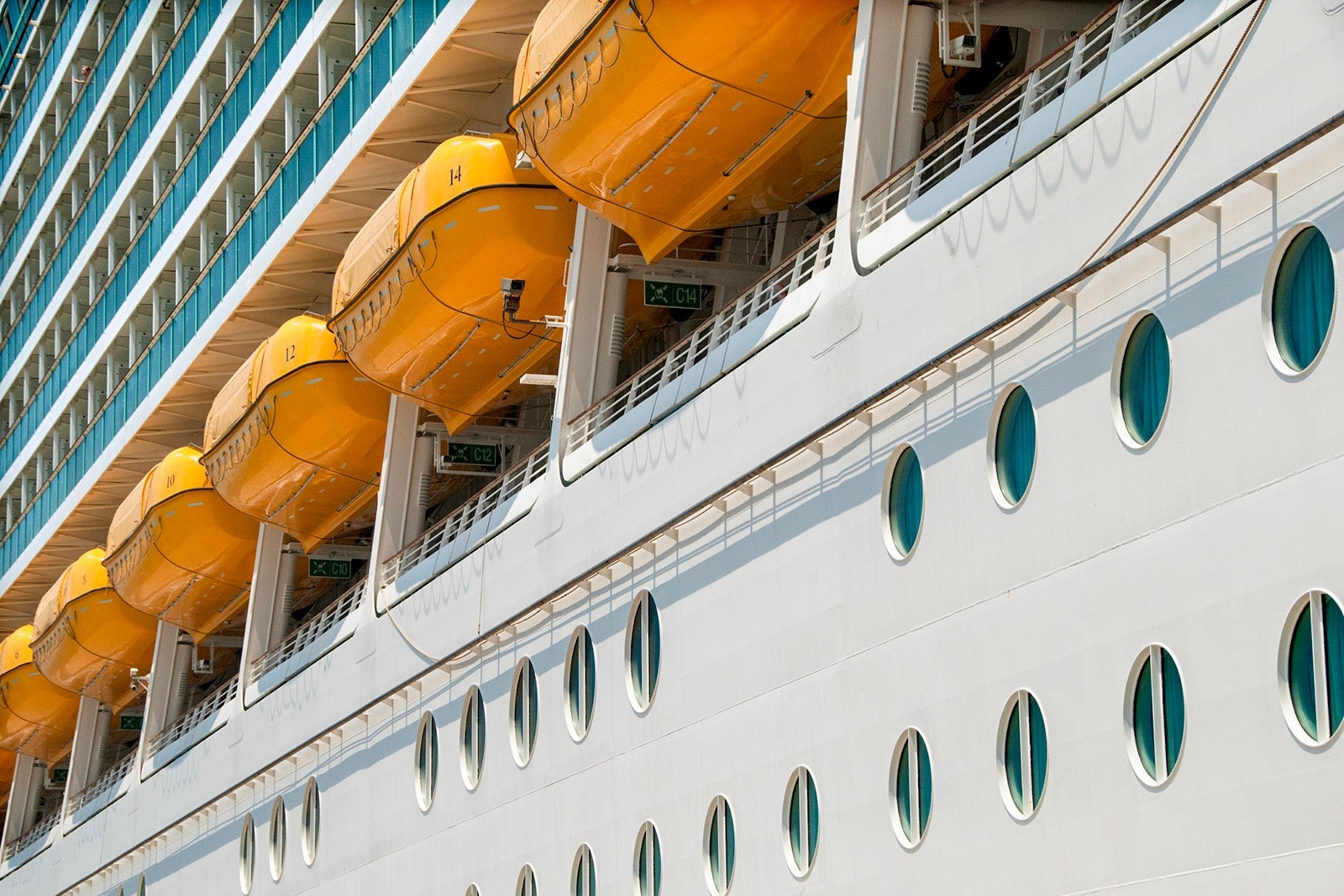
Lifeboats are located outside on both sides of the cruise ship, typically stored on or just above one of the middle decks with an outdoor promenade so passengers can easily board them. This spot is ideal because it's a central location for both the upper- and lower-deck cabins, as well as many public indoor and outdoor venues and amenities.
It also works because it keeps the lifeboats high enough out of the water that they won't be in the way when the ship docks and most likely won't be affected by rough waves. On the flip side, it keeps them low enough that they don't have to be lowered the entire height of the ship (plus, no one wants a lifeboat view from the lido pool or their upper-deck suite).
In an emergency, passengers should not head directly to the lifeboats. Instead, every cabin is assigned an assembly station, where they will meet with crew members and be escorted to a lifeboat if an evacuation is deemed necessary. Passengers must attend a muster drill to identify their assembly station and learn about their ship's emergency procedures. These drills must take place before a cruise ship can set sail.
Related: What is a cruise ship muster drill?
What can be found on a lifeboat?
While this list is not exhaustive, here's most of what you'll find on a cruise ship lifeboat, according to the LSA:
- Enough fuel to travel at 6 knots for at least a full day (24 hours)
- 48 hours' worth of anti-seasickness medication per person
- 2 seasickness bags per person
- 3 liters of fresh water per person
- 2,390 calories' worth of food rations per person
- Life jackets
- Enough thermal protective aid suits for 10% of the lifeboat's capacity
- Three can openers
- First aid supplies
- Buoyant oars
- Anchor
- Illuminated compass
- Hand and parachute flares
- Smoke signals
- Survival manual
- One whistle
- One jackknife
- One searchlight that can work continuously for at least three hours
- Portable fire extinguishing equipment
- Fishing gear
- Tools to repair the engine
Do lifeboats have bathrooms?
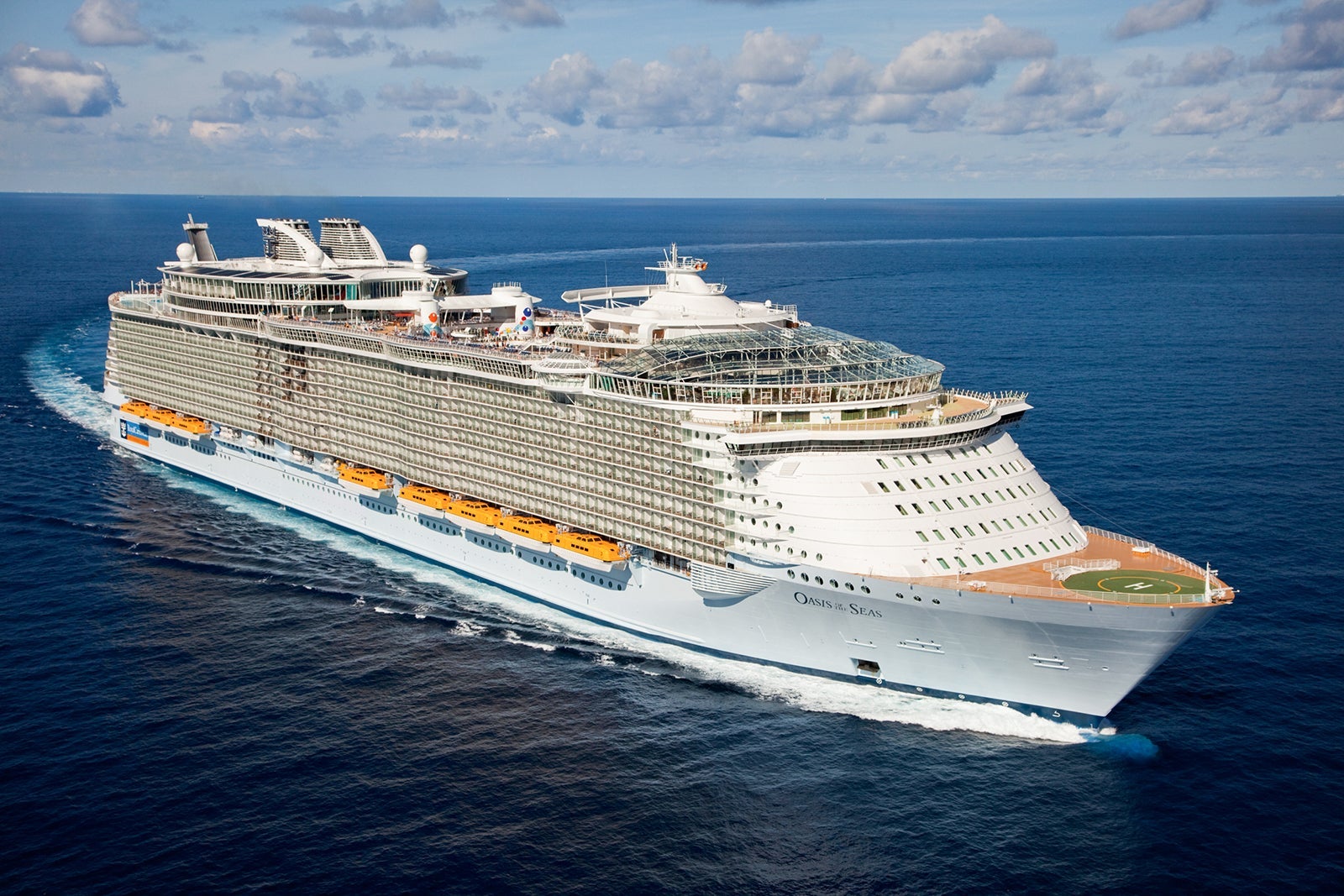
Traditional 150-person lifeboats don't have toilet facilities, but the 370-person catamaran lifeboats used on Royal Caribbean's Oasis-class ships do.
What are other requirements for lifeboats on cruise ships?
Cruise ship lifeboats must be made of noncombustible and flame-retardant materials, according to SOLAS. Modern lifeboats are usually made of fiberglass.
All seating on the lifeboat must support a person weighing a minimum of 220 pounds. In addition, the lifeboats and the wires that move them up and down must be strong enough to allow the lifeboat to be lowered at full capacity.
How are lifeboats tested?
During the manufacturing process, lifeboats are tested using water weights, which can mimic the weight of passengers in various spots around the vessel. These water weights are pumped to fill and drain with water remotely. They're placed in various spots in the lifeboat throughout the testing period to gather data on how the watercraft would handle passenger weight in various locations and scenarios.
Once a lifeboat is delivered to the shipyard for installation on a ship, the inspections and tests do not stop. Throughout the life of the cruise ship, time, weather and use all mean that — like with any type of equipment — things on the lifeboats will degrade and endure wear and tear over time. This is why SOLAS includes requirements for regular lifeboat drills and inspections.
Related: 15 cruise ship rules you shouldn't break
Cruise crew members conduct weekly and monthly lifeboat inspections and undergo periodic training so lifeboat operations stay fresh in their minds.
A more thorough inspection — by either a certified lifeboat technician from an independent company or an inspector from the lifeboat manufacturer itself — occurs annually. According to the International Maritime Organization, this process includes an inspection of these key components:
- The hull is inspected for cracks, damage or other defects.
- The propulsion system, including the engine, is inspected to ensure it's in good working condition. The cooling, exhaust and fuel systems are also examined.
- The electrical system, including the battery, charging, lighting and communications systems, are checked for defects or malfunctions.
- The maneuvering system is inspected, including the steering mechanism, the rudder and other steering gear.
- Lifeboat equipment, such as life jackets and survival equipment, is examined to ensure it's in good condition.
- The davit and winch system, including the winch and wire ropes, are checked for defects or damage.
- The lifeboat undergoes a load test to ensure that it can withstand its maximum weight of crew and passengers.
Any equipment or systems found to have defects or deficiencies during the inspection are either repaired or replaced.
Bottom line
The chances of passengers ever experiencing an emergency on a cruise that requires abandoning ship via lifeboats is extremely slim. Still, it's good to know your ship is outfitted with safety equipment to give you peace of mind when taking your next cruise.
Planning a cruise? Start with these stories:
- The 5 most desirable cabin locations on any cruise ship
- A beginners guide to picking a cruise line
- The 8 worst cabin locations on any cruise ship
- The ultimate guide to what to pack for a cruise
- A quick guide to the most popular cruise lines
- 21 tips and tricks that will make your cruise go smoothly
- 15 ways cruisers waste money
- The ultimate guide to choosing a cruise ship cabin
TPG featured card

at Capital One's secure site
Terms & restrictions apply. See rates & fees.
| 5X miles | Earn 5X miles on hotels, vacation rentals and rental cars booked through Capital One Travel |
| 2X miles | Earn unlimited 2X miles on every purchase, every day |
Pros
- Stellar welcome offer of 75,000 miles after spending $4,000 on purchases in the first three months from account opening. Plus, a $250 Capital One Travel credit to use in your first cardholder year upon account opening.
- You'll earn 2 miles per dollar on every purchase, which means you won't have to worry about memorizing bonus categories
- Rewards are versatile and can be redeemed for a statement credit or transferred to Capital One’s transfer partners
Cons
- Highest bonus-earning categories only on travel booked via Capital One Travel
- LIMITED-TIME OFFER: Enjoy $250 to use on Capital One Travel in your first cardholder year, plus earn 75,000 bonus miles once you spend $4,000 on purchases within the first 3 months from account opening - that’s equal to $1,000 in travel
- Earn unlimited 2X miles on every purchase, every day
- Earn 5X miles on hotels, vacation rentals and rental cars booked through Capital One Travel
- Miles won't expire for the life of the account and there's no limit to how many you can earn
- Receive up to a $120 credit for Global Entry or TSA PreCheck®
- Use your miles to get reimbursed for any travel purchase—or redeem by booking a trip through Capital One Travel
- Enjoy a $50 experience credit and other premium benefits with every hotel and vacation rental booked from the Lifestyle Collection
- Transfer your miles to your choice of 15+ travel loyalty programs
- Top rated mobile app