The Points Guy believes that credit cards can transform lives, helping you leverage everyday spending for cash back or travel experiences that might otherwise be out of reach. That's why we publish a variety of editorial content and card comparisons: to help you find a great card to turn your goals into reality.
Our site may earn compensation when a customer clicks on a link, when an application is approved, or when an account is opened with our partners, and this may impact how or where these products appear. While we don't cover all available credit cards, our editorial team creates and maintains all of the analysis of these cards, and our content is not influenced nor subject to review by any credit card company, bank or partner prior to (or after) publication. Please view our advertising policy and product review methodology for more information.
Advertiser disclosure
The Points Guy believes that credit cards can transform lives, helping you leverage everyday spending for cash back or travel experiences that might otherwise be out of reach. That's why we publish a variety of editorial content and card comparisons: to help you find a great card to turn your goals into reality.
Our site may earn compensation when a customer clicks on a link, when an application is approved, or when an account is opened with our partners, and this may impact how or where these products appear. While we don't cover all available credit cards, our editorial team creates and maintains all of the analysis of these cards, and our content is not influenced nor subject to review by any credit card company, bank or partner prior to (or after) publication. Please view our advertising policy and product review methodology for more information.
Credit Cards
13 Best Chase Credit Cards of November 2026
UpdatedOctober 16, 2026
At The Points Guy, our goal is to help you maximize your travel experiences while minimizing spending. While we do receive compensation through our credit card application links, ads and clearly indicated sponsored content, our editorial content, points valuations and card analyses are entirely our own. Learn more about our advertising policy and product review methodology.
Best for overall mid-tier cards
Chase Sapphire Preferred® Card
Intro offer75,000 bonus points.
Annual fee$95
You'll earn1-5x
Regular APR19.49% - 27.74% Variable
at Chase's secure site. Terms & restrictions apply. See rates & fees.
Chase credit cards can come with solid cash-back rates or valuable transferable reward points through Chase Ultimate Rewards. If you’re looking to earn more on your spending, consider our top picks for the best Chase credit cards. Chase offers a wide selection of credit cards for all customers, whether you’re looking for the easiest cash-back option or a premium travel card.
We rated the best Chase credit cards based on the benefits and protections each card provides across several categories, including travel and everyday purchases. We also considered the earning structure of each Chase card so that there were options for everyone, whether your preference is earning miles, points or cash back. To learn more about how TPG evaluates and chooses cards for our roundups, check out our methodology here.
Welcome bonus
We included Chase cards with varying welcome bonuses for fans of points, miles and cash back.
Annual fee
We chose cards with different annual fees to provide a wider range of perks and benefits.
Earning rates
Each Chase card features several reward categories for maximizing your earning rates.
Redemption options
Our best Chase cards give you options by letting you redeem rewards as cash back, points or miles.
Added benefits
Our top picks offer travel protections, valuable earning rates and welcome bonuses in addition to other perks.
More than half of TPG readers hold more than one Chase card
A recent survey revealed that 52% of TPG readers prioritize earning high-value credit card points and cash back by holding a Chase Sapphire card along with a Chase Freedom* card.
We also discovered that nearly 60% of TPG readers hold at least one card that earns Chase Ultimate Rewards points, which we value at 2.05 cents apiece. When you account for Chase’s transfer partners and how valuable Ultimate Rewards points are, these numbers aren’t surprising.
*The information for the Chase Freedom® card, Chase Freedom® Student credit card and the Chase Freedom Rise® card has been collected independently by The Points Guy. The card details on this page have not been reviewed or provided by the card issuer.
This information was collected via opt-in surveys of TPG’s roughly 900,000 daily newsletter subscribers in May-June 2024. All data is anonymous and aggregated; you can view our full methodology for collecting and utilizing data here.
How to choose the best Chase credit card
Choosing the best Chase credit card will depend on factors like your personal financial goals and spending habits. If you want a simple, flat-rate cash back earner, a card with a high annual fee may be overkill. If you’re looking for a premium travel card loaded with protections and perks, you might not mind paying a higher annual fee for the right card — it really boils down to your specific needs.
Here are some of the main points to consider when choosing a Chase credit card:
1
Sign-up bonus
Choose a card that aligns with your financial goals — if you’re saving for a big vacation, applying for a card with a generous sign-up bonus may help cover some of the travel costs for that trip.
2
Annual fee
Whether your preference is a card with no annual fee or a premium card with a high annual fee, choose the one that best fits your lifestyle.
3
Bonus categories
Choose the card that earns rewards in your most frequently used bonus categories like groceries, gas and streaming subscriptions.
The complete Chase Ultimate Rewards guide - The Points Guy
Chase offers multiple credit cards to earn multiple types of rewards, such as cash back and transferable points
Some Chase credit cards earn valuable Chase Ultimate Rewards points, which can be redeemed for travel through Chase Travel or transferred to partners for maximum value
Some Chase credit cards provide purchase, theft and fraud protection
Chase credit cards come with access to Chase Sapphire lounges
Multiple Chase credit cards pair well together to help you earn more Chase Ultimate Rewards points to maximize your travel purchases
Cons
Carrying a balance on your Chase card can lessen the value of rewards you earn
The cost of borrowing on Chase credit cards is higher than traditional loans
Having too many card applications can negatively affect your credit score
Chase has some of the most stringent application restrictions of any issuer
Some Chase credit cards come with an annual fee
How to apply for a Chase credit card
You can apply for a Chase credit card online, by mail or in person at a Chase bank. You'll need some basic information like your social security number and gross annual income. Here's what else you should know before you submit an application.
Frequently asked questions
Which Chase credit card is best?
There’s no single Chase credit card that’s best for everyone. Instead, it will depend on your spending habits and what rewards you are looking for. Luckily, Chase cards are easy to pair and maximize, so you can consider adding multiple cards to your wallet.
How do you apply for a Chase credit card?
To apply for any Chase card on this list, you can click on the card’s name, photo or “Apply Now” link to the right of the card. Then, simply follow the on-screen instructions to complete (and submit) your application.
How many Chase credit cards can you have?
Chase doesn’t have an official limit on the number of Chase cards one person can have. In fact, many TPG staffers have had several Chase credit cards at the same time. However, Chase does limit the amount of total credit it will extend to you. It also has the 5/24 rule (more on that below). Finally, as a general rule of thumb, you can only be approved for one personal card and one business card within 90 days — but even that’s not a hard-and-fast rule.
There are also different application rules for specific Chase cards. You can now hold more than one Sapphire product at the same time, though welcome bonus eligibility for Sapphire products has changed.
For example, if you've received a welcome bonus on one consumer Sapphire product, you will most likely not be eligible to receive another welcome bonus on any other consumer Sapphire product. This excludes the Chase Sapphire Reserve for Business℠ as it's a business card and not a personal consumer card.
You can only have a single personal Southwest credit card; however, you can hold both a Southwest business card and personal card, which is a great way to earn the Southwest Companion Pass.
That being said, having a score of at least 700 will give you the best chances of being approved for the top Chase credit cards. Of course, it’s possible to be approved with a slightly lower score; it’s just not as likely.
How do you cancel a Chase credit card?
To cancel a Chase credit card, you’ll need to call the number on the back of your card. A phone agent can help you complete the cancellation process. However, be sure to use (or transfer) all of your rewards first, since you may forfeit them after canceling (or shortly thereafter). Pay off any outstanding balances, and be sure to update your account with any merchants that automatically bill the card you’re closing.
Just note that canceling a credit card should not be taken lightly, as it can affect your credit score. You can check out our guide to how to cancel a credit card to help you determine if you should go this route.
What credit score do you need to get a Chase credit card?
Chase does not publish an official score for approval, but our data suggests that a score of at least 670 will increase your chances of getting approved. In addition, rewards credit cards generally require a higher credit score for approval, typically 720-plus.
Having a score of at least 700 will give you the best chances of being approved for the top Chase credit cards. Of course, it’s possible to be approved with a slightly lower score; it’s just not as likely.
“For me, the Sapphire Reserve is the best card in the Chase lineup. It comes with tons of benefits and features a solid point-earning structure. I also love that Chase Ultimate Rewards has several high-value transfer partners like World of Hyatt and Air Canada Aeroplan.”
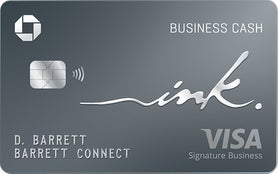
“My Ink Business Cash earns me 5% back on my internet and phone bills plus purchases at my local Staples, but since I also have the Chase Sapphire Reserve®, I can combine my points in a single account. This effectively converts my cash-back earnings into full transferable Ultimate Rewards points.”
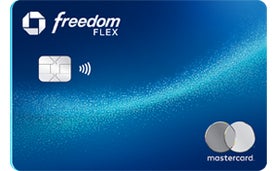
“I enjoy earning 5% cash back in quarterly bonus categories, especially since this card has no annual fee. I particularly like when the Freedom Flex offers unique bonus categories that aren’t available on my other cards, such as Amazon or Walmart, for a quarter.”
The Chase Sapphire Preferred® Card remains one of the easiest travel rewards cards to recommend because it has elevated rewards across everyday spending categories, valuable travel protections, useful statement credits and an approachable annual fee. Whether you're new to points and miles or already maximizing transfer partners, it offers a rare combination of flexibility and long-term value for both beginners and experienced travelers alike.
Pros + cons
Pros
Earn elevated rewards in popular categories, including travel, dining, gas, EV charging and vacation home stays
Premium travel protection benefits include trip cancellation/interruption insurance, primary car rental insurance and lost luggage insurance
Versatile airline and hotel transfer partners
Features up to $100 in annual hotel credits through Chase Travel℠
Cons
Has an annual fee
No airport lounge access
Transfers to Hyatt at a lower rate than other Sapphire cards
More details
Earn 75,000 bonus points after you spend $5,000 on purchases in the first 3 months from account opening.
Enjoy benefits such as 5x on travel purchased through Chase Travel℠, 3x on dining, 3x on vacation homes at top brands, 3x on gas & EV charging, 3x on top streaming services and online groceries (excluding Walmart, Target, and wholesale clubs), 2x on all other travel purchases, 1x on all other purchases.
Earn up to $100 in statement credits each account anniversary year for hotel stays through Chase Travel℠.
Count on Trip Cancellation/Interruption Insurance, Auto Rental Coverage, Emergency Evacuation and Transportation, and more.
Get a year of complimentary Apple TV when activated by December 31, 2026 - a value of $180.
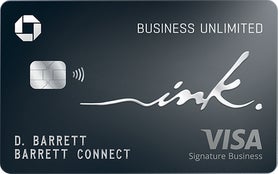
The Ink Business Unlimited offers unlimited 1.5% cash back on every business purchase. It fills in rewards gaps not covered by the Ink Business Cash® Credit Card. You can maximize this card by pairing it with cards including the Chase Sapphire Reserve® and the Chase Sapphire Preferred® Card. Read our full review of the Ink Business Unlimited Credit Card.
Pros + cons
Pros
No annual fee
Flat 1.5% cash back on all purchases
Primary insurance for car rentals
Shopping protections
Cash back can become points when paired with an eligible card
Cons
Lacks bonus categories
High spending requirement to receive the welcome bonus
No conversion to Ultimate Rewards points without holding another eligible Chase card
More details
Earn $750 bonus cash back after you spend $6,000 on purchases in the first 3 months from account opening
Earn unlimited 1.5% cash back on every purchase made for your business
No Annual Fee
Redeem rewards for cash back, gift cards, travel and more through Chase Ultimate Rewards®.
Earn rewards faster with employee cards at no additional cost. Set individual spending limits for greater control.
Round-the-clock monitoring for unusual credit card purchases
With Zero Liability you won't be held responsible for unauthorized charges made with your card or account information.
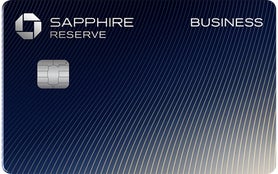
The Chase Sapphire Reserve for Business℠ is a top choice for business owners who prioritize travel and premium perks. It offers elevated rewards, including 8 points per dollar spent through Chase Travel℠ and 4 points per dollar spent on flights and hotels booked direct.
Cardmembers also receive flexible statement credits totalling over $2,500 annually, including more than $1,300 in travel value and $1,200 towards business services. These credits cover a wide range of expenses, such as a $300 annual travel credit and a $400 ZipRecruiter hiring credit.
While the card carries a high annual fee, its broad range of benefits and generous earning potential make it a solid choice for businesses with frequent travel and significant spending needs.
Pros + cons
Pros
Earn 8 points per dollar spent through Chase Travel and 4 points per dollar spent on flights and hotels booked direct
$300 annual travel credit plus additional credits for rideshare and food delivery
$120 statement credit for Global Entry, TSA PreCheck or NEXUS every four years
Access to Chase Sapphire Lounges, plus IHG Platinum Elite status and exclusive hotel perks via The Edit
Comprehensive travel protections and purchase coverage, including trip delay and rental car insurance
Up to $500 annual hotel credit with The Edit by Chase Travel (two $250 credits per year; two-night minimum required)
Cons
Steep $795 annual fee, which may be hard to justify without frequent traveling or high spending
Many credits are split across the year or require activation, making them harder to fully maximize
Employee cards lack key perks like lounge access and hotel elite status
Must spend $120,000 annually to unlock some of the most valuable benefits (like IHG Diamond status and Southwest A-List)
More details
Earn 200,000 bonus points after you spend $30,000 on purchases in your first 6 months from account opening.
The Ink Business Cash is an excellent no annual fee card for small business owners. Cardholders can earn 5% cash back on office supplies and select utilities, as well as 2% cash back at restaurants and gas stations. On top of that, the Ink Business Cash card also offers automatic credit limit increase assessments every six months — and sometimes even sooner — to suit the needs of growing businesses. Read our full review of the Ink Business Cash card.
Pros + cons
Pros
Valuable welcome offer
No annual fee means this is a good card for businesses that want to keep operating costs low
Decent earning rates across popular categories for businesses
Cons
5% cash back earned on certain categories is capped at the first $25,000 you make in combined purchases each account anniversary year
More details
Earn $750 when you spend $6,000 on purchases in the first 3 months after account opening
Earn 5% cash back at office supply stores and on internet, cable and phone services each account anniversary year on the first $25,000 in combined spend
Earn 2% cash back on dining and gas each account anniversary year on the first $25,000 spent in combined spend.
Earn 1% cash back on all other purchases with no limit to the amount you can earn.
Earn 5% total cash back on Lyft rides through 9/30/27.
As a Chase cardmember, you’ll be automatically checked for a credit line increase at least every 6 months.
The Chase Sapphire Reserve® remains one of the most rewarding travel credit cards thanks to its elevated earning rates on both Chase Travel℠ and direct hotel and airline purchases. Cardholders also gain access to more than $3,000 in potential annual value through premium perks like lounge access, hotel status, lifestyle credits and flexible travel credits.
With its strong earning structure and access to Chase’s airline and hotel partners, it’s a top choice for travelers seeking both luxury and long-term value.
Pros + cons
Pros
Automatic $300 annual travel credit each account anniversary year
Earn 8 points per dollar spent on Chase Travel purchases and 4 points per dollar spent on flights and hotels booked direct
Over $3,000 in total annual cardmember value, including credits for StubHub, Apple Music, Apple TV+ and DoorDash
$300 annual dining credit (split up as two semiannual $150 credits) for Sapphire Reserve Exclusive Tables restaurants
Access to Chase’s 13 hotel and airline travel partners
No foreign transaction fee
Cons
Steep $795 annual fee, plus a $195 fee per authorized user
Some credits are split biannually, requiring careful tracking to maximize value
Some credits require enrollment or specific platforms, which may make it more difficult to maximize value
May not be a good fit for those who don’t spend heavily on travel or select lifestyle categories
More details
Earn 100,000 bonus points after you spend $6,000 on purchases in the first 3 months from account opening.
Get $3,000 in annual value with Sapphire Reserve.
Earn 8x points on all purchases through Chase Travel℠, including The Edit℠ and 4x points on flights and hotels booked direct. Plus, earn 3x points on dining worldwide & 1x points on all other purchases.
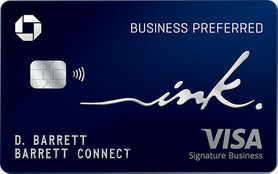
The Ink Business Preferred Credit Card's sign-up bonus is a generous offer for the card. Plus, earn points across the four bonus categories (travel, shipping, advertising and telecommunication providers) that are most popular with businesses. The card comes with travel protections, shopping protections and will also have primary coverage when renting a car for business purposes for you and your employees. Read our full review of the Ink Business Preferred Credit Card.
Pros + cons
Pros
Relevant bonus categories to business owners for a reasonable $95 annual fee
Access to the Chase Ultimate Rewards portal for points redemption
Trip cancellation/interruption insurance, trip delay reimbursement and primary car rental insurance when traveling on business
Additional perks including extended warranty, cellphone protection and purchase protection
Cons
High spending needed to get the welcome bonus
Subject to Chase's 5/24 rule on card applications
More details
Earn 100k bonus points after you spend $8,000 on purchases in the first 3 months from account opening.
Earn 3 points per $1 on the first $150,000 spent on travel and select business categories each account anniversary year. Earn 1 point per $1 on all other purchases
Earn 5x total points on Lyft rides through 9/30/27.
With Zero Liability you won't be held responsible for unauthorized charges made with your card or account information.
Redeem points for cash back, gift cards, travel and more - your points don't expire as long as your account is open
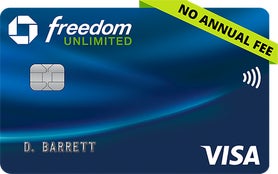
The Chase Freedom Unlimited is a surprisingly powerful card that earns cash back on every purchase. However, it doubles in potential value if you pair it with a card that earns transferable Ultimate Rewards points. Read our full review of the Chase Freedom Unlimited.
Pros + cons
Pros
At least 1.5% back on every purchase, with up to 5% or 3% back on select categories
No annual fee
Perfect for everyday, non-bonus spending
Offers great value when paired with a premium Chase card
Cons
3% foreign transaction fee
More details
Earn a $200 Bonus after you spend $500 on purchases in your first 3 months from account opening
Enjoy 5% cash back on travel purchased through Chase Travel℠, our premier rewards program that lets you redeem rewards for cash back, travel, gift cards and more; 3% cash back on drugstore purchases and dining at restaurants, including takeout and eligible delivery service, and 1.5% on all other purchases.
No minimum to redeem for cash back. You can use points to redeem for cash through an account statement credit or an electronic deposit into an eligible Chase account located in the United States!
Enjoy 0% Intro APR for 15 months from account opening on purchases and balance transfers, then a variable APR of 18.49% - 27.99%.
No annual fee – You won't have to pay an annual fee for all the great features that come with your Freedom Unlimited® card
Keep tabs on your credit health, Chase Credit Journey helps you monitor your credit with free access to your latest score, alerts, and more.
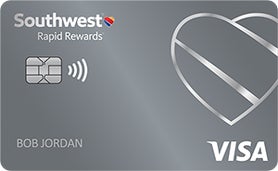
The Southwest Plus credit card is a great starter card for those who are loyal to the carrier. Read our full review of the Southwest Rapid Rewards Plus Credit Card.
Pros + cons
Pros
Complimentary first checked bag for the cardmember and up to eight additional passengers on the same reservation
Standard seat selection within 48 hours prior to departure, when available
Earn 2 points per dollar spent at gas stations and grocery stores (on the first $5,000 in combined purchases per anniversary year)
3,000 complimentary Southwest points annually, on each cardmember anniversary
One 10% promo code each year at your cardmember anniversary (excluding Basic fare)
No foreign transaction fees
Cons
Flight redemption limited to U.S., Caribbean and Central American destinations
More details
Earn 50,000 bonus points after spending $1,000 on purchases in the first 3 months from account opening.
3,000 anniversary points each year.
Earn 2 points per $1 spent on Southwest Airlines® purchases
Earn 2 points for every $1 you spend at gas stations and grocery stores on the first $5,000 in combined purchases per anniversary year
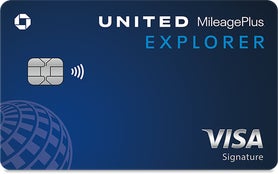
Between a TSA PreCheck/Global Entry fee credit, two annual lounge visits and a free checked bag, the United Explorer card is packed with perks that will enhance your trips for even occasional United flyers. Read our full review of the United Explorer card.
Pros + cons
Pros
First checked bag free for the cardholder and a companion
Priority boarding
25% off eligible inflight purchases
Up to $120 credit every four years for Global Entry/TSA PreCheck
No foreign transaction fees
Cons
Other United cards have higher earning rates on some purchases
You might get more use from a transferable points card instead of a cobranded United card
More details
Earn up to 80,000 bonus miles
$0 introductory annual fee for the first year, then $150
9x total miles on eligible United flights and 3x miles on all other eligible United® purchases.
2x miles on dining and hotel stays when booked with the hotel. 1x mile on all other purchases.
Free first checked bag - a savings of up to $200 per roundtrip. Terms Apply. Plus, Group 2 priority boarding on United® flights.
2 United Club one-time passes per year - over a $100 value
Over $500 in partner credits each year
Save 10% or more when booking flights with miles. Premier members save even more.
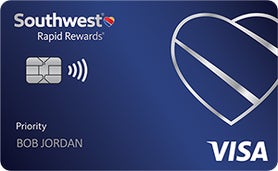
While other airlines’ top credit cards have annual fees toppling over $500 per year, the Southwest Rapid Rewards Priority Card comes with just a $229 annual per year. If Southwest is your airline of choice, you’ll receive a number of perks every year, like 7,500 points on your cardmember anniversary. Additionally, for every $5,000 spent on this card, you’ll earn 2,500 Tier Qualifying Points, fast-tracking your way to A-List Status. Read our full review of the Southwest Rapid Rewards Priority Card.
Pros + cons
Pros
Complimentary first checked bag for the cardmember and up to eight additional passengers on the same reservation
Preferred seat selection at booking, when available
Unlimited upgrades to Extra Legroom seating within 48 hours of departure when available
7,500 complimentary Southwest points annually, on each cardmember anniversary
25% discount on inflight purchases
Ability to earn A-List status faster by spending on this card
Cons
$229 annual fee
More details
Earn 60,000 bonus points after spending $2,000 on purchases in the first 3 months from account opening.
7,500 anniversary points each year.
Earn 4 points per $1 spent on Southwest Airlines® purchases, including flights, inflight, and Southwest gift cards.
Earn 2 points for every $1 you spend at gas stations and restaurants
First checked bag free for Cardmembers and up to 8 additional passengers in the same reservation.
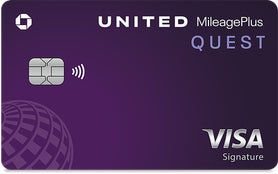
The United Quest Card is a solid, middle-of-the-road option for frequent United flyers. The $350 annual fee is more than cut in half if you can take advantage of the annual $200 United travel credit, and there’s a long list of benefits from checked baggage benefits to a strong earning rate on United and everyday purchases. Read our full review of the United Quest Card.
Pros + cons
Pros
Earn 4 miles per dollar spent on eligible United purchases and 2 miles per dollar spent on a variety of other categories
Get a first and second checked bag free for the cardholder and a companion
Priority boarding on United- and United Express-operated flights
25% off eligible inflight purchases
Cons
Day-of-travel perks limited to United and some partner flights
Other United cards have higher earning rates on some purchases
You might get more use from transferable points instead of United miles
More details
Earn up to 90,000 bonus miles after qualifying activities and 500 PQP after first purchase
10x total miles on eligible United flights and 4x miles on all other eligible United® purchases
2x miles on dining, select streaming services, and all other travel
1x mile on all other purchases
Get a jump start on earning Premier status with 1,000 Card Bonus PQP each year, awarded within 8 weeks of February 1, starting in the calendar year following your account open date.
Free first and second checked bags--a savings of up to $440 per roundtrip (terms apply)
The Chase Freedom Flex delivers a formidable 5% cash back on select bonus categories and travel purchased through Chase Travel℠. This card is an excellent addition to your wallet as it provides ongoing rewards, a welcoming sign-up bonus and no annual fee to worry about. Read our full review of the Chase Freedom Flex.
Pros + cons
Pros
No annual fee
High earn rate on rotating categories, as well as everyday spending categories like dining and drugstores
Offers valuable benefits for cardholders, including extended warranties, trip insurance and food delivery perks
Comes with an intro APR offer
Cons
You must remember to activate your bonus categories quarterly
Rewards can only be used for cash back unless you pair it with a Chase Ultimate Rewards card
More details
Limited Time Offer! Earn a $250 Bonus after you spend $500 on purchases in your first 3 months from account opening
5% cash back on up to $1,500 in combined purchases in bonus categories each quarter you activate. Enjoy new 5% categories each quarter!
New Benefit! Earn rewards worldwide with no foreign transaction fees
5% cash back on travel purchased through Chase Travel℠, our premier rewards program that lets you redeem rewards for cash back, travel, gift cards and more
3% cash back on drugstore purchases and dining at restaurants, including takeout and eligible delivery service, and unlimited 1% cash back on all other purchases.
No minimum to redeem for cash back. You can use points to redeem for cash through an account statement credit or an electronic deposit into an eligible Chase account located in the United States.
Limited-Time Offer
Best for rotating bonus categories
Chase Freedom Flex®
TPG editor's rating
Best for casual Southwest flyers
Southwest Rapid Rewards® Premier Credit Card
TPG editor's rating3.5
TPG editor's rating
Why we chose it
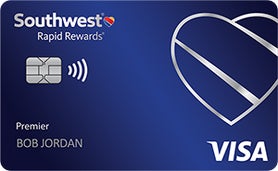
The Southwest Rapid Rewards Premier Credit Card is one of the best mid-range annual fee cards in part to its generous sign-up bonus. You’ll also receive 6,000 bonus points upon card renewal, among travel and purchase protections that make this card a solid pick for seldom Southwest flyers. Read our full review of the Southwest Rapid Rewards Premier Credit Card.
Pros + cons
Pros
10,000 Companion Pass qualifying points every year
6,000 anniversary points each cardmember anniversary
No foreign transaction fees
More details
Earn 55,000 bonus points after spending $1,500 on purchases in the first 3 months from account opening.
6,000 anniversary points each year.
Earn 3 points per $1 spent on Southwest Airlines® purchases, including flights, inflight, and Southwest gift cards.
Earn 2 points for every $1 you spend at grocery stores and restaurants on the first $8,000 in combined purchases per anniversary year.
First checked bag free for Cardmembers and up to 8 additional passengers in the same reservation.
Select a Standard or Preferred seat within 48 hours prior to departure, when available.
Cardmembers and up to 8 passengers in the same reservation will board with Group 5 giving them earlier access to overhead bins.
Earn 2X points at grocery stores and restaurants on the first $8,000 in combined purchases per year.
1X
Earn 1X points on all other purchases.
Intro offer
Earn 55,000 points
Annual fee
$149
Regular APR
19.49% - 27.99% Variable
Recommended credit
Good Credit, Excellent Credit
Why we chose it
The Southwest Rapid Rewards Premier Credit Card is one of the best mid-range annual fee cards in part to its generous sign-up bonus. You’ll also receive 6,000 bonus points upon card renewal, among travel and purchase protections that make this card a solid pick for seldom Southwest flyers. Read our full review of the Southwest Rapid Rewards Premier Credit Card.
View more
Pros
10,000 Companion Pass qualifying points every year
6,000 anniversary points each cardmember anniversary
No foreign transaction fees
Earn 55,000 bonus points after spending $1,500 on purchases in the first 3 months from account opening.
6,000 anniversary points each year.
Earn 3 points per $1 spent on Southwest Airlines® purchases, including flights, inflight, and Southwest gift cards.
Earn 2 points for every $1 you spend at grocery stores and restaurants on the first $8,000 in combined purchases per anniversary year.
First checked bag free for Cardmembers and up to 8 additional passengers in the same reservation.
Select a Standard or Preferred seat within 48 hours prior to departure, when available.
Cardmembers and up to 8 passengers in the same reservation will board with Group 5 giving them earlier access to overhead bins.
No foreign transaction fees.
Member FDIC
Why we chose it
The Southwest Rapid Rewards Premier Credit Card is one of the best mid-range annual fee cards in part to its generous sign-up bonus. You’ll also receive 6,000 bonus points upon card renewal, among travel and purchase protections that make this card a solid pick for seldom Southwest flyers. Read our full review of the Southwest Rapid Rewards Premier Credit Card.
Pros + cons
Pros
10,000 Companion Pass qualifying points every year
6,000 anniversary points each cardmember anniversary
No foreign transaction fees
More details
Earn 55,000 bonus points after spending $1,500 on purchases in the first 3 months from account opening.
6,000 anniversary points each year.
Earn 3 points per $1 spent on Southwest Airlines® purchases, including flights, inflight, and Southwest gift cards.
Earn 2 points for every $1 you spend at grocery stores and restaurants on the first $8,000 in combined purchases per anniversary year.
First checked bag free for Cardmembers and up to 8 additional passengers in the same reservation.
Select a Standard or Preferred seat within 48 hours prior to departure, when available.
Cardmembers and up to 8 passengers in the same reservation will board with Group 5 giving them earlier access to overhead bins.
No foreign transaction fees.
Member FDIC
Why we chose it
The Southwest Rapid Rewards Premier Credit Card is one of the best mid-range annual fee cards in part to its generous sign-up bonus. You’ll also receive 6,000 bonus points upon card renewal, among travel and purchase protections that make this card a solid pick for seldom Southwest flyers. Read our full review of the Southwest Rapid Rewards Premier Credit Card.
Pros
10,000 Companion Pass qualifying points every year
6,000 anniversary points each cardmember anniversary
No foreign transaction fees
Earn 55,000 bonus points after spending $1,500 on purchases in the first 3 months from account opening.
6,000 anniversary points each year.
Earn 3 points per $1 spent on Southwest Airlines® purchases, including flights, inflight, and Southwest gift cards.
Earn 2 points for every $1 you spend at grocery stores and restaurants on the first $8,000 in combined purchases per anniversary year.
First checked bag free for Cardmembers and up to 8 additional passengers in the same reservation.
Select a Standard or Preferred seat within 48 hours prior to departure, when available.
Cardmembers and up to 8 passengers in the same reservation will board with Group 5 giving them earlier access to overhead bins.
The Southwest Rapid Rewards Premier Credit Card is one of the best mid-range annual fee cards in part to its generous sign-up bonus. You’ll also receive 6,000 bonus points upon card renewal, among travel and purchase protections that make this card a solid pick for seldom Southwest flyers. Read our full review of the Southwest Rapid Rewards Premier Credit Card.
Pros + cons
Pros
10,000 Companion Pass qualifying points every year
6,000 anniversary points each cardmember anniversary
No foreign transaction fees
More details
Earn 55,000 bonus points after spending $1,500 on purchases in the first 3 months from account opening.
6,000 anniversary points each year.
Earn 3 points per $1 spent on Southwest Airlines® purchases, including flights, inflight, and Southwest gift cards.
Earn 2 points for every $1 you spend at grocery stores and restaurants on the first $8,000 in combined purchases per anniversary year.
First checked bag free for Cardmembers and up to 8 additional passengers in the same reservation.
Select a Standard or Preferred seat within 48 hours prior to departure, when available.
Cardmembers and up to 8 passengers in the same reservation will board with Group 5 giving them earlier access to overhead bins.
No foreign transaction fees.
Member FDIC
4.5
at Chase's secure site. Terms & restrictions apply. See rates & fees.
Rewards rate
Rewards rate
Rate
Category
8x
Earn 8x points on all purchases through Chase Travel℠, including The Edit℠.
4x
Earn 4x points on flights and hotels booked direct.
3x
Earn 3x points on dining worldwide.
1x
Earn 1x points on all other purchases.
Intro offer
100,000 bonus points.
Annual fee
$795
Regular APR
19.74% - 28.24% Variable
Recommended credit
740-850
Excellent
$300 annual travel credit as reimbursement for travel purchases charged to your card each account anniversary year.
Access over 1,300 airport lounges worldwide with a complimentary Priority Pass™ Select membership, plus every Chase Sapphire Lounge® by The Club with two guests. Plus, a statement credit of up to $120 every four years as reimbursement for the application fee charged to your card for a Global Entry, TSA Precheck® or NEXUS application.
Get up to $150 in statement credits from January through June and again from July through December for a maximum of $300 annually when you dine at restaurants part of Sapphire Reserve Exclusive Tables.
Count on Trip Cancellation/Interruption Insurance, Auto Rental Coverage, Lost Luggage Insurance, no foreign transaction fees, and more.
Get complimentary subscriptions to Apple TV and Apple Music for a minimum of one year when activated by June 22, 2027, a value of $324 annually.
Member FDIC
Why we chose it
The Chase Sapphire Reserve® remains one of the most rewarding travel credit cards thanks to its elevated earning rates on both Chase Travel℠ and direct hotel and airline purchases. Cardholders also gain access to more than $3,000 in potential annual value through premium perks like lounge access, hotel status, lifestyle credits and flexible travel credits.
With its strong earning structure and access to Chase’s airline and hotel partners, it’s a top choice for travelers seeking both luxury and long-term value.
View more
Pros
Automatic $300 annual travel credit each account anniversary year
Earn 8 points per dollar spent on Chase Travel purchases and 4 points per dollar spent on flights and hotels booked direct
Over $3,000 in total annual cardmember value, including credits for StubHub, Apple Music, Apple TV+ and DoorDash
$300 annual dining credit (split up as two semiannual $150 credits) for Sapphire Reserve Exclusive Tables restaurants
Access to Chase’s 13 hotel and airline travel partners
No foreign transaction fee
Cons
Steep $795 annual fee, plus a $195 fee per authorized user
Some credits are split biannually, requiring careful tracking to maximize value
Some credits require enrollment or specific platforms, which may make it more difficult to maximize value
May not be a good fit for those who don’t spend heavily on travel or select lifestyle categories
Earn 100,000 bonus points after you spend $6,000 on purchases in the first 3 months from account opening.
Get $3,000 in annual value with Sapphire Reserve.
Earn 8x points on all purchases through Chase Travel℠, including The Edit℠ and 4x points on flights and hotels booked direct. Plus, earn 3x points on dining worldwide & 1x points on all other purchases.
$300 annual travel credit as reimbursement for travel purchases charged to your card each account anniversary year.
Access over 1,300 airport lounges worldwide with a complimentary Priority Pass™ Select membership, plus every Chase Sapphire Lounge® by The Club with two guests. Plus, a statement credit of up to $120 every four years as reimbursement for the application fee charged to your card for a Global Entry, TSA Precheck® or NEXUS application.
Get up to $150 in statement credits from January through June and again from July through December for a maximum of $300 annually when you dine at restaurants part of Sapphire Reserve Exclusive Tables.
Count on Trip Cancellation/Interruption Insurance, Auto Rental Coverage, Lost Luggage Insurance, no foreign transaction fees, and more.
Get complimentary subscriptions to Apple TV and Apple Music for a minimum of one year when activated by June 22, 2027, a value of $324 annually.
Member FDIC
Why we chose it
The Chase Sapphire Reserve® remains one of the most rewarding travel credit cards thanks to its elevated earning rates on both Chase Travel℠ and direct hotel and airline purchases. Cardholders also gain access to more than $3,000 in potential annual value through premium perks like lounge access, hotel status, lifestyle credits and flexible travel credits.
With its strong earning structure and access to Chase’s airline and hotel partners, it’s a top choice for travelers seeking both luxury and long-term value.
Pros + cons
Pros
Automatic $300 annual travel credit each account anniversary year
Earn 8 points per dollar spent on Chase Travel purchases and 4 points per dollar spent on flights and hotels booked direct
Over $3,000 in total annual cardmember value, including credits for StubHub, Apple Music, Apple TV+ and DoorDash
$300 annual dining credit (split up as two semiannual $150 credits) for Sapphire Reserve Exclusive Tables restaurants
Access to Chase’s 13 hotel and airline travel partners
No foreign transaction fee
Cons
Steep $795 annual fee, plus a $195 fee per authorized user
Some credits are split biannually, requiring careful tracking to maximize value
Some credits require enrollment or specific platforms, which may make it more difficult to maximize value
May not be a good fit for those who don’t spend heavily on travel or select lifestyle categories
More details
Earn 100,000 bonus points after you spend $6,000 on purchases in the first 3 months from account opening.
Get $3,000 in annual value with Sapphire Reserve.
Earn 8x points on all purchases through Chase Travel℠, including The Edit℠ and 4x points on flights and hotels booked direct. Plus, earn 3x points on dining worldwide & 1x points on all other purchases.
$300 annual travel credit as reimbursement for travel purchases charged to your card each account anniversary year.
Access over 1,300 airport lounges worldwide with a complimentary Priority Pass™ Select membership, plus every Chase Sapphire Lounge® by The Club with two guests. Plus, a statement credit of up to $120 every four years as reimbursement for the application fee charged to your card for a Global Entry, TSA Precheck® or NEXUS application.
Get up to $150 in statement credits from January through June and again from July through December for a maximum of $300 annually when you dine at restaurants part of Sapphire Reserve Exclusive Tables.
Count on Trip Cancellation/Interruption Insurance, Auto Rental Coverage, Lost Luggage Insurance, no foreign transaction fees, and more.
Get complimentary subscriptions to Apple TV and Apple Music for a minimum of one year when activated by June 22, 2027, a value of $324 annually.
Member FDIC
Why we chose it
The Chase Sapphire Reserve® remains one of the most rewarding travel credit cards thanks to its elevated earning rates on both Chase Travel℠ and direct hotel and airline purchases. Cardholders also gain access to more than $3,000 in potential annual value through premium perks like lounge access, hotel status, lifestyle credits and flexible travel credits.
With its strong earning structure and access to Chase’s airline and hotel partners, it’s a top choice for travelers seeking both luxury and long-term value.
Pros
Automatic $300 annual travel credit each account anniversary year
Earn 8 points per dollar spent on Chase Travel purchases and 4 points per dollar spent on flights and hotels booked direct
Over $3,000 in total annual cardmember value, including credits for StubHub, Apple Music, Apple TV+ and DoorDash
$300 annual dining credit (split up as two semiannual $150 credits) for Sapphire Reserve Exclusive Tables restaurants
Access to Chase’s 13 hotel and airline travel partners
No foreign transaction fee
Cons
Steep $795 annual fee, plus a $195 fee per authorized user
Some credits are split biannually, requiring careful tracking to maximize value
Some credits require enrollment or specific platforms, which may make it more difficult to maximize value
May not be a good fit for those who don’t spend heavily on travel or select lifestyle categories
Earn 100,000 bonus points after you spend $6,000 on purchases in the first 3 months from account opening.
Get $3,000 in annual value with Sapphire Reserve.
Earn 8x points on all purchases through Chase Travel℠, including The Edit℠ and 4x points on flights and hotels booked direct. Plus, earn 3x points on dining worldwide & 1x points on all other purchases.
$300 annual travel credit as reimbursement for travel purchases charged to your card each account anniversary year.
Access over 1,300 airport lounges worldwide with a complimentary Priority Pass™ Select membership, plus every Chase Sapphire Lounge® by The Club with two guests. Plus, a statement credit of up to $120 every four years as reimbursement for the application fee charged to your card for a Global Entry, TSA Precheck® or NEXUS application.
Get up to $150 in statement credits from January through June and again from July through December for a maximum of $300 annually when you dine at restaurants part of Sapphire Reserve Exclusive Tables.
Count on Trip Cancellation/Interruption Insurance, Auto Rental Coverage, Lost Luggage Insurance, no foreign transaction fees, and more.
Get complimentary subscriptions to Apple TV and Apple Music for a minimum of one year when activated by June 22, 2027, a value of $324 annually.
at Chase's secure site. Terms & restrictions apply. See rates & fees.
Intro offer
100,000 bonus points.
Annual fee
$795
Regular APR
19.74% - 28.24% Variable
Recommended credit
740-850
Excellent
Why we chose it
The Chase Sapphire Reserve® remains one of the most rewarding travel credit cards thanks to its elevated earning rates on both Chase Travel℠ and direct hotel and airline purchases. Cardholders also gain access to more than $3,000 in potential annual value through premium perks like lounge access, hotel status, lifestyle credits and flexible travel credits.
With its strong earning structure and access to Chase’s airline and hotel partners, it’s a top choice for travelers seeking both luxury and long-term value.
Pros + cons
Pros
Automatic $300 annual travel credit each account anniversary year
Earn 8 points per dollar spent on Chase Travel purchases and 4 points per dollar spent on flights and hotels booked direct
Over $3,000 in total annual cardmember value, including credits for StubHub, Apple Music, Apple TV+ and DoorDash
$300 annual dining credit (split up as two semiannual $150 credits) for Sapphire Reserve Exclusive Tables restaurants
Access to Chase’s 13 hotel and airline travel partners
No foreign transaction fee
Cons
Steep $795 annual fee, plus a $195 fee per authorized user
Some credits are split biannually, requiring careful tracking to maximize value
Some credits require enrollment or specific platforms, which may make it more difficult to maximize value
May not be a good fit for those who don’t spend heavily on travel or select lifestyle categories
More details
Earn 100,000 bonus points after you spend $6,000 on purchases in the first 3 months from account opening.
Get $3,000 in annual value with Sapphire Reserve.
Earn 8x points on all purchases through Chase Travel℠, including The Edit℠ and 4x points on flights and hotels booked direct. Plus, earn 3x points on dining worldwide & 1x points on all other purchases.
$300 annual travel credit as reimbursement for travel purchases charged to your card each account anniversary year.
Access over 1,300 airport lounges worldwide with a complimentary Priority Pass™ Select membership, plus every Chase Sapphire Lounge® by The Club with two guests. Plus, a statement credit of up to $120 every four years as reimbursement for the application fee charged to your card for a Global Entry, TSA Precheck® or NEXUS application.
Get up to $150 in statement credits from January through June and again from July through December for a maximum of $300 annually when you dine at restaurants part of Sapphire Reserve Exclusive Tables.
Count on Trip Cancellation/Interruption Insurance, Auto Rental Coverage, Lost Luggage Insurance, no foreign transaction fees, and more.
Get complimentary subscriptions to Apple TV and Apple Music for a minimum of one year when activated by June 22, 2027, a value of $324 annually.
Member FDIC
4
at Chase's secure site. Terms & restrictions apply. See rates & fees.
Rewards rate
Rewards rate
Rate
Category
8x
Earn 8x points on Chase Travel℠ for airline tickets, hotels, including The Edit℠, car rentals, cruises, activities and tours.
5x
Earn 5x total points on Lyft rides through 9/30/27.
4x
Earn 4x points on flights & hotels booked direct.
3x
Earn 3x points on social media & search engine advertising on up to $1 million in spend each anniversary year, starting 11/15/26.
1x
Earn 1x points on all other purchases.
Intro offer
Earn 200,000 bonus points
Annual fee
$795
Regular APR
Flex for Business Variable APR: 17.99% - 28.74%
Recommended credit
Good Credit, Excellent Credit
$7,000+ in value your first year. 200K points, valued at $4,000 for select flights and hotels through Chase Travel℠, plus $3,000+ in annual value through travel and business benefits.
Earn 8x points on Chase Travel℠ for airline tickets, hotels, including The Edit℠, car rentals, cruises, activities and tours.
Earn 5x total points on Lyft rides through 9/30/27.
Earn 4x points on flights & hotels booked direct.
Earn 3x points on social media & search engine advertising on up to $1 million in spend each anniversary year, starting 11/15/26.
Get the most flexible travel credit compared to any other card, with up to $300 in statement credits each anniversary year on travel purchases.
Enjoy complimentary access to the Chase Sapphire Lounge® by The Club network and Priority Pass™ Select membership. Two guests may accompany the Primary Cardmember to the lounges free of charge.
Member FDIC
Why we chose it
The Chase Sapphire Reserve for Business℠ is a top choice for business owners who prioritize travel and premium perks. It offers elevated rewards, including 8 points per dollar spent through Chase Travel℠ and 4 points per dollar spent on flights and hotels booked direct.
Cardmembers also receive flexible statement credits totalling over $2,500 annually, including more than $1,300 in travel value and $1,200 towards business services. These credits cover a wide range of expenses, such as a $300 annual travel credit and a $400 ZipRecruiter hiring credit.
While the card carries a high annual fee, its broad range of benefits and generous earning potential make it a solid choice for businesses with frequent travel and significant spending needs.
View more
Pros
Earn 8 points per dollar spent through Chase Travel and 4 points per dollar spent on flights and hotels booked direct
$300 annual travel credit plus additional credits for rideshare and food delivery
$120 statement credit for Global Entry, TSA PreCheck or NEXUS every four years
Access to Chase Sapphire Lounges, plus IHG Platinum Elite status and exclusive hotel perks via The Edit
Comprehensive travel protections and purchase coverage, including trip delay and rental car insurance
Up to $500 annual hotel credit with The Edit by Chase Travel (two $250 credits per year; two-night minimum required)
Cons
Steep $795 annual fee, which may be hard to justify without frequent traveling or high spending
Many credits are split across the year or require activation, making them harder to fully maximize
Employee cards lack key perks like lounge access and hotel elite status
Must spend $120,000 annually to unlock some of the most valuable benefits (like IHG Diamond status and Southwest A-List)
Earn 200,000 bonus points after you spend $30,000 on purchases in your first 6 months from account opening.
$7,000+ in value your first year. 200K points, valued at $4,000 for select flights and hotels through Chase Travel℠, plus $3,000+ in annual value through travel and business benefits.
Earn 8x points on Chase Travel℠ for airline tickets, hotels, including The Edit℠, car rentals, cruises, activities and tours.
Earn 5x total points on Lyft rides through 9/30/27.
Earn 4x points on flights & hotels booked direct.
Earn 3x points on social media & search engine advertising on up to $1 million in spend each anniversary year, starting 11/15/26.
Get the most flexible travel credit compared to any other card, with up to $300 in statement credits each anniversary year on travel purchases.
Enjoy complimentary access to the Chase Sapphire Lounge® by The Club network and Priority Pass™ Select membership. Two guests may accompany the Primary Cardmember to the lounges free of charge.
Member FDIC
Why we chose it
The Chase Sapphire Reserve for Business℠ is a top choice for business owners who prioritize travel and premium perks. It offers elevated rewards, including 8 points per dollar spent through Chase Travel℠ and 4 points per dollar spent on flights and hotels booked direct.
Cardmembers also receive flexible statement credits totalling over $2,500 annually, including more than $1,300 in travel value and $1,200 towards business services. These credits cover a wide range of expenses, such as a $300 annual travel credit and a $400 ZipRecruiter hiring credit.
While the card carries a high annual fee, its broad range of benefits and generous earning potential make it a solid choice for businesses with frequent travel and significant spending needs.
Pros + cons
Pros
Earn 8 points per dollar spent through Chase Travel and 4 points per dollar spent on flights and hotels booked direct
$300 annual travel credit plus additional credits for rideshare and food delivery
$120 statement credit for Global Entry, TSA PreCheck or NEXUS every four years
Access to Chase Sapphire Lounges, plus IHG Platinum Elite status and exclusive hotel perks via The Edit
Comprehensive travel protections and purchase coverage, including trip delay and rental car insurance
Up to $500 annual hotel credit with The Edit by Chase Travel (two $250 credits per year; two-night minimum required)
Cons
Steep $795 annual fee, which may be hard to justify without frequent traveling or high spending
Many credits are split across the year or require activation, making them harder to fully maximize
Employee cards lack key perks like lounge access and hotel elite status
Must spend $120,000 annually to unlock some of the most valuable benefits (like IHG Diamond status and Southwest A-List)
More details
Earn 200,000 bonus points after you spend $30,000 on purchases in your first 6 months from account opening.
$7,000+ in value your first year. 200K points, valued at $4,000 for select flights and hotels through Chase Travel℠, plus $3,000+ in annual value through travel and business benefits.
Earn 8x points on Chase Travel℠ for airline tickets, hotels, including The Edit℠, car rentals, cruises, activities and tours.
Earn 5x total points on Lyft rides through 9/30/27.
Earn 4x points on flights & hotels booked direct.
Earn 3x points on social media & search engine advertising on up to $1 million in spend each anniversary year, starting 11/15/26.
Get the most flexible travel credit compared to any other card, with up to $300 in statement credits each anniversary year on travel purchases.
Enjoy complimentary access to the Chase Sapphire Lounge® by The Club network and Priority Pass™ Select membership. Two guests may accompany the Primary Cardmember to the lounges free of charge.
Member FDIC
Why we chose it
The Chase Sapphire Reserve for Business℠ is a top choice for business owners who prioritize travel and premium perks. It offers elevated rewards, including 8 points per dollar spent through Chase Travel℠ and 4 points per dollar spent on flights and hotels booked direct.
Cardmembers also receive flexible statement credits totalling over $2,500 annually, including more than $1,300 in travel value and $1,200 towards business services. These credits cover a wide range of expenses, such as a $300 annual travel credit and a $400 ZipRecruiter hiring credit.
While the card carries a high annual fee, its broad range of benefits and generous earning potential make it a solid choice for businesses with frequent travel and significant spending needs.
Pros
Earn 8 points per dollar spent through Chase Travel and 4 points per dollar spent on flights and hotels booked direct
$300 annual travel credit plus additional credits for rideshare and food delivery
$120 statement credit for Global Entry, TSA PreCheck or NEXUS every four years
Access to Chase Sapphire Lounges, plus IHG Platinum Elite status and exclusive hotel perks via The Edit
Comprehensive travel protections and purchase coverage, including trip delay and rental car insurance
Up to $500 annual hotel credit with The Edit by Chase Travel (two $250 credits per year; two-night minimum required)
Cons
Steep $795 annual fee, which may be hard to justify without frequent traveling or high spending
Many credits are split across the year or require activation, making them harder to fully maximize
Employee cards lack key perks like lounge access and hotel elite status
Must spend $120,000 annually to unlock some of the most valuable benefits (like IHG Diamond status and Southwest A-List)
Earn 200,000 bonus points after you spend $30,000 on purchases in your first 6 months from account opening.
$7,000+ in value your first year. 200K points, valued at $4,000 for select flights and hotels through Chase Travel℠, plus $3,000+ in annual value through travel and business benefits.
Earn 8x points on Chase Travel℠ for airline tickets, hotels, including The Edit℠, car rentals, cruises, activities and tours.
Earn 5x total points on Lyft rides through 9/30/27.
Earn 4x points on flights & hotels booked direct.
Earn 3x points on social media & search engine advertising on up to $1 million in spend each anniversary year, starting 11/15/26.
Get the most flexible travel credit compared to any other card, with up to $300 in statement credits each anniversary year on travel purchases.
Enjoy complimentary access to the Chase Sapphire Lounge® by The Club network and Priority Pass™ Select membership. Two guests may accompany the Primary Cardmember to the lounges free of charge.
at Chase's secure site. Terms & restrictions apply. See rates & fees.
Intro offer
Earn 200,000 bonus points
Annual fee
$795
Regular APR
Flex for Business Variable APR: 17.99% - 28.74%
Recommended credit
Good Credit, Excellent Credit
Why we chose it
The Chase Sapphire Reserve for Business℠ is a top choice for business owners who prioritize travel and premium perks. It offers elevated rewards, including 8 points per dollar spent through Chase Travel℠ and 4 points per dollar spent on flights and hotels booked direct.
Cardmembers also receive flexible statement credits totalling over $2,500 annually, including more than $1,300 in travel value and $1,200 towards business services. These credits cover a wide range of expenses, such as a $300 annual travel credit and a $400 ZipRecruiter hiring credit.
While the card carries a high annual fee, its broad range of benefits and generous earning potential make it a solid choice for businesses with frequent travel and significant spending needs.
Pros + cons
Pros
Earn 8 points per dollar spent through Chase Travel and 4 points per dollar spent on flights and hotels booked direct
$300 annual travel credit plus additional credits for rideshare and food delivery
$120 statement credit for Global Entry, TSA PreCheck or NEXUS every four years
Access to Chase Sapphire Lounges, plus IHG Platinum Elite status and exclusive hotel perks via The Edit
Comprehensive travel protections and purchase coverage, including trip delay and rental car insurance
Up to $500 annual hotel credit with The Edit by Chase Travel (two $250 credits per year; two-night minimum required)
Cons
Steep $795 annual fee, which may be hard to justify without frequent traveling or high spending
Many credits are split across the year or require activation, making them harder to fully maximize
Employee cards lack key perks like lounge access and hotel elite status
Must spend $120,000 annually to unlock some of the most valuable benefits (like IHG Diamond status and Southwest A-List)
More details
Earn 200,000 bonus points after you spend $30,000 on purchases in your first 6 months from account opening.
$7,000+ in value your first year. 200K points, valued at $4,000 for select flights and hotels through Chase Travel℠, plus $3,000+ in annual value through travel and business benefits.
Earn 8x points on Chase Travel℠ for airline tickets, hotels, including The Edit℠, car rentals, cruises, activities and tours.
Earn 5x total points on Lyft rides through 9/30/27.
Earn 4x points on flights & hotels booked direct.
Earn 3x points on social media & search engine advertising on up to $1 million in spend each anniversary year, starting 11/15/26.
Get the most flexible travel credit compared to any other card, with up to $300 in statement credits each anniversary year on travel purchases.
Enjoy complimentary access to the Chase Sapphire Lounge® by The Club network and Priority Pass™ Select membership. Two guests may accompany the Primary Cardmember to the lounges free of charge.
Member FDIC
4
at Chase's secure site. Terms & restrictions apply. See rates & fees.
Rewards rate
Rewards rate
Rate
Category
10x
Earn 10x total miles on eligible United flights.
4x
Earn 4x miles on all other eligible United® purchases.
2x
Earn 2x miles on dining, select streaming services & all other travel.
1x
Earn 1x mile on all other purchases. Plus, receive a $200 United® travel credit and 10,000-mile award flight discount on each account anniversary, as well as earn up to 18,000 Premier qualifying points.
Intro offer
Earn up to 90,000 miles
Annual fee
$350
Regular APR
19.99% - 28.49% Variable
Recommended credit
670-850
Excellent, Good
Receive a $200 United® travel credit and 10,000-mile award flight discount on each account anniversary
Save 10% or more when booking flights with miles. Premier members save even more.
Member FDIC
Why we chose it
The United Quest Card is a solid, middle-of-the-road option for frequent United flyers. The $350 annual fee is more than cut in half if you can take advantage of the annual $200 United travel credit, and there’s a long list of benefits from checked baggage benefits to a strong earning rate on United and everyday purchases. Read our full review of the United Quest Card.
View more
Pros
Earn 4 miles per dollar spent on eligible United purchases and 2 miles per dollar spent on a variety of other categories
Get a first and second checked bag free for the cardholder and a companion
Priority boarding on United- and United Express-operated flights
25% off eligible inflight purchases
Cons
Day-of-travel perks limited to United and some partner flights
Other United cards have higher earning rates on some purchases
You might get more use from transferable points instead of United miles
Earn up to 90,000 bonus miles after qualifying activities and 500 PQP after first purchase
10x total miles on eligible United flights and 4x miles on all other eligible United® purchases
2x miles on dining, select streaming services, and all other travel
1x mile on all other purchases
Get a jump start on earning Premier status with 1,000 Card Bonus PQP each year, awarded within 8 weeks of February 1, starting in the calendar year following your account open date.
Free first and second checked bags--a savings of up to $440 per roundtrip (terms apply)
Receive a $200 United® travel credit and 10,000-mile award flight discount on each account anniversary
Save 10% or more when booking flights with miles. Premier members save even more.
Member FDIC
Why we chose it
The United Quest Card is a solid, middle-of-the-road option for frequent United flyers. The $350 annual fee is more than cut in half if you can take advantage of the annual $200 United travel credit, and there’s a long list of benefits from checked baggage benefits to a strong earning rate on United and everyday purchases. Read our full review of the United Quest Card.
Pros + cons
Pros
Earn 4 miles per dollar spent on eligible United purchases and 2 miles per dollar spent on a variety of other categories
Get a first and second checked bag free for the cardholder and a companion
Priority boarding on United- and United Express-operated flights
25% off eligible inflight purchases
Cons
Day-of-travel perks limited to United and some partner flights
Other United cards have higher earning rates on some purchases
You might get more use from transferable points instead of United miles
More details
Earn up to 90,000 bonus miles after qualifying activities and 500 PQP after first purchase
10x total miles on eligible United flights and 4x miles on all other eligible United® purchases
2x miles on dining, select streaming services, and all other travel
1x mile on all other purchases
Get a jump start on earning Premier status with 1,000 Card Bonus PQP each year, awarded within 8 weeks of February 1, starting in the calendar year following your account open date.
Free first and second checked bags--a savings of up to $440 per roundtrip (terms apply)
Receive a $200 United® travel credit and 10,000-mile award flight discount on each account anniversary
Save 10% or more when booking flights with miles. Premier members save even more.
Member FDIC
Why we chose it
The United Quest Card is a solid, middle-of-the-road option for frequent United flyers. The $350 annual fee is more than cut in half if you can take advantage of the annual $200 United travel credit, and there’s a long list of benefits from checked baggage benefits to a strong earning rate on United and everyday purchases. Read our full review of the United Quest Card.
Pros
Earn 4 miles per dollar spent on eligible United purchases and 2 miles per dollar spent on a variety of other categories
Get a first and second checked bag free for the cardholder and a companion
Priority boarding on United- and United Express-operated flights
25% off eligible inflight purchases
Cons
Day-of-travel perks limited to United and some partner flights
Other United cards have higher earning rates on some purchases
You might get more use from transferable points instead of United miles
Earn up to 90,000 bonus miles after qualifying activities and 500 PQP after first purchase
10x total miles on eligible United flights and 4x miles on all other eligible United® purchases
2x miles on dining, select streaming services, and all other travel
1x mile on all other purchases
Get a jump start on earning Premier status with 1,000 Card Bonus PQP each year, awarded within 8 weeks of February 1, starting in the calendar year following your account open date.
Free first and second checked bags--a savings of up to $440 per roundtrip (terms apply)
Receive a $200 United® travel credit and 10,000-mile award flight discount on each account anniversary
Save 10% or more when booking flights with miles. Premier members save even more.
at Chase's secure site. Terms & restrictions apply. See rates & fees.
Intro offer
Earn up to 90,000 miles
Annual fee
$350
Regular APR
19.99% - 28.49% Variable
Recommended credit
670-850
Excellent, Good
Why we chose it
The United Quest Card is a solid, middle-of-the-road option for frequent United flyers. The $350 annual fee is more than cut in half if you can take advantage of the annual $200 United travel credit, and there’s a long list of benefits from checked baggage benefits to a strong earning rate on United and everyday purchases. Read our full review of the United Quest Card.
Pros + cons
Pros
Earn 4 miles per dollar spent on eligible United purchases and 2 miles per dollar spent on a variety of other categories
Get a first and second checked bag free for the cardholder and a companion
Priority boarding on United- and United Express-operated flights
25% off eligible inflight purchases
Cons
Day-of-travel perks limited to United and some partner flights
Other United cards have higher earning rates on some purchases
You might get more use from transferable points instead of United miles
More details
Earn up to 90,000 bonus miles after qualifying activities and 500 PQP after first purchase
10x total miles on eligible United flights and 4x miles on all other eligible United® purchases
2x miles on dining, select streaming services, and all other travel
1x mile on all other purchases
Get a jump start on earning Premier status with 1,000 Card Bonus PQP each year, awarded within 8 weeks of February 1, starting in the calendar year following your account open date.
Free first and second checked bags--a savings of up to $440 per roundtrip (terms apply)
Receive a $200 United® travel credit and 10,000-mile award flight discount on each account anniversary
Save 10% or more when booking flights with miles. Premier members save even more.
Member FDIC
3.5
at Chase's secure site. Terms & restrictions apply. See rates & fees.
Rewards rate
Rewards rate
Rate
Category
4X
Earn 4X points on Southwest Airlines® purchases.
2X
Earn 2X points at gas stations and restaurants.
1X
Earn 1X points on all other purchases.
Intro offer
Earn 60,000 points
Annual fee
$229
Regular APR
19.49% - 27.99% Variable
Recommended credit
Good Credit, Excellent Credit
Select a Preferred seat at booking, at no additional charge, when available.
Cardmembers and up to 8 passengers in the same reservation will board with Group 5 giving them earlier access to overhead bins.
No foreign transaction fees.
Member FDIC
Why we chose it
While other airlines’ top credit cards have annual fees toppling over $500 per year, the Southwest Rapid Rewards Priority Card comes with just a $229 annual per year. If Southwest is your airline of choice, you’ll receive a number of perks every year, like 7,500 points on your cardmember anniversary. Additionally, for every $5,000 spent on this card, you’ll earn 2,500 Tier Qualifying Points, fast-tracking your way to A-List Status. Read our full review of the Southwest Rapid Rewards Priority Card.
View more
Pros
Complimentary first checked bag for the cardmember and up to eight additional passengers on the same reservation
Preferred seat selection at booking, when available
Unlimited upgrades to Extra Legroom seating within 48 hours of departure when available
7,500 complimentary Southwest points annually, on each cardmember anniversary
25% discount on inflight purchases
Ability to earn A-List status faster by spending on this card
Cons
$229 annual fee
Earn 60,000 bonus points after spending $2,000 on purchases in the first 3 months from account opening.
7,500 anniversary points each year.
Earn 4 points per $1 spent on Southwest Airlines® purchases, including flights, inflight, and Southwest gift cards.
Earn 2 points for every $1 you spend at gas stations and restaurants
First checked bag free for Cardmembers and up to 8 additional passengers in the same reservation.
Select a Preferred seat at booking, at no additional charge, when available.
Cardmembers and up to 8 passengers in the same reservation will board with Group 5 giving them earlier access to overhead bins.
No foreign transaction fees.
Member FDIC
Why we chose it
While other airlines’ top credit cards have annual fees toppling over $500 per year, the Southwest Rapid Rewards Priority Card comes with just a $229 annual per year. If Southwest is your airline of choice, you’ll receive a number of perks every year, like 7,500 points on your cardmember anniversary. Additionally, for every $5,000 spent on this card, you’ll earn 2,500 Tier Qualifying Points, fast-tracking your way to A-List Status. Read our full review of the Southwest Rapid Rewards Priority Card.
Pros + cons
Pros
Complimentary first checked bag for the cardmember and up to eight additional passengers on the same reservation
Preferred seat selection at booking, when available
Unlimited upgrades to Extra Legroom seating within 48 hours of departure when available
7,500 complimentary Southwest points annually, on each cardmember anniversary
25% discount on inflight purchases
Ability to earn A-List status faster by spending on this card
Cons
$229 annual fee
More details
Earn 60,000 bonus points after spending $2,000 on purchases in the first 3 months from account opening.
7,500 anniversary points each year.
Earn 4 points per $1 spent on Southwest Airlines® purchases, including flights, inflight, and Southwest gift cards.
Earn 2 points for every $1 you spend at gas stations and restaurants
First checked bag free for Cardmembers and up to 8 additional passengers in the same reservation.
Select a Preferred seat at booking, at no additional charge, when available.
Cardmembers and up to 8 passengers in the same reservation will board with Group 5 giving them earlier access to overhead bins.
No foreign transaction fees.
Member FDIC
Why we chose it
While other airlines’ top credit cards have annual fees toppling over $500 per year, the Southwest Rapid Rewards Priority Card comes with just a $229 annual per year. If Southwest is your airline of choice, you’ll receive a number of perks every year, like 7,500 points on your cardmember anniversary. Additionally, for every $5,000 spent on this card, you’ll earn 2,500 Tier Qualifying Points, fast-tracking your way to A-List Status. Read our full review of the Southwest Rapid Rewards Priority Card.
Pros
Complimentary first checked bag for the cardmember and up to eight additional passengers on the same reservation
Preferred seat selection at booking, when available
Unlimited upgrades to Extra Legroom seating within 48 hours of departure when available
7,500 complimentary Southwest points annually, on each cardmember anniversary
25% discount on inflight purchases
Ability to earn A-List status faster by spending on this card
Cons
$229 annual fee
Earn 60,000 bonus points after spending $2,000 on purchases in the first 3 months from account opening.
7,500 anniversary points each year.
Earn 4 points per $1 spent on Southwest Airlines® purchases, including flights, inflight, and Southwest gift cards.
Earn 2 points for every $1 you spend at gas stations and restaurants
First checked bag free for Cardmembers and up to 8 additional passengers in the same reservation.
Select a Preferred seat at booking, at no additional charge, when available.
Cardmembers and up to 8 passengers in the same reservation will board with Group 5 giving them earlier access to overhead bins.
at Chase's secure site. Terms & restrictions apply. See rates & fees.
Intro offer
Earn 60,000 points
Annual fee
$229
Regular APR
19.49% - 27.99% Variable
Recommended credit
Good Credit, Excellent Credit
Why we chose it
While other airlines’ top credit cards have annual fees toppling over $500 per year, the Southwest Rapid Rewards Priority Card comes with just a $229 annual per year. If Southwest is your airline of choice, you’ll receive a number of perks every year, like 7,500 points on your cardmember anniversary. Additionally, for every $5,000 spent on this card, you’ll earn 2,500 Tier Qualifying Points, fast-tracking your way to A-List Status. Read our full review of the Southwest Rapid Rewards Priority Card.
Pros + cons
Pros
Complimentary first checked bag for the cardmember and up to eight additional passengers on the same reservation
Preferred seat selection at booking, when available
Unlimited upgrades to Extra Legroom seating within 48 hours of departure when available
7,500 complimentary Southwest points annually, on each cardmember anniversary
25% discount on inflight purchases
Ability to earn A-List status faster by spending on this card
Cons
$229 annual fee
More details
Earn 60,000 bonus points after spending $2,000 on purchases in the first 3 months from account opening.
7,500 anniversary points each year.
Earn 4 points per $1 spent on Southwest Airlines® purchases, including flights, inflight, and Southwest gift cards.
Earn 2 points for every $1 you spend at gas stations and restaurants
First checked bag free for Cardmembers and up to 8 additional passengers in the same reservation.
Select a Preferred seat at booking, at no additional charge, when available.
Cardmembers and up to 8 passengers in the same reservation will board with Group 5 giving them earlier access to overhead bins.
No foreign transaction fees.
Member FDIC
3.5
at Chase's secure site. Terms & restrictions apply. See rates & fees.
Rewards rate
Rewards rate
Rate
Category
5%
5% cash back on up to $1,500 in combined purchases in bonus categories each quarter you activate. Enjoy new 5% categories each quarter!
5%
5% cash back on travel purchased through Chase Travel℠.
3%
3% cash back on dining and drugstores.
1%
1% cash back on all other purchases.
Intro offer
$250 bonus
Annual fee
$0
Regular APR
18.49% - 27.99% Variable
Recommended credit
670-850
Excellent, Good
0% Intro APR for 15 months from account opening on purchases and balance transfers, then a variable APR of 18.49% - 27.99%.
No annual fee – You won’t have to pay an annual fee for all the great features that come with your Freedom Flex® card
Keep tabs on your credit health - Chase Credit Journey helps you monitor your credit with free access to your latest score, real-time alerts, and more.
Member FDIC
Why we chose it
The Chase Freedom Flex delivers a formidable 5% cash back on select bonus categories and travel purchased through Chase Travel℠. This card is an excellent addition to your wallet as it provides ongoing rewards, a welcoming sign-up bonus and no annual fee to worry about. Read our full review of the Chase Freedom Flex.
View more
Pros
No annual fee
High earn rate on rotating categories, as well as everyday spending categories like dining and drugstores
Offers valuable benefits for cardholders, including extended warranties, trip insurance and food delivery perks
Comes with an intro APR offer
Cons
You must remember to activate your bonus categories quarterly
Rewards can only be used for cash back unless you pair it with a Chase Ultimate Rewards card
Limited Time Offer! Earn a $250 Bonus after you spend $500 on purchases in your first 3 months from account opening
5% cash back on up to $1,500 in combined purchases in bonus categories each quarter you activate. Enjoy new 5% categories each quarter!
New Benefit! Earn rewards worldwide with no foreign transaction fees
5% cash back on travel purchased through Chase Travel℠, our premier rewards program that lets you redeem rewards for cash back, travel, gift cards and more
3% cash back on drugstore purchases and dining at restaurants, including takeout and eligible delivery service, and unlimited 1% cash back on all other purchases.
No minimum to redeem for cash back. You can use points to redeem for cash through an account statement credit or an electronic deposit into an eligible Chase account located in the United States.
0% Intro APR for 15 months from account opening on purchases and balance transfers, then a variable APR of 18.49% - 27.99%.
No annual fee – You won’t have to pay an annual fee for all the great features that come with your Freedom Flex® card
Keep tabs on your credit health - Chase Credit Journey helps you monitor your credit with free access to your latest score, real-time alerts, and more.
Member FDIC
Why we chose it
The Chase Freedom Flex delivers a formidable 5% cash back on select bonus categories and travel purchased through Chase Travel℠. This card is an excellent addition to your wallet as it provides ongoing rewards, a welcoming sign-up bonus and no annual fee to worry about. Read our full review of the Chase Freedom Flex.
Pros + cons
Pros
No annual fee
High earn rate on rotating categories, as well as everyday spending categories like dining and drugstores
Offers valuable benefits for cardholders, including extended warranties, trip insurance and food delivery perks
Comes with an intro APR offer
Cons
You must remember to activate your bonus categories quarterly
Rewards can only be used for cash back unless you pair it with a Chase Ultimate Rewards card
More details
Limited Time Offer! Earn a $250 Bonus after you spend $500 on purchases in your first 3 months from account opening
5% cash back on up to $1,500 in combined purchases in bonus categories each quarter you activate. Enjoy new 5% categories each quarter!
New Benefit! Earn rewards worldwide with no foreign transaction fees
5% cash back on travel purchased through Chase Travel℠, our premier rewards program that lets you redeem rewards for cash back, travel, gift cards and more
3% cash back on drugstore purchases and dining at restaurants, including takeout and eligible delivery service, and unlimited 1% cash back on all other purchases.
No minimum to redeem for cash back. You can use points to redeem for cash through an account statement credit or an electronic deposit into an eligible Chase account located in the United States.
0% Intro APR for 15 months from account opening on purchases and balance transfers, then a variable APR of 18.49% - 27.99%.
No annual fee – You won’t have to pay an annual fee for all the great features that come with your Freedom Flex® card
Keep tabs on your credit health - Chase Credit Journey helps you monitor your credit with free access to your latest score, real-time alerts, and more.
Member FDIC
Why we chose it
The Chase Freedom Flex delivers a formidable 5% cash back on select bonus categories and travel purchased through Chase Travel℠. This card is an excellent addition to your wallet as it provides ongoing rewards, a welcoming sign-up bonus and no annual fee to worry about. Read our full review of the Chase Freedom Flex.
Pros
No annual fee
High earn rate on rotating categories, as well as everyday spending categories like dining and drugstores
Offers valuable benefits for cardholders, including extended warranties, trip insurance and food delivery perks
Comes with an intro APR offer
Cons
You must remember to activate your bonus categories quarterly
Rewards can only be used for cash back unless you pair it with a Chase Ultimate Rewards card
Limited Time Offer! Earn a $250 Bonus after you spend $500 on purchases in your first 3 months from account opening
5% cash back on up to $1,500 in combined purchases in bonus categories each quarter you activate. Enjoy new 5% categories each quarter!
New Benefit! Earn rewards worldwide with no foreign transaction fees
5% cash back on travel purchased through Chase Travel℠, our premier rewards program that lets you redeem rewards for cash back, travel, gift cards and more
3% cash back on drugstore purchases and dining at restaurants, including takeout and eligible delivery service, and unlimited 1% cash back on all other purchases.
No minimum to redeem for cash back. You can use points to redeem for cash through an account statement credit or an electronic deposit into an eligible Chase account located in the United States.
0% Intro APR for 15 months from account opening on purchases and balance transfers, then a variable APR of 18.49% - 27.99%.
No annual fee – You won’t have to pay an annual fee for all the great features that come with your Freedom Flex® card
Keep tabs on your credit health - Chase Credit Journey helps you monitor your credit with free access to your latest score, real-time alerts, and more.
at Chase's secure site. Terms & restrictions apply. See rates & fees.
Intro offer
$250 bonus
Annual fee
$0
Regular APR
18.49% - 27.99% Variable
Recommended credit
670-850
Excellent, Good
Why we chose it
The Chase Freedom Flex delivers a formidable 5% cash back on select bonus categories and travel purchased through Chase Travel℠. This card is an excellent addition to your wallet as it provides ongoing rewards, a welcoming sign-up bonus and no annual fee to worry about. Read our full review of the Chase Freedom Flex.
Pros + cons
Pros
No annual fee
High earn rate on rotating categories, as well as everyday spending categories like dining and drugstores
Offers valuable benefits for cardholders, including extended warranties, trip insurance and food delivery perks
Comes with an intro APR offer
Cons
You must remember to activate your bonus categories quarterly
Rewards can only be used for cash back unless you pair it with a Chase Ultimate Rewards card
More details
Limited Time Offer! Earn a $250 Bonus after you spend $500 on purchases in your first 3 months from account opening
5% cash back on up to $1,500 in combined purchases in bonus categories each quarter you activate. Enjoy new 5% categories each quarter!
New Benefit! Earn rewards worldwide with no foreign transaction fees
5% cash back on travel purchased through Chase Travel℠, our premier rewards program that lets you redeem rewards for cash back, travel, gift cards and more
3% cash back on drugstore purchases and dining at restaurants, including takeout and eligible delivery service, and unlimited 1% cash back on all other purchases.
No minimum to redeem for cash back. You can use points to redeem for cash through an account statement credit or an electronic deposit into an eligible Chase account located in the United States.
0% Intro APR for 15 months from account opening on purchases and balance transfers, then a variable APR of 18.49% - 27.99%.
No annual fee – You won’t have to pay an annual fee for all the great features that come with your Freedom Flex® card
Keep tabs on your credit health - Chase Credit Journey helps you monitor your credit with free access to your latest score, real-time alerts, and more.
Member FDIC
3
at Chase's secure site. Terms & restrictions apply. See rates & fees.
Rewards rate
Rewards rate
Rate
Category
2X
Earn 2X points on Southwest Airlines® purchases.
2X
Earn 2X points at Gas stations and Grocery stores on first $5,000 in combined purchases per year.
1X
Earn 1X points on all other purchases.
Intro offer
Earn 50,000 points
Annual fee
$99
Regular APR
19.49% - 27.99% Variable
Recommended credit
Good Credit, Excellent Credit
Cardmembers and up to 8 additional passengers in the same reservation can check their first bag at no additional cost.
Select a Standard seat within 48 hours prior to departure, when available.
Earn 1 point for every $1 spent on all other purchases.
No foreign transaction fees.
Member FDIC
Why we chose it
The Southwest Plus credit card is a great starter card for those who are loyal to the carrier. Read our full review of the Southwest Rapid Rewards Plus Credit Card.
View more
Pros
Complimentary first checked bag for the cardmember and up to eight additional passengers on the same reservation
Standard seat selection within 48 hours prior to departure, when available
Earn 2 points per dollar spent at gas stations and grocery stores (on the first $5,000 in combined purchases per anniversary year)
3,000 complimentary Southwest points annually, on each cardmember anniversary
One 10% promo code each year at your cardmember anniversary (excluding Basic fare)
No foreign transaction fees
Cons
Flight redemption limited to U.S., Caribbean and Central American destinations
Earn 50,000 bonus points after spending $1,000 on purchases in the first 3 months from account opening.
3,000 anniversary points each year.
Earn 2 points per $1 spent on Southwest Airlines® purchases
Earn 2 points for every $1 you spend at gas stations and grocery stores on the first $5,000 in combined purchases per anniversary year
Cardmembers and up to 8 additional passengers in the same reservation can check their first bag at no additional cost.
Select a Standard seat within 48 hours prior to departure, when available.
Earn 1 point for every $1 spent on all other purchases.
No foreign transaction fees.
Member FDIC
Why we chose it
The Southwest Plus credit card is a great starter card for those who are loyal to the carrier. Read our full review of the Southwest Rapid Rewards Plus Credit Card.
Pros + cons
Pros
Complimentary first checked bag for the cardmember and up to eight additional passengers on the same reservation
Standard seat selection within 48 hours prior to departure, when available
Earn 2 points per dollar spent at gas stations and grocery stores (on the first $5,000 in combined purchases per anniversary year)
3,000 complimentary Southwest points annually, on each cardmember anniversary
One 10% promo code each year at your cardmember anniversary (excluding Basic fare)
No foreign transaction fees
Cons
Flight redemption limited to U.S., Caribbean and Central American destinations
More details
Earn 50,000 bonus points after spending $1,000 on purchases in the first 3 months from account opening.
3,000 anniversary points each year.
Earn 2 points per $1 spent on Southwest Airlines® purchases
Earn 2 points for every $1 you spend at gas stations and grocery stores on the first $5,000 in combined purchases per anniversary year
Cardmembers and up to 8 additional passengers in the same reservation can check their first bag at no additional cost.
Select a Standard seat within 48 hours prior to departure, when available.
Earn 1 point for every $1 spent on all other purchases.
No foreign transaction fees.
Member FDIC
Why we chose it
The Southwest Plus credit card is a great starter card for those who are loyal to the carrier. Read our full review of the Southwest Rapid Rewards Plus Credit Card.
Pros
Complimentary first checked bag for the cardmember and up to eight additional passengers on the same reservation
Standard seat selection within 48 hours prior to departure, when available
Earn 2 points per dollar spent at gas stations and grocery stores (on the first $5,000 in combined purchases per anniversary year)
3,000 complimentary Southwest points annually, on each cardmember anniversary
One 10% promo code each year at your cardmember anniversary (excluding Basic fare)
No foreign transaction fees
Cons
Flight redemption limited to U.S., Caribbean and Central American destinations
Earn 50,000 bonus points after spending $1,000 on purchases in the first 3 months from account opening.
3,000 anniversary points each year.
Earn 2 points per $1 spent on Southwest Airlines® purchases
Earn 2 points for every $1 you spend at gas stations and grocery stores on the first $5,000 in combined purchases per anniversary year
Cardmembers and up to 8 additional passengers in the same reservation can check their first bag at no additional cost.
Select a Standard seat within 48 hours prior to departure, when available.
Earn 1 point for every $1 spent on all other purchases.
at Chase's secure site. Terms & restrictions apply. See rates & fees.
Intro offer
Earn 50,000 points
Annual fee
$99
Regular APR
19.49% - 27.99% Variable
Recommended credit
Good Credit, Excellent Credit
Why we chose it
The Southwest Plus credit card is a great starter card for those who are loyal to the carrier. Read our full review of the Southwest Rapid Rewards Plus Credit Card.
Pros + cons
Pros
Complimentary first checked bag for the cardmember and up to eight additional passengers on the same reservation
Standard seat selection within 48 hours prior to departure, when available
Earn 2 points per dollar spent at gas stations and grocery stores (on the first $5,000 in combined purchases per anniversary year)
3,000 complimentary Southwest points annually, on each cardmember anniversary
One 10% promo code each year at your cardmember anniversary (excluding Basic fare)
No foreign transaction fees
Cons
Flight redemption limited to U.S., Caribbean and Central American destinations
More details
Earn 50,000 bonus points after spending $1,000 on purchases in the first 3 months from account opening.
3,000 anniversary points each year.
Earn 2 points per $1 spent on Southwest Airlines® purchases
Earn 2 points for every $1 you spend at gas stations and grocery stores on the first $5,000 in combined purchases per anniversary year
Cardmembers and up to 8 additional passengers in the same reservation can check their first bag at no additional cost.
Select a Standard seat within 48 hours prior to departure, when available.
Earn 1 point for every $1 spent on all other purchases.
No foreign transaction fees.
Member FDIC
4.5
at Chase's secure site. Terms & restrictions apply. See rates & fees.
Rewards rate
Rewards rate
Rate
Category
5x
Earn 5x on travel purchased through Chase Travel℠.
3x
Earn 3x on dining, vacation homes at top brands, gas & EV charging, top streaming services and online groceries (excluding Walmart, Target, and wholesale clubs).
2x
Earn 2x on all other travel purchases.
1x
Earn 1x on all other purchases.
Intro offer
75,000 bonus points.
Annual fee
$95
Regular APR
19.49% - 27.74% Variable
Recommended credit
670-850
Excellent/Good
Complimentary DashPass membership, a $120 value for 12 months. Enjoy $0 delivery fees and reduced service fees on eligible DoorDash orders, plus exclusive Chase savings on grocery, everyday essentials, and more. Activate by 12/31/29.
Receive one statement credit of up to $120 every four years as reimbursement for the application fee charged to your card for a Global Entry, TSA Precheck® or NEXUS application.
Transfer points to leading airline and hotel loyalty programs.
Member FDIC
Why we chose it
The Chase Sapphire Preferred® Card remains one of the easiest travel rewards cards to recommend because it has elevated rewards across everyday spending categories, valuable travel protections, useful statement credits and an approachable annual fee. Whether you're new to points and miles or already maximizing transfer partners, it offers a rare combination of flexibility and long-term value for both beginners and experienced travelers alike.
View more
Pros
Earn elevated rewards in popular categories, including travel, dining, gas, EV charging and vacation home stays
Premium travel protection benefits include trip cancellation/interruption insurance, primary car rental insurance and lost luggage insurance
Versatile airline and hotel transfer partners
Features up to $100 in annual hotel credits through Chase Travel℠
Cons
Has an annual fee
No airport lounge access
Transfers to Hyatt at a lower rate than other Sapphire cards
Earn 75,000 bonus points after you spend $5,000 on purchases in the first 3 months from account opening.
Enjoy benefits such as 5x on travel purchased through Chase Travel℠, 3x on dining, 3x on vacation homes at top brands, 3x on gas & EV charging, 3x on top streaming services and online groceries (excluding Walmart, Target, and wholesale clubs), 2x on all other travel purchases, 1x on all other purchases.
Earn up to $100 in statement credits each account anniversary year for hotel stays through Chase Travel℠.
Count on Trip Cancellation/Interruption Insurance, Auto Rental Coverage, Emergency Evacuation and Transportation, and more.
Get a year of complimentary Apple TV when activated by December 31, 2026 - a value of $180.
Complimentary DashPass membership, a $120 value for 12 months. Enjoy $0 delivery fees and reduced service fees on eligible DoorDash orders, plus exclusive Chase savings on grocery, everyday essentials, and more. Activate by 12/31/29.
Receive one statement credit of up to $120 every four years as reimbursement for the application fee charged to your card for a Global Entry, TSA Precheck® or NEXUS application.
Transfer points to leading airline and hotel loyalty programs.
Member FDIC
Why we chose it
The Chase Sapphire Preferred® Card remains one of the easiest travel rewards cards to recommend because it has elevated rewards across everyday spending categories, valuable travel protections, useful statement credits and an approachable annual fee. Whether you're new to points and miles or already maximizing transfer partners, it offers a rare combination of flexibility and long-term value for both beginners and experienced travelers alike.
Pros + cons
Pros
Earn elevated rewards in popular categories, including travel, dining, gas, EV charging and vacation home stays
Premium travel protection benefits include trip cancellation/interruption insurance, primary car rental insurance and lost luggage insurance
Versatile airline and hotel transfer partners
Features up to $100 in annual hotel credits through Chase Travel℠
Cons
Has an annual fee
No airport lounge access
Transfers to Hyatt at a lower rate than other Sapphire cards
More details
Earn 75,000 bonus points after you spend $5,000 on purchases in the first 3 months from account opening.
Enjoy benefits such as 5x on travel purchased through Chase Travel℠, 3x on dining, 3x on vacation homes at top brands, 3x on gas & EV charging, 3x on top streaming services and online groceries (excluding Walmart, Target, and wholesale clubs), 2x on all other travel purchases, 1x on all other purchases.
Earn up to $100 in statement credits each account anniversary year for hotel stays through Chase Travel℠.
Count on Trip Cancellation/Interruption Insurance, Auto Rental Coverage, Emergency Evacuation and Transportation, and more.
Get a year of complimentary Apple TV when activated by December 31, 2026 - a value of $180.
Complimentary DashPass membership, a $120 value for 12 months. Enjoy $0 delivery fees and reduced service fees on eligible DoorDash orders, plus exclusive Chase savings on grocery, everyday essentials, and more. Activate by 12/31/29.
Receive one statement credit of up to $120 every four years as reimbursement for the application fee charged to your card for a Global Entry, TSA Precheck® or NEXUS application.
Transfer points to leading airline and hotel loyalty programs.
Member FDIC
Why we chose it
The Chase Sapphire Preferred® Card remains one of the easiest travel rewards cards to recommend because it has elevated rewards across everyday spending categories, valuable travel protections, useful statement credits and an approachable annual fee. Whether you're new to points and miles or already maximizing transfer partners, it offers a rare combination of flexibility and long-term value for both beginners and experienced travelers alike.
Pros
Earn elevated rewards in popular categories, including travel, dining, gas, EV charging and vacation home stays
Premium travel protection benefits include trip cancellation/interruption insurance, primary car rental insurance and lost luggage insurance
Versatile airline and hotel transfer partners
Features up to $100 in annual hotel credits through Chase Travel℠
Cons
Has an annual fee
No airport lounge access
Transfers to Hyatt at a lower rate than other Sapphire cards
Earn 75,000 bonus points after you spend $5,000 on purchases in the first 3 months from account opening.
Enjoy benefits such as 5x on travel purchased through Chase Travel℠, 3x on dining, 3x on vacation homes at top brands, 3x on gas & EV charging, 3x on top streaming services and online groceries (excluding Walmart, Target, and wholesale clubs), 2x on all other travel purchases, 1x on all other purchases.
Earn up to $100 in statement credits each account anniversary year for hotel stays through Chase Travel℠.
Count on Trip Cancellation/Interruption Insurance, Auto Rental Coverage, Emergency Evacuation and Transportation, and more.
Get a year of complimentary Apple TV when activated by December 31, 2026 - a value of $180.
Complimentary DashPass membership, a $120 value for 12 months. Enjoy $0 delivery fees and reduced service fees on eligible DoorDash orders, plus exclusive Chase savings on grocery, everyday essentials, and more. Activate by 12/31/29.
Receive one statement credit of up to $120 every four years as reimbursement for the application fee charged to your card for a Global Entry, TSA Precheck® or NEXUS application.
Transfer points to leading airline and hotel loyalty programs.
at Chase's secure site. Terms & restrictions apply. See rates & fees.
Intro offer
75,000 bonus points.
Annual fee
$95
Regular APR
19.49% - 27.74% Variable
Recommended credit
670-850
Excellent/Good
Why we chose it
The Chase Sapphire Preferred® Card remains one of the easiest travel rewards cards to recommend because it has elevated rewards across everyday spending categories, valuable travel protections, useful statement credits and an approachable annual fee. Whether you're new to points and miles or already maximizing transfer partners, it offers a rare combination of flexibility and long-term value for both beginners and experienced travelers alike.
Pros + cons
Pros
Earn elevated rewards in popular categories, including travel, dining, gas, EV charging and vacation home stays
Premium travel protection benefits include trip cancellation/interruption insurance, primary car rental insurance and lost luggage insurance
Versatile airline and hotel transfer partners
Features up to $100 in annual hotel credits through Chase Travel℠
Cons
Has an annual fee
No airport lounge access
Transfers to Hyatt at a lower rate than other Sapphire cards
More details
Earn 75,000 bonus points after you spend $5,000 on purchases in the first 3 months from account opening.
Enjoy benefits such as 5x on travel purchased through Chase Travel℠, 3x on dining, 3x on vacation homes at top brands, 3x on gas & EV charging, 3x on top streaming services and online groceries (excluding Walmart, Target, and wholesale clubs), 2x on all other travel purchases, 1x on all other purchases.
Earn up to $100 in statement credits each account anniversary year for hotel stays through Chase Travel℠.
Count on Trip Cancellation/Interruption Insurance, Auto Rental Coverage, Emergency Evacuation and Transportation, and more.
Get a year of complimentary Apple TV when activated by December 31, 2026 - a value of $180.
Complimentary DashPass membership, a $120 value for 12 months. Enjoy $0 delivery fees and reduced service fees on eligible DoorDash orders, plus exclusive Chase savings on grocery, everyday essentials, and more. Activate by 12/31/29.
Receive one statement credit of up to $120 every four years as reimbursement for the application fee charged to your card for a Global Entry, TSA Precheck® or NEXUS application.
Transfer points to leading airline and hotel loyalty programs.
Member FDIC
4
at Chase's secure site. Terms & restrictions apply. See rates & fees.
Rewards rate
Rewards rate
Rate
Category
5%
Enjoy 5% cash back on travel purchased through Chase Travel℠, our premier rewards program that lets you redeem rewards for cash back, travel, gift cards and more.
3%
3% cash back on drugstore purchases and dining at restaurants, including takeout and eligible delivery service.
1.5%
1.5% cash back on all other purchases.
Intro offer
Earn $200 cash back
Annual fee
$0
Regular APR
18.49% - 27.99% Variable
Recommended credit
670-850
Excellent/Good
Member FDIC
Why we chose it
The Chase Freedom Unlimited is a surprisingly powerful card that earns cash back on every purchase. However, it doubles in potential value if you pair it with a card that earns transferable Ultimate Rewards points. Read our full review of the Chase Freedom Unlimited.
View more
Pros
At least 1.5% back on every purchase, with up to 5% or 3% back on select categories
No annual fee
Perfect for everyday, non-bonus spending
Offers great value when paired with a premium Chase card
Cons
3% foreign transaction fee
Earn a $200 Bonus after you spend $500 on purchases in your first 3 months from account opening
Enjoy 5% cash back on travel purchased through Chase Travel℠, our premier rewards program that lets you redeem rewards for cash back, travel, gift cards and more; 3% cash back on drugstore purchases and dining at restaurants, including takeout and eligible delivery service, and 1.5% on all other purchases.
No minimum to redeem for cash back. You can use points to redeem for cash through an account statement credit or an electronic deposit into an eligible Chase account located in the United States!
Enjoy 0% Intro APR for 15 months from account opening on purchases and balance transfers, then a variable APR of 18.49% - 27.99%.
No annual fee – You won't have to pay an annual fee for all the great features that come with your Freedom Unlimited® card
Keep tabs on your credit health, Chase Credit Journey helps you monitor your credit with free access to your latest score, alerts, and more.
Member FDIC
Why we chose it
The Chase Freedom Unlimited is a surprisingly powerful card that earns cash back on every purchase. However, it doubles in potential value if you pair it with a card that earns transferable Ultimate Rewards points. Read our full review of the Chase Freedom Unlimited.
Pros + cons
Pros
At least 1.5% back on every purchase, with up to 5% or 3% back on select categories
No annual fee
Perfect for everyday, non-bonus spending
Offers great value when paired with a premium Chase card
Cons
3% foreign transaction fee
More details
Earn a $200 Bonus after you spend $500 on purchases in your first 3 months from account opening
Enjoy 5% cash back on travel purchased through Chase Travel℠, our premier rewards program that lets you redeem rewards for cash back, travel, gift cards and more; 3% cash back on drugstore purchases and dining at restaurants, including takeout and eligible delivery service, and 1.5% on all other purchases.
No minimum to redeem for cash back. You can use points to redeem for cash through an account statement credit or an electronic deposit into an eligible Chase account located in the United States!
Enjoy 0% Intro APR for 15 months from account opening on purchases and balance transfers, then a variable APR of 18.49% - 27.99%.
No annual fee – You won't have to pay an annual fee for all the great features that come with your Freedom Unlimited® card
Keep tabs on your credit health, Chase Credit Journey helps you monitor your credit with free access to your latest score, alerts, and more.
Member FDIC
Why we chose it
The Chase Freedom Unlimited is a surprisingly powerful card that earns cash back on every purchase. However, it doubles in potential value if you pair it with a card that earns transferable Ultimate Rewards points. Read our full review of the Chase Freedom Unlimited.
Pros
At least 1.5% back on every purchase, with up to 5% or 3% back on select categories
No annual fee
Perfect for everyday, non-bonus spending
Offers great value when paired with a premium Chase card
Cons
3% foreign transaction fee
Earn a $200 Bonus after you spend $500 on purchases in your first 3 months from account opening
Enjoy 5% cash back on travel purchased through Chase Travel℠, our premier rewards program that lets you redeem rewards for cash back, travel, gift cards and more; 3% cash back on drugstore purchases and dining at restaurants, including takeout and eligible delivery service, and 1.5% on all other purchases.
No minimum to redeem for cash back. You can use points to redeem for cash through an account statement credit or an electronic deposit into an eligible Chase account located in the United States!
Enjoy 0% Intro APR for 15 months from account opening on purchases and balance transfers, then a variable APR of 18.49% - 27.99%.
No annual fee – You won't have to pay an annual fee for all the great features that come with your Freedom Unlimited® card
Keep tabs on your credit health, Chase Credit Journey helps you monitor your credit with free access to your latest score, alerts, and more.
at Chase's secure site. Terms & restrictions apply. See rates & fees.
Intro offer
Earn $200 cash back
Annual fee
$0
Regular APR
18.49% - 27.99% Variable
Recommended credit
670-850
Excellent/Good
Why we chose it
The Chase Freedom Unlimited is a surprisingly powerful card that earns cash back on every purchase. However, it doubles in potential value if you pair it with a card that earns transferable Ultimate Rewards points. Read our full review of the Chase Freedom Unlimited.
Pros + cons
Pros
At least 1.5% back on every purchase, with up to 5% or 3% back on select categories
No annual fee
Perfect for everyday, non-bonus spending
Offers great value when paired with a premium Chase card
Cons
3% foreign transaction fee
More details
Earn a $200 Bonus after you spend $500 on purchases in your first 3 months from account opening
Enjoy 5% cash back on travel purchased through Chase Travel℠, our premier rewards program that lets you redeem rewards for cash back, travel, gift cards and more; 3% cash back on drugstore purchases and dining at restaurants, including takeout and eligible delivery service, and 1.5% on all other purchases.
No minimum to redeem for cash back. You can use points to redeem for cash through an account statement credit or an electronic deposit into an eligible Chase account located in the United States!
Enjoy 0% Intro APR for 15 months from account opening on purchases and balance transfers, then a variable APR of 18.49% - 27.99%.
No annual fee – You won't have to pay an annual fee for all the great features that come with your Freedom Unlimited® card
Keep tabs on your credit health, Chase Credit Journey helps you monitor your credit with free access to your latest score, alerts, and more.
Member FDIC
4
at Chase's secure site. Terms & restrictions apply. See rates & fees.
Rewards rate
Rewards rate
Rate
Category
9x
Earn 9x total miles on eligible United flights.
3x
Earn 3x miles on all other eligible United® purchases.
2x
Earn 2x miles on dining, and hotel stays when booked with the hotel.
1x
Earn 1x mile on all other purchases.
Intro offer
Earn up to 80,000 miles
Annual fee
$0 Intro Annual fee for the First Year, then $150
Regular APR
19.99% - 28.49% Variable
Recommended credit
Good Credit, Excellent Credit
Member FDIC
Why we chose it
Between a TSA PreCheck/Global Entry fee credit, two annual lounge visits and a free checked bag, the United Explorer card is packed with perks that will enhance your trips for even occasional United flyers. Read our full review of the United Explorer card.
View more
Pros
First checked bag free for the cardholder and a companion
Priority boarding
25% off eligible inflight purchases
Up to $120 credit every four years for Global Entry/TSA PreCheck
No foreign transaction fees
Cons
Other United cards have higher earning rates on some purchases
You might get more use from a transferable points card instead of a cobranded United card
Earn up to 80,000 bonus miles
$0 introductory annual fee for the first year, then $150
9x total miles on eligible United flights and 3x miles on all other eligible United® purchases.
2x miles on dining and hotel stays when booked with the hotel. 1x mile on all other purchases.
Free first checked bag - a savings of up to $200 per roundtrip. Terms Apply. Plus, Group 2 priority boarding on United® flights.
2 United Club one-time passes per year - over a $100 value
Over $500 in partner credits each year
Save 10% or more when booking flights with miles. Premier members save even more.
Member FDIC
Why we chose it
Between a TSA PreCheck/Global Entry fee credit, two annual lounge visits and a free checked bag, the United Explorer card is packed with perks that will enhance your trips for even occasional United flyers. Read our full review of the United Explorer card.
Pros + cons
Pros
First checked bag free for the cardholder and a companion
Priority boarding
25% off eligible inflight purchases
Up to $120 credit every four years for Global Entry/TSA PreCheck
No foreign transaction fees
Cons
Other United cards have higher earning rates on some purchases
You might get more use from a transferable points card instead of a cobranded United card
More details
Earn up to 80,000 bonus miles
$0 introductory annual fee for the first year, then $150
9x total miles on eligible United flights and 3x miles on all other eligible United® purchases.
2x miles on dining and hotel stays when booked with the hotel. 1x mile on all other purchases.
Free first checked bag - a savings of up to $200 per roundtrip. Terms Apply. Plus, Group 2 priority boarding on United® flights.
2 United Club one-time passes per year - over a $100 value
Over $500 in partner credits each year
Save 10% or more when booking flights with miles. Premier members save even more.
Member FDIC
Why we chose it
Between a TSA PreCheck/Global Entry fee credit, two annual lounge visits and a free checked bag, the United Explorer card is packed with perks that will enhance your trips for even occasional United flyers. Read our full review of the United Explorer card.
Pros
First checked bag free for the cardholder and a companion
Priority boarding
25% off eligible inflight purchases
Up to $120 credit every four years for Global Entry/TSA PreCheck
No foreign transaction fees
Cons
Other United cards have higher earning rates on some purchases
You might get more use from a transferable points card instead of a cobranded United card
Earn up to 80,000 bonus miles
$0 introductory annual fee for the first year, then $150
9x total miles on eligible United flights and 3x miles on all other eligible United® purchases.
2x miles on dining and hotel stays when booked with the hotel. 1x mile on all other purchases.
Free first checked bag - a savings of up to $200 per roundtrip. Terms Apply. Plus, Group 2 priority boarding on United® flights.
2 United Club one-time passes per year - over a $100 value
Over $500 in partner credits each year
Save 10% or more when booking flights with miles. Premier members save even more.
at Chase's secure site. Terms & restrictions apply. See rates & fees.
Intro offer
Earn up to 80,000 miles
Annual fee
$0 Intro Annual fee for the First Year, then $150
Regular APR
19.99% - 28.49% Variable
Recommended credit
Good Credit, Excellent Credit
Why we chose it
Between a TSA PreCheck/Global Entry fee credit, two annual lounge visits and a free checked bag, the United Explorer card is packed with perks that will enhance your trips for even occasional United flyers. Read our full review of the United Explorer card.
Pros + cons
Pros
First checked bag free for the cardholder and a companion
Priority boarding
25% off eligible inflight purchases
Up to $120 credit every four years for Global Entry/TSA PreCheck
No foreign transaction fees
Cons
Other United cards have higher earning rates on some purchases
You might get more use from a transferable points card instead of a cobranded United card
More details
Earn up to 80,000 bonus miles
$0 introductory annual fee for the first year, then $150
9x total miles on eligible United flights and 3x miles on all other eligible United® purchases.
2x miles on dining and hotel stays when booked with the hotel. 1x mile on all other purchases.
Free first checked bag - a savings of up to $200 per roundtrip. Terms Apply. Plus, Group 2 priority boarding on United® flights.
2 United Club one-time passes per year - over a $100 value
Over $500 in partner credits each year
Save 10% or more when booking flights with miles. Premier members save even more.
Member FDIC
4
at Chase's secure site. Terms & restrictions apply. See rates & fees.
Rewards rate
Rewards rate
Rate
Category
1.5%
Earn unlimited 1.5% cash back on every purchase made for your business
Intro offer
Earn $750 bonus cash back
Annual fee
$0
Regular APR
16.99% - 24.99% Variable
Recommended credit
670-850
Good, Excellent
0% introductory APR for 12 months on purchases
Earn 5% total cash back on Lyft rides through 9/30/27.
Member FDIC
Why we chose it
The Ink Business Unlimited offers unlimited 1.5% cash back on every business purchase. It fills in rewards gaps not covered by the Ink Business Cash® Credit Card. You can maximize this card by pairing it with cards including the Chase Sapphire Reserve® and the Chase Sapphire Preferred® Card. Read our full review of the Ink Business Unlimited Credit Card.
View more
Pros
No annual fee
Flat 1.5% cash back on all purchases
Primary insurance for car rentals
Shopping protections
Cash back can become points when paired with an eligible card
Cons
Lacks bonus categories
High spending requirement to receive the welcome bonus
No conversion to Ultimate Rewards points without holding another eligible Chase card
Earn $750 bonus cash back after you spend $6,000 on purchases in the first 3 months from account opening
Earn unlimited 1.5% cash back on every purchase made for your business
No Annual Fee
Redeem rewards for cash back, gift cards, travel and more through Chase Ultimate Rewards®.
Earn rewards faster with employee cards at no additional cost. Set individual spending limits for greater control.
Round-the-clock monitoring for unusual credit card purchases
With Zero Liability you won't be held responsible for unauthorized charges made with your card or account information.
0% introductory APR for 12 months on purchases
Earn 5% total cash back on Lyft rides through 9/30/27.
Member FDIC
Why we chose it
The Ink Business Unlimited offers unlimited 1.5% cash back on every business purchase. It fills in rewards gaps not covered by the Ink Business Cash® Credit Card. You can maximize this card by pairing it with cards including the Chase Sapphire Reserve® and the Chase Sapphire Preferred® Card. Read our full review of the Ink Business Unlimited Credit Card.
Pros + cons
Pros
No annual fee
Flat 1.5% cash back on all purchases
Primary insurance for car rentals
Shopping protections
Cash back can become points when paired with an eligible card
Cons
Lacks bonus categories
High spending requirement to receive the welcome bonus
No conversion to Ultimate Rewards points without holding another eligible Chase card
More details
Earn $750 bonus cash back after you spend $6,000 on purchases in the first 3 months from account opening
Earn unlimited 1.5% cash back on every purchase made for your business
No Annual Fee
Redeem rewards for cash back, gift cards, travel and more through Chase Ultimate Rewards®.
Earn rewards faster with employee cards at no additional cost. Set individual spending limits for greater control.
Round-the-clock monitoring for unusual credit card purchases
With Zero Liability you won't be held responsible for unauthorized charges made with your card or account information.
0% introductory APR for 12 months on purchases
Earn 5% total cash back on Lyft rides through 9/30/27.
Member FDIC
Why we chose it
The Ink Business Unlimited offers unlimited 1.5% cash back on every business purchase. It fills in rewards gaps not covered by the Ink Business Cash® Credit Card. You can maximize this card by pairing it with cards including the Chase Sapphire Reserve® and the Chase Sapphire Preferred® Card. Read our full review of the Ink Business Unlimited Credit Card.
Pros
No annual fee
Flat 1.5% cash back on all purchases
Primary insurance for car rentals
Shopping protections
Cash back can become points when paired with an eligible card
Cons
Lacks bonus categories
High spending requirement to receive the welcome bonus
No conversion to Ultimate Rewards points without holding another eligible Chase card
Earn $750 bonus cash back after you spend $6,000 on purchases in the first 3 months from account opening
Earn unlimited 1.5% cash back on every purchase made for your business
No Annual Fee
Redeem rewards for cash back, gift cards, travel and more through Chase Ultimate Rewards®.
Earn rewards faster with employee cards at no additional cost. Set individual spending limits for greater control.
Round-the-clock monitoring for unusual credit card purchases
With Zero Liability you won't be held responsible for unauthorized charges made with your card or account information.
0% introductory APR for 12 months on purchases
Earn 5% total cash back on Lyft rides through 9/30/27.
at Chase's secure site. Terms & restrictions apply. See rates & fees.
Intro offer
Earn $750 bonus cash back
Annual fee
$0
Regular APR
16.99% - 24.99% Variable
Recommended credit
670-850
Good, Excellent
Why we chose it
The Ink Business Unlimited offers unlimited 1.5% cash back on every business purchase. It fills in rewards gaps not covered by the Ink Business Cash® Credit Card. You can maximize this card by pairing it with cards including the Chase Sapphire Reserve® and the Chase Sapphire Preferred® Card. Read our full review of the Ink Business Unlimited Credit Card.
Pros + cons
Pros
No annual fee
Flat 1.5% cash back on all purchases
Primary insurance for car rentals
Shopping protections
Cash back can become points when paired with an eligible card
Cons
Lacks bonus categories
High spending requirement to receive the welcome bonus
No conversion to Ultimate Rewards points without holding another eligible Chase card
More details
Earn $750 bonus cash back after you spend $6,000 on purchases in the first 3 months from account opening
Earn unlimited 1.5% cash back on every purchase made for your business
No Annual Fee
Redeem rewards for cash back, gift cards, travel and more through Chase Ultimate Rewards®.
Earn rewards faster with employee cards at no additional cost. Set individual spending limits for greater control.
Round-the-clock monitoring for unusual credit card purchases
With Zero Liability you won't be held responsible for unauthorized charges made with your card or account information.
0% introductory APR for 12 months on purchases
Earn 5% total cash back on Lyft rides through 9/30/27.
Member FDIC
4.5
at Chase's secure site. Terms & restrictions apply. See rates & fees.
Rewards rate
Rewards rate
Rate
Category
3X
Earn 3 points per $1 on the first $150,000 spent on travel and select business categories each account anniversary year
1X
Earn 1 point per $1 on all other purchases – with no limit to the amount you can earn
Intro offer
Earn 100,000 bonus points
Annual fee
$95
Regular APR
17.99% - 26.99% Variable
Recommended credit
670-850
Good, Excellent
Go further when you book with Chase Travel℠. Enjoy competitive rates, seamless booking and premium benefits.
Purchase Protection covers your new purchases for 120 days against damage or theft up to $10,000 per claim and $50,000 per account.
Receive complimentary access to DashPass by DoorDash.
Member FDIC
Why we chose it
The Ink Business Preferred Credit Card's sign-up bonus is a generous offer for the card. Plus, earn points across the four bonus categories (travel, shipping, advertising and telecommunication providers) that are most popular with businesses. The card comes with travel protections, shopping protections and will also have primary coverage when renting a car for business purposes for you and your employees. Read our full review of the Ink Business Preferred Credit Card.
View more
Pros
Relevant bonus categories to business owners for a reasonable $95 annual fee
Access to the Chase Ultimate Rewards portal for points redemption
Trip cancellation/interruption insurance, trip delay reimbursement and primary car rental insurance when traveling on business
Additional perks including extended warranty, cellphone protection and purchase protection
Cons
High spending needed to get the welcome bonus
Subject to Chase's 5/24 rule on card applications
Earn 100k bonus points after you spend $8,000 on purchases in the first 3 months from account opening.
Earn 3 points per $1 on the first $150,000 spent on travel and select business categories each account anniversary year. Earn 1 point per $1 on all other purchases
Earn 5x total points on Lyft rides through 9/30/27.
With Zero Liability you won't be held responsible for unauthorized charges made with your card or account information.
Redeem points for cash back, gift cards, travel and more - your points don't expire as long as your account is open
Go further when you book with Chase Travel℠. Enjoy competitive rates, seamless booking and premium benefits.
Purchase Protection covers your new purchases for 120 days against damage or theft up to $10,000 per claim and $50,000 per account.
Receive complimentary access to DashPass by DoorDash.
Member FDIC
Why we chose it
The Ink Business Preferred Credit Card's sign-up bonus is a generous offer for the card. Plus, earn points across the four bonus categories (travel, shipping, advertising and telecommunication providers) that are most popular with businesses. The card comes with travel protections, shopping protections and will also have primary coverage when renting a car for business purposes for you and your employees. Read our full review of the Ink Business Preferred Credit Card.
Pros + cons
Pros
Relevant bonus categories to business owners for a reasonable $95 annual fee
Access to the Chase Ultimate Rewards portal for points redemption
Trip cancellation/interruption insurance, trip delay reimbursement and primary car rental insurance when traveling on business
Additional perks including extended warranty, cellphone protection and purchase protection
Cons
High spending needed to get the welcome bonus
Subject to Chase's 5/24 rule on card applications
More details
Earn 100k bonus points after you spend $8,000 on purchases in the first 3 months from account opening.
Earn 3 points per $1 on the first $150,000 spent on travel and select business categories each account anniversary year. Earn 1 point per $1 on all other purchases
Earn 5x total points on Lyft rides through 9/30/27.
With Zero Liability you won't be held responsible for unauthorized charges made with your card or account information.
Redeem points for cash back, gift cards, travel and more - your points don't expire as long as your account is open
Go further when you book with Chase Travel℠. Enjoy competitive rates, seamless booking and premium benefits.
Purchase Protection covers your new purchases for 120 days against damage or theft up to $10,000 per claim and $50,000 per account.
Receive complimentary access to DashPass by DoorDash.
Member FDIC
Why we chose it
The Ink Business Preferred Credit Card's sign-up bonus is a generous offer for the card. Plus, earn points across the four bonus categories (travel, shipping, advertising and telecommunication providers) that are most popular with businesses. The card comes with travel protections, shopping protections and will also have primary coverage when renting a car for business purposes for you and your employees. Read our full review of the Ink Business Preferred Credit Card.
Pros
Relevant bonus categories to business owners for a reasonable $95 annual fee
Access to the Chase Ultimate Rewards portal for points redemption
Trip cancellation/interruption insurance, trip delay reimbursement and primary car rental insurance when traveling on business
Additional perks including extended warranty, cellphone protection and purchase protection
Cons
High spending needed to get the welcome bonus
Subject to Chase's 5/24 rule on card applications
Earn 100k bonus points after you spend $8,000 on purchases in the first 3 months from account opening.
Earn 3 points per $1 on the first $150,000 spent on travel and select business categories each account anniversary year. Earn 1 point per $1 on all other purchases
Earn 5x total points on Lyft rides through 9/30/27.
With Zero Liability you won't be held responsible for unauthorized charges made with your card or account information.
Redeem points for cash back, gift cards, travel and more - your points don't expire as long as your account is open
Go further when you book with Chase Travel℠. Enjoy competitive rates, seamless booking and premium benefits.
Purchase Protection covers your new purchases for 120 days against damage or theft up to $10,000 per claim and $50,000 per account.
Receive complimentary access to DashPass by DoorDash.
at Chase's secure site. Terms & restrictions apply. See rates & fees.
Intro offer
Earn 100,000 bonus points
Annual fee
$95
Regular APR
17.99% - 26.99% Variable
Recommended credit
670-850
Good, Excellent
Why we chose it
The Ink Business Preferred Credit Card's sign-up bonus is a generous offer for the card. Plus, earn points across the four bonus categories (travel, shipping, advertising and telecommunication providers) that are most popular with businesses. The card comes with travel protections, shopping protections and will also have primary coverage when renting a car for business purposes for you and your employees. Read our full review of the Ink Business Preferred Credit Card.
Pros + cons
Pros
Relevant bonus categories to business owners for a reasonable $95 annual fee
Access to the Chase Ultimate Rewards portal for points redemption
Trip cancellation/interruption insurance, trip delay reimbursement and primary car rental insurance when traveling on business
Additional perks including extended warranty, cellphone protection and purchase protection
Cons
High spending needed to get the welcome bonus
Subject to Chase's 5/24 rule on card applications
More details
Earn 100k bonus points after you spend $8,000 on purchases in the first 3 months from account opening.
Earn 3 points per $1 on the first $150,000 spent on travel and select business categories each account anniversary year. Earn 1 point per $1 on all other purchases
Earn 5x total points on Lyft rides through 9/30/27.
With Zero Liability you won't be held responsible for unauthorized charges made with your card or account information.
Redeem points for cash back, gift cards, travel and more - your points don't expire as long as your account is open
Go further when you book with Chase Travel℠. Enjoy competitive rates, seamless booking and premium benefits.
Purchase Protection covers your new purchases for 120 days against damage or theft up to $10,000 per claim and $50,000 per account.
Receive complimentary access to DashPass by DoorDash.
Member FDIC
4
at Chase's secure site. Terms & restrictions apply. See rates & fees.
Rewards rate
Rewards rate
Rate
Category
5%
Earn 5% cash back on the first $25,000 spent in combined purchases at office supply stores and on internet, cable and phone services each account anniversary year.
2%
Earn 2% cash back on the first $25,000 spent in combined purchases on dining and gas each account anniversary year.
1%
Earn 1% cash back on all other purchases.
Intro offer
Earn $750 bonus cash back
Annual fee
$0
Regular APR
16.99% - 24.99% Variable
Recommended credit
670-850
Good, Excellent
Complimentary three-month lnstacart+ membership.
No Annual Fee
0% introductory APR for 12 months on purchases
Member FDIC
Why we chose it
The Ink Business Cash is an excellent no annual fee card for small business owners. Cardholders can earn 5% cash back on office supplies and select utilities, as well as 2% cash back at restaurants and gas stations. On top of that, the Ink Business Cash card also offers automatic credit limit increase assessments every six months — and sometimes even sooner — to suit the needs of growing businesses. Read our full review of the Ink Business Cash card.
View more
Pros
Valuable welcome offer
No annual fee means this is a good card for businesses that want to keep operating costs low
Decent earning rates across popular categories for businesses
Cons
5% cash back earned on certain categories is capped at the first $25,000 you make in combined purchases each account anniversary year
Earn $750 when you spend $6,000 on purchases in the first 3 months after account opening
Earn 5% cash back at office supply stores and on internet, cable and phone services each account anniversary year on the first $25,000 in combined spend
Earn 2% cash back on dining and gas each account anniversary year on the first $25,000 spent in combined spend.
Earn 1% cash back on all other purchases with no limit to the amount you can earn.
Earn 5% total cash back on Lyft rides through 9/30/27.
As a Chase cardmember, you’ll be automatically checked for a credit line increase at least every 6 months.
Complimentary three-month lnstacart+ membership.
No Annual Fee
0% introductory APR for 12 months on purchases
Member FDIC
Why we chose it
The Ink Business Cash is an excellent no annual fee card for small business owners. Cardholders can earn 5% cash back on office supplies and select utilities, as well as 2% cash back at restaurants and gas stations. On top of that, the Ink Business Cash card also offers automatic credit limit increase assessments every six months — and sometimes even sooner — to suit the needs of growing businesses. Read our full review of the Ink Business Cash card.
Pros + cons
Pros
Valuable welcome offer
No annual fee means this is a good card for businesses that want to keep operating costs low
Decent earning rates across popular categories for businesses
Cons
5% cash back earned on certain categories is capped at the first $25,000 you make in combined purchases each account anniversary year
More details
Earn $750 when you spend $6,000 on purchases in the first 3 months after account opening
Earn 5% cash back at office supply stores and on internet, cable and phone services each account anniversary year on the first $25,000 in combined spend
Earn 2% cash back on dining and gas each account anniversary year on the first $25,000 spent in combined spend.
Earn 1% cash back on all other purchases with no limit to the amount you can earn.
Earn 5% total cash back on Lyft rides through 9/30/27.
As a Chase cardmember, you’ll be automatically checked for a credit line increase at least every 6 months.
Complimentary three-month lnstacart+ membership.
No Annual Fee
0% introductory APR for 12 months on purchases
Member FDIC
Why we chose it
The Ink Business Cash is an excellent no annual fee card for small business owners. Cardholders can earn 5% cash back on office supplies and select utilities, as well as 2% cash back at restaurants and gas stations. On top of that, the Ink Business Cash card also offers automatic credit limit increase assessments every six months — and sometimes even sooner — to suit the needs of growing businesses. Read our full review of the Ink Business Cash card.
Pros
Valuable welcome offer
No annual fee means this is a good card for businesses that want to keep operating costs low
Decent earning rates across popular categories for businesses
Cons
5% cash back earned on certain categories is capped at the first $25,000 you make in combined purchases each account anniversary year
Earn $750 when you spend $6,000 on purchases in the first 3 months after account opening
Earn 5% cash back at office supply stores and on internet, cable and phone services each account anniversary year on the first $25,000 in combined spend
Earn 2% cash back on dining and gas each account anniversary year on the first $25,000 spent in combined spend.
Earn 1% cash back on all other purchases with no limit to the amount you can earn.
Earn 5% total cash back on Lyft rides through 9/30/27.
As a Chase cardmember, you’ll be automatically checked for a credit line increase at least every 6 months.
at Chase's secure site. Terms & restrictions apply. See rates & fees.
Intro offer
Earn $750 bonus cash back
Annual fee
$0
Regular APR
16.99% - 24.99% Variable
Recommended credit
670-850
Good, Excellent
Why we chose it
The Ink Business Cash is an excellent no annual fee card for small business owners. Cardholders can earn 5% cash back on office supplies and select utilities, as well as 2% cash back at restaurants and gas stations. On top of that, the Ink Business Cash card also offers automatic credit limit increase assessments every six months — and sometimes even sooner — to suit the needs of growing businesses. Read our full review of the Ink Business Cash card.
Pros + cons
Pros
Valuable welcome offer
No annual fee means this is a good card for businesses that want to keep operating costs low
Decent earning rates across popular categories for businesses
Cons
5% cash back earned on certain categories is capped at the first $25,000 you make in combined purchases each account anniversary year
More details
Earn $750 when you spend $6,000 on purchases in the first 3 months after account opening
Earn 5% cash back at office supply stores and on internet, cable and phone services each account anniversary year on the first $25,000 in combined spend
Earn 2% cash back on dining and gas each account anniversary year on the first $25,000 spent in combined spend.
Earn 1% cash back on all other purchases with no limit to the amount you can earn.
Earn 5% total cash back on Lyft rides through 9/30/27.
As a Chase cardmember, you’ll be automatically checked for a credit line increase at least every 6 months.
Nick Ewen is TPG's editor-in-chief and helps readers leverage credit cards (he has more than 25 of them) and loyalty programs to travel more for less. He's been at TPG for over 11 years.
Compliance manager Stanley Sanford has years of compliance experience in the credit card industry dating back to 2017. He's reviewed content for several reputable sites, including CreditCards.com, Bankrate, CNET. and even thepointsguy.com before leading the compliance team for The Points Guy full time in early 2022.



 Chase Sapphire Reserve®