Your Guide to Biometric Airline Boarding in the US

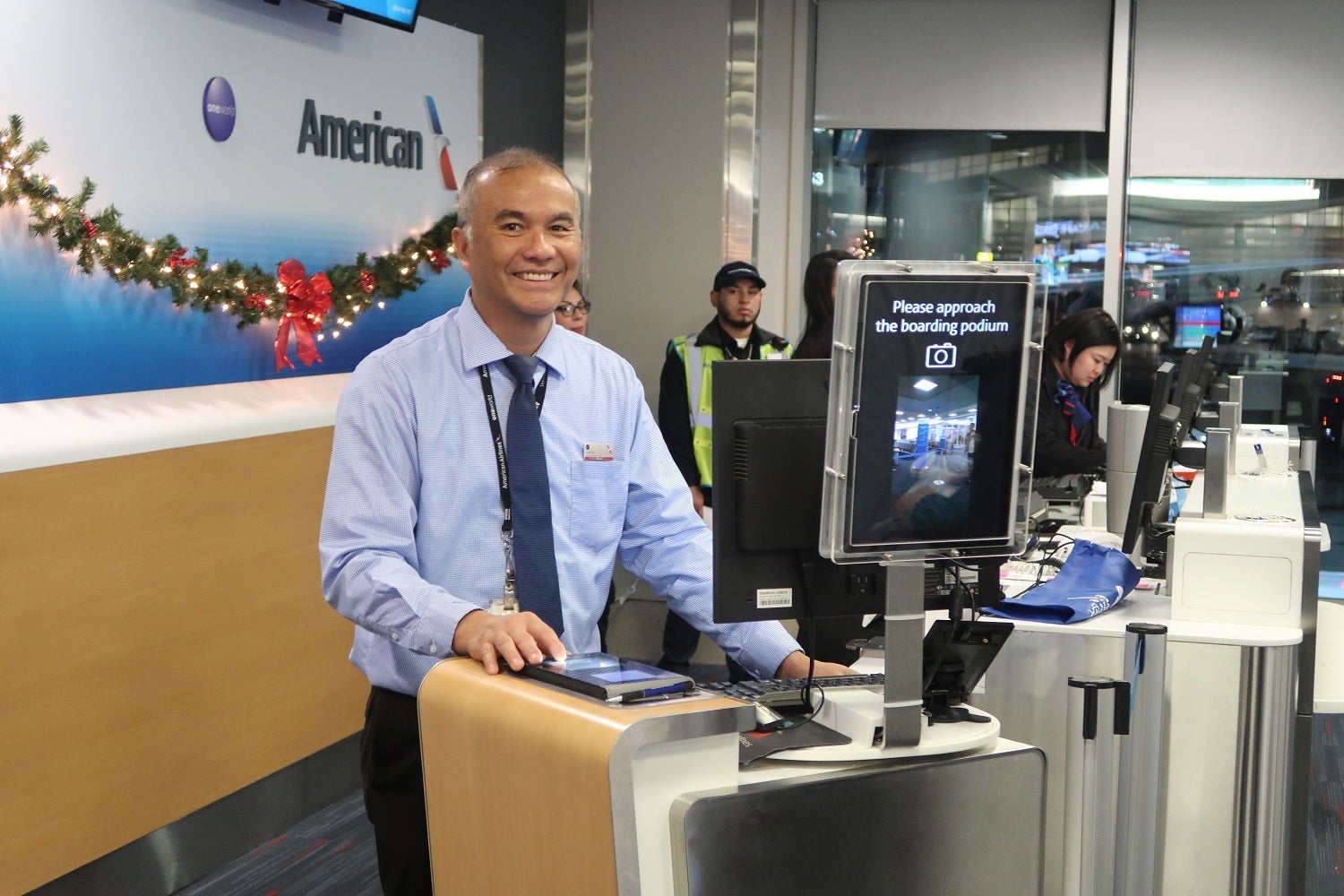
TPG's Darren Murph experienced Delta's biometric terminal in Atlanta (ATL) last November and I boarded an American Airlines flight to Auckland, New Zealand, using biometrics last December. Biometrics are already being used broadly by programs like CLEAR and Global Entry, as well as a few credit card issuers.
Now, some airlines -- in a constant attempt to speed up the boarding process -- are implementing biometric boarding procedures so that you don't need to present a boarding pass or open your passport during boarding. Here's what you should know about biometric boarding in the US.
What Airlines Use Biometric Boarding?
American Airlines, Delta and JetBlue use biometric boarding for select international flights from the US. Plus, a few international carriers including British Airways and Lufthansa use biometric boarding for some of their flights departing the US.
American Airlines began a 90-day pilot program for biometric boarding at Los Angeles (LAX) Terminal 4 in December. American is now evaluating "its potential expansion to more flights and locations throughout its global network."
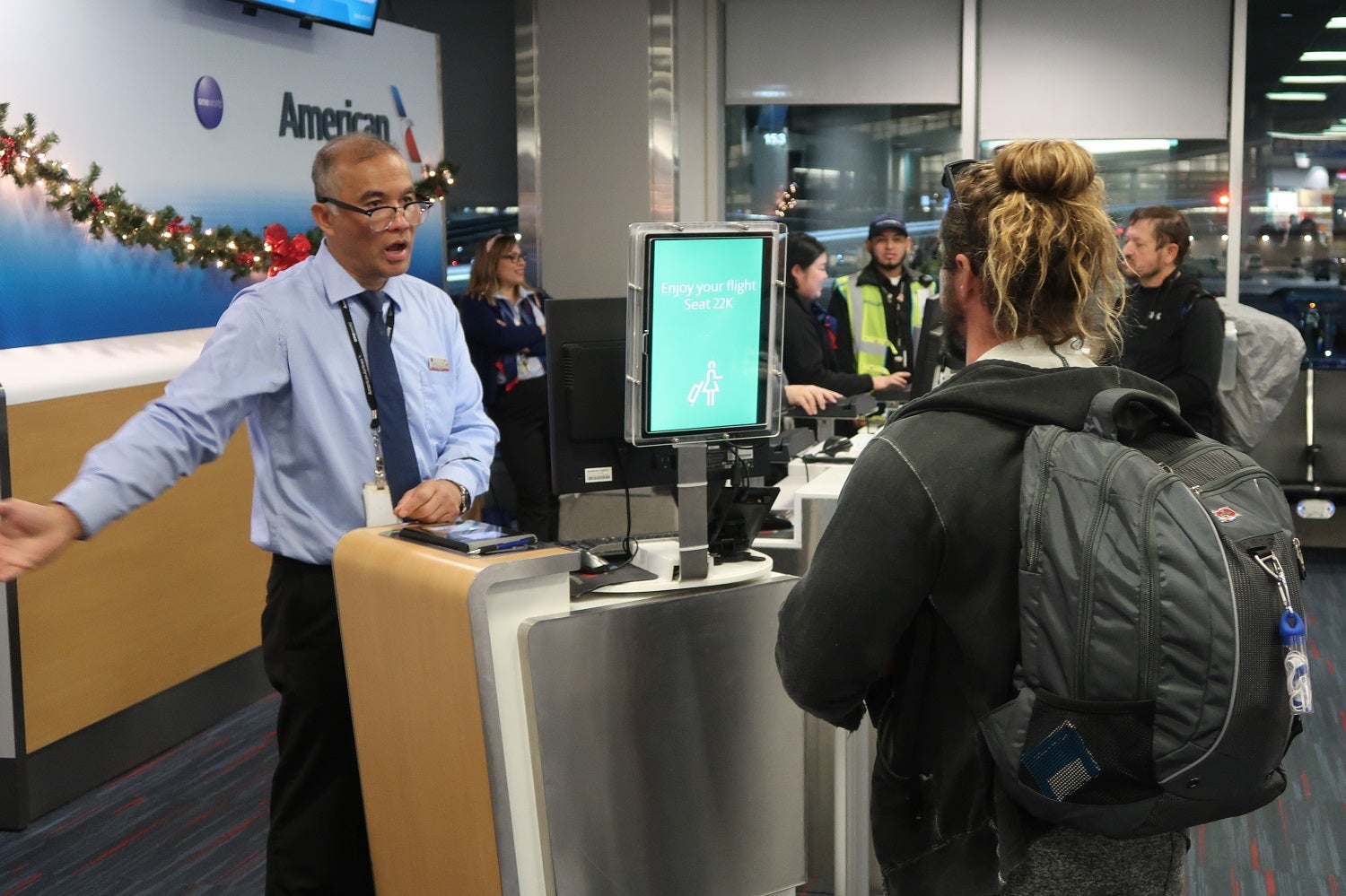
Delta recently opened the first biometric terminal in the United States in Atlanta's (ATL) international terminal and plans to create a similar experience in Detroit. Besides this biometric terminal in ATL, Delta has conducted optional facial recognition boarding tests at ATL, Detroit (DTW), New York (JFK) and Washington (DCA) and recently tested a self-service biometric bag drop at Minneapolis-Saint Paul (MSP). Plus, Delta offers biometric entrance to domestic SkyClubs for eligible passengers in partnership with CLEAR.
JetBlue currently offers fully-integrated biometric self-boarding gates for some international flights departing from New York (JFK), although trial programs have also occurred in Boston (BOS), Fort Lauderdale (FLL) and DCA. The airline plans to expend its biometric boarding program to additional international flights from BOS and FLL later this year, as well as pilot a biometric bag drop station at JFK.
How Does Biometric Boarding Work?
TPG's Darren Murph and JT Genter recently wrote about their experiences using biometric boarding with Delta and American, while contributor Mike Arnot wrote about his experience using biometric boarding with British Airways. In each case, the process of using biometric boarding was relatively simple from a passenger standpoint.
If your gate is using biometric boarding, you'll line up when your boarding group is called as usual. You'll approach the desk or gate where your boarding pass would normally be scanned. For some biometric systems, you may need to remove your hat or glasses, or leave space between you and the next passenger. There may be marks on the ground showing where to stand, although an airline employee may also be directing passengers.
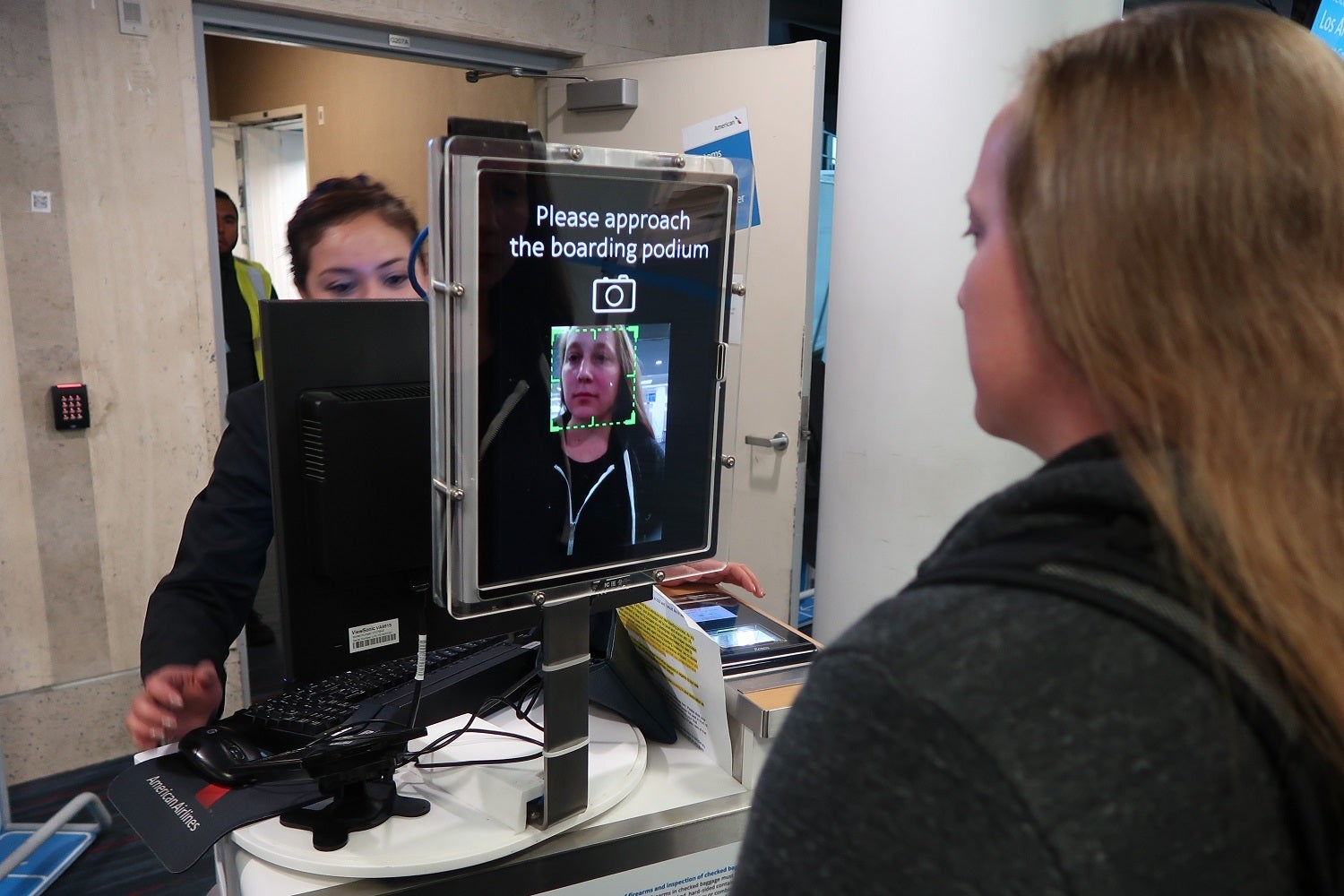
You may need to move closer or farther from the system, or even lean down if you're tall. But, in most cases the system will recognize you and display an image noting so. Then the gates will open or an agent will usher you forward. If the system rejects you, or you want to opt out, you'll need to see a boarding agent to have your boarding pass scanned and passport checked.

What Happens Behind the Scenes?
So, you may be wondering how the biometric system is able to replace the normal passport and boarding pass check using just your face. Well, Customs and Border Protection's (CBP) cloud-based Traveler Verification Service uses flight manifests to generate biometric templates of the historical images of travelers for a given flight. These templates are built from photos that you submitted when you applied for a passport and/or images captured on previous entries to the US. The templates are temporarily stored in CBP's Virtual Private Cloud prior to boarding.
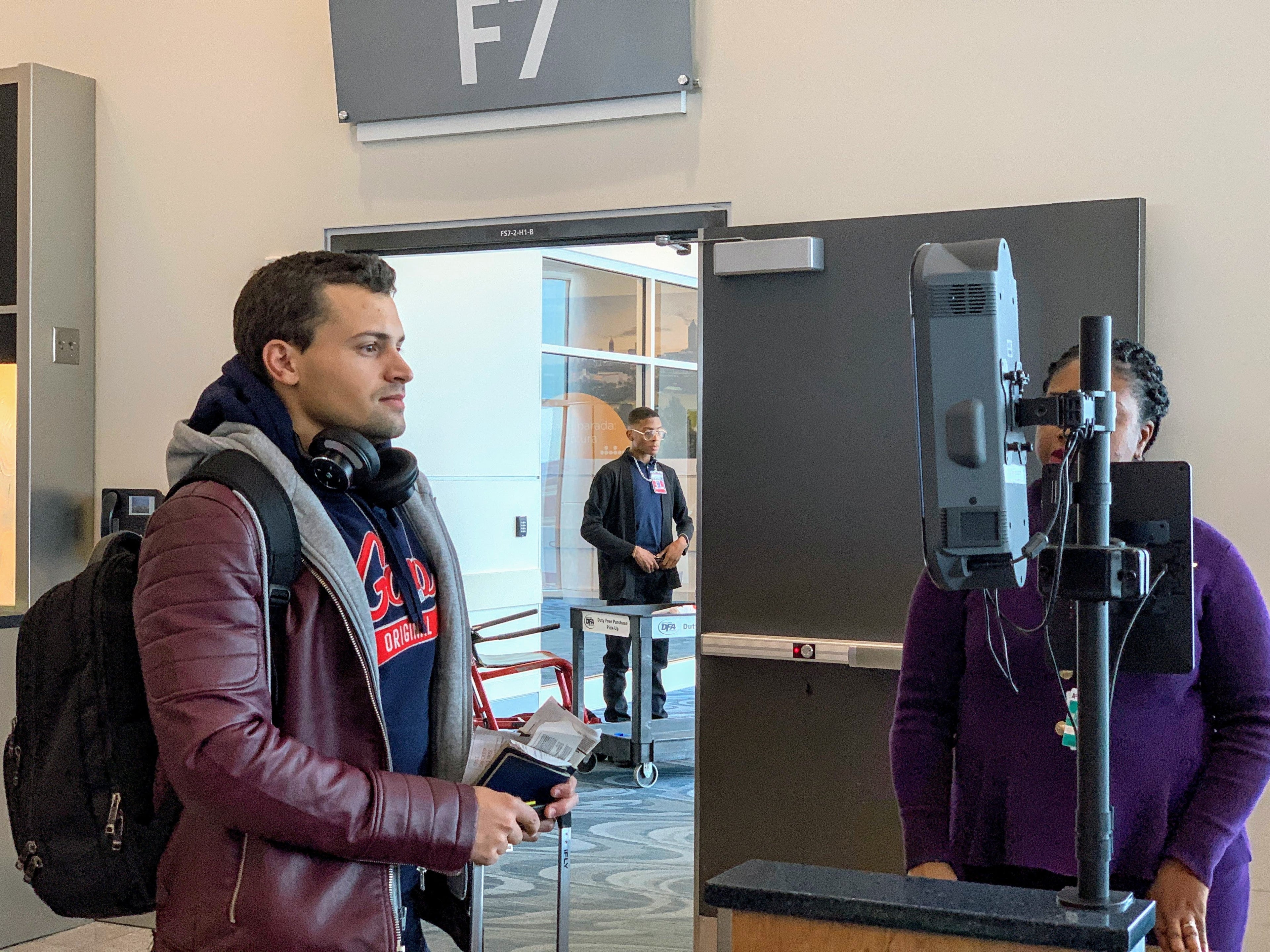
During boarding, a camera is used to capture a usable facial image and this image is transmitted to CBP's cloud-based facial matching service. The matching service generates a template from the image and uses that template to search the biometric templates of travelers on the manifest for a given flight. The matching service attempts to find a match between the newly-captured image template and the pool of previously-captured image templates. Then, the matching service returns "match/no-match" results to the airline.
The airlines are quick to note that they don't store any photos. Instead, each photo is immediately and securely sent to CBP and the airline simply gets a match/no match response. If you're interested in learning more about the technical details, head to the Department of Homeland Security website.
Benefits of Biometric Boarding
The main benefit of biometric boarding to passengers is that it is quicker. Delta's initial trials showed that the facial recognition option saves up to nine minutes per flight and Lufthansa's initial trials showed they could board approximately 350 passengers onto an A380 in about 20 minutes. As computer vision algorithms improve and customers become more acquainted to biometric boarding, the process will only become faster.
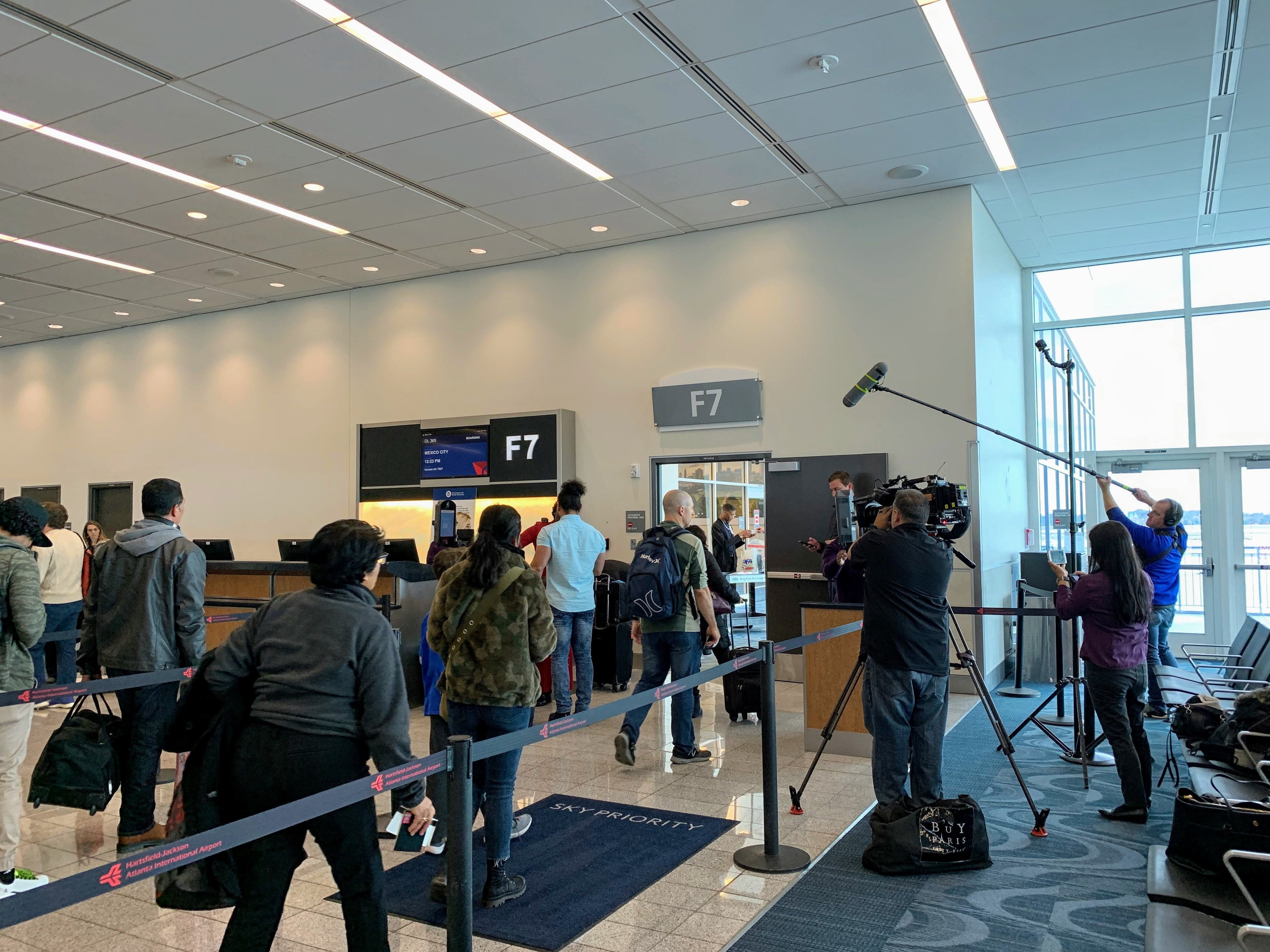
Biometric boarding is also easier -- especially with children or for elderly passengers -- since you don't need to search for boarding passes or have your passport open. And, boarding mistakes will be decreased if a positive biometric match is required for boarding.
Concerns with Biometric Boarding
Biometric boarding by JetBlue was recently brought into the spotlight when a passenger wrote on Twitter that she didn't consent to using biometric boarding.
The tweet got hundreds of comments and thousands of retweets and likes. Although the passenger eventually concluded that "opting out isn't really an option" since her "data will have already been accessed and loaded into a database," her photo and data was loaded into the database when she applied for her passport. Indeed, US passport applications state that all of the information on your passport application can be "disclosed to another domestic government agency, a private contractor, a foreign government agency, or to a private person or private employer in accordance with certain approved routine uses."
You can opt out of using biometrics to board a flight by avoiding the cameras and instead asking the boarding agents to manually process you. But, opting out of biometric boarding simply means that an additional image of you won't be sent to CBP's cloud-based facial matching service. Your passport photo and/or entry photos are already in their system if you're taking an international flight from the US.
All photos by JT Genter and Darren Murph/TPG.
TPG featured card
at American Express's secure site
Terms & restrictions apply. See rates & fees.
| 4X | Earn 4X Membership Rewards® points per dollar spent on purchases at restaurants worldwide, on up to $50,000 in purchases per calendar year, then 1X points for the rest of the year. |
| 4X | Earn 4X Membership Rewards® points per dollar spent at US supermarkets, on up to $25,000 in purchases per calendar year, then 1X points for the rest of the year. |
| 5X | Earn 5X Membership Rewards® points on prepaid hotel stays booked through AmexTravel.com or the Amex Travel App™. |
| 3X | Earn 3X Membership Rewards® points on flights booked through AmexTravel.com, the Amex Travel App™, or purchased directly from airlines. |
| 2X | Earn 2X Membership Rewards® points on prepaid car rentals booked through AmexTravel.com or the Amex Travel App™ and cruises booked and paid through AmexTravel.com. |
| 1X | Earn 1X Membership Rewards® point per dollar spent on all other eligible purchases. |
Pros
- Valuable dining and food-related credits
- Flexible rewards with airline and hotel transfer partners
- Multiple travel and purchase protections
- No foreign transaction fees
- Access to Amex Offers for additional savings (enrollment required)
Cons
- Not as useful for those living outside the U.S.
- Some may have trouble using Uber and other dining credits
- You may be eligible for as high as 100,000 Membership Rewards® Points after you spend $8,000 in eligible purchases on your new Card in your first 6 months of Card Membership. Welcome offers vary and you may not be eligible for an offer. Apply to know if you’re approved and find out your exact welcome offer amount – all with no credit score impact. If you’re approved and choose to accept the Card, your score may be impacted.
- Earn 4X Membership Rewards® points per dollar spent on purchases at restaurants worldwide, on up to $50,000 in purchases per calendar year, then 1X points for the rest of the year.
- Earn 4X Membership Rewards® points per dollar spent at US supermarkets, on up to $25,000 in purchases per calendar year, then 1X points for the rest of the year.
- Earn 5X Membership Rewards® points on prepaid hotel stays booked through AmexTravel.com or the Amex Travel App™.
- Earn 3X Membership Rewards® points on flights booked through AmexTravel.com, the Amex Travel App™, or purchased directly from airlines.
- Earn 2X Membership Rewards® points on prepaid car rentals booked through AmexTravel.com or the Amex Travel App™ and cruises booked and paid through AmexTravel.com.
- Earn 1X Membership Rewards® point per dollar spent on all other eligible purchases.
- Pay It® lets you tap in the American Express® App to quickly pay for small purchase amounts throughout the month and still earn rewards the way you usually do. Plan It® gives you the option to split up big purchases into equal monthly payments with a fixed fee. You’ll know upfront exactly how much you’ll pay.
- $120 Dining Credit: Earn up to a total of $10 in statement credits monthly when you pay with the Gold Card at Grubhub (including Seamless), Buffalo Wild Wings, Five Guys, The Cheesecake Factory, and Wonder. This can be an annual savings of up to $120. Enrollment required.
- $100 Resy Credit: Get up to $100 in statement credits each calendar year at over 10,000 qualifying U.S. Resy restaurants after you pay for eligible purchases with the American Express® Gold Card. That’s up to $50 in statement credits semi-annually. Enrollment required.
- $84 Dunkin' Credit: Earn up to $7 in monthly statement credits after you pay with the American Express® Gold Card at U.S. Dunkin’ locations. Enrollment required.
- $120 Uber Cash on Gold: Enjoy up to $120 in Uber Cash annually with your Gold Card. Just add your Card to your Uber account and you'll get $10 in Uber Cash each month to use on orders and rides in the U.S. when you select an Amex Card for your transaction.
- Enjoy complimentary Hertz Five Star® Status benefits like skipping the counter at select locations, adding an additional driver at no additional cost*, and vehicle upgrades**. Benefit enrollment and Hertz Gold+ registration are required. *Additional drivers must meet standard rental qualifications and must be a spouse or domestic partner to qualify as complimentary. Other additional drivers subject to fees. **Benefits are subject to availability and vary by location. Additional Hertz program Terms and Conditions including age restrictions apply.
- Book two nights or more with The Hotel Collection through AmexTravel.com or the Amex Travel App™ and receive a $100* credit towards eligible charges at over 1,400 upscale hotels worldwide. *Eligible charges vary by property.
- Book your travel through the Amex Travel App™ with added peace of mind – backed by American Express® service and support. Only for American Express® Card Members.
- Whenever you need us, we're here. Our Member Services team will ensure you are taken care of. From lost Card replacement to statement questions, we are available to help 24/7.
- No Foreign Transaction Fees.
- Annual Fee is $325.
- Terms Apply.