The reason why aircraft have switched runways at Heathrow

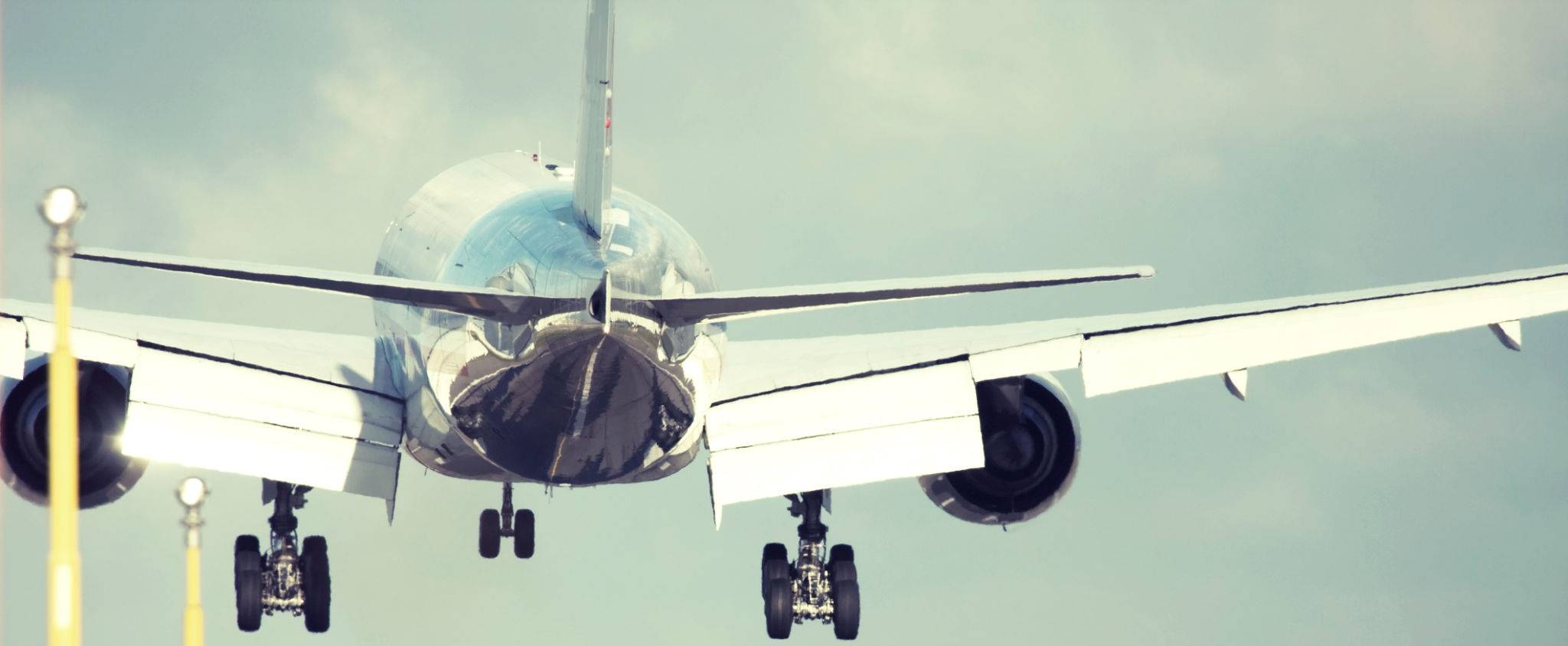
London Heathrow is one of the busiest airports in the world. It also sits at the western edge of the U.K.'s capital and the majority of flights make their approach in over the city. Whilst this provides stunning views for pilots and passengers alike, it's not ideal for the millions of people who live under the flight paths.
During normal operation, the northern runway is not used for departures. However, due to the drop in traffic due to coronavirus, the airport is now using one runway at a time for both takeoff and landing. This means that flights are now regularly taking off from the northern runway.
Heathrow runways and their usage
London Heathrow has two runways aligned in an east/west direction. The runways are given an alphanumeric designator, depending on the magnetic heading of the runway. As the westerly runways have a heading of 271 degrees, they are designated as 27L (two-seven left) and 27R (two-seven right). As the reciprocals, the runways at the other end are 09L and 09R.

In 2019, the westerly runways were in use 75% of the time, meaning that aircraft made their approach to land in over London and departed out over the M25. In normal operations, one runway is used for takeoffs and the other is used for landings.
To reduce the effects of noise on local communities, the airport switches the runway usage at 3 p.m. every day. This means that, for example, 27R will be used for landings from when the airport opens at 6 a.m. until 3 p.m. At this point, aircraft will then be switched to land on 27L until the last flight of the day departs.
This system continues for a week at which point the alternation is switched again. Aircraft will use 27L for landings in the morning and 27R in the afternoons. This means that those living under the approach path for one runway will get respite from the noise in the mornings one week and in the afternoons the next.
If you're a Heathrow regular, you'll be familiar with this routine. However, when the easterly runways are in use, aircraft normally only ever take off on the southern runway, 09R, and land on the northern one, 09L.
This is down to the legacy of a document called the Cranford Agreement.
Historic legacy
Situated just at the eastern end of 09L is the village of Cranford. Back in the 1950s as Heathrow began to grow, surrounding villagers were already being affected by noise. To protect them from the sound of low-flying aircraft, an agreement was made whereby the northern runway would not be used for departures during easterly operations.

Read more: What's happening in the flight deck during a rejected takeoff?

This meant that 09L had to be used solely for arrivals, leaving 09R for departures. Whilst this benefited the residents of Cranford, it came at the expense of those living in Windsor and southern parts of Hounslow.
During easterly operations, Cranford would experience a relatively peaceful day whilst those living in southern Hounslow had to bear the brunt of departures all day. For arrivals, despite aircraft being much higher, around 2,000 feet, residents of Windsor had to put up with the sound of landing aircraft for the entirety of the day.
After 50 years of this agreement governing the use of the runways at Heathrow, in 2008, the government began discussions with local residents about changing the agreement. After much consultation, the decision was made to remove the Cranford Agreement and enable the use of the northern runway for departures.
This would result in a fairer distribution of noise around the airport when the airport was using the easterly runways. However, it wasn't as simple as just starting this the next day.
Read more: How pilots and aircraft keep cabin air fresher than you may think
The departure conundrum
Heathrow is so busy that it's not just a case of aircraft forming one long queue for departure and taking off in turn. They have to be separated from each other for both departure routing and wake turbulence.
However, when every second counts, having aircraft sat on the runway waiting to depart is less than ideal. Multiply this several times a day and you lose the time to depart multiple flights, costing the airport and the airlines considerable money.
Route separation
Departure routing separation is the major constraint in separating traffic on departure. Before each flight pushes back from the gate, they are assigned a Standard Instrument Departure or SID. This determines the initial routing the aircraft must fly when airborne to turn toward its route and keep it clear from other traffic.
For the most part, there are three directions aircraft can turn after departure on easterlies. Left, for flights routing up to northern England and those heading toward Scandinavia. Straight ahead (albeit with a slight kink) for those heading to mainland Europe. Right for France, Africa and North and South America.

For aircraft using the same route, there needs to be a two-minute gap between departures and this causes a problem. Heathrow is so busy that ATC cannot afford to have aircraft just sat waiting on the runway for two minutes before starting the takeoff run.
However, what they can do is alternate the departures so that no two consecutive flights are heading in the same direction. Therefore one departure will turn left after takeoff, the next will go straight ahead and the third will turn right. The process is then repeated enabling a constant flow of departures.
The other factor affecting the departure sequence is wake turbulence.
Read more: What's the difference between a go-around and a rejected landing?
Wake turbulence
From the moment aircraft lift off, they create a phenomenon known as wake turbulence. As the wing cuts through the air, there is a decrease of pressure above the wing and an increase below the wing. As a result, at the tip of the wing, there is a difference of pressure which wants to roll up and over the top of the wingtip. It's for this reason why some aircraft have winglets, to block this downward force and increase wing efficiency.
The other consequence of this rolling air is the creation of wake vortices. Forming tornado-like swirls out from the rear of the wingtip, the fast-moving air can pose a serious threat to aircraft behind. The heavier and slower the aircraft, the greater the vortices generated.
To prevent aircraft from getting airborne into the wake of the aircraft which departed ahead, there are strict rules governing the time gap needed between departures. For the most part, the bigger the preceding aircraft is than the following aircraft, the bigger the gap needed to allow the wake to dissipate.
Aircraft are grouped into four main categories according to the severity of the wake they generate.
| Super | Heavy | Upper | Medium |
|---|---|---|---|
A380 | A330 | A300 | A318/19 |
A340 | B757 | A320/21 | |
A350 | B767 | B737 | |
B747 | |||
B777 | |||
B787 |
The next table indicates the time needed between the combination of aircraft. (The leading aircraft is down the side and the following aircraft is across the top.)
| Follower | |||||
|---|---|---|---|---|---|
Super | Heavy | Upper | Medium | ||
Leader | Super | 0s | 100s | 120s | 140s |
Heavy | 0s | 0s | 0s | 100s | |
Upper | 0s | 0s | 0s | 80s | |
Medium | 0s | 0s | 0s | 0s |
From the table above, you can see that there are quite a few combinations where no time between departures is needed. However, as the size difference begins to increase, so does the time gap. The worst situation would be when an A320 is departing after an A380.
So not only do ATC have to separate aircraft on their departure routing, but they also have to ensure that there is sufficient gap between certain types on aircraft.
Crossing traffic
The final part of this dynamic puzzle is aircraft coming from Terminal 4, situated on the south side of the airport. The taxiway on the south side of the airfield from Terminal 4 to 09R is not sufficient for A380 aircraft. As a result, all Terminal 4 A380 departures must cross the runway first and join the stream of traffic coming from Terminals 2 and 3.
Any time an aircraft crosses an active runway, there is added element of risk so this has to be managed carefully. As you might expect, an aircraft is not allowed to takeoff whilst another aircraft is crossing the runway. Therefore, ATC has to halt the departure traffic to allow T4 traffic to cross.
Sequencing for departure
As ideal as it would be, aircraft don't arrive at the runway in the order they need to be in for departure. Different flights are ready to pushback from the gate at different times. Early in the morning, there are a lot of short-haul departures on aircraft such as A320s and B737s. Come midmorning, the early long-haul arrivals are ready to leave again, mixing heavy jets in with the smaller ones.
This is where clever tactical planning comes into play.
Runway holding points
Looking at the satellite image of the area around the threshold of 09R, you can see that there are multiple taxiways and runway entry points, known as intersections. Holding points N11, N10 and N8 give access to the runway from the north side and S11 gives access from the south side.
There are also five ground reporting points before reaching the runway -- HANLI, DASSO and VIKAS for aircraft coming from Terminal 5 and OSTER and HORKA for aircraft coming from the rest of the airfield.

When taxiing from the gate, the controller in charge of ground movements clears the pilots as far as one of the ground reporting points. Here, they are transferred over to the controller in charge of the departure runway.
It is their job to take the aircraft at the front of the queue at each ground reporting point and sequence them for route separation and also for wake turbulence. This is why you may have noticed several aircraft seeming to "jump the queue" when you're sat waiting to depart. This is just the controllers optimizing the sequence for departure.
The departure flow
As there is less issue with wake turbulence being the follower aircraft, most heavies and supers will go from the full-length at N11. This leaves N10 and N8 for medium aircraft to gain access to the runway.
Whilst the heavy aircraft wait in departure routing sequence at N11, a few mediums, also sequenced for departure routing, can depart from N10 or N8 with no gap between them. As soon as the mediums have gone, the heavies can depart, once again with no gaps required.
The sticking point comes when there is no choice but to have a gap for wake turbulence. However, this is where the final element of the conundrum comes into play -- arriving aircraft crossing to T4.
Terminal 4 traffic
Whilst aircraft have been departing 09R with maximum efficiency, flights have been landing on 09L and are waiting to cross the departure runway to Terminal 4. Instead of stopping departures to allow them to cross, ATC waits for a natural gap in the departure process.
The natural gap created when one departing aircraft has to wait for wake turbulence separation.

With an A380 just airborne, an A320 has to wait for 140 seconds before it is allowed to depart -- plenty of time for an aircraft to cross the runway to Terminal 4. As soon as the A380 is airborne, ATC will clear the T4 bound aircraft to cross 09R, usually down at the opposite end of the runway.
This efficient use of time means that ATC can make use of the runway, even when it's not being used for a departure.
The problem with 09L
If we take a look at 09L, you'll notice a marked difference. There is only one taxiway that gives aircraft the ability to use the full-length of the runway, compared to four on the south side. With such limited access, ATC would have considerable issues in positioning aircraft to optimize the departure sequence. It's for this reason that 09L is unable to be used for regular departures in its current configuration.

However, with so few departures in the current climate, this lack of runway entry points no longer causes a problem. As a result, ATC is able to use efficiently 09L for departures.
Bottom line
A historic legacy dating back to the very start of Heathrow's operation still plays a major part in how the airport operates today. When easterly operations are in use, ATC has to make clever use of the tools available to them in order to get aircraft away as efficiently as possible off the southern runway.
However, due to the severe drop in the number of flights operating in and out of the airport at the moment, the lack of access to the runway is no longer a prohibiting factor for departures from 09L
TPG featured card

at Capital One's secure site
Terms & restrictions apply. See rates & fees.
| 5X miles | Earn 5X miles on hotels, vacation rentals and rental cars booked through Capital One Travel |
| 2X miles | Earn unlimited 2X miles on every purchase, every day |
Pros
- Stellar welcome offer of 75,000 miles after spending $4,000 on purchases in the first three months from account opening. Plus, a $250 Capital One Travel credit to use in your first cardholder year upon account opening.
- You'll earn 2 miles per dollar on every purchase, which means you won't have to worry about memorizing bonus categories
- Rewards are versatile and can be redeemed for a statement credit or transferred to Capital One’s transfer partners
Cons
- Highest bonus-earning categories only on travel booked via Capital One Travel
- LIMITED-TIME OFFER: Enjoy $250 to use on Capital One Travel in your first cardholder year, plus earn 75,000 bonus miles once you spend $4,000 on purchases within the first 3 months from account opening - that’s equal to $1,000 in travel
- Earn unlimited 2X miles on every purchase, every day
- Earn 5X miles on hotels, vacation rentals and rental cars booked through Capital One Travel
- Miles won't expire for the life of the account and there's no limit to how many you can earn
- Receive up to a $120 credit for Global Entry or TSA PreCheck®
- Use your miles to get reimbursed for any travel purchase—or redeem by booking a trip through Capital One Travel
- Enjoy a $50 experience credit and other premium benefits with every hotel and vacation rental booked from the Lifestyle Collection
- Transfer your miles to your choice of 15+ travel loyalty programs
- Top rated mobile app