The Points Guy believes that credit cards can transform lives, helping you leverage everyday spending for cash back or travel experiences that might otherwise be out of reach. That's why we publish a variety of editorial content and card comparisons: to help you find a great card to turn your goals into reality.
Our site may earn compensation when a customer clicks on a link, when an application is approved, or when an account is opened with our partners, and this may impact how or where these products appear. While we don't cover all available credit cards, our editorial team creates and maintains all of the analysis of these cards, and our content is not influenced nor subject to review by any credit card company, bank or partner prior to (or after) publication. Please view our advertising policy and product review methodology for more information.
Advertiser disclosure
The Points Guy believes that credit cards can transform lives, helping you leverage everyday spending for cash back or travel experiences that might otherwise be out of reach. That's why we publish a variety of editorial content and card comparisons: to help you find a great card to turn your goals into reality.
Our site may earn compensation when a customer clicks on a link, when an application is approved, or when an account is opened with our partners, and this may impact how or where these products appear. While we don't cover all available credit cards, our editorial team creates and maintains all of the analysis of these cards, and our content is not influenced nor subject to review by any credit card company, bank or partner prior to (or after) publication. Please view our advertising policy and product review methodology for more information.
News
The credit reporting agency your bank uses matters — here's why
Since launching TPG in 2010, founder Brian Kelly has expanded the team to include a distinguished editorial staff and an extensive network of freelancer contacts from around the globe. Today, TPG reaches 11 million unique monthly visitors and more than 3 million followers across social media platforms and has offices in New York City, Charlotte and the U.K.
Stephanie Stevens is an associate writer with TPG's credit cards team. She focuses on creating timely credit cards content for TPG readers.
also contributed to this story
April 11, 2025 • 7 min read
The cards we feature here are from partners who compensate us when you are approved through our site, and this may impact how or where these products appear. We don't cover all available credit cards, but our analysis, reviews, and opinions are entirely from our editorial team. Terms apply to the offers listed on this page. Please view our advertising policy and product review methodology for more information.
Editorial note: This is a recurring post regularly updated with new information.
Editorial disclaimer: Opinions expressed here are the author's alone, not those of any bank, credit card issuer, airline or hotel chain, and have not been reviewed, approved or otherwise endorsed by any of these entities.
Comments
By commenting, you agree to our Community Guidelines to help create a positive space for conversation. The responses below are not provided or commissioned by the bank advertiser, our partners, or The Points Guy (“TPG”). They have not been reviewed, approved, or otherwise endorsed by any of these parties. All responses are submitted by individual contributors, and neither the bank advertiser, our partners, nor TPG are responsible for ensuring that all posts and/or questions are answered.
Related stories
Quick summary
When applying for a new line of credit, the credit bureau used to review your report can affect your approval chances.
The three major U.S. credit bureaus are Equifax, Experian and TransUnion, and lenders may check reports from one or more of them.
Multiple recent credit applications can negatively impact your score and approval odds, especially if the same bureau is used repeatedly.
Checking your credit report and score before applying helps you understand your standing and address any issues.
What to consider
Lenders may use different credit bureaus depending on your location and the specific product, so the bureau pulled is not always predictable.
Too many hard inquiries in a short time can lower your score and raise concerns for lenders.
You can access free annual credit reports from each bureau at AnnualCreditReport.com.
What you'll miss from the article
A detailed explanation of how credit scores are calculated and how to strategically time applications to improve approval odds.
Generated by AI with support from our editorial team.
One of the most important things to know when you apply for a credit card is which credit bureau the bank uses to pull your credit report.
Your credit report is a detailed record of your credit history that can determine whether or not you are approved for a new line of credit, such as a credit card.
In the U.S., there are three major credit bureaus — also known as credit reporting agencies — that banks and credit card companies can pay to access your credit report: Equifax, Experian and TransUnion.
The credit reporting agency (CRA) used by a card issuer to see your credit report can determine whether your application is approved or denied, especially when you apply for various cards in a short period of time. If several card issuers pull from the same credit reporting agency, it could affect your chances of being approved.
CYTHER5/GETTY
However, if card issuers go to different credit bureaus to buy your reports, one issuer might not see that you’re applying for a new account elsewhere. As a result, your chances of being approved for several cards should increase.
Multiple credit applications may reduce your score, so it’s important to know what you’re getting into before you decide to apply for several cards at once.
Before you apply for a new line of credit
Knowing where your credit stands before applying for any type of new credit is critical. Make sure to check your credit score and reports before you fill out a new application.
Check your credit report
Your credit report is a record of your credit activity, including your payment history, outstanding debts and credit inquiries. Understanding your credit health gives you a better idea of how your application may look to potential credit card issuers. Fortunately, checking your three credit reports is easy.
You can request a free report from Equifax, TransUnion and Experian once every 12 months online at AnnualCreditReport.com.
While your credit report paints a detailed picture of your credit history, it does not typically include your current credit score, so you'll want to check that too.
Checking your credit score, however, can be a bit more complex. Instead of just three scores — one for each of your credit reports — there are hundreds of commercially available credit scores, and some lenders even use their own custom models. This means there are thousands of possible credit score variations.
The two most widely used credit score models in the U.S. are FICO and VantageScore. VantageScore, created by the three major credit bureaus, has been gaining in popularity since its launch in 2006.
However, FICO remains the industry standard, with 90% of lenders relying on it for credit decisions. Many banks offer free FICO scores to cardholders as a helpful perk.
What is a FICO score?
Your FICO score is a number between 300 and 850 based on the information in your credit report.
FICO scores are calculated using many different pieces of credit data in your credit report. This data is grouped into five categories: payment history (35%), amounts owed (30%), length of credit history (15%), new credit (10%) and credit mix (10%).
These are the factors that make up your FICO score. FICO
Lenders use this score to assess your creditworthiness — the higher your score, the better your chances of getting approved for credit cards and other loans.
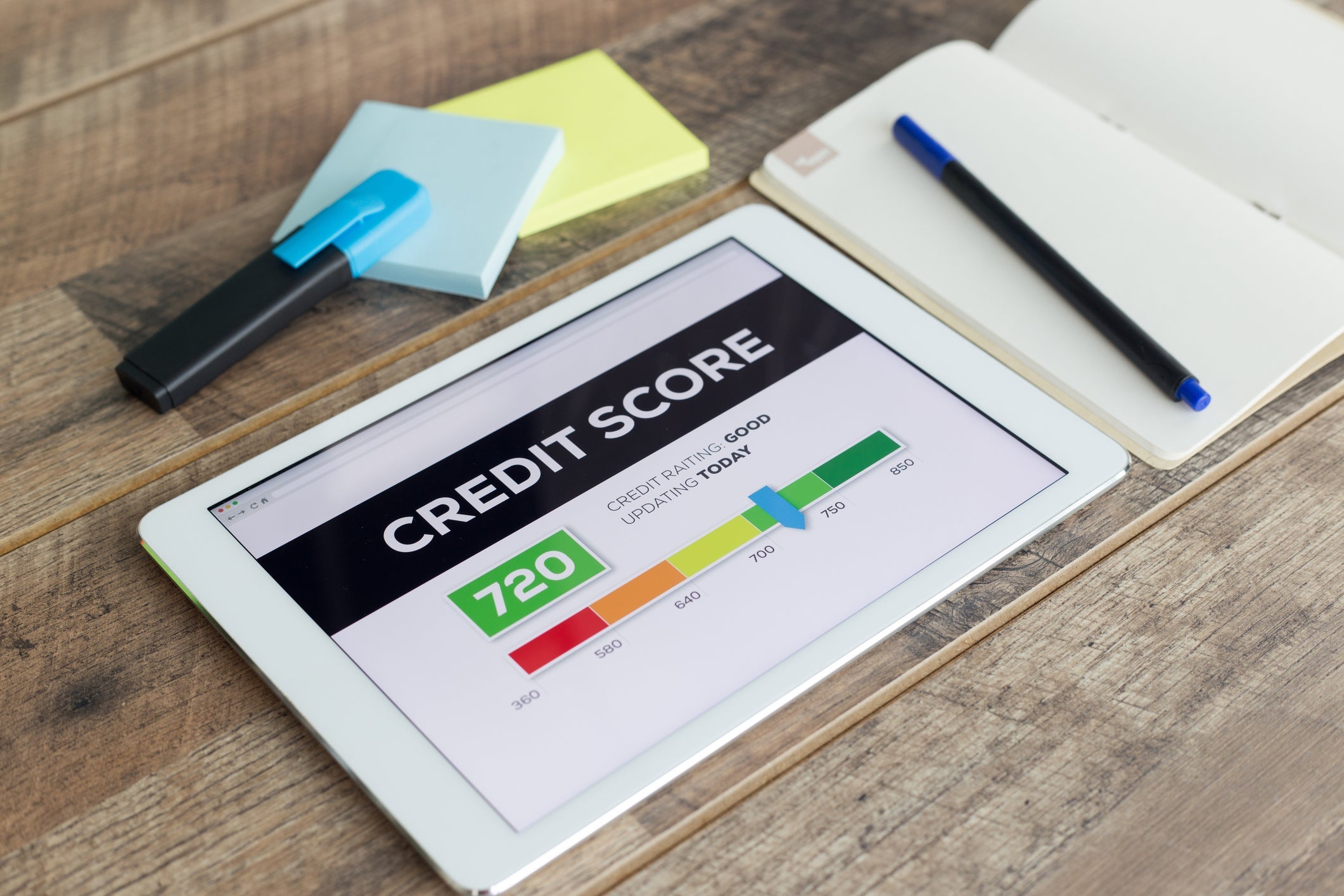
According to FICO, a “good” credit score falls between 670 and 739, while a score of 740-799 is considered "very good” and 800+ is considered “exceptional.” However, chasing a perfect 850 score isn't necessary. In most cases, credit card issuers don't differentiate much between scores above 720, so a strong score in this range is typically enough to secure the best offers.
Which credit bureaus do banks check — and why does it matter?
When you apply for a credit card, the issuer contacts a credit bureau (or several) to purchase a copy of your credit report. Included in your report are the five categories mentioned above.
You’ll notice one credit report category, which counts for 10% of your score, is called “new credit.” If you have too many credit applications opened within a short period of time, it may affect your credit score negatively.
MOMO PRODUCTIONS/GETTY IMAGES
Imagine the following scenario: You’ve filled out several applications for new credit (think loans or credit cards) in the last 12 months. These applications show up on your credit reports as “hard inquiries” and could potentially damage your credit score.
You then decide to apply for another new credit card. In addition to your score potentially taking a hit, you might experience another road block.
The bank processing your application might be concerned about why you’re applying for so much new credit in a short period of time. As a result, there’s a chance you could be turned down for a credit card even if your credit score is in good shape.
Knowing which credit reporting agency card issuers use to pull reports might help you avoid this problem. With this knowledge in hand, you can time your applications (or bundle them, as the case may be) in such a way that you improve your approval odds for the credit cards you want.
Many credit card companies tend to rely on one bureau when they process credit card applications. The credit bureau they use to buy reports, however, may differ depending on the state you live in and the specific credit card you want.
HERO IMAGES/GETTY IMAGES
Here are the credit bureaus commonly used by three popular issuers:
Citi uses all three credit bureaus, but usually pulls credit reports from Equifax or Experian.
American Express uses all three credit bureaus but primarily pulls reports from Experian, though sometimes Equifax or TransUnion as well.
Chase uses all three credit bureaus but favors Experian, yet may also buy Equifax or TransUnion reports.
However, keep in mind that you can never know for sure which credit bureau a credit card company will use.
Bottom line
Your credit report is a key part of your financial profile that can have a notable impact on your creditworthiness. By understanding which credit reporting agency banks use to review your credit, you may be able to increase approval odds on your next credit card application.
By commenting, you agree to our Community Guidelines to help create a positive space for conversation. The responses below are not provided or commissioned by the bank advertiser, our partners, or The Points Guy (“TPG”). They have not been reviewed, approved, or otherwise endorsed by any of these parties. All responses are submitted by individual contributors, and neither the bank advertiser, our partners, nor TPG are responsible for ensuring that all posts and/or questions are answered.