Skip to content

What is the difference between a hard and soft pull on your credit report?

Dec. 16, 2024
7 min read
Credit Score Going Up
The cards we feature here are from partners who compensate us when you are approved through our site, and this may impact how or where these products appear. We don’t cover all available credit cards, but our analysis, reviews, and opinions are entirely from our editorial team. Terms apply to the offers listed on this page. Please view our advertising policy and product review methodology for more information.

Editor's Note

This is a recurring post, regularly updated with new information.

A common question we get from credit card beginners is the difference between a “soft pull” and a “hard pull” on your credit report.

Both terms are frequently used when discussing new credit card applications — but how does each affect your credit score?

The major difference between the two is that a hard pull appears on your credit report while a soft pull does not. Let's dig deeper.

Related: How do credit scores work?

What is a hard pull?

When you apply for a line of credit, whether it be a new credit card, mortgage, auto loan or some other type of loan, the lender will pull your credit report from at least one of the three major credit reporting agencies — Equifax, Experian and TransUnion. This is called a hard pull or a hard inquiry.
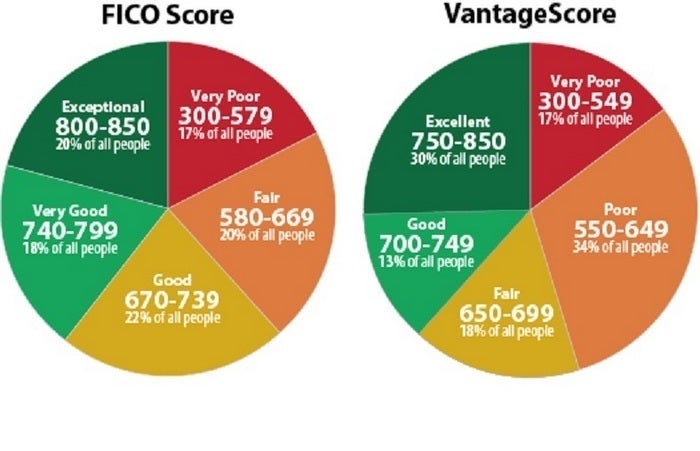
pie charts show possible credit scores and how they're composed
EXPERIAN.COM

These checks are tied to an application and will appear on your credit report. That means they could potentially affect your score since new inquiries on your credit report are a factor in determining your credit score. What is considered an official application? Any time you send in a request for a line of credit and share your full identification details, such as your name, address and Social Security Number.

A hard pull results in the lender obtaining your official credit report and credit score from whichever bureau it requested the information. This is a much more in-depth look at your credit history than what might be collected and sent over after a soft pull.

When are hard pulls performed?

As mentioned above, hard pulls are almost always connected to an application for credit of some sort. Credit card issuers generally run hard pulls when you apply for a new card (though there are some exceptions to this). Mortgage and private student loan lenders will also run a hard pull on your credit. Occasionally, a potential landlord may ask to perform a credit check. Depending on what service they use to run that check, it may result in a hard pull.

Man using a computer at home
When you apply for a new card (or another type of credit), it almost always results in a hard pull. MORSA IMAGES/GETTY IMAGES

Lenders will want a deeper look at your credit report to ensure you are a responsible borrower and will likely repay the amount of credit you request.

Daily Newsletter
Reward your inbox with the TPG Daily newsletter
Join over 700,000 readers for breaking news, in-depth guides and exclusive deals from TPG’s experts

Related: Ultimate guide to credit card application restrictions

What is a soft pull?

A soft inquiry does not appear on your credit report and does not affect your score at all. Soft pulls generally occur when you check your credit score or you give someone, like a potential employer, permission to review your credit report.

Generally speaking, a soft pull won’t result in someone receiving your full credit profile and score. Instead, they might get an estimated score based on the information requested, or you may get limited information on just one area of your report.

Person using laptop at home
IVAN PANTIC/GETTY IMAGES

These credit checks are not tied directly to a credit application of any kind, which is why they aren’t recorded in your report and do not affect your credit score.

When are soft pulls performed?

Any time you check your credit score (or you give someone permission to do so) and it isn’t tied to an official application, it will likely cause a soft pull. Generally, a soft pull won’t result in a full, in-depth report being shared with the recipient.

For example, checking your credit through a service such as Credit Karma results in a soft pull. Additionally, when insurance companies request a credit check to give you a quote, that will usually also result in a soft pull.

While opening new credit accounts results in a hard pull, looking at pre-qualified offers generally only requires a soft pull. Card issuers or other lenders may offer to perform one to give you insight into your approval odds before you submit an official application.

Hands putting money into a wallet
GRACE CARY/GETTY IMAGES

If you are working to improve your credit score and are wary of any nonessential hard inquiries being listed on your account, pre-qualification tools that don’t affect your credit score at all can be useful. Additionally, you can use pre-qualification tools such as CardMatch to find the best welcome offers available across certain credit cards with targeted offers.

Related: 3 real ways to boost your credit score in 30 days

How do hard pulls affect your credit score?

Hard pulls on your credit report signal that you want to open a line of credit. The more inquiries you have in a short period of time, the more creditors might assume you are in financial distress and, therefore, at a higher risk for delinquencies. Both the FICO and VantageScore credit scoring models factor in recent credit behavior, including new inquiries. This can affect your score in two ways.

When you apply for a new account, you may notice a slight dip in your score because of the hard pull. This is almost always temporary and should only affect your score by a few points at most.

Man at home with credit card
DJELICS/GETTY IMAGES

However, if you have opened many new credit accounts recently, that could affect your score in the long term. Hard inquiries can stay on your credit report for up to two years and can potentially affect your score for as long as they are on your report.

Hard pulls also factor into your Chase 5/24 eligibility.

How many hard pulls are too many?

According to Credit Karma’s credit score service, keeping recent inquiries below two is optimal. Once you have five or more on your account, you start to drift into the “red zone.”

Take this with a grain of salt, though. FICO only uses new inquiries to make up 10% of your score, and TransUnion lists credit behavior and new accounts as a “less influential” factor. Many TPG staffers have seven or eight inquiries on their reports and still have excellent credit scores.

While you’ll want to avoid unnecessary inquiries on your account, don’t let the possibility of having another hard pull on your report stop you from applying for a new credit card if your score is otherwise healthy.

Related: What is a good credit score?

Bottom line

Your credit score and overall credit report are both important to your financial health. Knowing the difference between a hard pull and a soft pull can help you mitigate the risk of damaging your score. It will also give you peace of mind that checking your score or going through a pre-qualification tool won’t affect it.

Remember that while hard inquiries can affect your credit score, they only make up a small percentage of your overall score. As long as you have a proven history of paying bills on time and not overutilizing your lines of credit, a new inquiry shouldn’t negatively affect your score in the long run.

Related: Best travel credit cards

Featured image by SOLSTOCK/GETTY IMAGES
Editorial disclaimer: Opinions expressed here are the author’s alone, not those of any bank, credit card issuer, airline or hotel chain, and have not been reviewed, approved or otherwise endorsed by any of these entities.

TPG featured card

Best for dining at restaurants
TPG Editor‘s Rating
4 / 5
Go to review
Apply for American Express® Gold Card
at American Express's secure site

Rewards

1 - 4X points

Intro offer

As High As 100,000 points. Find Out Your Offer.

Annual Fee

$325

Recommended Credit

Excellent to Good

Why We Chose It

There’s a lot to love about the Amex Gold. It’s a fan favorite thanks to its fantastic bonus-earning rates at restaurants worldwide and at U.S. supermarkets. If you’re hitting the skies soon, you’ll also earn bonus Membership Rewards points on travel. Paired with up to $120 in Uber Cash annually (for U.S. Uber rides or Uber Eats orders, card must be added to Uber app and you can redeem with any Amex card), up to $120 in annual dining statement credits to be used with eligible partners, an up to $84 Dunkin’ credit each year at U.S. Dunkin Donuts and an up to $100 Resy credit annually, there’s no reason that foodies shouldn’t add the Amex Gold to their wallet. These benefits alone are worth more than $400, which offsets the $325 annual fee on the Amex Gold card. Enrollment is required for select benefits. (Partner offer)

Pros

  • 4 points per dollar spent on dining at restaurants worldwide and U.S. supermarkets (on the first $50,000 in purchases per calendar year; then 1 point per dollar spent thereafter and $25,000 in purchases per calendar year; then 1 point per dollar spent thereafter, respectively)
  • 3 points per dollar spent on flights booked directly with the airline or with amextravel.com
  • Packed with credits foodies will enjoy
  • Solid welcome bonus

Cons

  • Not as useful for those living outside the U.S.
  • Some may have trouble using Uber and other dining credits
  • You may be eligible for as high as 100,000 Membership Rewards® Points after you spend $6,000 in eligible purchases on your new Card in your first 6 months of Card Membership. Welcome offers vary and you may not be eligible for an offer. Apply to know if you’re approved and find out your exact welcome offer amount – all with no credit score impact. If you’re approved and choose to accept the Card, your score may be impacted.
  • Earn 4X Membership Rewards® points per dollar spent on purchases at restaurants worldwide, on up to $50,000 in purchases per calendar year, then 1X points for the rest of the year.
  • Earn 4X Membership Rewards® points per dollar spent at US supermarkets, on up to $25,000 in purchases per calendar year, then 1X points for the rest of the year.
  • Earn 3X Membership Rewards® points per dollar spent on flights booked directly with airlines or on AmexTravel.com.
  • Earn 2X Membership Rewards® points per dollar spent on prepaid hotels and other eligible purchases booked on AmexTravel.com.
  • Earn 1X Membership Rewards® point per dollar spent on all other eligible purchases.
  • $120 Uber Cash on Gold: Add your Gold Card to your Uber account and get $10 in Uber Cash each month to use on orders and rides in the U.S. when you select an American Express Card for your transaction. That’s up to $120 Uber Cash annually. Plus, after using your Uber Cash, use your Card to earn 4X Membership Rewards® points for Uber Eats purchases made with restaurants or U.S. supermarkets. Point caps and terms apply.
  • $84 Dunkin' Credit: With the $84 Dunkin' Credit, you can earn up to $7 in monthly statement credits after you enroll and pay with the American Express® Gold Card at U.S. Dunkin' locations. Enrollment is required to receive this benefit.
  • $100 Resy Credit: Get up to $100 in statement credits each calendar year after you pay with the American Express® Gold Card to dine at U.S. Resy restaurants or make other eligible Resy purchases. That's up to $50 in statement credits semi-annually. Enrollment required.
  • $120 Dining Credit: Satisfy your cravings, sweet or savory, with the $120 Dining Credit. Earn up to $10 in statement credits monthly when you pay with the American Express® Gold Card at Grubhub, The Cheesecake Factory, Goldbelly, Wine.com, and Five Guys. Enrollment required.
  • Explore over 1,000 upscale hotels worldwide with The Hotel Collection and receive a $100 credit towards eligible charges* with every booking of two nights or more through AmexTravel.com. *Eligible charges vary by property.
  • No Foreign Transaction Fees.
  • Annual Fee is $325.
  • Terms Apply.
Apply for American Express® Gold Card
at American Express's secure site
Terms & restrictions apply. See rates & fees
Best for dining at restaurants
TPG Editor‘s Rating
4 / 5
Go to review

Rewards Rate

4XEarn 4X Membership Rewards® points per dollar spent on purchases at restaurants worldwide, on up to $50,000 in purchases per calendar year, then 1X points for the rest of the year.
4XEarn 4X Membership Rewards® points per dollar spent at US supermarkets, on up to $25,000 in purchases per calendar year, then 1X points for the rest of the year.
3XEarn 3X Membership Rewards® points per dollar spent on flights booked directly with airlines or on AmexTravel.com.
2XEarn 2X Membership Rewards® points per dollar spent on prepaid hotels and other eligible purchases booked on AmexTravel.com.
1XEarn 1X Membership Rewards® point per dollar spent on all other eligible purchases.
  • Intro Offer

    As High As 100,000 points. Find Out Your Offer.
  • Annual Fee

    $325
  • Recommended Credit

    Excellent to Good

Why We Chose It

There’s a lot to love about the Amex Gold. It’s a fan favorite thanks to its fantastic bonus-earning rates at restaurants worldwide and at U.S. supermarkets. If you’re hitting the skies soon, you’ll also earn bonus Membership Rewards points on travel. Paired with up to $120 in Uber Cash annually (for U.S. Uber rides or Uber Eats orders, card must be added to Uber app and you can redeem with any Amex card), up to $120 in annual dining statement credits to be used with eligible partners, an up to $84 Dunkin’ credit each year at U.S. Dunkin Donuts and an up to $100 Resy credit annually, there’s no reason that foodies shouldn’t add the Amex Gold to their wallet. These benefits alone are worth more than $400, which offsets the $325 annual fee on the Amex Gold card. Enrollment is required for select benefits. (Partner offer)

Pros

  • 4 points per dollar spent on dining at restaurants worldwide and U.S. supermarkets (on the first $50,000 in purchases per calendar year; then 1 point per dollar spent thereafter and $25,000 in purchases per calendar year; then 1 point per dollar spent thereafter, respectively)
  • 3 points per dollar spent on flights booked directly with the airline or with amextravel.com
  • Packed with credits foodies will enjoy
  • Solid welcome bonus

Cons

  • Not as useful for those living outside the U.S.
  • Some may have trouble using Uber and other dining credits
  • You may be eligible for as high as 100,000 Membership Rewards® Points after you spend $6,000 in eligible purchases on your new Card in your first 6 months of Card Membership. Welcome offers vary and you may not be eligible for an offer. Apply to know if you’re approved and find out your exact welcome offer amount – all with no credit score impact. If you’re approved and choose to accept the Card, your score may be impacted.
  • Earn 4X Membership Rewards® points per dollar spent on purchases at restaurants worldwide, on up to $50,000 in purchases per calendar year, then 1X points for the rest of the year.
  • Earn 4X Membership Rewards® points per dollar spent at US supermarkets, on up to $25,000 in purchases per calendar year, then 1X points for the rest of the year.
  • Earn 3X Membership Rewards® points per dollar spent on flights booked directly with airlines or on AmexTravel.com.
  • Earn 2X Membership Rewards® points per dollar spent on prepaid hotels and other eligible purchases booked on AmexTravel.com.
  • Earn 1X Membership Rewards® point per dollar spent on all other eligible purchases.
  • $120 Uber Cash on Gold: Add your Gold Card to your Uber account and get $10 in Uber Cash each month to use on orders and rides in the U.S. when you select an American Express Card for your transaction. That’s up to $120 Uber Cash annually. Plus, after using your Uber Cash, use your Card to earn 4X Membership Rewards® points for Uber Eats purchases made with restaurants or U.S. supermarkets. Point caps and terms apply.
  • $84 Dunkin' Credit: With the $84 Dunkin' Credit, you can earn up to $7 in monthly statement credits after you enroll and pay with the American Express® Gold Card at U.S. Dunkin' locations. Enrollment is required to receive this benefit.
  • $100 Resy Credit: Get up to $100 in statement credits each calendar year after you pay with the American Express® Gold Card to dine at U.S. Resy restaurants or make other eligible Resy purchases. That's up to $50 in statement credits semi-annually. Enrollment required.
  • $120 Dining Credit: Satisfy your cravings, sweet or savory, with the $120 Dining Credit. Earn up to $10 in statement credits monthly when you pay with the American Express® Gold Card at Grubhub, The Cheesecake Factory, Goldbelly, Wine.com, and Five Guys. Enrollment required.
  • Explore over 1,000 upscale hotels worldwide with The Hotel Collection and receive a $100 credit towards eligible charges* with every booking of two nights or more through AmexTravel.com. *Eligible charges vary by property.
  • No Foreign Transaction Fees.
  • Annual Fee is $325.
  • Terms Apply.
