Senitra is a credit cards expert and TPG contributor. Senitra spent seven years working in marketing, has been a freelance writer for numerous websites and worked as a full-time reporter and editor for several daily and weekly newspapers in Texas, New Jersey and Pennsylvania. She has been quoted on her credit card expertise in MarketWatch, Consumer Reports and Kiplinger.
November 2, 2020 • 7 min read
The cards we feature here are from partners who compensate us when you are approved through our site, and this may impact how or where these products appear. We don't cover all available credit cards, but our analysis, reviews, and opinions are entirely from our editorial team. Terms apply to the offers listed on this page. Please view our advertising policy and product review methodology for more information.Editorial disclaimer: Opinions expressed here are the author's alone, not those of any bank, credit card issuer, airline or hotel chain, and have not been reviewed, approved or otherwise endorsed by any of these entities.
Comments
By commenting, you agree to our Community Guidelines to help create a positive space for conversation. The responses below are not provided or commissioned by the bank advertiser, our partners, or The Points Guy (“TPG”). They have not been reviewed, approved, or otherwise endorsed by any of these parties. All responses are submitted by individual contributors, and neither the bank advertiser, our partners, nor TPG are responsible for ensuring that all posts and/or questions are answered.
Related stories
Quick summary
Clawbacks occur when a bank or loyalty program reverses previously awarded points, miles or statement credits due to perceived misuse or violation of terms.
Common reasons for clawbacks include returning purchases, downgrading or closing accounts soon after opening, or exploiting bonus offers.
Clawbacks can affect not only points and miles but also statement credits and may result in a negative rewards balance.
A clawback is distinct from an account shutdown, though both can result in loss of rewards.
What to consider
Reading and understanding the terms and conditions of your rewards program is essential to avoid unintentional violations.
Promotions and program rules can change unexpectedly, sometimes even during a promotional period, increasing the risk of clawbacks.
Returning purchases or misusing bonus offers are frequent triggers for reversals of rewards.
What you'll miss from the article
Detailed guidance on how to recognize, prevent and respond to clawbacks and shutdowns from banks and loyalty programs.
Generated by AI with support from our editorial team.
Update: Some offers mentioned below are no longer available. View the current offers here.
Getting a new travel credit card is an experience filled with anticipation and excitement. You may be looking forward to completing the minimum spend requirement and planning how you’ll use the points or miles you earned from a sign-up bonus.
But imagine these scenarios: You log in to your account and the points you earned from that sign-up bonus many months ago are suddenly missing. Or maybe your statement closed showing that you earned points, but they never posted to your account.
The excitement you felt when getting that new card has turned to anger or disappointment because you put a lot of effort into shifting spend from other credit cards to earn points. What happened? Your points and miles just might have been clawed back.
Maybe you’ve heard this word “clawback” before, but you’re not completely sure what it means or how and why it happens. Here’s your guide.
What is a clawback?
The dictionary definition of a clawback is “to get back (something, such as money) by strenuous or forceful means.”
In the case of rewards credit cards, this takes the form of a bank reversing points, miles or even statement credits you previously received because they’ve decided you’ve done something against their terms and conditions or otherwise misused their program. Their terms give them permission to do this.
(Photo by Isabelle Raphael/The Points Guy)
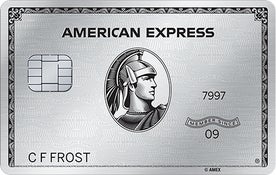
American Express, for example, states in their terms for The Platinum Card® for American Express:
“If we in our sole discretion determine that you have engaged in abuse, misuse, or gaming in connection with the welcome offer in any way or that you intend to do so (for example, if you applied for one or more cards to obtain a welcome offer (s) that we did not intend for you; if you cancel or downgrade your account within 12 months after acquiring it; or if you cancel or return purchases you made to meet the Threshold Amount), we may not credit Membership Rewards points to, we may freeze Membership Rewards points credited to, or we may take away Membership Rewards points from your account.”
Over the past few years, Amex has clawed back points from bonus category spending, sign-up bonuses, bonus points from self-referrals and bonus points received from buying too many gift cards and/or cash equivalents. If you’ve already transferred your points out to a loyalty program partner, a clawback can cause you to have a negative rewards balance and future points earned will go toward repaying the negative balance.
If you open an Amex card and decide you want to downgrade or close it within the first 12 months, you can wave goodbye to that welcome bonus you earned because Amex will claw back your points for that.
(Photo by Robert Alexander/Getty Images)
And it’s not just miles and points that can be clawed back, but statement credits as well. The terms and conditions for the up to $100 annual credit for Saks Fifth Avenue* states: “Statement credit may be reversed if the eligible purchase is returned/cancelled.” Enrollment required for select benefit.
And a few years back, Amex made news for clawing back airline incidental credits that were not used according to their terms.
While reports are rare of Chase clawing back sign-up bonuses, some of their recent Chase Offers have included terms that explicitly state that statement credits may be clawed back on purchases.
For example, my Chase Sapphire Reserve account currently has an offer for $1,000 back when you spend $3,000 at Kwiat (a diamond retailer). The terms of that offer say “Statement credit may be reversed if qualifying purchase is returned/cancelled.” and that “Abuse of offers may result in exclusion from future offers.” So the idea of gaming or misuse of Chase Offers is certainly on the bank’s radar and something to avoid.
Clawback vs. shutdown: Are they the same?
(Photo by Mario Tama/Getty Images)
In some cases, a bank or loyalty program doesn’t just clawback your points, but they also shut down your account. Late last year, American Airlines shut down accounts of AAdvantage members who were using mailers to continuously open new Citi credit card accounts. And when the accounts were shut down, all rewards were forfeited.
Sometimes if a bank has shut down your accounts — say they’ve decided you’re a credit risk due to opening too many recent accounts — you may still have an opportunity to redeem or transfer your points. Chase, for example, has been known to give 30 days to use any remaining Ultimate Rewards points after you’ve been shut down.
So a clawback does not always equal a shutdown, and a shutdown does not necessarily mean all of your points have been clawed back. However, there are occasions when a shutdown has meant the loss of all rewards.
How can you avoid clawbacks?
Start by reading and familiarizing yourself with the terms and conditions on your credit card accounts. If it says gift cards don’t count toward an airline incidental credit, you buy a gift card and get credit, you can’t be too surprised if the card issuer looks back and decides you were wrongly credited for that charge.
However, you may not be doing anything against the current terms and a card issuer can suddenly change their terms and decide you haven’t been playing by their rules. It can be difficult to know when or if that is going to happen.
Tread lightly on new or limited-time promotions because the rules can and sometimes do change mid-promotion. And finding out you’re on the wrong side of a rule change can be upsetting.
Bottom line
Clawbacks are something you want to avoid. The good news is that a clawback is not necessarily indicative of a shutdown. Typically, you haven’t severed your relationship with the bank and you’re free to continue using your credit card. Just be cautious to avoid future scenarios that could cause a bank to look negatively at your accounts.
By commenting, you agree to our Community Guidelines to help create a positive space for conversation. The responses below are not provided or commissioned by the bank advertiser, our partners, or The Points Guy (“TPG”). They have not been reviewed, approved, or otherwise endorsed by any of these parties. All responses are submitted by individual contributors, and neither the bank advertiser, our partners, nor TPG are responsible for ensuring that all posts and/or questions are answered.