Senitra is a credit cards expert and TPG contributor. Senitra spent seven years working in marketing, has been a freelance writer for numerous websites and worked as a full-time reporter and editor for several daily and weekly newspapers in Texas, New Jersey and Pennsylvania. She has been quoted on her credit card expertise in MarketWatch, Consumer Reports and Kiplinger.
November 20, 2024 • 8 min read
The cards we feature here are from partners who compensate us when you are approved through our site, and this may impact how or where these products appear. We don't cover all available credit cards, but our analysis, reviews, and opinions are entirely from our editorial team. Terms apply to the offers listed on this page. Please view our advertising policy and product review methodology for more information.Editorial disclaimer: Opinions expressed here are the author's alone, not those of any bank, credit card issuer, airline or hotel chain, and have not been reviewed, approved or otherwise endorsed by any of these entities.
Comments
By commenting, you agree to our Community Guidelines to help create a positive space for conversation. The responses below are not provided or commissioned by the bank advertiser, our partners, or The Points Guy (“TPG”). They have not been reviewed, approved, or otherwise endorsed by any of these parties. All responses are submitted by individual contributors, and neither the bank advertiser, our partners, nor TPG are responsible for ensuring that all posts and/or questions are answered.
Related stories
Quick summary
Switching from debit to credit cards can feel daunting, especially for those focused on avoiding debt and tracking spending closely.
Treating a credit card like a debit card—only spending what you can pay off monthly—can help maintain financial discipline while earning rewards.
Starting with a single card and shifting automatic payments can simplify the transition and maximize potential benefits.
Regularly reviewing transactions and setting up payment reminders or autopay can prevent missed payments and help manage finances effectively.
What to consider
Be mindful of your credit limit to avoid declined transactions or extra charges.
Some recurring payments, such as mortgages or car loans, may not accept credit cards or may charge additional fees for doing so.
Certain issuers restrict the number of new cards you can open within a set timeframe.
What you'll miss from the article
Step-by-step strategies for transitioning from debit to credit cards while minimizing risk and maximizing rewards.
Generated by AI with support from our editorial team.
Update: Some offers mentioned below are no longer available. View the current offers here.
If you’ve been using your debit card for all your purchases for years — carefully tracking your checking account balance and not spending more than what you have in the bank — shifting your spending to a credit card can be a big change.
I used to be one of those people who paid for everything with their debit card because they were afraid of racking up debt. I thought debit cards were the safe spending option since you can’t spend more money than what you had in your account.
At the time, that was what financial responsibility looked like for me. However, my perspective changed as my interest in travel grew, and I learned that I could earn big rewards by applying for and using credit cards.
Maybe you already have a rewards credit card but are hesitant to shift your spending to credit cards. You’ve possibly signed up for a credit card and charged enough to meet the minimum spending requirement for a bonus, but after that, you always return to using your debit card.
If you’ve been on the fence about switching your spending from debit to credit, here are a few tips to help you make the change.
When I first decided to shift my spending to credit cards, I knew I wanted to be a responsible credit card user. I didn’t view a credit card as free money or a long-term loan to repay over time through minimum payments.
Paying interest was a no-go, which meant not charging more than I could pay back each month.
WESTEND61/GETTY IMAGES
One thing that helped me is that I treated my credit card just like my debit card. That meant not spending more than I had in the bank. Even though my credit card did not withdraw directly from my checking account for every purchase (as my debit card did), I acted as if it did.
Maybe you made only minimum payments on credit cards in the past. If so, paying it in full will require adjusting your mindset. View your credit card just like a debit card. Don’t spend more than you can pay back every month.
You’ll want to avoid accidentally exceeding your credit limit on a lower-limit card. If you do, transactions may be declined, or you may be charged fees. But you also shouldn’t view cards with high limits as a free pass to max out your card.
Maximizing your points- and miles-earning often involves strategizing which cards to use for different purchases. As many cards come with category bonuses — bonus points for different types of spending, such as restaurants or gas stations — it can be quite lucrative to use different cards for different purchase categories.
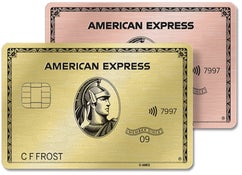
That might mean using an American Express® Gold Card for 4 points per dollar at restaurants worldwide (on up to $50,000 in purchases per calendar year, then 1 point per dollar) and U.S. supermarkets (on up to $25,000 in purchases per calendar year, then 1 point per dollar).
However, remembering which card to use for each purchase can feel overwhelming if you’re new to travel rewards and using your credit card for everything.
SHAPECHARGE/GETTY IMAGES
A good way to maximize points earned using only one card at a time is through new card welcome bonuses. Open a new credit card and use only that card until you meet the minimum spending requirement (which is required to earn the welcome bonus), being sure to pay off your balance in full every month.
Once that’s complete, apply for another card and shift all your spending to that card. You’re generating lots of points by earning welcome bonuses, even though you may not utilize all of the bonus categories you could maximize by juggling multiple cards.
But remember that some issuers — including American Express, Chase and Bank of America — limit the number of cards you can be approved for over a certain period of time.
Once you’re comfortable with consistently paying your balance off in full every month, you can add more complexity, like switching your spending to different cards to take advantage of category bonuses.
Automatic payments make life easier by knocking one more thing off the to-do list. If you have automatic transactions using your checking account or debit card and use your credit card for other purchases, tracking your finances can get complicated. There’s more to manage. Keep it simple by shifting as many automatic payments as possible to your credit card.
IZUSEK/GETTY IMAGES
You likely can't use your credit card to autopay everything. Your mortgage and car payments are good examples. You’ll still have to track those in your checking account.
Whether you check your credit card account daily or monthly, it’s important to take the time to ensure all your transactions post correctly.
PIXELFIT/GETTY IMAGES
You’re not just reviewing transactions for the correct amounts, but you should review your points earned to verify you've earned the correct amount of points. And check for any statement credits you expect to receive, such as from Chase Offers or Amex Offers.
You don’t want to forget a payment and incur late fees and interest. While some card issuers may waive late charges and interest as a one-time courtesy, you shouldn't get in the habit of paying late.
MILAN2099/GETTY IMAGES
Determine a payment schedule that works best for you. Some people pay weekly; others pay monthly. If you’re afraid of overspending and not having the money in your checking account to pay the bill, don’t wait until the due date. You can make multiple payments, even paying off balances daily or weekly.
If you're concerned you may forget to pay your bill, you should set up autopay for your full balance (ideal) or the minimum balance by the due date. Alternatively, set reminders on your phone for each credit card, ideally a week in advance and again a couple of days before your due date.
I'm a longtime travel rewards enthusiast, and I spend significant time and energy learning how to maximize my spending and earn rewards. However, it can feel like everyone is signing up for new credit cards (and spending thousands of dollars on them) to generate points for first-class flight redemptions and luxury hotel stays.
But that’s not the case. Even still, I'm still surprised when a friend or family member pulls out a debit card to pay for a purchase. Even though they may be interested in travel rewards, moving from a debit card to a credit card can be nerve-wracking, and I understand that.
Switching from debit to credit was one of my best money moves. My only regret is not doing so sooner.
By commenting, you agree to our Community Guidelines to help create a positive space for conversation. The responses below are not provided or commissioned by the bank advertiser, our partners, or The Points Guy (“TPG”). They have not been reviewed, approved, or otherwise endorsed by any of these parties. All responses are submitted by individual contributors, and neither the bank advertiser, our partners, nor TPG are responsible for ensuring that all posts and/or questions are answered.