My card strategy without an ultra-premium card


Update: Some offers mentioned below are no longer available. View the current offers here.
Fun fact: I do not have an ultra-premium credit card. As someone who spends a considerable amount of time talking about how many amazing premium credit cards are out there, a lot of people are surprised when they learn I don't have a card like the Chase Sapphire Reserve or The Platinum Card® from American Express. While there are plenty of excellent premium credit cards out there, I haven't applied for any yet. So far, my focus has been on establishing an earning strategy that helps me hit my travel (and overall financial) goals.
Here's a peek at my cards strategy and why I've avoided ultra-premium credit cards right now.
For more credit card news and advice, sign up for the TPG newsletter!
My focus is on earning rewards, not premium benefits
At this stage in my life, my travel goals are about seeing as many places as possible by spending the least money possible. I'm a budget traveler and my credit card portfolio mirrors that. Lounge access, elite status with hotel chains – those aren't currently large priorities for me. Instead, I'm more interested in building up my Membership Rewards points balance with my American Express® Gold Card and my Ultimate Rewards balance with my Chase Sapphire Preferred Card and new Chase Freedom Unlimited, along with an assortment of other low-annual-fee credit cards.
This will likely change as I visit more places and mark destinations off my bucket list. I'll start revisiting places I've already been to and I'll want to upgrade my travel experiences. But for now? I'm a young budget traveler who would rather use credit cards for earning and burning points than luxury perks.
Pairing cards for maximum value
A large part of my credit card strategy is pairing credit cards. I try not to overlap too many earning categories, and all of my main spending habits are covered by a card that earns rewards in those categories.
My two largest expenses each month are groceries and dining, followed closely by assorted online shopping. I use my American Express® Gold Card (which is my most expensive card at a $250 annual fee — see rates and fees) for U.S. supermarket purchases and dining at restaurants since it earns 4x on those expenses (on the first $25,000 in purchases per calendar year; then 1x at U.S. supermarkets). Since I use Doordash for most delivery, and they have a partnership with Chase, I put my food delivery purchases on my Chase Sapphire Preferred. Any broad travel purchases go on my CSP, too. Drugstore and online shopping purchases go on my new Chase Freedom Unlimited since it earns 3% (which I will convert into 3x Ultimate Rewards points by transferring rewards over to my CSP) on drugstores and 1.5% on non-bonus spending such as online shopping.
Right now, those three are the primary cards I use for pretty much everything, and they ensure I'm racking up points to spend on travel at a solid rate.

Other earning strategies
As I said before, my primary focus is on earning rewards. While some mid-tier cards offer a great return on some of my top spending categories (looking at you, Chase Freedom Unlimited and Amex Gold), they don't always hold up against the potential earnings from top-tier credit cards. That's where other earning strategies such as online shopping portals, referral bonuses, and Amex and Chase offers come into play.
Related: How to refer friends and earn points, miles or cash credits
I sift through my Amex Offers and Chase Offers at least weekly (it's currently part of my Sunday evening routine) and add any I think I might use. That way, I make sure I'm earning across every purchase possible. I also send friends and family members my referral codes when they ask for recommendations on which cards to get. Then I make sure to check CashBackMonitor for any shopping portal bonuses when I'm shopping online.

Bottom line
Now, none of this means I won't ever get a premium credit card. In fact, I have one on my wish list for 2021. Back when the Chase Sapphire Reserve first added Lyft and Doordash benefits earlier in 2020, I'd planned to upgrade my CSP. I put that plan on hold because of the coronavirus pandemic. Still, I will eventually add that card to my wallet (barring another card announcing some serious changes that make me reevaluate). This is simply my current strategy without a premium credit card and how I'm making my cards work for me without paying a $500+ annual fee.
Premium cards can be a great tool for frequent travelers. The annual fees are worth it for many people, and there is a lot of love about the benefits that come with most of these cards. But premium credit cards are not the only way to be successful in the points and miles game. With so many excellent mid-tier and no-annual-fee credit cards out there, you can build a solid strategy for earning travel rewards without adding any luxury cards that cost hundreds of dollars in annual fees.
For rates and fees of the Amex Gold Card, please click here.
TPG featured card
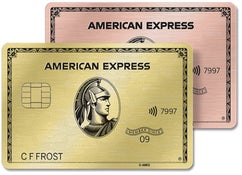
at American Express's secure site
Terms & restrictions apply. See rates & fees.
| 4X | Earn 4X Membership Rewards® points per dollar spent on purchases at restaurants worldwide, on up to $50,000 in purchases per calendar year, then 1X points for the rest of the year. |
| 4X | Earn 4X Membership Rewards® points per dollar spent at US supermarkets, on up to $25,000 in purchases per calendar year, then 1X points for the rest of the year. |
| 5X | Earn 5X Membership Rewards® points on prepaid hotel stays booked through AmexTravel.com or the Amex Travel App™. |
| 3X | Earn 3X Membership Rewards® points on flights booked through AmexTravel.com, the Amex Travel App™, or purchased directly from airlines. |
| 2X | Earn 2X Membership Rewards® points on prepaid car rentals booked through AmexTravel.com or the Amex Travel App™ and cruises booked and paid through AmexTravel.com. |
| 1X | Earn 1X Membership Rewards® point per dollar spent on all other eligible purchases. |
Pros
- Valuable dining and food-related credits
- Flexible rewards with airline and hotel transfer partners
- Multiple travel and purchase protections
- No foreign transaction fees
- Access to Amex Offers for additional savings (enrollment required)
Cons
- Not as useful for those living outside the U.S.
- Some may have trouble using Uber and other dining credits
- You may be eligible for as high as 100,000 Membership Rewards® Points after you spend $8,000 in eligible purchases on your new Card in your first 6 months of Card Membership. Welcome offers vary and you may not be eligible for an offer. Apply to know if you’re approved and find out your exact welcome offer amount – all with no credit score impact. If you’re approved and choose to accept the Card, your score may be impacted.
- Earn 4X Membership Rewards® points per dollar spent on purchases at restaurants worldwide, on up to $50,000 in purchases per calendar year, then 1X points for the rest of the year.
- Earn 4X Membership Rewards® points per dollar spent at US supermarkets, on up to $25,000 in purchases per calendar year, then 1X points for the rest of the year.
- Earn 5X Membership Rewards® points on prepaid hotel stays booked through AmexTravel.com or the Amex Travel App™.
- Earn 3X Membership Rewards® points on flights booked through AmexTravel.com, the Amex Travel App™, or purchased directly from airlines.
- Earn 2X Membership Rewards® points on prepaid car rentals booked through AmexTravel.com or the Amex Travel App™ and cruises booked and paid through AmexTravel.com.
- Earn 1X Membership Rewards® point per dollar spent on all other eligible purchases.
- Pay It® lets you tap in the American Express® App to quickly pay for small purchase amounts throughout the month and still earn rewards the way you usually do. Plan It® gives you the option to split up big purchases into equal monthly payments with a fixed fee. You’ll know upfront exactly how much you’ll pay.
- $120 Dining Credit: Earn up to a total of $10 in statement credits monthly when you pay with the Gold Card at Grubhub (including Seamless), Buffalo Wild Wings, Five Guys, The Cheesecake Factory, and Wonder. This can be an annual savings of up to $120. Enrollment required.
- $100 Resy Credit: Get up to $100 in statement credits each calendar year at over 10,000 qualifying U.S. Resy restaurants after you pay for eligible purchases with the American Express® Gold Card. That’s up to $50 in statement credits semi-annually. Enrollment required.
- $84 Dunkin' Credit: Earn up to $7 in monthly statement credits after you pay with the American Express® Gold Card at U.S. Dunkin’ locations. Enrollment required.
- $120 Uber Cash on Gold: Enjoy up to $120 in Uber Cash annually with your Gold Card. Just add your Card to your Uber account and you'll get $10 in Uber Cash each month to use on orders and rides in the U.S. when you select an Amex Card for your transaction.
- Enjoy complimentary Hertz Five Star® Status benefits like skipping the counter at select locations, adding an additional driver at no additional cost*, and vehicle upgrades**. Benefit enrollment and Hertz Gold+ registration are required. *Additional drivers must meet standard rental qualifications and must be a spouse or domestic partner to qualify as complimentary. Other additional drivers subject to fees. **Benefits are subject to availability and vary by location. Additional Hertz program Terms and Conditions including age restrictions apply.
- Book two nights or more with The Hotel Collection through AmexTravel.com or the Amex Travel App™ and receive a $100* credit towards eligible charges at over 1,400 upscale hotels worldwide. *Eligible charges vary by property.
- Book your travel through the Amex Travel App™ with added peace of mind – backed by American Express® service and support. Only for American Express® Card Members.
- Whenever you need us, we're here. Our Member Services team will ensure you are taken care of. From lost Card replacement to statement questions, we are available to help 24/7.
- No Foreign Transaction Fees.
- Annual Fee is $325.
- Terms Apply.