The Points Guy believes that credit cards can transform lives, helping you leverage everyday spending for cash back or travel experiences that might otherwise be out of reach. That's why we publish a variety of editorial content and card comparisons: to help you find a great card to turn your goals into reality.
Our site may earn compensation when a customer clicks on a link, when an application is approved, or when an account is opened with our partners, and this may impact how or where these products appear. While we don't cover all available credit cards, our editorial team creates and maintains all of the analysis of these cards, and our content is not influenced nor subject to review by any credit card company, bank or partner prior to (or after) publication. Please view our advertising policy and product review methodology for more information.
Advertiser disclosure
The Points Guy believes that credit cards can transform lives, helping you leverage everyday spending for cash back or travel experiences that might otherwise be out of reach. That's why we publish a variety of editorial content and card comparisons: to help you find a great card to turn your goals into reality.
Our site may earn compensation when a customer clicks on a link, when an application is approved, or when an account is opened with our partners, and this may impact how or where these products appear. While we don't cover all available credit cards, our editorial team creates and maintains all of the analysis of these cards, and our content is not influenced nor subject to review by any credit card company, bank or partner prior to (or after) publication. Please view our advertising policy and product review methodology for more information.
Guides
The 6 best starter cards for building your credit
Featured image by WESLEY SOARES FERRACINI/GETTY IMAGES
Chris was a reporter at The Points Guy, where he covered the intersection of credit card rewards and travel. At TPG, he wrote a broad array of stories ranging from in-depth features and reports to trending travel news as it related to loyalty, card benefits and consumer behavior.
Credit card writer Danyal Ahmed is an avid traveler, averaging about 100,000 aeronautical miles per year. He regularly applies that knowledge and his expertise in credit cards to his role as a credit card writer at TPG.
also contributed to this story
September 23, 2024 • 12 min read
The cards we feature here are from partners who compensate us when you are approved through our site, and this may impact how or where these products appear. We don't cover all available credit cards, but our analysis, reviews, and opinions are entirely from our editorial team. Terms apply to the offers listed on this page. Please view our advertising policy and product review methodology for more information.Editorial disclaimer: Opinions expressed here are the author's alone, not those of any bank, credit card issuer, airline or hotel chain, and have not been reviewed, approved or otherwise endorsed by any of these entities.
Comments
By commenting, you agree to our Community Guidelines to help create a positive space for conversation. The responses below are not provided or commissioned by the bank advertiser, our partners, or The Points Guy (“TPG”). They have not been reviewed, approved, or otherwise endorsed by any of these parties. All responses are submitted by individual contributors, and neither the bank advertiser, our partners, nor TPG are responsible for ensuring that all posts and/or questions are answered.
Related stories
Quick summary
The article reviews several starter credit cards suitable for those building or rebuilding credit, including options for students and individuals with no credit history.
It compares both secured and unsecured cards, highlighting features such as flexible rewards, ease of approval and suitability for those with limited or poor credit.
Some cards are designed for applicants without a credit check or bank account, while others offer ongoing rewards or introductory bonuses.
The guide emphasizes the importance of choosing a card that reports payment activity to major credit bureaus to help establish or improve credit.
What to consider
Certain cards require a security deposit, which typically determines your credit limit.
Some options have a modest annual fee, while others do not charge one; always check for foreign transaction fees if planning to use the card abroad.
Introductory bonuses and higher rewards rates may be subject to spending thresholds or quarterly limits.
What you'll miss from the article
Detailed comparisons of each card's features, eligibility criteria and tips for selecting the best option based on your credit profile.
Generated by AI with support from our editorial team.
Update: Some offers mentioned below are no longer available. View the current offers here.
Starting from scratch with credit cards can be a daunting task. At TPG, we want to give you the confidence to take control of your financial journey — wherever you might happen to be. Remember that everyone was a beginner at one point or another.
From sharing simple rules to stay out of card debt to debunking myths about your credit score, we're here to help along the way. Whether you're building credit from the get-go — or looking to rebuild — this guide will help you consider the best credit card for you.
Let's take a closer look at six of the best starter cards for building credit and bringing more stability to your financial future. From entry-level first cards to secured cards, these products will help those who lack an extensive credit profile or need to repair some financial mistakes from the past.
The best starter cards to build credit
Capital One Platinum Credit Card: Best for starting out with some credit
Chase Freedom Unlimited®: Best for future value
Discover it Secured Credit Card: Best for beginner rewards
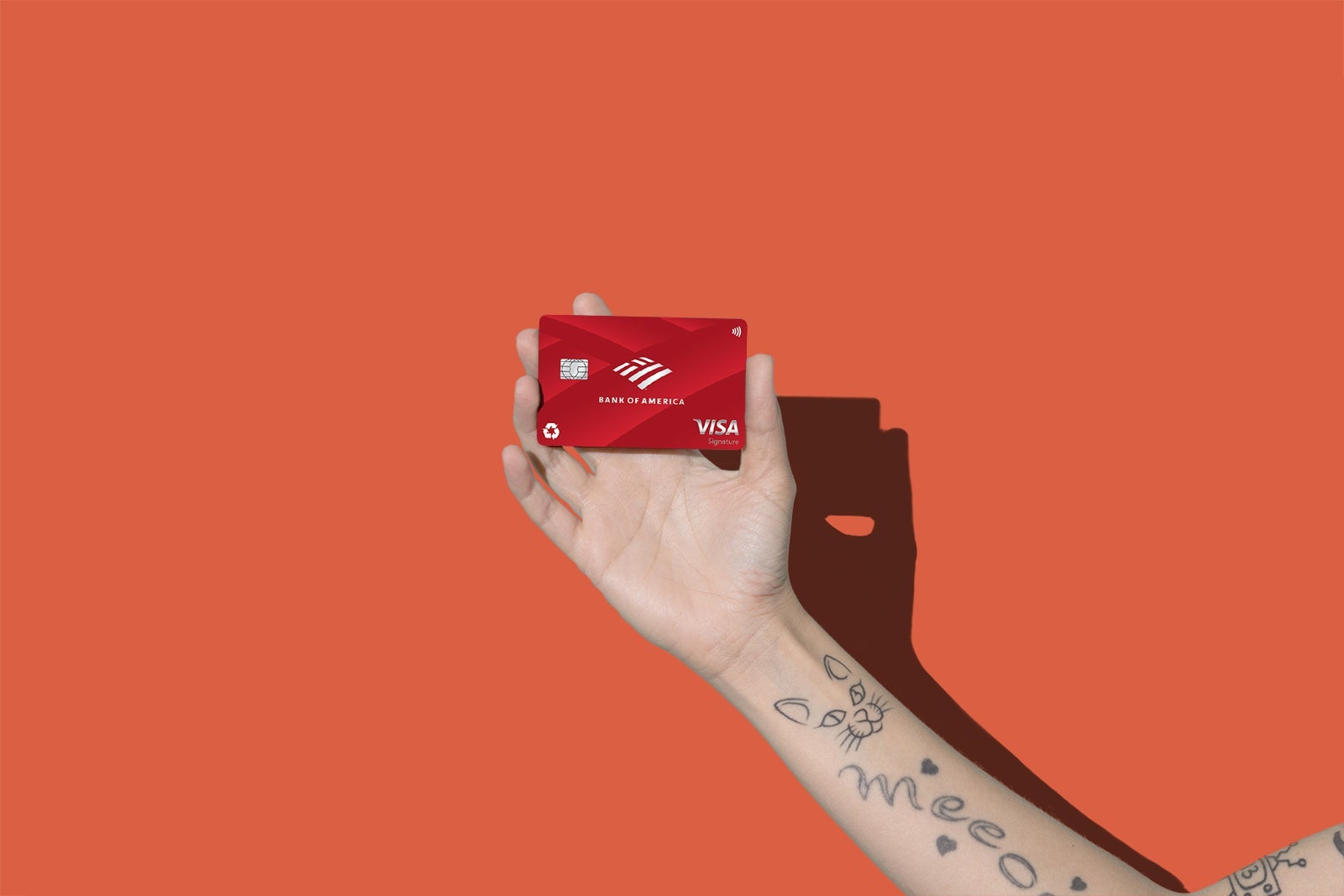
Bank of America® Customized Cash Rewards Credit Card for Students: Best for students
Citi Double Cash® Card: Best for flat-rate cash back
opensky® Secured Visa®: Best for no credit check
Comparing the best cards to build credit
Card
Best for
Sign-up bonus
Annual fee
Capital One Platinum Credit Card
Establishing credit
None
$0
Chase Freedom Unlimited
Future value
Earn a $200 bonus after spending $500 on purchases within the first three months from account opening.
$0
Discover it Secured Credit Card
Beginner rewards
At the end of your first year, Discover automatically matches all the cash back you earned.
$0
Bank of America Customized Cash Rewards Credit Card for Students
Students
Earn a $200 cash rewards bonus after spending $1,000 in the first 90 days of account opening.
$0
Citi Double Cash Card
Flat-rate cash back
Earn $200 cash back after spending $1,500 on purchases in the first six months of account opening.
$0
opensky Secured Visa Credit Card"
No credit check
None
$35
The information for the Discover it Secured and Bank of America Customized Cash Rewards credit card for Students has been collected independently by The Points Guy. The card details on this page have not been reviewed or provided by the card issuer.
As you can see, these cards run the gamut from household names like Chase to much more niche players in the secured card landscape. Let's take a closer look at each of these cards to see which may fit the bill for you.
Best cards to build credit
Capital One Platinum Credit Card: Best for establishing credit
Whether you're just starting out or want to build up your credit, the Capital One Platinum Credit Card is a practical choice for many looking to elevate their credit profile.
THE POINTS GUY
Welcome offer: None
Rewards: None
Who should apply: Capital One designates (and markets) the Capital One Platinum for consumers with average credit. Taken directly from the Capital One website, this card is a fit for you if:
"I have limited credit history. I've had my own credit card or other credit for less than 3 years (including students, people new to the U.S., or authorized users on someone else's credit card)."
When you have an average credit score or a short credit history, you likely won't be accepted for rewards or travel cards that require good to excellent credit. Therefore, there's no need to shoot for the stars just yet if the likelihood of getting a card is low.
It's likely in your best interest to open a card — even a basic one — to get positive information flowing into your credit reports and to start building up a credit history.
The Chase Freedom Unlimited" offers a good enough earnings structure to remain in your wallet for many years, even after you've been approved for higher-end travel and rewards cards.
Welcome offer: Earn a $200 bonus after spending $500 on purchases within the first three months from account opening.
Rewards: Earn 5% cash back on travel purchased through Chase Travel℠, 3% on dining (including takeout) and drugstores and 1.5% on all other purchases.
Who should apply: The Chase Freedom Unlimited may be a good fit if you already have some credit history. It's also a dynamic starter card because it pairs very well with other Chase cards.
When you have this card by itself, you'll earn no less than 1.5% cash back on all purchases in addition to bonus rewards for specific categories.
And because you can transfer your points into an Ultimate Rewards account, the points earned by the Chase Freedom Unlimited are worth just over 2 cents apiece, according to TPG's September 2024 valuations, if you link the card to a higher-end Ultimate Rewards-earning card such as the Chase Sapphire Reserve®, Ink Business Preferred® Credit Card or [Chase Sapphire Preferred® Card.
When you combine the rewards you earn on the Freedom Unlimited with your other Ultimate Rewards-earning cards, you can transfer the points you earn to one of Chase's 11 airline and three hotel partners or redeem them for added value directly in Chase Travel. Ultimate Rewards points are some of the most valuable points when redeeming for travel.
Discover it Secured Credit Card: Best for beginner rewards
The Discover it Secured is one of the few secured credit cards that earn rewards, making it an appealing option for those interested in stretching their dollars.
Welcome offer: At the end of your first year, Discover automatically matches all the cash back you earned.
Rewards: Earn 2% cash back at gas stations and restaurants on up to $1,000 in purchases each quarter and unlimited 1% cash back on all other purchases.
Who should apply: Most beginner credit cards don't offer any rewards; if you're determined to begin earning cash back as soon as possible, this is a great card to consider.
To open this card, you must provide a deposit of at least $200. Your credit line will match the amount of your deposit.
Discover will match all the cash back you've earned at the end of your first year. This means you can earn rewards while you work to build your credit by using your card responsibly and paying your bill each month.
As a cardholder, you also get to check your FICO score for free and you won't pay any foreign transaction fees when you use your card abroad. After you've been a cardholder for six consecutive months, Discover will automatically review your account monthly to see if you are eligible to get your security deposit back and may consider converting you to an unsecured card.
Discover also will waive the late payment penalty fee the first time you pay late.
Bank of America Customized Cash Rewards credit card for Students: Best for students
If you're a student concerned about getting approved for a starter card, applying for a student card like the Bank of America Customized Cash for Students is a great idea.
THE POINTS GUY
Welcome offer: Earn a $200 cash rewards bonus after spending $1,000 in the first 90 days of account opening.
Rewards rates: Earn 3% cash back in the category of your choice (choose from gas and electric vehicle charging stations, online shopping (including cable, internet, phone plans and streaming), dining, travel, drugstores or home improvement/furnishings) and 2% cash back at grocery stores and wholesale clubs (on up to $2,500 in combined spending each quarter on choice category, grocery stores and wholesale clubs, then 1%); 1% on all other purchases.
Who should apply: The Bank of America Customized Cash Rewards Credit Card for Students is unique in that it offers plenty of flexibility in its rewards-earning structure. It merits consideration if you want a cash-back card that you don't need to replace when you graduate from college.
However, it's important to note that the 3% and 2% bonus categories are limited to your first $2,500 in combined purchases each quarter. Once you reach that threshold in a quarter, all your purchases revert to 1% cash back.
Citi Double Cash Card: Best for flat-rate cash back
Similarly to the Chase Freedom Unlimited is a card that you can easily justify using over the long term.
THE POINTS GUY
Welcome offer: Earn $200 cash back after spending $1,500 on purchases in the first six months of account opening.
Rewards: Earn 2% cash back on every purchase (1% when you buy, 1% as you pay)
Who should apply: If you're looking to earn a solid cash-back return on everyday purchases beyond your first year, you may want to consider the Citi Double Cash Card. As its name suggests, the card earns 2% cash back on all purchases (1% when you buy, plus 1% as you pay off your statement).
While other mid-tier credit cards may have more valuable perks, 2% back on everything leads the pack in terms of the best no-annual-fee credit cards. Plus, there's no limit on the amount of cash back you can earn.
Like the Chase Freedom Unlimited, opening the Double Cash card can unlock more valuable rewards in the future. Cardholders with the Citi Strata Premier® Card (see rates and fees) can effectively convert their Double Cash earnings into fully transferable Citi ThankYou points — which, according to TPG's September 2024 valuations, are worth 1.8 cents apiece.
As a result, this unlocks the ability to transfer your points to Citi's 20 transfer partners for award redemptions. If you value simplicity with no restricting categories to keep track of or enroll in, a respectable 2% earning rate and no annual fees, the Citi Double Cash is a compelling choice.
Just note that the Citi Double Cash charges a 3% foreign transaction fee, so you won't want to use it outside of the U.S.
Opensky Secured Visa Credit Card: Best for no credit check
Your main goal as a beginner in the credit card world is to build your credit and establish responsible habits; the opensky Secured Visa can help you do that.
Welcome offer: None
Rewards: None
Who should apply: Looking to build credit and don't mind paying a nominal annual fee of $35? While this card lacks any perks or rewards, the opensky Secured Visa Credit Card reports your payment activity to all three major credit bureaus, helping you boost your credit score when paying your balance off each month. With an easy approval process, this card may provide the key to a better financial path.
This is a foundational starter card meant for individuals looking to build credit by making on-time payments. In terms of secured cards, the opensky Visa is one of the few that you can qualify for without a bank account or credit check. That means if you're grappling with past financial mistakes or just have bad to poor credit, this is a card that might be on your radar.
Additionally, those without any credit history can start their credit from scratch.
Doing so will also open opportunities for car loans and mortgages with lower interest rates. A secured card, such as the opensky Visa, is a much better option than using cash or prepaid cards since those payment methods don't help build credit.
If you're looking to build or repair your credit with a credit card, you'll want to make sure the card you get reports your payment activity to the credit bureaus. Lenders look at your credit report and credit score when deciding whether to approve you for lines of credit, such as mortgages and car loans; the higher your score, the higher the odds of approval.
Before applying for your first credit card, consider what you're looking for out of a starter card, your current credit score and your income. If you have no or poor credit or lack meaningful income, I recommend applying for one of the secured cards mentioned above. Otherwise, a starter rewards card is a great choice.
By commenting, you agree to our Community Guidelines to help create a positive space for conversation. The responses below are not provided or commissioned by the bank advertiser, our partners, or The Points Guy (“TPG”). They have not been reviewed, approved, or otherwise endorsed by any of these parties. All responses are submitted by individual contributors, and neither the bank advertiser, our partners, nor TPG are responsible for ensuring that all posts and/or questions are answered.