Why we cry on airplanes, according to a psychologist
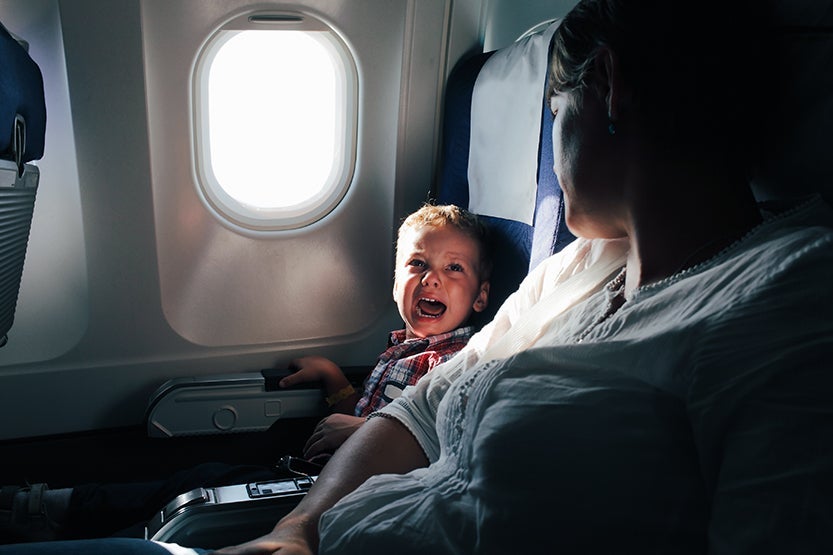
Feeling emotional lately?
Crying on an airplane once or twice in a lifetime may be something most of us do, but having the tendency to cry on an airplane regularly indicates a behavioral pattern.
Virgin Atlantic famously conducted a Facebook survey back in 2011 and found that 41% of men reported hiding their tears under a blanket, while 55% of men and women reported that flying intensified their emotions overall. What's interesting is that much of it can be triggered by something as seemingly harmless as the movies people watch on the in-flight entertainment screens. (It even prompted Virgin Atlantic to issue "emotional health warnings" before certain flicks.)
For more TPG news delivered each morning to your inbox, sign up for our daily newsletter.
A new report by travel brand strategy and content agency Studio Black Tomato, titled "Heightened Emotions: An Analysis of How We Feel When We Fly," notes that flying not only involves a physical transition from one place to another, but also an emotional shift in state of mind. It's an emotionally loaded experience and a unique setting where you have little control over in-flight outcomes. It cites other studies that suggest that factors such as fatigue, stress, high altitude and dehydration add to the overwhelming sense of heightened emotion
Here are a few theories to explain why flying brings out the weepers in us.
Why We Cry on Airplanes
It's evolution
From an evolutionary perspective, people cry instinctively to send a message to others that they may need help. According to this theory, showing vulnerability through tears may make your fellow passengers more likely to help you in the event of a crisis. A 2009 study from Tel Aviv University suggested that it works, too, and crying not only elicits a helping-oriented response from nearby people, but increases a sense of group cohesion.
It's fatigue and stress
Traveling is stressful. You have to pack and prepare to leave your home; schedule enough time to make the flight; navigate security lines; wait out possible delays; and finally let yourself be corralled onto the plane as if you were cattle avoiding a steel prod. By the time you get to your seat, you've already had an unusually stressful day, and that's assuming you even got enough sleep.
Related: Pass the tissues: I'm a plane crier, and I'm proud of it

All of this brings down your psychological defenses and heightens your emotional reactions. When people get stressed or tired, they often unleash these feelings by eating or drinking more, yelling or snapping at others, or — you guessed it — crying.
It's physiological
We may cry on airplanes, in part, because factors associated with flying impact us physiologically. Specifically, the high altitude and cabin pressure reduces oxygen in the cabin, which causes dehydration. Dehydration is associated with a flurry of symptoms, including mood disturbances and fatigue, both of which can make a person more likely to feel sad or become tearful.Another cause that often goes undiscussed when considering the link between flying and crying has to do with space and comfort. For many people — especially travelers crammed into the middle seat in economy — flying may simply be physically uncomfortable. There's hardly any room between passengers, and very little privacy. (We're willing to bet there are fewer tears in first class.) The combination of physical and emotional discomfort can destabilize a person's mood and cause them to feel frustrated and to become tearful.
It's about loss of control
Giving up as much control as you have to when you fly can also heighten your anxiety and trigger crying on airplanes. The intense and unusual sounds you hear after boarding (massive jet engines, vault-like jet doors closing, and a range of tones and announcements overhead) put you on alert even before you take off, when you have no idea who the pilot is — and this is the person who holds your life in their hands. Once in the air, you likely have no idea how to control a plane if something were to go wrong. So, basically, you're powerless and have no way to change that until you land again. People who tend to have alpha personalities or who need a high level of control can have a hard time giving up so much control. Sometimes the only thing you can do is shed tears.
It's about separation
Some men and women who are prone to crying on airplanes do so because the flight experience triggers memories of loss or painful separations. With every flight, you may be leaving loved ones behind, or a place you love and feel connected to. The experience of leaving something behind again can trigger memories of times in your life when you were scared, anxious, sad or lonely.
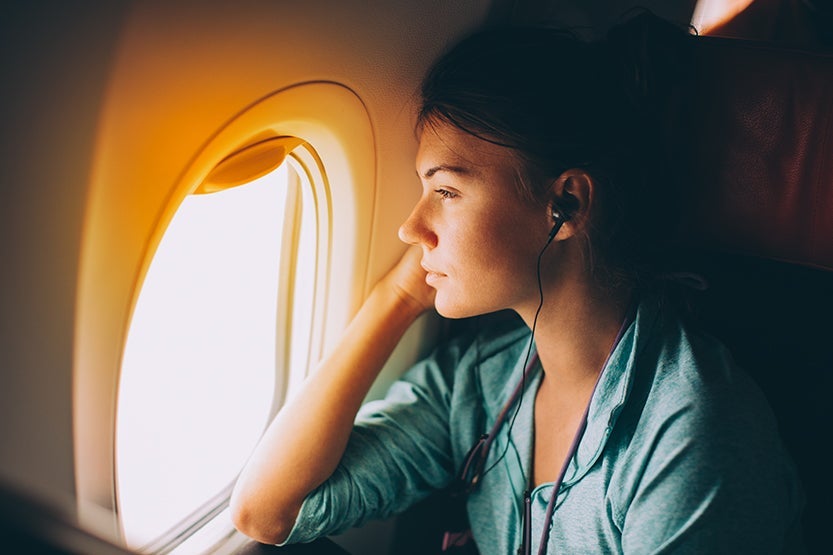
What Should You Do When You Cry on a Plane?
The best way to stave off an intense emotional reaction is to prepare for it. If you are someone who tends to cry on airplanes, consider trying the behaviors below, which have helped some of my clients in the past.
Sleep well the night before
Fatigue is a major factor in lowering one's psychological defenses, and people are more likely to cry when those defenses are down. Getting plenty of sleep keeps your mood regulated, and keeps you better prepared to deal with setbacks and stress.
Call a friend before boarding
Expressing your thoughts and feelings helps to modulate the intensity of your feelings, and it also helps you keep perspective. Talk to a friend you trust. Afterward, you'll have a better sense of security and well-being.
Bring a security blanket
Therapists call this type of item a "transitional object." Your transitional object could be a photo or something warm and soft (think: a literal blanket), or any other small item that makes you feel comforted when you look at it or hold it. Transitional objects give you something concrete to hold onto as you transition between situations, and this can help reduce anxiety.
Distract yourself
Part of the anxiety of flying has to do with the restrictions placed on you when you're seated. Have something truly absorbing that you can read, or write something — lists of things to do or a journal entry — to distract you during the flight. Distraction is a coping mechanism that's especially helpful when your mind is prone to wander because of anxiety or stress. Just don't make it a tear-jerker of a movie if you're trying not to get weepy!
Take a deep breath
One of the best ways to fight off a crying episode is to redirect your attention. Focus on your breathing and take several long and slow, deep breaths. Directing your attention to a concrete task that organizes you emotionally. You will be less likely to become tearful because your brain is now focused on a concrete task instead of the emotions that cause you to feel tearful.
Just cry it out
Expressing your feelings is crucial to feeling balanced. Crying provides a way to discharge overwhelming feelings or even pent-up physical energy, reducing anxiety and feelings of insecurity. Sometimes you've just got to let the tears flow.
Seth Meyers is an author, television contributor and licensed clinical psychologist based in Los Angeles.
Featured image courtesy of Radist / Getty Images.
TPG featured card

at Capital One's secure site
Terms & restrictions apply. See rates & fees.
| 5X miles | Earn 5X miles on hotels, vacation rentals and rental cars booked through Capital One Travel |
| 2X miles | Earn unlimited 2X miles on every purchase, every day |
Pros
- Stellar welcome offer of 75,000 miles after spending $4,000 on purchases in the first three months from account opening. Plus, a $250 Capital One Travel credit to use in your first cardholder year upon account opening.
- You'll earn 2 miles per dollar on every purchase, which means you won't have to worry about memorizing bonus categories
- Rewards are versatile and can be redeemed for a statement credit or transferred to Capital One’s transfer partners
Cons
- Highest bonus-earning categories only on travel booked via Capital One Travel
- LIMITED-TIME OFFER: Enjoy $250 to use on Capital One Travel in your first cardholder year, plus earn 75,000 bonus miles once you spend $4,000 on purchases within the first 3 months from account opening - that’s equal to $1,000 in travel
- Earn unlimited 2X miles on every purchase, every day
- Earn 5X miles on hotels, vacation rentals and rental cars booked through Capital One Travel
- Miles won't expire for the life of the account and there's no limit to how many you can earn
- Receive up to a $120 credit for Global Entry or TSA PreCheck®
- Use your miles to get reimbursed for any travel purchase—or redeem by booking a trip through Capital One Travel
- Enjoy a $50 experience credit and other premium benefits with every hotel and vacation rental booked from the Lifestyle Collection
- Transfer your miles to your choice of 15+ travel loyalty programs
- Top rated mobile app