What is the jet stream? Exploring what caused my 7-hour flight from NYC to San Francisco

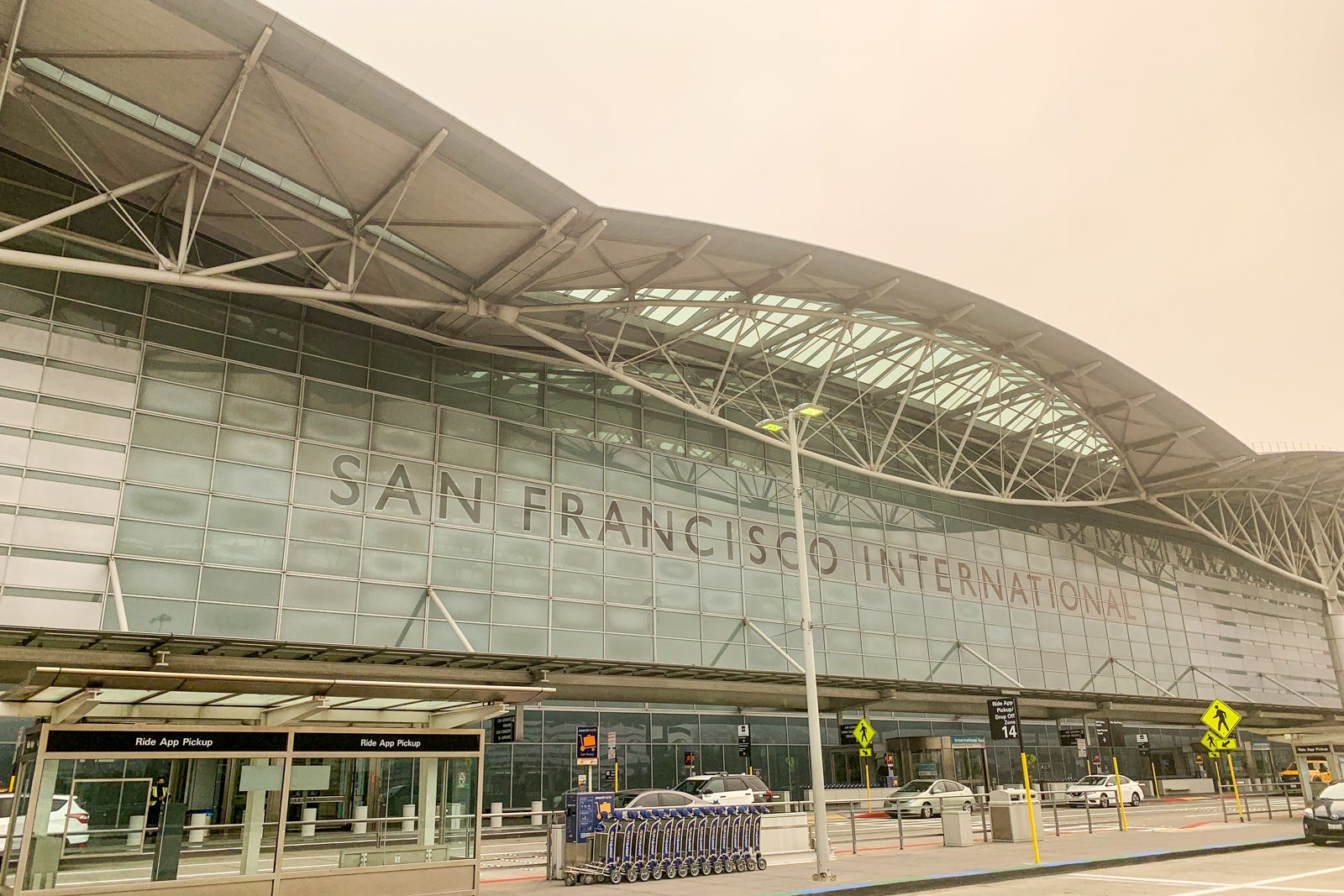
Imagine my surprise when I saw that my flight from New York to San Francisco on Tuesday night was showing as leaving on time, but my arrival was delayed by 46 minutes. I'd never seen that before, and it turns out the jet stream is making for some very unusual flights lately. My flight ended up getting in only about a half-hour late, but it was a long flight. A whopping seven hours from coast to coast, it was longer than trips to Europe I've had. And it's all about the jet stream.
Jet stream creating some unusual flight patterns
It's not just longer flights going from the East Coast to the West Coast. Flights going east are shorter because they get the opposite push from the jet stream. There have been lots of sub-six-hour flights going to Europe; also, flights from the U.S. West Coast to the East Coast get a big jet stream push and arrive early at times.
Related: No, your plane didn't go supersonic
The jet stream over the Atlantic Ocean is pushing planes some 200 miles per hour faster than normal. That means some flights from New York to London are clocking in at a remarkable 778 miles per hour. Average flight speeds are about 550 miles an hour.
Just one example?
American Airlines Flight 106 on Tuesday from New York's John F. Kennedy International Airport (JFK) to London's Heathrow Airport (LHR) clocked a flight time of just five hours and 52 minutes. On Oct. 31, it was just five and a half hours. The average flight time for that route is normally six hours and 13 minutes.
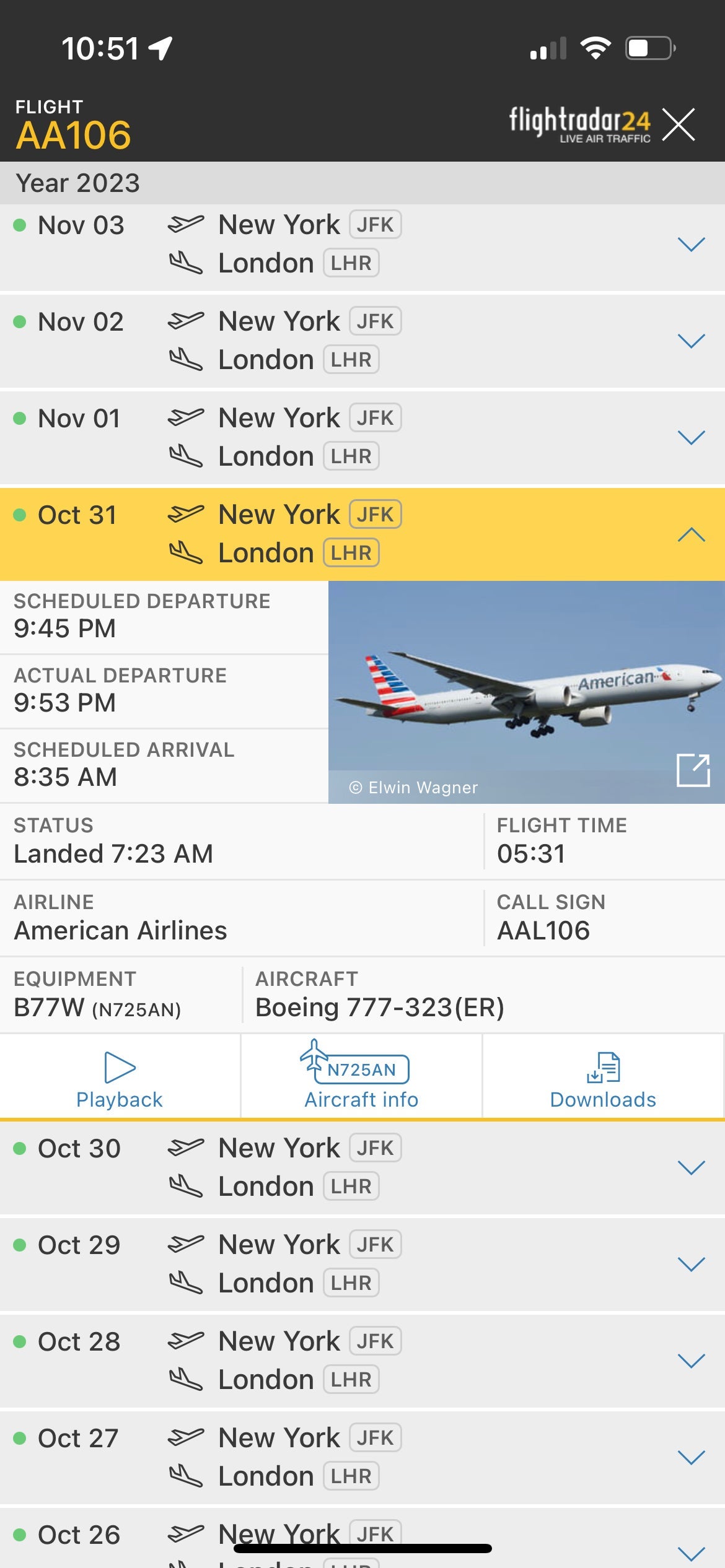
That's faster than trips from the East Coast to the West Coast right now — but that's not even close to the fastest. In February 2020, a British Airways flight from New York to London clocked in at just four hours and 56 minutes.
What is the jet stream?
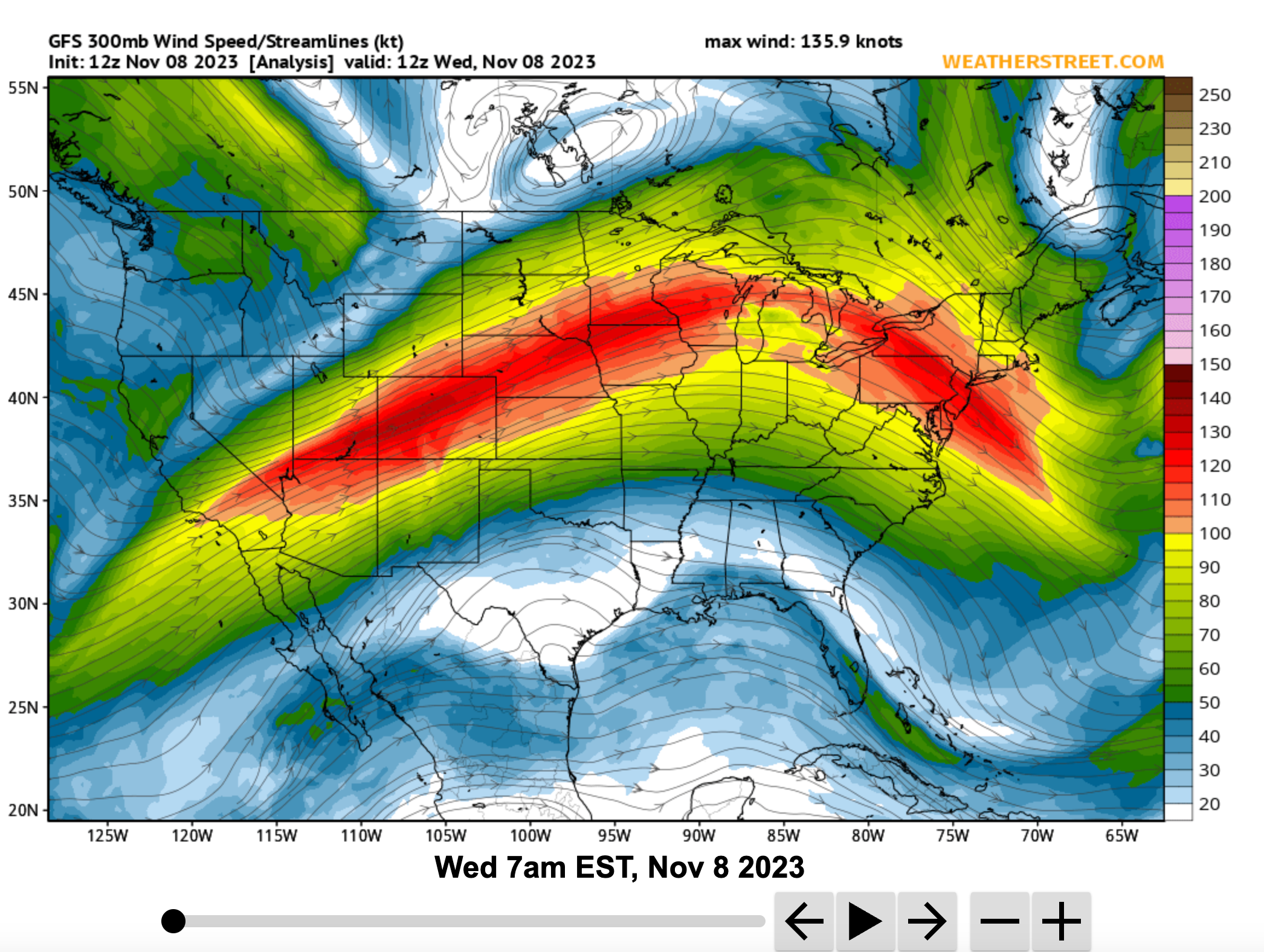
The jet stream comprises powerful winds miles above the Earth's surface, blowing mostly west to east. When planes enter the jet stream, they get either pushed by that jet stream or have to fight against it. That's why flights going east are generally faster than those going west. The jet stream begins at about 30,000 feet above Earth. When pilots reach "cruising altitude," they are sometimes trying to slip into that jet stream.
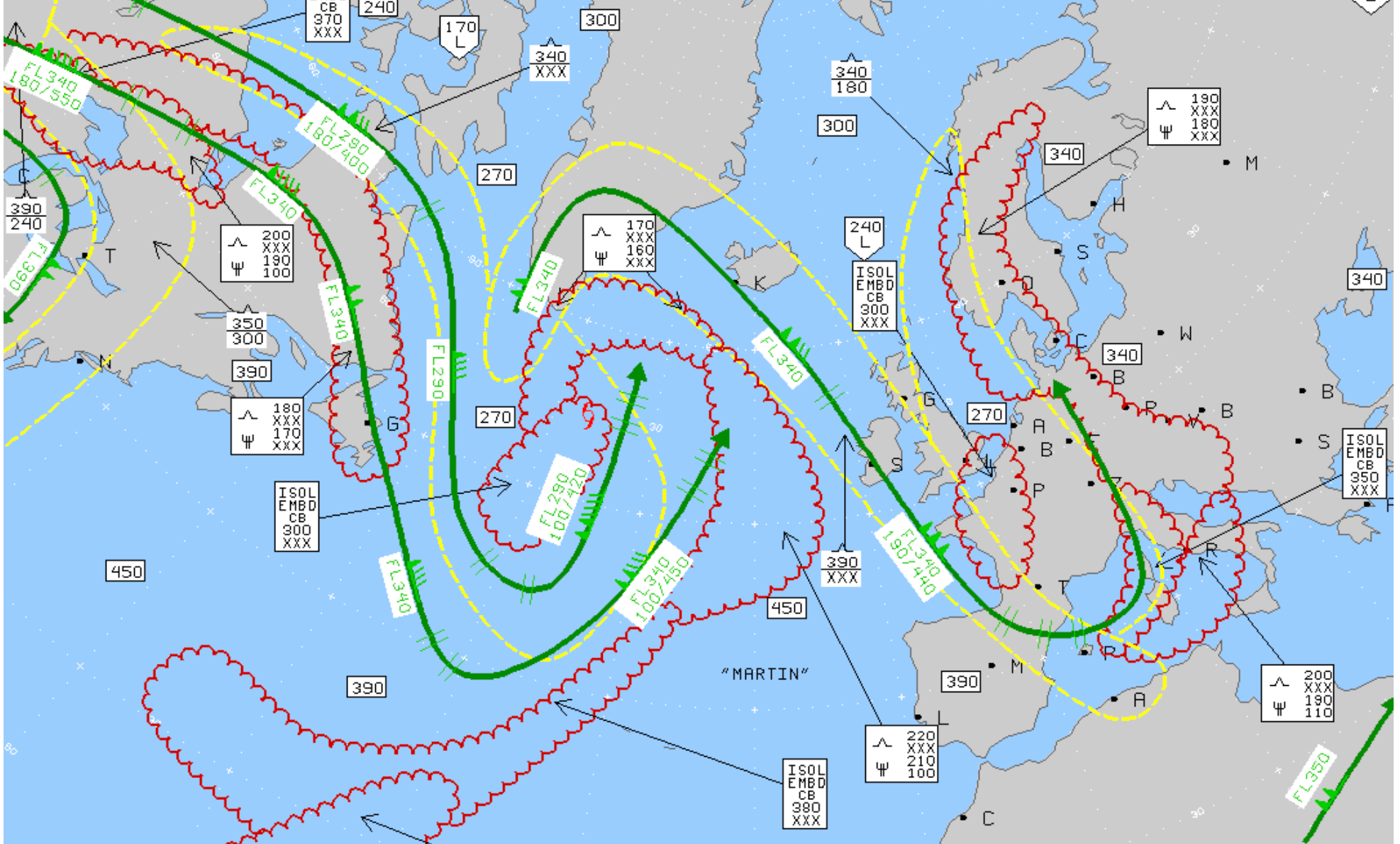
When there are large differences in temperatures, it can speed up or slow down the winds in that jet stream. "Since these hot and cold air boundaries are most pronounced in winter, jet streams are the strongest during both the northern and southern hemisphere winters," according to the National Oceanic and Atmospheric Administration.

Indeed, "Good Morning America" and WABC-TV meteorologist Sam Champion told TPG that jet streams are often stronger when we change from a cold season to a hot season, or from a hot season to a cold season.
"Those temperature extremes fuel the jet stream," said Champion. "The position of the jet is what's working for travel right now from the U.S. to England," he told me. "The jet is following the flight path. That's exactly why people are noticing these super-fast flight times."
Related: Flight planning: The unseen detail behind every flight
Why you should be paying attention to the jet stream
While it's almost always good news to get to your destination early, you sometimes won't have a gate available and may be stuck on the ground at your destination. Airlines would much rather run closer to schedule.
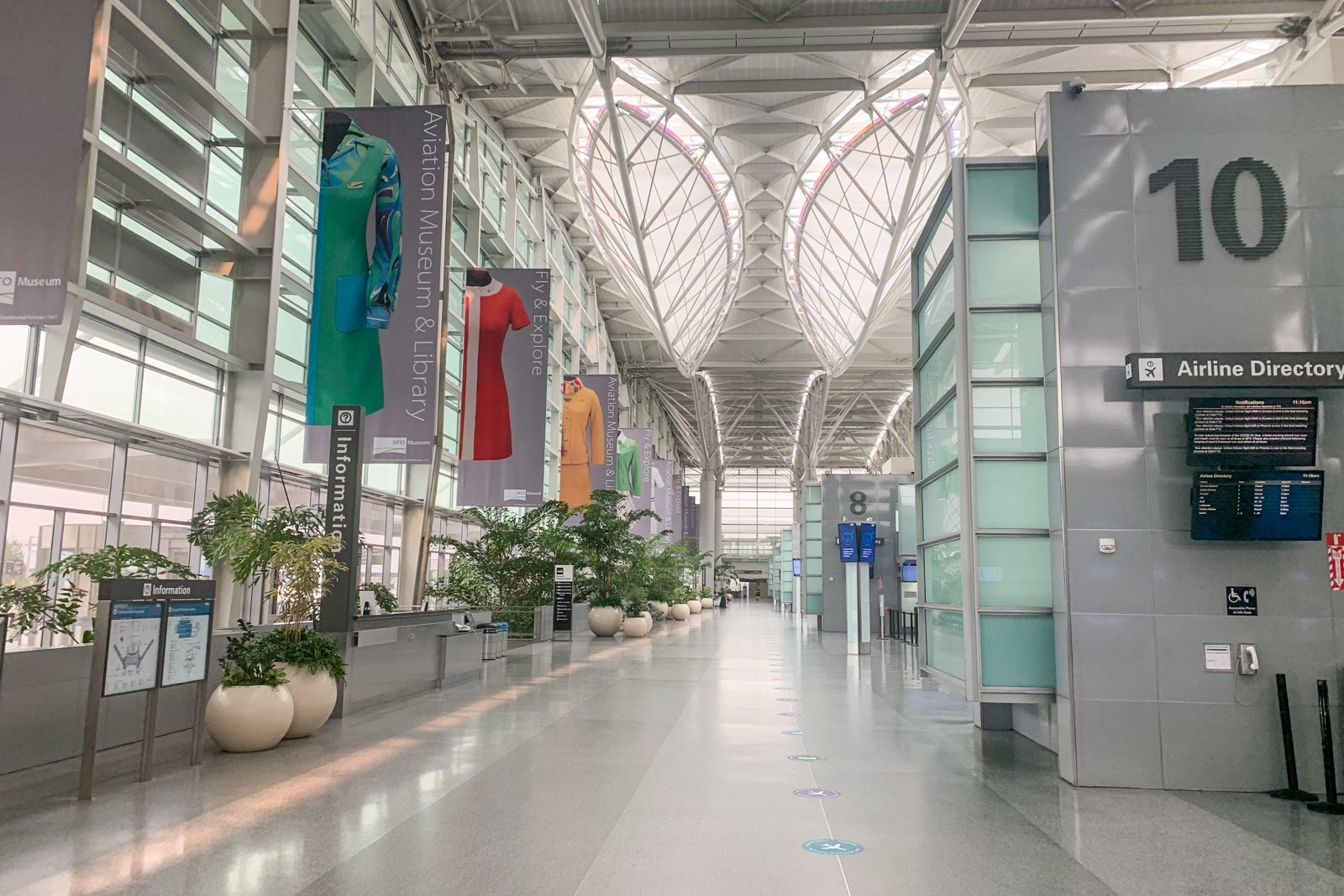
And obviously, it can create massive problems if you are late like I was Tuesday night. If I had been trying to make an early morning international flight in another terminal at San Francisco International Airport (SFO), I might have been in trouble.
"Airlines can't control Mother Nature," Henry Harteveldt, a travel industry analyst and president of Atmosphere Research, said. Still, he said airlines have an obligation to consumers to adjust schedules.
"The jet stream is not new," Harteveldt said. "What is changing is the intensity of the winds ... the paths are more divergent as a result of climate change." Harteveldt told me that the jet stream is different now compared to 10 or 20 years ago. "Airlines have to factor this into their flight schedules," he said.
"Even in the early days of climate science, experts believed a warming planet would lead to faster jet streams in general," said Champion. "So recline your seatback, put your tray table down, and enjoy the faster flight times the way many flyers often enjoy them from the West Coast of the U.S. to the East Coast of the U.S."
Airlines look at historical data for each month as they build their flight schedules and make adjustments until 30 days before departure. Harteveldt said if airlines determine the jet streams are faster or are creating stronger head winds or tail winds, they will adjust them.
Related: Why the quickest route may not always be the most obvious one
Harteveldt said flyers should be paying attention to the weather no matter what's going on with the jet stream.
"Consumers shouldn't have to become armchair meteorologists," he said. "Airlines are doing the best they can, but when and where you are traveling, you should be paying attention to the weather. Because of air traffic controller problems and weather problems, you don't want to schedule connections, if you can avoid it, that are too tight. Allow at least an hour between flights."
That's always good advice.
For more travel tips, check out our stories below.
- Key travel tips you need to know — whether you're a beginner or expert traveler
- The best travel credit cards
- Where to go in 2024: The 16 best places to travel
- 6 real-life strategies you can use when your flight is canceled or delayed
- 8 of the best credit cards for general travel purchases
- 13 must-have items the TPG team can't travel without
TPG featured card

at Capital One's secure site
Terms & restrictions apply. See rates & fees.
| 5X miles | Earn 5X miles on hotels, vacation rentals and rental cars booked through Capital One Travel |
| 2X miles | Earn unlimited 2X miles on every purchase, every day |
Pros
- Stellar welcome offer of 75,000 miles after spending $4,000 on purchases in the first three months from account opening. Plus, a $250 Capital One Travel credit to use in your first cardholder year upon account opening.
- You'll earn 2 miles per dollar on every purchase, which means you won't have to worry about memorizing bonus categories
- Rewards are versatile and can be redeemed for a statement credit or transferred to Capital One’s transfer partners
Cons
- Highest bonus-earning categories only on travel booked via Capital One Travel
- LIMITED-TIME OFFER: Enjoy $250 to use on Capital One Travel in your first cardholder year, plus earn 75,000 bonus miles once you spend $4,000 on purchases within the first 3 months from account opening - that’s equal to $1,000 in travel
- Earn unlimited 2X miles on every purchase, every day
- Earn 5X miles on hotels, vacation rentals and rental cars booked through Capital One Travel
- Miles won't expire for the life of the account and there's no limit to how many you can earn
- Receive up to a $120 credit for Global Entry or TSA PreCheck®
- Use your miles to get reimbursed for any travel purchase—or redeem by booking a trip through Capital One Travel
- Enjoy a $50 experience credit and other premium benefits with every hotel and vacation rental booked from the Lifestyle Collection
- Transfer your miles to your choice of 15+ travel loyalty programs
- Top rated mobile app