What flying was like 20 years ago

Twenty years may not seem like a very long time, but in commercial aviation it's fully one-fifth of the entire history of the industry. The oldest airlines in the world turned exactly a century old this year. And with 2020 about to begin, now is a good time to take a look at what flying was like in 2000.
Today's commercial jets sport features their counterparts of 20 years ago could not dream of, routinely offering comforts that were hard to find back then; flat beds in business class and individual screens for every passenger are a recent luxury.
So let's look at what air transport looked like in 2000, inside airplanes and out.
The airlines: Before the merger craze
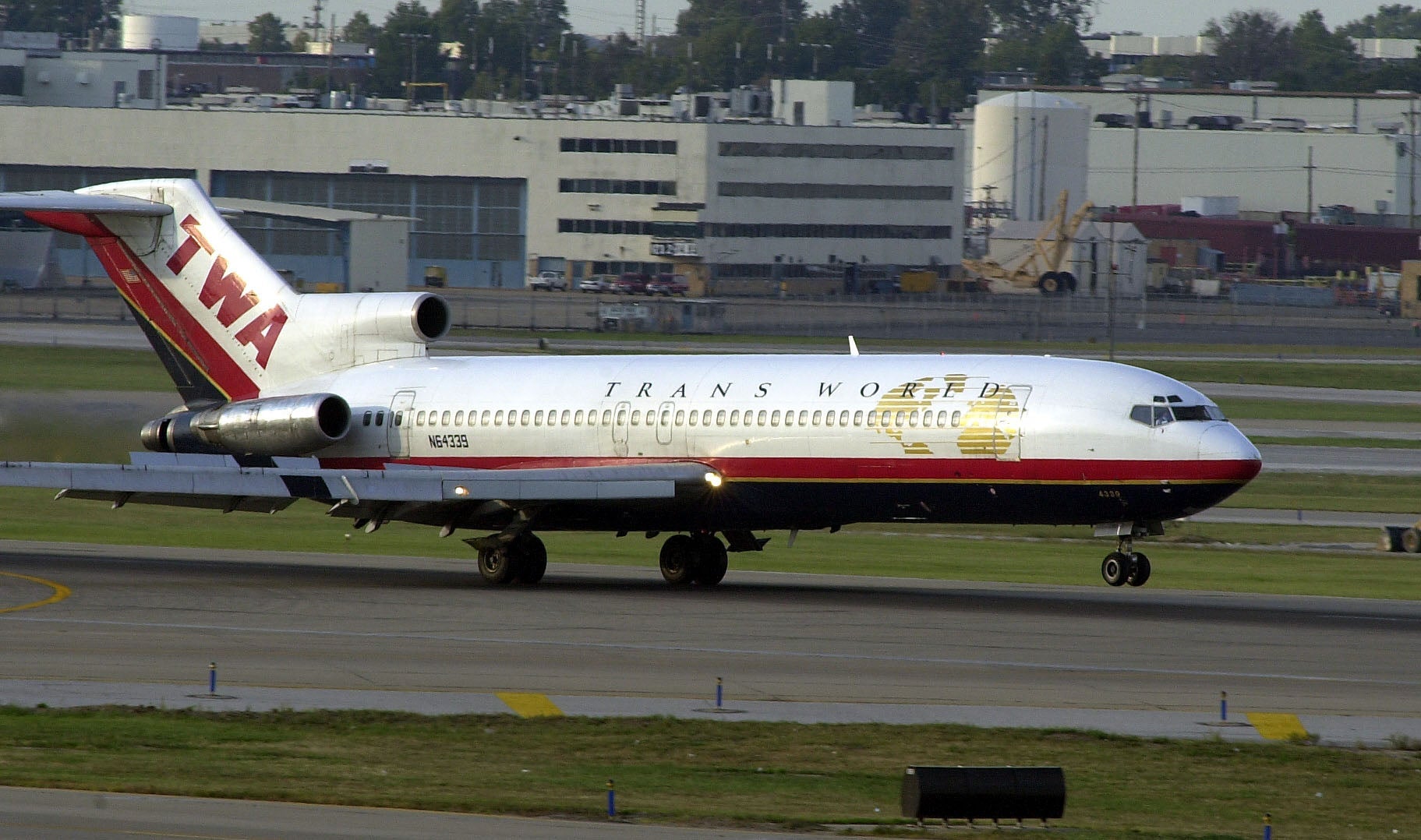
Remember TWA? Trans World Airlines, a storied carrier founded in 1930, was still flying in 2000. So were Continental, Northwest, USAir and America West. What happened to all of them was the same thing: mergers. America West merged with USAir, TWA was acquired by American, and USAir and American then merged under the name of the latter. Continental merged with United, and Northwest with Delta. Across the Atlantic, Sabena and Swissair, the flag carriers of Belgium and Switzerland, were still around too, both destined to go under the following year.
Despite the reduced competition due to all those mergers, fares have dropped hugely since then.
The average domestic airfare in the U.S. according to the Bureau of Transportation Statistics was $502, adjusted for inflation, in 2000. Fast forward 20 years, and it's now $357, meaning air travel today is almost 30% cheaper.
2000 was also the year that JetBlue began flying. The average airfare out of its New York - JFK home base has dropped by 40% since then, a lot more than the national average, showing that the new airline's entrance into the New York market has had an outsized impact on fares.
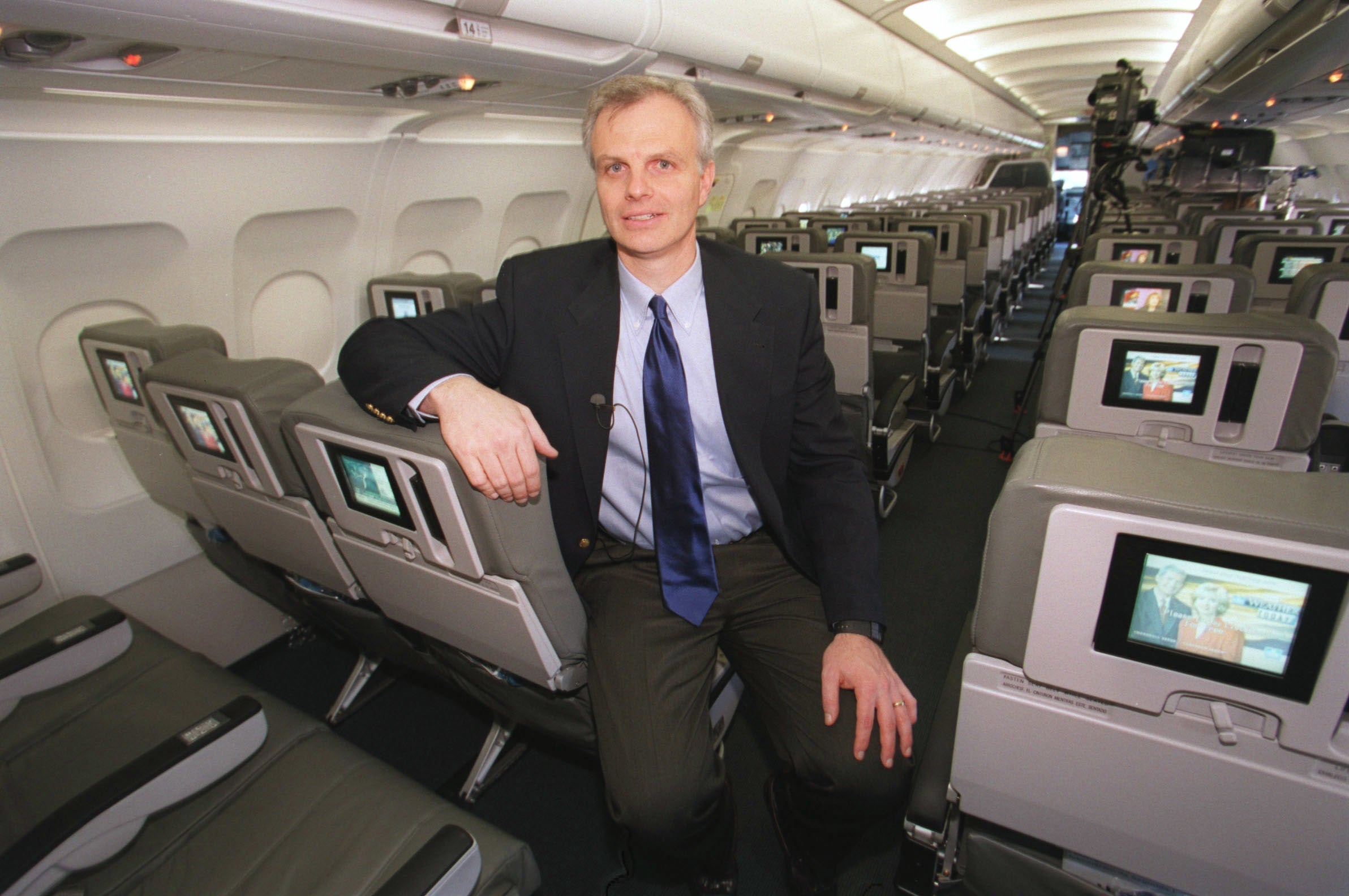
The era of the ultra-low-cost airlines was yet to come. Frontier and Spirit in the U.S. and Ryanair and EasyJet in Europe were all flying in 2000, but had not achieved anywhere near the size they have now.
Outside the U.S., the big Middle Eastern airlines that now dominate long-haul flying weren't even a blip on the horizon. Emirates and Qatar were mostly regional carriers and would not fly to the U.S. until the mid-2000s; Etihad did not even exist. Today, Emirates is the largest airline in the world by international passengers carried, and its Dubai home base the biggest airport in the world by international passenger traffic.

The airplanes: When dinosaurs still roamed
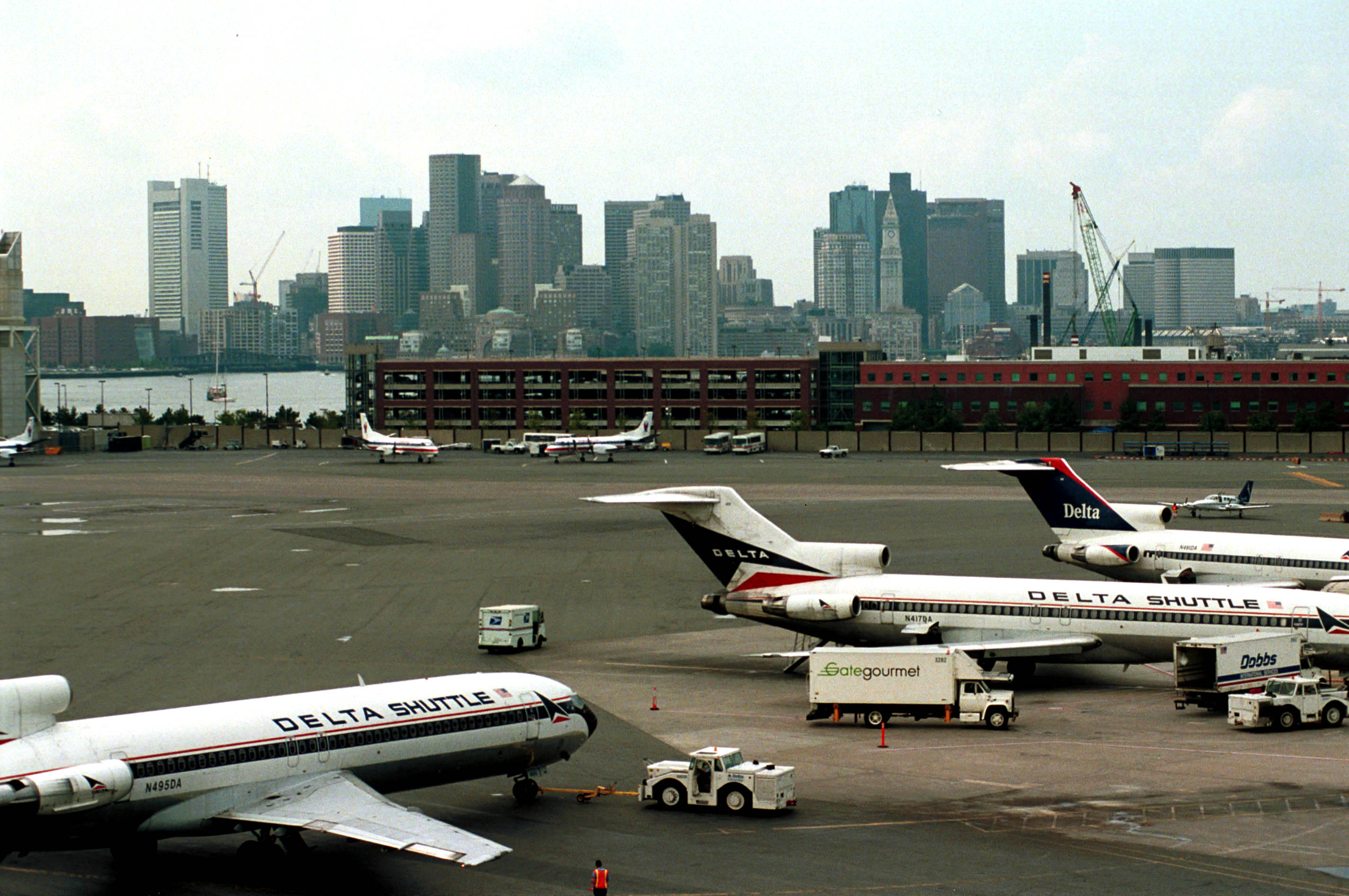
Wearing the colors of all those now-dead airlines were a lot of now-dead airplanes. Three-engined passenger jets have been extinct for years now, but in 2000 they were still very much a fixture. Hundreds of Boeing 727s, horrendously noisy and fuel-thirsty by today's standards, were in U.S. fleets including with American, Delta and United. Long-haul three-engined planes, the DC-10 and MD-11, were found all over the world. Even the L-1011 TriStar, another three-engined jet and the last passenger plane made by Lockheed, was still around.
On long hauls, the 747 dominated; the early 2000s were still the reign of the Queen of the Skies. The four-engined Boeing behemoth would rule the air for a few more years. Today, not a single one is left in passenger service with U.S. airlines.
None of the jets that do most of today's long-haul flying existed in the year 2000. There was no Airbus A350 or A380, and no Boeing 787. The 777 had been around since the mid-1990s, but the version that's most commonly seen today, the stretched 777-300ER, hadn't flown yet.
But you could still cross the Atlantic in three hours on Concorde, which would be retired three years later. In the summer of 2000, the supersonic airliner had its only fatal accident, when an Air France bird crashed shortly after taking off, accelerating the end of the 25-year era when it was the fastest, sleekest commercial jet. At JFK, London Heathrow and Paris CDG, you could see amazing sights like the one below every day .
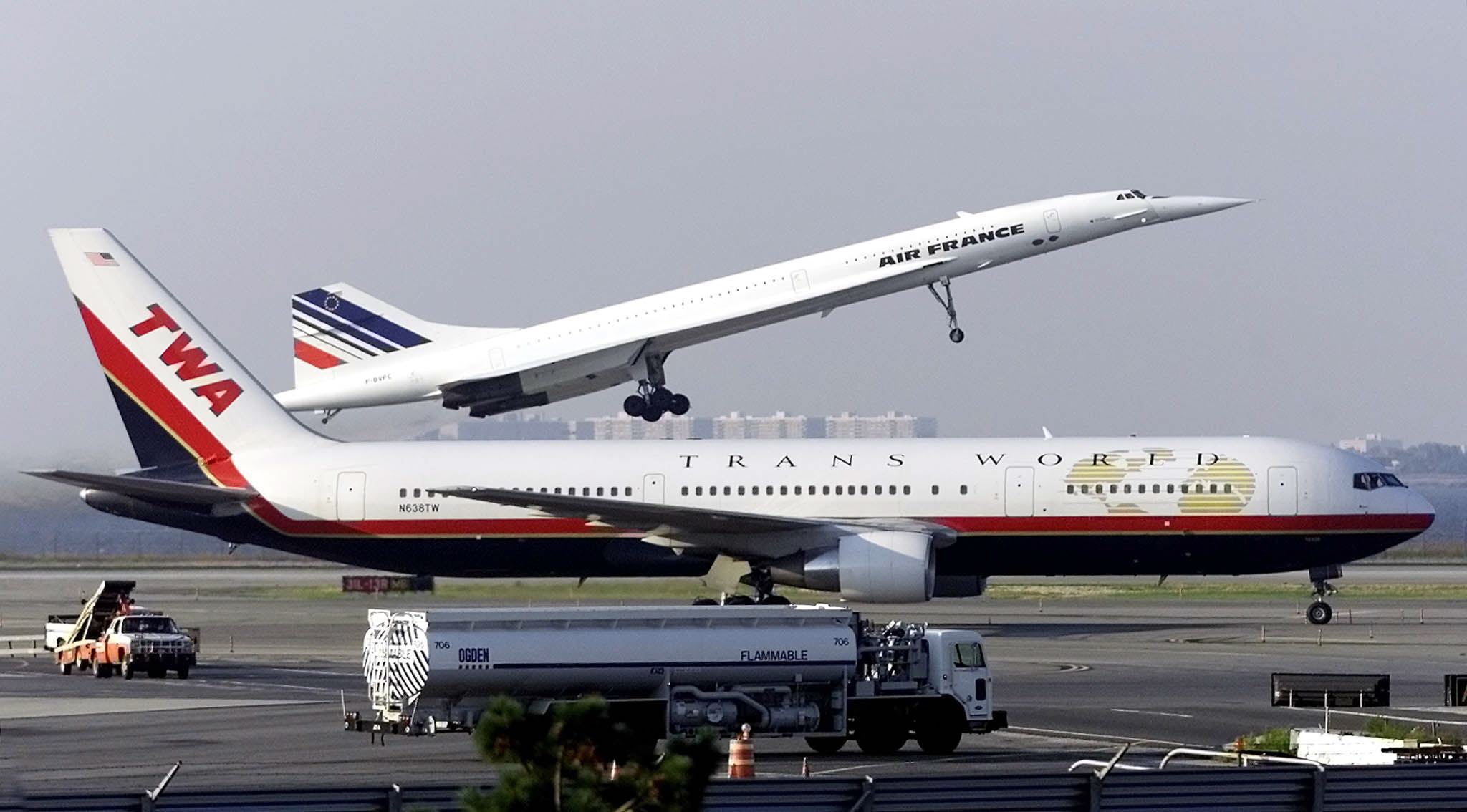
Accident or not, though, Concorde's days were numbered anyway. It was just too expensive to operate, with technological roots in the 1950s, including four very thirsty and loud engines. And airplanes today are very different from the 1960s-vintage machines that still plied the skies in 2000.
That year, a TWA crew saluted the final flight of the airline's last Boeing 727 — check out the totally analog cockpit and the third crew member, the flight engineer, in the image below. It was as old-school as it gets, and it was a normal scene in North American skies until Delta became the last U.S. major to retire the 727, in 2003.
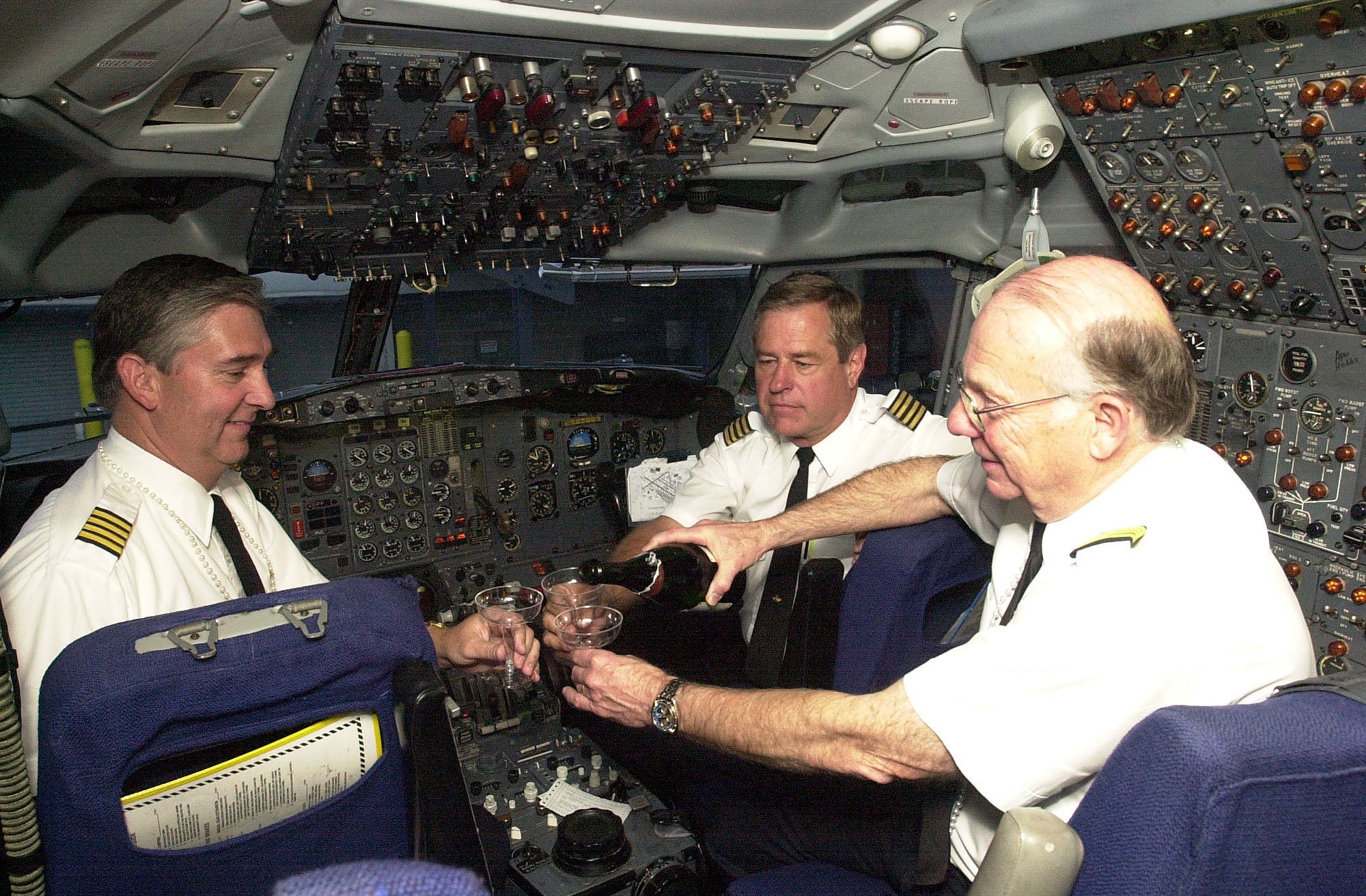
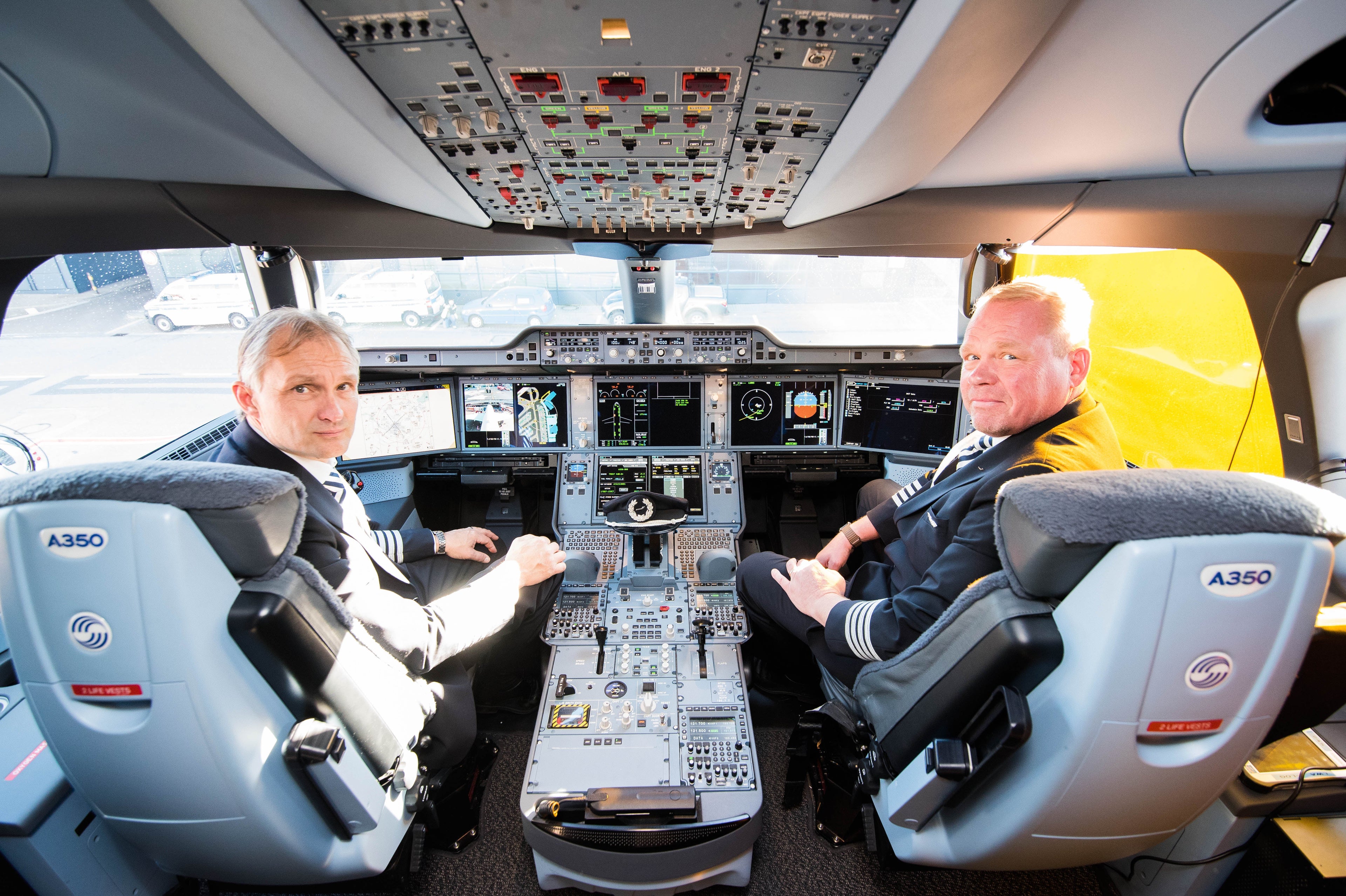
Then look below at the fully digital flight deck of the Airbus A350, the most modern twin-aisle jet in service today: It might as well be a science-fiction spaceship compared to that 727. And it needs just two people to run it, thanks to computers.
(Speaking of digital: Notice anything unusual about the look of the images from 20 years ago? They were all shot on film. The first really convenient professional digital camera, the Nikon D1, had appeared in 1999 – and with a price tag of $4,999 a pop, about a cool eight grand in today's money, it hadn't made its way yet to every news organization.)
In 2000, cockpit doors were not armored. They would be after September 11 of the following year, a date that would usher in a vastly different experience of airport security, too.
The airplanes of the year 2000 could not fly as far as today's can, either. The longest flight in the world was Chicago to Hong Kong on a United 747-400, at a mere 7,788 miles. When it was launched in 1996, a newspaper reporter called it "fantastic" and "a rendezvous with history" — but today it would not even qualify for the top 30 longest nonstop flights.
The seats: Lie-flat what?
Seats that turn into flat beds in long-haul business class are standard these days. In 2000, they were a rarity. You had to move up to the very rarefied atmosphere of long-haul first class, one level above business, to find them, and then only on some airlines, like British Airways.
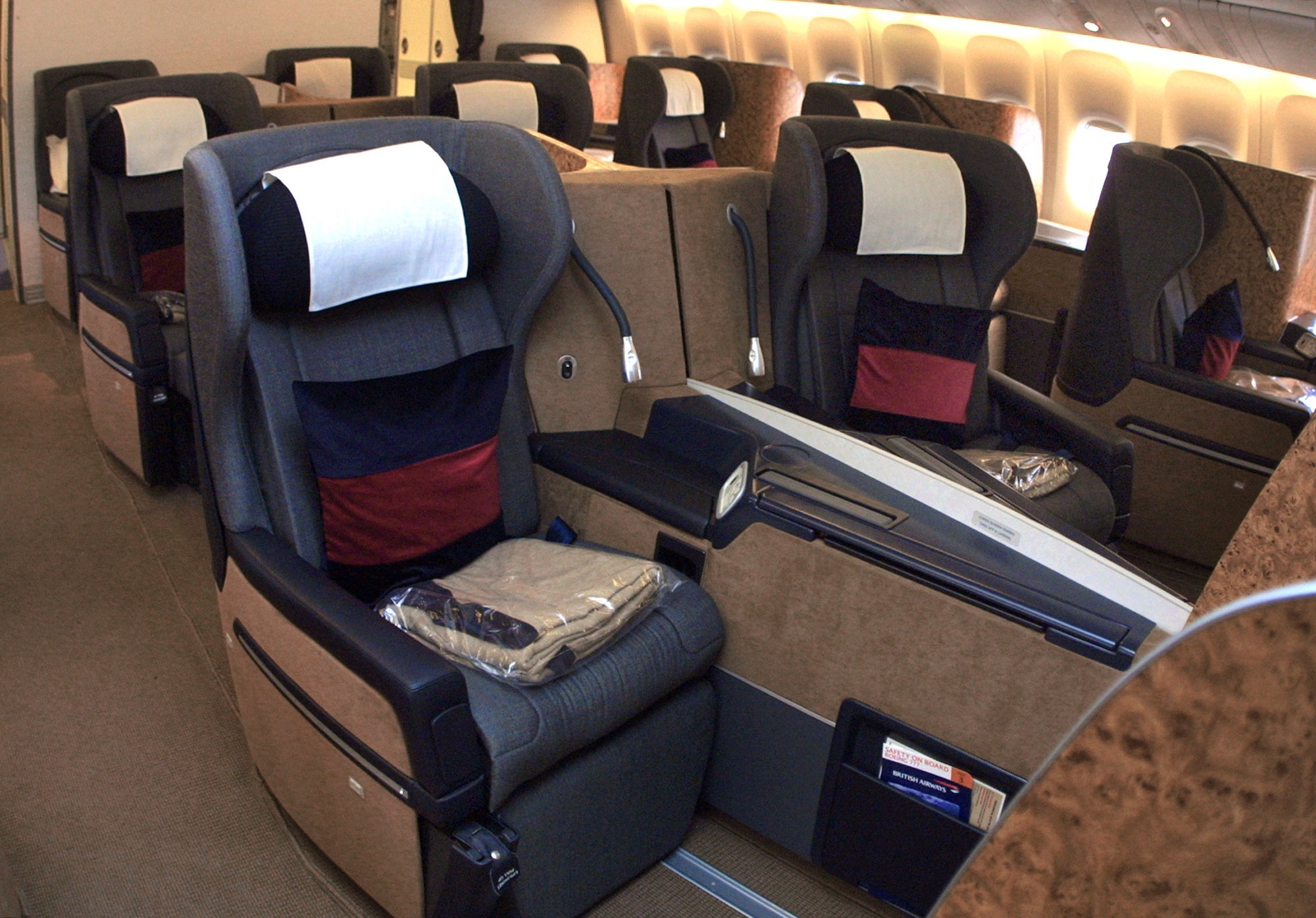
In biz class, you got recliners, or at best seats that converted to an angled bed, even on the world's best carriers, like Singapore Airlines. There was just one exception: British Airways again, which introduced flat beds in Club Class, aka business, in 2000. But it would take years before all of the carrier's twin-aisle fleet was converted.
One thing commonly seen on board in 2000 that has disappeared today: built-in phones. Often found at every seat in business and first, and shared one per row in economy, they were a very expensive way to stay in touch while in the air. Towards the end of their era in the early 2000s, prices had gone down to about $3 to $4 per minute, but that was still too much to encourage widespread use. By the mid-2000s, they were largely gone.
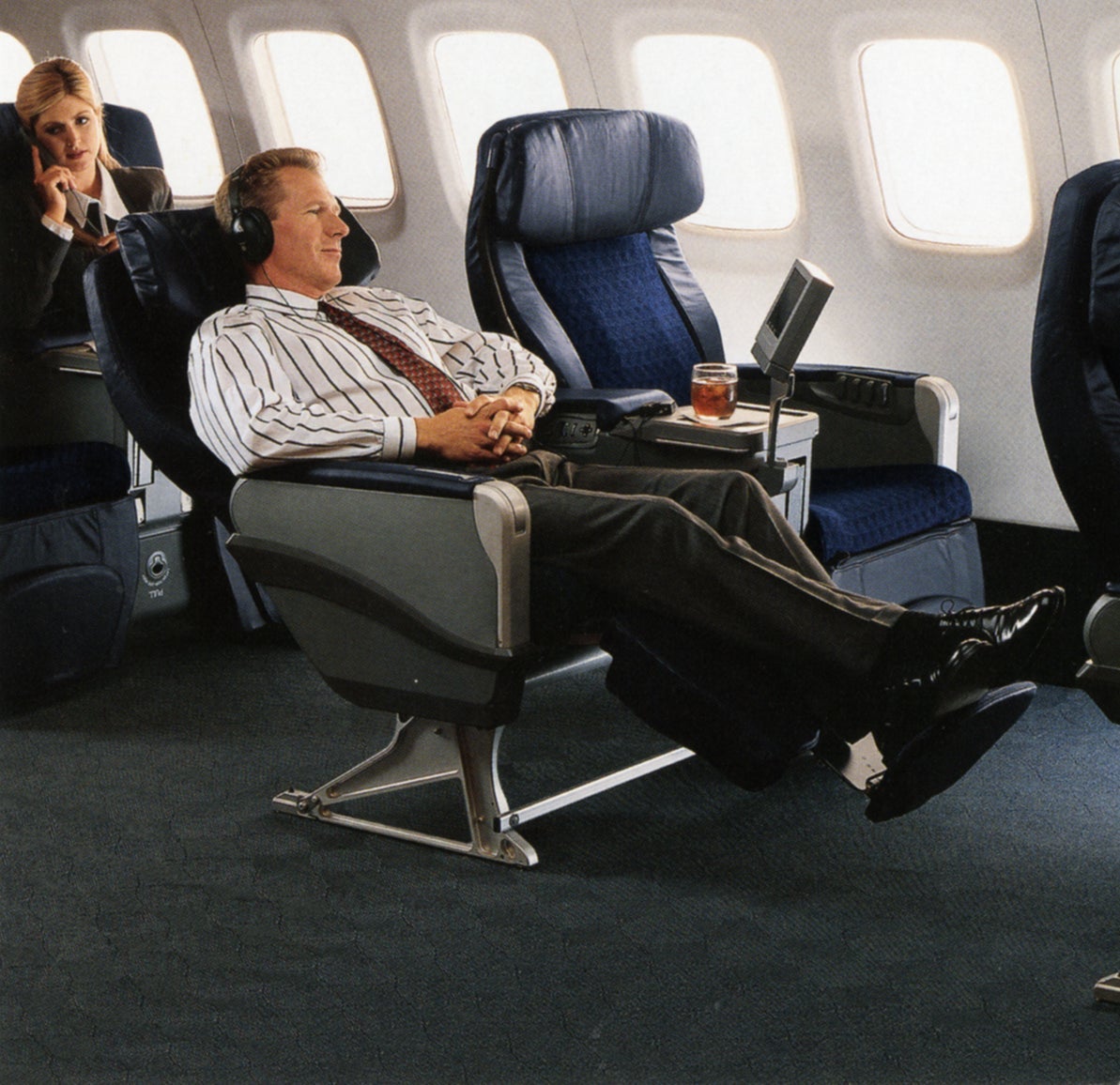
Individual monitors were still rare, especially in coach. Without individual screens to watch movies, most passengers had to take in whatever the airline offered and watch it on projection screens, with usually terrible headphones.
The reporter who waxed poetic about the flight from Chicago to to Hong Kong also noted that it offered a whopping "three feature films." Compare that to today's personal displays with hundreds of movies, TV shows, games and maps, helping you pass the time on flights that regularly go 10,000 miles like the record-holding Singapore Airlines nonstop from Singapore to Newark.
It's true that legroom in coach class was on average more generous than today, but the lack of personalized entertainment or Wi-Fi meant you could easily be bored silly in those bigger seats. Unless you had bought an airport paperback, that is, like people used to do before everybody could access entire libraries on their smartphone. (The first iPhone would not be sold until 2007.)
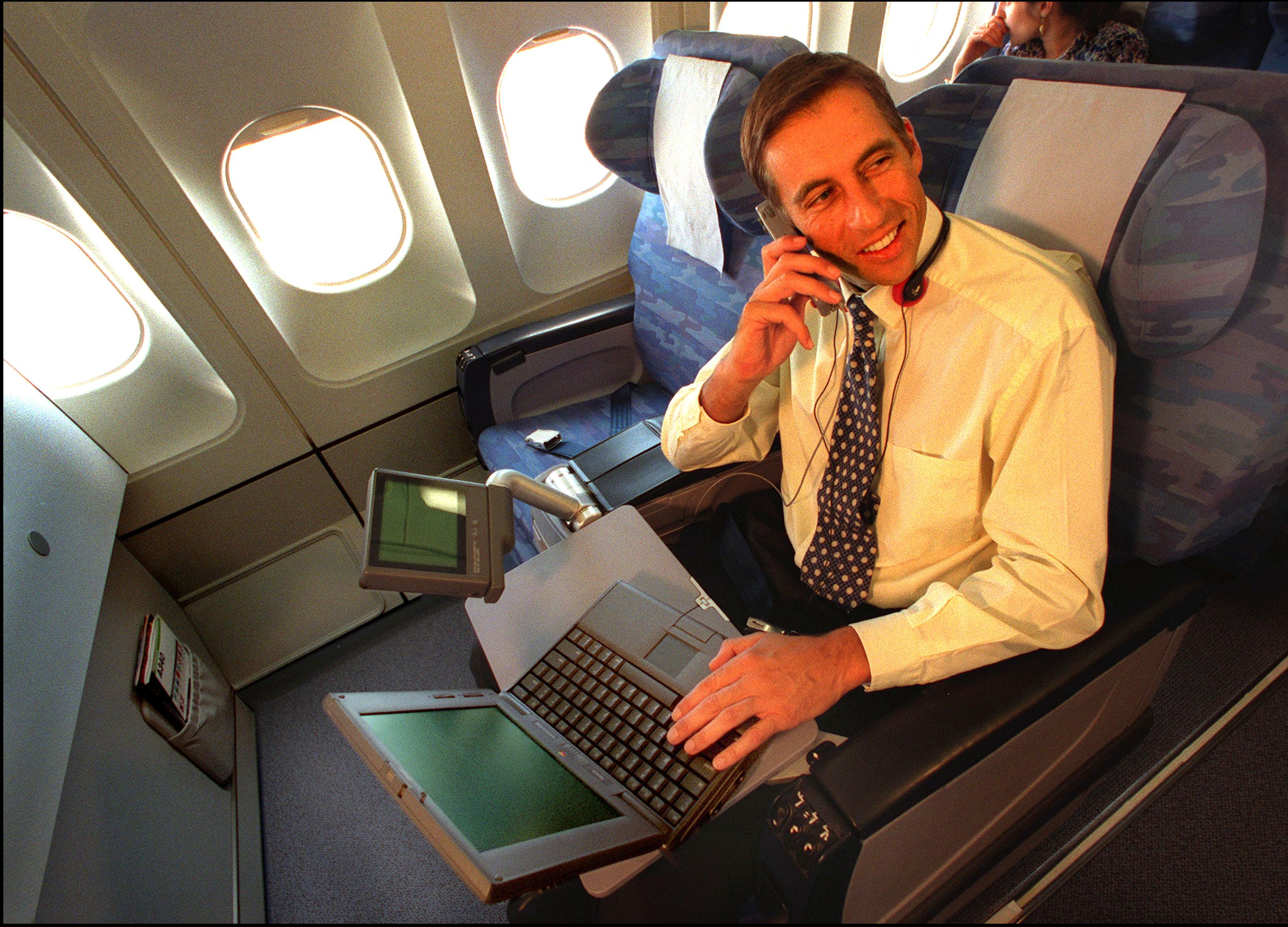
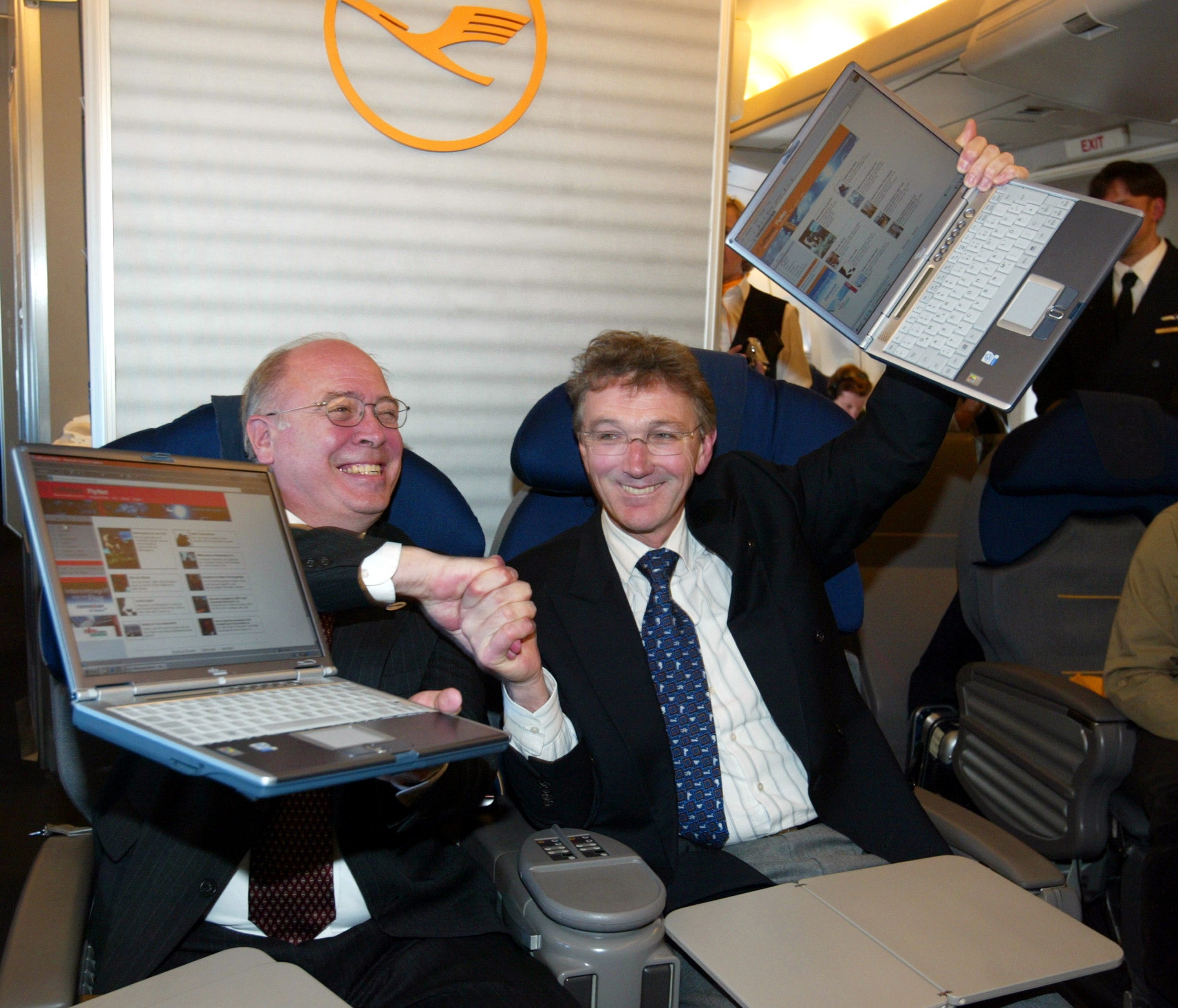
Inflight internet debuted, on Lufthansa, in 2003. It was such a feat that the first connection on a laptop aboard a scheduled commercial flight was cause for the enthusiasm seen in the image below.
Also hard to believe today: While smoking had been banned on domestic U.S. flights lasting less than six hours, i.e. pretty much every one, in the 1980s, a federal law banning smoking on all scheduled flights in, into or from the United States would not come into effect until that very year 2000.
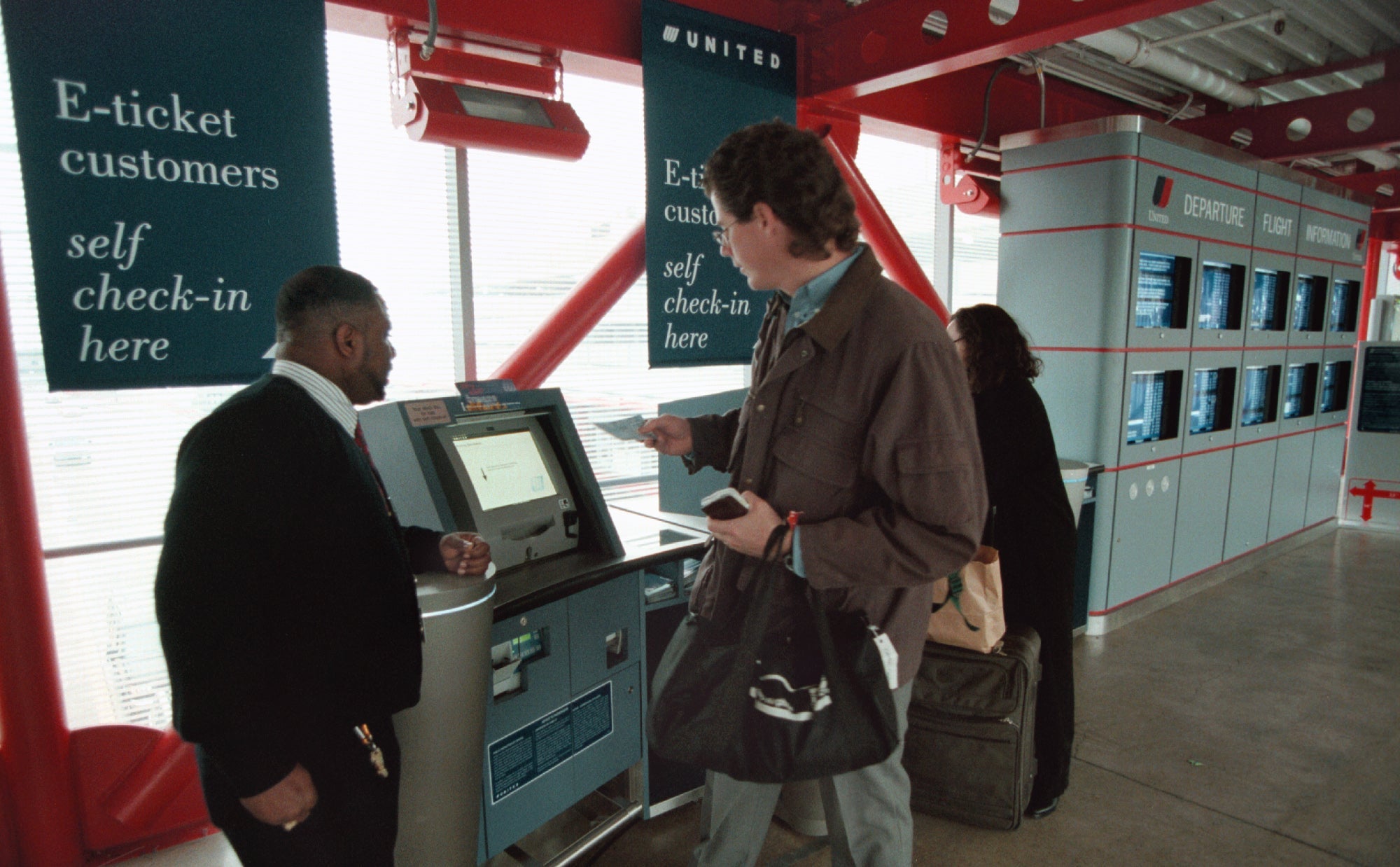
To board those flights, you mostly used paper boarding passes, which you got from employees at a check-in counter, often after buying a paper ticket from a travel agent. Electronic ticketing was beginning to take hold, though, and in 2000 United installed 25 pioneering self-check-in kiosks at Chicago's O'Hare airport for passengers holding one of those newfangled e-tickets.
Things are better today for frequent flyers, too. Thanks to airline alliances, passengers can earn their favorite airline's miles even when flying on a host of other international carriers. In 2000, Delta, Air France, Aeromexico and Korean Air founded the third of the three global alliances, Skyteam.
Star Alliance had been formed in 1997, and Oneworld in 1999. Those three alliances now include almost every major global airline, with few notable exceptions like Emirates (and, in the U.S., Southwest, JetBlue and Alaska Airlines.)
But what about mitigating the environmental impact of all this flying? While carbon offsetting existed in 2000, airlines did not begin selling offsets until a decade later.
Yet, one thing hasn't changed in 20 years.
The busiest airport in the world in 2000 was Atlanta's Hartsfield, with 80 million passengers. Today it's called Hartsfield-Jackson, but it's still firmly on top, with 107 million people passing through it in 2018. That's a whopping 34% growth, and a clear indication that the air travel industry is doing well as it enters a new decade.
TPG featured card

at Capital One's secure site
Terms & restrictions apply. See rates & fees.
| 5X miles | Earn 5X miles on hotels, vacation rentals and rental cars booked through Capital One Travel |
| 2X miles | Earn unlimited 2X miles on every purchase, every day |
Pros
- Stellar welcome offer of 75,000 miles after spending $4,000 on purchases in the first three months from account opening. Plus, a $250 Capital One Travel credit to use in your first cardholder year upon account opening.
- You'll earn 2 miles per dollar on every purchase, which means you won't have to worry about memorizing bonus categories
- Rewards are versatile and can be redeemed for a statement credit or transferred to Capital One’s transfer partners
Cons
- Highest bonus-earning categories only on travel booked via Capital One Travel
- LIMITED-TIME OFFER: Enjoy $250 to use on Capital One Travel in your first cardholder year, plus earn 75,000 bonus miles once you spend $4,000 on purchases within the first 3 months from account opening - that’s equal to $1,000 in travel
- Earn unlimited 2X miles on every purchase, every day
- Earn 5X miles on hotels, vacation rentals and rental cars booked through Capital One Travel
- Miles won't expire for the life of the account and there's no limit to how many you can earn
- Receive up to a $120 credit for Global Entry or TSA PreCheck®
- Use your miles to get reimbursed for any travel purchase—or redeem by booking a trip through Capital One Travel
- Enjoy a $50 experience credit and other premium benefits with every hotel and vacation rental booked from the Lifestyle Collection
- Transfer your miles to your choice of 15+ travel loyalty programs
- Top rated mobile app