Should You Book Business on Turkish Airlines' Boeing 777-300ER or Airbus A330-300?

If you're flying the airline with the most international destinations in the world, Turkish Airlines, you will likely have a choice of either the Boeing 777-300ER or the Airbus A330-300. The two jets form the backbone of Turkish's relatively large long-haul fleet, and both are found on flights to the US.
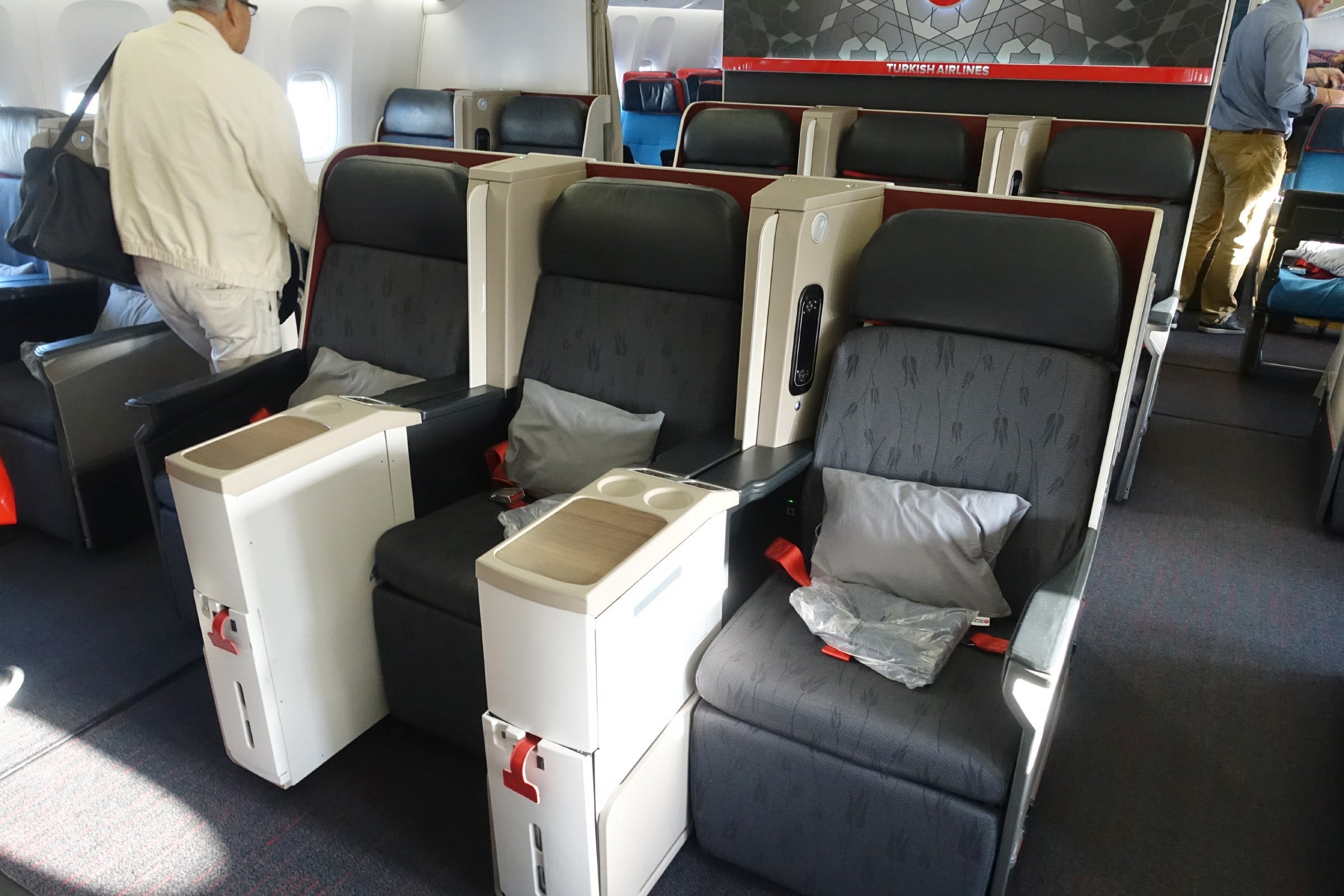
I tried them both after the Dubai Air Show in November 2017, when I booked a business-class flight home to New York JFK on Turkish, which gave me an opportunity to review the 777-300ER, from Dubai to Istanbul (IST), and the A330-300 from IST to JFK. While I loved the service and especially the outstanding catering on both flights, the seats are almost entirely lacking in privacy — especially the older version, which I found on the much longer A330 leg to JFK. The 2-3-2 arrangement on the 777 is inexcusable, too:
Where They Fly
If you're looking to travel nonstop to or from one of Turkish's US gateways, you probably won't have a choice when it comes to which plane to fly — New York-JFK is the only exception, with one daily flight operated by the A330 and the second with the 777-300ER.
| Destination | Airbus A330-300 | Boeing 777-300ER |
|---|---|---|
Atlanta | X | |
Boston | X | |
Chicago | X | |
Houston | X | |
Los Angeles | X | |
Miami | X | |
New York-JFK | X | X |
San Francisco | X | |
Washington, DC | X |
Notable Differences
Both planes fall under the "wide-body" category, in that they offer two aisles, but the A330's cabin is 17 feet wide, while the 777's interior measures 19 feet, 3 inches.
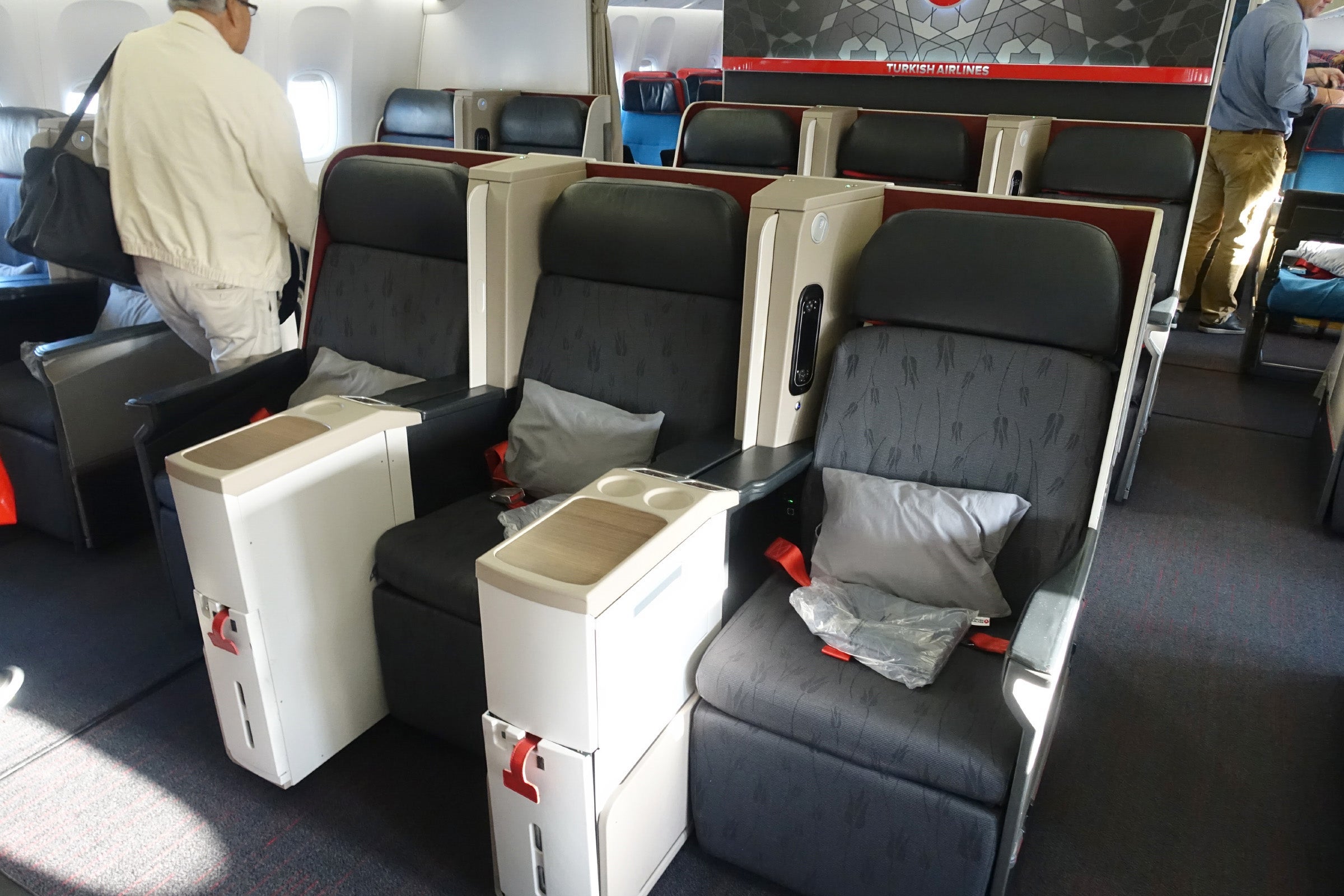
The Airbus cabin is noticeably smaller, but that might make it more appealing, depending on your preferences. Turkish offers 28 business-class seats in a single cabin on the A330, and a whopping 49 spread between two cabins on the 777.
As with most Airbus planes, the A330's windows are considerably smaller than those on the Boeing 777 — and smaller windows are obviously a minus, except for slightly limiting ambient light in the cabin, perhaps.
From a practical perspective, the 777 is a bit of a time-saver, since it typically cruises at 562 miles per hour, compared to 541mph for the A330. On the JFK flight, that translates to a 10-15-minute shorter block time with the 777, though traffic patterns, winds aloft, turbulence and plenty of other factors could end up eliminating that in-flight advantage.
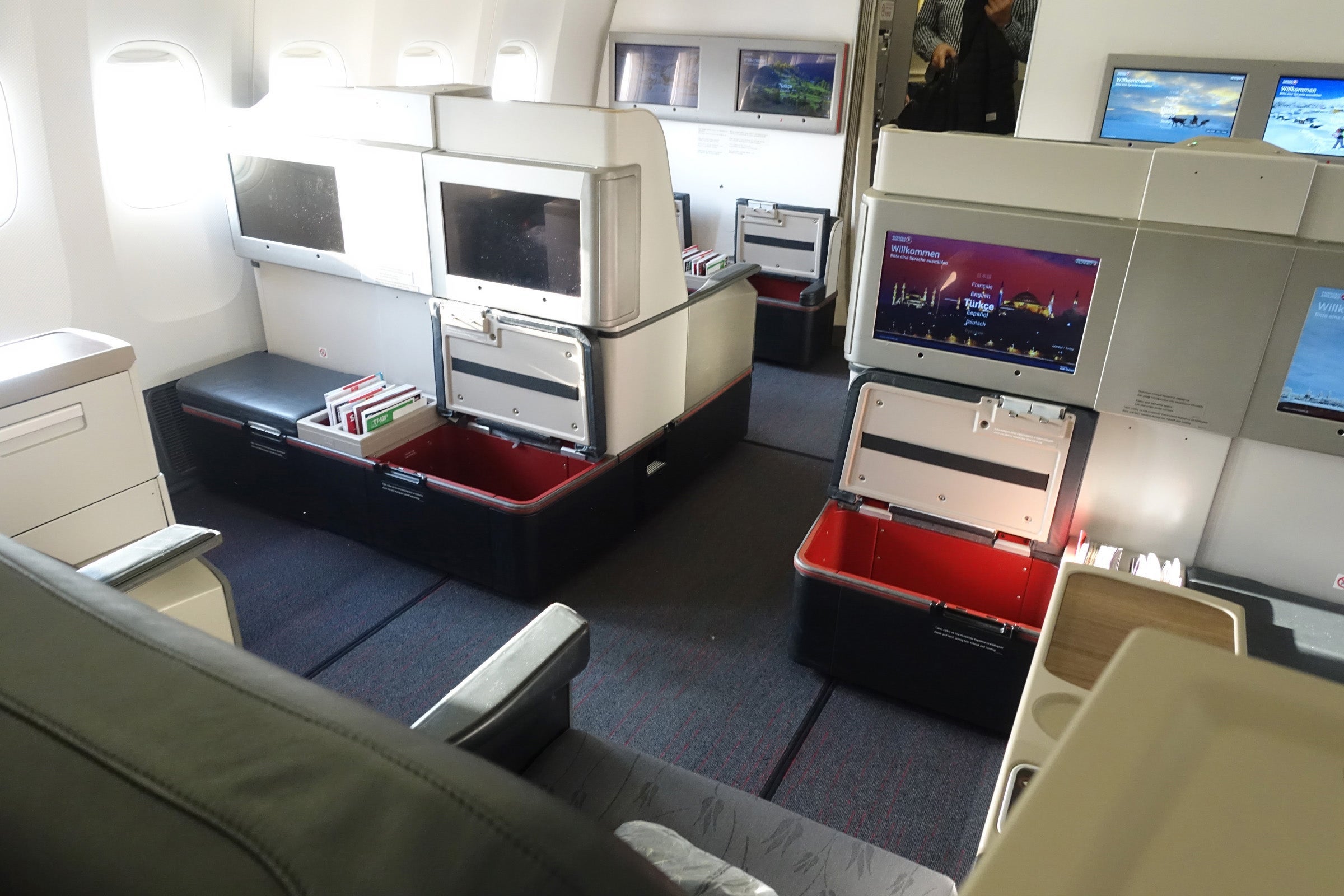
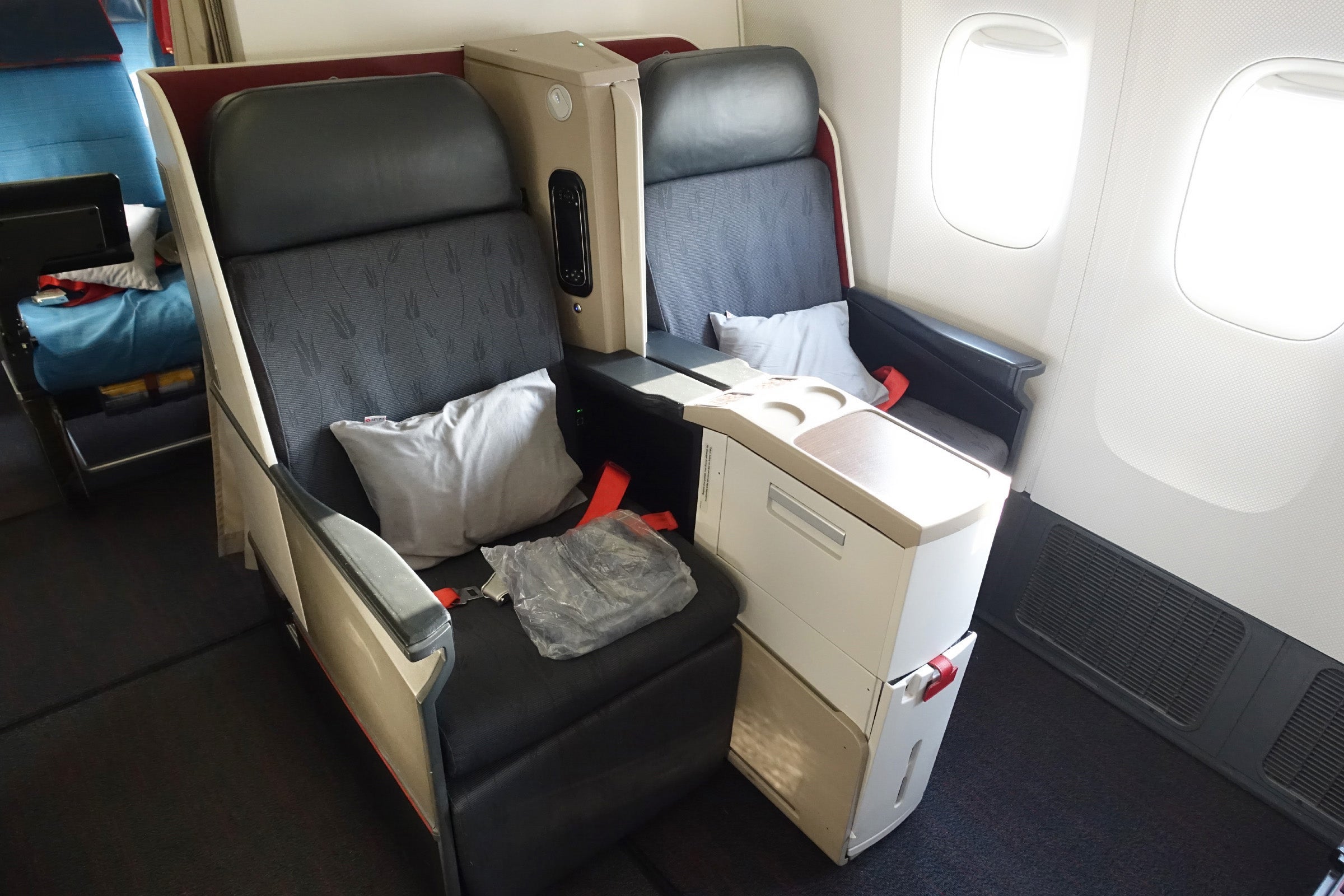
As far as amenities go, with my particular flights, I much preferred the 777 overall. My 777's cabin was the latest available in Turkish's fleet, which meant a small slide-out privacy divider between seats, a larger, high-definition in-flight entertainment system with a touchscreen controller, a large storage ottoman and an overall fresher feel.
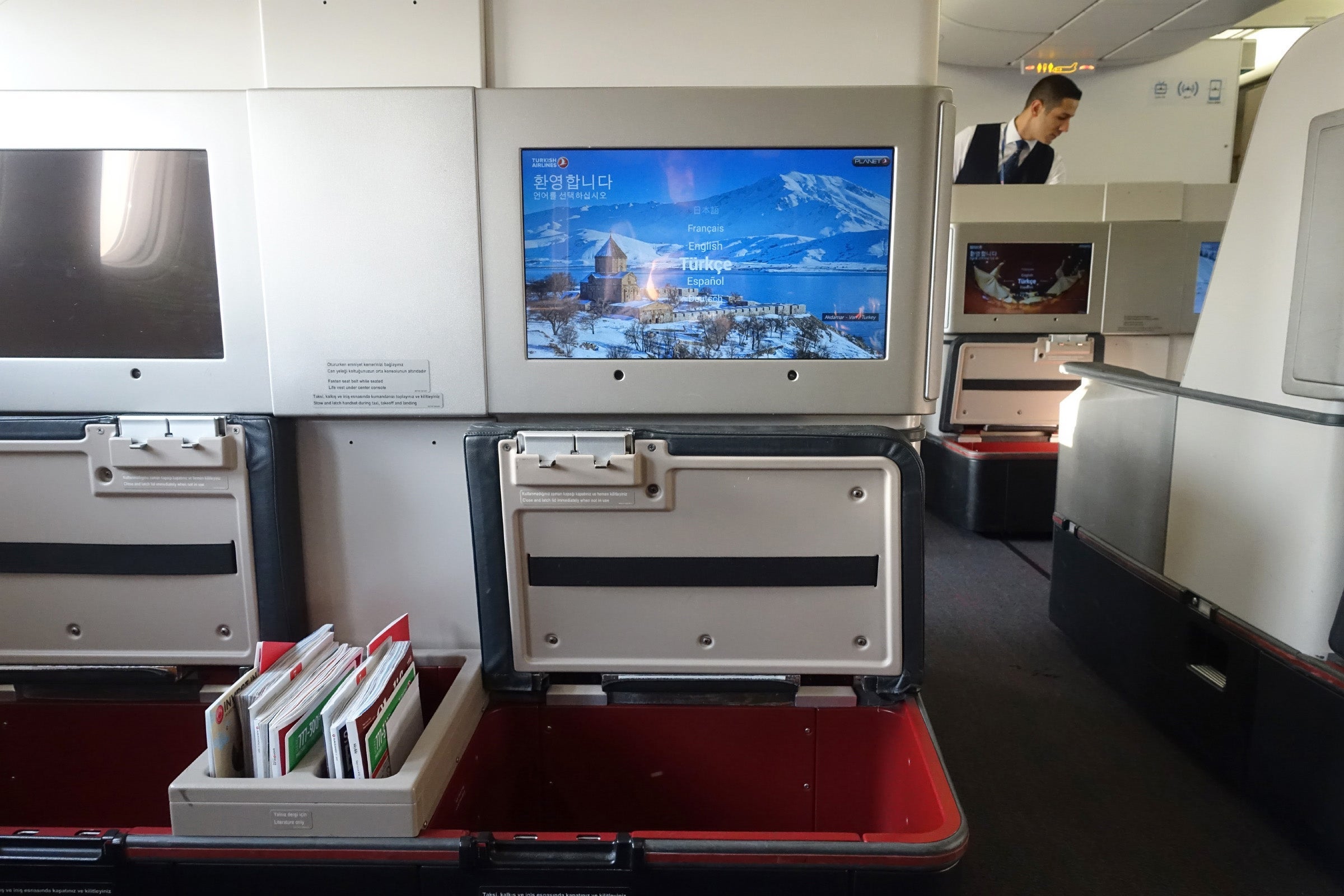
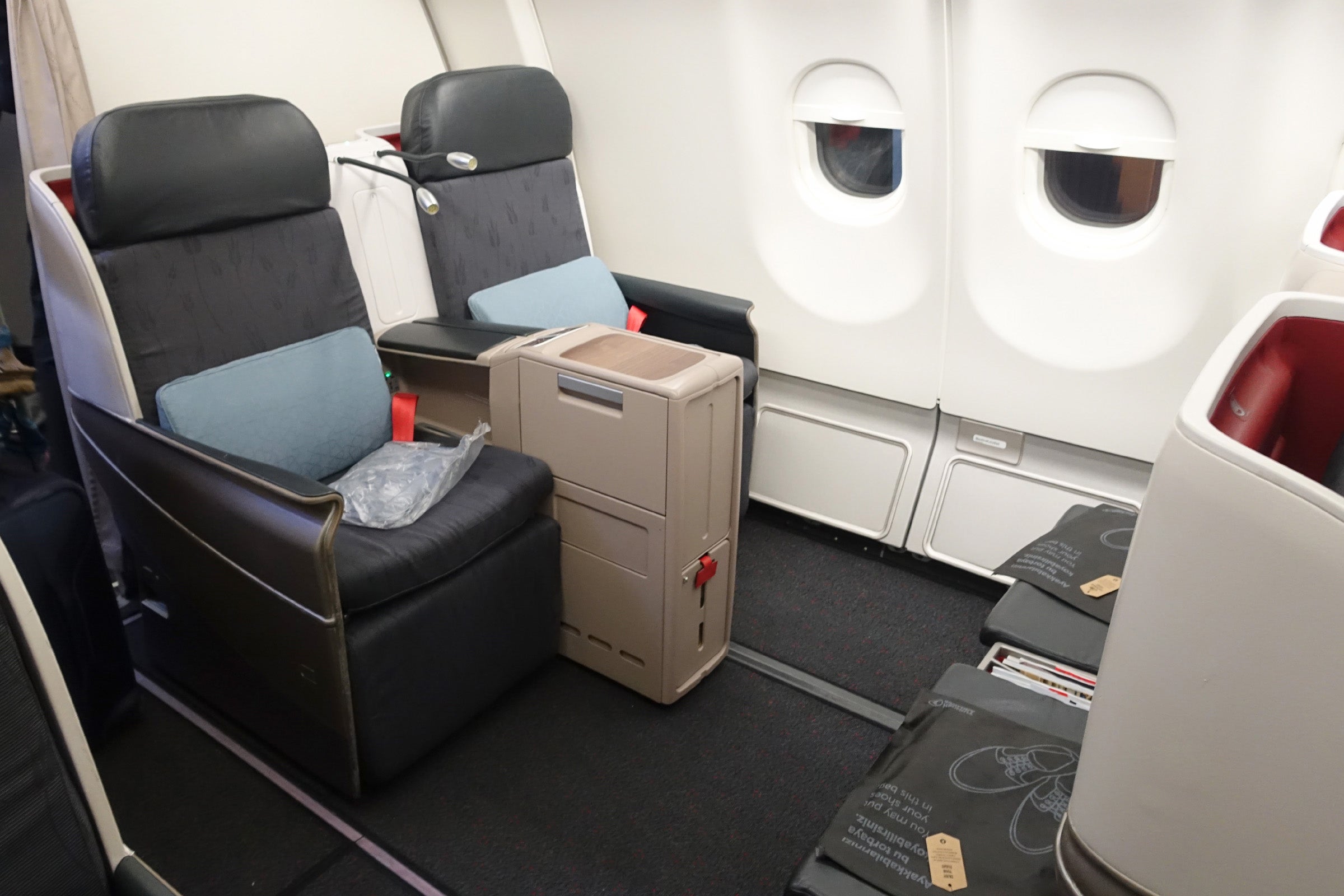
The A330, meanwhile, had Turkish's older seats — they still lie completely flat, and I did find mine to be comfortable both upright and in bed mode, but there's virtually no privacy, and storage is limited as well.

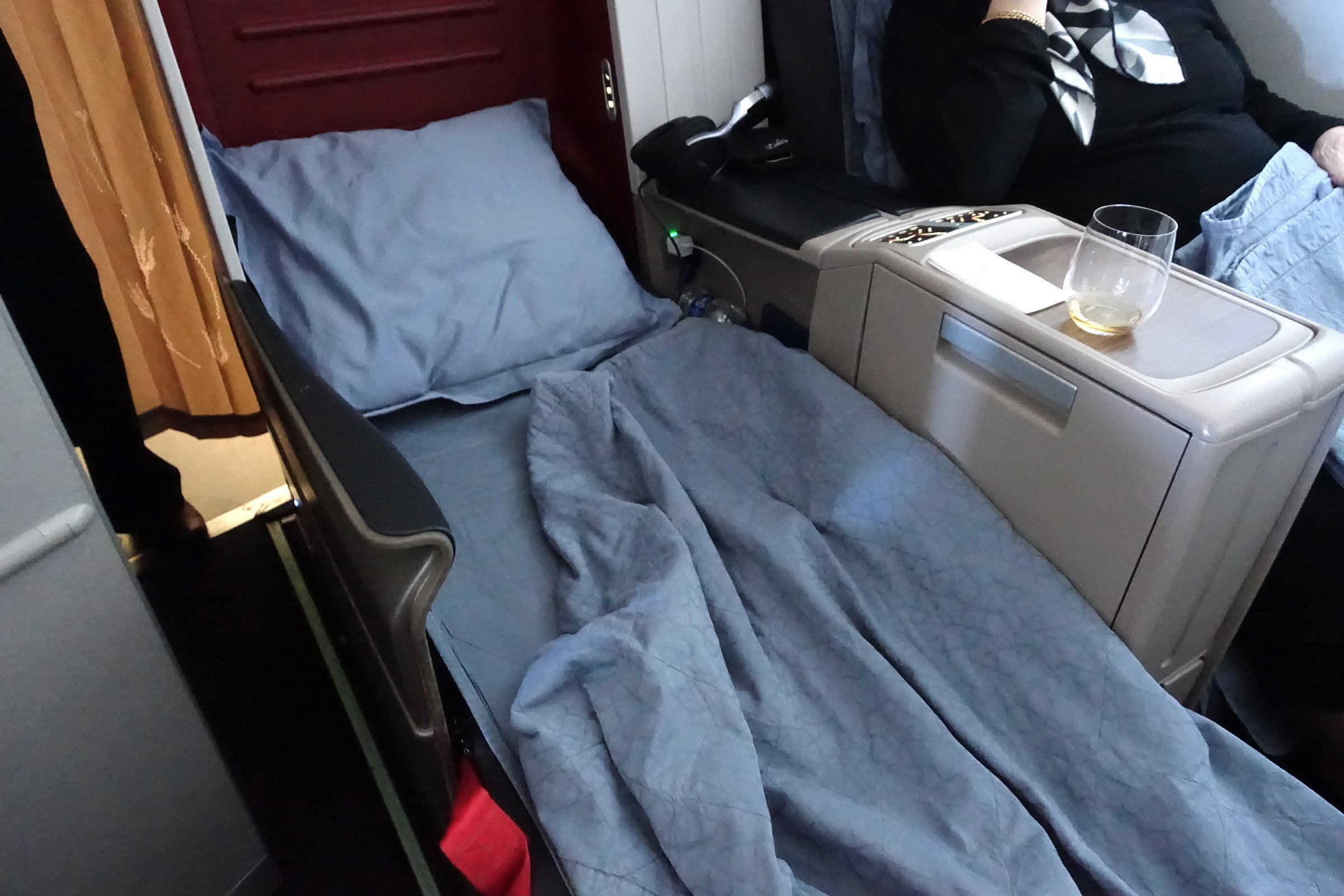
Of course, one A330 advantage is the 2-2-2 arrangement — which, while not at all competitive when 1-2-1 has become the norm even on the wider 777, sure beats the 2-3-2 seating on Turkish's larger plane. If you end up in one of the paired seats (A and B or J and K), you'll have a similar experience on either model, though.
Both planes offer Wi-Fi, which is free for business-class passengers. I found middling performance on both the A330...
...and the 777-300ER.
Bottom Line
Since Turkish Airlines offers both versions of its seats on both planes, it's challenging to offer up a definitive suggestion here. Based on my own flights, I far preferred the seat on the 777-300ER, but you could end up with the older seat on a 777 and the new version on the A330, in which case you'll probably be best off with the Airbus plane. (I haven't come across any option for confirming which configuration you'll get far in advance, but if you have any suggestions there please share them in the comments below.)
Ultimately, I'd fly Turkish Airlines again, though there's no question that the airline's business-class product is in dire need of an overhaul. Considering my alternatives from the UAE — including A380s operated by Emirates and Etihad — I'm not sure why anyone would opt for a far less private Turkish flight, unless you're able to find a far cheaper fare, or earning miles toward Star Alliance elite status is more important than efficiency and comfort.
The same can be said for flights between Western Europe and the US, too — you'd be backtracking to connect in Istanbul, and unless you can work in a stopover, or the price is right, I think Turkish Airlines is a bit of a hard sell.
For more on Turkish Airlines' business class, see:
TPG featured card
at American Express's secure site
Terms & restrictions apply. See rates & fees.
| 4X | Earn 4X Membership Rewards® points per dollar spent on purchases at restaurants worldwide, on up to $50,000 in purchases per calendar year, then 1X points for the rest of the year. |
| 4X | Earn 4X Membership Rewards® points per dollar spent at US supermarkets, on up to $25,000 in purchases per calendar year, then 1X points for the rest of the year. |
| 5X | New! Earn 5X Membership Rewards® points on prepaid hotel stays booked through AmexTravel.com or the Amex Travel App. |
| 3X | Earn 3X Membership Rewards® points on flights booked through AmexTravel.com, the Amex Travel App, or purchased directly from airlines. |
| 2X | Earn 2X Membership Rewards® points on prepaid car rentals booked through AmexTravel.com or the Amex Travel App and cruises booked and paid through AmexTravel.com. |
| 1X | Earn 1X Membership Rewards® point per dollar spent on all other eligible purchases. |
Pros
- Valuable dining and food-related credits
- Flexible rewards with airline and hotel transfer partners
- Multiple travel and purchase protections
- No foreign transaction fees
- Access to Amex Offers for additional savings (enrollment required)
Cons
- Not as useful for those living outside the U.S.
- Some may have trouble using Uber and other dining credits
- You may be eligible for as high as 100,000 Membership Rewards® Points after you spend $8,000 in eligible purchases on your new Card in your first 6 months of Card Membership. Welcome offers vary and you may not be eligible for an offer. Apply to know if you’re approved and find out your exact welcome offer amount – all with no credit score impact. If you’re approved and choose to accept the Card, your score may be impacted.
- Earn 4X Membership Rewards® points per dollar spent on purchases at restaurants worldwide, on up to $50,000 in purchases per calendar year, then 1X points for the rest of the year.
- Earn 4X Membership Rewards® points per dollar spent at US supermarkets, on up to $25,000 in purchases per calendar year, then 1X points for the rest of the year.
- New! Earn 5X Membership Rewards® points on prepaid hotel stays booked through AmexTravel.com or the Amex Travel App.
- Earn 3X Membership Rewards® points on flights booked through AmexTravel.com, the Amex Travel App, or purchased directly from airlines.
- Earn 2X Membership Rewards® points on prepaid car rentals booked through AmexTravel.com or the Amex Travel App and cruises booked and paid through AmexTravel.com.
- Earn 1X Membership Rewards® point per dollar spent on all other eligible purchases.
- Pay It® lets you tap in the American Express® App to quickly pay for small purchase amounts throughout the month and still earn rewards the way you usually do. Plan It® gives you the option to split up big purchases into equal monthly payments with a fixed fee. You’ll know upfront exactly how much you’ll pay.
- Updated! $120 Dining Credit: Earn up to a total of $10 in statement credits monthly when you pay with the Gold Card at Grubhub (including Seamless), Buffalo Wild Wings, Five Guys, The Cheesecake Factory, and Wonder. This can be an annual savings of up to $120. Enrollment required.
- $100 Resy Credit: Get up to $100 in statement credits each calendar year at over 10,000 qualifying U.S. Resy restaurants after you pay for eligible purchases with the American Express® Gold Card. That’s up to $50 in statement credits semi-annually. Enrollment required.
- $84 Dunkin' Credit: Earn up to $7 in monthly statement credits after you pay with the American Express® Gold Card at U.S. Dunkin’ locations. Enrollment required.
- $120 Uber Cash on Gold: Enjoy up to $120 in Uber Cash annually with your Gold Card. Just add your Card to your Uber account and you'll get $10 in Uber Cash each month to use on orders and rides in the U.S. when you select an Amex Card for your transaction.
- New! As an American Express® Gold Card Member, you can enjoy complimentary Hertz Five Star® Status. Enjoy benefits like skipping the counter at select locations, adding an additional driver at no additional cost*, and vehicle upgrades**. Benefit enrollment and Hertz Gold+ registration are required. *Additional drivers must meet standard rental qualifications and must be a spouse or domestic partner to qualify as complimentary. Other additional drivers subject to fees. **Benefits are subject to availability and vary by location. Additional Hertz program Terms and Conditions including age restrictions apply.
- Take advantage of a $100 credit towards eligible charges* at over 1,300 upscale hotels worldwide when you book The Hotel Collection through AmexTravel.com or the Amex Travel App **. *Eligible charges vary by property. **The Hotel Collection requires a two-night minimum stay.
- Book your travel through the Amex Travel App with added peace of mind – backed by American Express® service and support. Only for American Express® Card Members.
- Whenever you need us, we're here. Our Member Services team will ensure you are taken care of. From lost Card replacement to statement questions, we are available to help 24/7.
- No Foreign Transaction Fees.
- Annual Fee is $325.
- Terms Apply.