'Our job is on the line every 6 months' — Inside the pilot's simulator check

As athletes currently competing at the Olympics in Tokyo will no doubt agree, if you don't practice a skill, your ability will slowly decline. It's why they put in hours of training every single day to ensure that they are at the very top of their game when it comes to competition day.
This mantra is the same with any skill, be it archery, playing a musical instrument or flying an aircraft. As a result, pilots also undergo regular training and testing to ensure that we are always ready to perform at the peak of our ability should the need arise.
Every six months, pilots go into a flight simulator to ensure that their skills — both technical and non-technical — not only meet the standards of the national regulator but also those of their airline, which are normally set much higher. If they don't make the grade, they are removed from flying duties to undergo extra training. Only when their proficiency has been confirmed are they then allowed to return to flying passengers.
A $17 million computer game
Some of you may remember playing the first-ever Microsoft Flight Simulator back in the 1980s. My first memory of this was desperately hammering the cursor keys on my keyboard, trying to get a pixelated Cessna 172 into Meigs Field, Chicago.
Whilst this was technically a flight simulator, in terms of closeness to the real thing, it was some way off. Fast-forward 40 years and the quality of flight simulators, both professional and those available on your computer at home, are in a totally different league.
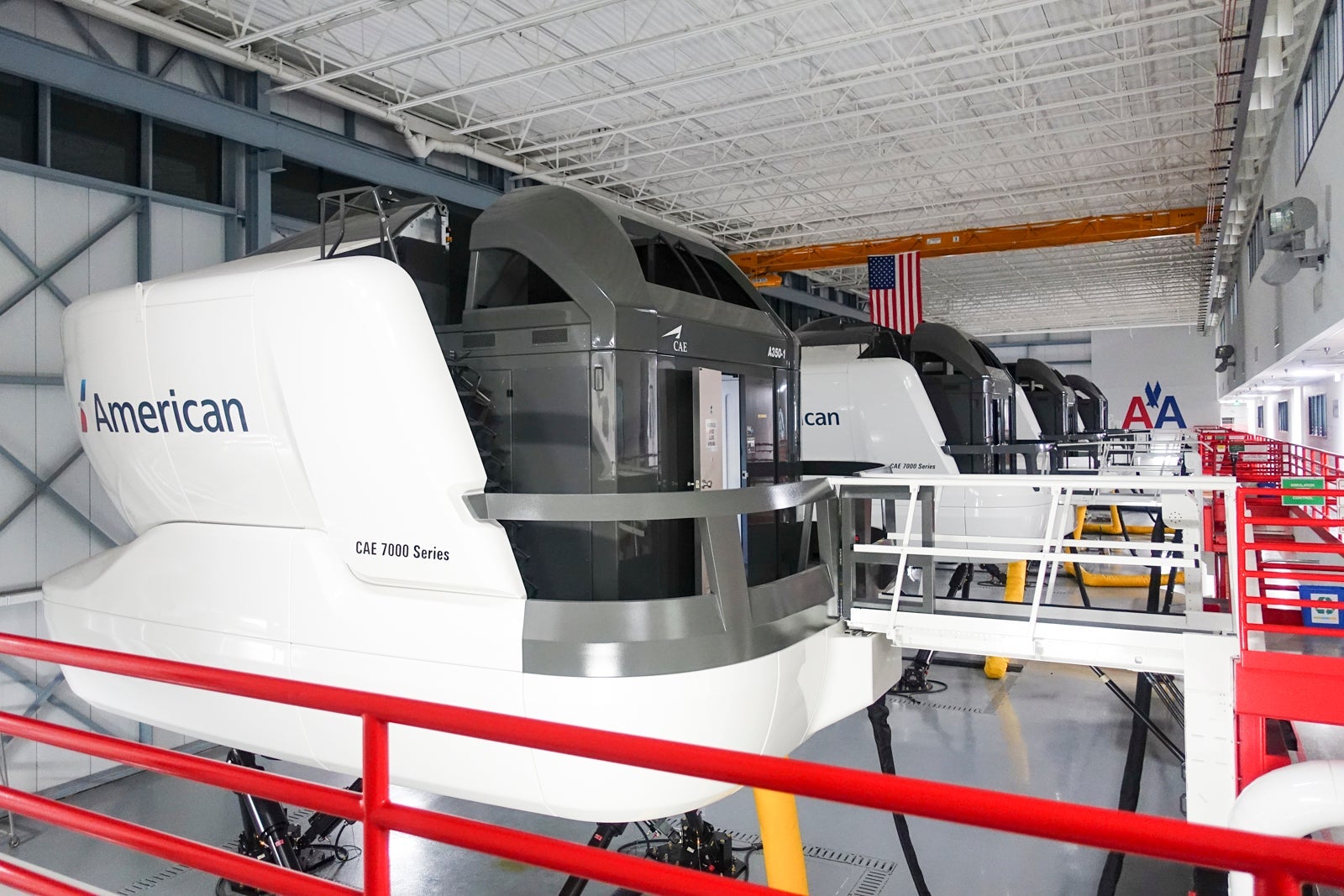
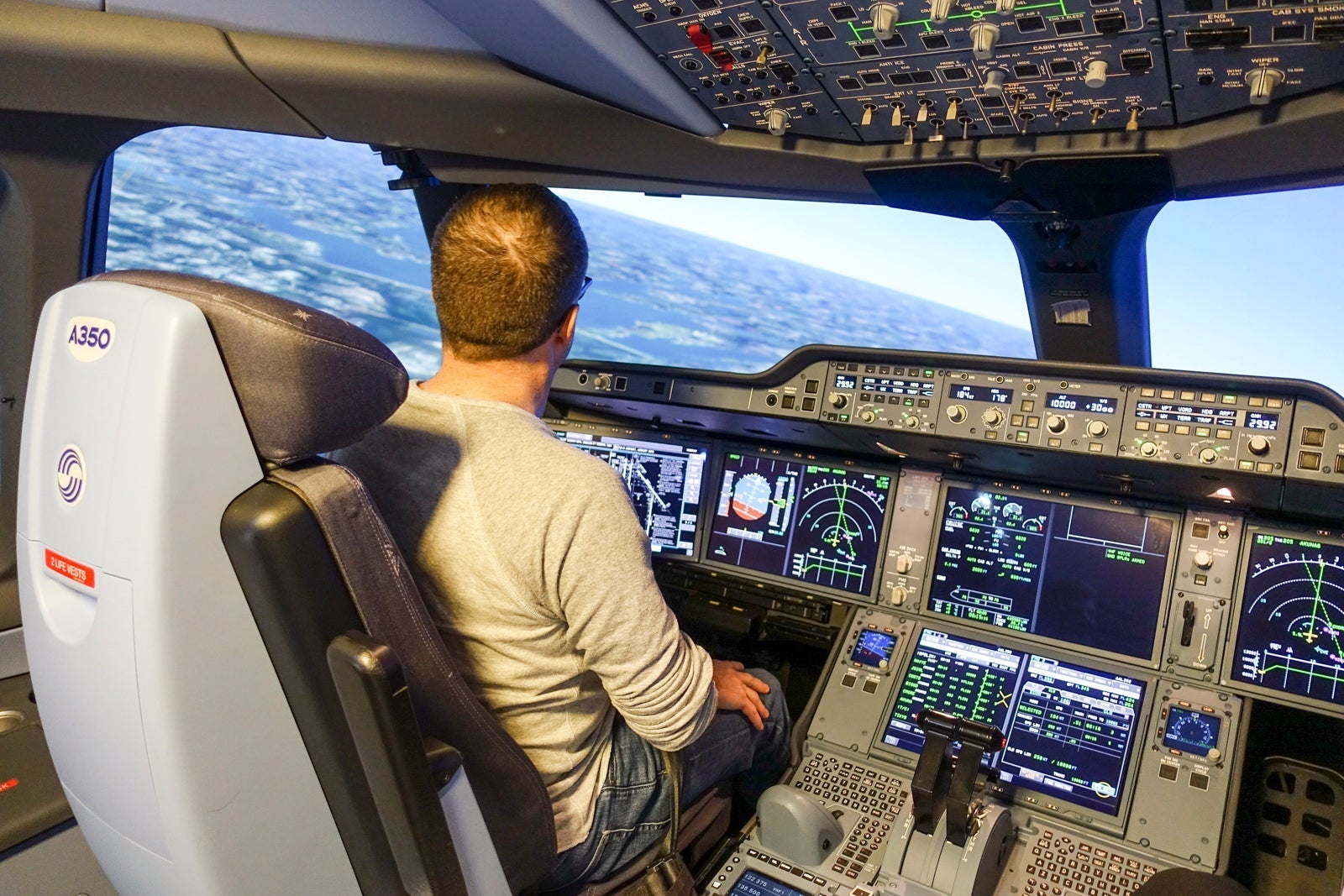
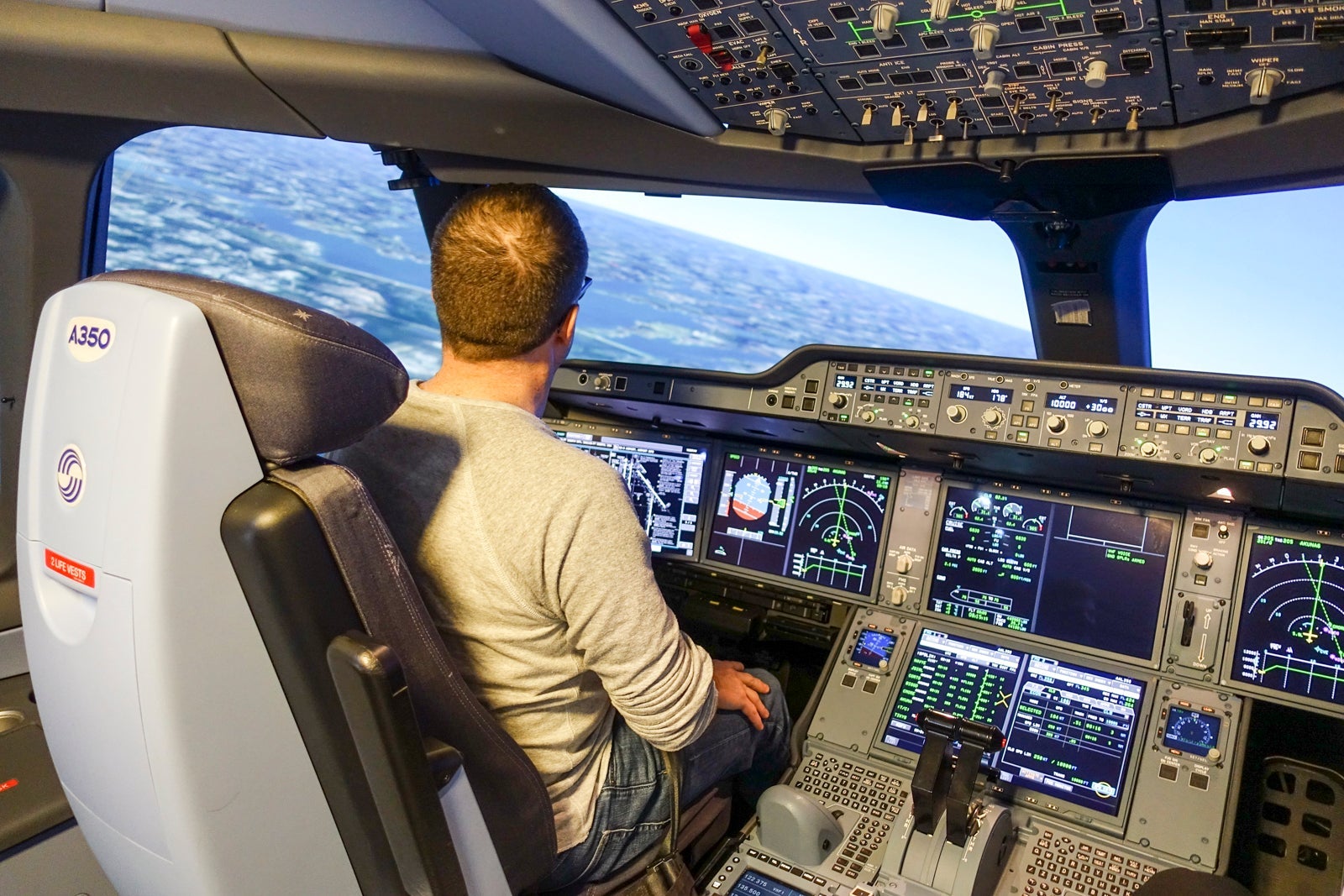
Most large airlines have their own training centers with scores of full-motion flight simulators, which, despite looking like boxes on legs from the outside, are incredibly realistic replicas of their aircraft counterparts once on the inside. Sat in the back on the simulator, the instructor is able to create any normal or non-normal scenario that you could imagine, giving the pilots in the operating seats the ability to practice emergency situations exactly as they'd unfold in the real aircraft, whilst being bolted firmly to the ground.
Despite their expensive cost to purchase and run, the ability to train pilots 24 hours a day, seven days a week without the risk to actual aircraft and passengers makes the use of flight simulators an industry norm these days. In fact, the development of such simulators has been instrumental in improving flight safety over the past 50 years.
Related: Your next flight could be a pilot's final test before making captain
What do the simulator checks cover?
Each national regulator around the world, for example, the Civil Aviation Authority (CAA) in the U.K. and the Federal Aviation Administration (FAA) in the U.S., sets its own requirements for the simulator check. They then hand the responsibility down to the individual airlines to ensure that all their pilots meet this standard. The simulator check is then conducted by a pilot within the airline (Captain or First Officer) who has been officially accredited by the CAA to act as a Type Rating Examiner (TRE). Every so often, the regulator will carry out audits on the checks to ensure that the standards that they have laid out are being adhered to.

For pilots undergoing the check, it can be quite a nerve-wracking time. In effect, our job is on the line every six months. Don't perform to the required standard and we could be out of a job. As a result, it's imperative that we perform well over the two days of our check.
Fortunately, the skills that we need to demonstrate are clearly defined in CAA documents and cover core skills, which, if I'm honest, all pilots should be able to deal with at any moment in their career. Any day we go to work could be the day where we need to use these skills. With that in mind, I personally view the simulator check from a flipped perspective — it's my opportunity to practice the skills in a safe environment that I may need to use on any normal flight. Taking this mindset helps me deal with the stress of the check and see it as a positive experience and not a negative one.
As you might imagine, most of the skills that form part of the Licence Skills Test (LST) are based on emergency situations. On top of this, we are also checked on our normal procedures that we use every day. These include:
- Pre-flight procedures and engine start;
- Use of checklists;
- Engine failure after takeoff;
- Departure and arrival procedures;
- One engine inoperative approach;
- One engine inoperative go around;
- One engine inoperative landing;
- Low visibility operations; and
- Other non-normal events.
In order to make the session more realistic, the training department of the airline will design a scenario that will incorporate as many of these as possible. For example, it might involve a flight from a foggy Manchester planning to go to Orlando. However, it's all a bit of a game. We know full well that we won't actually end up in Orlando as events will happen pretty soon after we are airborne to tick off as many items from the above list as possible.
The key to a good simulator session is to take the events as they come and treat them exactly as we would were it in the real aircraft.
Related: Practice makes perfect: How pilots train for every situation
Engine failure after takeoff
One of the most important skills to demonstrate during the simulator check is our ability to deal with an engine failure at the most critical stage of flight — just as we get airborne.
Before each departure, we calculate the engine power that will not only be the most efficient for the given conditions (aircraft weight, runway length, weather, etc.) but will also leave us with enough power to still climb away from the runway should one of the engines fail. Performing this maneuver is a key part of the LST. The instructor will program the simulator to generate an engine problem that will lead to an engine failure or fire just as we hit VR, the speed at which we rotate the nose off the ground and into the air. Of course, we will not know which engine this will be or what the actual problem is — exactly like it would be were this to happen in real life.
Related: How do pilots deal with an engine failure on takeoff?
When experiencing an engine issue at this stage of flight, we have a standard way to handle the aircraft— and it is this that the instructor is looking to assess.
The first thing that we must do is keep the aircraft straight. With the sudden loss of power from one engine, the aircraft nose will swing towards that side, driven by the extra power from the other side. So, if the left engine fails, the extra power on the right-hand side will cause the nose to swing to the left. In order to control this, we must use our feet on the rudder pedals.
The best way to do this is to look towards the end of the runway and imagine a set of rugby/American football posts planted at the end. Our aim is to squeeze in enough rudder to return the nose of the aircraft to the centerline and fly through those posts.
With the direction of the aircraft under control, we still need to get the aircraft into the air and climb safely away from the ground. In order to do this, we must rotate the nose into the air as per a normal takeoff but with one major difference.
With the loss of half our engine power, the acceleration of the aircraft will be much slower. As a result, if we rotate into the air as we would do on a normal takeoff, the airspeed will deteriorate quickly and we will end up in a dangerous low-speed situation.
To stop this from happening, when rotating with an engine failure, we do so at a much slower rate. With the adrenaline pumping, this takes serious conscious thought. By slowing down the rate of rotation, the airspeed is able to increase sufficiently to a safe flying speed, allowing us to climb away from the runway.
As soon as we see that the aircraft is indeed climbing, we retract the landing gear. This reduces the aerodynamic drag on the aircraft, enabling us to fly more efficiently and climb at a quicker rate.
As much as this part of the test is about demonstrating our handling skills, it's also about showing our management skills, an aspect that many would say is the more important skill. With this in mind, we will engage the autopilot at around 200 feet, allowing us to "take a step back" and assess the situation for what it really is. Identifying the correct engine that we need to shut down is critical. The history of aviation is littered with incidents where the crew shut down the wrong engine with catastrophic consequences. As a result, it is imperative that both pilots confirm between us what we think the problem engine is.
Once this has been confirmed, the Pilot Monitoring can then begin the process of shutting down the engine. Even this process requires the input of the other pilot, confirming each time a thrust lever is moved or a fuel cut-off switch is selected. There are no second chances with this type of emergency.
Getting back on the ground
Once the engine has been shut down, it's fairly obvious that we won't be continuing our flight to Orlando. As a result, we must make a decision to land at a suitable airfield. This may be the one from where we've just taken off, or, if the weather has deteriorated or the runway is closed due to debris from the engine, we must find somewhere else to land. How we carry out this decision-making process is a large part of how the instructor assesses our performance.
Once we've come up with a plan to land somewhere, we must start the approach to land. Flying an approach on a single engine is very similar to one with two engines. The main problem comes in the case of the need to go around.
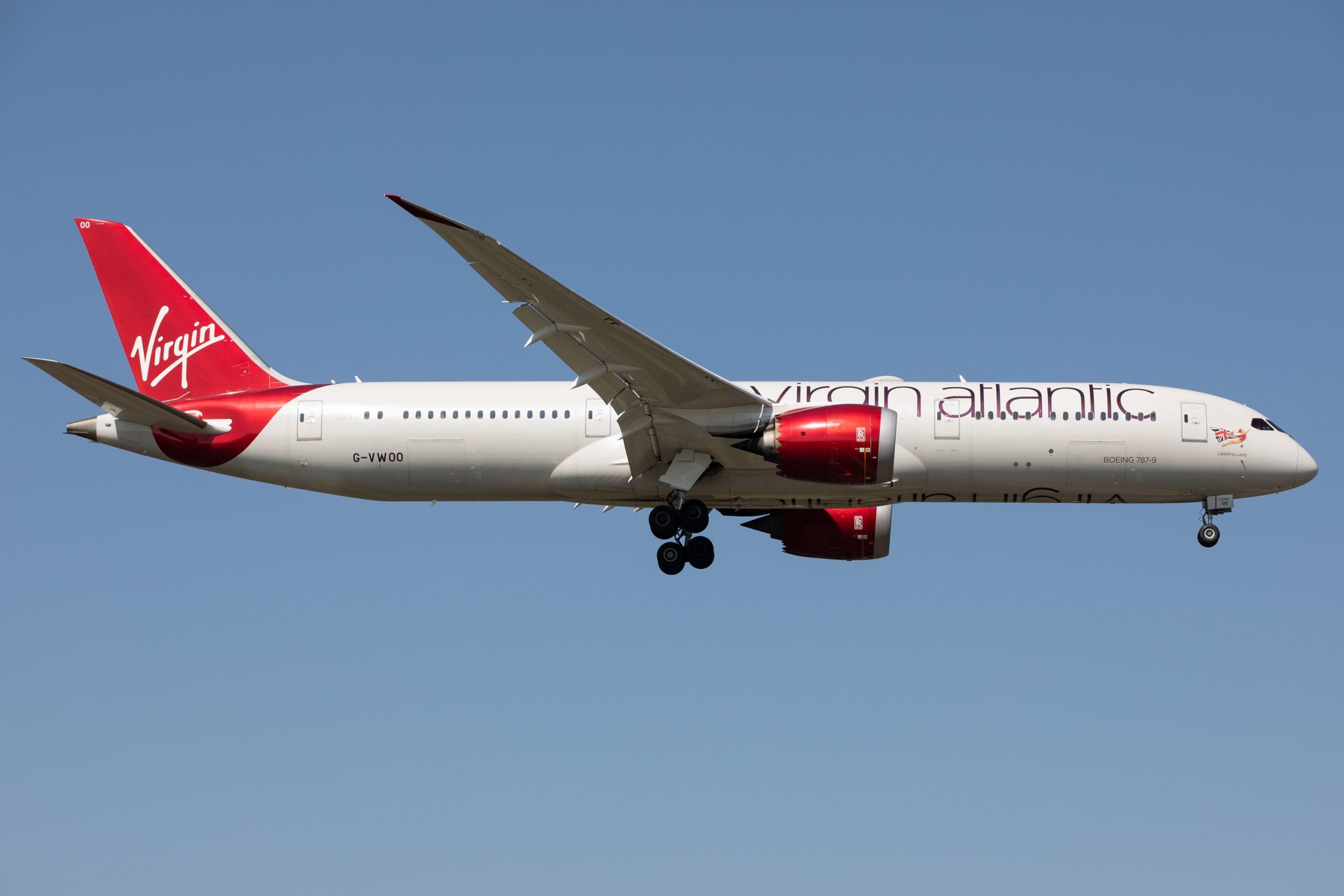
Now, in a real-world scenario, the chances of having to go around from an emergency approach due to the cloud being too low or another aircraft blocking the runway are incredibly slim. However, the chance is always there and as a result, we must demonstrate our ability to perform a go-around using just a single engine.
Much like when the engine failed on takeoff, our priority is to keep the nose straight when we apply go-around power to the working engine. The difference here is that we will require much more rudder as we will be using full power on the operative engine, not the reduced power which was used on takeoff.
Back up in the air again, we still need to demonstrate a single-engine landing. If the weather had been the reason for the go-around, by a stroke of good fortune, it will have suddenly improved enough to make another approach and land.
It's not over yet...
All this will take around an hour to complete, maybe a little longer. However, in that time we will have ticked off quite a few of the elements required as part of the skills test. However, with one hour gone, there are still another seven hours to go. The remainder of this time will consist of similar scenarios where we will have to demonstrate all the other skills.
For example, a cargo fire leading to a rejected takeoff, landings into foggy conditions complicated by technical failures and then whatever other technical elements the airliner has decided to focus on for this particular training cycle.
This could involve scenarios looking at hydraulics failures or practicing what we'd do were to discover a fuel leak halfway across the Atlantic. As much as the two-day simulator session is about testing pilots to ensure that we can handle the aircraft in an emergency situation, the focus is heavily based on training. Many scenarios we will never see for real in the aircraft. If they do crop up, however, the fact that we've been able to practice and understand them in the simulator means that they become much less of an issue.
Bottom line
The six-monthly simulator check is a big event in a pilot's calendar. We will often hide away from friends and family in the weeks running up to the check to ensure that we have studied and prepared sufficiently. However, the main aim of the two days is to come out feeling like we have improved as pilots. Like the Olympic athletes, each training session is designed to improve their performance and it's the same for us and the simulator sessions.
TPG featured card

at Capital One's secure site
Terms & restrictions apply. See rates & fees.
| 5X miles | Earn 5X miles on hotels, vacation rentals and rental cars booked through Capital One Travel |
| 2X miles | Earn unlimited 2X miles on every purchase, every day |
Pros
- Stellar welcome offer of 75,000 miles after spending $4,000 on purchases in the first three months from account opening. Plus, a $250 Capital One Travel credit to use in your first cardholder year upon account opening.
- You'll earn 2 miles per dollar on every purchase, which means you won't have to worry about memorizing bonus categories
- Rewards are versatile and can be redeemed for a statement credit or transferred to Capital One’s transfer partners
Cons
- Highest bonus-earning categories only on travel booked via Capital One Travel
- LIMITED-TIME OFFER: Enjoy $250 to use on Capital One Travel in your first cardholder year, plus earn 75,000 bonus miles once you spend $4,000 on purchases within the first 3 months from account opening - that’s equal to $1,000 in travel
- Earn unlimited 2X miles on every purchase, every day
- Earn 5X miles on hotels, vacation rentals and rental cars booked through Capital One Travel
- Miles won't expire for the life of the account and there's no limit to how many you can earn
- Receive up to a $120 credit for Global Entry or TSA PreCheck®
- Use your miles to get reimbursed for any travel purchase—or redeem by booking a trip through Capital One Travel
- Enjoy a $50 experience credit and other premium benefits with every hotel and vacation rental booked from the Lifestyle Collection
- Transfer your miles to your choice of 15+ travel loyalty programs
- Top rated mobile app