From engine fires to systems failures: How pilots manage emergency situations

The night of December 29, 1972 was instrumental in improving flight safety for passengers and pilots alike. Making their approach to Miami International Airport (MIA), it was just another flight for the pilots of Eastern flight 401. In preparation for landing, they moved the landing gear lever to the down position. However, the light which indicates that the nose gear is in the down and locked position failed to illuminate green.
In order to troubleshoot the problem, the crew decided to break off the approach and climb back up to 2,000 feet. To reduce their workload, they entered a holding pattern to the west of the airport over the Everglades. The first officer, who was responsible for flying the aircraft on that sector, then engaged the Autopilot to reduce the workload further.
However, both pilots (and the flight engineer) became engrossed in trying to fix the problem. As the captain issued instructions, the first officer tried to move the gear indicator, but to no avail. The green light just would not illuminate. The more time went on, the more the crew became obsessed with the problem.
All of a sudden, the first officer looked at the altimeter and realized that they were no longer at 2,000 feet. Instead, they were just a few feet above the Everglade swamp. The Autopilot had become disconnected and because all three crew members were fixated on solving the problem, no one noticed to slow descent toward the ground.
A few moments later the aircraft crashed into the ground, killing 101 people.
Whilst many safety systems such as GPWS have been incorporated into modern aircraft in the 50 years since the crash, the principle of "who's flying the aircraft?" still holds firm today.
At all times during a flight, one of the pilot's sole responsibility is to ensure the safe flight path of the aircraft, no matter what else is going on. This is particularly important when it comes to emergency situations.
The natural urge is to get involved and help solve the issue. However, this will often make the problem worse. As a result, pilots are trained to take a step back from the flashing lights and treat all non-normal and emergency situations in a calm and methodical fashion.
Aviate, navigate, communicate
I've mentioned "The Chimp Paradox" by Dr. Steve Peters, in previous articles. It states that inside us still live our original ancestors, the ones who behave like any other animal in the jungle.

When that ancestor felt threatened, the immediate reaction of its brain was the "fight or flight" impulse. Do I stay and fight or do I run away? When something untoward or surprising happens to us today, that inner chimp still reigns supreme as panic takes over.
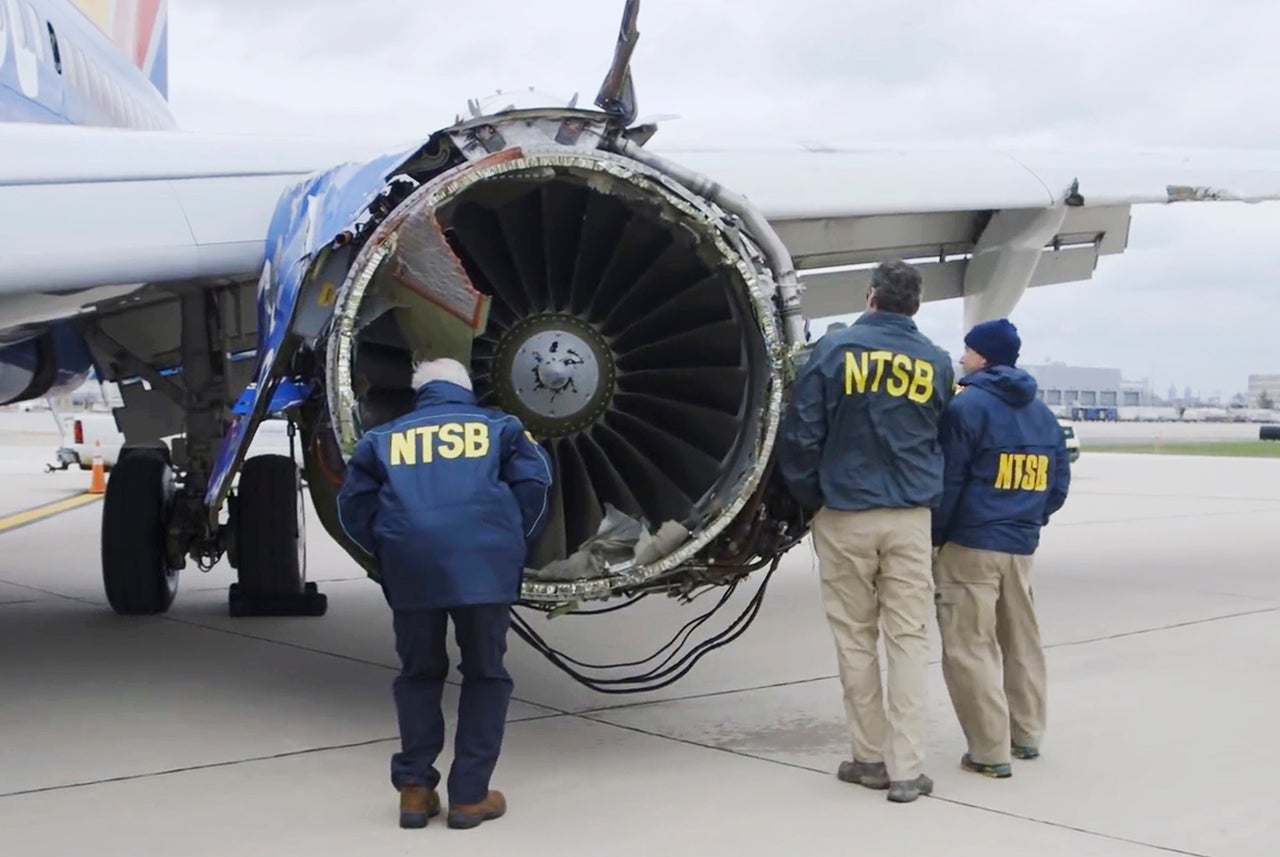
When flying an airliner and an engine suddenly catches fire in the middle of the night, it's only natural for the chimp to control our initial emotions. Red lights are flashing and warning alarms are going off. However, with 300 lives on board, we rarely get a second chance to rectify an instinctive poor decision. What we must do is put the chimp back in its cage to allow us to think rationally.
The best way to do this is to have a structure we can always fall back on. A structure which will help us calm down and give us time to evaluate the situation properly and it comes in three steps.
Aviate
When a non-normal event occurs, the first thing we must do is ensure that the aircraft is flying safely. As the fateful crew of Eastern 401 discovered, there's no point in trying to fix a problem if you crash into the ground whilst doing so.
When a crew first become aware of a developing situation, usually from a warning or caution alert, the pilot responsible for flying the aircraft (PF) will state out loud: "I have control." Whilst this may seem obvious, this clear and unambiguous statement immediately resolves any confusion over who is doing what.

Next, the PF will confirm not only what the aircraft is doing, but make sure that it is doing what they actually want it to be doing. For example, if they were flying manually, would it be a better idea to now engage the Autopilot? In the case of an engine failure, do they need to increase engine power?
Whatever the crew decide to do, the "aviate" part must establish the aircraft in a safe flight path.
Navigate
With the aircraft flying safely, the next step is to navigate the aircraft to a position which continues to keep us safe. This very much depends on the stage of flight and how well prepared we are.
Pilots are always thinking about the "what if?" scenarios at all stages of flight. By constantly talking to each other, we keep our situational awareness high, ready to put a plan into action should the need arise. A great example of this is in the event of an engine failure over the Atlantic Ocean.
During Oceanic segments of a flight, there are set procedures in the case of a required descent. With this in mind, we always discuss our plan should the need arise to make a descent due to a loss of cabin pressurization, engine failure or need to divert.

As a result, if an emergency does occur, we already know how we're going to navigate the aircraft away from our route.
Terrain clearance is also critical in these situations, particularly if the even happens soon after takeoff or just before landing. Making sure that the aircraft is at a safe altitude which will ensure terrain clearance is paramount before the crew attempt to deal with the issue at hand.
Communicate
With the aircraft flying safely, the final element is to communicate. But who with and when?
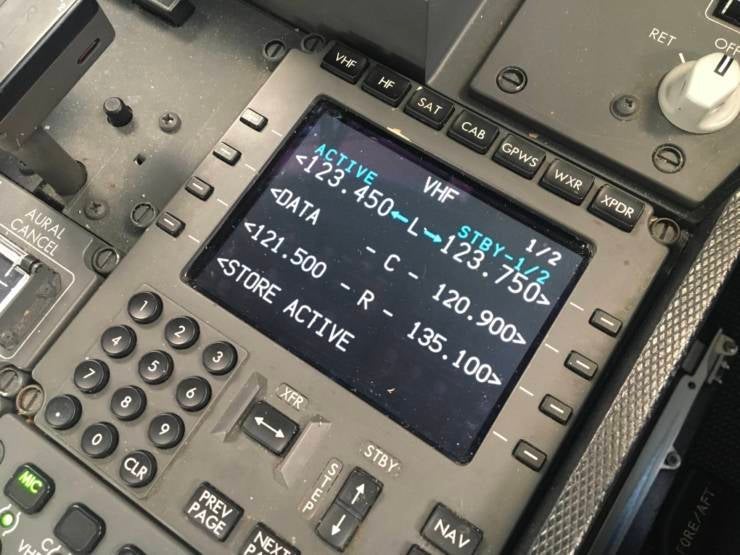
Understandably, letting Air Traffic Control know that we have a problem is important at some point, but it may not need to be done immediately. In some parts of the world, letting ATC know too soon may result in a barrage of questions which will hamper our efforts to solve the problem.
Likewise, for passengers seeing flames coming out the back of the engine may be pretty alarming, but letting them know what is going on isn't always high on our list of priorities. Once the situation is under control and we have a plan, then we will speak to them.
Running the checklists
With the aircraft flying safely and the chimp caged, the stress in the flight deck begins to reduce. With lower stress comes clearer decisions, which is ultimately what we're looking to achieve. We can now start to look at managing the non-normal situation with the aircraft.
Most modern airliners have an electronic checklist (ECL) which automatically displays on the screens when a fault is detected. It is the job of the pilot monitoring (PM) to carry out the checklist whilst the PF continues to fly the aircraft.
The ECL will direct the crew to carry out actions to try and rectify the problem. For example resetting and electric generator. If this does not work and the system stays failed, the checklist will then continue to secure the system and prepare the crew for flight without it.

More often than not this means continuing the flight as there are backup systems, but it may require a diversion in the case of certain system failures.
Whilst the PM caries out the ECL, it's imperative that the PF does not get distracted from the flying of the aircraft. If the PM needs to the PF to check something, the PF will hand over control of the aircraft to the PM to ensure that they are never both "heads down."
With the non-normal checklist complete, the crew must then do any remaining normal checklists, such as the after takeoff checklist.
What have we got?
With the checklists completed, it's time to take stock of the situation. What has happened? What failures did we have? Which systems have we lost? This stage of the process is key to being able to come up with a suitable plan of what to do next.
In the case of multiple faults, there may have been several ECLs to complete. As a result, there may be important information which was missed in the heat of the moment. By running through the alert messages again, we can pick up on these missed items and also start to build a better picture of where we're at with the situation.
This is also a good time to work out the implications of the failure. If there has been a hydraulics problem, it is likely that the landing distance required is much longer than normal. With that required distance calculated, it will help simplify the decision-making process later on.
Making a decision
There are a number of ways to come up with a decision and some are quicker than others. If the crew suffer an engine failure after takeoff, they may already have come up with a plan during their preflight emergency briefing. If this plan is still viable, there may not be a need to spend time thinking about it again. After all, this is exactly why we carry out an emergency brief.

However, if a problem occurs which the crew were not expecting, it often pays to spend a little time coming up with a plan. Not only is the mnemonic TDODAR useful in aviation, but it can also be useful in many other situations where an evaluated decision is needed.
Time
Time available is always a factor as there is only ever a finite amount of fuel in the tanks. However, "time" doesn't just refer to fuel available. A good question to ask the other pilot is "how urgent do you think this is?".
An engine fire which won't extinguish is far more urgent than a minor flight control computer fault. This establishment of urgency will make it clear how much time we have to run this process and make a decision.
Diagnose
It may be easy to simply see this as "what happened?" but that's of little use when trying to decide what to do next. Instead, asking ourselves questions such as "what does this mean?" and "what equipment do I have left?" will be far more useful.
If there has been a failure of some of the navigation equipment, it may mean that we are unable to land at an airport with poor visibility. This will then aid us in the next section.
Options
When we know the situation we are facing and what tools we have available to us, we can now generate some options. Do we continue the flight? If we have to divert, which airport will be most suitable? What if we do nothing?
This part is made much easier if we have collected all the pertinent information as detailed in the sections above.
Decide
In an ideal situation, there will be a number of options to chose from. At other times, there may only be one option available. Whatever the choices, a decision needs to be made. This is where a strong crew dynamic is essential.
The captain needs to be open enough to allow the other crew members to input their ideas, but they also need to be strong enough to make a decision if discussions are just going round in circles. How quickly this needs to be done constantly refers back to the "time" section.
Assign tasks
With a plan decided, it's time to action it. Between the crew, someone will need to keep flying the aircraft whilst the other person sets the flight management computer up for the approach. They will also have to inform ATC, the flight attendants and passengers of the new plan.
Review
This part is almost more important than everything before. Coming up with a plan is all well and good, but is it still valid? Flying an aircraft is a dynamic situation and things change quickly. A plan which was ideal 20 minutes ago, may no longer be suitable.
Has the weather at the diversion airfield changed? Do we still have enough fuel to get there? Has the sick passenger who we are diverting for made a recovery?
By constantly reviewing the situation, new information may come to light which changes the plan. We must always be open and adaptable to changing the plan at all times.
Bottom line
In all walks of life, when the unexpected happens it is very easy to let our inner chimp take control and react in an instant. However, when flying an aircraft, this evolutionary reaction can often make things worse. As pilots, we need to react in a calm and collected manner to enable us to think clearly and come up with a safe plan.
By using the "aviate, navigate, communicate" process, we not only ensure that the aircraft is flying safely, but we also give ourselves time to breathe deeply and put the chimp back in its cage. With a cool head, we can then work through the problem and come up with a plan which will keep the aircraft and all it's occupants safe.
TPG featured card

at American Express's secure site
Terms & restrictions apply. See rates & fees.
| 3X | Earn 3X Miles on Delta purchases. |
| 1X | Earn 1X Miles on all other eligible purchases. |
Pros
- Delta SkyClub access when flying Delta
- Annual companion ticket for travel on Delta (upon renewal)
- Ability to earn MQDs through spending
- Various statement credits for eligible purchases
Cons
- Steep annual fee of $650
- Other Delta cobranded cards offer superior earning categories
- Earn 100,000 Bonus Miles after you spend $6,000 or more in purchases with your new Card within the first 6 months of Card Membership and an additional 25,000 bonus miles after you make an additional $3,000 in purchases on the Card within your first 6 months, starting from the date that your account is opened. Offer Ends 04/01/2026.
- Delta SkyMiles® Reserve American Express Card Members receive 15 Visits per Medallion® Year to the Delta Sky Club® when flying Delta and can unlock an unlimited number of Visits after spending $75,000 in purchases on your Card in a calendar year. Plus, you’ll receive four One-Time Guest Passes each Medallion Year so you can share the experience with family and friends when traveling Delta together.
- Enjoy complimentary access to The Centurion® Lounge in the U.S. and select international locations (as set forth on the Centurion Lounge Website), Sidecar by The Centurion® Lounge in the U.S. (see the Centurion Lounge Website for more information on Sidecar by The Centurion® Lounge availability), and Escape Lounges when flying on a Delta flight booked with the Delta SkyMiles® Reserve American Express Card. § To access Sidecar by The Centurion® Lounge, Card Members must arrive within 90 minutes of their departing flight (including layovers). To access The Centurion® Lounge, Card Members must arrive within 3 hours of their departing flight. Effective July 8, 2026, during a layover, Card Members must arrive within 5 hours of the connecting flight.
- Receive $2,500 Medallion® Qualification Dollars with MQD Headstart each Medallion Qualification Year and earn $1 MQD for each $10 in purchases on your Delta SkyMiles® Reserve American Express Card with MQD Boost to get closer to Status next Medallion Year.
- Enjoy a Companion Certificate on a Delta First, Delta Comfort, or Delta Main round-trip flight to select destinations each year after renewal of your Card. The Companion Certificate requires payment of government-imposed taxes and fees of between $22 and $250 (for itineraries with up to four flight segments). Baggage charges and other restrictions apply. Delta Basic experiences are not eligible for this benefit.
- $240 Resy Credit: When you use your Delta SkyMiles® Reserve American Express Card for eligible purchases with U.S. Resy restaurants, you can earn up to $20 each month in statement credits. Enrollment required.
- $120 Rideshare Credit: Earn up to $10 back in statement credits each month after you use your Delta SkyMiles® Reserve American Express Card to pay for U.S. rideshare purchases with select providers. Enrollment required.
- Delta SkyMiles® Reserve American Express Card Members get 15% off when using miles to book Award Travel on Delta flights through delta.com and the Fly Delta app. Discount not applicable to partner-operated flights or to taxes and fees.
- With your Delta SkyMiles® Reserve American Express Card, receive upgrade priority over others with the same Medallion tier, product and fare experience purchased, and Million Miler milestone when you fly with Delta.
- Earn 3X Miles on Delta purchases and earn 1X Miles on all other eligible purchases.
- No Foreign Transaction Fees. Enjoy international travel without additional fees on purchases made abroad.
- $650 Annual Fee.
- Apply with confidence. Know if you're approved for a Card with no impact to your credit score. If you're approved and you choose to accept this Card, your credit score may be impacted.
- Terms Apply.
- See Rates & Fees